Tag: Announces

  • DHS Announces Proposed Pilot Program for Non-E-Verify Employers to Use Remote I-9 Document Examination – CUPA-HR

    DHS Announces Proposed Pilot Program for Non-E-Verify Employers to Use Remote I-9 Document Examination – CUPA-HR

    by CUPA-HR | August 9, 2023

    On August 3, 2023, the Department of Homeland Security (DHS) published a notice in the Federal Register seeking comments on a potential pilot program to allow employers not enrolled in E-Verify to harness remote examination procedures for the Form I-9, Employment Eligibility Verification.

    Background

    DHS’s recent actions are built upon a series of moves aimed at modernizing and making more flexible the employment verification process. On July 25, 2023, the DHS rolled out a final rule enabling the Secretary of Homeland Security to authorize optional alternative examination practices for employers when inspecting an individual’s identity and employment authorization documents, as mandated by the Form I-9. The rule creates a framework under which DHS may implement permanent flexibilities under specified conditions, start pilot procedures with respect to the examination of documents, or react to crises similar to the COVID-19 pandemic.

    Alongside the final rule, DHS published a notice in the Federal Register authorizing a remote document examination procedure for employers who are participants in good standing in E-Verify and announced it would be disclosing details in the near future about a pilot program to a broader category of businesses.

    Key Highlights of the Proposed Non-E-Verify Remote Document Examination Pilot 

    DHS’s proposal primarily revolves around the following points:

    • Purpose: Immigration and Customs Enforcement (ICE) intends to gauge the security impact of remote verification compared to traditional in-person examination of the Form I99. This involves evaluating potential consequences like error rates, fraud and discriminatory practices.
    • Pilot Procedure: The new pilot program would mirror the already authorized alternative method for E-Verify employers, including aspects such as remote document inspection, document retention and anti-discrimination measures.
    • Eligibility: The pilot program is open to most employers unless they have more than 500 employees. However, E-Verify employers are excluded since DHS has already greenlit an alternative for them.
    • Application Process: Interested employers must fill out the draft application form, which DHS has made available online. This form captures details like company information, terms of participation, participant obligations, and more.
    • Information Collection: Employers wishing to join the pilot would be required to complete the formal application linked above. ICE would periodically seek data from these employers, such as the number of new hires or how many employees asked for a physical inspection.
    • Documentation: Participating companies must electronically store clear copies of all supporting documents provided by individuals for the Form I-9. They might also be required to undertake mandatory trainings for detecting fraudulent documents and preventing discrimination.
    • Onsite/Hybrid Employees: Companies might face restrictions or a set timeframe for onsite or hybrid employees, dictating when they must physically check the Form I-9 after the initial remote assessment.
    • Audits and Investigations: All employers, including pilot participants, are liable for audits and evaluations. DHS plans to contrast data from these assessments to discern any systemic differences between the new method and the traditional one.

    What’s Next: Seeking Public Comments by October 2 

    DHS is actively seeking feedback from the public regarding the proposed pilot and the draft application form. The department encourages stakeholders to consider and provide insights on the following points:

    • Practical Utility: Assess if the proposed information requirement is vital for the agency’s proper functioning and whether the data collected will be practically useful.
    • Accuracy and Validity: Analyze the agency’s estimation of the information collection’s burden, ensuring the methods and assumptions are valid.
    • Enhance Information Quality: Offer suggestions to improve the clarity, utility and overall quality of the data collected.
    • Minimize Collection Burden: Propose ways to ease the data collection process for respondents, exploring technological solutions such as electronic submissions.

    In light of this, CUPA-HR plans to carefully evaluate the notice and associated application. Based on its review, CUPA-HR is considering submitting comments to provide valuable insights to DHS. CUPA-HR will keep members apprised of any updates regarding this proposed pilot program and other changes to Form I-9 alternative examination procedures.


    Source link

  • DHS Announces Final Rule Permitting Alternative Options for Form I-9 Document Examination – CUPA-HR

    DHS Announces Final Rule Permitting Alternative Options for Form I-9 Document Examination – CUPA-HR

    by CUPA-HR | July 24, 2023

    On July 21, the Department of Homeland Security (DHS) announced a final rule permitting the Secretary of Homeland Security to authorize optional alternative examination practices for employers when reviewing an individual’s identity and employment authorization documents required by the Form I-9, Employment Eligibility Verification. The rule creates a framework under which DHS may implement permanent flexibilities under specified conditions, start pilot procedures with respect to the examination of documents, or react to crises similar to the COVID-19 pandemic.

    Simultaneously, DHS published a notice in the Federal Register authorizing an alternative document examination procedure. This provides employers who are participants in good standing in E-Verify with the option to remotely examine their employees’ identity and employment authorization documents via a live video interaction.

    Background

    Under current law, employers are required to physically examine an individual’s identity and employment authorization documents within three business days after an individual’s first day of employment. In response to the COVID-19 pandemic, DHS introduced temporary flexibilities in March 2020, enabling employers to remotely review these documents. This virtual inspection was to be succeeded by a physical examination within three business days once normal operations resumed. These flexibilities, extended multiple times, are set to expire on July 31, 2023.

    Due to the success of temporary changes to document verification procedures implemented at the onset of the COVID-19 pandemic, DHS issued a Request for Public Input (RPI) on October 26, 2021, concerning remote document examination. This move initiated a discussion on whether these leniencies should be extended permanently. After examining the comments responding to the RPI, DHS proposed a framework on August 18, 2022, empowering the Secretary to extend these flexibilities. CUPA-HR submitted comments in response to the RPI (see here) and proposal (see here) encouraging DHS to move forward expediently and ensure that a remote review process remains available following the end of the COVID-19 Flexibilities.

    Details of the Alternative Procedure

    From August 1, 2023, eligible employers can start using the alternative procedure as outlined in the Federal Register notice. The conditions include: (1) restricting participation to E-Verify participants in good standing; (2) broadening document retention requirements to include clear and legible copies of all Form I-9 documents; (3) requiring E-Verify training on fraud awareness and antidiscrimination; and (4) holding a live video interaction after the employee transmits a copy of the document(s) to the employer.

    Employers participating in E-Verify, who created a case for employees whose documents were examined during the COVID-19 flexibility period (March 20, 2020 to July 31, 2023), can opt for the new alternative procedure from August 1, 2023 to satisfy the required physical examination of the employee’s documents for that Form I-9. Conversely, employers not enrolled in E-Verify during the flexibility period must complete a physical examination in-person by August 30, 2023 as outlined in the Agency’s May 4 announcement.

    What’s Next

    Looking ahead, DHS continues to expand its efforts to streamline employment verification procedures. As part of this endeavor, the department is gearing up to roll out a pilot program offering a remote examination option not just to E-Verify-enrolled employers but also to a broader category of businesses. This pilot program is expected to inform decisions about a comprehensive expansion of the remote examination option.

    Simultaneously, DHS is preparing to issue a new edition of Form I-9. Dated August 1, 2023, the new form will become the standard for all employers starting November 1, 2023. Until then, employers can still use the previous edition dated October 21, 2019, through October 31, 2023. It’s important to note, however, that if an employer chooses to utilize the 2019 edition in conjunction with the new alternative remote inspection procedure, they must mark “alternative procedure” in the Additional Information field in Section 2 of Form I-9.

    According to DHS, more details about the new Form I-9 and the pilot program will be disclosed in the near future. CUPA-HR will continue to monitor these developments and keep members apprised as they are announced.


    Source link

  • Higher Ed Without Borders Announces Its First Guest – Edu Alliance Journal

    Higher Ed Without Borders Announces Its First Guest – Edu Alliance Journal

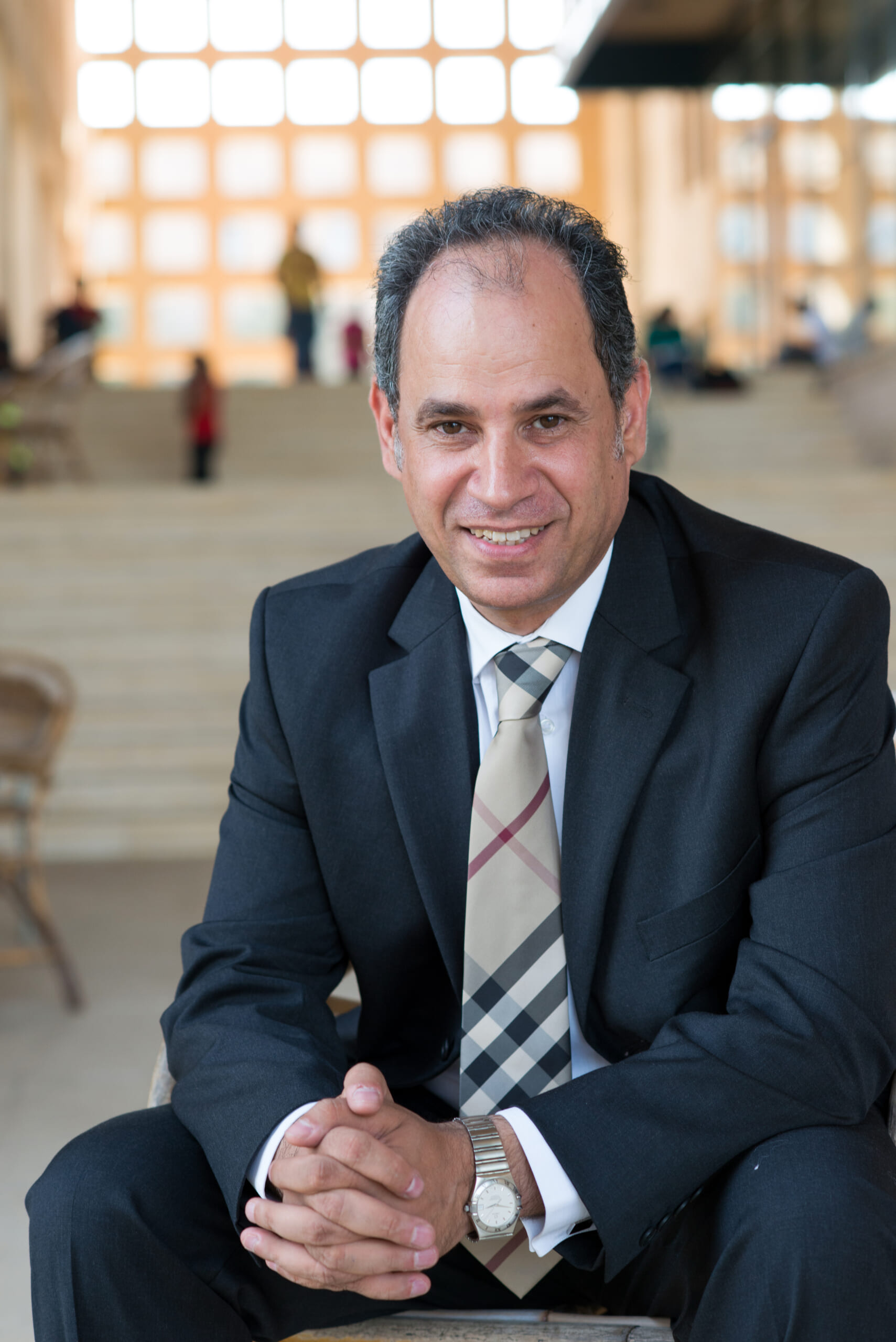
    May 29, 2022 – Higher Ed Without Borders a podcast series dedicated to education professionals worldwide announced its opening guest will be Dr. Ehab Abdel-Rahman, Provost of The American University in Cairo.  The series is hosted by co-founders of Edu Alliance Dr. Senthil Nathan in Abu Dhabi, UAE, and Dean Hoke in Bloomington, Indiana. The episode will be available on June 7th.

    Each episode is a half-an-hour-long conversation with international thought leaders that will enlighten and provide some new thoughts on critical issues facing higher education globally. You can subscribe to this free podcast series by going to Higher Ed Without Borders or searching for “Higher Ed Without Borders” on your preferred podcast app.

    Podcast Guest Dr. Ehab Abdel-Rahman

    Dr. Abdel-Rahman is the Provost of the American University in Cairo (AUC).  The university founded in 1919 has over 7,000 undergraduate and graduate students from over 60 nations. He is the Chief Academic Officer and provides administrative leadership and oversight for all academic components of the University. As Provost, he has twice led the re-accreditations of AUC by the Middle States Commission on Higher Education (MSCHE)  and the National Authority for Quality Assurance and Accreditation of Education “NAQAAE”.

    He also spearheaded the development of AUC’s Strategic Plan, and in 2020, AUC’s QS World University Rankings moved up 25 places, placing it amongst the top 1.5% of universities worldwide.

    Dr. Abdel-Rahman holds his Bachelor’s and Master’s Degrees in Physics from Helwan University in Cairo and his Ph.D. in Physics from the University of Utah.

    Future Guests Include

    • Dr. Allen Goodman, Chief Executive Officer of the Institute of International Education (IIE)
    • Dr. Frank Cooley, Chancellor Purdue University Global
    • Dr. Jim Henderson, President, and Chief Executive Officer of the University of Louisiana System
    • Dr. Gil Latz, Vice Provost of Global Strategies, and International Affairs for The Ohio State University
    • Dr. Mariët Westermann Vice Chancellor of New York University, Abu Dhabi

    Co-Host Biographies

    Dr. Senthil Nathan is Co-Founder and Managing Partner of Edu Alliance Ltd in Abu Dhabi, UAE.  Since the founding of the company in 2014, Senthil has been involved in numerous advisory & consulting projects for higher education institutions and investment firms.

    After spending a decade in the USA on research and engineering design projects, Dr. Nathan joined the Higher Colleges of Technology in 1993, the largest higher education institution in the UAE. He served in various positions and from 2006-to 2014 was Deputy Vice-Chancellor / Vice Provost for Planning & Administration. Dr. Nathan has been involved in numerous advisory and consulting roles in education/training & development engagements. In 2014 he received the Distinguished Alumni Award from the National Institute of Technology in India. He is the Chairman of the Board of Trustees for Livingston University in Uganda. Dr. Nathan is an accomplished speaker and presents at educational events worldwide.

    Dean Hoke is Managing Partner of Edu Alliance Group in the United States and Co-Founder of Edu Alliance Ltd. in the United Arab Emirates. Dean has decades of progressively responsible and visionary leadership roles in higher education, communications & online learning. He has led numerous initiatives that have created innovation & positive change in the higher education & non-profit sector. He has worked since 1974 in senior positions in higher education, broadcasting, and online learning.

    He participates in numerous advisory & consulting projects in the fields of international education, branding, business intelligence, and online learning. He is an active speaker and writer in the field of global higher education and distance learning.  Dean is a member of the Board of the American Association of University Administrators, the Franklin University School of Education Advisory Board, and is a member of the Board of Advisors for Higher Education Digest.

    Edu Alliance

    The podcast is a production of Edu Alliance an education consulting firm located in Bloomington, Indiana, and Abu Dhabi, United Arab Emirates. Founded in 2014 Edu Alliance assists higher education institutions worldwide on a variety of mission-critical projects. The consulting team is accomplished leaders who share the benefit of their experience to diagnose and solve challenges. They have provided consulting and executive search services for over 35 higher education institutions in Australia, Egypt, Georgia, India, Kazakhstan, Morocco, Nigeria, Uganda, United Arab Emirates, and the United States.

    A special thanks to:

    White Rabbit in Bloomington, Indiana is the production partner providing graphics and audio support.

    Higher Education Digest is the media partner for Higher Ed Without Borders podcast. The Digest is an independent Higher Education Portal and Magazine.

    Source link

  • White House Announces Actions to Attract STEM Talent – CUPA-HR

    White House Announces Actions to Attract STEM Talent – CUPA-HR

    by CUPA-HR | February 7, 2022

    On January 21, President Biden announced several agency programs at the Department of State (DOS) and Department of Homeland Security (DHS) to help international STEM students and researchers access certain non-immigrant visas to allow them to study and work in the United States. The programs aim to admit and retain more international scholars to help advance STEM competitiveness in the U.S.

    Department of State

    The first announced program was DOS’s Early Career STEM Research Initiative. The initiative will facilitate engagement between J-1 visa recipients coming to the U.S. to participate in STEM research with host organizations, including businesses. Additionally, the department also announced new guidance to allow J-1 visa recipients in STEM fields to obtain up to 36 months of optional practical training. According to the announcement, the guidance will be applicable for exchange students in the 2021-2022 and 2022-2023 academic years, so long as the students meet certain academic training requirements.

    Department of Homeland Security

    Of significance, the president’s announcement also included a decision by DHS to add 22 new fields of study in the STEM Optional Practical Training (OPT) program through the Student and Exchange Visitor Program (SEVP). The program permits F-1 students earning bachelors, masters and doctorate degrees in certain STEM fields to remain in the United States for up to 36 months to complete OPT after earning their degrees. DHS issued a notice in the Federal Register announcing the specific fields of study added to the designated list of STEM fields.

    Additionally, the United States Customs and Immigration Services (USCIS) issued guidance “to clarify how USCIS evaluates evidence to determine eligibility for O-1A non-immigrants of extraordinary ability, with a focus on persons in science, technology, engineering or mathematics (STEM) fields, as well as how USCIS determines whether an O-1 beneficiary’s prospective work is within the beneficiary’s area of extraordinary ability or achievement.”

    CUPA-HR will keep members apprised of any further updates to these programs and any additional policies and guidance documents impacting student visas as released by President Biden and Congress.


    Source link

  • Biden Announces New COVID-19 Mitigation Plan – CUPA-HR

    Biden Announces New COVID-19 Mitigation Plan – CUPA-HR

    by CUPA-HR | September 9, 2021

    On September 9, President Biden released a new COVID-19 mitigation plan, which includes several new requirements and recommendations for employers, employees, schools and others across the country. The six-part plan includes new policies and strategies to vaccinate more unvaccinated individuals, administer booster shots, keep schools safely open, increase testing facilities and products, protect economic recovery, and improve treatments for COVID-19.

    New Vaccine Requirements for Many Employers and Employees

    In the new plan, the Biden administration announced that the Occupational Safety and Health Administration (OSHA) is developing a rule to require all employers under OSHA’s jurisdiction with 100 or more employees “to ensure their workforce is fully vaccinated or require any workers who remain unvaccinated to produce a negative test result on at least a weekly basis before coming to work.” Additionally, OSHA is developing a rule that will require these same employers to provide paid time off to their employees to allow them to get vaccinated and recover from post-vaccination symptoms. According to the plan, both of these rules will be implemented by OSHA through an Emergency Temporary Standard (ETS), though when the ETS will be issued is still unknown. Importantly, while OSHA’s direct jurisdiction is limited to private sector employers, the ETS requirements could extend to many state and local government employers as detailed in the February 2021 CRS report.

    In addition to the requirements for employers with 100 or more employees, the plan also announced that healthcare workers at Medicare and Medicaid participating healthcare settings will be required to be vaccinated. Unlike the requirements for employers with 100 or more employees, these requirements do not allow for a testing option in lieu of getting vaccinated. According to the announcement, this requirement will apply to over 17 million healthcare workers across the country.

    Lastly, the plan states that President Biden signed two Executive Orders that will require all federal executive branch workers and federal contractors to be vaccinated. Unlike previous Biden administration policies on vaccine mandates for federal employees and contractors, the new requirements will no longer provide the option for unvaccinated employees to undergo regular testing instead of getting vaccinated, “with exceptions only as required by law.”

    COVID-19 Testing and Booster Shots

    In addition to these new vaccine requirements, the plan lays out the Biden administration’s plans to expand and improve testing and to provide booster shots to eligible Americans. According to the plan, booster shots will begin during the week of September 20 after the Food and Drug Administration authorizes their use.

    President Calls on Entertainment Venues to Require Vaccination or Negative Tests

    While not directly mandating, the president’s plan also calls on entertainment venues such as sports arenas, large concert halls and other venues where large groups of people gather — many of which are common to campuses — to require that their patrons be vaccinated or show a negative test for entry.

    As the Biden administration moves forward with implementing this new plan, CUPA-HR will continue to keep members apprised of any new guidance or requirements that come from this announcement.


    Source link