Tag: Annual

  • Three Questions to Help You Build a Better Workplace Culture — Annual Conference Takeaways – CUPA-HR

    Three Questions to Help You Build a Better Workplace Culture — Annual Conference Takeaways – CUPA-HR

    by CUPA-HR | October 18, 2023

    Culture was at the heart of the three keynote events at CUPA-HR’s 2023 national conference, which took place recently in New Orleans. Our keynote speakers asked thought-provoking questions that resonate with higher ed HR’s mission. Engaging with these questions can help you boost employee engagement, promote a culture of inclusivity and strengthen collaboration with your campus colleagues.

    1. Are You Creating an Ecosystem of Opportunity?

    Organizations with strong learning cultures tend to have significantly higher retention rates.

    In her keynote presentation on employee retention, business strategist and author Erica Keswin pointed out that the days of climbing the same corporate ladder for 50 years are long gone. Organizations are flatter, which means you need to get creative to give people opportunities to move not only up, but sideways, helping them gain new skills and find new pathways for their careers. Instead of thinking “ladders,” Keswin said, think “lilypads.”
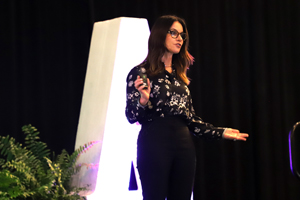
    She also encouraged attendees to talk about employee learning opportunities early and often, beginning with their onboarding programs! Managers should be talking regularly with employees about what skills they want to learn and giving them the opportunity to learn with no strings attached.

    The mission, values and priorities of higher education have learning at their core, and that culture of learning is a value proposition higher ed is uniquely positioned to provide as an employer. Make it work to your advantage by prioritizing learning and opportunity for all employees.

    Another key takeaway from Keswin’s presentation was the importance of being a “human professional” and checking in with your team on a regular basis. She shared the story of a company that starts team meetings with a quick check-in called “Pick Your Nic.” Referring to a popular meme of Nicolas Cage images representing different feelings (happy, relaxed, excited, focused, stressed, meh, etc.), each person picks the Nic that represents how they’re feeling that day. The goal isn’t to address the responses in the meeting, but rather to give the team leader the opportunity to take a pulse and to give team members the opportunity to be seen and heard.

    You’ll find more retention strategies in Keswin’s new book, The Retention Revolution: 7 Surprising (and Very Human!) Ways to Keep Employees Connected to Your Company. And be sure to check out the article “The Higher Ed Employee Retention Crisis — and What to Do About It” in the fall issue of Higher Ed HR Magazine.

    2. Are You Treating Diversity as a Problem to Be Managed or a Value to Be Cherished?

    When it comes to creating and sustaining a more inclusive culture, Princeton professor and religion scholar Dr. Eddie S. Glaude Jr. prompted attendees to consider a question: Do you view diversity as a problem to be managed or a value to be cherished?

    Through a problem-solving lens, we might see diversity as a series of goals to be met and obstacles to be overcome. Through the lens of a cherished value, on the other hand, we are more likely to see every situation as an opportunity to expand and celebrate diversity of people and ideas. A problem-solving lens divides “us” from “others,” while a value-based lens sees diversity as constitutive of who we are, as a people, a country and an institution. Instead of envisioning inclusion as something undertaken in response to a mandate or in compliance with a law, what if diversity was seen as key metric of an institution’s success?
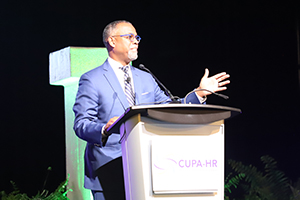
    The data support the positive impact of diversity on metrics like productivity and creativity in the workplace, and Glaude urged higher education to also view diversity as an integral part of its core identity and a reflection of its regional or national reach.

    To see how your institution compares to others when it comes to composition of your workforce and pay equity for employees, see the results of CUPA-HR’s signature surveys.

    3. Are You Ramping Up Retention Efforts in Your Most Vulnerable Departments?

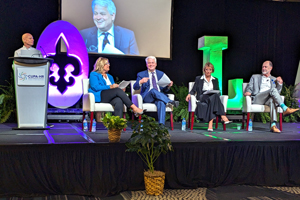
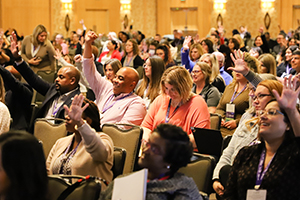
    Retention and recruitment were on everyone’s mind at CUPA-HR’s annual conference. The closing panel discussion brought together leaders in student affairs, campus facilities and IT and provided insights on how HR can partner with these campus constituencies to support a culture of belonging. Here are a few of their recommendations:

    Provide training opportunities.

    John O’Brien, president of EDUCAUSE, which represents IT professionals in higher ed, stressed the importance of career pathways to support employees’ desire to grow in their careers.

    Noting that “supervisors will make or break us,” Lander Medlin, president and CEO of APPA, which serves the needs of facilities professionals, stressed the critical role that supervisor training has on retention and workplace culture in facilities, where the aging of the skilled craft workforce has posed unique recruitment and retention challenges, and all areas.

    Ensure employees feel they belong and are valued.

    No matter their role on campus, employees want their opinions to be heard and valued.

    Kevin Kruger, president of NASPA, the association for student affairs administrators in higher education, noted that millennial and Generation Z employees especially want to feel cared about at work and to believe their opinions matter. Today, as all student affairs professionals find themselves on the front lines of the mental health crisis, they need supervisors who have the skills to meet them where they are and to create a culture of belonging.

    Medlin seconded the importance of feeling heard when it comes to job satisfaction. She would ask supervisors this question: Are you a coach and mentor, or are you a boss?
    Offer job flexibility.

    Some campus jobs don’t easily lend themselves to remote work, but that doesn’t mean institutions can’t build in flexibility, which CUPA-HR found is a key retention factor.

    For example, facilities employees might take advantage of a compressed workweek, with employees having the option to work four 10-hour shifts.

    Since student affairs professionals often work outside of a typical nine-to-five day, there’s room for remote work. In fact, students might prefer to meet with student affairs professionals remotely.

    If year-round remote work isn’t a possibility, seasonal flexibility might be. When students are off campus during holiday and summer break, your staff might be able to work from home.

    See employees as a strategic asset (and pay them accordingly).

    The three areas represented by the panel — IT, facilities and student affairs — are among the most vulnerable to turnover and recruitment challenges on most campuses. How can HR lead the way in creating a culture that positions these employees as strategic assets? The panel offered these suggestions, based on their unique perspectives:

    • O’Brien encouraged satisfaction surveys. Find what’s working well and replicate it.
    • Kruger recommended streamlining job searches, posting salary ranges, and focusing on internal pay equity and livable wages.
    • Medlin asked conference attendees to help us help you. How we treat people matters, and HR leads the way in building that culture of belonging.


    Source link

  • Three Take-Home Messages From the 2022 Annual Conference – CUPA-HR

    Three Take-Home Messages From the 2022 Annual Conference – CUPA-HR

    by CUPA-HR | November 2, 2022

    Thank you to all who attended the CUPA-HR Annual Conference and Expo in person and virtually last week! It was wonderful to welcome new (300+ first-timers!) and familiar faces and to learn about successful projects and initiatives from higher ed peers at institutions across the country. 

    For those who weren’t able to attend, here’s some food for thought from our three outstanding keynote speakers:

    • Stand-Out Leadership — Opening keynote Sara Ross applied her passion for brain science to a key element of stand-out leadership: accountability. Ross explained that employees would rather have leaders who hold themselves accountable for their actions than perfect leaders. One way HR professionals can be stand-out leaders and hold themselves accountable is by using Ross’s SLOW strategy when responding to critical situations on campus. The SLOW strategy helps us respond in a way that is reflective of the positive impact we want to make in our roles as HR leaders.
      • S – Stop. Intercept your emotional reaction. Our brains are designed to process emotions first and logic second. By pausing and checking in with your emotions before responding to a situation, you prevent adding more fuel to the fire.
      •  L – Language. Check your body language. No really, look in the mirror! Pay attention to how you are presenting yourself. People are honed in on your body language, so you must make sure your body language is aligned with your message.
      • O – Oxygenate. Consciously slow your breathing to push back on your fight-or-flight instincts. Research shows that slowing down for as little as two minutes and deepening your breath can decrease the amount of cortisol in your system by up to 20 percent, which is essential when responding to an already stressful situation.
      • W – Wonder. Step outside your perspective and challenge yourself by thinking from someone else’s perspective. This simple practice helps reset our sensitivity and tap into empathy.
    • How to Citizen — Sunday’s keynote speaker, Baratunde Thurston, spoke about how racial injustices during the summer of 2020 motivated him to launch his podcast, “How To Citizen With Baratunde.” He challenged the audience to think about the word “citizen” as a verb rather than a noun. “Citizen” as a noun can carry divisive and exclusive undertones, but as a verb, it gives us something to do to improve our society. According to Thurston, there are four principles that serve as the foundation of how to “citizen.” The four principles are showing up and participating; investing in relationships with yourself and others; understanding power and what we give our power to; and to do all of these things to benefit our collective selves, not just our individual selves. What specific ways can you begin to “citizen” at your institution?
    • Reinvent HR — The take-home message from David Ulrich’s energizing talk about reinventing HR is that HR is not about HR, but about creating value for stakeholders inside and outside the organization (students, family, employers, community, alumni) so that our institutions and communities can succeed. Here are five ways HR can lead in this area: 1) Empower the next generation by making sure people feel better about themselves following their interaction with a leader, 2) Shape the future by establishing a compelling vision/mission, 3) Engage today’s talent by living the Es (empathy, emotion, energy, experience), 4) Make things happen by delivering on promises and creating a positive work environment, and 5) Invest in yourself so you can invest in others.

    Don’t Forget! Conference attendees can watch the sessions they missed or re-watch their favorites on demand. Recordings of our keynotes and livestreamed concurrent sessions are available for viewing in the desktop conference platform and the app.

    Be sure to save the dates for our Spring Conference, April 23-25 in Boston, and our 2023 Annual Conference, taking place October 1-3 in New Orleans! Registration details coming soon.


    Source link

  • Dr. Jennifer T. Edwards: A Texas Professor Focused on Artificial Intelligence, Health, and Education: FREE 11th Annual Texas Social Media Conference

    Dr. Jennifer T. Edwards: A Texas Professor Focused on Artificial Intelligence, Health, and Education: FREE 11th Annual Texas Social Media Conference

    Yes! I am excited! We are getting back into the training and development mode with the Texas Social Media Research Institute (and the Rural Communication Institute)! Are you looking for a FREE conference focused on social media and rural communication? Check out our conference schedule!

    Tuesday, November 2nd

    5pm – Journal Club (Discussing “Reality check: How adolescents use

    TikTok as a digital backchanneling medium to speak back against

    institutional discourses of school(ing).”

    Thursday, November 4th

    8pm – #TXSocialMedia Twitter Chat – Pumpkin Spice Lattes, Sweater

    Weather, and Autumn/Winter Social Media Outreach Strategies

    Monday, November 8th

    6pm – How Public Health Agencies in the United States in the United

    Kingdom Communicate with their Target Audience During the COVID19

    Pandemic (Presented by: Riley Odom, Megan Mackay, Erin McDonald,

    Bayley Chenault, Sydney Brown)

    8pm – How the Texas Department of Health and Safety and Colorado

    Department of Health and Environment are Communicating about

    Health During COVID19 (Presented By: Halie Hix, Shelby Hargrove,

    Magnolia Dunlap, Michaela Bierman, Steven Duncan)

    Tuesday, November 9th

    5pm – Journal Club – Discussing the article: “We (Want To) Believe in

    the Best of Men: A Qualitative Analysis of Reactions to

    #Gillette on Twitter”

    7pm – How the United States Federal Government and the State of Texas

    Communicate with the Public During the Pandemic (Presented by: Kristi

    Cortez, Jessica Thomas, Kennedy Onuam, Julia Nolen)

    Thursday, November 11th

    3pm – Neurodiversity at Work; Assignment Construction Strategies for

    Creative Thinkers in Online Teams (Presented By: Melanie Mason (University

    of Texas at Arlington)

    8pm – #TXSocialMedia Twitter Chat – Veterans Day and How the Military

    Engages the Public Through Social Media

    Thursday, November 11th

    11:59pm – #TXSocialMedia Undergraduate and Graduate Fellowship

    Applications Due

    Sunday, November 14th

    6:30 pm – How the Louisiana Department of Education and the Texas

    Education Agency are Communicating about Health During COVID19

    (Presented By: Katherine Mitchell, Audrey Morton, Jorge Irizarry,

    Audrey Morton, Morgan Maley, Christina Byrd)

    Monday, November 15th

    7pm – #TXSocialMedia LIVE: Let’s Network Session on Zoom –

    Social Media and Privacy – The Good, the Bad, and the Ugly

    Tuesday, November 16th

    1pm – Connecting & Engaging with Students –

    Presented By: Narissra Punyanunt-Carter & Dr. Ryan Martinez (Texas Tech University)

    3pm – Alzheimer’s (and Rural Health) Community Forum for Tarleton

    Staff and Faculty- Register online: alznct.news/ACF1116

    5pm – Journal Club – Discussing “Small Businesses Still Missing the Boat

    on Social Media and Internet Advertising.”

    Thursday, November 18th

    8pm – #TXSocialMedia Twitter Chat – National Rural Health Day –

    Innovative Ways Rural Residents Can Practice Preventative Care

    7pm – #TXSocialMedia LIVE: Let’s Network Session on Zoom – Innovative

    Ways TikTok Can Be Utilized in Education, Business, and Life

    Saturday, November 27th

    All Day – Use the Hashtag #ShopSmall for Small Business Saturday

    Monday, November 28th

    7pm – #TXSocialMedia LIVE: Let’s Network Session on Zoom –

    Social Media and Health – How Does Social Media Impact Our Health?

    Tuesday, November 30th

    12:30pm – Student-based Resourcing: Responding to Increased Needs as

    a Rural Institution (Presented by: Dr. Lora Helvie-Mason

    & Cameron Ellner, Tarleton State University)

    6pm – How the Texas Department of Health and Human Services

    and the State of Louisiana Department of Health are Communicating

    About Health (Presented By: Averill Hubbard, Zachary Mesa, Dylan

    Antonelli, Olivia Teague, Kyon Barnes)

    7pm – #TXSocialMedia LIVE: Let’s Network Session on Zoom –

    Hooked on Social: Social Media the New Kid’s Toy?

    Are They Becoming Hooked TOO EARLY?

    National Day of Giving – Give to the Rural Communication Institute and

    the Texas Social Media Research Institute

    National Mason Jar Day –

    Highlight Innovative Ways You Can Use Mason Jars

    (Use the #TXSocialMedia and #ThinkRuralComm hashtags)

    Save-the-Date & Call for Proposals

    The 12th Annual #TXSocialMedia Conference & the 3rd Annual Rural

    Communication Conference will be held on Friday, April 22, 2022 in Fort

    Worth Texas. Submit a Proposal – http://www.tinyurl.com/SMCCFP/

    Executive Director of the Texas Social Media Research Institute & Rural Communication Institute

    Source link

  • 3 Takeaways From the CUPA-HR Annual Conference – CUPA-HR

    3 Takeaways From the CUPA-HR Annual Conference – CUPA-HR

    by CUPA-HR | October 7, 2021

    Thank you to all who attended the CUPA-HR Annual Conference and Expo in person and virtually this week! It was wonderful to welcome new and familiar faces, celebrate CUPA-HR’s 75th anniversary, and explore outstanding sessions with so many of you.

    For those who weren’t able to attend, here are three conference takeaways you can put to use wherever you are.

    • The Power of Kindness — Opening keynote and host of the Netflix series, “Kindness Diaries,” Leon Logothetis shared some of his experiences travelling the world fueled only by the kindness of strangers. “Kindness,” said Logothetis, “is simply a portal into human connection.” Overwhelmed by all the work to be done to support your institution’s workforce? Logothetis offered this advice: “To change the world, start by changing one life.” Who can you connect with and invest in at your institution? How can you use the power of kindness to make a difference in their life?
    • Birds and Frogs — Tuesday’s keynote speaker, David Epstein, spoke about the data supporting the value of generalists in a world increasingly focused on specialization. During his presentation, he offered an insightful message on how organizations can adapt successfully to change. Epstein used the example of birds and frogs; frogs are down on the ground, seeing all the granular details while the birds soaring above have a broader view of the big picture. Epstein asserted that we need both of these types of people to enhance our campus “ecosystems,” and should actively seek them out.
    • Ubuntu: I am because we are — Shola Richards topped off the conference with his energetic and inspiring message about the African concept of Ubuntu, which means “I am because we are.” Richards encouraged HR pros to use the spirit of Ubuntu in our various units and teams back on campus and to recognize that we will go a lot farther together than we will if we go alone no matter how small we feel (“be the mosquito, tiny but impossible to ignore”) or how difficult the situation (“be the buffalo, and run toward the storm”).

    We can’t wait to hear about the projects, initiatives, conversations and connections sparked by this year’s conference. Be sure to save the dates for our Virtual Spring Conference, April 19-21, and our 2022 Annual Conference, taking place October 22-24 in San Diego! Registration details coming soon.


    Source link

  • U.S. Secretary of State & U.S. Secretary of Education to Address 12th Annual EducationUSA Forum on July 26, 2021

    U.S. Secretary of State & U.S. Secretary of Education to Address 12th Annual EducationUSA Forum on July 26, 2021

    U.S. Secretary of State Antony Blinken to highlight value of International Education at the Department’s 12th Annual EducationUSA Forum on July 26th. U.S. Secretary of Education Dr. Miguel Cardona will also address the Forum. Media Note via the Office of the Spokesperson [July 23, 2021] available at https://bit.ly/3kU7c1J

    Source link

  • Learn more about the Upcoming Forum on Education Abroad Annual Conference and Register #ForumEA21

    Learn more about the Upcoming Forum on Education Abroad Annual Conference and Register #ForumEA21

    Learn more about the upcoming Forum on Education Abroad annual conference and register at https://forumea.org/training-events/annual-conference/general-info-2/ #ForumEA21

    Note: I’ve been invited to attend the Forum on Education Abroad annual conference and will be tweeting and posting to IHEC Blog‘s Facebook page during the conference as well as doing an end of conference summary blog post.


    Source link