Tag: antiDEI

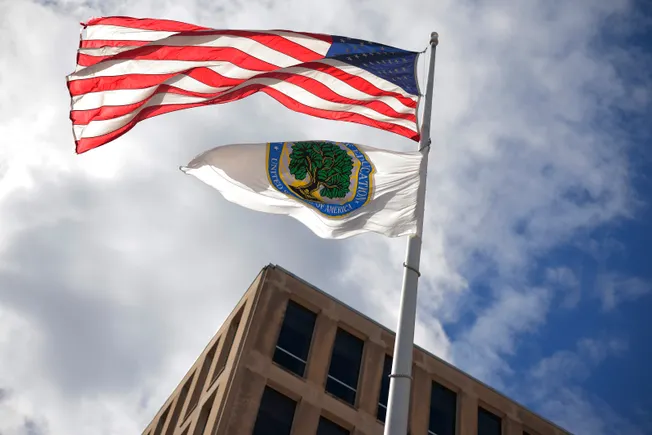
  • Colleges May Lose State Dept. Partnership in Anti-DEI Crusade

    Colleges May Lose State Dept. Partnership in Anti-DEI Crusade

    Drew Angerer/AFP/Getty Images | Lance King, Mario Tama and Justin Sullivan/Getty Images | Liz Albro Photography/iStock/Getty Images

    The State Department’s Diplomacy Lab program says it enables students to work on real policy issues, benefitting both their careers and American foreign policy through their research and perspectives. It’s meant to “broaden the State Department’s research base in response to a proliferation of complex global challenges,” according to the program website.

    But now the Trump administration’s domestic policy fight against diversity, equity and inclusion could upend this partnership between the State Department and universities. The Guardian reported last week that the department is planning to suspend 38 institutions from the program, effective Jan. 1, because they had what the department dubbed a “clear DEI hiring policy.” It’s unclear how the department defines that phrase or how it determined these institutions have such policies.

    On Tuesday, The Guardian—citing what it called an unfinalized “internal memo and spreadsheet”—published the list of institutions that State Department plans to kick out, keep in or add to the program. A State Department spokesperson didn’t confirm or deny the list to Inside Higher Ed or provide an interview, but sent an email reiterating the administration’s anti-DEI stance.

    “The Trump Administration is very clear about its stance on DEI,” the unnamed spokesperson wrote. “The State Department is reviewing all programs to ensure that they are in line with the President’s agenda.”

    The institutions to be ousted, per The Guardian’s list, range from selective institutions such as Northeastern, Stanford and Yale universities to relatively small institutions including Colorado College, Gettysburg College and Monmouth University. The 10 universities to be added include Gallaudet University, which specializes in educating deaf and hard-of-hearing students, Liberty University, a conservative Christian institution, and the St. Louis and Kansas City campuses of the University of Missouri system. In all, the list shows plans for 76 institutions.

    The shakeup appears to be yet another consequence of the Trump administration’s now nearly year-long campaign to pressure universities to end alleged affirmative action programs or policies. The day after his inauguration, Trump signed an executive order mandating an end to “illegal DEI” and calling for restoring “merit-based opportunity.” But Trump’s order didn’t define DEI.

    Through cutting off federal research funding and other blunt means, the administration has tried to push universities to end alleged DEI practices. A few have settled with the administration to restore funding; Columbia University agreed this summer to pay a $221 million fine and to not, among other things, “promote unlawful DEI goals” or “promote unlawful efforts to achieve race-based outcomes, quotas, diversity targets, or similar efforts.” Columbia is among the institutions that the State Department intends to keep in the program, according to The Guardian’s list.

    Inside Higher Ed reached out Tuesday to the institutions listed to be ousted. Those who responded suggested the program didn’t provide much, or any, funding, and said they didn’t engage in any illegal hiring practices.

    The University of Southern California said in a statement that it “appreciated travel funding provided by the Diplomacy Lab program to two USC students in 2017 and looks forward to future opportunities to collaborate.” The university said that was the last time it received funding, and said it “complies with all applicable federal nondiscrimination laws and does not engage in any unlawful DEI hiring practices.”

    Oakland University political science department chair and Diplomacy Lab campus coordinator Peter F. Trumbore said through a spokesperson that he hasn’t received notice of a change in status as a partner institution. He also said his university received no funding from the State Department for the program, though “our students have had invaluable experiences conducting research on behalf of State, and working with State Department stakeholders in producing and presenting their work.”

    Georgia Institute of Technology spokesperson Blair Meeks said his university also never received funding from the State Department for the program. He also said “Georgia Tech does not discriminate in any of its functions including admissions, educational, and employment programs. We have taken extensive actions over time to eliminate any programs, positions, or activities that could be perceived as DEI in nature.”

    Meeks further wrote that the State Department “communicated that cuts or halts to the program were associated with the federal government shutdown” that ended earlier this month. Sarah Voigt, a spokesperson for St. Catherine University, said in an email that the State Department told her university back on Jan. 31 that it was pausing Diplomacy Lab activities, so the institution didn’t apply for research opportunities this semester. Then, last week, the State Department told the university that “‘due to the delays caused by the shutdown,’ they were again pausing Diplomacy Lab activities.”

    “Our understanding is that the program was shut down due to a lack of government funding,” she wrote.

    “The University had been participating as a Diplomacy Lab Partner Institution since early 2020, and we appreciated the opportunities to offer our students and faculty members very timely research topics through this program,” she added. “If the Department of State were to resume Diplomacy Lab activities, we would review what opportunities were available.”

    Source link

  • Six States Lead Nation in Anti-DEI Legislative Push, New Report Finds

    Six States Lead Nation in Anti-DEI Legislative Push, New Report Finds

    A new policy brief from the University of Southern California reveals that six states—Texas, Missouri, Tennessee, Iowa, Oklahoma, and Indiana—have emerged as national leaders in efforts to dismantle diversity, equity, and inclusion (DEI) programs in higher education, with significant consequences for students and faculty of color.

    The report, “DEI Under Fire: Policy, Politics, and the Future of Campus Diversity,” released by USC’s Black Critical Policy Collective, analyzed legislative trends across all 50 states between August 2024 and July 2025. Researchers developed a composite scoring system based on bills introduced and laws passed, identifying states with the most aggressive anti-DEI activity.

    Texas topped the rankings with a composite score of 16, having introduced 10 bills and passed three laws restricting DEI efforts. Missouri followed with 15 bills introduced, though none passed into law. Tennessee, Iowa, Oklahoma, and Indiana rounded out the top six states, all scoring between 9 and 14 on the composite scale.

    As of July 2025, 14 states have passed a total of 20 anti-DEI laws, up from 12 states with 14 laws when data collection began in December 2024. These laws typically target four main areas: elimination of DEI offices and staff, bans on mandatory diversity training, prohibitions on diversity statements in hiring, and restrictions on identity-based preferences in admissions and employment.

    “Diversity, equity, and inclusion are not peripheral ideals. They are institutional functions—woven into the operational, cultural, and legal architecture of colleges and universities,” wrote Dr. Kendrick B. Davis, series editor for the Critical Policy Collective, in the report’s introduction. “When those functions are restricted or removed, the effects are material.”

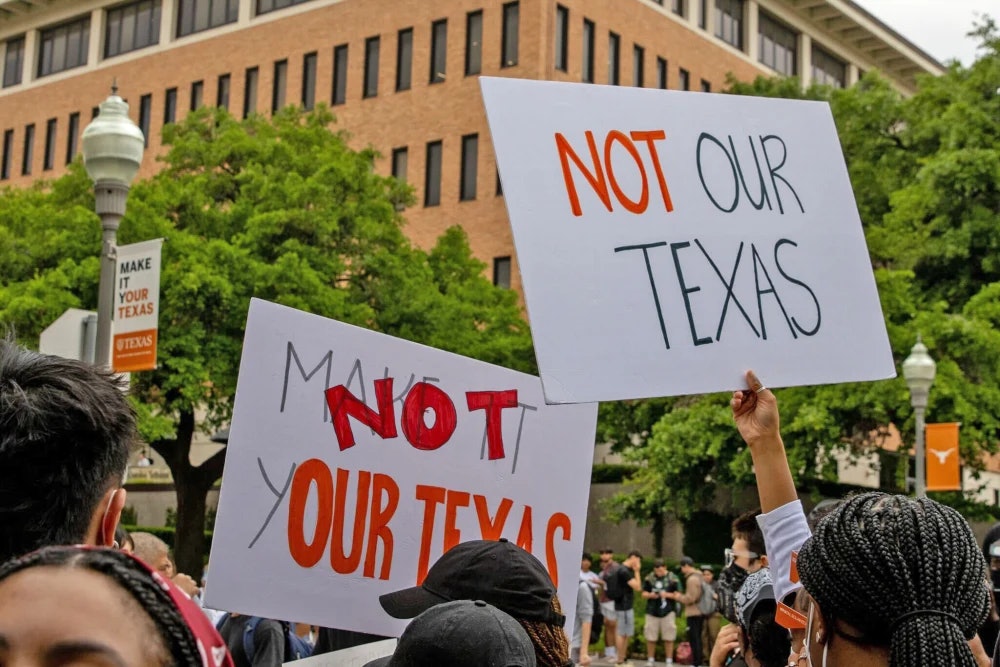
    The institutional responses have been swift and substantial. At the University of Texas System, at least 49 DEI-related employees were terminated following the passage of three bills in 2023. The system shut down its Multicultural Engagement Center and Gender & Sexuality Center at UT-Austin and eliminated funding for student identity-based organizations and scholarships for undocumented students.

    In Iowa, following Senate File 2435’s passage in May 2024, the University of Iowa eliminated its Office of Inclusive Education and Strategic Initiatives and laid off 11 DEI-related staff members. The university also removed scholarships specifically aimed at racially minoritized students, redirecting funds to support low-income students more broadly. By October 2024, Iowa’s state universities had reallocated more than $2.1 million from DEI programs.

    Indiana University announced one of the most sweeping academic restructurings in its history, planning to suspend, eliminate, or consolidate at least 43 undergraduate programs, including African American and African Diaspora Studies, Gender Studies, and multiple language programs. The changes follow passage of Senate Bills 202 and 289, which banned DEI offices and prohibited diversity statements in hiring.

    Preliminary enrollment data following the 2023 Supreme Court decision in Students for Fair Admissions v. Harvard—which effectively ended race-conscious admissions—shows declining representation of students of color at several elite institutions. At Harvard Law School, Black student enrollment in 2024 dropped to 19 first-year students, down from 43 the previous year. MIT reported a 1% decrease in the proportion of Hispanic and Black students, while UNC-Chapel Hill experienced a 5% decrease in Black, Indigenous, and people of color students overall.

    “The ongoing attacks on DEI, manifested in policy restrictions forcing institutions to comply with race-evasive policies, have significant implications for racial and ethnic diversity, student access and success, and workforce development,” the report states.

    Research shows faculty diversity benefits all students by fostering critical thinking and better preparing graduates for diverse workforces. However, DEI rollbacks make it significantly more difficult to recruit faculty of color, as institutions are now restricted from considering race in hiring decisions—a limitation reinforced by the Harvard ruling.

    The report’s authors—Mya Haynes, Glenda Palacios Quejada, Shawntae Mitchum, and Alexia Oduro—note that even private institutions like Vanderbilt University have implemented similar changes despite not being subject to state laws, “reflecting broader anxieties within the private sector about maintaining—or being seen to maintain—equity-oriented infrastructure under political scrutiny.”

    Student activism has emerged in response to the restrictions. Iowa State University students organized rallies and petitions opposing the elimination of the DEI office and restructuring of the LGBTQIA+ Center. In Alabama, university professors and students filed a lawsuit challenging the state’s DEI ban, arguing it violates First Amendment rights.

    “What is one of the things that’s sometimes difficult to see is the level of coordination between states,” Davis said in an interview. “Texas, Oklahoma, Iowa, Indiana, Tennessee, and Missouri—they’re not just a random collection. They’re a coordinated collection of states that have made some formal, some informal decisions, but what is clear through the legislation is that they share a common goal in restricting access to anything that is culturally relevant or sensitive to racially and ethnically minoritized groups in this country.” 

    Davis noted that while federal actions have dominated recent headlines, states initiated the anti-DEI movement shortly after 2020.

    “We have to remember the states started this anti-DEI, anti-critical race theory movement shortly after 2020,” he explained. “This has been a long time in the making, and I think the current federal efforts are just complementary to what states had already been doing.” The report aims to help policymakers and practitioners “get through some of the noise” and track the escalating legislative activity across multiple states, Davis said.

    The report recommends that institutions embed DEI principles within broader student success initiatives, leverage private funding where public funding is restricted, and strengthen alliances among students, faculty, staff, and community organizations to advocate for institutional accountability.

    Missouri represents a notable exception in the analysis. Despite introducing 14 bills targeting DEI—more than any state except Texas—none have passed into law. The report attributes this to intense legislative gridlock, ideological conflicts within the Republican majority, and strong opposition from educational institutions and community organizations. However, the 2025 legislative session has seen renewed efforts to advance anti-DEI policies.

    The researchers emphasize that the policy shifts carry particular consequences for Black, Latino, and Indigenous communities, who are losing access to culturally affirming resources, mentorship opportunities, and financial aid programs specifically designed to address historical inequities in higher education access.

    “If access is conditional and inclusion retractable, higher education cannot claim to serve the public,” Davis wrote.

    The report represents the third in a series examining how equity is being withdrawn across the education pipeline.


    Source link

  • Federal District Judge Rules Against Trump’s Anti-DEI Orders

    Federal District Judge Rules Against Trump’s Anti-DEI Orders

    One of the Trump administration’s attempts to terminate diversity, equity and inclusion initiatives on college campuses and in K–12 classrooms has been struck down by a federal district court judge who previously put the guidance on hold.

    Judge Stephanie Gallagher declared in the Thursday ruling that the Department of Education broke the law when it tried to withhold grant funding from institutions that practiced DEI based on one of the president’s executive orders and a related guidance letter

    In her opinion, Gallagher focused less on the legality of the attempt to ban DEI itself, but rather the process through which the president and secretary of education tried to do so.

    “This court takes no view as to whether the policies at issue in this case are good or bad, prudent or foolish, fair or unfair. But, at this stage too, it must closely scrutinize whether the government went about creating and implementing them in the manner the law requires. Here, it did not,” the judge wrote. “By leapfrogging important procedural requirements, the government has unwittingly run headfirst into serious constitutional problems.”

    That said, she did explain the ways Trump’s policy violated the Constitution, saying, “The government cannot proclaim that it ‘will no longer tolerate’ speech it dislikes because of its ‘motivating ideology’—that is a ‘blatant’ and ‘egregious’ violation of the First Amendment.”

    Gallagher’s decision followed a motion for summary judgment that was filed by the plaintiffs, the American Federation of Teachers and the American Sociological Association, after they won a preliminary injunction that blocked parts of Trump’s anti-DEI policy since April. (Gallagher was appointed by Trump during his first presidency in 2018.)

    Since the Education Department’s anti-DEI guidance was enjoined, the Trump administration has made other attempts to block the same academic practices. Most recently, the Department of Justice published a nine-page memo that stated that DEI is unlawful and discriminatory.

    Still, AFT president Randi Weingarten viewed the ruling as a “huge win” against Trump’s “draconian attacks on the essence of public education.”

    “This decision rightly strikes down the government’s attempt to dictate curriculum, and, in so doing, upholds the purpose and promise inherent in our public schools,” Weingarten said in a news release.

    Source link

  • Education Department’s anti-DEI guidance struck down in federal court

    Education Department’s anti-DEI guidance struck down in federal court

    A federal judge on Thursday struck down the U.S. Department of Education’s guidance that threatened to strip colleges and K-12 schools of their federal funding over diversity, equity and inclusion practices it deemed unlawful. 

    U.S. District Judge Stephanie Gallagher’s final judgment in the case comes after she and another federal judge temporarily blocked the guidance while litigation proceeded. 

    Her ruling vacates the Education Department’s Feb. 14 guidance. It also strikes down a Trump administration directive that ordered K-12 school districts to certify they’re not using DEI practices or risk losing federal funding. However, the Trump administration had already withdrawn the requirement due to a prior court ruling. 

    The Education Department, Gallagher wrote Thursday, didn’t take the proper steps to issue the new guidance. She also ruled that the guidance violated constitutional rights by placing viewpoint-based restrictions on classroom speech and using vague language that didn’t make clear what kind of DEI initiatives were prohibited. 

    The ruling deals a blow to one of the Trump administration’s many efforts to stamp out DEI practices in colleges and elsewhere. 

    The Feb. 14 guidance letter immediately sparked outcry from educator groups, who argued that it would limit what they could teach in the classroom, including instruction on history or systemic racism. They also argued it would prohibit campus resources, such as college cultural centers. 

    Shortly after its release, the guidance and related actions from the Education Department sparked at least three separate lawsuits. Gallagher’s ruling is in response to the complaint brought by the American Federation of Teachers, the union’s Maryland affiliate, the American Sociological Association and an Oregon school district. 

    Those groups hailed the ruling Thursday. 

    “Today’s ruling makes it clear that, regardless of President Trump’s wishes and endless attacks, our public education system will continue to meet the diverse needs of every student — from teaching true history to providing critical resources,” AFT-Maryland President Kenya Campbell said in a statement

    The required steps for new policies

    The sweeping Feb. 14 guidance interpreted the U.S. Supreme Court case striking down race-conscious admissions to extend to every aspect of education, arguing that colleges and K-12 schools were prohibited from considering race in any of their policies. The letter said that ban extended to scholarships, housing and graduation ceremonies. 

    The letter also took aim at classroom instruction and DEI practices. 

    “Educational institutions have toxically indoctrinated students with the false premise that the United States is built upon ‘systemic and structural racism’ and advanced discriminatory policies and practices,Craig Trainor, acting assistant secretary for civil rights, wrote in the letter. “Proponents of these discriminatory practices have attempted to further justify them — particularly during the last four years — under the banner of ‘diversity, equity, and inclusion.’”

    The Trump administration has maintained that the Feb. 14 guidance merely restates colleges and K-12 schools’ existing obligations under Title VI, which bars federally funded institutions from discriminating based on race, color or national origin. However, Gallagher pushed back on that argument, writing that the guidance created new policies for colleges and schools to follow. 

    Title VI — along with the landmark court decision striking down race-conscious admissions — have “never been interpreted to preclude teaching about concepts relating to race,” Gallagher wrote. 

    The Trump administration could have issued guidance to note that it would prioritize Title VI enforcement to “discrimination against all groups, even those in the majority,” Gallagher added. “But it went much farther than that by expanding the definitions of ‘stereotyping,’ ‘stigmatizing,’ and ‘discrimination’ to reach entirely new categories of conduct.” 

    Moreover, the Education Department cited the Feb. 14 letter the following month when it launched investigations into more than 50 colleges over allegations that their programs or scholarships have race-based restrictions. Most of the institutions were targeted because of their relationship with The PhD Project, a nonprofit that for years provided support for underrepresented groups earning doctoral degrees in business but recently adopted a broader mission.

    Source link

  • Federal judge halts Education Department’s anti-DEI measures

    Federal judge halts Education Department’s anti-DEI measures

    This audio is auto-generated. Please let us know if you have feedback.

    A federal judge blocked two U.S. Department of Education actions attempting to restrict diversity, equity and inclusion in schools on Thursday. 

    The decision undoes a February “Dear Colleague” letter that threatened to withhold federal funding to schools that didn’t eliminate race-based programming, as well as a subsequent letter requiring school districts to certify that they do not incorporate DEI in their schools. 

    In her 76-page opinion, Judge Stephanie Gallagher of U.S. District Court for Maryland ruled that the administration violated decision-making procedures under the Administrative Procedure Act — a move that violated the constitutional rights of plaintiffs, who are led by the American Federation of Teachers. 

    Gallagher, a Trump-appointed judge, took no stance, however, on the content of the Education Department’s directives themselves. 

    “Still here, this Court takes no view as to whether the policies at issue in this case are good or bad, prudent or foolish, fair or unfair,” she said. “But, at this stage too, it must closely scrutinize whether the government went about creating and implementing them in the manner the law requires. Here, it did not.” 

    The administration’s anti-DEI measures were already on pause as a result of this court case and at least two other separate but similar federal court cases pending in Washington, D.C., and New Hampshire. Those cases also challenged the Education Department’s anti-DEI policy.

    As a result of previous court action pausing the measures, the department had already withdrawn its certification requirement. 

    However, in an email to chief state school officers in April retracting the certification requirement, the department said, “Please be advised that the Court Order does not preclude the U.S. Department of Education from initiating any enforcement actions that it may otherwise pursue under Title VI of the Civil Rights Act and its implementing regulations.” 

    Title VI bars discrimination based on race, color or national origin in federally funded programs — and has in the past been used especially to protect historically marginalized students from such bias. However, since President Donald Trump reentered the White House, the Education Department has invoked the civil rights statute to protect Asian and White students. The Trump administration’s anti-DEI efforts are a core part of that interpretation. 

    The Education Department echoed its earlier sentiments in a reaction to Thursday’s ruling. 

    “While the Department is disappointed in the judge’s ruling, judicial action enjoining or setting aside this guidance has not stopped our ability to enforce Title VI protections for students at an unprecedented level,” said the department in an email to K-12 Dive on Friday. “The Department remains committed to its responsibility to uphold students’ anti-discrimination protections under the law.”

    However, some public school educators and advocates say the measures would harm decades of equity work meant to level the playing field for Black and brown students. Moreover, the directives would create an environment of fear that impacts other underserved students such as students with disabilities, they say

     “Our district works hard to ensure that every student feels included through thoughtful curriculum and programs,” said Eugene School District 4J school board member Jenny Jonak in a statement on Thursday. The Oregon district was a plaintiff in the lawsuit that led to Thursday’s court decision. 

    “Teachers and schools must be able to provide inclusive, comprehensive education without fear of losing critical federal funding. We should never be forced to choose between supporting our students and securing the resources they need and deserve,” Jonak said.

    The Trump administration, in its court response to the lawsuit, argued that the certification requirement “fails to rise to the level of final agency action,” which would have required the formal rulemaking procedures that the department didn’t undergo. 

    Source link

  • Judge Keeps Alabama’s Anti-DEI Law in Place for Now

    Judge Keeps Alabama’s Anti-DEI Law in Place for Now

    Just_Super/iStock/Getty Images Plus

    Ruling in part that professors lack First Amendment protections in the classroom, a federal judge denied an effort from college faculty and students in Alabama to block a 2024 state law that banned diversity, equity and inclusion programs as well as the teaching of so-called divisive concepts.

    The plaintiffs, who include students from the University of Alabama at Birmingham and professors at the University of Alabama in Tuscaloosa, argued in court filings and at hearings that the legislation known as Senate Bill 129 amounted to state-sponsored censorship and infringed on their rights under the First and 14th Amendments. The professors alleged that they had to cancel class projects or events and faced other questions about their classroom conduct from administrators because of the law. They’ve also changed course material as a result.

    R. David Proctor, chief judge in the U.S. District Court for the Northern District of Alabama, found that while the professors and the Alabama NAACP had standing to sue, they weren’t likely to succeed at this time. For instance, he ruled that the professors aren’t protected by the First Amendment because their “in-class instruction constitutes government speech.”

    Furthermore, Proctor wrote, based on other rulings in the U.S. Court of Appeals for the 11th Circuit, “when there is a dispute about what is taught in the classroom, the university’s interests outweigh those of a professor, and the professor’s interest in academic freedom and free speech do not displace the university’s interest inside the classroom.”

    The plaintiffs said Proctor’s ruling was disappointing.

    “I feel incredibly dismayed that SB 129 is allowed to continue going into the new school year,” said Sydney Testman, one of the students who sued, in a statement. “As a senior at University of Alabama at Birmingham, I’ve seen firsthand how SB 129 has transformed my college campus for the worst. Voices have been silenced, opportunities have been revoked, and meaningful community engagement has faded. This decision undermines the need for students to properly feel a sense of belonging and inclusion on campus.”

    Source link

  • Federal judge declines to block Alabama anti-DEI law

    Federal judge declines to block Alabama anti-DEI law

    This audio is auto-generated. Please let us know if you have feedback.

    Dive Brief: 

    • A federal judge declined to temporarily block the enforcement of a state law that bans public colleges from funding diversity, equity and inclusion programs and from compelling students to affirm certain “divisive concepts.”
    • Earlier this year, a group of students and faculty members sued the state’s governor and the University of Alabama’s trustees over the new law, arguing that it violates their free speech rights by placing viewpoint-based restrictions on what can be taught in the classroom. They also contended that the law undermines due process by being so ambiguous that instructors and students don’t know what is prohibited. 
    • U.S. District Judge R. David Proctor — a George W. Bush appointee — pushed back on those arguments in his 146-page ruling Wednesday. Proctor denied their request for a preliminary injunction, writing that public colleges could reasonably control curricular content and rejecting assertions that the law’s language is impermissibly vague. 

    Dive Insight: 

    Last year, Alabama Gov. Kay Ivey signed a law known as SB 129, which bans public colleges and K-12 schools from having DEI initiatives. It defined those efforts as programs, training or other events where attendance is based on “race, sex, gender identity, ethnicity, national origin, or sexual orientation.” 

    PEN America noted last year that while this language doesn’t outright ban all DEI initiatives, the attendance restrictions could bar public colleges from activities like creating programming specifically for international students or recognizing a Black student union. 

    The law also barred public colleges from requiring students to affirm or adhere to a list of so-called divisive concepts. 

    Under the law, one of the concepts is that individuals “are inherently responsible for actions committed in the past by other members of the same race, color, religion, sex, ethnicity, or national origin.” Another is that people are “inherently racist, sexist, or oppressive, whether consciously or subconsciously” based on their personal characteristics. 

    The law also contains carve-outs. It says that the language does not bar public colleges from teaching or discussing divisive concepts “in an objective manner and without endorsement as part of a larger course of academic instruction.”

    According to court documents, faculty members who sued over the measure said that while they do not require students to affirm or adhere to these concepts, they worry that their instruction on race and gender could be viewed as running afoul of the law — even with the carve-outs for teaching. 

    “I do not know what it means to discuss a divisive concept ‘in an objective manner’ and ‘without endorsement,’ plaintiff Cassandra Simon, a social work professor at University of Alabama, said in court documents. “There is robust empirical evidence of implicit bias, white privilege, and the absence of a colorblind meritocracy. I am unable to determine whether continuing to present these scholarly findings, and assigning readings on these subjects, would violate SB 129.”

    One of Simon’s class assignments — that students select a social issue of their choice and advocate for it — was abruptly canceled due to the law, according to court documents. 

    Her students chose to hold a sit-in to protest SB 129 for their project. The day of the sit-in, however, the social work dean told Simon to cancel the assignment in part over concerns that it would compel students to agree with one of the banned divisive concepts. 

    Another plaintiff raised concerns over teaching about topics such as structural racism, employment discrimination and health disparities by race. And another voiced concerns that the law potentially limits his ability to teach about eugenics. 

    However, Proctor wrote in his ruling that the law doesn’t prohibit the teaching of divisive concepts and pointed to the carve-outs provided. 

    The judge also cited an appeals court case that found a public college could “reasonably control the content of its curriculum, particularly that content imparted during class time.”

    “There is no legal basis for concluding that the First Amendment protects a university professor’s academic freedom in the way the Professors suggest,” Proctor wrote. 

    Referring to the canceled sit-in, Proctor wrote that it was “a reasonable exercise of control over course curriculum to ensure that students would not feel coerced into advocating for a belief with which they disagreed.”

    Proctor also dismissed Ivey as a defendant in the case, ruling that plaintiffs’ alleged injuries aren’t traceable to her. 

    The plaintiffs in the case slammed the decision on Thursday. 

    “SB129 created a culture of fear that has severely hindered the ability of professors to provide comprehensive instruction in our areas of expertise,” Dana Patton, a University of Alabama professor and plaintiff in the case, said in a statement. “The law infringes on our academic freedom and our duty to students to provide a truthful and comprehensive education.”

    Alabama state Sen. Will Barfoot, the sponsor of the legislation, didn’t immediately respond to a request for comment.

    Source link

  • Iowa board approves course policy change after stripping anti-DEI references

    Iowa board approves course policy change after stripping anti-DEI references

    This audio is auto-generated. Please let us know if you have feedback.

    The Iowa Board of Regents on Tuesday approved a policy change that requires public university faculty to “present coursework in a way that reflects the range of scholarly views and ongoing debate in the field.” 

    Under the change, effective immediately, the board will also audit the three universities it oversees — the University of Iowa, Iowa State University and the University of Northern Iowa — at least every two years for compliance with the new directive.

    The policy change significantly revises the original proposal’s language, which included references to diversity, equity and inclusion and critical race theory. Tuesday’s 7-1 vote came after public pushback over that proposal and two postponements by the board to approve the policy.

    The initial version of the proposal would have barred Iowa university academic programs from requiring courses containing “substantial content that conveys DEI or CRT.” As examples of DEI, it lists systemic oppression, anti-racism, social justice, and unconscious or implicit bias. Universities would have been able to apply to regents for exemptions.

    The wide-reaching language prompted criticism from academic groups, students and those who argued it would undermine free speech.

    In one example, five state educator groups launched a joint petition urging “the Iowa Board of Regents to firmly reject efforts to restrict what students can learn.” The petition, which does not address the updated policy, noted that the original language would have affected at least a dozen academic programs. 

    “Students in certain fields — such as social work and nursing — would have been at a special disadvantage, since those professions’ standards require graduates to show competency in various topics banned under the policy,” it said.

    Board President Sherry Bates said the regents delayed the vote at their July meeting so they could review the policy. The board then set a special August meeting for the vote.

    In the intervening weeks, the board released a new version of the proposal. The updated language — which ultimately passed Tuesday — states that “faculty may teach controversial subjects” when relevant to course content, but they must present such topics from multiple and opposing viewpoints.

    “University teachers shall be entitled to academic freedom in the classroom in discussing the teachers’ course subject, but shall not introduce into the teaching controversial matters that have no relation to the subject,” the updated version says.

    It also states that students’ grades should reflect their “mastery of course content and skills,” not their “agreement or disagreement with particular viewpoints expressed during instruction or in their work.”

    ‘What exactly is controversial, and who will decide?’

    The new policy addresses how topics are taught rather than what is taught, Regent Robert Cramer argued.

    “Personally, I don’t want any of the DEI/CRT woke left stuff being taught in our classes,” he said. “But this policy is not my personal beliefs.

    But Regent Nancy Dunkel, the sole member of the board to vote against the policy, raised concern about the ambiguity of the policy’s language.

    “What exactly is controversial, and who will decide? Can anyone declare something as controversial?” she asked. She also noted that the policy change in and of itself has become controversial among Iowa constituents. 

    Dunkel further raised questions about the requirement for faculty to present a range of viewpoints.

    “If a professor has to present both sides to an issue, does that mean a marketing professor must also include anti-capitalist arguments to students?” she asked. “Do anti-evolution arguments have to be presented in biology classes? How do we present both sides of the Holocaust?”

    The board voted immediately after Dunkel’s comments.

    ‘I will not be passive’ 

    The regents also made clear to Iowa’s three universities — the leaders of which joined Tuesday’s meeting — that they have been put on notice regarding DEI efforts.

    Two of Iowa’s public universities have become a talking point among conservative media outlets. In recent weeks, conservative outlets and anti-DEI watchdog groups published a series of videos — the most recent of which was released Sunday — that appear to show two officials at the University of Iowa and one at Iowa State discussing how they could work around state DEI restrictions.

    Source link

  • Iowa board reworks anti-DEI course policy proposal following pushback

    Iowa board reworks anti-DEI course policy proposal following pushback

    This audio is auto-generated. Please let us know if you have feedback.

    Dive Brief:

    • The Iowa Board of Regents has removed references to “critical race theory” and “diversity, equity and inclusion” from a controversial proposal to limit what courses the state’s three public universities can require. The regents plan to vote on the issue during a special meeting on Tuesday.
    • Under the original proposal, academic programs would not have been able to require students to take classes containing “substantial content that conveys DEI or CRT.” Universities that wanted an exemption would have had to gain board approval every other year.
    • Following public pushback, the board reworked the proposal to state that “faculty may teach controversial subjects” when relevant to course content, but they are expected to “present coursework in a way that reflects the range of scholarly views and ongoing debate in the field.” The revision also leaves the board the option to “periodically” review the universities’ compliance.

    Dive Insight:

    The Iowa Board of Regents — which oversees the University of Iowa, Iowa State University and the University of Northern Iowa — has so far delayed the vote on the proposal twice, last postponing the decision at its July 30 meeting. 

    The original language included extensive examples of DEI topics that would have been restricted, including anti-racism, “transgender ideology,” systemic oppression, and unconscious or implicit bias.

    “One of the primary reasons we are not taking up the DEI/CRT policy is that the discussions on how to best implement the ideas that were brought forward are still ongoing,” Board President Sherry Bates said in prepared remarks, citing responses from the community. “It has become clear that we would be better served by something more comprehensive.”

    Much of the local response has been negative.

    Five Iowa educator advocacy groups joined together to form the Iowa Higher Education Coalition to oppose the policy and launched a petition “to urge the Iowa Board of Regents to firmly reject efforts to restrict what students can learn.” The petition, which does not address the updated policy, had garnered 470 signatures as of Friday afternoon.

    The faculty union at the University of Northern Iowa, one of the members of the coalition, voiced opposition at the board’s June meeting, when it was first scheduled to vote on the proposal.

    “There is no middle position, no position of slight appeasement,” United Faculty President Christopher Martin told board members at the meeting. “Either you stand for free expression at Iowa’s universities or you don’t. And God help Iowa, its public universities and all the citizens of this state if you don’t.”

    Martin said that the proposal came from two out-of-state think tanks’  generic recommendations, and he alleged that it runs contrary to state law.

    Since that meeting, the board has reworked the language significantly.

    “University teachers shall be entitled to academic freedom in the classroom in discussing the teachers’ course subject, but shall not introduce into the teaching controversial matters that have no relation to the subject,” the updated version said.

    Regardless of how the board votes next week, the Iowa Legislature may step in.

    State Rep. Taylor Collins, chair of the Legislature’s newly created Higher Education Committee and an avid opponent of DEI efforts, voiced support for the board’s original policy proposal last month.

    “If this policy is not adopted, the House Committee on Higher Education stands ready to act,” he said on social media after the board delayed a vote on the policy for the second time.

    Iowa Gov. Kim Reynolds signed a bill in May 2024 that prohibits public universities from maintaining or funding DEI offices or from officially weighing in on a wide array of issues. The list includes allyship, cultural appropriation, systemic oppression, social justice, racial privilege or “any related formulation” of the listed topics. 

    The law prompted PEN America, a free expression advocacy group, to include Iowa on its yearly list of states that enacted “educational gag orders.”

    The board of regents has also moved to limit diversity work on campus. In 2023, it ordered the universities under its purview to cut all campuswide DEI efforts not required to comply with the law or accreditation standards.

    Source link

  • King Misrepresented in Anti-DEI Congressional Hearing

    King Misrepresented in Anti-DEI Congressional Hearing

    In January 2024, I wrote a Forbes article titled, “How Martin Luther King Would Respond to Today’s Attacks on DEI.” I declared therein that King would be outraged and disgusted by the catastrophic assault on values for which he fought, was arrested 29 times and ultimately died. Were he still alive today, I know for sure that King would call on leaders to demonstrate more courage and integrity as DEI is being recklessly torn down in our nation’s K-12 schools, higher education institutions, government agencies and businesses. He would insist on brave truth telling, nonviolent resistance, larger and more audacious multiracial coalitions, and strategically pulling every possible lever in defense of racial justice. King would not have been okay with colleges and universities closing culture centers and multicultural affairs offices, scrubbing their websites of language pertaining to antiracism and equity, and firing innocent DEI practitioners who broke no laws and did nothing wrong.

    Regarding his dream, I insisted the following in the aforementioned Forbes article about King: “Paradoxically, many people who know little about the greatest American civil rights leader of all time at least know he famously spoke these words: ‘I have a dream that my four little children will one day live in a nation where they will not be judged by the color of their skin, but by the content of their character.’ The part about not judging people by skin color gets weaponized to justify colorblindness.”

    Unsurprisingly, this very thing happened this week in a U.S. House of Representatives hearing titled “Restoring Excellence: The Case Against DEI.” I was the lone expert witness for the Democrats, a role I had played twice before on Capitol Hill.

    Robert Onder, a Republican congressman representing Missouri, prefaced a question to me by reciting the go-to line from King’s speech. “Let me read to you a quote you may have heard of, maybe you haven’t, it goes something like this …”

    Two things ran through my mind at the time. First was “Oh, here we go with the tired, predictable misrepresentation of Martin Luther King’s stance on colorblindness.” Secondly, I thought, “Of course I have heard these words—I have been a Black man in America for nearly 50 years; I am a proud graduate of a historically Black university; I spent a decade as a member of the Africana studies faculty at the University of Pennsylvania; I have delivered numerous Martin Luther King Day keynote addresses for universities and companies across the country (including this one in 2016 at Duke University in which I critiqued the twisting of King’s Dream speech); and I have read dozens of MLK sermons, speeches and letters, including but not limited to those published in A Testament of Hope: The Essential Writings and Speeches—how absurd to even suggest that I may be hearing these words for the first time.” It was the most disgusting moment of the hearing for me, yet I somehow maintained my composure.

    I have said it many times before, but it is worth repeating during these dangerous times in higher education and our democracy: King was not a proponent of colorblindness. He hated racism against African Americans and other people of color. He called white supremacy by its name. He called Black people by their names as he fearlessly demanded equity, opportunity and justice for them. The remedies he advocated were extraordinarily race-forward and color-conscious. Any policy or practice in higher education or elsewhere that insists on colorblindness is a misrepresentation of King’s stance.

    There is at least one other noteworthy thing about the annoying evocation of King in the congressional hearing: The civil rights icon said judged “by the content of their character,” but Onder and other Republicans kept insisting on narrowly judging applicants by standardized college entrance exams that tell admission professionals more about those prospective students’ ZIP codes, socioeconomic statuses, the ability of their families to pay for expensive test prep courses and tutors, and the abundance of resources in the K-12 schools they attended.

    Ironically, DEI opponents often fail to recognize and appreciate the incredibly valuable proxies for character, leadership, creativity and other strong indicators of undeniable potential for greatness in holistic admissions practices.

    Those of us who love King and truly value the race-consciousness of the unrealized American dream for which he fought, was repeatedly jailed and died must continue to help our family members, neighbors, colleagues, presidents and governing board members, students, and elected officials understand why wholesale, decontextualized advocacy for colorblindness is wrong, unfair and bad for our democracy.

    If we really want to honor King, especially during this time, more of us would demonstrate brave resistance to the enormously consequential dismantling of DEI in educational institutions and our broader society. The civil rights hero is widely known for peace, love and nonviolence—what Cornel West calls the “Santa Clausification” of King.

    But to be sure, King would have hated the weaponization of government to dismantle DEI broadly and racial equity efforts specifically right now. He would have put up the biggest fight and demanded that leaders, including those in higher education, stop cowardly surrendering to white supremacy and hate. More of us should do that, too.

    Shaun Harper is University Professor and Provost Professor of education, business and public policy at the University of Southern California, where he holds the Clifford and Betty Allen Chair in Urban Leadership.

    Source link