Tag: antitrans

  • Texas Tech Puts Its Anti-Trans Rules In Writing

    Texas Tech Puts Its Anti-Trans Rules In Writing

    Months after beginning to enforce unwritten policies about how faculty members can and cannot teach topics related to gender, Texas Tech University system officials released a memo Monday that officially put those policies—and more—in writing.

    “Effective immediately, faculty must not include or advocate in any form course content that conflicts with the following standards,” Chancellor Brandon Creighton wrote in the memo to system presidents, which was passed along to faculty members. The standards include specific rules around race and sexuality that were not previously discussed, system faculty members told Inside Higher Ed. The memo also enshrines that the Texas Tech system recognizes only two sexes—male and female.

    The fuzzy anti-trans policies that were first introduced via a game of censorship telephone at Angelo State University in September have now been made clear and expanded upon across the entire five-university Texas Tech system. Course content related to race and sexuality is now also subject to heightened scrutiny. Although the memo doesn’t ban outright discussion of transgender topics or any topics that suggest there are more than two genders, policies across the country stating that there are only two sexes or genders have been used to restrict transgender rights.

    Texas Tech is far from alone in its efforts; public systems across Texas have taken on varying politically motivated course reviews, leaving faculty members in the state angry and confused. For example, the University of Texas system recently completed a review of all courses on gender identity, and the Texas A&M system board approved a new policy last month mandating presidential approval for classes that “advocate race or gender ideology, sexual orientation, or gender identity.”

    According to Creighton’s memo, faculty members may not “promote” or instill the belief that one race or sex is superior to another; that an individual is, consciously or unconsciously, inherently racist, sexist or “oppressive”; that any person should be discriminated against because of their race or sex; that moral character is determined by race or sex; that individuals bear responsibility or guilt because of the actions by others of the same race or sex; or that meritocracy or a strong work ethic are racist, sexist or “constructs of oppression.”

    Creighton defined advocacy as “presenting these beliefs as correct or required and pressuring students to affirm them, rather than analyzing or critiquing them as one viewpoint among others. This also includes course content that promotes activism on issues related to race or sex, rather than academic instruction.”

    The memo also outlines a Board of Regents–controlled review process, complete with a flowchart, for courses that include content related to gender identity and sexuality. Although race is mentioned earlier in the memo, it’s unclear whether race-related course content will also be subject to this review.

    “We’ve been in this slow rollout process already. We had to go through all of the courses and essentially do the flowchart before the flowchart existed,” said a faculty member at Angelo State who wished to remain anonymous for fear of retribution. “Anything that would cover transgender [people] was flagged.”

    Creighton, a former member of the Texas State Senate, justified the new rules using Senate Bill 37, a law he sponsored earlier this year that, among other things, gave the control of faculty senates to public institution governing boards and established a once-every-five-years review process for general education curricula. An earlier version of the bill that passed the Senate contained language that’s very similar to the restrictions in the Texas Tech memo, including censoring specific course topics that suggest any social, political or religious belief is superior to another and allowing administrators to unilaterally remove faculty senate members for their personal political advocacy. The existing law does not prohibit teaching about transgender identity, racial inequality, systemic racism, homosexuality or any other individual topic.

    “This directive is the first step of the Board of Regents’ ongoing implementation of its statutory responsibility to review and oversee curriculum under Senate Bill 37 and related provisions of the Education Code. This curriculum review under Senate Bill 37 will, in part, ensure each university is offering degrees of value,” Creighton wrote.

    Texas Tech University system spokespeople did not respond to Inside Higher Ed’s questions about the memo, including what next steps might be.

    “The Board’s responsibility is to safeguard the integrity of our academic mission and maintain the trust of Texans,” Board of Regents chairman Cody Campbell said in a news release. “The Board welcomed the clarity provided by Senate Bill 37, which reaffirmed the Regents’ role in curriculum oversight. This new framework strengthens accountability, supports our faculty, and ensures that our universities remain focused on education, research, and innovation—core commitments that position the TTU System for continued national leadership.”

    Faculty across the system are largely upset about the changes but unsure about how to push back, a faculty member told Inside Higher Ed. One Texas Tech professor emeritus, Kelli Cargile Cook, told The Texas Tribune she began drafting a resignation letter.

    “I’ve been teaching since 1981 and this was going to be my last class. I was so looking forward to working with the seniors in our major, but I can’t stomach what’s going on at Texas Tech,” she told the Tribune. “I think the memo is cunning in that the beliefs that it lists are, at face value, something you could agree with. But when you think about how this would be put into practice, where a Board of Regents approves a curriculum—people who are politically appointed, not educated, not researchers—that move is a slippery slope.”

    Brian Evans, president of the Texas chapter of the American Association of University Professors, criticized the memo Tuesday. 

    “Empowering administrators to censor faculty experts’ teaching decisions does a disservice to the university, its students and the state,” Evans said. “Such a system is inconsistent with long-standing principles of academic freedom, university policy and the First Amendment.”

    Graham Piro, faculty legal defense fund fellow for campus advocacy at the Foundation for Individual Rights and Expression, decried the memo in a statement Tuesday.

    “The Texas Tech memo unconstitutionally singles out specific viewpoints on these topics, implying that faculty members must adhere to the state’s line on these issues—and that dissenters face punishment. The memo is also so broadly worded that an overzealous administration could easily punish a professor who seeks to provoke arguments in class or advocates outside the classroom for changes to curricula that reflect developments in teaching,” Piro said.

    “Decades ago, the Supreme Court recognized that the First Amendment ‘does not tolerate laws that cast a pall of orthodoxy over the classroom.’ It instead wrote that ‘truth’ is discovered not by ‘authoritative selection,’ but ‘out of a multitude of tongues.’ These principles are timeless, and Texas Tech should not compromise them, no matter the political winds of the day.”

    He also likened the memo to Florida’s Stop WOKE Act, currently blocked by a federal court, which severely limited how Florida faculty members could talk and teach about race, gender and sexuality.

    Source link

  • Texas Tech Clarified Anti-Trans Policies in FAQ—Then Removed It

    Texas Tech Clarified Anti-Trans Policies in FAQ—Then Removed It

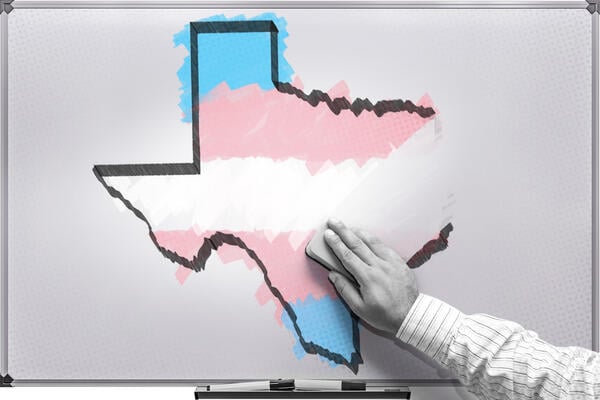
    Photo illustration by Justin Morrison/Inside Higher Ed | menonsstocks/E+/Getty Images | snorkulencija/iStock/Getty Images

    After a confusing week, Texas Tech University officials offered the first written clarification on new university policies that prohibit faculty members from speaking or teaching about transgender identity. On Sunday, the provost’s office posted a lengthy frequently asked questions page that, among other things, addressed the definition of “noncompliant language,” explained how the new policies impact research and answered whether faculty can write on their syllabi that they are an ally to transgender people.

    But after three days, the FAQ was taken down. Faculty have not been told why the information was removed, and health-care instructors are concerned students will not be trained in care for transgender patients, as required by certification exams.

    A university spokesperson did not respond to Inside Higher Ed’s questions on the matter. Some faculty suspect that Brandon Creighton, who was officially named the Texas Tech system’s next chancellor on Tuesday, may have orchestrated the removal of the FAQ. Creighton was the lead author of the Texas Senate’s sweeping ban on diversity, equity and inclusion in 2023, and of the recent bill giving control of faculty senates to university presidents and boards. He will assume the chancellor role on Nov. 19.

    While it was the first and most comprehensive written guidance Texas Tech has posted on its anti-trans policies, the FAQ left a lot of questions unanswered. The word “transgender” wasn’t included in any of the written answers. In one answer, officials wrote that noncompliant language “refers specifically to outdated or inaccurate syllabus content (i.e., COVID-era statements or statements referring to offices or units that no longer exist at Texas Tech.),” but said nothing about gender identity.

    In response to a question about academic freedom, officials wrote, “Faculty may include course content that is relevant to a student’s program of study and post-graduation opportunities, including workforce and additional education. Faculty are encouraged to be thoughtful about including content that is described in the Chancellor’s memo.”

    The new directives do not impact research, the FAQ clarified. Officials advised against including a “personal statement of student support” or a statement professing LGBTQ allyship, writing that “such a statement could attract unwanted attention.” They also wrote that faculty could include a preferred name policy on their syllabi, but that “until further clarification is available, it is advisable to omit personal pronoun language.” When relevant, instructors are permitted to facilitate classroom discussions in which students examine the state’s position on gender alongside other views, but the instructor may not advocate for any particular view.

    In a later question about government censorship and faculty retention, officials wrote, “We recognize that faculty recruitment and retention may be affected. At present, the issued guidance applies only to instructional activities, not a faculty member’s independent research.”

    The Texas conference of the American Association of University Professors has pushed back on the anti-trans policies at Texas Tech and other public universities in the state.

    “Colleges and universities have an obligation to develop campus policies that protect the constitutional rights of their faculty to teach and research the subjects in their areas of expertise without intimidation or censorship,” said Brian Evans, president of the Texas conference of the AAUP. “By ensuring that teachers can speak freely, campus administrators should enable students to explore and learn the widest set of topics for civil engagement and successful careers. Campus policies related to academic freedom and free speech should be devised with the full participation of faculty in the spirit of a shared commitment to excellence.”

    The FAQ—as short-lived as it was—only applied to Texas Tech’s flagship campus. The four other campuses in the public system, including Angelo State University, where faculty have received a profusion of conflicting verbal information, were not included.

    A faculty member at the Texas Tech University Health Sciences Center who asked to remain anonymous for fear of retribution confirmed to Inside Higher Ed that faculty at their campus have been told not to use certain terms in their course content, including “transgender”; “gender-affirming care”; “diversity, equity and inclusion”; and “affirmative action.” Health Sciences Center faculty have not received any written guidance, and the deans don’t have clarifying information, either, the faculty member said. It is an especially troubling policy to enforce for health-care students, because care for transgender patients is included in some certification exams students must pass to be licensed, they said.

    “There are certainly many things that our government has [outlawed] … but I can’t think of another thing that we’ve been told we can’t talk about,” the faculty member said. “Sex trafficking is illegal, but we can talk about how to care for people who have been victims of sex trafficking. Drunk driving—there’s about a million examples.”

    It is unclear how much information students have about these new policies, according to the faculty member. Some students are bringing up transgender care in classroom discussions, and instructors are unsure how to respond.

    Source link

  • Angelo State Allows Pride Flags, Keeps Anti-Trans Policies

    Angelo State Allows Pride Flags, Keeps Anti-Trans Policies

    Michael Barera/Wikimedia Commons

    Directives related to a slate of convoluted and sometimes contradictory new policies prohibiting discussion of transgender topics and identity have left employees at Angelo State University frightened and confused.

    As of Monday, conversations and content about transgender identities are still prohibited, but employees are allowed to use students’ preferred names, display rainbow flags in their offices and on their cars, and talk about lesbian, gay, bisexual and queer identities, according to emails from department heads to faculty obtained by Inside Higher Ed.

    The changes were clarified to employees after a meeting between the deans, provost and ASU legal counsel. Employees are still seeking other clarifications. For example, students who are already working on papers related to transgender identity are allowed to continue doing so, but it’s unclear whether they could give a final class presentation on the topic. 

    Only some faculty members at some the university’s colleges have been told about these changes. Others are still responding to the initial policies handed down to employees Friday following a meeting with Angelo State leadership. The policies are stringent and exhaustive: no pride flags, no calling students by the singular “they” or using their preferred names (unless it aligns with their sex assigned at birth), no pronouns in email signatures and no mention of the fact that there are more genders than the two assigned at birth.

    None of the policies are formalized in writing, and that is purposeful, said Brian Evans, president of the Texas Conference of the American Association of University Professors. The guidance only changed after faculty brought up questions about the policies, which deans took back to the provost and university counsel. Final details about what is and is not allowed and how the rules will be enforced are still under discussion.

    Source link

  • ‘New sheriff in town’: DOJ to enforce anti-trans Trump orders

    ‘New sheriff in town’: DOJ to enforce anti-trans Trump orders

    This audio is auto-generated. Please let us know if you have feedback.

    The Trump administration on Friday announced a major change in Title IX enforcement at schools and colleges, tapping the U.S. Department of Justice to help investigate and ultimately enforce the separation of transgender students from girls’ and women’s athletics teams and spaces in schools and colleges. 

    The Title IX Special Investigations Team shifts some civil rights investigations and enforcement from the U.S. Department of Education to the Department of Justice — both of which are a part of the newly minted unit.

    The move is part of a Trump administration effort to push through a backlog of complaints at the Education Department’s Office for Civil Rights. These investigations usually take months — sometimes years — to complete. The process typically includes interviews and other tools and ultimately ends in resolution agreements to bring schools into compliance.  

    Instead, the department will rely on a rapid resolution process to address sex discrimination complaints, framing the move as a way to protect cisgender girls and women, according to a Friday announcement. Rapid resolution is “an expedited case processing approach,” according to the Trump administration’s case processing manual, which was updated in January. 

    There are certain requirements before rapid resolution is an option, including having the complainant initiate the expedited process and having schools on board with that plan of action to resolve a complaint. The tool can be tapped when schools have already taken action to resolve the complaint on their own accord. It was used under the previous administration as well to address the increasing volume of complaints.

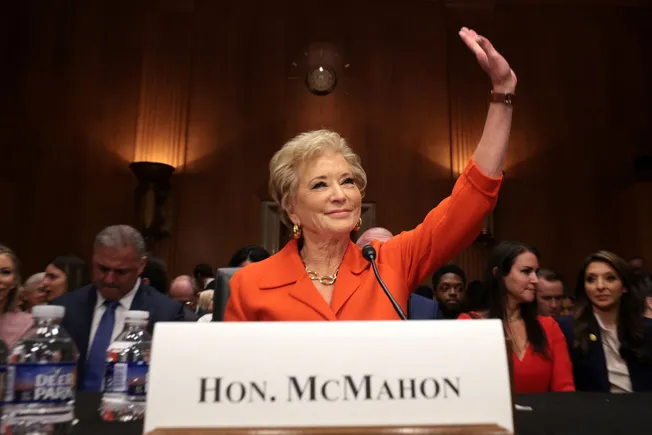
    OCR under this Administration has moved faster than it ever has, and the Title IX SIT will ensure even more rapid and consistent investigations,” U.S. Secretary of Education Linda McMahon said in Friday’s announcement. “To all the entities that continue to allow men to compete in women’s sports and use women’s intimate facilities: there’s a new sheriff in town. We will not allow you to get away with denying women’s civil rights any longer.”

    Attorney General Pamela Bondi said in an accompanying statement that “protecting women and women’s sports is a key priority” for the Department of Justice. The agency will “ take comprehensive action when women’s sports or spaces are threatened,” she continued. The administration has often used that language to separate transgender students from programs spaces aligning with their gender identities with blanket bans. 

    The department’s formal announcement that it is handing off Title IX enforcement to the Justice Department and joining forces on investigations comes after weeks of collaboration between the two agencies, confirming suspicions from education civil rights attorneys that DOJ involvement will be the new normal.

    It was also expected, considering that Education Department layoffs gutted half of OCR enforcement offices nationwide, and the department was already relying on the DOJ in the layoffs’ wake. 

    The Education Department already tapped the Justice Department in an investigation the Trump administration launched into the Maine Department of Education over the state’s transgender athlete policy.

    “Why would they continue to administratively enforce when they’re trying to put themselves out of jobs?” Kayleigh Baker, a Title IX attorney for TNG Consulting, an education civil rights consultant group, surmised late last month in wake of the Maine case. “And so I think leaning on DOJ makes sense.” 

    Prior to this administration, the DOJ was rarely called off the bench to enforce civil rights protections in schools, and its involvement was usually only reserved for complex and high-profile cases.

    Source link

  • ‘New sheriff in town’: DOJ to enforce anti-trans Trump orders

    ‘New sheriff in town’: DOJ to enforce anti-trans Trump orders

    This audio is auto-generated. Please let us know if you have feedback.

    The Trump administration on Friday announced a major change in Title IX enforcement at schools and colleges, tapping the U.S. Department of Justice to help investigate and ultimately enforce the separation of transgender students from girls’ and women’s athletics teams and spaces in schools and colleges. 

    The Title IX Special Investigations Team shifts some civil rights investigations and enforcement from the U.S. Department of Education to the Department of Justice — both of which are a part of the newly minted unit.

    The move is part of a Trump administration effort to push through a backlog of complaints at the Education Department’s Office for Civil Rights. These investigations usually take months — sometimes years — to complete. The process typically includes interviews and other tools and ultimately ends in resolution agreements to bring schools into compliance.  

    Instead, the department will rely on a rapid resolution process to address sex discrimination complaints, framing the move as a way to protect cisgender girls and women, according to a Friday announcement. Rapid resolution is “an expedited case processing approach,” according to the Trump administration’s case processing manual, which was updated in January. 

    There are certain requirements before rapid resolution is an option, including having the complainant initiate the expedited process and having schools on board with that plan of action to resolve a complaint. The tool can be tapped when schools have already taken action to resolve the complaint on their own accord. It was used under the previous administration as well to address the increasing volume of complaints.

    OCR under this Administration has moved faster than it ever has, and the Title IX SIT will ensure even more rapid and consistent investigations,” U.S. Secretary of Education Linda McMahon said in Friday’s announcement. “To all the entities that continue to allow men to compete in women’s sports and use women’s intimate facilities: there’s a new sheriff in town. We will not allow you to get away with denying women’s civil rights any longer.”

    Attorney General Pamela Bondi said in an accompanying statement that “protecting women and women’s sports is a key priority” for the Department of Justice. The agency will “ take comprehensive action when women’s sports or spaces are threatened,” she continued. The administration has often used that language to separate transgender students from programs spaces aligning with their gender identities with blanket bans. 

    The department’s formal announcement that it is handing off Title IX enforcement to the Justice Department and joining forces on investigations comes after weeks of collaboration between the two agencies, confirming suspicions from education civil rights attorneys that DOJ involvement will be the new normal.

    It was also expected, considering that Education Department layoffs gutted half of OCR enforcement offices nationwide, and the department was already relying on the DOJ in the layoffs’ wake. 

    The Education Department already tapped the Justice Department in an investigation the Trump administration launched into the Maine Department of Education over the state’s transgender athlete policy.

    “Why would they continue to administratively enforce when they’re trying to put themselves out of jobs?” Kayleigh Baker, a Title IX attorney for TNG Consulting, an education civil rights consultant group, surmised late last month in wake of the Maine case. “And so I think leaning on DOJ makes sense.” 

    Prior to this administration, the DOJ was rarely called off the bench to enforce civil rights protections in schools, and its involvement was usually only reserved for complex and high-profile cases.

    Source link