Tag: APPs

  • Best Sites & Apps for K-12 Education Games

    Best Sites & Apps for K-12 Education Games

    This article was updated December 2025.

    Game-based learning turns potentially tedious study time into an adventurous knowledge quest, complete with catchy soundtracks and digital rewards. It helps keep kids engaged with the subject matter and motivated to pursue greater expertise. Best of all, web- or app-based gameplay integrates easily into both online and in-person classes.

    We’ve curated the best K-12 educational game sites and apps, arranged according to cost. Many are free (or offer free basic accounts), while some provide progress tracking and analysis tools for teachers. All are remarkably creative and will help kids enjoy learning.


    Best Free K-12 Education Games


    Source link

  • Data lag and ambition aggregation means APPs are fundamentally flawed

    Data lag and ambition aggregation means APPs are fundamentally flawed

    In her letter to the sector last November, Secretary of State Bridget Phillipson said that she expects universities to play a stronger role in expanding access and improving outcomes for disadvantaged students.

    Her letter noted that the gap in outcomes from higher education between disadvantaged students and others is unacceptably large and is widening, with participation from disadvantaged students in decline for the first time in two decades.

    She’s referring to the Free School Meals (FSM) eligible HE progression rate – 29 percent in 2022–23, down for the first time in the series.

    Of course in 2023–24, or this year, the numbers for FSM and any number of other factors could be much worse – but on the current schedule, we won’t be seeing an update to OfS’ access and participation data dashboard until “summer or autumn 2025”, and even then only for 2023–24.

    If you’re prepared to brave the long loading times – which for me generate a similar level of frustration to that I used to experience watching Eurovision national finals 20 years ago – you can drill down into that dashboard by provider.

    It’s a mixed picture, with a lot of splits to choose from. But what the data doesn’t tell us is how providers are doing when compared to their signed off targets in their (mainly 2020–21 to 2024–25) access and participation plans.

    The last time OfS published any monitoring data was for the 2020–21 academic year – almost three years ago, in September 2022.

    That means that we can’t see how well providers are doing against their targets, and nor do we have any sense of any action that OfS may (or may not) have taken to tackle underperformance.

    So I decided to have a go. I restricted my analysis to the Russell Group, and extracted all of the targets from the 2020–21 to 2024–25 plans that were measurable via the dashboard.

    I then compared the 2022–23 performance with the relevant milestone, and with the original baseline. Where the target was unclear on what type of student was in scope, I assumed FT, first degree students.

    The results are pretty worrying.

    Baseline 2022-23 Milestone 2022-23 Actual Behind milestone? Behind baseline?
    PROG Disabled Percentage difference in progression to employment and further study between disabled and non-disabled. 3.00 2.00 0.10 N N
    PROG Ethnicity Percentage difference in graduate employability between white and black students 7.9 4.70 -2.50 N N
    CONT Disabled Percentage difference in non-continuation rates non-disabled and students with mental health conditions 7.00 5.50 1.80 N N
    CONT Disabled Percentage difference in continuation rates between disabled students and non-disabled students. 6.4 3 1.3 N N
    CONT Low Participation Neighbourhood (LPN) Percentage difference in non-continuation rates between POLAR4 quintile 5 and quintile 1 students. 5 3.5 2.3 N N
    CONT Low Participation Neighbourhood (LPN) Percentage difference in non-continuation rates between POLAR4 quintile 5 and quintile 1 students. 4 2.5 3.40 Y N
    CONT Low Participation Neighbourhood (LPN) Close the gap in non-continuation between POLAR 4 Q1 and Q5 undergraduate students from 3.8% in 2016/2017 to 1.5% in 2024/25 3.8 3 6.4 Y Y
    CONT Low Participation Neighbourhood (LPN) POLAR4 Q1 non-continuation gap v Q5 (relates to KPM3) 4 3.25 6.1 Y Y
    CONT Low Participation Neighbourhood (LPN) Percentage difference in non-continuation rates between POLAR4 quintile 5 and quintile 1 students 2.40 1.00 6.90 Y Y
    CONT Low Participation Neighbourhood (LPN) Percentage difference in continuation rates between the most (POLAR Q5) and least (POLAR Q1) representative groups. 2.4 1.5 3.1 Y Y
    CONT Mature Percentage point difference in non-continuation rates between young (under 21) and mature (21 and over) students. 10 9 6.8 N N
    CONT Mature Percentage difference in continuation rates of mature first degree entrants when compared to young students. 10.2 7 -0.4 N N
    CONT Mature Significantly raise the percentage of our intake from mature students 5.90 7.00 4.10 N Y
    CONT Mature Percentage difference in non-continuation rates mature and non-mature students 9.00 6.00 7.40 Y N
    CONT Mature Percentage difference in non-continuation rates between mature (aged 21+) and young (aged 8.00 5.00 5.10 Y N
    CONT MATURE Close the gap in non-continuation between young and mature full-time, first degree students from 7.8% in 2016/2017 to 4.4% in 2024/2025. 7.8 6.8 10.2 Y Y
    CONT Mature Mature v Young non-continuation gap 9 8.5 10.1 Y Y
    CONT Mature Close the gap in continuation rates between young and mature students (by 1pp each year) by 2024/25. 5 3 6.1 Y Y
    CONT Mature Percentage difference in non-continuation rates between mature and young students 5.30 3.80 5.80 Y Y
    ATTAIN Disabled Percentage difference in degree attainment (1st and 2:1) between disabled students and other students 2.60 1.72 0.9 N N
    ATTAIN Disabled Disabled students attainment gap v non-disabled 3 1.5 1.2 N N
    ATTAIN Disabled To significantly reduce the difference in degree attainment (1st and 2:1) between disabled students and students with no known disability 4.4 2 0.30 N N
    ATTAIN Disabled Percentage point difference in good degree attainment (1st and 2:1) between disabled and not known to be disabled students. 6 5 -2.2 N N
    ATTAIN Disabled To remove the absolute gap in degree outcomes for students with a disability (OfS KPM5). 4.0 2.0 -0.60 N N
    ATTAIN Disabled Percentage difference in degree attainment (1st and 2:1) between disabled and non-disabled students 3.90 2.00 3.60 Y N
    ATTAIN Disabled Percentage difference in degree attainment (1st and 2:1) between students with registered mental health disabilities and non-disabled students 5.80 3.00 4.7 Y N
    ATTAIN Disabled Percentage difference in degree attainment (1st and 2:1) between disabled students and non-disabled students 4.2 2.3 3.6 Y N
    ATTAIN Ethnicity Black students attainment gap v White (relates to KPM4) 20 15.5 11.2 N N
    ATTAIN Ethnicity By 2025, reduce the attainment gap between Asian and white students 8.4 5.2 4.80 N N
    ATTAIN Ethnicity Percentage difference in degree attainment (1st and 2:1) between black and white students (5 year rolling average). 12 8.6 4.60 N N
    ATTAIN Ethnicity Percentage difference in degree attainment (1st and 2:1) between white and asian students. 19 17 14.4 N N
    ATTAIN Ethnicity Percentage difference in degree attainment (1st and 2:1) between white and black students. 14.00 11.00 9.90 N N
    ATTAIN Ethnicity To close the gap between Black and White student continuation rates (reducing the gap by 4 percentage points, from 8% to 4%, by 2024/2025). 8 5.6 5.5 N N
    ATTAIN Ethnicity To close the gap between BME and White student attainment (reducing the gap by 3 percentage points from 11% to 8% by 2024/25). 17 13.1 11.6 N N
    ATTAIN Ethnicity Close the unexplained gap between proportion of BAME and white full-time, first degree students attaining a 2:1 or above from 12.7% in 2017/2018 to 5.5% in 2024/2025. 12.7 10.3 10.8 Y N
    ATTAIN Ethnicity Significantly increase the percentage of our intake from Black students 2.30 3.80 2.90 Y N
    ATTAIN Ethnicity Percentage difference in degree attainment (1st and 2:1) between white and black students 15.70 9.815 11.6 Y N
    ATTAIN Ethnicity Percentage difference in degree attainment (1st and 2:1) between white and Asian students 12.5 8.375 11.4 Y N
    ATTAIN Ethnicity Percentage difference in degree attainment (1st and 2:1) between black and white students. 20 15 19.00 Y N
    ATTAIN Ethnicity Percentage difference in degree attainment (1st and 2:1) between white and BME students. 5.20 2.00 4.60 Y N
    ATTAIN Ethnicity Percentage difference in degree attainment (1st and 2:1) between white and black students. 13.8 6 12.9 Y N
    ATTAIN Ethnicity Percentage difference in degree attainment (1st and 2:1) between BAME and White students. 7.00 4.00 7.50 Y Y
    ATTAIN Ethnicity Percentage difference in degree attainment (1st and 2:1) between white and black students 4.50 3.00 31.00 Y Y
    ATTAIN Ethnicity Percentage difference in degree attainment (1st and 2:1) between white and BAME students 9.50 6.00 11.60 Y Y
    ATTAIN Ethnicity By 2025, reduce the attainment gap between black and white students 8.7 5.9 10.70 Y Y
    ATTAIN Ethnicity To significantly reduce the difference in degree attainment (1st and 2:1) between white and black students 11.6 10 20.00 Y Y
    ATTAIN Ethnicity To significantly reduce the difference in degree attainment (1st and 2:1) between white and Asian students 10.6 10 14.50 Y Y
    ATTAIN Ethnicity Percentage point difference in good degree attainment (1st and 2:1) between white and black students. 18 14 22.1 Y Y
    ATTAIN Ethnicity Percentage difference in degree attainment (1st and 2:1) between white and black students. 17 15 22.9 Y Y
    ATTAIN Ethnicity Halve the gap in attainment that are visible between black and white students (OfS KPM4). 10.0 7.0 15.80 Y Y
    ATTAIN Ethnicity To close the gap between Black and White student attainment (by raising the attainment of Black students) reducing the gap by 8.5 percentage points from 17% to 8.5% by 2024/25 11 9.5 24 Y Y
    ATTAIN Low Participation Neighbourhood (LPN) Percentage difference in degree attainment (1st and 2:1) between POLAR4 quintile 5 and quintile 1 students 9.10 4.645 8.7 Y N
    ATTAIN MATURE Close the unexplained gap between proportion of mature and young full-time, first degree students attaining a 2:1 or above from 12.1% in 2017/2018 to 6.8% in 2024/2025. 12.1 8.8 12.6 Y Y
    ATTAIN Socio-economic Percentage difference in degree attainment (1st and 2:1) between students from most and least deprived areas (based on IMD) 10.20 6.00 12.30 Y Y
    ATTAIN Socio-economic To significantly reduce the difference in degree attainment (1st and 2:1) between the most and least advantaged as measured by IMD. 10.4 8.8 15.60 Y Y
    ATTAIN Socio-economic Reduce the gaps in attainment that are visible between IMD Q1 and Q5 (OfS KPM3). 10.0 7.0 13.70 Y Y
    ACCESS Disabled By 2025, increase the proportion of students with a declared disability enrolling from the baseline of 9% to 13% 9 11 15.70 N N
    ACCESS Ethnicity Significantly increase the percentage of our intake from Asian students 6.90 8.50 9.70 N N
    ACCESS Ethnicity Percentage of BAME entrants 10.10 12.50 12.70 N N
    ACCESS Ethnicity Increase percentage proportion of students identifying as black entering to at least match or exceed sector average (11%). 9.5 10.5 11.7 N N
    ACCESS Ethnicity To increase the proportion of Black, young, full-time undergraduate entrants by 1.2 percentage points, from 2.4% to 3.6% by 2024/25. 2.4 2.8 2.1 Y Y
    ACCESS Low Participation Neighbourhood (LPN) Ratio in entry rates for POLAR4 quintile 5: quintile 1 students 7.4:1 6:1 4.5 N N
    ACCESS Low Participation Neighbourhood (LPN) Reduce the ratio in entry rates for POLAR4 quintile 5: quintile 1 students 3.9:1 3.4:1 3.4:1 N N
    ACCESS Low Participation Neighbourhood (LPN) By 2025, reduce the gap in access between those from the highest and lowest POLAR4 quintiles enrolling from the baseline of 49% to 41% 49 45 41.00 N N
    ACCESS Low Participation Neighbourhood (LPN) Ratio of students from POLAR Q1 compared to POLAR Q5. 01:14 01:11 8.5 N N
    ACCESS Low Participation Neighbourhood (LPN) Close the gap in access between Q1 and Q5 students from a ratio of 5.5 in 2017/2018 to 3.5 by 2024/2025. 5.5 3.64 4.2 Y N
    ACCESS Low Participation Neighbourhood (LPN) Reduce ratio in entry rates for POLAR4 quintile 5: quintile 1 students 12:1 8:1 8.5 Y N
    ACCESS Low Participation Neighbourhood (LPN) To reduce the gap in participation and ratio in entry rates for POLAR 4 Quintile 5: Quintile 1 students Ratio Q5:Q1 of 5.2:1 500 students from POLAR 4 Q1 4.5 or 500 Y N
    ACCESS Low Participation Neighbourhood (LPN) LPN determined by POLAR 4 data. Looking specifically at increasing the intake for LPN Quintile 1 students, and thereby reduce the ratio of Q5 to Q1. (Target articulated as both a percentage and number). 8.0%, 391 10%, 490 8.6, 400 Y N
    ACCESS Low Participation Neighbourhood (LPN) Ratio in entry rates for POLAR4 quintile 5: quintile 1 students. 7.4:1 5.5:1 6.9 Y N
    ACCESS Low Participation Neighbourhood (LPN) Ratio in entry rates for POLAR4 quintile 5: quintile 1 students. All undergraduates. 6.2:1 5.1:1 6.3 Y Y
    ACCESS Low Participation Neighbourhood (LPN) Ratio in entry rates for POLAR4 quintile 5: quintile 1 students. 4.2:1 3.5:1 4.3 Y Y
    ACCESS Low Participation Neighbourhood (LPN) Ratio in entry rates for POLAR4 quintile 5: quintile 1 students. Reduce gap to 3.0 to 1.0 by 2024-25 (OfS KPM2). 5:2 to 1 4 5.2 Y Y
    ACCESS Low Participation Neighbourhood (LPN) To increase the proportion of young, full-time undergraduate entrants from POLAR4 Q1 by 2.5 percentage points, from 7.8% to 10.3%, by 2024/25. 7.8 8.9 10.3 Y Y
    ACCESS Low Participation Neighbourhood (LPN) To increase the proportion of young, full-time undergraduate entrants from POLAR4 Q2 by 2.5 percentage points, from 12.4% to 14.9%, by 2024/25. 12.4 13.9 15.4 Y Y
    ACCESS Mature Percentage of mature entrants 5.80 7.20 3.70 Y Y
    ACCESS Mature Percentage of mature students as part of the overall cohort. 9.2 11.0 6.70 Y Y
    ACCESS Multiple Increase the proportion of BME students from Q1 and Q2 backgrounds 5.2 8 7.6 N Y
    ACCESS Socio-economic Eliminate the IMD Q5:Q1 access gap by 2024/25. 5 2 -4.5 N N
    ACCESS Socio-economic By 2025, reduce the gap in access between those from the highest and lowest IMD quintiles from the baseline of 16.4% to 10.4% 16.4 13.5 7.00 N N
    ACCESS Socio-economic Percentage point difference in access rates between IMD quintile 1 and 2 and quintile 3, 4 and 5 students. 51.8 43.8 53.4 Y Y

    Milestones and baselines

    If we start with access, of the 25 targets that can be analysed, 14 behind milestone – and 10 show a worse performance than the baseline.

    On continuation, 11 of the 17 are behind milestone, and 9 are behind the baseline. And on attainment, 25 of the 38 are behind milestone, and 14 behind baseline.

    Notwithstanding that some of the other targets might have been smashed, and that in all cases the performance may well have improved since then, that looks like pretty poor performance to me.

    It’s the sort of thing that we might have expected to result in fines, or at least specific conditions of registration being imposed.

    But as far as we know, nothing beyond enhanced monitoring has been applied – and even then, we don’t know who has been under enhanced monitoring.

    And the results are a problem. When OfS launched this batch of plans, it noted that young people from the most advantaged areas of England were over six times as likely to attend one of the most selective universities – including Oxford, Cambridge and other members of the Russell Group – as those from the most disadvantaged areas, and that that gap had hardly changed despite a significant expansion in the number of university places available.

    At the rates of progress forecast under those plans, the ratio was supposed to be less than 4:1 by 2025. It was still at 5.44 in the Russell Group in 2022–23.

    It was supposed to mean around 6,500 extra students from the most disadvantaged areas attending those universities each year from 2024-25 onwards. The Russell Group isn’t the whole of “high tariff” – but it had only increased its total of POLAR1 students by 1350 by 2022/23.

    OfS also said that nationally, the gap between the proportion of white and black students who are awarded a 1st or 2:1 degree would drop from 22 to 11.2 percentage points by this year. As we’ve noted before on the site, the apparent narrowing during Covid was more of a statistical trick than anything else. It was up at 22.4 in 2022–23.

    And the gap in dropout rates between students from the most and least represented groups was supposed to fall from 4.6 to 2.9 percentage points – it was up at 5.3pp in 2022–23.

    The aggregation of ambition into press-releasable targets appears to have suffered from a similar fate to the equivalent exercise over financial sustainability.

    What a wonderful thing

    Of course, much has happened since January 2020. To the extent to which there were challenges over the student life cycle, they were likely exacerbated by the pandemic and a subsequent cost of living crisis.

    But when you’re approving four year plans, changes in the external risk environment ought to mean that it revises what it now calls an Equality of Opportunity Risk Register to reflect that – and either allows providers to revise targets down, or requires more action/investment to meet the targets agreed.

    Neither of those things seem to have happened.

    It’s also the case that OfS has radically changed how it regulates in this area. Back then, the director for fair access and participation was Chris Millward. It’s now John Blake. And the guidance, nature of the plans expected and monitoring regimes have all been revamped.

    But when we’re dealing with long-term plans, a changing of the guard does run the risk that the expectations and targets agreed under any old regime get sidelined and forgotten about – letting poor performers off the hook.

    It certainly feels like that’s the case. And while John Blake is widely respected, it’s hard to believe that he’ll still be the director for fair access and participation by the end of the latest round of plans – 2029.

    Hindsight is a wonderful thing, of course, but notwithstanding the external environment changes, few anticipated that any of the gaps, percentages or ratios would worsen for any of the targets set back in 2019.

    That matters because of that OfS aggregation issue. It’s not just that some providers can drag down the performance of the sector as a whole. It’s that no provider was set the target of not getting any worse on the myriad of measures that it didn’t pick for its plan.

    For all we know, while a certain number of providers might have set and agreed a target, say, on POLAR1 access or IMD attainment, performance could have worsened in all of those that didn’t – and that poses a major problem for the regulator and the design of the thing.

    It remains the case that we’re lacking clarity on the way in which the explosion of franchised, urban area business provision has impacted the stats of both the providers that have lit that blue touch paper, and the sector’s scores overall. For me, improvements in access via that method look like cheating – and declines in continuation, completion or progression ought to mean serious questions over funding policy within the Department for Education.

    We don’t really know – but need to know – the impact of other providers’ behaviour on an individual provider’s external environment. If, for example, high tariff universities scoop up more disadvantaged students (without necessarily actually narrowing the gap), that could end up widening the gap elsewhere too. There’s only so many moles to whack when you’re looking at access.

    We still can’t see A&P performance by subject area – which has always been an issue when we think about access to the professions, but is an even bigger issue now that whole subject areas are being culled in the face of financial problems.

    And the size and shape question lingers too. UCAS figures at the close of clearing suggested that high tariff providers were set to balance the books by expanding in ways they claimed were impossible when the “mutant algorithm” hit in 2020.

    Much of continuation, completion and progression appears to be about the overall mix of students at a provider – something that’s made much more challenging in medium and lower tariff providers if high-tariff ones lower theirs.

    In the forthcoming skills white paper, we should expect exhortations from ministers that the sector improves its performance on access and participation. It will have choices on provider type, subject area, the types of disadvantage to focus on, and the mix of measures between things inside its control in the external environment, and things within providers’ control (or at least influence) that OfS should expect.

    Whatever it chooses, on the evidence available, it will have real problems judging either its own performance, its regulator’s, groups of providers or even individuals’. If you think the sector still has some distance to go on fairness, that just won’t do.

    Source link

  • The 6 Best Language Learning Apps in 2023: Duolingo, iTalki, and More

    The 6 Best Language Learning Apps in 2023: Duolingo, iTalki, and More

    If you’ve ever tried to learn a new language, you know that it’s far from easy or straightforward.

    Fortunately, we have a lot more language learning tools available than our ancestors (who basically just had books and other humans to learn from).

    Indeed, we have an overwhelming number of resources available. Hardly a day goes by without me hearing about a new language learning app that promises to revolutionize the learning process or offer a quick path to fluency.

    But no matter how great (or how expensive) the app you use, gaining fluency in a language requires lots of study and practice. You can do things to make your study time more effective or even more fun, but there’s no substitute for putting in the hours.

    Having said that, language learning apps can play an important role in your journey to fluency. And not all of them are created equal.

    In this article, we take a look at six of the best. Whether you’re looking to practice vocab or find a private teacher, there’s an app for you on this list.

    Overview: The best free app for learning the basics of a wide variety of languages.

    Price: Free (with ads). For $6.99 / month, you can remove ads and unlock additional practice options.

    Platforms: Android, iOS, Web

    If you’ve looked into learning a language at all, you’ve probably come across Duolingo. The app launched in 2011, and it’s continued to grow ever since.

    Of all the apps on this list, Duolingo offers the most learning content for free. It combines listening practice, vocabulary lessons, grammar info, and even speaking practice. And as long as you don’t mind a few ads, you get all of this without paying a dime.

    Duolingo also boasts a vast number of languages. Currently, you can use the app to learn:

    • Arabic
    • Czech
    • Danish
    • Dutch
    • Esperanto
    • Finnish
    • French
    • German
    • Greek
    • Haitian Creole
    • Hawaiian
    • Hebrew
    • High Valyrian
    • Hindi
    • Hungarian
    • Indonesian
    • Irish
    • Italian
    • Japanese
    • Klingon
    • Korean
    • Latin
    • Mandarin Chinese
    • Navajo
    • Norwegian
    • Polish
    • Portuguese
    • Romanian
    • Russian
    • Scottish Gaelic
    • Spanish
    • Swahili
    • Swedish
    • Turkish
    • Ukrainian
    • Vietnamese
    • Welsh
    • Yiddish

    What’s more, Duolingo lets you learn languages you won’t find in other language learning apps:

    • There are languages with a small number of speakers, such as Yiddish and Navajo.
    • There are dead languages such as Latin.
    • And there are even fictional languages such as Klingon and High Valyrian.

    If you’re trying to learn any of these languages, Duolingo is the place to begin.

    The only downside of Duolingo is its focus on translation. Even when you reach higher levels, the app continues to present lessons in English. This can impede your ability to learn to think in the language you’re learning.

    But if you’re a complete beginner, Duolingo is still a great place to start your language learning journey (especially since it’s free).

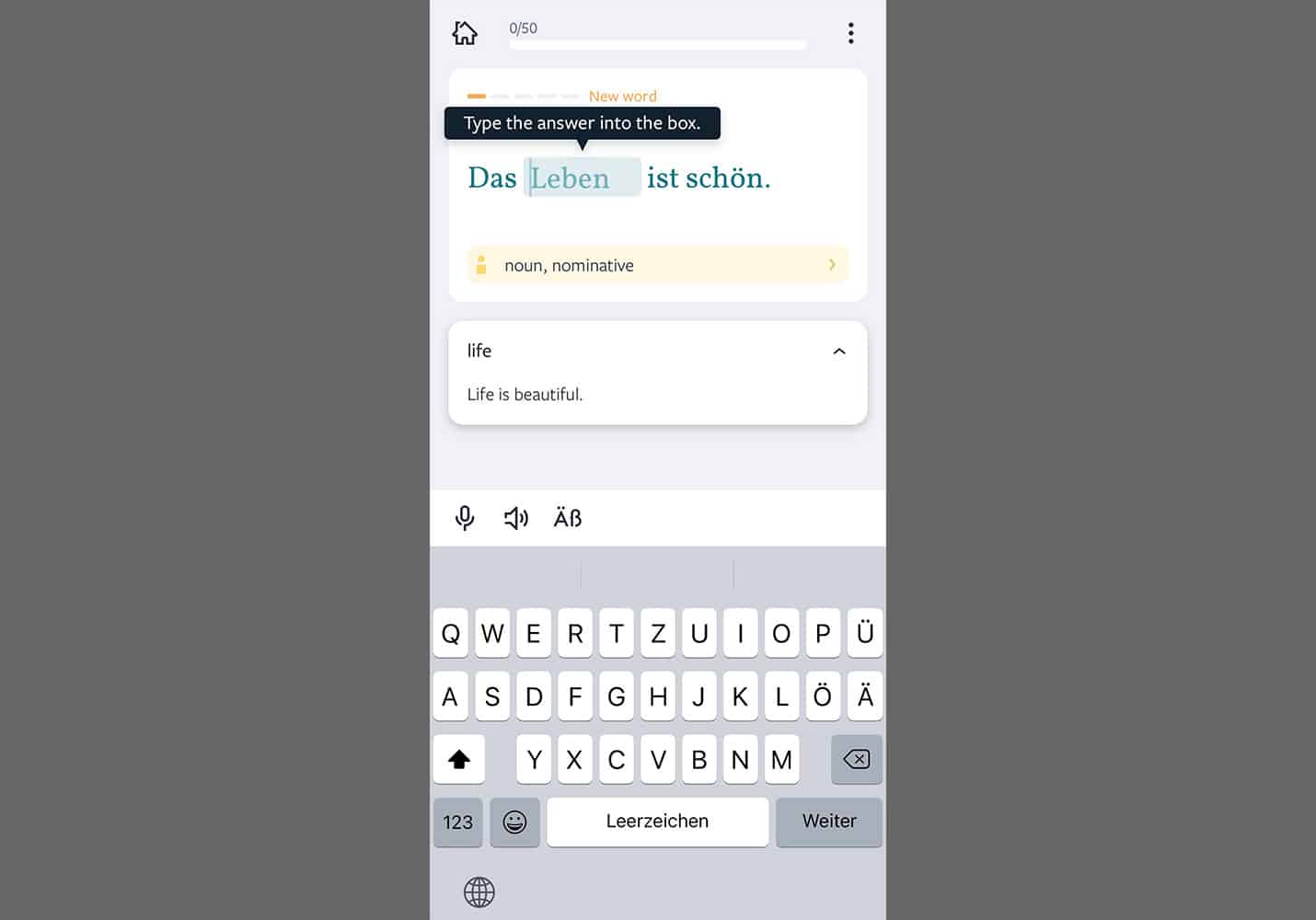
    Lingvist app lesson

    Overview: A fantastic app for learning vocabulary in several widely-spoken languages.

    Price: $9.99 / month after a 14-day free trial

    Platforms: Android, iOS, Web

    Many language courses focus too much on grammar in the beginning. And while grammar is important for learning to speak, vocabulary is far more important for communicating.

    If you know a bit of vocabulary, you can make yourself understood (even if you sound a bit childlike in the process). The same is not true if you know grammar but lack essential vocab.

    Recognizing this, Lingvist focuses on vocabulary. The app starts by teaching you the most common words in the language you’re learning. The goal is to learn vocab that covers “80% of everyday scenarios.” This way, you don’t waste your time learning words you’re unlikely to use.

    Lingvist also uses spaced repetition to help you learn more efficiently. The app quizzes you on words right before you’re about to forget them, which is the most optimal way to memorize information.

    Plus, Lingvist will focus on the words you struggle with, not wasting your time reviewing vocabulary you already know. If you’ve used a flashcard app such as Anki, this approach will be familiar.

    The only disadvantage of Lingvist is its limited selection of languages. Currently, the app supports:

    • Dutch
    • French
    • German
    • Italian
    • Portuguese
    • Russian
    • Spanish (Castilian & Latin American)

    If you’re learning one of these languages, Lingvist is a great option. But prospective learners of other languages will need to look elsewhere.

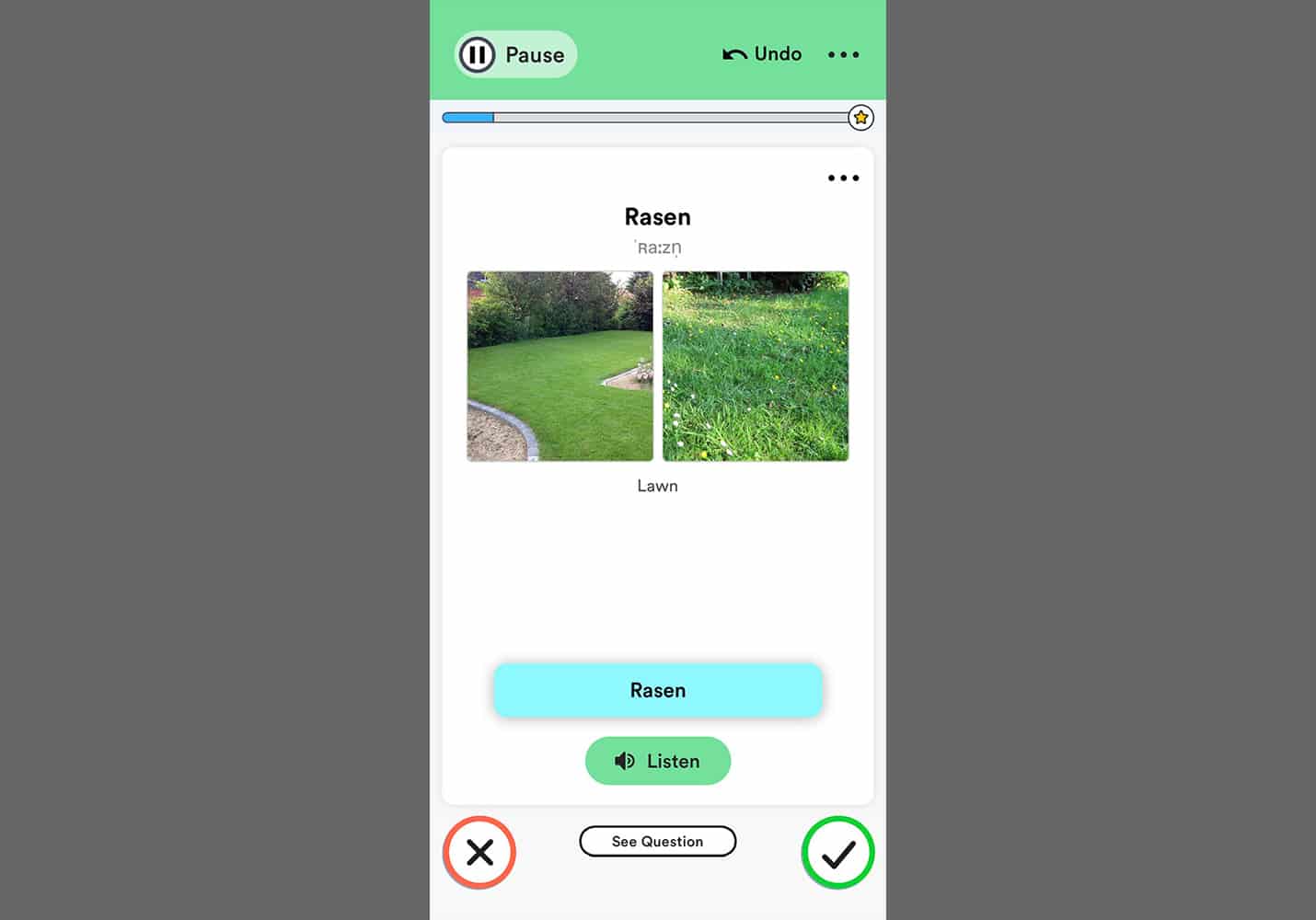
    Fluent Forever screenshot

    Overview: The best app for learning to pronounce, spell, and think in another language.

    Price: $9.99 / month after a 14-day free trial. Live coaching is available for an additional fee (select languages only).

    Platforms: Android, iOS

    Full disclosure: I backed the original Fluent Forever app project on Kickstarter, and I currently use the app. However, I don’t receive any compensation for mentioning it.

    Do you want to be mistaken for a native speaker? If so, mastering pronunciation in your target language is essential.

    Proper pronunciation will also improve your listening comprehension, making it far easier to communicate with native speakers and enjoy media in the language you’re learning.

    Recognizing this, Fluent Forever focuses on teaching you to pronounce (and spell) your target language first. Only once you’ve mastered these basics do you move on to learning vocabulary and grammar. This approach is based on a method that founder and polyglot Gabriel Wyner developed in his book Fluent Forever.

    In addition to teaching you pronunciation and spelling, Fluent Forever uses a frequency-based approach to learning vocabulary. That is, you learn the most common words first.

    The app also steers you away from translation and teaches you to think in the language you’re learning. It does this with picture-based flashcards that you create yourself. Making the language more personal in this way improves your learning and retention.

    Fluent Forever currently supports the following languages:

    • Dutch
    • French
    • German
    • Italian
    • Japanese
    • Korean
    • Mandarin Chinese
    • Portuguese (Brazilian)
    • Russian
    • Spanish (Latin American & Castilian)

    In addition to the app-based learning, Fluent Forever also offers live coaching with professional teachers (for an additional monthly fee).

    Coaching is only available in select languages as of this writing, but the developers are working to expand coaching options based on user interest.

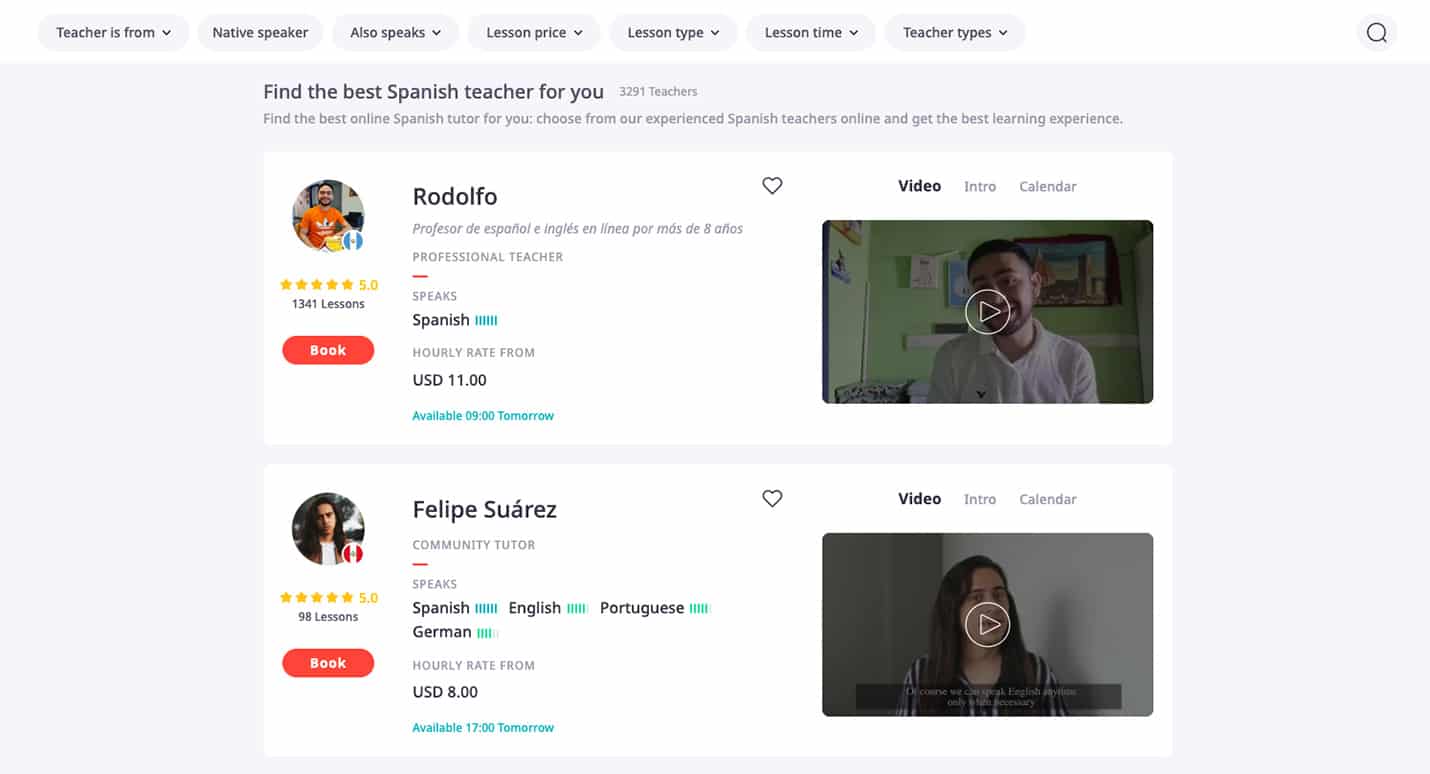
    iTalki dashboard

    Overview: An app that lets you find language teachers for one-on-one, online lessons.

    Price: Varies (each teacher sets their own rate).

    Platforms: Android, iOS, Web

    Traditionally, live language lessons were prohibitively expensive. But thanks to the power of the internet and video chat platforms, one-on-one lessons are now cheaper and more accessible than ever before.

    iTalki has played a big part in this language education revolution.

    Unlike the other apps on this list, iTalki doesn’t offer language lessons itself. Instead, it’s a place to find and book lessons with live teachers. Teachers on iTalki range from “community tutors” without formal training to professional instructors with decades of experience.

    To find a teacher on iTalki, all you have to do is sign up for an account. Then, you can filter prospective teachers based on language, price, and even level of experience. From there, you can typically book a trial lesson for a small fee. This helps you and the teacher decide if you’ll work well together.

    The cost of lessons on iTalki varies. Each teacher sets their own rate, and some offer discounts for purchasing multiple lessons in advance. Currency exchange rates and differences in cost of living also mean that some teachers will be cheaper than others.

    iTalki claims to offer lessons in over 150 languages. More popular/widely spoken languages will tend to have more teachers available. Still, it’s possible to find teachers of obscure or even endangered languages such as Irish Gaelic or Aramaic.

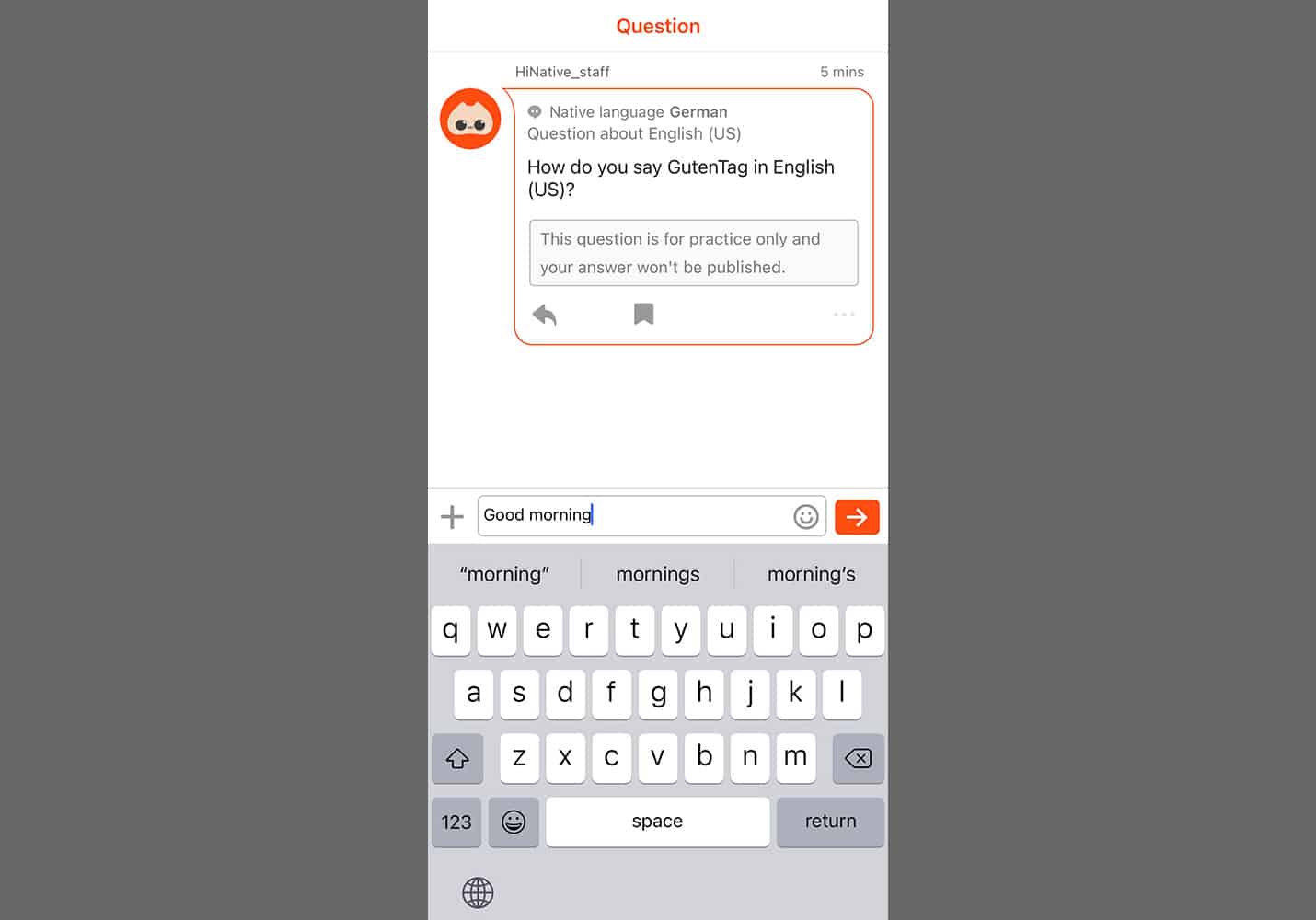
    Asking a question in HiNative

    Overview: A community-driven Q&A platform for language learners.

    Price: Free (limited features). For $4.49 / month, you can remove ads, search for questions, and play an unlimited number of audio/video answers.

    Platforms: Android, iOS, Web

    Apps like Duolingo, Fluent Forever, and Lingvist are great for learning the basics of a language. Eventually, however, you’ll have questions about your target language that these platforms just can’t answer.

    In this case, your best option is to ask a teacher. But hiring a teacher can be expensive (and excessive for one-off questions). As an alternative, consider HiNative. This platform lets you post questions about a language and get answers from native speakers.

    For instance, let’s say you’re unsure about the meaning of a particular slang term. HiNative is the perfect place to post your question and get answers you’d never find in a textbook.

    Even better, you can ask most questions for free (though you can pay to boost the visibility of your questions and get a response faster).

    In addition to posting questions about vocabulary and grammar, you can also get feedback on your writing or even your pronunciation.

    Just be sure to take some time to answer questions about your native language. HiNative is a community-driven platform, after all, and it only works if all users contribute.

    HiNative currently supports over 110 languages. Though, as with iTalki, more widely spoken or popular languages will tend to have more contributors.

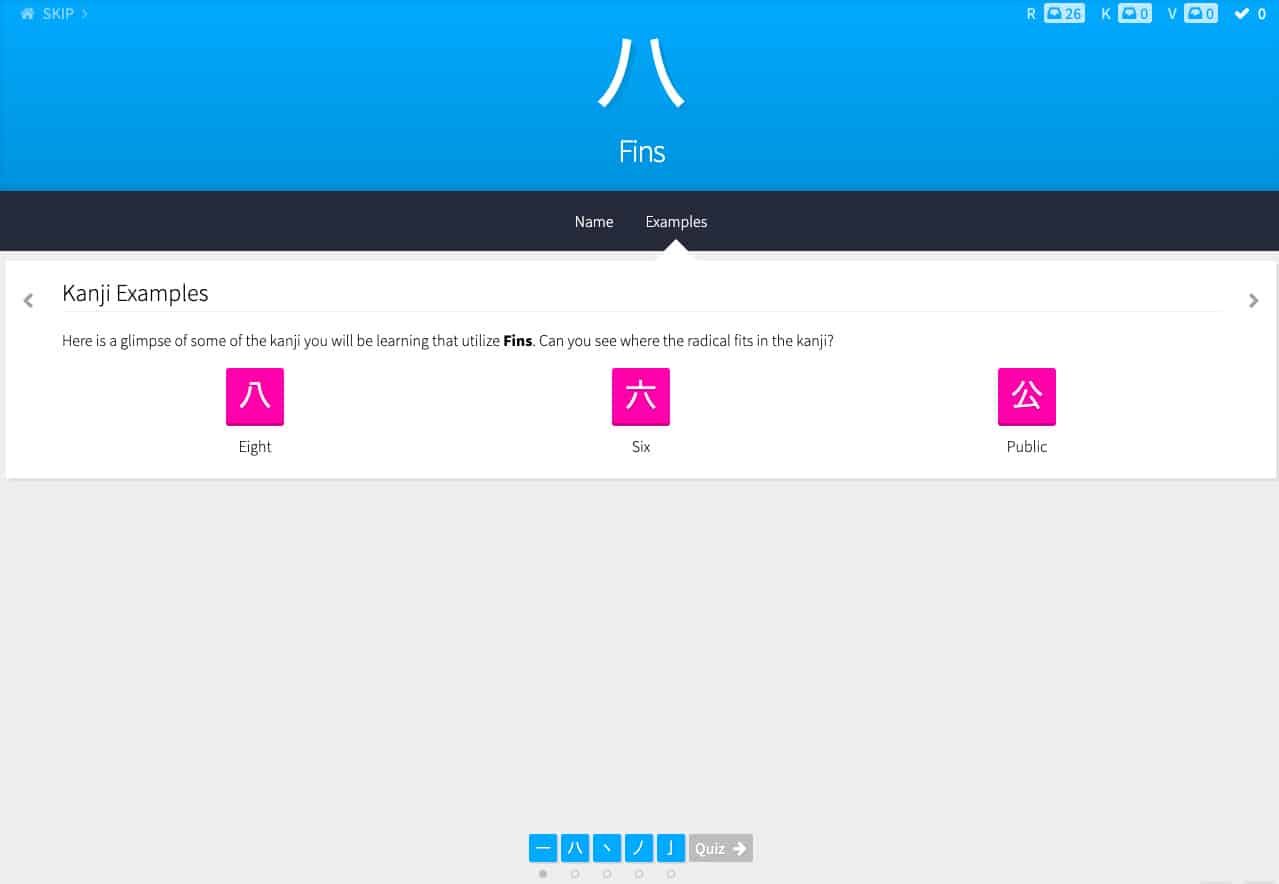
    WaniKani kanji lesson

    Overview: The best app for learning to read Japanese.

    Price: $9 / month. A lifetime subscription is also available for a one-time payment of $299.

    Platforms: Web

    This last app comes courtesy of a suggestion from Martin (our operations lead, web developer, and an avid Japanese learner).

    WankiKani addresses one of the biggest challenges for students of Japanese: reading. Japanese uses a writing system unlike any other, and it’s notoriously difficult and confusing. That is, until you start using WaniKani.

    The app combines mnemonics and spaced repetition to teach you 2,000 kanji and 6,000 vocabulary words in just over a year. Even better, the first three levels of learning in the app are free (no ads, time limits, or other restrictions).

    Great as all of this is, be aware that WaniKani is not a resource for learning to speak Japanese. For that, Martin recommends iTalki or Duolingo (particularly Duolingo Stories, which focus on listening skills).

    Finally, WaniKani typically does a New Year’s sale on their lifetime membership. This can save you a fair bit of money if you plan to stick with the app long-term.

    Language Learning Apps Are Only the Beginning

    If you’re learning a new language, the apps on this list are a great place to start.

    However, an app can only get you so far. To truly learn a language, you need to spend lots of time practicing and ultimately using it. Fortunately, this process is a lot of fun once you’re past the beginner stage.

    Happy language learning!

    Image Credits: multinational flag

    Source link

  • EdTech Roundup Going on Extended Hiatus, edCircuit Taking Over in the Meantime!

    EdTech Roundup Going on Extended Hiatus, edCircuit Taking Over in the Meantime!


    Hi Everyone – 

    I will be taking an extended break from the blog.  My current workload and new responsibilities as a father have left me with not enough time to devote to the site.  I hope things balance back out in the future, but currently, I will be on break from the site until further notice. 

    In the meantime, our good friends over at edCircuit will be taking over the site and sharing some excellent posts and resources each week!  So even though I’ll be on break, we will still be sharing new material on a regular basis. 

    Thanks for understanding,

    Mike

    Source link

  • Reviews | Genially: Create Presentations, Infographics, and Visuals in Seconds

    Reviews | Genially: Create Presentations, Infographics, and Visuals in Seconds


    Genial.ly is a presentation creation platform that offers a wide range of possibilities for what teachers and students can create.  From excellent templates to interactive visuals, there are some really fun and exciting ways to easily create visuals of all kinds.  Plus, it’s a freemium resource, so teachers and students can get started creating completely for free. Continue reading on our Review’s Page.

    Source link