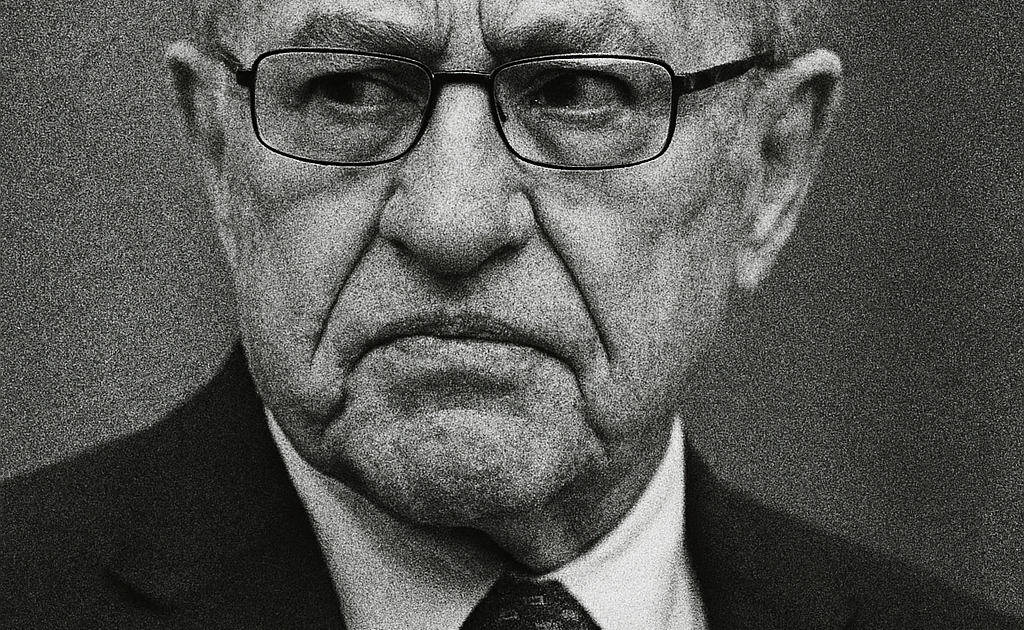
For many observers, Jeffrey Epstein, Alan Dershowitz, and Larry Summers appear as separate figures orbiting the world of elite academia, finance, and politics. But together—and through the long lens of history—they represent something far more revealing: the modern expression of a centuries-old system in which elite institutions protect powerful men while sacrificing the vulnerable.
The Epstein-Dershowitz-Summers triangle is not a scandal of individuals gone astray. It is the predictable result of structures that make such abuses almost inevitable.
The Modern Version of an Old System
Jeffrey Epstein built his influence not through scholarship or scientific discovery—he had no advanced degrees—but by inserting himself into the financial bloodstream of the Ivy League. Harvard and MIT accepted his money, his introductions, and his promises of access to ultra-wealthy networks. Epstein did not need credibility; he purchased it.
Larry Summers, as president of Harvard from 2001 to 2006, continued to engage with Epstein after the financier’s first arrest and plea deal. Summers’ administration accepted substantial Epstein donations, including funds channeled into the Program for Evolutionary Dynamics. Summers and his wife dined at Epstein’s Manhattan home. After leaving Harvard, Summers stayed in touch with Epstein even as the financier’s abuses became increasingly public. Summers used the same revolving door that has long connected elite universities, Wall Street, and presidential administrations—moving freely and comfortably across all three.
Alan Dershowitz, Epstein’s close associate and legal strategist, exemplifies another pillar of this system: elite legal protection. Dershowitz defended Epstein vigorously, attacked survivors publicly, and remains embroiled in litigation connected to the case. Whether one believes Dershowitz’s claims of innocence is secondary to the structural fact: elite institutions reliably shield their own.
Together, Epstein offered money and connections; Summers offered institutional prestige and political access; Dershowitz offered legal insulation. Harvard, meanwhile, offered a platform through which all three profited.
Knowledge as a Shield—Not a Light
For centuries, elite universities have served as both engines of knowledge and fortresses of power. They are not neutral institutions.
They defended slavery and eugenics, supplying “scientific” justification for racial hierarchies.
They exploited labor—from enslaved workers who built campuses to adjuncts living in poverty today.
They marginalized survivors of sexual violence while protecting benefactors and faculty.
They accepted fortunes derived from war profiteering, colonial extraction, hedge-fund predation, and private-equity devastation.
Epstein did not invent the model of the toxic patron. He merely perfected it in the neoliberal era.
A Four-Step Pattern of Elite Impunity
The scandal surrounding Epstein, Dershowitz, and Summers follows a trajectory that dates back centuries:
-
Wealth accumulation through exploitation
From slave plantations to private equity, concentrated wealth is generated through systems that harm the many to benefit the few. -
The purchase of academic legitimacy
Endowed chairs, laboratories, fellowships, and advisory roles allow dubious benefactors to launder reputations through universities. -
Legal and cultural shielding
Elite lawyers, confidential settlements, non-disclosure agreements, and institutional silence create protective armor. -
Silencing of survivors and critics
Reputational attacks, threats of litigation, and internal pressure discourage transparency and accountability.
Epstein operated within this system. Dershowitz defended it. Summers benefited from it. Harvard reinforced it.
Larry Summers: An Anatomy of Power
Summers’ career illuminates the deeper structure behind the scandal. His trajectory—Harvard president, U.S. Treasury Secretary, World Bank chief economist, adviser to hedge funds, consultant to Big Tech—mirrors the seamless circulation of elite power between universities, finance, and government.

During his presidency, Harvard publicly embraced Epstein’s donations. After Epstein’s first sex-offense conviction, Summers continued to meet with him socially and professionally. Summers leveraged networks that Epstein also sought to cultivate. And even after the Epstein scandal fully broke open, Summers faced no meaningful institutional repercussions.
The message was clear: individual wrongdoing matters less than maintaining elite continuity.
Higher Education’s Structural Complicity
Elite universities were not “duped.” They were beneficiaries.
Harvard returned only a fraction of Epstein’s donations, and only after the press exposed the relationship. MIT hid Epstein’s gifts behind false donor names. Faculty traveled to his island and penthouse without demanding transparency.
Meanwhile:
Adjuncts qualify for food assistance
Students carry life-crippling debt
Administrators earn CEO-level pay
Donors dictate priorities behind closed doors
This is not hypocrisy—it is hierarchy. A system built to serve wealth does exactly that.
A Timeline Much Longer Than Epstein
To understand the present, we must zoom out:
Oxford and Cambridge accepted slave-trade wealth as institutional lifeblood.
Gilded Age robber barons endowed libraries while crushing labor movements.
Cold War intelligence agencies quietly funded research centers.
Today’s oligarchs, tech billionaires, and private-equity titans buy influence through endowments and think tanks.
The tools change. The pattern does not.
Universities help legitimate the powerful—even when those powerful figures harm the public.
Why This Still Matters
The Epstein scandal is not resolved. Court documents continue to emerge. Survivors continue to speak. Elite institutions continue to stall and deflect. Harvard still resists meaningful transparency, even as its endowment approaches national GDP levels.
The danger is not simply that another Epstein will emerge. It is that elite universities will continue to provide the conditions that make another Epstein inevitable.
What Breaking the Pattern Requires
Ending this system demands more than symbolic gestures or public-relations apologies. Real reform requires:
Radical donor transparency—with all gifts, advisory roles, and meetings disclosed
Worker and student representation on governing boards
Strong whistleblower protections and the abolition of secret NDAs
Robust public funding to reduce reliance on elite philanthropy
Independent journalism committed to exposing institutional power
Ida B. Wells, Jessica Mitford, Upton Sinclair, and other muckrakers understood what universities still deny: scandals are symptoms. The disease is structural.
Epstein was not an anomaly.
Dershowitz is not an anomaly.
Summers is not an anomaly.
They are products of a system in which universities serve power first—and truth, only if convenient.
If higher education wants to reclaim public trust, it must finally decide which side of history it is on.