This audio is auto-generated. Please let us know if you have feedback.
Dive Brief:
While career and technical education has long connected students to real-world job skills and opportunities in different fields, it may also offer an avenue to strengthen arts programming and diversify career pathways for students interested in the arts.
CTE experts emphasize the importance of thinking outside the traditional arts education framework by combining foundational techniques with an awareness of how those skills can be applied in the real world and meet local job market needs.
“There’s a dismissiveness about careers in the arts because it’s assumed that you have to be a starving artist, but that’s truly not the case,” said Ashley Adams, executive director of Arts Media Entertainment Institute, a nonprofit that connects educators to creative professionals. “There are incredible jobs for students that use their creative skills, and it empowers them if you can teach them about those careers early on.”
Dive Insight:
Adams began as a classroom teacher at a school with a robust Parent Teacher Association that regularly fundraised to support high-quality arts programming. However, not every school has access to this type of resource, Adams said, which is why she views CTE in the arts as an avenue for equity and access for students.
For example, a theater teacher in Colorado launched a new course that teaches technical theater skills such as set design and sound design in order to qualify for CTE state and federal level funding.
Technical training is valuable for students because graduating with a certification in an industry-recognized software platform boosts and strengthens their resume when applying for jobs, Adams said. She added that because CTE programs are project-based, it’s a great preparation for the workforce, as many jobs are seeking professionals who can work collaboratively.
For an arts-oriented CTE course to succeed, one of the main factors to take into consideration — as with any CTE course — is labor market value. Dan Hinderliter, associate director of state policy for Advance CTE, a national association for CTE directors and professionals, explained that there needs to be at least some level of local labor market analysis to determine which careers and opportunities are available, and to make these explicitly clear to stakeholders.
“There’s a lot of programs in, say, California — where there’s more opportunity because they have the labor market — than you would find in rural Oklahoma, where they don’t inherently have a lot of need for students with a lot of technical arts skill and background,” Hinderliter said.
If a school district decides they have a local labor market that’s looking for a much more technical approach to arts education, Hinderliter encourages them to make sure they partner with the employers in that area and, more comprehensively, with the state.
At the local level, the AME Institute connects teachers with creative industries and ensures they have training resources and the knowledge necessary to prepare students for these jobs. The organization provides virtual learning opportunities, in-person institutes that include visits to industry studios, and curated programming to strengthen pathway curriculum.
“It’s workforce development, and our workforce needs creators, it needs innovators, if we are going to continue to be a leader,” Adams said. “Entertainment is a huge industry sector within our economy, but if we’re going to continue to lead in that industry sector and many others, we have to have creative thinkers. We have to have people who are taking these tools and using them in innovative ways.”
Liberal arts education empowers individuals to become well-rounded to handle complexity, diversity, and change by providing broad knowledge of the world and in-depth study in a specific area. It fosters social responsibility, strong intellectual and practical skills, and the ability to think critically to apply knowledge in real-world settings, combining general education with specialized study (Barker, 2000). Today’s modern liberal education typically encompasses a general education curriculum that offers extensive learning across various multiple disciplines and perspectives, paired with focused study in a chosen major.
Liberal arts education has long been valued for its broad-based approach to learning, fostering critical thinking, creativity, and a well-rounded knowledge base. However, in an increasingly complex and interconnected world, there is a growing need to enhance this traditional model with innovative teaching methods (Barker, 2000). Systems thinking and learning-centered teaching are two such approaches that, when integrated, can significantly enrich the liberal arts educational experience (Forrester, 2016). Key learning outcomes from a Liberal Arts Curriculum include:
A liberal arts curriculum fosters a comprehensive understanding of human cultures and the physical and natural world through diverse fields such as sciences, mathematics, social sciences, humanities, histories, languages, and the arts. This knowledge is deepened by engaging with significant, both contemporary and enduring, real-world problems.
Additionally, it cultivates intellectual and practical skills, including inquiry and analysis, critical and creative thinking, written and oral communication, quantitative literacy, information literacy, teamwork, and problem-solving. These skills are honed extensively across the curriculum, within the context of increasingly challenging problems, projects, and performance standards.
Systems Thinking Principles and Framework for Liberal Arts Curriculum and Interdisciplinary Learning
Systems thinking is a powerful tool for promoting students’ holistic thinking, interdisciplinary learning, critical and creative thinking skills for problem solving (Meadows, 2008; Richmond, 1994, 2000). Systems thinking complements interdisciplinary learning. For example, environmental science applies systems thinking to study ecosystems and environmental sustainability, integrating ecological, economic, and social dimensions to address environmental challenges holistically. Economics utilizes systemic relationships and feedback loops in its models to analyse market dynamics, resource allocation, and the impact of economic policies on various sectors. Sociology examines social systems through their structures, functions, and interactions, using systems thinking to understand societal issues like inequality, social change, and community dynamics. This synergy between systems thinking and liberal arts curriculum enhances students’ learning and ability to:
Identify Patterns and Relationships: Systems thinking helps students recognize patterns and relationships across disciplines, fostering a deeper understanding of how various factors interact within a system.
Develop Holistic Solutions: By considering the broader context, students can develop more holistic and sustainable solutions to complex problems.
Enhance Critical Thinking: Systems thinking encourages critical analysis and the ability to see beyond surface-level issues, promoting a more nuanced and informed approach to problem-solving.
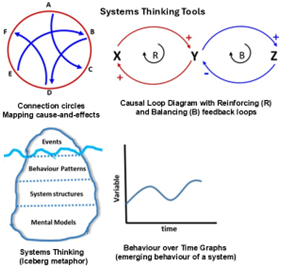
For this it is essential to introduce the concepts and principles of systems thinking (Figure 1). It is essential for students to learn a variety of systems thinking concepts and tools such as plotting dynamic behaviour patterns (behaviour over-time graphs, BOTGs), causal loops diagrams (CLDs) with reinforcing (R) and balancing (B) feedback loops, system archetypes for constructing models (see for example, Meadows, 2008; Richmond, 1994, 2000; Sterman, 2000).
Figure 1. Tools of systems thinking
Applying these systems thinking tools and concepts students will be able to make connections between disciplines to achieve the intended learning outcomes through integrated learning and problem-solving skills.
Purpose and System/Problem Boundary Identification
Purpose: In liberal arts, the purpose is to develop well-rounded individuals with critical thinking, problem-solving, and ethical reasoning skills. Systems thinking helps students understand the broader purpose of their education and how different disciplines interconnect.
System or Problem Boundary Identification: This involves defining what is included within the system and what is excluded. In liberal arts, this helps students delineate the scope of their studies and understand the limits of their knowledge.
Causation and Feedback Loops
Causation: Understanding cause-and-effect relationships is crucial in liberal arts. Systems thinking helps students analyze how different factors influence each other within a system.
Feedback loops: This involves recognizing how outputs of a system can loop back as inputs, influencing future behavior. In liberal arts, this principle helps students understand dynamic interactions and long-term consequences of actions.
Validity Criteria and Experiment Design for Validity
Validity Criteria: Establishing criteria to assess the validity of information and arguments is essential in liberal arts. Systems thinking provides tools to evaluate the reliability and relevance of data.
Experiment Design for Validity: Designing experiments or studies to test hypotheses and validate theories is a key skill. Systems thinking helps students create robust experimental designs to identify the policy levers that account for complex variables.
Policy Space and Experiment Design for Policy
Policy Space: This involves exploring different policy options and their potential impacts. In liberal arts, students learn to consider various perspectives and the broader implications of policies.
Experiment Design for Policy: Designing experiments to test policy interventions helps students understand the practical applications of their studies. Systems thinking aids in creating comprehensive policy experiments that consider multiple factors.
Integration of Systems Approach and Learner-Centered Teaching
Learner-centered teaching, as outlined by Weimer (Weimer 2010, 2013), fundamentally transforms the traditional classroom into dynamic, placing students at the heart of their educational journey. This approach not only involves students in the intricate process of learning but also empowers them to take charge of their educational experiences. By fostering reflection, collaboration, and explicit skill development, learner-centered teaching equips students with critical thinking and problem-solving skills essential for lifelong learning and success. When this approach is harmoniously integrated with essential pedagogical actions for engaging in activities that require independent work or collaboration, students have the chance to discover their preferred learning methods, solve problems, and explore concepts on their own or with peers. Thus, this holistic approach empowers learners to become active, self-directed participants in their educational journey, preparing them for the challenges of the modern world (Blumberg, 2019).
Liberal arts education faces several challenges, including the need to stay relevant in a rapidly changing world and to equip students with skills that are applicable across various fields. Integrating systems thinking and learning-centered teaching can address these challenges by making education more dynamic, interactive, and applicable to real-life situations (Forrester, 2016). For example, a history course might use systems thinking to analyze historical events within broader social, economic, and political contexts, while employing learning-centered techniques to encourage students to draw parallels with contemporary issues. Integrating systems thinking into liberal arts education can be achieved through various learner-centered strategies:
Interdisciplinary Courses: Designing courses that explicitly incorporate systems thinking and draw on multiple disciplines can help students see the connections between different fields of study.
Project-Based Learning: Encouraging students to work on projects that require interdisciplinary collaboration and systems thinking can enhance their problem-solving skills and real-world application of knowledge.
Collaborative Learning Environments: Creating learning environments that promote collaboration and dialogue among students from diverse academic backgrounds can foster a culture of interdisciplinary learning.
In conclusion, teaching in a liberal arts classroom, learner-centered environments empower students to build their own understanding by drawing on their prior knowledge, beliefs, and cultural practices. By incorporating systems thinking into the design and implementation of liberal arts curriculum and interdisciplinary course content, institutions can further enhance students’ holistic thinking and creative problem-solving skills.
Dr. Bellam Sreenivasulu earned his Ph.D. in Chemistry from the National University of Singapore. He has taught at NUS, SUTD, and MDIS, and co-taught with MIT faculty at SUTD in Singapore. Currently, he is a Senior Lecturer at Residential College 4, NUS. He specializes in Systems Thinking and System Dynamics (ST&SD) education, focusing on energy systems, sustainable energy production, energy supply and demand, energy security, and carbon emissions. He also teaches a course on sleep health using systems approach. Passionate about interdisciplinary and learner-centered teaching and research.
References
Blumberg, P. (2019).Making learning-centered teaching work: Practical strategies for implementation (2nd ed.) Stylus.
Barker, C.M. (2000). Liberal Arts Education for a Global Society. New York: Carnegie Corporation of New York.
Forrester, J. W. (2016). Learning through System Dynamics as Preparation for the 21st Century. System Dynamics Review, 32, 187−203
Meadows, D. (2008). Thinking in Systems: A Primer (Chelsea Green Publishing, Hartford, VT).
Richmond, B. (2000). The “Thinking” in Systems Thinking: Seven Essential Skills (Pegasus Communications, Waltham, MA).
Weimer, M. (2010). Inspired college teaching. San Francisco, CA: Jossey-Bass.
Weimer, M. (2013). Learner-centered teaching: Five key changes to practice (2nd ed.). San Francisco, CA: Jossey Bass.
This audio is auto-generated. Please let us know if you have feedback.
Dive Brief:
The New York Conservatory for Dramatic Arts plans to close at the end of its current academic year, with operations and classes set to end Aug. 31, it announced Tuesday.
The for-profit arts college is currently coordinating with other institutions to help find spots for students who have not completed their programs by then. So far, it has established teach-out agreements with Five Towns College and American Academy of Dramatic Arts, both in New York.
NYCDA trustees decided to close after a “thorough evaluation of our enrollment and financial forecasts,” the two-year college said in an FAQ page. In explaining the closure, it cited national college enrollment trends and demographic projections.
Dive Insight:
The 45-year-old NYCDA said that the decision to close “has not been made lightly, and it comes after exhaustive efforts to explore every possible alternative.”
On the FAQ page about the wind-down, the college noted that “the landscape of higher education has meaningfully changed since the pandemic.” Its own fall enrollment fell by 8.6% to 286 students between the pre-pandemic year of 2019 and 2023, according to federal data.
Founded in 1980 by Joan See, a successful commercial actor, the New York City institution started with a single private acting class.
From there, it was built into a “nationally accredited college that to this day empowers actors to follow their dreams, prove the doubters wrong, and make a living doing what they love,” as the institution described itself in Tuesday’s announcement.
Before the closure decision, NYCDA offered two-year acting programs in theater, musical theater, and film and television, and a two-year program in media production geared toward actors. It also offers shorter-term programs, including certificates. Its alumni include film and television actors, including Miles Teller, Jacob Batalon and Ashleigh Murray.
NYCDA joins a growing list of private arts colleges to fail recently. Last year saw the sudden closure of University of the Arts in Philadelphia along with the Delaware College of Art and Design. Pennsylvania Academy of the Fine Arts, meanwhile, announced it would stop offering two- and four-year degrees at the end of the 2024-25 academic year.
Those closures left holes not just in the higher education world of those regions but also in the local arts scenes, where the institutions employed working artists, hosted events and created hubs of artistic activity.
This audio is auto-generated. Please let us know if you have feedback.
Dive Brief:
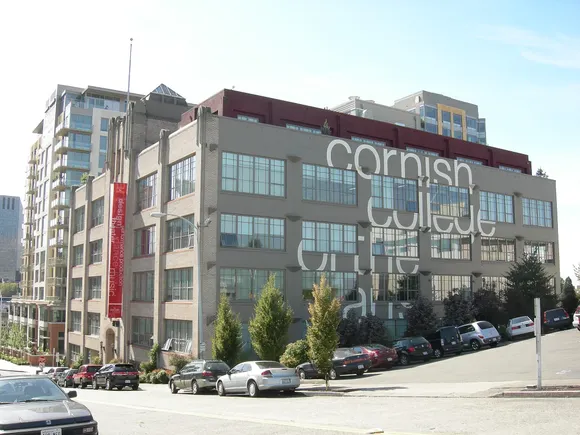
Seattle University officially absorbed the Cornish College of the Arts, it announced Tuesday, realizing the deal the two signed earlier this year to transfer nearly all of the arts college’s assets to the university.
The university expects the campus — now known as Cornish College of the Arts at Seattle University — to enroll between 430 and 450 students in the upcoming fall semester, according to a Tuesday announcement.
Seattle University offered jobs to the “vast majority” of Cornish’s original full-time employees, who were all let go last month. Most accepted the offer. The announcement this week did not give specific numbers, and the university did not immediately respond to questions Wednesday.
Dive Insight:
Seattle University and Cornish’s campuses are just 1 ½ miles apart, but the two institutions are dramatically different in scope.
The private Jesuit university enrolled 7,182 students in fall 2023, according to federal data. The same semester, Cornish had 502.
Cornish’s academic offerings focused on visual and interdisciplinary arts, while Seattle University offered a wider range of programs, from engineering to accounting to film and media. But the large institutiondid not have a fine arts school before acquiring Cornish’s name and assets.
“This is a historic day for two legendary Seattle institutions,” Seattle University President Eduardo Peñalver said in a statement. “The combination of Cornish with Seattle University preserves the Cornish legacy for future generations and will transform arts education in Seattle, opening up exciting interdisciplinary opportunities for students and faculty on both campuses.”
Cornish will operate as the university’s arts school at its original campus. Most Cornish students are opting to continue their education under Seattle University’s banner, according to Tuesday’s announcement. In spring 2025, Cornish enrolled 437 students who were not graduating that semester. Of that cohort, about 91% decided to stay and earn their degrees from Seattle University.
Cornish’s provost and vice president of academic affairs, Brian Harlan, will become dean of the arts school under Seattle University.
Beginning this fall, the university and Cornish will begin a “faculty-led process” of integrating both campuses’ arts programming, Harlan said in a Tuesday statement.
Of 125 Cornish’s original employees, 92 have been rehired, including Harlan, a Seattle University official told The Seattle Times. The university made job offers to 36 of Cornish’s 40 full-time faculty members, and 33 accepted.
The university also intends to hire adjunct faculty and part-time and seasonal staff over the summer, it said Tuesday.
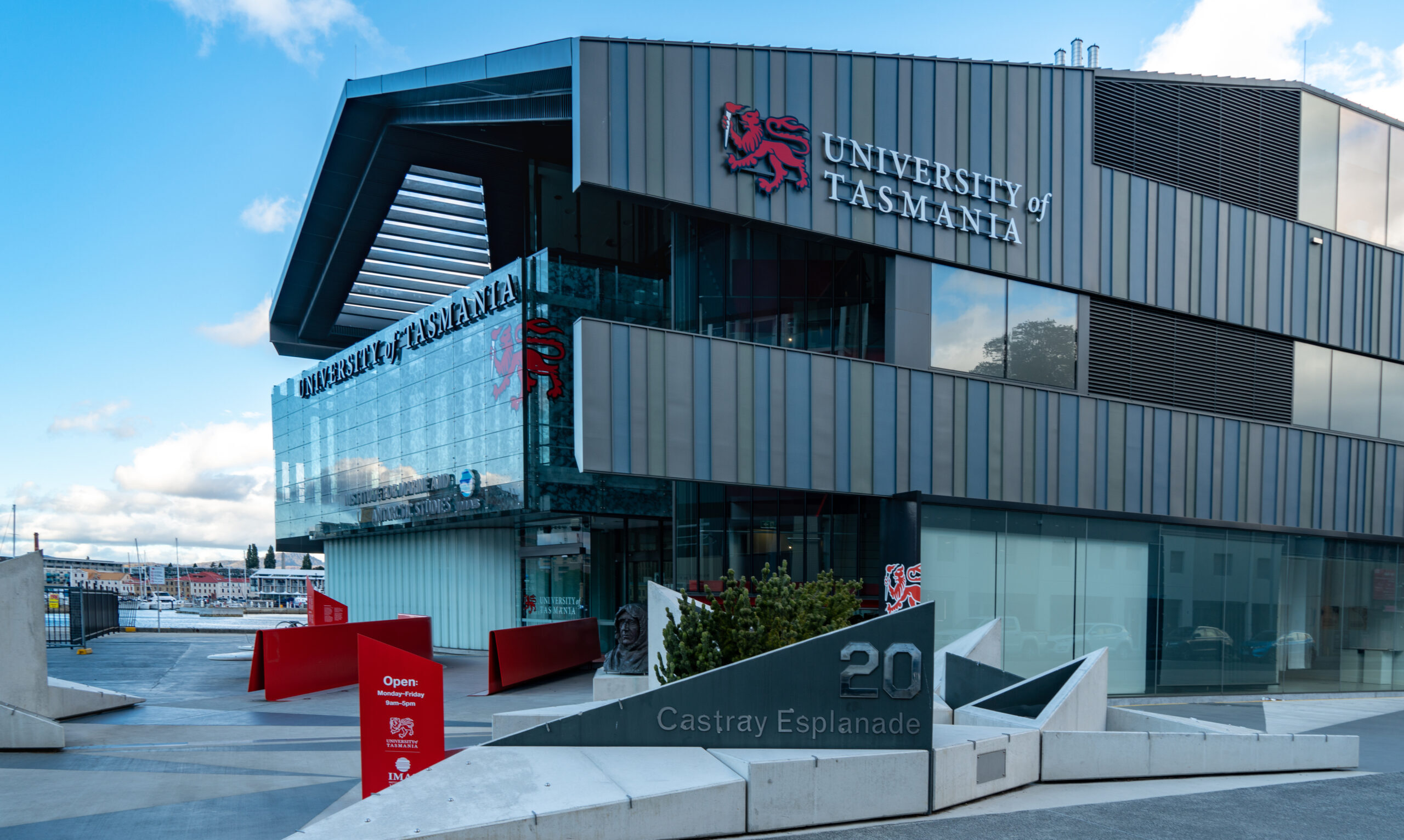
The University of Tasmania (UTAS) is set to cut 13 full-time staff as it proposes a massive shake-up of its humanities, social sciences, creative arts, and media schools amid declining student enrolments.
Please login below to view content or subscribe now.
We interviewed students currently studying creative arts subjects at a Russell Group university to hear more about their experiences of social class inclusivity. Speaking to ten undergraduate and eight postgraduate students studying a range of creative fields including music, drama and film, we found that working-class students find it difficult to attend class, are disadvantaged in terms of accessing the cultural resources needed to succeed on their course, and feel excluded from social life on campus.
Economic disadvantage presents a considerable barrier to students completing arts subjects at university. To be inclusive, university staff may have to adjust teaching and learning. We would like to make the case for those working in higher education to consider what classed assumptions are made about students in our institutions and accordingly reassess our expectations of those studying the creative arts.
Many of the disadvantages or challenges that working-class students face are connected to wider structural inequalities that are deeply entrenched in our society. At the same time, there are still meaningful interventions that staff can make to support working-class students. We suggest four ways in which university staff can make their practice more inclusive to working-class students.
Discuss working-class stories as present and live
Universities are middle-class spaces. In creative arts subjects, students often make work referring to their class identity. This can be at odds in institutions where middle-class experience is the “norm”.
Class diversity must be present within teaching. More working-class mentorship and role models would help students to feel like they belonged at university – including visiting working-class creatives. Our participants also advocated for contemporary working-class experience in the curriculum, in academic texts, and in the artworks discussed.
Staff must maintain a supportive and safe space when discussing issues pertaining to social class. Staff should also recognise that not everyone wants to talk about their background or experience. Additionally, staff must be aware of social class-based stereotyping that might exist in other students’ creative work, and be prepared to intervene when necessary if (often unintended) prejudices around work, class, accent, or lifestyle emerge.
Adapt teaching to the multiple demands on working-class students’ time
More and more students are undertaking part-time work alongside their studies. It is difficult to devise our curricula for only those students who can commit all their time to studying, when significant numbers are balancing their studies with multiple part-time, temporary and precarious jobs, or with care responsibilities.
Working-class and carer students may be commuting considerable distances to engage with their studies. This is creating a two-tier system of engagement, and many of the students we interviewed felt that teaching and learning on their courses was not flexible enough to support their participation. The same issues are present when students try to engage in extracurricular and cultural activities.
Working-class students asked for more online resources and access to course materials immediately at the start of modules, alongside concerns over early starts and late finishes and travel costs. They wanted permission to speak to staff about part-time work without feeling like they were “doing something wrong” or not taking their studies seriously. The normalisation of working alongside studying is something that staff may have to accept and work with, rather than try to push against.
Early intervention is important
The early stages of the student’s degree are a key time when social class difference and disadvantage is felt, with high levels of anxiety around finance and budgeting in comparison to more affluent peers.
Working-class students asked for the university to provide information to support their transition into economic independence. Examples include advice on budgeting, lists of free resources, inexpensive alternatives and free access to cultural resources.
Peer support plays a huge role in the transition to higher education. Working-class peer support groups and mentorship are as significant interventions to help.
Adjust assumptions and reassess expectations
University staff can make a difference to the experience of working-class students through simple adjustments of the assumptions we make.
Interviewees believed staff made assumptions about what creative arts students should know, or the kind of experiences they should have had prior to university. These assumptions corresponded with a more middle-class experience, for example knowledge of university life, or access to (and the ability to afford) cultural resources or engagement with extra-curricular activities. Participants were particularly frustrated by assumptions from staff that students could afford to pay for learning resources not available in the library.
Extra work is also needed to ensure that working-class or other marginalised students feel comfortable and entitled to ask for help from staff.
Because many students now must work alongside studying, students may have less time to complete their work outside of class. Stronger steers on the amount of time to complete activities and prioritisation of reading, and the removal of blame for those struggling to balance time constraints of working whilst studying can all be effective.
Working-class creatives
Class inclusivity means students feel like they belong on their course, alongside having the financial security to take the time and space to study.
This is particularly important in the creative arts because the more time and space students have to engage with their course or with extracurricular activities like arts societies, the more working-class stories will be represented in the creative work they make. Creative arts subjects must better support working-class students to engage fully with their studies – and not to be disadvantaged by financial pressure, lack of resource, or through feeling like they don’t belong on their course.
Netflix drama Adolescence has ignited two vital national conversations.
The rise of online misogyny among radicalised young men has seen Keir Starmer weighing in on the issue.
There’s also been a debate surrounding disenfranchisement among boys and young men in primary, secondary and tertiary education.
The latter has long been on the radar of policymakers, academics, and researchers. HEPI recently linked boys’ educational underattainment to a “veering towards the political extremes,” while discussions around figures like Andrew Tate have kept the former on Parliament’s agenda.
Yet both issues remained on the margins until Adolescence – written, produced, and starring Rose Bruford College alum Stephen Graham – catalysed real-world conversations and moved us toward legislative action.
Despite press, and policy, and parliament, the issue broke through because of storytelling.
Power of creative arts
Much like the Post Office scandal – exposed by Private Eye but only widely acknowledged after Mr Bates vs The Post Office (co-produced by another Rose Bruford alumus, Sara Huxley) – Adolescence shows how creative arts can achieve what policy papers often cannot: capturing public attention and driving cultural change.
It highlights a key truth in fostering social change – the arts play a vital role.
As a membership body representing nearly 40 per cent of creative arts students, we’re concerned by the continued perception of creative degrees as niche or non-essential – leading to disproportionate funding cuts compared to STEM.
In reality, our graduates shape public discourse on identity, gender, and social responsibility, shifting public discourse, and ultimately contributing to public policy.
At the same time as a devaluation of creative degrees, there’s another issue hiding in plain sight – working-class boys are falling behind in education.
HEPI has produced compelling reports on this subject, outlining the growing gender attainment gap, particularly for boys from disadvantaged backgrounds and neurodivergent boys (although we note that some of this may be down to underdiagnosis in girls).
Concerns in the report also raised that boys are less likely to be steered toward specific disciplines (while girls have been encouraged into STEM) and that traditional educational structures serve girls better.
Although the authors should avoid biologically deterministic assumptions around how people learn and bear in mind that gendered socialisation probably plays a large part here – regardless of how behaviour and engagement is socially or otherwise fostered, the data shows its material impact – boys academically underperform compared to girls at every age, in almost every subject.
Class acts
But it is essential to be clear – the issue is not boys in general, but working class boys who are most at risk of falling behind. Discussions that flatten this into a gender-only concern risk obscuring the real and compounding impact of class-based disadvantage on educational engagement and attainment.
This issue receives little attention in practice. A rudimentary and quick scan of Access and Participation Plans (APPs) revealed a striking omission: boys are rarely, if ever, mentioned as a specific target group.
Even when John Blake outlined the significant scale to equality of opportunity faced by “boys from working-class communities” back in 2022, it was primarily in comparison to smaller groups who experience more intense forms of disadvantage, rather than recognising the issue of working-class boys attainment as a standalone concern.
GuildHE Institutions like Rambert School, Northern School of Contemporary Dance and AUB are already doing vital outreach work to bring boys into the subject spaces they are underrepresented in. But again, this work often happens in isolation, without the policy recognition or funding it truly deserves.
That’s a mistake. For many boys, especially those disengaged from traditional academic pathways, creative disciplines provide an essential space to connect, reflect, and grow. Dance, drama, music, and film help young men process difficult emotions and identities constructively.
As our recent written submission to parliament outlined, the dance training boys took part in at Rambert School helped them in areas of life such as creative thinking, managing anger and ADHD symptoms. Arts University Bournemouth runs Being a Boy which provides a supportive space for young men to creatively and safely engage with the role of masculinity in their lives.
Add in Prof Becky Francis’s review of the school curriculum – which argues it’s failing students outside the A-levels-to-university pipeline, disproportionately boys – and her call to value arts subjects, and we see an emerging case for education that better accounts for how many boys have been socialised to learn and engage.
This is where creative education comes in. The arts are not just about performance or aesthetic appreciation – they are powerful tools for expression, empathy, and exploration, and a possible way to engage boys who are disenfranchised at an estimated cohort size of half a million from higher education
While the HEPI report calls for a push to get more men into teaching, care roles, and nursing, we believe in the individual and societal benefits of encouraging boys – particularly working-class boys – into, and their contribution to, the arts.
Some of this work is already being done by our alumnus – Stephen Graham discovered Owen Cooper, who plays Jamie Miller in Adolescence, who Cooper describes as “a normal working-class family from a normal council estate”. But there needs to be a concerted policy effort.
That means:
Valuing arts and creative degrees as critical to both gendered social progress and supporting widening participation in HE for boys
Including boys as a key demographic in widening participation strategies in HE.
Supporting cross-sector collaboration between educators, policymakers, creatives, and communities to tackle today’s issues and truly value the impact creative degrees make on individuals and society.
The success of Adolescence in sparking national debate is a wake-up call. If we want to tackle misogyny, and we must remember that Adolescence was fundamentally about violence against women and girls, as well as male disengagement in education, we need to invest in the places where empathy and identity are formed – and value how these are explored and communicated to wider society.
From fostering creativity and critical thinking to enhancing emotional intelligence and cultural awareness, arts education plays a crucial role in shaping future leaders.
Martine Kei Green-Rogers, Ph.D.
Dean, The Theatre School at DePaul University
Artists want to be in conversation with other artists, artforms, and disciplines of study. An arts education is valuable because we need people who are interested in exploring, highlighting, and sharing our collective humanity. We need people to tell the history of our global societies and help us recognize how to make what may seem foreign to us more familiar.
A conservatory model encourages other artforms and disciplines to play together by establishing a place where artists can fail miserably, pick back up, and start again. Students not only learn the technical skills of their craft, but they also learn creative problem-solving, collaboration and communication, and discipline and adaptability. These are the skills needed for a person to be successful, no matter what they decide to do later in life.
100 years of arts education
At The Theatre School at DePaul University, modeling new paths for what one can do with conservatory training is our future. We are an amazing school with a rich heritage. This year, we celebrate 100 years of training theatre professionals, and this milestone has given us an opportunity to reflect on how our students have taken their training and gone on to do so many phenomenal things both inside and out of the theatre world. Our graduates use their arts training to make the world a better place and to provide opportunities for the next generation of artists.
At the heart of who we are as an educational institution, and as a value based collective of artists, we embody in our spaces everyday why the arts are necessary.
Rebecca Ryan, the director of admissions for The Theatre School, summarizes who we are succinctly: ”Nestled in the heart of Chicago, a city renowned for its vibrant and diverse theatre scene, The Theatre School at DePaul University offers a cutting-edge education with 15 highly specialized Bachelor of Fine Arts programs ranging from Acting and Comedy Arts to Projection Design and Theatre Management, a Master of Fine Arts program in Acting, and a new Certification for Intimacy Professionals in Theatre & Cinema.
“With over 30 productions each year, students engage in immersive, hands-on experiences. Faculty — all professional theatre artists active in the industry — bring their real-world expertise to the classroom, along with their professional network and connections. Students develop skills that prepare them to innovate and excel in the dynamic entertainment landscape.”
More than art for art’s sake
We help students find their path by providing numerous opportunities to delve into the real-world applications for their art that goes beyond “art for art’s sake” (not that this is a bad thing). For example, we devised a theatrical piece in May 2024 as a response to an exhibition by Selva Aparicio at the DePaul Art Museum to bring awareness to domestic violence, we are currently partnering with the College of Science and Health at our university to train emerging healthcare professionals, and provoking conversations about our contemporary society through the lens of historical events via our partnership with the american vicarious and TimeLine Theatre.
These kinds of collaborative projects expand the world of possibilities for our students and the ability to experiment allows for someone to have the fortitude to carve their own paths and create their own opportunities.
While resilience, emotional intelligence, and critical-thinking skills might not be in the course catalog per se, these transferable skills not only prepare students for a wide range of careers, but an education in the arts also deeply connects students to our shared humanity. The world needs more innovators who lead with empathy.
Martine Kei Green-Rogers is the dean at The Theatre School at DePaul University in Chicago. She earned her Ph.D. from the Department of Theatre and Drama at the University of Wisconsin-Madison. She received her bachelor’s in theatre from Virginia Wesleyan College and her master’s in theatre history and criticism from The Catholic University of America. A director and writer, Martine has a long history in the theatre. She has held several positions in dramaturgy, literary management, writing, directing and creative storytelling in the professional theatre and entertainment industries. Her portfolio includes positions at the Oregon Shakespeare Festival and the Court Theatre in Chicago. Martine previously served as interim dean of the Division of Liberal Arts at the University of North Carolina School for the Arts. She also is the immediate past president of the Literary Managers and Dramaturgs of the Americas and the current President-Elect of the Association for Theatre in Higher Education (ATHE).
Arts engagement empowers youth by providing a vital outlet to express their thoughts, feelings, ideas, and passions, while also building their self-confidence, creativity, critical-thinking, and communication skills. This participation directly supports a student’s emotional well-being and academic success.
Yvonne Johnson
President, National PTA
Research shows that students who participate in the arts have higher GPAs, higher standardized test scores, and lower dropout rates. Yet, there are great disparities in the access to quality arts education for many students across the country. It is critical that we advocate for investments in arts education so all students can benefit from participating in the arts.
Here’s how you can help make arts more accessible to youth:
Ask your child’s school about current arts programs and funding. Talk to other parents about the barriers they face.
Email or call district leaders about expanding arts access.
Attend meetings with decision-makers and voice support for arts funding.
Meet with school administrators to discuss arts opportunities.
Share arts success stories on social media and with your local news media.
Remember: Your voice matters. Even small actions like attending one meeting or sending an email can help build momentum for better arts access.
If you aren’t already a member of PTA, join us! Our association has long advocated for access to arts education and our popular Reflections program encourages students to explore their talents and express their ideas by creating works of art for fun and recognition.
Together, we can ensure every child has the opportunity to experience the transformative power of the arts. Your voice and actions will help unlock creativity for generations to come.
As events at the federal level unfold in ways that will most certainly intensify the debate on public education, it is important to remember that Americans overwhelmingly support arts education.
In a recent survey conducted by Americans for the Arts, 90% of respondents proclaimed the importance of arts education, and 83% supported government funding for arts education programs. Americans know its importance because research consistently shows that a quality arts education is essential for a student’s overall learning experience. Students with access to arts education and arts-integrated classes demonstrate long-term retention of information and increased proficiency in reading, writing, and math. Beyond academics, arts education also positively impacts students’ mental health and emotional well-being. Engaging in the arts helps prevent depression and nurtures empathy and compassion for others.
The value of arts education
While research and anecdotal evidence clearly illustrate the value of arts education, teachers, parents, school leaders, and other stakeholders regularly face challenges related to funding, scheduling, and competing legislative priorities. Low-income students, students with disabilities, students of color, and other underrepresented groups have less access to quality arts education. Yet, these students stand to benefit the most from it and arts-integrated learning. There is strong agreement about the importance of arts education, and more than half of American adults believe students don’t have enough opportunities to take arts classes.
In addition to its academic benefits and vital role in supporting mental and emotional well-being, arts education also prepares students for the workforce by cultivating originality and creativity. Employers value strong communication, problem-solving, and teamwork — abilities developed in art classrooms, theater rehearsals, and band or orchestra performances. Furthermore, 61% of employed American workers say the arts boost their creativity, which makes them more successful at work.
Unlocking even more benefits
The emerging field of neuroarts provides even stronger evidence for the importance of arts education. Neuroarts is the transdisciplinary study of how the arts and aesthetic experiences measurably impact the body, the brain, and behavior, and how this knowledge can be applied to support health and well-being. Researchers Susan Magsamen and Ivy Ross have been pioneers in this field, finding that artistic experiences stimulate neurons and brain pathways unlike anything else. Their research shows that art can be integrated with medicine to improve mobility, relieve pain and trauma, enhance learning outcomes, prevent disease, and build resilience. For children in particular, participating in the arts supports brain and language development, emotional regulation, self-expression, and overall learning ability.
With so many profound benefits, the case for quality arts education is well-founded. Investing in arts education helps students become healthier and more likely to succeed both in the classroom and the workplace. It is crucial to ensure every student in the United States has access to a strong arts education.