The assassination of Charlie Kirk on September 10, 2025, offers a stark illustration of how violent acts against movement leaders can reconfigure political energy on U.S. campuses. Kirk was the leader of Turning Point USA, Turning Point Action (formerly Students for Trump), and Turning Point Faith. He was also the creator of the Professor Watchlist and the School Board Watchlist.
Far from diminishing conservative student mobilization, Kirk’s death appears to have amplified it—at least in the short term. Randall Collins’ sociology of interaction ritual chains and Eric Hoffer’s classic analysis of mass movements provide a useful lens for understanding both the surge and the likely limits of this moment.
Collins’ Emotional Energy Framework Applied to Kirk’s Death
Collins identifies four outcomes of successful ritual gatherings: group solidarity, emotional energy, sacred symbols, and moral righteousness. In the wake of Kirk’s assassination, conservative students and evangelical leaders have experienced all four in compressed, amplified form.
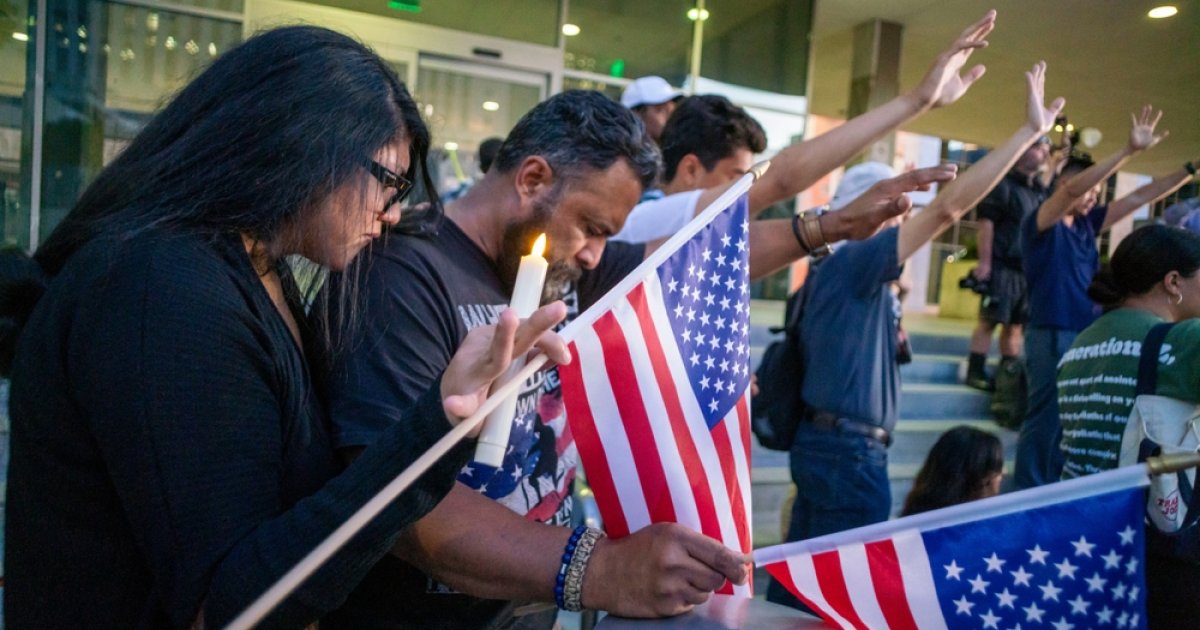
Pastors quickly declared Kirk a “Christian martyr.” Rob McCoy invoked biblical precedent, while Jackson Lahmeyer described the murder as “spiritual in nature and an attack on the very institution of the church.” This religious framing elevates Kirk from activist to sacred symbol.
The immediate response has been extraordinary. Turning Point USA claims more than 32,000 requests for new chapters in the 48 hours following his death. Collins would interpret this as emotional energy seeking new ritual outlets. In this sense, Kirk’s martyrdom has become not just a grievance but a generator of collective action.
The memorial scheduled for September 21 at State Farm Stadium—with capacity for more than 60,000 and featuring Donald Trump—is set to be the largest ritual gathering in the history of conservative student politics. Collins would predict this to be a high-intensity moment of “collective effervescence,” the kind of event that extends emotional energy for months if not years.
Hoffer’s Mass Movement Dynamics and Conservative Student Mobilization
Hoffer’s The True Believer provides a complementary angle. He argued that mass movements thrive on frustration, doctrine, and the presence of either a leader or a transcendent cause. Kirk’s assassination intensified frustration while transforming him into a more powerful symbolic figure than he was in life.
Student conservatives now have all three: grievance (left-wing violence), a sacred cause (free speech framed as religious duty), and a heroic narrative (following a martyred leader). In Hoffer’s words, martyrdom provides both “grievance and transcendent meaning.”
The shift from Kirk as a living leader to Kirk as martyr reflects Hoffer’s principle of substitutability. Loyalty has already migrated from the man himself to the mythology of his sacrifice. College Republicans chairman William Donahue compared the killing to Martin Luther King Jr.’s assassination, framing it as a watershed for the movement.
Sustainability and the Ritual Problem
The paradox is that Kirk’s most important contribution—the high-energy confrontational rituals of his “Prove Me Wrong” campus debates—cannot be replicated without him. These events generated viral spectacle, solidified conservative identity, and created sacred moments of confrontation. They were, in Collins’ terms, engines of emotional energy.
The September 21 memorial may provide a one-time boost, but Collins emphasizes that emotional energy must be renewed through repeated rituals. Without Kirk’s charisma and willingness to create confrontational spaces, conservative students risk energy dissipation. Already some students report greater enthusiasm for activism, while others express fear of being targeted themselves.
The dilemma is clear: the rituals that generated the most energy (public confrontations) are the very ones most likely to invite violence. This tension may limit the sustainability of the movement’s current surge.
The Profit Motive: Martyrdom as Marketplace
Beyond the sociology of solidarity lies a material reality: martyrdom is also a business model. Conservative organizations are already converting Kirk’s death into a revenue stream. Within hours of the assassination, Turning Point USA launched fundraising appeals invoking Kirk’s “sacrifice,” while conservative merchandisers began selling commemorative t-shirts, hats, and wristbands emblazoned with slogans like “Martyr for Freedom” and “Charlie Lives.”
Publishing houses are reportedly fast-tracking hagiographic biographies, while streaming platforms are negotiating for documentaries. Memorial events, livestreams, and “Martyrdom Tours” are being packaged as both spiritual rituals and ticketed spectacles. Kirk’s death, in other words, is generating not only emotional energy but also financial capital.
This profit motive raises questions about the sincerity of the rhetoric surrounding Kirk’s martyrdom. While Collins and Hoffer help explain the emotional pull, the commodification of grief ensures that the “sacred symbol” is also a lucrative brand. Conservative student organizing may thus be sustained less by spontaneous devotion than by a well-financed industry of grievance, merchandise, and media spectacle.
Indicators to Watch
Several markers will reveal whether Kirk’s martyrdom produces lasting transformation or burns out in ritual dissipation:
-
Memorial impact: Attendance and intensity at the September 21 gathering will test whether Kirk’s death can generate lasting solidarity.
-
Chapter formation: The real test of Turning Point USA’s 32,000 claims will be functioning chapters in six months.
-
Leadership succession: Hoffer reminds us that movements need charismatic leaders. At present, Trump appears to be monopolizing the emotional energy, raising doubts about the rise of new student leaders.
-
Counter-mobilization: Collins’ conflict theory suggests left-wing backlash could shape whether conservative students double down or retreat.
The Probable Trajectory
For the next 6–18 months, conservative student mobilization is likely to grow. The movement now has the grievance, sacred symbolism, and transcendent narrative that both Collins and Hoffer identify as powerful motivators.
But sustaining this surge will be difficult without Kirk’s unique talent for generating high-energy campus rituals. Unless new leaders emerge who can replicate or reimagine those ritual forms, the emotional energy of martyrdom may eventually dissipate.
At the same time, the financial infrastructure now growing around Kirk’s death suggests the movement has a fallback strategy: keep the martyrdom alive as long as it remains profitable. In this way, Kirk’s assassination may prove to be not just a sociological event but also a business opportunity—one that reveals the convergence of politics, religion, and profit in contemporary conservative student life.