Tag: athlete

  • $1.2B Fine, Nix Trans Athlete Wins, More

    $1.2B Fine, Nix Trans Athlete Wins, More

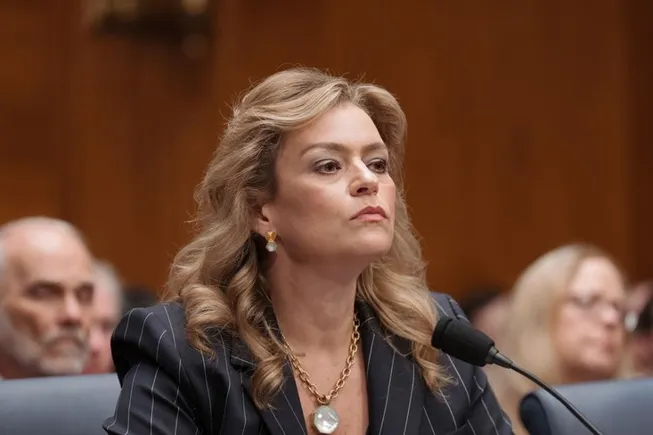
    Juliana Yamada/Los Angeles Times/Getty Images

    The details of the Trump administration’s demands on the University of California, Los Angeles—in addition to the previously reported $1.2 billion payout the federal government asked for—have finally been revealed. A lawsuit by UC faculty unions forced the higher ed system to release a copy of a draft resolution agreement, shedding light on the terms UC was first faced with nearly three months ago.

    The Trump administration has demanded, among other things, that UCLA not enroll “foreign students likely to engage in anti-Western, anti-American, or antisemitic disruptions or harassment.” In the same paragraph, the proposed resolution agreement says UCLA would have to “socialize international students to the norms of a campus dedicated to free inquiry and open debate.”

    The federal government also demanded that UCLA ban overnight campus demonstrations and mandate that masked campus protesters reveal their identities when asked.

    Multiple provisions aim to limit transgender individuals’ rights. The document demands that UCLA’s medical school and affiliated hospitals stop “performing hormonal interventions and ‘transgender’ surgeries” on anyone under 18; stop allowing transgender women to play on women’s sports teams; strip records, awards and other recognition from transgender women athletes; and send personal apologies to the cisgender women who placed lower than trans athletes.

    California voters banned affirmative action in public education nearly 30 years ago, but the demand letter suggests the Trump administration doesn’t think UCLA has complied. It would require UCLA to bar providing “information about candidates’ race, sex, ethnicity, or other protected characteristics to faculty or other UCLA personnel with decision-making authority over hiring, retention, promotion or tenure.”

    Other provisions target affirmative action in hiring and student admissions, including a line that says, “UCLA shall discontinue race- and ethnicity-based scholarships.” The proposed agreement says “proxies used to effectuate race-based or sex-based outcomes” aren’t allowed in selecting for fellowship programs and also bans the use of such undefined proxies in hiring and admissions.

    The document’s release comes after UC said in early August that it would negotiate with the federal government, citing the estimated $584 million in funding that at least three different federal agencies had announced they were suspending. That funding freeze followed a July 29 letter to UC from the Department of Justice, which said its months-long investigations across the system had so far concluded that in its response to a pro-Palestinian protest encampment in spring 2024, UCLA violated the equal protection clause of the 14th Amendment and Title VI of the Civil Rights Act of 1964.

    It was yet another example of the Trump administration accusing a selective university of tolerating antisemitism and cutting off hundreds of millions of federal dollars. But, unlike Harvard and Columbia Universities, UCLA is a public institution, and its targeting by the federal government represents an expansion of the administration’s campaign to overhaul higher ed.

    Last week, the University of Virginia became the first known public institution to settle with the administration over discrimination allegations. That settlement didn’t require a payout, but among other things, UVA committed to not use proxies for race; to end all diversity, equity and inclusion programming; and to prohibit trans athletes from participating in sports.

    Media earlier reported some of the administration’s demands on UCLA, but university officials didn’t make the details public until Friday, when a lawsuit by the UCLA Faculty Association and Council of UC Faculty Associations forced them to.

    “Accession to these demands would be to undermine everything that has made the UC the successful engine of social mobility and economic might that it has been for our state,” Anna Markowitz, president of the UCLA Faculty Association, wrote in an email. “It will harm undergraduate learning opportunities, and hamper UC’s ability to be a scholarly leader on the international stage. It enshrines ideology at the heart of the institution rather than decades of empirical and scholarly understanding. We stand against this extortion effort.”

    Markowitz said the “UCLA FA and CUCFA have stood with our union colleagues in calling for no negotiations since the beginning.” The university administration “is under intense federal pressure,” she said, and she urged them to resist—“particularly because other faculty legal action has resulted in the restoration of nearly all of the temporarily suspended federal grants.”

    Indeed, Stett Holbrook, a UC spokesperson, wrote in an email to Inside Higher Ed Monday that “as for terminated federal research funds, that figure is in the tens of millions”—a far cry from the August estimate of $584 million.

    He provided a statement saying, “UC has been clear it must evaluate its response to the administration’s settlement proposal that, like all settlement communications, is confidential. As stated previously, the proposed $1.2 billion settlement payment alone would derail work that saves lives, grows our economy, and fortifies our national security. UC remains committed to protecting the mission, governance, and academic freedom of the University.”

    White House and DOJ officials didn’t respond to requests for interviews Monday or answer written questions.

    Source link

  • University of Kentucky Athlete Arrested After Infant Found Dead in Closet – Amid Kentucky’s Near-Total Abortion Ban

    University of Kentucky Athlete Arrested After Infant Found Dead in Closet – Amid Kentucky’s Near-Total Abortion Ban

    Lexington, KY (September 3, 2025) — A University of Kentucky student and athlete, 21-year-old Laken Ashlee Snelling—a senior member of the UK STUNT cheer team—has been arrested and charged in connection with the death of her newborn, authorities say.

    Allegations and Legal Proceedings

    Lexington police were called to a Park Avenue residence on August 27 after they discovered the unresponsive body of an infant hidden in a closet, wrapped in a towel inside a black trash bag. Snelling admitted to giving birth and attempting to conceal both the infant and evidence of the birth, according to arrest documents.

    Snelling faces three Class D felony charges:

    Each charge carries potential penalties of 1 to 5 years in prison and fines up to $10,000.

    At her first court appearance on September 2, Snelling pleaded not guilty and was released on a $100,000 bond, with the court ordering her to live under house arrest at her parents’ home in Tennessee. Her next hearing is scheduled for September 26.

    A preliminary autopsy by the Fayette County Coroner’s Office revealed that the infant was a boy, but the cause of death remains inconclusive. Officials confirmed that a thorough death investigation is ongoing.

    Context: Kentucky’s Near-Total Abortion Ban

    Kentucky currently enforces one of the nation’s most restrictive abortion laws. Since August 1, 2022, the state’s trigger law has rendered abortion completely illegal, except when necessary to prevent the pregnant individual’s death or permanent impairment of a major, life-sustaining bodily function. No exceptions are made for rape, incest, or fetal abnormalities.

    Attempts to challenge the ban have largely failed. A 2024 lawsuit disputing the near-total prohibition was voluntarily dismissed earlier this year, and the law remains firmly in place. Additionally, a constitutional amendment that would have explicitly declared that Kentucky’s state constitution does not protect abortion rights was rejected by voters in November 2022.

    Public Reaction and Additional Details

    Snelling, originally from White Pine, Tennessee, had built a public persona that included cheerleading and pageant appearances. Months earlier, she had posted on TikTok expressing a desire for motherhood—listing “having babies” among her life goals. Viral maternity-style photos—later removed from her social media—have intensified public scrutiny.

    A Broader National Context

    Snelling’s case arises within a wider national conversation about the legal and societal implications of criminal investigations following pregnancy outcomes. Since the repeal of federal protections for abortion rights, concerns have grown that miscarriages, stillbirths, or even self-managed abortions may now be subject to legal scrutiny—raising fears about reproductive autonomy and medical privacy.


    Sources

    • The Guardian: University of Kentucky athlete charged after dead infant found hidden in closet (Sept. 2, 2025)

    • People: Univ. of Kentucky STUNT Team Member Arrested After Allegedly Hiding Dead Newborn in Her Closet (Sept. 2, 2025)

    • TurnTo10: University of Kentucky athlete pleads not guilty to hiding newborn in closet (Sept. 2, 2025)

    • WWNYTV: College student pleads not guilty after dead infant found in closet (Sept. 3, 2025)

    • The Sun (UK): Laken Snelling cheerleader baby case (Sept. 2, 2025)

    • WKYT: Fayette County coroner releases autopsy results after infant found in closet (Sept. 3, 2025)

    • AP News: Kentucky abortion law lawsuit dismissed (2024)

    • Wikipedia: Abortion in Kentucky (updated 2025); 2022 Kentucky Amendment 2

    • New York Post: Kentucky cheerleader who hid newborn had listed “having babies” as life goal (Sept. 2, 2025)

    • Fox News: Kentucky athlete once posted about wanting babies (Sept. 2, 2025)

    • India Times: Viral maternity photos of Kentucky student after newborn death case (Sept. 2, 2025)

    • Vox: How abortion bans create confusion and surveillance risks (2025)

    Source link

  • A Unified System for Student Athlete Supports

    A Unified System for Student Athlete Supports

    A growing number of programs in higher education focus on student athletes’ mental health, recognizing that the pressures of competing in collegiate athletics, combined with academic challenges, financial concerns and team relationships, can negatively impact student well-being.

    At the University of Richmond, the athletics department created a new program to emphasize holistic student well-being, taking into account the different dimensions of a student athlete’s identity and development.

    Spider Performance, named after the university mascot, unites various stakeholders on campus to provide a seamless experience for student athletes, ensuring they’re properly equipped to tackle challenges on the field, in the classroom and out in the world beyond college.

    “The athlete identity is a really special part of [students’ identities], but it’s not the only part, so making sure they are [considered] human beings first—even before they’re students, they’re humans first. Let’s examine and explore that identity,” said Lauren Wicklund, senior associate athletics director for leadership and student-athlete development.

    How it works: The university hosts 17 varsity sports in NCAA Division I, which include approximately 400 student athletes. Richmond has established four pillars of the student athlete experience: athletic, academic, personal and professional achievement.

    “The whole concept is to build champions for life,” said Wicklund, who oversees the program. “It’s not just about winning in sport; it’s about winning in the classroom, winning personally and then getting the skills and tools to win for the rest of your life.”

    These pillars have driven programming in the athletics department for years, but their messaging and implementation created confusion.

    Now, under Spider Performance, the contributions and collaborations of stakeholders who support student athletes are more visible and defined, clarifying the assistance given to the athletes and demonstrating the program’s value to recruits. The offices in Spider Performance include academic support, sports medicine, leadership, strength and conditioning, mental health, and well-being.

    “It’s building a team around them,” Wicklund explained. “Rather than our student athlete thinking, ‘I have to go eat here, I have to do my homework here, I have to do my workout here,’ it’s, ‘No, we want you to win at everything you do, and how you do one thing is how you do everything.’”

    Outside of the specific athletic teams, Wicklund and her staff collaborate with other campus entities including faculty members, career services and co-curricular supports.

    Preparing for launch: Richmond facilitates a four-year development model for student athletes, starting with an orientation experience for first-year students that helps them understand their strengths and temperament, up to more career-focused programming for seniors.

    Recognizing how busy students’ schedules get during their athletic season, the university has also created other high-impact learning experiences that are more flexible and adaptive. Students can engage in a career trek to meet alumni across the country, study abroad for a short period, participate in a service project or take a wellness course, all designed to fit into their already-packed schedules.

    Part of the goal is to help each student feel confident discussing their experience as an athlete and how it contributes to their long-term goals. For instance, students might feel ill-equipped for a full-time job because they never had a 12-week internship, but university staff help them translate their experiences on the field or the court into skills applicable to a workplace environment, Wicklund said.

    The university is also adapting financial literacy programming to include information on name, image and likeness rights for student athletes, covering not just budgeting, investing and financial literacy topics but also more specific information related to their teams.

    Encouraging athletes to attend extra sessions can be a challenge, but the Spider Performance team aims to help students understand the value of the program and how it applies to their daily lives. The program also requires buy-in from other role models in students’ lives, including trainers, coaches and professors.

    “We work really hard to customize fits to different programs so we’re speaking the same language as our coaches,” which helps create a unified message to students, Wicklund said.

    If your student success program has a unique feature or twist, we’d like to know about it. Click here to submit.

    Source link

  • Trump Wants to Cut Funding for California Schools Over One Trans Athlete. It’s Not So Easy – The 74

    Trump Wants to Cut Funding for California Schools Over One Trans Athlete. It’s Not So Easy – The 74


    Get stories like this delivered straight to your inbox. Sign up for The 74 Newsletter

    This story was originally published by CalMatters. Sign up for their newsletters.

    California’s schools and colleges receive billions in federal funding each year — money that President Donald Trump is threatening to terminate over the actions of one student. AB Hernandez, a junior from Jurupa Valley High School, is transgender, and on May 31 she won first- and second-place medals at the state track and field championship.

    “A Biological Male competed in California Girls State Finals, WINNING BIG, despite the fact that they were warned by me not to do so,” Trump said in a social media post last week. “As Governor Gavin Newscum (sic) fully understands, large scale fines will be imposed!!!”

    Despite this post and a similar threat a few days earlier to withhold “large-scale” federal funding from California, Trump lacks the authority to change the state’s policy toward transgender athletes without an act of Congress or a decision by the U.S. Supreme Court. And recent court cases suggest that Trump also may have a hard time withholding money from California.

    California state law explicitly allows transgender students in its K-12 school districts to compete on the team that matches their preferred gender, but the Trump administration has issued multiple directives that restrict access to girls’ sports, including a letter last week from the U.S. Department of Justice telling high schools to change their policies.

    On Monday, California Attorney General Rob Bonta sued the Justice Department over its letter, saying it had “no right to make such a demand.”

    “Let’s be clear: sending a letter does not change the law,” said State Superintendent of Public Instruction Tony Thurmond in a statement to school districts. “The DOJ’s letter to school districts does not announce any new federal law, and state law on this issue has remained unchanged since 2013.” On Monday, Thurmond sent his own letter to the Trump administration, refuting its legal argument.

    California receives over $2 billion each year for its low-income Title I schools, as well as over $1 billion for special education. At the college level, students receive billions in federal financial aid and federal loans. Even if Trump lacks the legal authority to change state law, he could still try to withhold funding from California, just like he tried with Maine. In February, Trump asked Maine Gov. Janet Mills if her state was going to comply with a presidential executive order — which is not a law — that directed schools to bar transgender girls from certain sports. Mills said she’d comply with “state and federal laws,” effectively rebuking the president.

    The Trump administration has since tried to withhold funding from Maine, but legal challenges have prevented it.

    The NCAA vs. California state law

    Trump made banning transgender youth athletes a centerpiece of his 2024 presidential campaign, and it’s remained a focal point for his administration this year. Nationally, Americans increasingly support restrictions on transgender athletes, according to surveys from the Pew Research Center. Gov. Gavin Newsom, who last year signed legislation supporting trans students, spoke out against transgender athletes in a podcast this March, saying it was “deeply unfair” to allow transgender girls to compete in girls’ sports.

    Female athletes with higher levels of testosterone or with masculine characteristics have long faced scrutiny, biological testing and disqualification. Debates about who gets to participate in girls’ or women’s sports predate the Trump administration — and Newsom — and policies vary depending on the athletic institution.

    In 2004, the International Olympic Committee officially allowed transgender athletes to compete in the sport that aligned with their gender identity, as long as the athlete had sex reassignment surgery, only to change that policy in 2015 and require hormone testing. In 2021, the committee changed the policy again, creating more inclusive guidelines but giving local athletic federations the power to create their own eligibility criteria.

    Across California, youth leagues, private sports leagues and other independent athletic associations all have their own policies. Some allow transgender women and men to participate; some restrict who can compete. Some require “confirmation” of a participant’s gender, such as a government ID or statements from health care professionals, while other associations take the athletes at their word.

    California’s colleges and universities are not allowed to discriminate against transgender students but state law doesn’t provide any guidance beyond that. After the presidential executive order in February, the National Collegiate Athletic Association (NCAA), which independently regulates college sports, changed its rules, prohibiting transgender women from competing and putting colleges in a bind. Roughly 60 California universities are part of the NCAA, including almost all of the UC and many Cal State campuses. Community colleges, which represent the bulk of the state’s undergraduates, are not part of the NCAA.

    “There’s a strong argument (the NCAA rules) could violate state law and federal equal protection,” said Elana Redfield, the federal policy director at UCLA’s Williams Institute, which studies LGBTQ+ issues.

    Amy Bentley-Smith, a spokesperson for the California State University system, declined to comment about how the NCAA policy conflicts with state and federal regulations. She said the Cal State campuses abide by the NCAA rules — preventing transgender athletes from competing — while still following state and federal non-discrimination laws regarding trans students.

    Stett Holbrook, a spokesperson for the University of California system, said the UC does not have a system-wide policy for transgender athletes. He did not respond to questions about whether the campuses abide by NCAA rules.

    Unlike the NCAA, the California Community College Athletic Association allows transgender athletes to compete. A spokesperson for the association, Mike Robles, said he’s aware of the NCAA rules and the Trump administration’s priorities but he did not say whether the association will modify its own policy.

    The U.S. Constitution is silent on trans students

    In February, just days after the president’s inauguration and the executive order regarding transgender athletes, the U.S. Department of Education launched an investigation into San Jose State after a women’s volleyball player outed her teammate as transgender. The education department has yet to provide an update on that investigation.

    With the Trump administration’s focus now on CA K-12 school districts, the legal debate has intensified. In its letter to the state’s public schools last week, Assistant U.S. Attorney General Harmeet Dhillon said allowing transgender girls to compete in girls’ sports is “in violation” of the Equal Protection Clause of the U.S. Constitution and asked schools to change their policies.

    But the U.S. Constitution doesn’t say anything about transgender athletes, at least not explicitly.

    Instead, Dhillon is offering an interpretation of the Constitution, “which doesn’t carry the full force of law,” Redfield said. The laws that do govern transgender athletes, such Title IX, aren’t clear about what schools should do, and the U.S. Supreme Court — the entity with the power to interpret federal law and the Constitution — has yet to decide on the matter.

    That said, many lower level judges have already weighed in on whether the Constitution or Title IX law protects transgender students or athletes.“The preponderance of cases are in favor of trans plaintiffs,” Redfield said. “The federal government is contradicting some pretty strong important precedent when they’re making these statements.”

    After Trump’s comments about AB Hernandez, the nonprofit entity that regulates high school sports, the California Interscholastic Federation, changed its policy, slightly. For the state’s track and field championship, the federation said it would implement a new process, whereby AB Hernandez would share her award with any “biological female” that she beat. All “biological female”  athletes below Hernandez would also move up in ranking.

    On May 31, Hernandez shared the first-place podium twice and the second-place podium once, each time with her competitors smiling supportively, the San Francisco Chronicle reported.

    A spokesperson for the governor, Izzy Gardon, said that approach is a “reasonable, respectful way to navigate a complex issue without compromising competitive fairness.”

    This article was originally published on CalMatters and was republished under the Creative Commons Attribution-NonCommercial-NoDerivatives license.


    Get stories like these delivered straight to your inbox. Sign up for The 74 Newsletter

    Source link

  • Trump administration rescinds Title IX guidance on athlete pay

    Trump administration rescinds Title IX guidance on athlete pay

    The Trump administration announced Wednesday it is rolling back guidance issued in the final days of the Biden administration that said payments to college athletes through revenue-sharing agreements or from name, image and likeness deals “must be made proportionately available to male and female athletes.”

    Republicans quickly criticized the guidance and called for its rescission, arguing that mandating equal pay between men and women’s sports could cause some colleges to cut athletics programs.

    Under Title IX, colleges must provide “substantially proportionate” financial assistance to male and female athletes, though it wasn’t clear until the Biden guidance whether that requirement applied to NIL deals or revenue-sharing agreements. A settlement reached in the House v. NCAA case would require colleges to share revenue with athletes starting in the 2025–26 academic year and provide back pay.

    The Trump administration said the guidance was “overly burdensome” and “profoundly unfair.”

    “Enacted over 50 years ago, Title IX says nothing about how revenue-generating athletics programs should allocate compensation among student athletes,” acting assistant secretary for civil rights Craig Trainor said in a statement. “The claim that Title IX forces schools and colleges to distribute student-athlete revenues proportionately based on gender equity considerations is sweeping and would require clear legal authority to support it.”

    A federal judge is set to sign off on the House settlement later this spring. Several athletes have objected to the plan, including some groups of women athletes who argue the revenue won’t be shared equitably and will primarily benefit men who play football and basketball.

    Source link