Tag: athletes

  • Recognizing First-Gen Student Athletes

    Recognizing First-Gen Student Athletes

    First-generation students can often feel alone or isolated on their college campuses, but a new initiative at the University of Texas, San Antonio, seeks to put first-generation student athletes in the spotlight.

    Starting this fall, UTSA competitive athletes will be given special patches to place on their uniforms, recognizing their unique identity as a first-gen learner.

    “We’ve been really intentional about telling the stories of our student athletes and sharing their personal stories that extend far beyond the fields and courts of competition,” said Lisa Campos, vice president for intercollegiate athletics and athletic director.

    Approximately 45 percent of UTSA’s student population are the first in their families to attend college, and over one-third of student athletes (or 113 students) are also first-gen learners. So far, a majority of student athletes have opted to wear the patch—which displays the campus mascot, a roadrunner, and the words “first gen”—on their uniforms for the upcoming year, Campos said.

    First gen in context: While NCAA student athletes are more likely to report thriving while in college, according to a study by Gallup, first-generation students are less likely to be engaged and connected on campus.

    A 2023 Student Voice survey by Inside Higher Ed and College Pulse found 37 percent of first-gen students spent zero hours per week engaging in extracurricular activities, while just 25 percent of continuing-generation students reported spending no time participating in activities on campus.

    Navigating institutional processes and the hidden curriculum of higher education can also be barriers to first-generation student success, because these students are less likely to ask for help or use campus resources.

    “First-gen students need a lot of support and a lot of education about what the college experience is like because, unlike other students, there’s not someone in their household who can answer all of the questions they may have,” Campos said.

    Past research shows, when given academic and emotional support, first-generation student athletes feel more driven and capable of graduating from their college or university.

    Students on display: The patch is just one piece of how the university seeks to celebrate first-generation students’ identities. UTSA’s athletic department is in the middle of a campaign that highlights stories of first-generation students, coaches and staff, recognizing their unique experiences. The department is also creating a resource hub on its website for first-gen student athletes.

    As a first-gen student herself, Campos said attending and graduating from college is a major accomplishment for these students because of how new and unfamiliar the experience can be. “It’s important to us to recognize those student athletes who every day are changing the trajectory of their families for generations to come.”

    Many of UTSA’s athletic staff members, including those on the leadership team or senior staff, are also first-generation college graduates, which Campos said provides them a better understanding of how to support student athletes.

    Across the university, first-generation students can participate in a mentorship program and other special programming from the First-Generation and Transfer Student division.

    How does your campus celebrate first-generation student identities? Tell us about it.

    Source link

  • Penn Agrees to Trump’s Demands, Will Strip Trans Athlete’s Awards

    Penn Agrees to Trump’s Demands, Will Strip Trans Athlete’s Awards

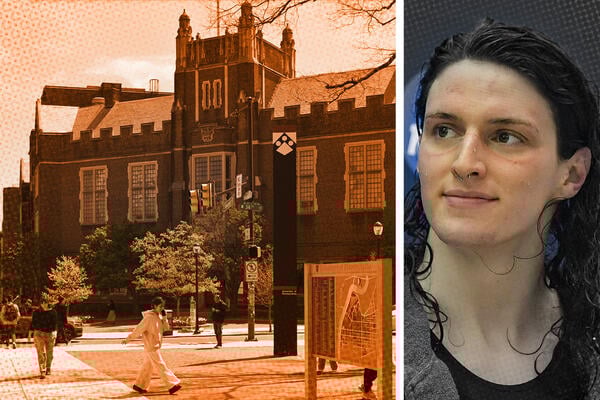
    Photo illustration by Justin Morrison/Inside Higher Ed | Kyle Mazza/Anadolu/Getty Images | Rich von Biberstein/Icon Sportswire/Getty Images

    The University of Pennsylvania will concede to the Trump administration’s demands that the university “restore” swimming awards—and send apology notes—to female competitors who lost to a trans athlete, the Department of Education’s Office for Civil Rights announced Tuesday.

    The department previously found that Penn violated Title IX for allowing a trans woman to compete on a women’s sports team—presumably referring to Lia Thomas, who rose to national attention while competing on Penn’s women’s swim team three years ago.

    To end the investigation, the administration demanded in part that Penn apologize to cisgender women whose swimming awards and honors were “misappropriated” to trans women athletes. Multiple Title IX advocates lambasted the department’s demands, arguing the agency was misusing the landmark gender-equity law to punish trans students and their institutions.

    Penn is one of multiple higher education institutions and K–12 schools that the administration has targeted for allowing trans women to play on women’s sports teams, in accordance with NCAA policy at the time. But it appears to be the first institution of higher education to reach a resolution agreement over the issue since Trump took office.

    “Penn remains committed to fostering a community that is welcoming, inclusive, and open to all students, faculty, and staff,” Penn president J. Larry Jameson said in a statement Tuesday. “I share this commitment, just as I remain dedicated to preserving and advancing the University’s vital and enduring mission. We have now brought to a close an investigation that, if unresolved, could have had significant and lasting implications for the University of Pennsylvania.”

    Separate from the department’s investigation, the White House paused $175 million in funding to the university because Penn “infamously permitted a male to compete on its women’s swimming team,” an official said in March. It’s not clear if the funding will be restored or when.

    Jameson stressed in the statement that the university was in compliance with Title IX and all NCAA guidelines at the time that Thomas swam for Penn’s women’s team from 2021 to 2022. But, he said, “we acknowledge that some student-athletes were disadvantaged by these rules. We recognize this and will apologize to those who experienced a competitive disadvantage or experienced anxiety because of the policies in effect at the time.”

    Title IX advocates have emphasized that trans athletes are not, in fact, explicitly forbidden from playing on women’s sports teams under the current Title IX regulations, which were finalized under the previous Trump administration and are the same ones that were in effect when Thomas was competing.

    In addition to stripping Thomas’s awards, Penn agreed to ED’s demands to make a public statement that people assigned male at birth are not allowed in Penn’s women’s athletic programs or its bathrooms and locker rooms, according to the department’s news release. The institution must also promise to adopt “biology-based definitions for the words ‘male’ and ‘female’ pursuant to Title IX” and Trump’s February executive order banning trans athletes from playing on the team that aligns with their gender.

    That statement also went up Tuesday. In it, the university promised to follow Trump’s trans athlete ban, as well as the executive order he signed that withdraws federal recognition of transgender people, with regard to women’s athletics.

    In the department’s announcement, Paula Scanlan, one of Thomas’s former teammates who has since led the crusade against trans women athletes, said she was “deeply grateful to the Trump Administration for refusing to back down on protecting women and girls and restoring our rightful accolades. I am also pleased that my alma mater has finally agreed to take not only the lawful path, but the honorable one.”

    Shiwali Patel, senior director of safe and inclusive schools at the National Women’s Law Center, criticized the agreement in a statement Tuesday as a “devastating and shameful outcome.” She blamed Penn’s “utter failure” as well as the department’s “continued manipulation of Title IX.”

    “The Trump administration’s attacks on civil rights protections, including Title IX, and obsession with undermining bodily autonomy is the real harm to women and girls, unlike transgender athletes who want to compete in sports alongside their peers and pose no threat to women’s sports, contrary to Trump’s lies,” Patel said in the statement. “In fact, their inclusion benefits all women and girls. We will continue to support Lia Thomas and her peers and their right to compete.”

    Source link

  • Court Approves Final Settlement Allowing Revenue Sharing Between Higher Ed Institutions and College Athletes – CUPA-HR

    Court Approves Final Settlement Allowing Revenue Sharing Between Higher Ed Institutions and College Athletes – CUPA-HR

    by CUPA-HR | June 9, 2025

    On June 6, a federal judge for the U.S. District Court for the Northern District of California approved a settlement in House v. NCAA, which will allow higher education institutions to share revenue with student-athletes directly.

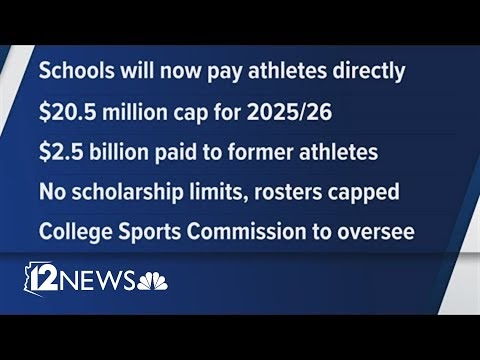
    The settlement creates a 10-year revenue-sharing model that will allow the athletic departments of the higher education institutions in the Power Five conferences (the ACC, Big 12, Big Ten, Pac-12, and SEC) and any other Division I institutions that opt in to distribute approximately $20.5 million in name, image, and likeness (NIL) revenue during the 2025-2026 season. The revenue-sharing cap will increase annually and be calculated as 22.5% of the Power Five schools’ average athletic revenue. The settlement also includes an enforcement arm to penalize institutions that exceed the $20.5 million cap, which will be overseen by a new regulatory body, the College Sports Commission. Institutions can start to share revenue beginning on July 1, 2025.

    Additionally, the settlement requires the NCAA and Power Five conferences to pay approximately $2.8 billion in damages to Division I athletes who were barred from signing NIL deals. This covers athletes dating back to 2016. It also replaces scholarship limits with roster limits.

    The settlement does not change college athletes’ ability to enter into NIL contracts with third parties, but under the settlement, all outside NIL deals valued at greater than $600 will have to go through a clearinghouse for approval. The clearinghouse will determine if the revenue is for a valid business purpose and if it reflects fair market value.

    Prior to this settlement, college athletes could only earn NIL revenue through partnerships with outside parties, such as companies or donor groups. The original case, House v. NCAA, was brought by two former college athletes in June 2020. They challenged the NCAA’s then-policy that prohibited athletes from earning NIL compensation. The case was consolidated with Carter v. NCAA and Hubbard v. NCAA, two similar cases. None of the cases ever made it to trial. Instead, in an effort to avoid higher damages, the NCAA and Power Five conferences agreed to a settlement in May 2024, and the court granted preliminary approval in October 2024.

    As NCAA President Charlie Baker explained in a letter, the settlement “opens a pathway to begin stabilizing college sports. This new framework that enables schools to provide direct financial benefits to student-athletes and establishes clear and specific rules to regulate third-party NIL agreements marks a huge step forward for college sports.”

    CUPA-HR will keep members apprised of updates related to this settlement and the future of student-athletics.


    Source link

  • U.S. Judge Rules Colleges Can Directly Pay Student Athletes

    U.S. Judge Rules Colleges Can Directly Pay Student Athletes

    Michael Reaves/Getty Images 

    Federal district judge Claudia Wilken granted final approval to a multi-billion-dollar settlement in the yearslong House v. NCAA lawsuit late Friday evening, effectively transforming college sports: Starting July 1, institutions will be allowed to pay student athletes directly.

    In accordance with the settlement, the National Collegiate Athletic Association and colleges in Division I conferences will distribute nearly $2.8 billion in back damages over the next 10 years to athletes who competed any time since 2016, as well as to their lawyers. The case also allows each college that opted in to pay their athletes collectively up to $20.5 million per year, in addition to scholarships. That figure will increase incrementally over time.

    The ruling, which technically resolves three antitrust lawsuits against the NCAA, essentially turns student-athletes from amateurs into professionals. But experts say this isn’t likely to end court battles over athletics. The creation of the revenue-sharing model (where schools distribute money earned from areas such as media rights or merchandise), combined with existing turmoil over the regulation of name, image and likeness (NIL) deals, will only invite more lawsuits, they say. 

    “The judge said, in essence, this is not a perfect settlement that solves everyone’s concerns, but it makes progress towards ‘righting the wrongs’ of higher education’s desire to maintain amateurism status for the players but no one else,” Karen Weaver, adjunct assistant professor in the graduate school of education at the University of Pennsylvania, wrote in an email to Inside Higher Ed.

    Although many colleges began making changes to their programs in anticipation of the settlement’s approval, the timing of the ruling could present logistical challenges as they move to start revenue-sharing with students from the July 1 deadline set out in the suit. 

    Current and former athletes have celebrated the ruling. 

    “It’s historic,” former college basketball star Sedona Prince, a co-lead plaintiff in one of the lawsuits, told ESPN. “It seemed like this crazy, outlandish idea at the time of what college athletics could and should be like. It was a difficult process at times … but it’s going to change millions of lives for the better.”

    Wild West Yet to be Tamed

    Judge Wilken’s ruling comes nearly two months after both parties presented arguments in early April for approving the settlement, and nearly five years after the suit was first filed in 2020. But contentious debates over how to manage paying student athletes really erupted in 2021, when NIL deals were first legalized. 

    Since then, collectives made up of alumni and boosters have paid athletes millions of dollars to play at schools through unregulated NIL partnerships. Top football and basketball players have earned the most.

    College leaders have argued that the collectives could give wealthier institutions an unfair recruiting advantage. The House settlement, which not only allows colleges to pay athletes directly but also gives conferences the power to regulate booster influence, could help solve that problem.

    “For several years, Division I members crafted well-intentioned rules and systems to govern financial benefits from schools and name, image and likeness opportunities, but the NCAA could not easily enforce these for several reasons,” NCAA president Charlie Baker wrote in a statement Friday. “The result was a sense of chaos: instability for schools, confusion for student-athletes and too often litigation.”

    “The settlement opens a pathway to begin stabilizing college sports,” Baker said. “This new framework that enables schools to provide direct financial benefits to student-athletes and establishes clear and specific rules to regulate third-party NIL agreements marks a huge step forward for college sports.”

    The settlement also establishes a new clearinghouse, run by Deloitte, that will vet any endorsement deal between a booster and an athlete worth more than $600, with the goal of ensuring it is for a “valid business purpose.”  

    Still, doubts remain about how the watchdog will work; one commenter on X noted that all it takes for boosters to create an NIL regulatory loophole is to pay athletes in multiple $599 payments rather than one mass sum

    Despite the efforts to regulate NIL payments through the clearinghouse, Weaver said the settlement will create “a feeding frenzy of agents and dealmakers capitalizing on a few athletes wealth while schools scramble to lock down players who could bolt for a better offer at any moment.”

    “I expect to see the first Title IX lawsuits, and requests for an immediate stay, filed as soon as this week,” she said. “It’s important for higher education leaders to understand the far-reaching impact on our industry—it’s only just begun.”

    Source link

  • For women athletes, world recognition is a long time coming

    For women athletes, world recognition is a long time coming

    Last year was arguably the best year for women’s sports yet.

    According to data analysis company S&P Global, in-person attendance and viewership were higher, with women’s professional sports sponsorships increasing by 22% since 2023. According to UN Women Australia, globally, there has been a lack of interest in women’s sports. But it seems that they might finally be getting the attention they deserve.

    To find out what is driving this change in attitude towards women’s sports, I interviewed 10 women athletes across high school, university, and coaching. 

    Historically, women’s sports have not gotten the recognition that they deserve. However, during 2024, women’s collegiate basketball had a significant increase in viewership compared to the previous year. The Final Four game in 2024 was a showdown between two players from two U.S. universities: Caitlin Clark of the University of Iowa and Paige Bueckers of the University of Connecticut. The game drew in a peak audience of 16.1 million, according to an article in Sports Illustrated

    Women’s media coverage has tripled since 2019. At this rate, if coverage trends continue, women’s share of coverage could reach 20% by the end of this year, according to Women.org, an organization within the United Nations devoted to gender equality and the empowerment of women. 

    Gender parity in sports

    The Paris Olympic and Paralympic Games were officially the first to see 50:50 coverage in gender equality.

    Avery Elliot, a track and field athlete from the University of Pennsylvania, attended the Paris Olympics as a spectator and said she noticed the change – more social media presence and sponsorships, particularly highlighting women of color, especially in women’s gymnastics, spurred by the popularity and success of U.S. athletes Simone Biles and Jordan Chiles and Brazilian Rebeca Andrade. 

    The lack of media coverage of women has always played a role in the lack of recognition that they receive. Lanae Carrington, a track star at Lehigh University in the U.S. state of Pennsylvania, said that in the past, women athletes would get dismissed for getting a low number of views or for the belief that women’s games were not as entertaining as those of men. “Overall, women are making a stronger impact in the entertainment industry, whether that’s more highlight reels on TikTok or screen time on TV,” Carrington said. “It’s finally becoming normalized.” 

    One of the hardest things to deal with as an athlete is a lack of support, whether from the media, in person or on the sidelines. 

    Brianna Gautier, a volleyball and basketball sensation at Neumann University in Pennsylvania, said it is hard to play a game where you’re not going to have a full house. “But it’s kind of helped me learn to just play for myself instead of waiting for people to show up and relying on that to bring some type of energy because I feel like it starts within you and your teammates,” she said.

    Play for yourself first

    As a track and field athlete, I have seen this firsthand. It is unfortunate to see people walk away after the men are finished competing. But I found that when you start showing up for yourself with energy, success comes rolling in. Gautier has embraced the idea of playing for herself and nobody else.

    It used to be that at Neumann, people would attend the men’s basketball games but never stay afterward to support the women. She also expressed the importance of the support of NBA players such as Steph Curry, who came out to watch several women’s Stanford basketball games in 2023. Gautier said that people think to themselves that if their favorite male basketball players are tuning in to watch women’s sports, it must be worthwhile. 

    Carrington said parents also need to support their daughters in athletics. “This is important because many girls don’t have parents who encourage them to play more traditionally masculine sports, such as basketball and soccer,” she said. 

    Most of the women I interviewed commented on the change in the WNBA as the catalyst for the change in women’s sports.. 

    Liz Spagnolo is a soccer player at Tower Hill High School in the U.S. state of Delaware who appreciates the opportunities she now has. “Women in sports is big for us because based on women 100 years ago, we wouldn’t be expected to play sports, or be expected to do something like cheer,” Spagnolo said. 

    The Caitlin Clark effect

    Arianna Montgomery, an athlete at The Tatnall School, the private school in Delaware that I also attend, said she appreciates the change in women’s basketball.

    “It’s gotten a lot more fame, definitely more college sports have gotten a lot more fame,” Montgomery said. “I think women’s games are starting to become more popular. People are starting to look more towards women’s sports as well as men’s sports, and even since before, instead of men’s sports now, a decade ago, that wasn’t the case.”

    Many of the women I spoke to said that a big contributor to the success of women’s sports is due to the Catlin Clark effect. The Caitlin Clark effect is a term that was created after her record-breaking seasons playing women’s basketball at the University of Iowa during the years of 2023-2024.

    As a result, she has become the all-time leading scorer in college basketball before entering the WNBA,  and has reportedly signed sponsorship deals worth more than $11 million. 

    Ruth Hiller, a lacrosse coach at my school said that are a number of successful women athletes that young women can now look up to, including tennis superstars Venus and Serena Williams and Alex Morgan, the former captain of the U.S. women’s soccer team, women’s tennis pioneer Billie Jean King and Charlotte North, a professional lacrosse player who broke the all-time goals record in college lacrosse. 

    Women now rack up medals and points

    Daija Lampkin, my track and field coach, pointed to Alison Felix, who won more medals than any other U.S. track and field athlete, and tennis superstar Serena Williams.

    It is important, Lampkin said, that women support women. “Our body is critical, and some women are self-conscious that they are going to be muscular,” Lampkin said. “It can tear down your confidence. It’s not talked about in sports how women look at their bodies. People tear down Serena Williams and her body all the time, but look at where she is and how much she has accomplished”. 

    I have been participating in sports since I was 3 years old, when my parents signed me up for gymnastics. I run track and field and am a runner, jumper and hurdler. I began training for track and field competitions at the age of 8, and my dad has been my coach since the very beginning. 

    In my experience, my father was instrumental in encouraging me to participate in dance and gymnastics growing up, while also encouraging me to run track and play basketball and soccer for fun.

    With opportunity comes pressure, and Gautier said it is important for girls not to put too much pressure on themselves. “When you are an athlete, you tend to feel that you have to perform a certain way to be successful or please everyone else, but I feel you kind of get blinded by the fact that you are doing it for yourself,” she said. 


    Questions to consider:

    1. Why have women not gotten the same recognition and pay as male athletes in sports? 

    2. What does “parity” mean when it comes to gender in sports?

    3. Should there be any differentiation when it comes to gender in sports and why?


    Source link

  • College Athletes Can Now Make Millions Off Sponsorship Deals – The 74

    College Athletes Can Now Make Millions Off Sponsorship Deals – The 74


    Get stories like this delivered straight to your inbox. Sign up for The 74 Newsletter

    $390,000 to Jaylon Tyson, a former basketball guard at UC Berkeley, from a group of private donors.

    $3,000 to Jordan Chiles, a UCLA gymnast and Olympic gold-medal winner, from Grammarly, an AI writing company. 

    $390 to Mekhi Mays, a former Cal State Long Beach sprinter, from a local barbecue joint. 

    These payments — derived from data that public universities provided to CalMatters — were part of “name, image and likeness deals” requiring students to create favorable posts on social media. 

    Such sponsorship deals were unheard of just four years ago. In 2021, California enacted a law allowing athletes to make these kinds of brand deals. It was the first state to pass such a law, prompting similar changes across the country. 

    This is the first-ever look at what many California athletes have actually made. University records show that money is flowing, but how much college athletes earn depends largely on the popularity of the sport, the gender and star power of its players and the fanbase of the university. While UCLA gymnasts earned over $2 million in the last three school years, university records show that players on the UCLA women’s water polo team earned just $152 during the same time frame, despite winning the national championship last year. 

    For companies, these name, image and likeness deals are akin to paying any other celebrity or professional athlete to promote a product. University alumni and sports fans can’t give money directly to a student athlete — at least not yet — but they are allowed to make name, image and likeness deals. Many universities have private donor groups, known as collectives or booster clubs, that offer athletes money, sometimes more than $400,000 in a single transaction, in exchange for an autograph or participation in a brief charity event. Often, those deals are a pretext to send money to top-tier players and discourage them from seeking better deals at other colleges.

    CalMatters reached out to every public and private university in the state with Division 1 teams, where the potential for profit is typically highest, and requested data that shows how much money each of its student athletes have made since 2021. State law requires all student athletes to report to their school any compensation they receive from their name, image and likeness, and public universities are required to disclose certain kinds of data upon request. Private universities, such as Stanford University and the University of Southern California, are not required to disclose any data about their students’ earnings. 

    All of the public Division 1 universities responded to CalMatters’ inquiry, though they did not all provide the same degree of transparency. San Jose State and Cal State Northridge said they had no records of any deals.

    There’s no consequence for students who fail to report what are known as NIL deals, so the data from public institutions may be incomplete. Still, certain trends emerge: 

    • College athletes at the state’s public universities received millions of dollars from collectives or booster clubs. At four University of California schools, around 70% or more of all compensation came from these collectives, according to university records. That’s just below national trends, according to a report by Opendorse, a tech company that tracks students’ deals. 
    • Male basketball players earned the most. While football is more popular and lucrative, nationally, many public Division 1 schools in California lack a football team. The football data may also be incomplete. For instance, all football players at UC Berkeley reported making a total of just over $113,000 since 2021 — less than what all San Diego State players made — even though Berkeley is in a more prominent conference. 
    • For high-profile football or basketball players in particular, it’s becoming more common for students to transfer multiple times, often in search of better name, image and likeness deals. Some California institutions, such as UC Davis and Cal Poly San Luis Obispo, have seen top athletes transfer colleges or threaten to transfer in order to attain better compensation elsewhere.
    • Except for a few star players, such as Chiles, most female college athletes made very little, according to the data provided to CalMatters. 
    • Collectively, athletes at UCLA and UC Berkeley earned more than double what those attending other UC and California State University campuses made. Some donors, such as those supporting Sacramento State and UC San Diego, have rapidly raised money to compete, while at other schools, athletic directors say they’ll never be able to guarantee such high-dollar deals. 

    Schools often removed any information that could identify an individual student. While UCLA generally did not provide the individual names of its athletes, the school was more transparent than most and shared the date of each transaction, the name of the brand or company, the amount of money it gave, and the sport. In February, a UCLA gymnast reported receiving $250,000 from the beverage company Bubbl’r. Since then, Chiles has promoted that brand, repeatedly. In May, a UCLA gymnast reported receiving $210,000 from the cosmetic brand Milani for “social media” — just a few months before Chiles posted a video on Instagram, promoting its makeup. One or more members of the UCLA gymnastics team have also reported deals with the food company Danone for $300,000 and with the health care company Sanofi for $285,000. 

    Fresno State shared less information. In the 2021-22 academic year, the Fresno State women’s basketball team raked in over $1.1 million from multiple name, image and likeness deals, but the university did not disclose which players were involved or how many were paid. After influencers and former basketball players Haley and Hanna Cavinder transferred to the University of Miami in April 2022, the number and dollar amount of deals for the Fresno team diminished. In the 2023-24 academic year, the team made just over $1,000 from 10 different deals.

    Money from boosters or collectives is the hardest to trace. In May, for example, a group of UCLA donors gave an undisclosed football player $450,000 for “social media.” 

    While private universities are not required to disclose students’ earnings, market estimates from On3, a media and technology company focused on college sports, say the highest-earning Stanford University athlete, basketball player Maxime Raynaud, could collect $1.5 million in the next 12 months. The top USC athlete, football player Jayden Maiava, could make $603,000 in the next year, according to the same estimates. These numbers are based on an algorithm that uses aggregate deals from college athletes across the country. Nationwide, the Opendorse report estimates that college athletes will earn $1.65 billion in the 2024-25 academic year. 

    Soon, college athletes may make even more. A high-profile class-action lawsuit will likely allow schools to pay athletes directly, while still classifying them as students, not employees. If the proposed settlement agreement goes into effect, students could see payouts as early as this fall. 

    If a school pays a student directly, the money should be divided roughly proportional to the number of male and female athletes, the Biden administration said in a U.S. Department of Education fact sheet issued in January. The page no longer exists

    In the last few months, attorneys have rescinded federal labor petitions asking that USC and Dartmouth College student athletes be reclassified as employees, but new cases are likely on the horizon, said Mit Winter, an attorney who specializes in name, image and likeness law: “I do think at some point — two years, five years, whatever it is — at least some college athletes will be employees.”

    A Times Square billboard reads: NIL has begun

    For decades, college sports have been a big business, though most of the money flowed to universities, not students. Nationally, Division 1 universities reported $17.5 billion in athletic revenue in 2022, according to the National Collegiate Athletic Association (NCAA). That’s more than the gross domestic product of 83 countries. For schools with top-performing football programs, such as UCLA and Berkeley, broadcast deals and other kinds of marketing represent over a third of total revenue. 

    Before California’s law went into effect, college athletes weren’t allowed to profit off their sport, though they frequently received scholarships equal to the cost of college tuition. On July 1, 2021 the new law took effect, and Haley and Hanna Cavinder were the first to benefit, signing deals with Boost Mobile, a cell phone company, and Sixstar, a nutrition company, just after the stroke of midnight. A Times Square billboard proclaimed they were the first such deals in the country. 

    Over the past four years, other California college athletes have signed advertising deals with clothing brands such as Crocs, Heelys and Aeropostale and food brands such as Liquid I.V. and Jack in the Box. FTX, the now-bankrupt cryptocurrency exchange, signed contracts with at least six players on the UCLA women’s basketball team in 2021. In 2022, the Biden campaign gave a UCLA gymnast $7,000, but public records did not disclose the purpose of the transaction. No other politicians appeared in any university’s data.

    Last year, Visit Fresno County, a nonprofit that promotes tourism, paid former Fresno State football players Dean Clark and Kosi Agina just under $10,000 to post Instagram videos about a local farmer’s market and a minor league baseball team, according to President and CEO Lisa Oliveira. She said the posts were so successful that she asked Agina to make another video, promoting a hiking trail in the Sierra National Forest

    But much of the money for students’ name, image and likeness doesn’t come from brands at all — it’s from private donors. Philanthropist and entertainment lawyer Mark Kalmansohn has given nearly $150,000 in 12 different transactions to athletes on UCLA’s volleyball, softball and women’s basketball teams since 2022, according to the data, which runs through May of last year. In an interview with CalMatters, Kalmansohn said he’s given more than $175,000 since May. “Women’s sports were almost always treated in a second-hand nature and given inferior resources,” he said, adding that his philanthropy is about “women’s rights.”

    In exchange for money, he asks each recipient to issue a free license of their name, image and likeness to a nonprofit organization that’s relevant to the athlete’s sport. But he said that’s not the norm. “In men’s football and men’s basketball, it’s pretty obvious that money is not for an ‘appearance’.” Instead, he explained that it’s a way to support the player and keep the team competitive. 

    Most donors give money to specific athletes through a collective, where the donors’ identities are largely hidden. At UCLA, public data through the 2023-24 academic year shows that a collective known as the Men of Westwood channeled nearly $2 million in private donations to the football, basketball and baseball teams. At Berkeley, collectives gave over $1.3 million to athletes since the 2022-23 academic year — the vast majority of which went to the men’s basketball team. 

    Supporting ‘elite talent’ at UC and Cal State

    For years, NCAA rules made it difficult for college athletes to transfer schools, but in 2021, right around the time that California started to allow name, image and likeness deals, the NCAA eased those rules. The number of students who transfer suddenly jumped in 2021 and has ticked up each year since, according to NCAA data. In practice, the new rules means that a well-endowed collective can lure athletes who want to make more money. 

    This year, over 11% of all Division 1 football players have tried to transfer colleges, an increase from the previous year, said Matt Kraemer, whose organization, The Portal Report, uses social media posts and tips from insiders to gauge college athletes’ transfer activity. Quarterbacks are even more likely to try to transfer, Kraemer said.

    For institutions like UC Davis, the threat of losing a top athlete can be costly. Late in the 2023-24 academic year, donors from other universities promised top athletes lucrative deals if they agreed to transfer, so UC Davis formed a collective, Aggie Edge, to make counter-offers, said Athletic Director Rocko DeLuca. “It’s a means to retain elite talent here at Davis.”

    DeLuca said the collective gave men’s basketball guard TY Johnson $50,000 and UC Davis running back Lan Larison $25,000. Those transactions were for “social media, appearances, autographs,” according to the university’s data. 

    So far, all other UC Davis athletes — more than 700 students over 25 sports — have reported just under $19,000 in deals since 2021. A few other athletes received products, such as a free cryotherapy session or a commission based on sales.

    In December, former UC Berkeley quarterback Fernando Mendoza transferred to Indiana University, where he later signed a name, image and likeness deal with a collective for an undisclosed amount. UC Berkeley then recruited former Ohio State quarterback Devin Brown the day after he won a national championship. It’s not clear if the Berkeley collective offered Brown a deal, since the university’s data doesn’t name Brown. 

    Justin DiTolla, Berkeley’s associate athletic director, said the university is “not affiliated with the collective” and that the university provides “equal support to all student athletes.” “We recognize that there is a difference in NIL support,” he said, “But it isn’t under our scope or umbrella.” The Berkeley collective, California Legends, declined to comment.

    At Cal Poly San Luis Obispo, some football players sought more money through a name, image and likeness deal by transferring to another school, but they didn’t all succeed, said Don Oberhelman, the university’s athletic director. “That’s the dirty little secret of all of this: the number of kids who blow an opportunity.”

    This fall, nine football players at Cal Poly San Luis Obispo announced their intention to transfer, he said. Six of them found a new university, he said, including University of Texas El Paso, San Diego State, Stanford, and Washington State — but three of them never received an offer from another school. 

    Oberhelman said that his football coach begins recruiting a replacement the moment a player announces his intention to transfer. If that student doesn’t end up transferring, he may lose his spot on the football team and the entirety of his athletic scholarship, which can be up to $30,000 a year. 

    “There’s raw emotion involved in these kinds of decisions,” he said. “I don’t think that’s how we would operate, but I can see a lot of people say, ‘You broke up with us.’” 

    Oberhelman said he doesn’t know what happened to the three players from the football team who failed to transfer. “For me, it would boil down to: Did we promise that money to someone else? Did we find another transfer or a high school person to replace you? If we did, that would put your future financial aid with us in jeopardy.”

    Small-town name, image and likeness deals 

    Outside of top football and men’s basketball programs, many of California’s college athletes vie for smaller name, image and likeness deals, often with local businesses, lesser-known clothing or athletic brands, or anything else they can find.

    Former Berkeley softball player Randi Roelling got $50 from one woman to give a pitching lesson to her daughter. In July 2023, chiropractor Lance Casazza started giving out free sessions to at least one Sacramento State football player in exchange for social media posts.

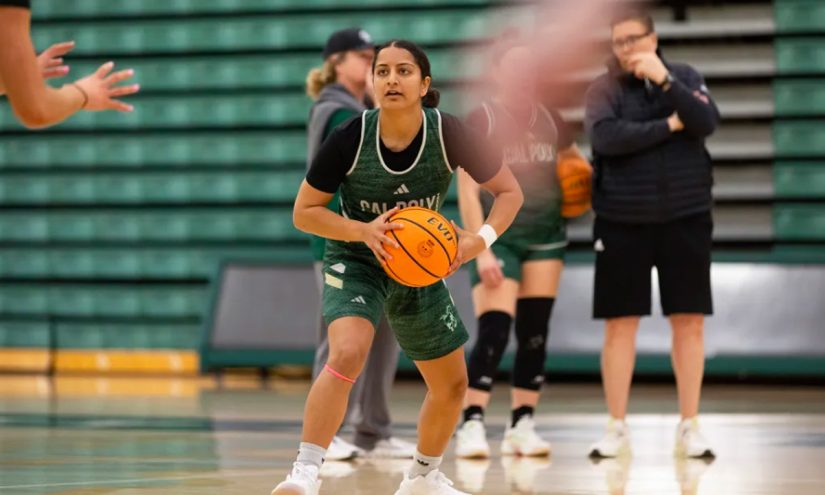
    Annika Shah, a basketball player at Cal Poly San Luis Obispo, got her first deal through a local restaurant, Jewel of India, which occasionally has a pop-up tent outside the college gym. “I just said, ‘Hey I can market you. Let’s think of a cool slogan to put out.’” Customers who ask to “swish with Shah” at the checkout counter get a discount on their meal, she said. Shah doesn’t get any money, she said, but she does get free food whenever she visits. 

    “It was just a cool relationship and connection that I made with this family and the owners of Jewel of India, where they just want to help me out and I want to help them.” 

    Walking around campus, friends jokingly refer to Shah as their own “Jewel of India” and she likes it. “It’s such a marketable slogan now, and it kind of identifies who I am.”

    Many Division 1 schools have their own websites where customers can buy gear with an athlete’s name on it, but last fall, no such platform existed at Cal Poly San Luis Obispo, said Shah, so she created her own. She partnered with a company, Cloud 9 Sports, and launched her own apparel brand. It’s brought in about $2,000 in sales so far, but after the university and Cloud 9 Sports take a cut, Shah said she’s left with about $800. 

    Shah said she was never told to report any of her monetary or in-kind contributions. After CalMatters asked, Oberhelman, the athletic director, said the school is now requiring it. “We haven’t done a great job following up because we’re just not going to have student athletes that are getting even five-figure deals,” he said. 

    Oberhelman said he only knew of eight deals, each for $2,000, all to the men’s football team from a group of private donors.

    Fresno State provided more data than Cal Poly San Luis Obispo, but it did not designate which deals came from its collective, known as Bulldog Bread. On its website the collective says it has raised more than $690,000 in corporate donations for Fresno State. At the top tier, that includes money from former Fresno State quarterbacks David and Derek Carr, property developer Lance Kashian, and construction company Tarlton and Son, Inc. The collective recently launched a vodka brand in partnership with a distillery, where a portion of all proceeds support students’ name, image and likeness deals.

    Athletes at UC Santa Barbara have reported $1,800 from their collective, Gold & Blue, but many other transactions reported by the school provide few details. According to the school’s data, an unnamed person or group made 15 deals with one or more members of the UC Santa Barbara men’s basketball team, totaling over $50,000 in “appearance fees” for an event last August associated with Heal the Ocean, a local environmental nonprofit. 

    The organization’s executive director, Hillary Hauser, said the nonprofit made no such contribution and had no events in August. University spokesperson Kiki Reyes said it’s “possible” that a collective made those payments, but she refused to respond to CalMatters’ questions regarding Hauser’s statement the event never occurred. 

    From August 2023 to August 2024, male basketball and baseball athletes at UC Santa Barbara reported roughly $500,000 in compensation for appearance fees related to various charities. Over the same time frame, all other athletes reported receiving free products, sales referrals, and cash payments totaling about $1,000.

    At UCLA, the CEO of the Men of Westwood collective, Ken Graiwer, is listed in university records as the “point of contact” for a $450,000 contribution, distributed over six transactions in the 2023-24 academic year, to the men’s basketball team for “public appearances.” For each of those transactions, the university’s data lists the Team First Foundation, a sports nonprofit, as the vendor. Neither UCLA nor the Team First Foundation responded to questions about who made the payment. 

    A few months before those transactions, the Men of Westwood posted a few photos on its Instagram account, showing UCLA men’s basketball players on the court with smiling children from the Team First Foundation programs. In the post, the Men of Westwood said it was “NIL outreach.” 

    California universities try to ‘stay competitive’

    Since becoming legal in 2021, the market for name, image and likeness compensation has exploded. Sports commentators, attorneys, and athletic directors say the landscape is a kind of “wild West” or “gold rush”: The money is pouring in, but the regulations are sparse or evolving.

    CalMatters has partial data from the 2024-25 academic year, but early indicators suggest that even more cash will soon flow to players. In September, a group of Sacramento State alumni, including some state lawmakers, said they raised over $35 million in one day for name, image and likeness deals. Cal State Bakersfield and UC San Diego recently formed their own collectives too.

    Last year, former Democratic Sen. Nancy Skinner of Berkeley — one of the co-authors of the watershed name, image and likeness law — proposed a new bill to gather more data about spending by collectives and its impact on women’s sports. Newsom vetoed the bill, saying “Further changes to this dynamic should be done nationally.” 

    Initially, the NCAA tried to prevent colleges from directly assisting athletes with deals, but the association has eased those regulations recently, blurring the lines between universities and the private collectives that support them. Many states have passed laws explicitly allowing universities to make deals directly with students. In October, Skinner and former Democratic Sen. Steven Bradford wrote a letter to California universities, encouraging them to do the same. 

    “I strongly urge California schools to make full use of (the watershed law) to stay competitive in college sports, especially now that other states are copying California and allowing their schools to make direct NIL deals with their student athletes,” said Skinner in a press release about the letter.

    This spring, California District Judge Claudia Wilken is expected to approve a settlement between athletes and the NCAA that would further expand the ways universities can pay their players. In the proposed settlement, a college could directly spend up to a combined $20.5 million per year on payments to all of its athletes. The spending limit would grow over time.

    Regardless of the settlement, athletic directors at many of California’s public institutions, such as Cal Poly San Luis Obispo and Cal State Bakersfield, said they don’t plan on giving any more money directly to students because their athletic programs lack the cash. “They’re already on full scholarship, so there aren’t any more existing dollars we can really offer that person,” said Oberhelman, with Cal Poly San Luis Obispo. Even if the university did have the money, he said he’s concerned about the legal implications of paying students directly. “Are they going to get a W-2 now? Are we paying workers comp? Nobody seems to have answered a lot of these questions.”

    DiTolla, at Berkeley, said the university will start paying its athletes once the settlement is finalized. UC San Diego joined Division 1 sports last year, and Athletic Director Earl Edwards said it is “seriously considering” paying its athletes too “if that’s what we need to do to be competitive.” UCLA refused to comment on the proposed settlement.

    USC Senior Associate Athletic Director Cody Worsham said the university will “invest the full permissible $20.5 million in 2025-26.” Stanford refused to answer any questions.

    While no Division 1 school in California has shared details about how it plans to pay its athletes, experts, such as attorney Mit Winter, say the proposed settlement is unlikely to change the current disparities in college sports, especially within the four most lucrative and dominant athletic conferences, known as the Power Four. Stanford, USC, UC Berkeley and UCLA are all in the Power Four. 

    For female rowers like Anaiya Singer, a freshman at UCLA, the disparities among men’s and women’s sports — and between football, basketball and everyone else — are no surprise. “Those big sports do bring in the most revenue, and they’re the most watched,” she said, while acknowledging that other athletes, such as fellow rowers, “deserve much more than we’re getting.” 

    Singer said she’s been working on building her social media brand and has nearly 3,000 followers on TikTok and just over 1,300 on Instagram. A few “very small companies” reached out to her through TikTok about promoting beauty products, but none of the brands felt like a good fit, she said. She has yet to agree to any deals or receive any funding from a collective.

    Neither have most of her peers. The UCLA women’s rowing team has reported less than $500 in name, image and likeness compensation since 2021.

    In the proposed settlement, each school will each be able to independently determine how to distribute their funds, but Winter said universities will likely follow their peers. “If you’re in UCLA, Berkeley….you’re in the Power Four and you’re going to have to stay competitive in recruiting,” he said. 

    “Most of the Power Four schools have all sort of landed on a similar way they’re going to pay that money out,” he added: 75% to the football team, 15% to the basketball team, around 5% to women’s basketball, and 5% to all other sports.

    This article was originally published on CalMatters and was republished under the Creative Commons Attribution-NonCommercial-NoDerivatives license.


    Get stories like these delivered straight to your inbox. Sign up for The 74 Newsletter



    Source link

  • House Education and Workforce Committee Holds Hearing on NLRB and Student Athletes

    House Education and Workforce Committee Holds Hearing on NLRB and Student Athletes

    by CUPA-HR | April 10, 2025

    On April 8, the House Education and Workforce Committee held a hearing titled, “Game Changer: The NLRB, Student-Athletes, and the Future of College Sports.” The hearing focused on the employment classification status of student athletes at institutions of higher education.

    The witnesses at the hearing included Daniel L. Nash, shareholder at Littler; Morgyn Wynne, former softball student athlete at Oklahoma State University; Ramogi Huma, executive director at the National College Players Association; and Jacqie McWilliams Parker, commissioner at the Central Intercollegiate Athletic Association.

    Majority Concerns with Employee Classification

    Republican committee members argued that the classification of student athletes as employees could alter college athletics to the detriment of institutions and student athletes alike. Confirmed by witness testimony, the majority discussed that employee classification for and unionization by student athletes could trigger unintended consequences for the athletes, such as fewer benefits, losing scholarships based on poor performance, having scholarships taxed as taxable income, and losing training support, mental health services, and media and career support. Further, they highlighted that employee classification could strain athletic department resources; McWilliams Parker stated that athletic departments would need to consider whether they could continue to sustain certain sports and provide scholarships to students.

    The majority also discussed the legislative and regulatory landscape surrounding this issue. In his opening statement, Chair Rick Allen (R-GA) discussed the memo from former General Counsel of the National Labor Relations Board (NLRB) Jennifer Abruzzo regarding the Biden-era NLRB’s position that student athletes are employees and are afforded statutory protections under the National Labor Relations Act (NLRA). Notably, the memo has since been revoked by the Trump administration’s acting general counsel at the NLRB. Further, in response to questioning from the chair of the full committee, Tim Walberg (R-MI), Nash clarified that existing labor laws are clear that revenue received by an organization is not a factor in determining employee status.

    Representative Lisa McClain (R-MI) also discussed her bill, the Protecting Student Athletes Economic Freedom Act, which would codify into law that student athletes are not employees of institutions, athletic conferences or athletic associations, as a solution to the majority’s concerns.

    Minority Argue for Greater Protections for Student Athletes

    Committee Democrats argued that student athletes require greater protection from exploitation. They argued that student athletes generate revenue for their institutions of higher education, conferences and the National Collegiate Athletic Association (NCAA), but fail to be compensated for their work and the amount of time they commit to their team. The members claimed that classifying student athletes as employees and allowing those athletes to collectively bargain would end the exploitation. Huma’s testimony supported committee Democrats advocating that student athletes should be equally able to benefit financially from the revenue they generate.

    CUPA-HR will monitor for future developments on the status of student athletes as discussed during this hearing and keep members apprised of significant policy updates.


    Source link

  • Ed Department investigates SJSU, UPenn over trans athletes

    Ed Department investigates SJSU, UPenn over trans athletes

    The Trump administration launched its first Title IX investigations into transgender athletes participating in college sports on Thursday, targeting San José State University and the University of Pennsylvania, according to a press release. The investigations came a day after President Trump signed an executive order banning transgender athletes from women’s sports and single-sex facilities.

    San José State and Penn are pointed choices for the first investigations by the Office for Civil Rights: Both were at the center of high-profile controversies over their acceptance of trans athletes on women’s teams. At SJSU, reports that one member of the women’s volleyball team was transgender spurred a months-long conflict in the NCAA last year, prompting a slew of teams to forfeit their games against the university in protest. And Penn swimmer Lia Thomas’s performance in 2022 led to an explosion of conservative backlash against trans athletes.

    “The previous administration trampled the rights of American women and girls—and ignored the indignities to which they were subjected in bathrooms and locker rooms—to promote a radical transgender ideology,” Craig Trainer, the department’s acting assistant secretary for civil rights, wrote in a statement. “That regime ended on January 20, 2025.”

    The press release also said that the Office for Civil Rights is “actively reviewing athletic participation policies” at other institutions.

    Source link

  • Trump signs order banning trans athletes in women’s sports

    Trump signs order banning trans athletes in women’s sports

    President Donald Trump signed an executive order Wednesday banning transgender women from participating in women’s sports.

    “The war on women’s sports is over,” he said. “With my action this afternoon, we are putting every school receiving taxpayer dollars on notice that if you let men take over women’s sports teams or invade your locker rooms, you will be investigated for violations of Title IX and risk your federal funding.”

    The executive order, signed on National Girls and Women in Sports Day, declares that it’s “the policy of the United States to oppose male competitive participation in women’s sports more broadly, as a matter of safety, fairness, dignity, and truth.” Under the order, the assistant to the president for domestic policy will bring together representatives of “major athletic organizations and governing bodies, and female athletes harmed by such policies, to promote policies that are fair and safe, in the best interests of female athletes.”

    The president’s latest action builds on the GOP’s broader campaign to remove all recognition of transgender individuals from state and federal programs. On his first day in office, Trump signed a separate executive action declaring that there are only two sexes and banning federal funding for any program related to “gender ideology.” And House Republicans have passed a bill that would unilaterally ban trans women from competing in women’s sports. In nearly half of the country, trans women are banned from playing women’s sports at the K-12 or higher education level, but the order would take those bans nationwide.

    Additionally, the order calls on the education secretary to prioritize “Title IX enforcement actions against educational institutions (including athletic associations composed of or governed by such institutions) that deny female students an equal opportunity to participate in sports and athletic events by requiring them, in the women’s category, to compete with or against or to appear unclothed before males.” (Federally funded K-12 public schools and colleges are required to comply with Title IX, which bars discrimination based on sex in educational settings.)

    Charlie Baker, president of the National Collegiate Athletic Association, told Congress recently that out of the more than 500,000 college athletes, fewer than 10 were transgender. The NCAA released a statement Wednesday that said, “The NCAA Board of Governors is reviewing the executive order and will take necessary steps to align NCAA policy in the coming days, subject to further guidance from the administration.”

    As Trump spoke Wednesday, girls and women—including former University of Kentucky swimmer and anti-trans advocate Riley Gaines—stood behind him, often clapping in support.

    After thanking them, the president turned back to face the rest of the East Room audience. He acknowledged the federal lawmakers, state attorneys general and governors in attendance, describing them as “friends of women’s sports.”

    “My administration will not stand by and watch men beat and batter women,” he said. “It’s going to end and nobody’s gonna be able to do a damn thing about it because when I speak [I] speak with authority.” (Trump was referring to an Olympic gold medal–winning Algerian boxer whom some accused of being transgender; the boxer has publicly said she was born a woman.)

    Fatima Goss Graves, president of the National Women’s Law Center, said in a statement that trans students do not pose a threat in sports and deserve the same opportunities as their peers.

    “The far-right’s disturbing obsession with controlling the bodies, hearts, and minds of our country’s youth harms all students,” Graves said.

    Education secretary nominee Linda McMahon attended the ceremony, though her confirmation hearing for the office has yet to be scheduled. In the meantime, the department is being led by a collection of acting officials and appointees, including Deputy General Counsel Candice Jackson, who described the president’s order as “a demonstration of common sense.”

    “The President affirmed that this administration will protect female athletes from the danger of competing against and the indignity of sharing private spaces with someone of the opposite sex,” Jackson said in a news release. “The Department of Education stands proudly with President Trump’s action as we prioritize Title IX enforcement against educational institutions that refuse to give female athletes the Title IX protections they deserve.”

    Other Republican lawmakers praised the order Wednesday, arguing it would ensure women and girls won’t be pushed to the sidelines.

    But Representative Bobby Scott, a Democrat from Virginia and ranking member on the House education committee, was quick to oppose the order, calling it “yet another overreach by this administration” and saying its lack of clarity will further complicate what should be addressed by sports associations.

    “Rather than address the real, urgent issues that students and families are facing every day, this administration continues to target vulnerable students—specifically transgender girls and women—with a shameless attempt to bully them,” he said in a statement. “They are willing to use the most vulnerable Americans as pawns in a political game.”

    Source link