Tag: Austin

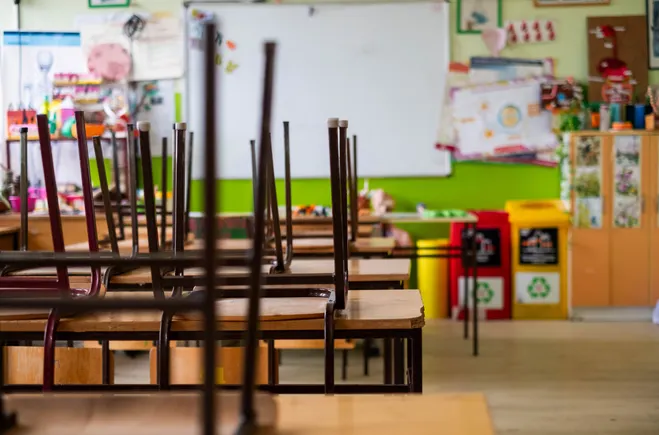
  • Austin ISD is closing 10 schools amid enrollment challenges

    Austin ISD is closing 10 schools amid enrollment challenges

    This audio is auto-generated. Please let us know if you have feedback.

    Dive Brief:

    • Austin Independent School District’s board of trustees approved a plan Thursday evening to close 10 schools in the Texas district by the 2026-27 school year in the midst of ongoing enrollment declines. 
    • The closures will impact nearly 3,800 students who will be reassigned to new schools in the district and the plan will cut 6,319 open seats, according to Austin ISD.
    • The move is expected to save the district $21.5 million, according to Austin ISD Superintendent Matias Segura during the Thursday board meeting. That amount more than covers the district’s budget deficit of $19.7 million this school year.  

    Dive Insight:

    Segura said during the board meeting that developing and carrying out this school closure plan has been “a very difficult process.” 

    Most of the schools impacted by closures are at the elementary level, according to the district.

    Segura also said he wished the district didn’t have to make this decision, “but the pressures are gargantuan.”

    Austin ISD instructed 72,700 students across 113 schools in 2024-25.

    When Austin ISD first announced it was considering school closures and consolidations earlier this year, Segura emphasized that the district lost over 10,000 students within the past decade, which led to a total of 21,000 empty seats.

    While the district’s preliminary fall enrollment data has yet to be released by the Texas Education Agency, Austin ISD has said it’s likely that the number of students attending its schools will continue to drop. 

    In recent months the district considered several factors before proposing which schools should close, including size, condition, student enrollment and operational costs.

    Elsewhere in Texas, Houston Independent School District laid off and reassigned hundreds of its teachers “to align” them “with student enrollment” as the district had previously projected a drop in enrollment by about 8,000 students this school year. 

    Houston ISD, which is under the leadership of the state, initially planned to announce a proposal this fall to close some schools during the 2026-27 school year. However, the district announced last week that Superintendent Mike Miles told principals he was no longer going to recommend any school consolidations to the board for 2026-27. There still may be a small number of consolidations needed in future years, the district said in a video update on Wednesday. 

    Texas’ districts student enrollment declines are part of a larger trend across states and districts nationwide, with the downward trajectory straining budgets tied to per pupil funding. Reasons for declining enrollment vary by state and district. An ongoing decline in birthrates has been a common factor while other education leaders have cited this year’s federal immigration crackdown and newer school choice policies for detracting students from attending their public schools. 

    As a result, plans for school closures similar to Austin ISD’s and teacher layoffs as seen in Houston are rippling across large and small school districts— from Arizona’s Kyrene School District to Atlanta Public Schools and Florida’s Broward County Public Schools to Oregon’s Corvallis School District.

    Source link

  • U Austin Announces $100M Gift, End to Tuition “Forever”

    U Austin Announces $100M Gift, End to Tuition “Forever”

    The University of Austin announced Wednesday that Republican megadonor Jeff Yass is donating $100 million, it’s “ending tuition forever” and it will also “never take government money.” At the same time, it said Yass’s gift represents the first third of “a $300 million campaign to build a university that sets students free.”

    University president Carlos Carvalho told Inside Higher Ed he doesn’t plan for this $300 million to become an endowment meant to last forever. Instead, he said it will be invested but spent down as a “bridge” until the institution produces enough donating alumni to keep tuition free. He estimated this will take 25 years, “give or take.”

    “We understand there’s risk in this approach,” Carvalho said. But he said he believes in the product, calling his students his “equity partners”—but stressed that “all they owe is their greatness.”

    When the institution welcomed its first class of students last fall, it said annual tuition was $32,000, but Carvalho said nobody has ever paid tuition. The university still hasn’t earned accreditation, which can take years, but the state of Texas allowed it to grant degrees and the Middle States Commission on Higher Education, an accrediting body, has granted it candidate status on its path to recognition. The university says it expects to complete “the first accreditation cycle” between 2028 and 2031.

    Yass—a billionaire co-founder of financial trading firm Susquehanna International Group and a significant investor in TikTok owner ByteDance—was very recently in the news for other gifts. He had backed Republicans in a bid to end the Pennsylvania Supreme Court’s Democratic majority, but voters reappointed all three justices up for re-election to another decade on the bench (though one is required to retire in a few years). He’s also provided millions in support of private K–12 school vouchers and electing Republicans to Congress.

    He told The Wall Street Journal, which broke the news of the University of Austin gift, that he’s been impressed by the university, wants to eliminate stress for parents and supports separation between education and government. His donation to the fledgling institution—which Carvalho said is atop Yass’s previous $36 million gift—is another example of its continued support from prominent conservatives. Carvalho said the university has raised more than $300 million, including the $100 million going toward the new $300 million campaign. The Journal reported that real estate developer Harlan Crow, who controversially funded trips for U.S. Supreme Court Justice Clarence Thomas, and Peter Thiel, a co-founder of Palantir and friend to Vice President JD Vance, have been among the donors.

    Such donations may enable the university to do what other universities can’t: rely neither on student, nor state, nor federal contributions to survive. Instead, the university says it’s banking on alumni sustaining it. The first group of students is slated to graduate in 2028.

    “Our bet: Create graduates so exceptional they’ll pay it forward when they succeed, financing the tuition of the next generation,” the university said in its announcement. “When our students build important companies, defend our nation, advance scientific frontiers, build families, and create works that elicit awe, they’ll remember who made their excellence possible. And they’ll give back.”

    It went on to say that “other Americans will take notice” and invest. “Every other college gets paid whether students succeed or fail. At UATX, if our graduates don’t become essential to American excellence—and if their work doesn’t inspire others to fund this mission—we’re done.”

    Some higher ed observers are skeptical. Mark DeFusco, a principal at Prometheus Education, which performs mergers and acquisitions for troubled colleges, said running a “serious college … a college as we know it” on just a $300 million fund would be “nearly impossible.”

    “If they can pull it off, God bless ’em,” DeFusco said. “While I really understand their urge, the practicality doesn’t seem like it’s possible, and I’d like to see the details.”

    Carvalho said the university currently has 150 students in its freshman and sophomore classes, and he plans to grow total enrollment to 400 to 500 for now. “We need this first phase of growth to be small,” he said.

    “We talk about building the Navy SEALs of the mind,” he said. “The Navy SEALs are not a class of thousands and thousands.”

    He said the university offers courses in, among other things, computer science, journalism and prelaw, and wants to launch programs in all three areas. One of the university’s founders is Bari Weiss, who also founded The Free Press and recently became editor in chief of CBS News.

    Other universities have also tried to jettison tuition in favor of alumni support. In 2021, Hope College in Michigan aimed to raise $1 billion for its endowment in order to go tuition-free. As part of that plan, students would commit to donate to the college after graduation. The first cohort graduated this past spring, and 126 students have participated over the first four years, according to an annual report from the college. Roughly 85 percent of the graduating seniors and 70 percent of freshmen through juniors have donated.

    Neal Hutchens, a university research professor and faculty member in the University of Kentucky’s College of Education, said the no-tuition, no-government-funding plan raises questions about how large UATX could grow and whether its model could be replicated elsewhere.

    He also noted that the university’s marketing of itself as against the grain of academe isn’t unique. A video on UATX’s homepage critiques “coddling,” “virtue signaling” and the “disastrous” state of higher ed “in the Western world,” complete with images of a building with a rainbow-colored sign above an entrance, people wearing cloth masks while blowing into instruments and pro-Palestine protesters being arrested. In the video, Weiss says to understand why “the museums you love, and the publishing houses you love, and the newspapers you used to trust” are “hollowed out, you have to look at the nucleation point for this—and that is the university.”

    Hutchens said New College of Florida, a public institution taken over by Gov. Ron DeSantis’s conservative board appointees, appears to be charting “a similar iconoclastic path.” He noted New College took a public stand early against what some call wokeness.

    “That’s not necessarily been an easy fix for New College to just automatically thrive,” he said. He said he’s curious if such institutions are going after the same donors, and they may eventually be competing more with one another than the institutions they’re setting themselves apart from.

    However, Hutchens said, UATX might be able to gain currency in the tech industry and make further inroads with people with deep pockets.

    “It doesn’t take too many $100 million gifts to add up to a pretty good endowment,” he said.

    Asked about assertions that his university pushes conservative ideology, Carvalho said, “We have a core curriculum that is teaching the best that has been done and has been seen in the Western tradition,” from philosophy to science, literature and more. He said none of those things are conservative.

    “We do have an institution that’s very patriotic,” he said, adding that if that’s a “conservative statement these days—again, not my choice.”

    Source link

  • UT Austin Muzzles Grad Student Assembly’s Political Speech

    UT Austin Muzzles Grad Student Assembly’s Political Speech

    Officials at the University of Texas at Austin blocked the Graduate Student Assembly from considering two resolutions against Texas state laws last week, arguing that the student-run body must follow institutional neutrality policies. 

    Mateo Vallejo, a first-year master’s student and representative in the GSA for the School of Social Work, drafted two resolutions for the assembly to consider: one condemning Texas SB 17, which bans diversity, equity and inclusion initiatives at Texas public institutions, and another against Texas SB 37, a state law that, among other changes, put faculty senates at public institutions under the control of university presidents and boards. 

    On Oct. 10, GSA president David Spicer submitted the two resolutions to Associate Dean for Graduate Studies Christopher J. McCarthy for approval. According to the assembly bylaws, the dean of students’ office must approve all proposed GSA legislation before it can be considered by the full assembly, effectively giving the office an opportunity to veto, Vallejo explained. Once a bill is submitted to the dean’s office, the assembly cannot make any changes to the text. Vallejo, Spicer and the GSA vice president were careful to follow the bylaws during the drafting process to give administrators as little reason as possible to shut the resolutions down.

    Five days later, McCarthy nixed them.

    “[Vice President for Legal Affairs] considers the legislation to be political speech that is not permitted to be issued by a sponsored student organization in their official capacity,” McCarthy wrote in an email to Spicer, which Inside Higher Ed obtained. “This legislation should not be permitted to go forward.”

    Spicer followed up, asking why the GSA was prohibited from engaging in political speech when others have done so in their official capacity at UT Austin. He pointed to an op-ed by Provost William Inboden in the conservative magazine National Affairs and a statement from University of Texas System Board of Regents chairman Kevin P. Eltife, who said the university was “honored” to be among the institutions “selected by the Trump Administration for potential funding advantages” under Trump’s “Compact for Academic Excellence in Higher Education.” 

    “Their speech was on ‘political and social’ matters, so I do not know how they escape the neutrality requirement whereas GSA cannot,” Spicer wrote in his response to McCarthy. In addition, UT Austin’s undergraduate student government recently put out a statement of support for the university’s new president, Jim Davis, which Spicer argued is also political speech. 

    “Like attacks on the Faculty Council, silencing GSA through institutional neutrality is an attack on the notion of shared governance,” Spicer said in a statement to Inside Higher Ed. “GSA appoints students to university-wide committees and, previously, Faculty Council committees. GSA is the one space at UT Austin where students can voice issues impacting their graduate education.”

    When asked about the double standard, UT Austin spokesperson Mike Rosen told Inside Higher Ed that the resolution in support of Davis is not political speech because he was appointed by a nonpartisan board and not by an elected official. Members of the University of Texas System Board of Regents are appointed by the Texas governor. 

    “UT Austin exercises institutional neutrality consistent with a policy approved by the UT System Board of Regents, which prohibits System institutions from expressing positions on political matters or issues of the day. As a sponsored student organization, GSA acts as an extension of the University and cannot act to cause the University to violate the UT System policy,” Rosen wrote in an email. 

    Vallejo’s resolutions against SB 17 and SB 37 would not be the first attempt by the GSA to address Texas politics. In 2022, the Assembly passed a resolution in response to Texas attorney general Ken Paxton’s opinion and Gov. Greg Abbott’s directive to the Department of Family and Protective Services that gender-affirming medical care for minors could be treated as child abuse. In its resolution, the Assembly urged campus officials not to adopt that definition for campus reporting purposes.

    Source link

  • Austin ISD eyes school consolidations as enrollment keeps dropping

    Austin ISD eyes school consolidations as enrollment keeps dropping

    Dive Brief:

    • Austin Independent School District in Texas is weighing school consolidations that could go into effect as soon as the 2026-27 school year, amid challenges with prolonged declining enrollment, Superintendent Matias Segura told families in a letter this week. 
    • The district also released a data rubric scoring each of its schools based on size, condition, student enrollment and operational costs. The scores will help inform any changes that might be necessary, including boundary adjustments, transfer policies, or school closures and consolidations, according to the district. 
    • Austin ISD lost over 10,000 students within the past decade — resulting in about 21,000 empty seats districtwide. And it’s likely that enrollment will continue to decrease, the district said.

    Dive Insight:

    “Right now, we’re serving fewer students than we did nearly 30 years ago, but we’re operating more schools than ever. That spreads us too thin and limits what we can offer each campus,” Segura said in the Aug. 11 letter to families. 

    “Consolidation is one piece of a bigger plan to reinvest in what matters most — strong academic programs, outstanding teachers, modern facilities and the wraparound supports that help every student succeed,” the superintendent said.

    District officials said they would make a draft plan available to the community before presenting proposed changes to the board of trustees on Oct. 9. The board is then to vote on a final consolidation plan on Nov. 20. 

    The rubric released Monday measures how aligned a school building is in serving students’ needs. It is not, however, a list of schools that are closing, Segura told families.

    The district said on its consolidation planning website that it will aim to minimize impact on students and families, balance enrollment among the remaining schools, create clear feeder patterns as students move from elementary to middle to high school, and focus on long-term stability for the district. 

    During the 2024-25 school year, Austin ISD enrolled 72,700 students across 113 schools, according to district data. 

    Austin ISD’s planning reflects a broader national trend as many districts reckon with declining enrollment, straining already uncertain school budgets

    The Austin announcement follows similar news from other large urban districts. 

    Last week, Atlanta Public Schools said it was in the early stages of looking at school consolidation and merger plans in the face of significant enrollment drops. Additionally, St. Louis Public Schools in July proposed shuttering over half, or 37 of its 68 schools, within the next two school years due to declining enrollment and buildings running under capacity. 

    Researchers foresee districts having to close and consolidate more schools in the coming months and years, with student enrollment unlikely to rebound. A recent analysis from Bellwether, an education nonprofit, estimates declining enrollment may have cost the nation’s 100 largest districts $5.2 billion in total lost revenue based on 2023-24 enrollment. 

    Public school enrollment changes nationally seemed to have persisted after the COVID-19 pandemic when parents increasingly explored alternatives to the traditional public school model and pivoted to private schools and homeschooling, according to a July study by Education Next. 

    Moving forward, public schools will need to continue navigating not only those shifts, but also declining birth rates and expanding school choice policies at both the state and federal levels.

    Source link

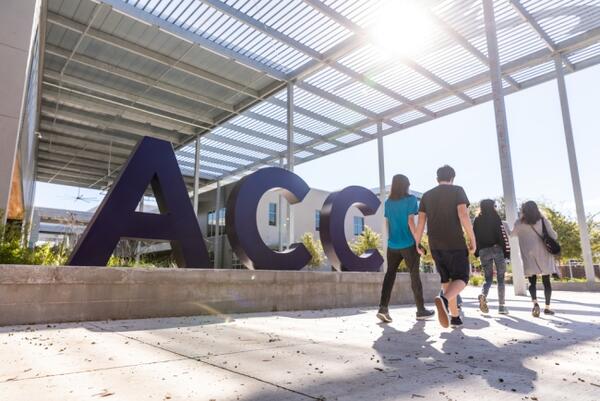
  • Austin Community College Joins Fight Against DOJ and Texas

    Austin Community College Joins Fight Against DOJ and Texas

    Civil rights groups have been piling on to intervene in the recent Texas court case that ended in-state tuition for noncitizens living in the state. Now Austin Community College and a Texas undocumented student are joining the effort to defend the now-defunct law.

    College officials worry they’ll lose students and revenue if undocumented students’ tuition prices suddenly skyrocket. Austin Community College is the first Texas college to try to join the lawsuit.

    The Texas Dream Act, which allowed noncitizens who grew up in the state to benefit from in-state tuition, was overturned last month after the Department of Justice sued Texas over the law. The state didn’t fight back and instead sided with the DOJ mere hours after the legal challenge. A week later, the Mexican American Legal Defense and Educational Fund, a Latino civil rights organization, filed a motion on behalf of a group of Texas undocumented students to intervene in the lawsuit. The group argued the swift resolution of the DOJ’s legal challenge denied those affected any chance to weigh in, so the students should become intervenors, or a party to the case, and have their day in court.

    Other groups quickly followed MALDEF’s lead. Since last week, the American Civil Liberties Union of Texas, the Texas Civil Rights Project, Democracy Forward and the National Immigration Law Center have joined the fight, representing the activist group La Unión del Pueblo Entero, the Austin Community College District’s Board of Trustees and Oscar Silva, a student at University of North Texas. The groups filed emergency motions on their behalf to intervene in the lawsuit and get relief from the judgment that killed the law. If these legal efforts are successful, a case so quickly open and shut by Texas and the DOJ could be reopened.

    Austin Community College board chair Sean Hassan said in a news release from the Texas ACLU chapter that college officials deserved to have their say on the policy shift.

    “Employers and taxpayers are looking to community colleges to produce a sufficient number of highly skilled graduates to meet workforce needs,” Hassan said. “If legislation or court decisions will impact our ability to meet these expectations, we should have a seat at the table to help shape responsible solutions. The action by our board asks the court to ensure our voice is heard.”

    Calculating the Costs

    In court filings, Austin Community College leaders argue that the institution will lose revenue because of the abrupt end of the Texas Dream Act. They estimated that about 440 students will see their tuition rates quadruple, and as a result, hundreds of students will stop out and prospective students will avoid enrolling in the first place. College leaders also argued in the motion to intervene that the need for scholarships will rise, putting extra financial pressure on the community college.

    They cited other potential costs as well, including setting up new processes to identify and notify noncitizen students of tuition rate changes and ramping up public relations efforts so the college can continue to “market itself as an accessible, inclusive, and affordable institution for all Texas high school graduates,” despite the policy change.

    “The loss of these students will have a cascading effect on campus life, academic programs, and student support services,” Austin Community College chancellor Russell Lowery-Hart said, according to court filings.

    The motion also detailed how Silva, the student, would likely have to withdraw from his joint bachelor’s and master’s program at the University of North Texas if he lost his in-state tuition benefits. He was expected to graduate next spring. Silva has lived in Texas since the age of 1 and attended Texas K–12 schools.

    “The Texas Dream Act means everything to me,” Silva said in the ACLU of Texas news release. “This law has made my education possible. Without it, college would’ve been out of reach for me as a first-generation college student.”

    The motion comes after Wynn Rosser, commissioner of higher education for the Texas Higher Education Coordinating Board, sent out a June 18 memo directing colleges and universities to determine which of their students are undocumented and need to be charged higher tuition starting this fall.

    Trouble Over Timelines

    Texas, the DOJ and civil rights groups have since been haggling over how fast the U.S. District Court should move in response to the new motions.

    The civil rights groups want a decision soon. But, in a joint submission to the court on June 30, the Trump administration and Texas argued emergency motions were uncalled-for and the legal proceedings shouldn’t be expedited, though they acknowledged the intervenors raised issues “which merit response.”

    “Expediting responses to intervenors’ motions would only serve [to] put the United States and Texas at a disadvantage, having to brief and respond to intervenors’ myriad of arguments in a drastically shorter timeframe than would otherwise be necessary, and would do nothing to help intervenors expedite any potential relief,” the response read.

    But the civil rights groups representing Austin Community College and other intervenors weren’t having it. On July 1, they asked that the court deny the request.

    The attorneys argued that the state and the federal government moved quickly to resolve the DOJ’s lawsuit and end the Texas Dream Act, but “when asked to respond on an expedited basis to the consequences of their actions and the imminent harm raised” by the motions, “the parties balk, insisting that the court should postpone its consideration of these motions until well past the point when the looming harms become irreversible.”

    That same day, Judge Reed O’Connor gave the Trump administration and Texas until July 14 to respond to the motion to intervene, which aligns with their requested timeline. He also delayed briefings on the motions to stay the judgement and for relief until he rules on the motion to intervene.

    As this fight plays out in Texas, the DOJ is targeting other states that offer in-state tuition benefits to undocumented students. Last month the Trump administration filed similar lawsuits in Kentucky and Minnesota, which have yet to be resolved.

    Source link

  • 25 (Mostly AI) Sessions to Enjoy in 2025 – The 74

    25 (Mostly AI) Sessions to Enjoy in 2025 – The 74


    Get stories like this delivered straight to your inbox. Sign up for The 74 Newsletter

    South by Southwest Edu returns to Austin, Texas, running March 3-6. As always, it’ll offer a huge number of panels, discussions, film screenings, musical performances and workshops exploring education, innovation and the future of schooling.

    Keynote speakers this year include neuroscientist Anne-Laure Le Cunff, founder of Ness Labs, an online educational platform for knowledge workers; astronaut, author and TV host Emily Calandrelli, and Shamil Idriss, CEO of Search for Common Ground, an international non-profit. Idriss will speak about what it means to be strong in the face of opposition — and how to turn conflict into cooperation. Also featured: indy musical artist Jill Sobule, singing selections from her musical F*ck 7th Grade.

    As in 2024, artificial intelligence remains a major focus, with dozens of sessions exploring AI’s potential and pitfalls. But other topics are on tap as well, including sessions on playful learning, book bans and the benefits of prison journalism. 

    To help guide the way, we’ve scoured the schedule to highlight 25 of the most significant presenters, topics and panels: 

    Monday, March 3:

    11 a.m. — Ultimate Citizens Film Screening: A new independent film features a Seattle school counselor who builds a world-class Ultimate Frisbee team with a group of immigrant children at Hazel Wolf K-8 School. 

    11:30 a.m. — AI & the Skills-First Economy: Navigating Hype & Reality: Generative AI is accelerating the adoption of a skills-based economy, but many are skeptical about its value, impact and the pace of growth. Will AI spark meaningful change and a new economic order, or is it just another overhyped trend? Meena Naik of Jobs for the Future leads a discussion with Colorado Community College System Associate Vice Chancellor Michael Macklin, Nick Moore, an education advisor to Alabama Gov. Kay Ivey, and Best Buy’s Ryan Hanson.

    11:30 a.m. — Navigation & Guidance in the Age of AI: The Clayton Christensen Institute’s Julia Freeland Fisher headlines a panel that looks at how generative AI can help students access 24/7 help in navigating pathways to college. As new models take root, the panel will explore what entrepreneurs are learning about what students want from these systems. Will AI level the playing field or perpetuate inequality? 

    12:30 p.m. — Boosting Student Engagement Means Getting Serious About Play: New research shows students who are engaged in schoolwork not only do better in school but are happier and more confident in life. And educators say they’d be happier at work and less likely to leave the profession if students engaged more deeply. In this session, LEGO Education’s Bo Stjerne Thomsen will explore the science behind playful learning and how it can get students and teachers excited again.

    1:30 p.m. — The AI Sandbox: Building Your Own Future of Learning: Mike Yates of The Reinvention Lab at Teach for America leads an interactive session offering participants the chance to build their own AI tools to solve real problems they face at work, school or home. The session is for AI novices as well as those simply curious about how the technology works. Participants will get free access to Playlab.AI.

    2:30 p.m. — Journalism Training in Prison Teaches More Than Headlines: Join Charlotte West of Open Campus, Lawrence Bartley of The Marshall Project and Yukari Kane of the Prison Journalism Project to explore real-life stories from behind bars. Journalism training is transforming the lives of a few of the more than 1.9 million people incarcerated in the U.S., teaching skills from time management to communication and allowing inmates to feel connected to society while building job skills. 

    Tuesday, March 4:

    11:30 a.m. — Enough Talk! Let’s Play with AI: Amid the hand-wringing about what AI means for the future of education, there’s been little conversation about how a few smart educators are already employing it to shift possibilities for student engagement and classroom instruction. In this workshop, attendees will learn how to leverage promising practices emerging from research with real educators using AI in writing, creating their own chatbots and differentiating support plans. 

    12:30 p.m. — How Much is Too Much? Navigating AI Usage in the Classroom: AI-enabled tools can be helpful for students conducting research, outlining written work, or proofing and editing submissions. But there’s a fine line between using AI appropriately and taking advantage of it, leaving many students wondering, “How much AI is too much?” This session, led by Turnitin’s Annie Chechitelli, will discuss the rise of GenAI, its intersection with academia and academic integrity, and how to determine appropriate usage.  

    1 p.m. — AI & Edu: Sharing Real Classroom Successes & Challenges: Explore the real-world impact of AI in education during this interactive session hosted by Zhuo Chen, a text analysis instructor at the nonprofit education startup Constellate, and Dylan Ruediger of the research and consulting group Ithaka S+R. Chen and Ruediger will share successes and challenges in using AI to advance student learning, engagement and skills. 

    1 p.m. — Defending the Right to Read: Working Together: In 2025, authors face unprecedented challenges. This session, which features Scholastic editor and young adult novelist David Levithan, as well as Emily Kirkpatrick, executive director of the National Council of Teachers of English, will explore the battle for freedom of expression and the importance of defending reading in the face of censorship attempts and book bans.

    1 p.m. — Million Dollar Advice: Navigating the Workplace with Amy Poehler’s Top Execs: Kate Arend and Kim Lessing, the co-presidents of Amy Poehler’s production company Paper Kite Productions, will be live to record their workplace and career advice podcast “Million Dollar Advice.” The pair will tackle topics such as setting and maintaining boundaries, learning from Gen Z, dealing with complicated work dynamics, and more. They will also take live audience questions.

    4 p.m. — Community-Driven Approaches to Inclusive AI Education: With rising recognition of neurodivergent students, advocates say AI can revolutionize how schools support them by streamlining tasks, optimizing resources and enhancing personalized learning. In the process, schools can overcome challenges in mainstreaming students with learning differences. This panel features educators and advocates as well as Alex Kotran, co-founder and CEO of The AI Education Project.

    4 p.m. — How AI Makes Assessment More Actionable in Instruction: Assessments are often disruptive, cumbersome or disconnected from classroom learning. But a few advocates and developers say AI-powered assessment tools offer an easier, more streamlined way for students to demonstrate learning — and for educators to adapt instruction to meet their needs. This session, moderated by The 74’s Greg Toppo, features Khan Academy’s Kristen DiCerbo, Curriculum Associates’ Kristen Huff and Akisha Osei Sarfo, director of research at the Council of the Great City Schools.

    Wednesday, March 5:

    11 a.m. — Run, Hide, Fight: Growing Up Under the Gun Screening & Q&A: Gun violence is now the leading cause of death for American children and teens, according to the federal Centers for Disease Control and Prevention, yet coverage of gun violence’s impact on youth is usually reported by adults. Run, Hide, Fight: Growing Up Under the Gun is a 30-minute documentary by student journalists about how gun violence affects young Americans. Produced by PBS News Student Reporting Labs in collaboration with 14 student journalists in five cities, it centers the perspectives of young people who live their lives in the shadow of this threat. 

    11:30 a.m. — AI, Education & Real Classrooms: Educators are at the forefront of testing, using artificial intelligence and teaching their communities about it. In this interactive session, participants will hear from educators and ed tech specialists on the ground working to support the use of AI to improve learning. The session includes Stacie Johnson, director of professional learning at Khan Academy, and Dina Neyman, Khan Academy’s director of district success. 

    11:30 a.m. — The Future of Teaching in an Age of AI: As AI becomes increasingly present in the classroom, educators are understandably concerned about how it might disrupt their teaching. An expert panel featuring Jake Baskin, executive director of the Computer Science Teachers Association andKarim Meghji of Code.org, will look at how teaching will change in an age of AI, exploring frameworks for teaching AI skills and sharing best practices for integrating AI literacy across disciplines.

    2:30 p.m. — AI in Education: Preparing Gen A as the Creators of Tomorrow: Generation Alpha is the first to experience generative artificial intelligence from the start of their educational journeys. To thrive in a world featuring AI requires educators helping them tap into their natural creativity, navigating unique opportunities and challenges. In this session, a cross-industry panel of experts discuss strategies to integrate AI into learning, allowing critical thinking and curiosity to flourish while enabling early learners to become architects of AI, not just users.

    2:30 p.m. — The Ethical Use of AI in the Education of Black Children: Join a panel of educators, tech leaders and nonprofit officials as they discuss AI’s ethical complexities and its impact on the education of Black children. This panel will address historical disparities, biases in technology, and the critical need for ethical AI in education. It will also offer unique perspectives into the benefits and challenges of AI in Black children’s education, sharing best practices to promote the safe, ethical and legal use of AI in classrooms.

    2:30 p.m. — Exploring Teacher Morale State by State: Is teacher morale shaped by where teachers work? Find out as Education Week releases its annual State of Teaching survey. States and school districts drive how teachers are prepared, paid and promoted, and the findings will raise new questions about what leaders and policymakers should consider as they work to support an essential profession. The session features Holly Kurtz, director of EdWeek Research Center, Stephen Sawchuk, EdWeek assistant managing editor, and assistant editor Sarah D. Sparks.

    2:30 p.m. — From White Folks Who Teach in the Hood: Is This Conversation Against the Law Now? While most students in U.S. public schools are now young people of color, more than 80% of their teachers are white. How do white educators understand and address these dynamics? Join a live recording of a podcast that brings together white educators with Christopher Emdin and sam seidel, co-editors of From White Folks Who Teach in the Hood: Reflections on Race, Culture, and Identity (Beacon, 2024).

    3:30 p.m. — How Youth Use GenAI: Time to Rethink Plagiarism: Schools are locked in a battle with students over fears they’re using generative artificial intelligence to plagiarize existing work. In this session, join Elliott Hedman, a “customer obsession engineer” with mPath, who with colleagues and students co-designed a GenAI writing tool to reframe AI use. Hedman will share three strategies that not only prevent plagiarism but also teach students how to use GenAI more productively.  

    Thursday, March 6:

    10 a.m. — AI & the Future of Education: Join futurists Sinead Bovell and Natalie Monbiot for a fireside discussion about how we prepare kids for a future we cannot yet see but know will be radically transformed by technology. Bovell and Monbiot will discuss the impact of artificial intelligence on our world and the workforce, as well as its implications for education. 

    10 a.m. — Reimagining Everyday Places as Early Learning Hubs: Young children spend 80% of their time outside of school, but too many lack access to experiences that encourage learning through hands-on activities and play. While these opportunities exist in middle-class and upper-income neighborhoods, they’re often inaccessible to families in low-income communities. In this session, a panel of designers and educators featuring Sarah Lytle, who leads the Playful Learning Landscapes Action Network, will look at how communities are transforming overlooked spaces such as sidewalks, shelters and even jails into nurturing learning environments accessible to all kids.

    11 a.m. — Build-a-Bot Workshop: Make Your Own AI to Make Sense of AI: In this session, participants will build an AI chatbot alongside designers and engineers from Stanford University and Stanford’s d.school, getting to the core of how AI works. Participants will conceptualize, outline and create conversation flows for their own AI assistant and explore methods that technical teams use to infuse warmth and adaptability into interactions and develop reliable chatbots.  

    11:30 a.m. — Responsible AI: Balancing Innovation, Impact, & Ethics: In this session, participants will learn how educators, technologists and policymakers work to develop AI responsibly. Panelists include Isabelle Hau of the Stanford Accelerator for Learning, Amelia Kelly, chief technology officer of the Irish AI startup SoapBox Labs, and Latha Ramanan of the AI developer Merlyn Mind. They’ll talk about how policymakers and educators can work with developers to ensure transparency and accuracy of AI tools. 


    Get stories like these delivered straight to your inbox. Sign up for The 74 Newsletter

    Source link