Tag: Australia

  • Decoder Replay: Australia waltzes with two superpowers

    Decoder Replay: Australia waltzes with two superpowers

    The index ranks 26 countries and territories in terms of their capacity to shape their external environment. It evaluates international power through 133 indicators across themes including military capability and defense networks, economic capability, diplomatic and cultural influence, as well as resilience and future resources.

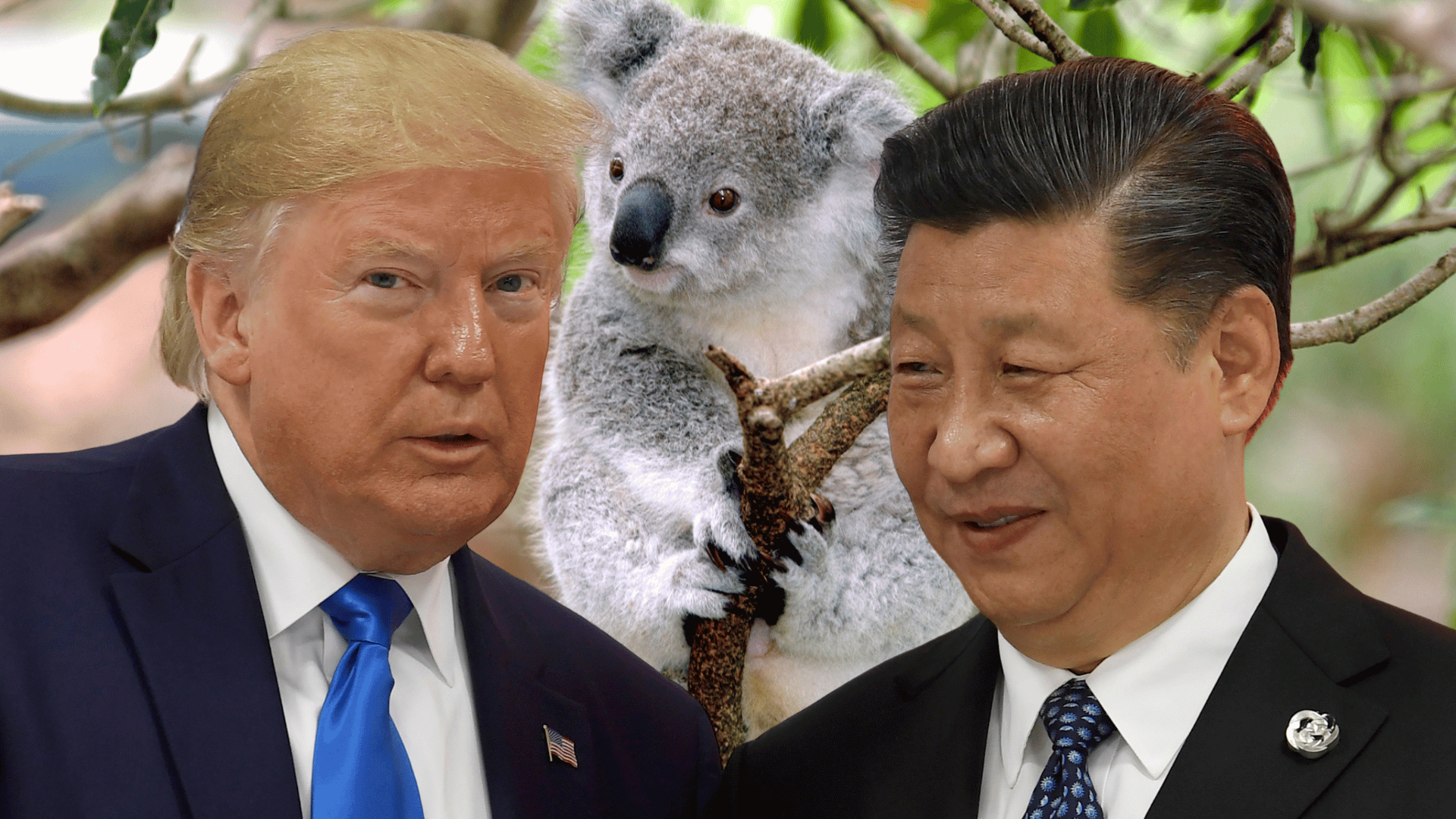
    The portrait that emerges from its latest survey is that while China’s overall power still lags the United States, it is not far behind, even though the current economic slowdown is holding it back in the short term.

    After the two superpowers, trailing a long way back as the next most powerful countries in the Asia-Pacific are Japan, India, Russia and then Australia.

    Economic versus military power

    The index confirms that China draws its power from its central place in Asia’s economic system, while that of the United States comes from its military capability and unrivaled regional defense networks.

    Australia’s relationship with the two mirrors the dilemma facing the whole region.

    The United States is far and away Australia’s main strategic partner and has been since the Second World War.

    In a deal signed in March 2023, Australia is set to acquire a conventionally-armed, nuclear-powered submarine capability with help from the United States through the AUKUS Treaty, which also involves the United Kingdom.

    This was followed by plans to station more U.S. forces in Australia, especially in air bases in northern and western Australia. There are also moves to increase cooperation between both countries in space, speed up efforts for Australia to develop its own guided missile production capability and work with the United States to deepen security relationships with other countries in the region — most notably Japan.

    This comes as Australia has been working hard to get trade restrictions eased with China after it imposed tariffs on a range of Australian products in 2020 during a standoff with the previous government.

    Dining with Joe and Jinping

    China is still Australia’s largest two-way trading partner in goods and services, accounting for almost one third of its trade with the world. Two-way trade with China grew 6.3% in 2020-21 to A$267 billion (about US$180 billion), mostly due to the coal and iron ore sectors.

    So as it stands, Australia’s security relies on the United States but its economic prosperity is heavily influenced by China.

    It’s no surprise then that Prime Minister Albanese had to walk a fine line in 2023 — going from a state dinner at the White House with U.S. President Biden on 26 October to meeting with Chinese president Xi Jinping 11 days later.

    Colin Heseltine, a former Deputy Head of Mission at the Australian Embassy in Beijing and now senior advisor for independent think tank Asialink, said Australia is in a conundrum over China.

    “Australia’s major trading partner is also perceived as our No.1 security threat,” he said.

    Normalizing relations before an abnormal U.S. election

    Heseltine believes there is a mood of cautious optimism about the growing relationship between Australia and China since the election of the Albanese government, but expects the future will not be completely free of headwinds.

    In the end, Australia, like many other nations in the region, is pragmatically making the situation work. It has seen relations with Beijing normalize, or as some prefer to describe it, stabilize.

    As for the United States, relations between Canberra and Washington remain vibrant and strong.

    The next big issue for Australia in managing this twin policy of improving ties with the Asia-Pacific’s two diverse superpowers could well be the 2024 U.S. presidential election — who wins it and if China features in it.

    And those things are outside its control.


    Three questions to consider:

    1. What is the emerging dilemma facing most democratic nations in the Asia-Pacific region?
    2. Is China likely to overtake the United States as the Asia-Pacific’s major superpower anytime soon?
    3. What is the biggest threat to the current status quo facing nations in the region?


    Source link

  • Sector ambivalent after Labor’s landslide election victory

    Sector ambivalent after Labor’s landslide election victory

    • Anthony Albanese has secured a second term for the ruling Labor party, beating out the Coalition to win Australia’s federal election.
    • His win has attracted mixed views from key stakeholders, with some welcoming Albanese’s return and others warning that the sector may have no more trump cards to play.
    • It follows pledges from both Labor and the Coalition to increase the price of student visas.

    The Labor party stormed its way to victory after a battle against the Peter Dutton-led Coalition, with both sides making controversial election promises to vastly increase student visa fee fees as immigration continues to dominate political discourse in Australia.

    The international education sector is still catching its breath as it takes in the result after months of hostile rhetoric from both parties – with each having promised crushing de facto caps on overseas students as tensions rise over Australia’s housing crisis and growing anger about mass immigration.

    But early reactions from sector leaders indicate mixed feelings over Albanese’s second term.

    Chief executive officer of the International Education Association of Australia (IEAA) Phil Honeywood said the result was “hopefully the best outcome” for the sector. He pointed out that the Labor government “has at least proactively proactively consulted” with stakeholders before announcing major policy changes – no matter how unwelcome they are.

    Now that Labor has been returned with a large majority, the hope is that it will be electorally confident enough to not target international students as the cause of the rent crisis
    Phil Honeywood, IEAA

    In contrast, he noted, the Coalition did not speak to any key stakeholders before unveiling its “draconian policy framework for our sector” – hardline proposals including a cap on new international student arrivals at a scant 240,000 per year and steep visa fee hikes.

    “Now that Labor has been returned with a large majority, the hope is that it will be electorally confident enough to not target international students as the cause of the rent crisis,” he remarked.

    On the other hand, Lexis English managing director Ian Pratt predicted that Labor’s election win would “give little comfort to an under-siege international education sector”.

    “An emboldened education minister Jason Clare is likely to take advantage of a newly compliant Senate to re-introduce the deeply flawed ESOS Amendment Bill – the  ‘capping legislation’ rejected in the previous term,” he said. 

    And he warned that with Labour expected to increase its majority, “industry peak bodies will have few levers to pull”. 

    “Initial focus will be on promoting small, sensible reforms, and likely to involve a push for a lower-fee ‘short-term’ student visa, catering for ELICOS and study abroad enrolments that do not generally contribute to net overseas migration figures,” he predicted.

    “There is also likely to be a push for a more transparent visa assessment process and a sensible approach to capping. Whether the returning government will feel any need to engage more positively with the sector remains to be seen.”

    The Labor party has repeatedly made attacks on the international education sector in recent months, first moving to cap new international student numbers to 270,000 under the thwarted ESOS Bill and then proposing a new Ministerial Direction tying individual caps to specific institutions after the Coalition blocked ESOS in a dramatic Senate battle.

    The party drew criticism from the sector last week after it made a last-minute pledge to increase student visa fees to AUD$2,000, up from the current AUD$1,600, drawing ire from some stakeholders for making the promise after early voting had already commenced.

    This is a developing story. Please check back for updates over the coming days…

    Source link

  • Australia Institute criticises $390m travel, $410m consultant spending amid job cuts and deficits – Campus Review

    Australia Institute criticises $390m travel, $410m consultant spending amid job cuts and deficits – Campus Review

    Analysis from The Australia Institute said 10 universities together spent more than $390m on travel in 2023 and 27 institutions spent $410m on consultants amid executive pay and wage underpayment scandals.

    Please login below to view content or subscribe now.

    Membership Login

    Source link

  • Industry mourns loss of Saskia Loer Hansen

    Industry mourns loss of Saskia Loer Hansen

    The industry was left reeling this week after the announcement by RMIT University in Australia of the death of Loer Hansen, a well known senior leader who had enjoyed a successful global career working in Australia and the UK.

    “It is with deep sadness that we share some very difficult news with our community. In a tragic car accident while returning from holiday, Saskia Loer Hansen, deputy vice-chancellor international and engagement and interim general director RMIT Vietnam, lost her life,” said RMIT in a statement.

    “The shock of her sudden passing is hard to fathom, and anyone who had the good fortune to know Saskia will understand that a rare light has gone out.

    “While nothing can make good of the loss of someone with so much more to give, the RMIT community will remember her as an example to emulate.”

    LinkedIn has seen many posts remembering Loer Hansen’s humanity, charisma and professional impact. Prior to RMIT, Loer Hansen worked as PVC international at Aston University in the UK, having moved to the UK from a prior role at the same Australian institution.

    “Saskia was an inspirational leader with the biggest heart,” remembered Wendy Yip, director international development at Aston University.

    “I will always remember how she made time to listen, no matter how busy she was. She will be deeply missed by the teams she led, the people she engaged with, and the global education sector she helped shape.”

    The shock of her sudden passing is hard to fathom, and anyone who had the good fortune to know Saskia will understand that a rare light has gone out
    RMIT University

    Neville Wylie, deputy principal at University of Stirling, wrote: “She had one of the warmest smiles in the business and was an extraordinarily talented communicator.”

    AEMG, an Australian based company working closely with China, also noted Loer Hansen’s dedication. “We will always remember our 2021 Hand in Hand Workshop, when Saskia joined us at 4am from the UK to participate and present,” it said. “Her commitment to global education and her support for AEMG never wavered, no matter the time nor circumstances.”

    “Saskia’s passing is an enormous shock, and the response from friends and colleagues has been overwhelming. She lived an exceptional life; her generous spirit reaching so many. Together, we will remember her,” commented VC of RMIT Alec Cameron on LinkedIn.

    Loer Hansen was born in Denmark and enjoyed a truly global career – engaging and sharing her insight with The PIE over many years. She is fondly remembered.

    Those wishing to attend a memorial service for Saskia Loer Hansen can register their interest with RMIT University here.

    Source link

  • Parents turn to international education as path to residency

    Parents turn to international education as path to residency

    If families looking to relocate to “top destinations” such as the US and Canada choose the right program for their children, they may be granted permanent residency as domestic students or even graduate from their chosen institution as residents or citizens, according to Tess Wilkinson, director of education services at Henley & Partners Education in the UK.

    “We’re now seeing a real uptick in the types of families who are now becoming aware that there is an option for them,” she told The PIE News.

    “For families looking at relocating, there can be real gains in the amount of fees they spend on education in places like Canada,” she explained. “They can they can save [up to] $150,000 on fees.”

    The sheer number of clients asking for assistance in this area signals that education is swiftly becoming “one of the key drivers for people looking at second residences to citizenships”, she added.

    Henley & Partners refers to itself as a “global leader in residence and citizenship by investment”. Its education arm, Wilkinson explained, helps to “advise transnational families who are looking for global education solutions”.

    Working with families all over the world with children and adults of all ages – from K-12 to those seeking master’s degrees or MBAs – it “assists them to find the right match”, taking into account children’s individual needs and the types of residency or citizenship that may become available to its clients through educational opportunities.

    “We can advise on all the top-tier destinations. So we have a family, for instance, who are considering the UK, the US and Australia and they’re putting in applications for all three countries,” Wilkinson shared.

    We’re now seeing a real uptick in the types of families who are now becoming aware that there is an option for them
    Tess Wilkinson, Henley & Partners Education

    With immigration policies in key markets such as the UK, the US, Canada and Australia shifting all the time, Wilkinson acknowledged that it “is not something that is simple”.

    But she said that, with expertise across a number of key markets, Henley & Partners can provide families with education counsellors to help match children to institutions that suit them best, as well as help with applying to universities or summer programs.

    The ‘big four’ international education destination countries are all seeing turbulence in their respective markets. Some of these restrictive policies are having an impact on students’ ability to study in the countries, hindering them from securing post-graduate residency in their chosen destination.

    Australia and Canada are both subject restrictions on international students, while UK universities’ international departments have been blighted by a crackdown on overseas students’ ability to bring their families into the country with them.

    Meanwhile, Donald Trump’s second term as US President continues to present challenges to the sector, as he freezes study abroad funding, battles against DEI legislation and moves to arrest or even deport international student protestors.

    Tess Wilkinson will be speaking at The PIE Live Europe at the PIEx Power Up Expanding horizons: accessing global education & opportunity via investment migration on March 11 at 16:00. Tickets are available online here.

    Source link

  • 2024 Shaping Australia award winners announced

    2024 Shaping Australia award winners announced

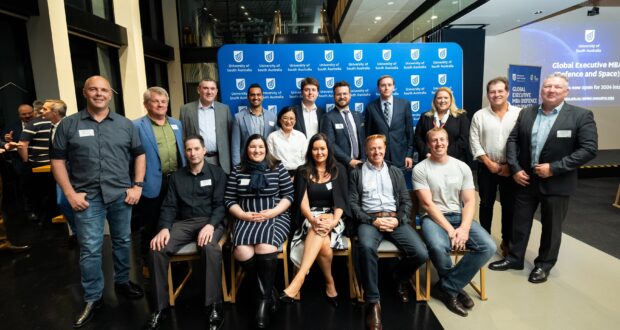
    The Future Builder award winners. Picture: UA

    Researchers who developed coffee ground-infused concrete, a rust disease cure for wheat crops and an intellectual-disability friendly playground took home a Universities Australia Shaping Australia award on Tuesday night.

    Please login below to view content or subscribe now.

    Membership Login

    Source link

  • Lessons from Australia on how to do R&D consultations well

    Lessons from Australia on how to do R&D consultations well

    Australia’s R&D sector is afflicted by challenges that will be familiar to UK readers.

    The proportion of GDP spent on research is too low. Business adoption and innovation in R&D is too shallow. Collaboration between business and academia is poor. Reliance on international student fees to fund research has rendered the entire system fragile. And the immobility of academics is stymieing the cross-pollination of ideas.

    However, the Australian government has a plan.

    Back in December the Australian government launched its Strategic Examination of Research and Development. At the time I said the review was about

    […]maximising the value of R&D, improving links between research and the real economy, supporting research mobility, advancing national priorities such as growth, growing research intensity, and doing so with due regard to regional distribution, risk, and international competitiveness.

    Bits and pieces

    In effect, unlike the innumerable reviews we have seen in the UK the Australian government is taking a look at the entire research ecosystem. A sensible approach for a system where improving R&D, in whatever form, relies on funding, funders, researchers, institutes, incentives, governments, the private sector, universities, and many actors besides all working in harmony.

    The Australian government has now launched their discussion paper and the potential for a new R&D system is starting to come into view.

    It is interesting that Australia believes the UK as a country to learn from

    Other countries, such as the UK, USA, China, Israel and Singapore, have successfully adopted new strategies for leveraging R&D and innovation for social and economic gain.

    Most impartial observers would not put the UK’s ability to deploy R&D in the same league as the USA and China, the UK’s GDP investment is well behind Israel’s, while Singapore has rapidly grown its financial and manufacturing base in a way the UK has not. However, where there is a shared ambition is the sense Australia hasn’t quite met its potential.

    Tough clear choices

    This consultation is written in a way that UK consultations are not. The starting premise of this discussion paper is that economic growth is predicated on research, research should benefit all of society, and therefore society as a whole should have a say in how research is funded and organised. This isn’t a document which talks down but it has a clarity that brings the sometimes turgid prose of the UK government’s commissions into share relief.

    The below caps off the executive summary and it is hard to imagine this appearing in the UK

    Boosting a focus on R&D will prevent Australia’s slide into mediocrity. It will ensure we will be offered a seat at the international table at which big global decisions are made – because we earn it.

    The UK has a greater research capacity than Australia in many ways but to frame the need to grow research as central to the entire future of the country is a bold thing to do. It’s exciting, and it encourages participation.

    The discussion paper sets out what the Australian government is seeking to achieve through this intervention. It is trying to create a more productive, sustainable, and resilient economy through improving the conditions through which research is created, adopted, and diffused.

    Like their UK counterparts the Australian government cannot resist an extremely complex research diagram with a dizzying array of arrows and pie charts to indicate inter-relationships between government and its partners.

    However, the underlying message is clear. Put in place the right set of regulations, policies and funds to allow a variety of research approaches to grow, have clear feedback loops in place with appropriate measurement, and a range of cultural, social, economic, and knowledge benefits can be realised.

    Trade off

    An important departure from the UK is that the trade-offs between policy choices are made clear. Because UK R&D consultations are often single issue it is too easy to advocate for policies without worrying about the consequences. In one consultation I can ask for the Full Economic Cost of research. In another I can ask for a greater variety of research proposals to be funded. And in another I can ask for an increase in PGR places without reducing money in cost recovery or the funding of programmes. Historically, this has meant that the UK has done some things well but has never looked at everything across the ecosystem all at once.

    The Australian review by contrast makes the trade-offs pretty clear. If funding is spread too thinly across the entire country, and if the country cannot rapidly mobilise private investment, there is clearly a choice to be made on whether to concentrate funding or live with this thin spread. There is a clear choice on whether to try to leverage R&D to prop up traditional industries like mining or shift focus into new and emerging technologies. There are clear links between the need for a more diverse workforce and diversity as a means of meeting the skills gaps within R&D. And it is stark in the lack of alternatives to crowding in more private investment to grow Australia’s R&D economy.

    In all, it feels like a document that aims toward interested observers without patronising the wider R&D community. Its framing is honest with the university sector and makes the challenges the university sector faces clear. For example, it pulls few punches in explaining that while a system of research dependent on student funding allows for great freedom this isn’t an effective way to organise funding and strategy in a coherent way.

    The last bit of the discussion paper is that it tells participants what will happen next. This discussion paper is the start of the analyse stage of the strategy. There will be time to test things out, iterate them, and then decide what will happen. Again, it’s clear, the call to take part is grounded in a shared reality, and the language is clear without being patronising.

    Source link

  • HEDx Podcast: How many international students does Australia need? – Episode 154

    HEDx Podcast: How many international students does Australia need? – Episode 154

    Abul Rizvi was the deputy secretary of the Department of Immigration, then the deputy secretary of the Department of Communication.

    He has a PhD in Immigration Policy from the University of Melbourne, and came to Australia as part of a migrant academic family.

    He argues Australia’s current visa system is unjust, proposes his alternative to student caps, and says we need to change government attitudes to international students.

    Do you have an idea for a story?
    Email [email protected]

    Source link

  • Universities Australia wishlist for next election

    Universities Australia wishlist for next election

    Universities Australia CEO Luke Sheehy. Picture: Supplied

    The peak body representing universities, Universities Australia (UA), has said the federal government should offer more money and less bureaucracy to the higher education sector ahead of the election due by April.

    Please login below to view content or subscribe now.

    Membership Login

    Source link

  • Australia blocks social media for teens while UK mulls blasphemy ban

    Australia blocks social media for teens while UK mulls blasphemy ban

    This year, FIRE launched the Free Speech Dispatch, a regular series covering new and continuing censorship trends and challenges around the world. Our goal is to help readers better understand the global context of free expression. The previous entries covered policing of online speech, assassination attempts on U.S. soil, and more. Want to make sure you don’t miss an update? Sign up for our newsletter

    One step forward, two steps back for Australia

    (Mojahid Mottakin / Shutterstock.com)

    Communications Minister Michelle Rowland confirmed there was “no pathway to legislate” the government’s controversial plans to require platforms to moderate “misinformation.” In other words, the legislation is effectively dead. The bill, which I covered in a previous Dispatch, defined misinformation as “reasonably verifiable as false, misleading, or deceptive” and “likely to cause or contribute to serious harm.” There are many free speech concerns that arise when the government grants itself the power to require moderation of speech it deems untrue.

    But while Australia’s troubling misinformation legislation failed, another worrying bill sailed forward. Late last month, Australia passed the Social Media Minimum Age bill, legislation banning social media for children under the age of 16 that does not even allow for parent permission, despite the myriad threats it poses to free speech and privacy. 

    Australia isn’t the only country considering measures limiting youth access to social media. Here in the United States, the Kids Online Safety Act — which suffers from numerous First Amendment pitfalls — risks passage in Congress. Advocates and legislators have even pushed for bills similar to Australia’s that would wholesale stop American teens from accessing social media sites.

    UK adds blasphemy to its mounting free speech woes


    WATCH VIDEO: Free nations don’t have blasphemy laws. The UK needs to tread carefully.

    Once again, the UK is making headlines — the bad kind. The reason this time? Late last month, Member of Parliament Tahir Ali called on UK Prime Minister Keir Starmer to lead “measures to prohibit the desecration of all religious texts and the prophets of the Abrahamic religions.” 

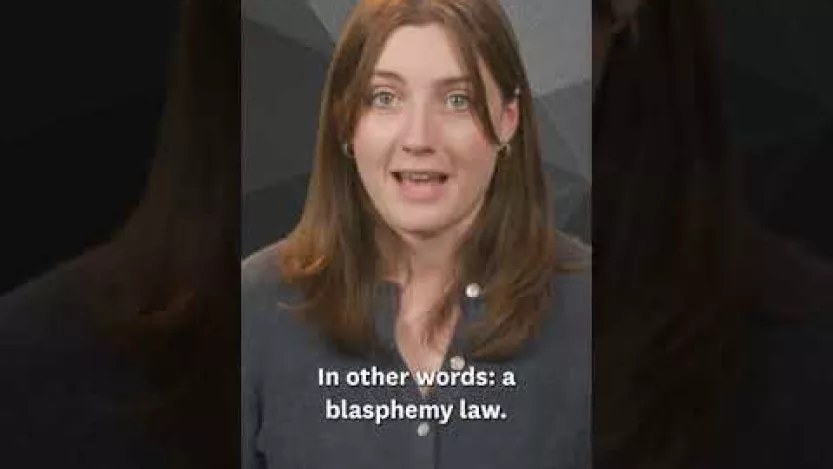
    There’s a term for that: a blasphemy law.

    The UK’s relationship with free expression is currently in a free fall and the last thing it needs right now is more forms of expression to police. Blasphemy laws are often packaged and promoted in language about protecting the powerless but, as countless recent arrests and prosecutions make clear, are regularly wielded as a tool to preserve power, whether religious, political, or somewhere in between. 

    Ali’s advocacy of a blasphemy law is deeply wrong-headed, but he is far from the only one to think it might be a worthy venture. Last year, in response to a spate of Quran burning incidents, the United Nations Human Rights Council passed a resolution encouraging more countries to “address, prevent and prosecute acts and advocacy of religious hatred” — a nebulous concept prone to abuse — and months later, Denmark enacted such a law

    That wasn’t even the only blasphemy-related story to emerge this month out of the UK. In November, the Advertising Standards Authority banned comedian Fern Brady from using an advertisement for her stand-up tour that comically depicted Brady in place of the Virgin Mary in a riff on Alonso Cano’s 17th century painting, “St. Bernard and the Virgin.” In its decision, the ASA alleged that the image could cause “serious offence” to Christians, and directed her to avoid causing insult “on the grounds of religions” again.

    Comedian Fern Brady advertisement for her stand-up tour that comically depicted Brady in place of the Virgin Mary in a riff on Alonso Cano’s 17th century painting, “St. Bernard and the Virgin"

    Advertisement for comedian Fern Brady’s stand-up tour. (Alonso Cano / Fern Brady)

    The latest in censorship, tech, and the internet:

    • An investigation from Legal Initiatives for Vietnam discovered a shockingly high 90% compliance rate from companies including Meta, Google, and TikTok in response to government requests for content moderation, often of material critical of the government. Meta even utilizes a secret list of Vietnamese officials its users aren’t allowed to criticize. 
    • Pakistan appears to be the first country to block the relatively new social media platform Bluesky, but that’s no great surprise given Pakistan’s frequent internet censorship efforts.
    • A Citizen Lab report found that books “largely related to LGBTIQ, the occult, erotica, Christianity, and health and wellness” were the top items Amazon restricts shipments of to certain countries like Saudi Arabia and the United Arab Emirates. Troublingly, Amazon “uses varying error messages such as by conveying that an item is temporarily out of stock” rather than stating upfront that the books are not available due to local censorship rules.
    • If you’re in Kyrgyzstan, watch what you say on the internet. In late November, the country’s parliament approved a bill that will issue fines for online “insult and libel.”
    • Russian communications authority Roskomnadzor is reportedly beefing up its efforts to cut off foreign internet access — including VPNs — in regions including Chechnya as it’s “testing its own sovereign internet it can fully control.”
    • The Parliament of Malaysia passed a worrying Online Safety Bill handing over to authorities broad new power to combat “harmful” content on the internet, including the ability to search and seize material from service providers without a warrant. “Freedom of speech does exist,” Communications Minister Fahmi Fadzil said, “but we are also given power through Parliament to impose any necessary restrictions for the safety of the public.”

    South Korea’s fleeting martial law decree threatened a free speech disaster 

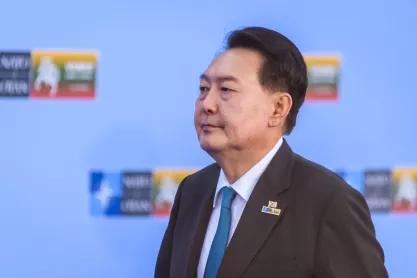
    South Korea President Yoon Suk Yeol in 2023 attending a NATO summit

    South Korea President Yoon Suk Yeol in 2023 (Gints Ivuskans / Shutterstock.com)

    On Dec. 3, President Yoon Suk Yeol shocked the world by declaring martial law in South Korea under the guise of protecting “liberal democracy from the threat of overthrowing the regime . . . by anti-state forces active within the Republic of Korea.”

    The decree banned, among other things, “fake news, public opinion manipulation, and false propaganda” as well as rallies and “all political activities.” All media would also be “subject to the control of the Martial Law Command.” Alleged violators of these and other provisions risked being “arrested, detained, and searched without a warrant.”

    Hours later, Yoon reversed course in response to massive protests and a parliamentary veto.

    Speech-related arrests and sentencing from Hong Kong to Brazil

    Elsa Wu - adoptive mother of the democrat Hendrick Lui - was arrested outside court on Tuesday. She was holding up a banner that read "Righteous people live, villains must die."

    • “Righteous people live, villains must die.” Elsa Wu, the mother of a Hong Kong activist recently sentenced to four years in prison, was arrested “on suspicion of disorderly conduct” for holding a banner with this message outside of a courthouse in November.
    • Indian journalist Mohammed Zubair has been charged with “endangering sovereignty, unity and integrity of India” for criticizing, and posting video of, comments a well-known Hindu priest made about the Prophet Muhammad. “It’s a classic case of shooting the messenger,” one of Zubair’s colleagues said. “It’s a witch hunt.”
    • Shortly after Zubair’s arrest, and on a similar basis, Indian police raided the offices of the Association for Protection of Civil Rights on charges including “promoting enmity.” The raid was reportedly based on the group’s social media posts highlighting abuses against Muslims in India.
    • Thai human rights lawyer Arnon Nampa, already imprisoned on similar charges, was sentenced this month to another two years in prison “over a 2020 social media post in which he allegedly criticised the king’s authority.” In total, he will serve over 16 years in prison and is one of many Thai activists punished for insulting or criticizing the country’s monarchy. Additionally, three Thai activists were charged with “contempt of court” for protesting a 2022 ruling from the Constitutional Court about the prime minister’s term limit.
    • Dozens of protesters have been arrested after demonstrating against Prime Minister Irakli Kobakhidze’s announcement that Georgia will postpone its efforts to join the European Union until 2028.
    • A Brazilian court has issued its longest-ever sentence for racism — nearly nine years in prison — over a woman’s 2017 social media video about a Malawian child adopted by two white Brazilian celebrities. The woman, Day McCarthy, called the child a “monkey” in a video and complained that “fake people and suck-ups” criticize McCarthy, “who identifies as half Black,” for not having “blue eyes and straight hair and a beautiful nose” but compliment the child’s appearance. McCarthy now lives in France and it’s unclear if she will serve the sentence. 

    Iran releases two dissidents but expands cruel crackdown on forced veiling critics

    Last week, a wide-ranging new law went into effect that will further punish women who transgress Iran’s deeply oppressive mandatory hijab laws. Punishments range from flogging to long prison terms to travel bans and even death for “nudity, indecency, unveiling and bad dressing” and related crimes.

    But amidst this awful development, there were some bright spots. Iranian cartoonist Atena Farghadani was released after serving eight months in prison on charges of “propaganda against the state” and dissident rapper Toomaj Salehi was also released after being held for 753 days over his support of women’s rights protests in the country. At one point, Salehi had been sentenced to death before the ruling was overturned by Iran’s Supreme Court.

    Tiananmen joke grounds ‘Family Guy’ episode from in-flight entertainment

    "Family Guy" father Peter stands in front of the tanks in Tiananmen Square


    WATCH VIDEO: In the first episode of the TV sitcom “Family Guy,” Peter Griffin briefly stands in front of the tanks at Tiananmen Square. (YouTube.com)

    Hong Kong airline Cathay Pacific is the latest example of a corporation eager to comply with the Chinese government’s political sensibilities after a passenger complained about an in-flight Family Guy episode that jokingly referenced Tank Man and the Tiananmen Square. 

    “We emphasise that the content of the programme does not represent Cathay Pacific’s standpoint, and have immediately arranged to have the programme removed as soon as possible,” the airline wrote in a statement earlier this month. It remains unclear what, exactly, is the company’s “standpoint” on the Tiananmen Square killings.

    Mostly, but not all, bad news in arts and media:

    • Bangladesh’s Press Information Department recalled the accreditation of 167 journalists in the country, a “broad and sweeping cancellation” that has “left the journalist community alarmed.”
    • Haiti’s telecommunications authority CONATEL suspended evening show Radio Mega after a wanted gang leader called into the show “claiming that he was offered a large bribe by a member of the ruling Presidential Transition Council to negotiate peace with the gangs.”
    • After a lengthy 14 years, broadcaster Luisito “Chito” Berjit Jr. was finally acquitted after a Filipino court found there was insufficient evidence to find him guilty of libel over his reporting about alleged government corruption.
    • A report this month from the Hong Kong Public Opinion Research Institute found that about two-thirds of respondents “perceived news outlets to have practiced self-censorship,” a record high result since the polling began in 1997.
    • French media regulatory authority Arcom reportedly fined a conservative TV station €100,000 for failure to uphold its “obligation of honesty and rigour in the presentation and processing of information” after it showed an image calling abortion the world’s leading cause of death during a Catholic program.
    • Kuwait has reportedly banned the release of “Wicked” within the country “amid reports that the film includes a gay character, which led to its prohibition.” The musical joins a long list of films, including “Barbie” and “Thor: Love and Thunder,” to face local bans over inclusions of LGBT themes or characters.
    • Belarusian authorities arrested seven reporters from an online independent news outlet for “supporting extremist activities.” The president of the Belarusian Association of Journalists said it “looks like the authorities have decided to arrest all journalists they suspect of being disloyal ahead of January’s presidential vote.”
    • If you expected to make it through this year without a censorship controversy from the divisive Australian Olympian break-dancer Raygun, think again. Her lawyers reportedly threatened legal action against the event space hosting comedian Steph Broadbridge’s show “Raygun: The Musical.” Broadbridge says Raygun’s lawyers “trademarked the poster used to advertise the musical” and “banned her from replicating the iconic kangaroo hop.”

    Source link