Tag: Authoritarianism

  • Loan Forgiveness Becomes Tool for Authoritarianism (opinion)

    Loan Forgiveness Becomes Tool for Authoritarianism (opinion)

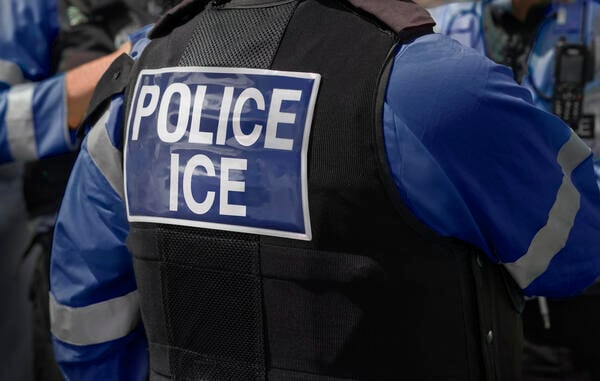
    By now, it’s obvious that the Trump administration’s efforts to expand Immigration and Customs Enforcement activities go far beyond enforcing federal immigration policy. The near-daily stories of inhumane detainment conditions, open violence against citizens and noncitizens alike, wanton civil rights violations, and purposeful shielding of these abuses from any form of public accountability lay bare that President Trump is now using ICE as a key component for advancing his administration’s hateful agenda.

    This context is essential to evaluate why the administration has sung such a different tune with the advertised $60,000 student loan forgiveness offers to new ICE recruits, compared to the normal song and dance about how higher education is evil incarnate. Trump and his political allies didn’t suddenly discover the societal benefits of affordable education, as evidenced by his simultaneous efforts to strip loan forgiveness pathways from those who are deemed obstructors to Trump’s political goals. What’s clear is that federal student loan forgiveness is now a poverty draft, coercing increased ICE and military enlistment from among those experiencing economic desperation.

    Weaponizing educational debt to fuel armed forces conscription from lower-income individuals is essentially socioeconomic hostage taking. It deprives people of their agency in choosing whether conscription is truly the career and life pathway they desire by forcing the decision as a survival tactic, especially when nearly half the country is approaching an economic recession deliberately caused by Trump’s policies.

    A History of Weaponizing College Affordability

    The easiest way for an authoritarian regime to maintain a highly militarized state is to make enlistment the only means of socioeconomic survival for the masses. This is exactly why the Trump administration is promoting student loan forgiveness for ICE recruits while curtailing eligibility for Public Service Loan Forgiveness. By passing the reconciliation bill that nearly tripled ICE’s budget while restricting Pell Grant eligibility for some students and cutting back basic needs programs like food stamps and Medicaid, congressional leaders have identified themselves as active participants in this strategy.

    Though Trump’s tactics are an unprecedentedly naked attempt to weaponize student loan relief in the service of authoritarianism, this is a foundational concept in federal higher education policy that he’s taking the opportunity to exploit. The Servicemen’s Readjustment Act of 1944, the first federal educational assistance program for veterans, and most follow-up educational assistance programs were more focused on rewarding military service in already-declared conflicts than using benefits as a recruitment draw.

    That shift came with the larger 1960s push to align higher education with the Cold War. California’s Master Plan of 1960 provided an opening for later attacks on college affordability, because it codified into public policy the idea that some types of institutions were worth attending more than others, mainly by segregating various types of educational experiences offered by different institutions. Later in the decade, then–California governor Ronald Reagan slashed public university budgets, in this way punishing students for antiwar protests. Reagan’s camouflaging of draconian education funding cuts as a necessary tool to combat the “filthy speech movement” became the groundwork for today’s deep inequality across all levels of the educational system.

    Over the next several decades, federal and state policymakers abandoned their responsibilities to fund public higher education, which has strengthened the ties between college (un)affordability and militarization. In 2022, 20 Republican House members—14 of whom are still in office—wrote a joint letter to then-president Biden expressing concern that his efforts to provide widespread student loan forgiveness would harm the ability of the military to use higher educational benefits as a recruitment tool.

    Last fall, 48 percent of 16- to 21-year-olds surveyed by the Department of Defense identified “to pay for future education” as a main reason they would consider joining the armed forces. This was the second-most common reason expressed in the survey, behind only “pay/money.”

    Student Loan Forgiveness Is Not Siloed Public Policy

    Public policy is rarely siloed into neat categories, and we are now experiencing the widespread consequences of allowing an inequitable and unaffordable higher education system to exist for so long in the United States. Trump isn’t the only federal policymaker endorsing this strategy, but he is the primary beneficiary. The more people willing to join ICE’s march toward martial law or forced to join ICE due to socioeconomic necessity, the easier it is for Trump to fully embrace authoritarianism and stay in power past January 2029.

    This is the framing that should be used in every policy conversation about student loan forgiveness moving forward, not just for the offers given to new ICE recruits. These actions are not distinct or separate from the administration’s federalizing of the National Guard, ICE’s vast increase in weapons spending or Trump’s public consideration of invoking the Insurrection Act to deploy more troops to U.S. cities; they’re a vital complement. Ransoming access to an affordable higher education, along with its associated socioeconomic benefits, based on how willing someone is to inflict terror on immigrant communities or any other population that the administration deems undesirable, is a deliberate tactic to build an authoritarian military state.

    Ideally, the current scenario facing higher education will end the usual hemming and hawing from policymakers about universal student loan forgiveness or tuition-free higher education being too expensive. Are the cost savings from not offering widespread forgiveness truly worth militarizing the country against the estimated 51.9 million immigrants living in the U.S., including more than 1.9 million immigrant and undocumented higher education students? Is appeasing Trump’s desire to play dictator dress-up so vital that policymakers feel compelled to willingly eradicate recent progress in national college affordability, discourage or outright bar international students from coming to learn in the United States, and shrink the economies of every state and congressional district due to the loss of international students?

    State Legislatures Are the Last Line of Defense

    The Trump administration is desperate to expand domestic militarization through ICE, as evidenced by advertisements on popular media streaming services and during nationally televised football games, public commitments to keep paying ICE agents as roughly 1.4 million federal workers go without pay during the government shutdown and the elimination or loosening of recruitment and training requirements for new ICE agents in relation to their age, physical fitness and ability to speak Spanish. As the Trump administration through ICE utilizes every available tool to further its authoritarian agenda, policymakers and institutions must use every available tool to combat said authoritarianism.

    State legislatures wield vast amounts of legal authority over education policy in comparison to the federal government. However, that authority is useless if states capitulate or are otherwise unwilling to use that authority to protect their education systems and their larger communities.

    Efforts like Connecticut’s new statewide student debt forgiveness program, California’s prohibition on campus police departments providing personal student information for immigration enforcement purposes and Colorado’s adoption of a new state law requiring public campuses to limit federal agents’ access to campus buildings are all welcome ways that state policymakers can fight back against ICE.

    These efforts must be expanded to more states as ICE continues to ramp up its domestic terrorism and congressional leadership remains content to abandon its constitutional responsibilities to hold the executive branch in check. For institutions, advocates and concerned community members, resources available through the Presidents’ Alliance on Higher Education and Immigration and its Higher Ed Immigration Portal, and from the Immigrant Legal Resource Center, provide essential guidance on how to act in protecting immigrants and their families.

    Student loan forgiveness, and the larger concept of an affordable and equitable higher education, could now be a matter of life and death for millions of people. The traditional willingness of policymakers to resist supporting higher education during times of economic surplus, while eagerly cutting educational funding at the first sign of economic distress, has now imperiled American democracy. Every image of ICE committing authoritarian violence is a stark call for policymakers to ask themselves what they value more: the fiscal savings of making no meaningful effort to address the more than $1.6 trillion owed in student debt, or American democracy itself.

    Christian Collins is a policy analyst with the education, labor and worker justice team at the Center for Law and Social Policy, a nonprofit organization focused on reducing poverty and advancing racial equity.

    Source link

  • Chancellors Playing Footsie With Authoritarianism

    Chancellors Playing Footsie With Authoritarianism

    It is hard not to feel at least occasionally helpless these days trying to operate between the twinned pincers of a Trump administration steamrolling our democracy and an AI industry pursuing its goal of automating all means and matter of human expression.

    It seems like, combined, they can take away just about anything: our grants, our international students, our jobs, our freedom.

    Things get worse when those of us toiling away as laborers see those in positions of leadership at the institutions that should be bollards blocking the path of antihuman, antifreedom movements instead lying down so as to be more easily run over.

    (Looking at you, Columbia University.)

    Arguments about how we should consider some measure of accommodation (to fascism, to AI) abound, and some are even reasonable-sounding. These are powerful forces with their hands around the throat of our futures. Certainly no one can be blamed for doing what it takes to nudge those hands back a few millimeters so you can get enough air to breathe.

    Those with the power to do so can seemingly take just about anything they want, except for one thing: your dignity.

    Your dignity must be given away by an act of free will. Maybe I was naïve to think that more people would be protective of their dignity in these times, but I see so many instances of the opposite that I’m frequently stunned by the eagerness with which people are willing to hurl their dignity into the abyss for some perceived benefit.

    The worst examples are found in the members of Donald Trump’s cabinet, who are occasionally tasked with a public performance of sycophantic fealty to their dear leader. It is amazing to see accomplished people treat the president of the United States like a toddler in need of a level of affirmation that would make Stuart Smalley blush. I think I understand the motives of these people: They are wielding power at a level that allows them to literally remake society or even the world.

    If it is your life’s goal to shield chemical companies from the financial responsibility of cleaning up the “forever chemicals” that cause cancer and miscarriages—which The New York Times reports is the apparent mission of some monster named Steven Cook—maybe it’s worth it to slather Trump in praise.

    But the decision to jettison one’s dignity made by the New York Times writer who looked at these displays and decided they are an example of leadership via reality television host rather than aspiring authoritarian is tougher for me to figure. While the article correctly identifies some of the lies conveyed during the spectacle, the overall tone is more of a “can you believe he’s getting away with this shit?” approach, rather than a “shouldn’t we be concerned he’s getting away with this shit?” approach, which would be far more accurate to the occasion.

    I can believe he’s getting away with it when the paper of record continually covers Trump like a novel spectacle practicing unusual politics rather than an authoritarian.

    I don’t know how one maintains their dignity when writing a story about Trump deploying the United States military in the nation’s capital that gives any credence to a “crackdown on crime” given that this is transparently BS, and yet the Times reflexively characterizes what is happening as a “crackdown” (see here, here and here), rather than, I don’t know, an “occupation.”

    In other jettisoning of dignity for strategic gain news, I have been, to a degree, sympathetic to the pre–Trump II stance of Vanderbilt chancellor Daniel Diermeier and WashU chancellor Andrew D. Martin’s views of higher ed reform anchored in institutional neutrality.

    I disagreed with that view as a matter of principle and policy approach, but this is a debate over principles.

    Now that we find ourselves in the midst of the overt Trump II attempts to destroy the independence of higher education institutions, I found their answers to a series of questions from The Chronicle’s Megan Zahneis about an apparent dispute between them and Princeton president Christopher Eisgruber about higher ed’s stance in relationship to Trump astounding as a performance of willed ignorance.

    This debate is taking place at a time when, obviously, the Trump administration has taken aim at higher ed. Are either of you concerned about this debate weakening the sector’s sense of autonomy?

    Martin: I would say the fact there is a public debate about the future of American higher education has no relationship whatsoever to what actions that the administration is taking.

    So you don’t see debate between leaders as detracting from that autonomy?

    Diermeier: I’m not 100 percent sure what we do about that. We have a point of view. We’ve had the point of view for a long time. We’re going to continue to argue for a point of view, because we think it’s essential. Now, if people disagree with that, I think that’s their decision. That’s the nature of civil discourse. We think that it’s important to get this right. We don’t think that the alternative, to hide under the desk, is appropriate.

    These answers would make Hogan’s Heroes’ Sergeant Schultz proud: “I know nothing! I see nothing.”

    Earlier in the interview, both chancellors make it clear that they are seeing a benefit to their institutions in the current climate, potentially enrolling more students who have been turned off by the turbulence being visited on their elite university brethren of the Northeast.

    They have apparently decided that they now have an advantage in the competitive market of higher education by their willingness to wink at an authoritarian push.

    Speaking of their fellow institutional leaders, Diermeier says there that there has been “no despising or disrespect or hatred among the sets of colleagues we’ve been engaged with,” and while I’m not a colleague of these gentlemen, let me publicly register my strong disrespect for their performative cluelessness in the interview.

    Let me also suggest I can’t imagine someone who respects themselves following that path, and I’m grateful to the institutional leaders like Christopher Eisgruber who are willing to express reality.

    I don’t know what the future holds. It’s possible that WashU and Vanderbilt are positioning themselves as the favored elite institutions of the authoritarian regime, ready to hoover up that federal cash that Trump is threatening to withhold from the schools that will not bend to his will.

    I’m genuinely curious if that scenario is worth one’s dignity.

    Source link

  • Chinese officials force censorship of Thai gallery’s art exhibit about authoritarianism (proving the exhibit’s point)

    Chinese officials force censorship of Thai gallery’s art exhibit about authoritarianism (proving the exhibit’s point)

    Last year, FIRE launched the Free Speech Dispatch, a regular series covering new and continuing censorship trends and challenges around the world. Our goal is to help readers better understand the global context of free expression. Want to make sure you don’t miss an update? Sign up for our newsletter

    Exhibit on authoritarianism censored by authoritarians

    These days, repressive regimes are not content with just censoring their critics within their own borders. They also think they have the authority to determine what the rest of the world can see, hear, and say, which is how we wind up with news like the latest out of Thailand. 

    In late July, staff from China’s embassy visited the Bangkok Arts and Cultural Centre, along with local city officials to demand the censorship of the exhibition “Constellation of Complicity: Visualising the Global Machinery of Authoritarian Solidarity.” The gallery granted their demands and “removed pieces included Tibetan and Uyghur flags and postcards featuring Chinese President Xi Jinping, as well as a postcard depicting links between China and Israel.” Words including “Hong Kong,” “Tibet,” and “Uyghur” were redacted. But even this was not enough for the Chinese embassy, whose staff returned to seek further redactions and “reminded the gallery to comply with the One China policy.” 

    In a statement, China’s foreign ministry said Thailand’s quick action to pressure the gallery to censor “shows that the promotion of the fallacies of ‘Tibetan independence,’ ‘East Turkestan Islamic Movement,’ and ‘Hong Kong independence’ has no market internationally and is unpopular.” What it actually shows, though, is that the Chinese government often throws its weight around on the global scale — and gets its way. Authoritarians in the Academy, my new book out this month, documents precisely how China has attempted to enforce this kind of censorship in global higher education.

    The co-curators of the show, a married couple, have since fled Thailand, citing fears of retaliation by Thai authorities. They plan to seek asylum in the UK. 

    Palestine Action, internet speech, and the disastrous Online Safety Act rollout 

    As I explained in the last Dispatch, UK police are enacting a widespread crackdown on protests surrounding Palestine Action, a group banned under anti-terrorism legislation for damaging military planes in a protest. They’re not just arresting the group’s activists, but also any and all members of the public who express “support” for the group. That even includes a man who held up a sign of a political cartoon — one legally printed and available for sale in a Private Eye edition — that criticized the ban on Palestine Action, as well as an 80-year-old woman who was held for 27 hours for attending a protest.

    Pro-Palestinian activists protest outside the Royal Courts of Justice as a judge hears a challenge to the proscription of Palestine Action under the Terrorism Act. (Pete Speller / Shutterstock.com)

    These arrests were just drops in the bucket. Police arrested 532 protesters over one weekend this month, with all but 10 being arrested for words or signs “supporting” the banned group. “We have significant resources deployed to this operation,” Metropolitan Police posted on X. “It will take time but we will arrest anyone expressing support for Palestine Action.” Northern Ireland police also warned protesters that they could face prosecution.

    That’s not even the only troubling free speech scandal from UK police these past weeks. 

    Carmen Lau, a Hong Kong activist now living in the UK and still a target of censorship from the Chinese government, says Thames Valley police asked her to sign an agreement that she would “cease any activity that is likely to put you at risk” and “avoid attending” protests to limit the likelihood of overseas repression. Then a magistrate court overturned a gag order placed on a firefighter, suggesting that police officers were attempting to enforce a “police state.” Police raided the home of Robert Moss, a firefighter who won a wrongful termination challenge in 2023, over Facebook comments he’d posted about Staffordshire’s fire department, and then told him he must not only stay silent about leadership of the fire department, but was also not permitted to even discuss the investigation itself. 

    Meanwhile, overzealous police are far from the only problems facing internet speech in the UK. Looming even larger is the Online Safety Act, now in effect and wreaking havoc on the UK’s internet users and the companies and platforms they engage with online. A useful collection from Reason’s Elizabeth Nolan Brown shows how requirements that sites verify age for material “harmful to children” created some absurd fallout. Age-gated content has included an X post with the famous painting Saturn Devouring His Son, news about Ukraine and Gaza, and a thread about material being restricted under the act. 

    The Wikimedia Foundation’s challenge to certain regulations of the law failed this month, meaning many of its concerns about the act’s threats to the privacy of Wikipedia’s anonymous editors remain. But now, the message board site 4chan is pushing back, refusing to pay a fine already doled out for its noncompliance with the law. “American businesses do not surrender their First Amendment rights because a foreign bureaucrat sends them an email,” the site’s lawyers wrote in a statement.

    And to the UK citizens who understandably are uncomfortable with the burdensome and privacy-threatening process of age-verification just to use the internet, Secretary of State for Science, Innovation and Technology Peter Kyle warns: Don’t look for a workaround. Bizarrely, Kyle claimed adults verifying their age “keeps a child safe,” as if an adult’s VPN use somehow poses a risk to some child, somewhere. 

    Two women sentenced to a decade for printing anti-Hugo Chávez shirts 

    In what certainly looks like a case of entrapment, two Venezuelan women who run a T-shirt printing business were recently sentenced to 10 years in prison on charges of incitement to hatred, treason, and terrorism. They had accepted an order to print shirts featuring a photo of a protester destroying a statue of late Venezuelan President Hugo Chávez. The women were initially wary of taking the order — apparently, for good reason — but eventually accepted it from the insistent customer. While delivering the order, they were arrested by police, who also confiscated their equipment and inventory. 

    It’s not just in Venezuela. More censorship of political speech, protest, and journalism globally:

    • Ugandan authorities disappeared a student for weeks, and when public outcry finally forced them to explain his whereabouts, he “resurfaced” at a police station and was charged with “offensive communication” for intent “to ridicule, demean and incite hostility against the president” on TikTok.
    • Moroccan feminist activist Ibtissam Lachgar was arrested this month for posting a photo of herself wearing a shirt with the message, “Allah is Lesbian.” A public prosecutor cited her “offensive expressions towards God” and post “containing an offense to the Islamic religion.”
    • An Argentine legislator is being prosecuted for social media posts comparing Israel to the Nazi regime and calling it a “genocide state.” In 2020, Argentina adopted the International Holocaust Remembrance Alliance’s definition of antisemitism. (FIRE has repeatedly expressed concerns about codification of the IHRA definition and the likelihood it will censor or chill protected political speech.)
    • Belarusian authorities arrested dozens of activists and critics who took part in anti-government protests outside Belarus, in countries including the U.S. and UK.
    • Russian journalist Olga Komleva was sentenced to 12 years on “extremism” charges for her ties to the late Alexei Navalny and for spreading alleged fake news about the Ukraine invasion.
    • Cities across Canada have withdrawn permits for performances by Sean Feucht, a right-wing Christian singer and vocal supporter of President Trump, with one Montreal church facing a $2,500 fine for going forward with his concert. Montreal mayor Valérie Plante said, “This show runs counter to the values of inclusion, solidarity, and respect that are championed in Montreal. Freedom of expression is one of our fundamental values, but hateful and discriminatory speech is not acceptable in Montreal.”
    • Indonesian authorities are warning about the country’s regulations on flag desecration and respect for state symbols in response to a trend of citizens posting the Jolly Roger flag from the manga One Piece as a form of protest.
    • Six journalists, including four with Al Jazeera, were killed by an Israeli airstrike. The Israeli military accused one of the journalists, Anas al-Sharif, of being a Hamas cell leader, but the Committee to Protect Journalists says it “has made no claims that any of the other journalists were terrorists.”
    • A 34-year-old Thai security guard, originally sentenced to 15 years, will spend seven years in prison for Computer Crimes Act and lese-majeste violations for insulting the monarchy on social media.
    • statement from the U.S. and a number of European nations accused Iranian intelligence authorities of widespread plots “to kill, kidnap, and harass people in Europe and North America in clear violation of our sovereignty.”
    • Chinese officials in eastern Zhejiang province issued warnings to performers about material on gender relations in response to a comedian’s viral set about her abusive husband. “Criticism is obviously fine, but it should be … constructive rather than revolve around gender opposition for the sake of being funny,” the warning read.

    Book banning abroad

    Arundhati Roy waliking on village the road at Dwaraka, Kerala, Indi

    Arundhati Roy walking on village the road at Dwaraka, Kerala, India (Paulose NK / Shutterstock.com)

    Under the criminal code of 2023, Indian authorities in Kashmir banned over two dozen books, including those by novelist Arundhati Roy and historian Sumantra Bose. The books allegedly promote “false narratives” and “secessionism.” Selling or even just owning these books can result in prison time.

    This ban follows raids by Russian authorities of bookshops carrying titles from a list of 48 banned books, often those with LGBT themes. 

    Tech and the law

    • In enforcing its under-16 ban for social media, Australia reversed course and now will include YouTube in the group of platforms subject to the country’s age-gate ban.
    • French prosecutors are investigating Elon Musk’s X to see if the platform’s algorithm or data extraction policies violated the country’s laws.
    • Indian media outlets are disappearing past reporting amid “growing pressure from the Indian government to limit reporting critical of its policies.” One journalist told Index on Censorship that “404 journalism” is “becoming a new genre of journalism in India — stories that once were, but are now memory.”
    • A new law in Kyrgyzstan bans online porn to “protect moral and ethical values” in the country and “requires internet providers to block websites based on decisions by the ministry of culture”
    • Starting this autumn, Meta will no longer allow political or social issue ads on its apps within the EU, citing “significant operational challenges and legal uncertainties” from the forthcoming Transparency and Targeting of Political Advertising rules.
    • Qatar approved an amendment to a cybercrime law that criminalizes publishing or circulating images or videos of people in public places without their consent, raising an outcry from press freedom advocates. Offenders can face up to one year in prison and/or a fine of up to 100,000 Qatari riyals (about $27,500).

    More suppression in and outside Hong Kong, as Jimmy Lai’s trial nears its end

    Readers of the Free Speech Dispatch are likely aware of how grim the situation for free expression in Hong Kong has become in the past few years, and there are no improvements in sight. It even reaches globally. Late last month, officials issued arrest warrants for overseas activists, including those based in the U.S., for alleged national security law violations.

    In recent weeks within the city, eight of Hong Kong’s public universities signed an agreement announcing their intent to comply with Xi Jinping’s and mainland China’s governance, another conspicuous sign of academic freedom’s decline in the city. The Hong Kong International Film Festival cut a Taiwanese film from its schedule for failing to receive a “certificate of approval” from the city’s film censors. Then a teenager was arrested by national security police for writing “seditious” words in a public toilet. Police said the messages “provoked hatred, contempt or disaffection against” Hong Kong’s government.

    And the trial of Jimmy Lai, the 77-year-old media tycoon and founder of dissenting newspaper Apple Daily, is now reaching its conclusion. Lai, who is in poor health, has pleaded not guilty to charges of conspiracy to collude with foreign forces and conspiracy to publish seditious material in Apple Daily.

    In a troubling incident in an already disturbing case, a judge overseeing the case cited speech suppression in the U.S. to justify the prosecution of Lai. “People who were freely expressing their views on Palestine, they were arrested in England… [and] in the US,” Judge Esther Toh said in court last week. “It’s easy to say ‘la-di-da, it’s not illegal,’ but it’s not an absolute. Each country’s government has a different limit on freedom of expression.”

    It should be a warning sign to Americans when our government’s actions are cited abroad in favor of, not against, censorship.

    Source link

  • Columbia’s Agreement: A Win for Authoritarianism

    Columbia’s Agreement: A Win for Authoritarianism

    Columbia’s Agreement: A Win for Authoritarianism

    Elizabeth Redden

    Fri, 07/25/2025 – 03:00 AM

    The disastrous deal between Columbia and the federal government only strengthens illiberal rule behind a façade of liberal values, Austin Sarat writes.

    Byline(s)

    Source link