Tag: autism

  • Tanzanian parents struggle with misconceptions of autism

    Tanzanian parents struggle with misconceptions of autism

    The nurse hands the newborn child to his mother, Jamila, who smiles down at him, mesmerized by the tiny being who is about to bring hope and joy to the family. Juma, the proud father, laughs with delight at getting a son, a symbol of pride.

     It feels like the beginning of a perfect future. The whole neighbourhood is celebrating.

    “Say ‘mama’.”

    “Come, walk to me.”

    “Can you count one to three?”

    But all the relatives begin to worry when, four years later, the child still can’t talk or walk and he behaves differently from the other children around him.

    The neighbours begin to whisper, quietly spreading false rumours about the family.

    “Evil spirits must have attacked them.”

    “They are being punished for their sins.”

    Unable to face the embarrassment, Juma refuses to take responsibility and eventually leaves. Jamila is then left alone to carry the weight of raising her child in silence, shame and confusion.

    This is the reality for many families in Tanzania who have a child with autism.

    Neema Massawe, the mother of a six-year old with both autism and cerebral palsy, shared her experience. “My child is a lovely six-year old, born with a condition described by doctors as cerebral palsy and autism,” Massawe said. “She has difficulties with movements and speech, and can only be helped.”

    Ignorance is the problem.

    As of 2023, less than 1% of the population of Tanzania is diagnosed with autism, but that’s more than 600,000 people. Still, public awareness of the condition remains alarmingly low, particularly in rural areas where access to diagnosis and support services is even more limited.

    For many children with autism in Tanzania, their struggle goes beyond their developmental challenges and is compounded by misunderstanding, stigma and limited support. Families often face judgment from their communities and cultural beliefs sometimes attribute the child’s condition to curses, punishment or supernatural causes.

    In an article published in 2019, Jane and Isaac Jisangu, parents of an autistic child, told how their community once believed their child was bewitched and accused them of being bad parents.

    Jane Jisangu told the interviewer: “The problem exists, but most people don’t know about it. Some will tell you to go to ‘experts’ or go see your elders. They might help you.”

    Her words reflect how, with limited awareness and scarce resources, families often turn to traditional healers or spiritual explanations rather than seeking professional medical help. The account was reported by China Global Television Network in 2019, highlighting how limited local research and reporting on autism in Tanzania often pushes families’ experiences to international platforms.

    No child deserves inhumanity. 

    Tumaini Kweka, the mother of a 14-year-old autistic boy said that because of autism, her son is often loud and restless.

    “Many people called him a ‘troublesome boy’,” she said. “One day, the maid decided to burn him with an iron machine to teach him a lesson. This really affected his siblings and I as well.”

    This is just one of many examples of how autistic children are treated daily. Sexual harassment, physical abuse and emotional mistreatment are heartbreakingly common. Many are scolded for behaviours they cannot control and are isolated simply for acting differently. Because of such treatment, countless autistic children are denied the chance to attend school, their educational journeys cut short before they even begin.

    Although the Tanzanian government has introduced policies such as the Law of the Child Act, 2009, to protect the rights of children with disabilities and ensure equal access to education and healthcare, the implementation remains weak.

    Limited resources, a shortage of trained professionals and widespread public ignorance continue to hinder meaningful progress.

    Deborah Mapunda, the grandmother of an autistic child, recalled how even visits to the hospital, which were meant for support and care, were met with cold stares and criticisms. “People gave us a lot of judgment and tend to look at us critically,” she said.

    Each stare and criticism left her feeling isolated, frustrated and painfully aware that society often rejects the family rather than understanding the child’s needs.

    “Maybe if everyone understood the situation, they would be nicer,” Mapunda added.

    Parents and caregivers carry quiet burdens.

    Just as autistic children struggle, their parents and caregivers carry a heavy emotional, social and financial burden that often goes unseen. Back in 2012, researchers at Muhimbili Hospital in Dar es Salaam found that many caregivers experience deep stress and even conflicted feelings about raising a child with a developmental condition.

    They spoke about how difficult it was to manage behaviours that are normal within autism but misunderstood by the wider community. Behaviours such as aggression, loud vocalizations, hyperactivity or restless movement often create tension with neighbours and extended family members, who quickly become irritated or uncomfortable.

    Over time, this constant friction makes some caregivers feel as if their child can not “fit in” within the community, a belief that grows into fear, shame and a persistent worry about the child’s future.

    Autism does not affect the child alone; it touches every family member. According to the Family Systems Theory, family members are deeply emotionally connected, so the challenges of one person influence the entire household.

    According to a 2017 study led by University of Kent researcher Ciara Padden, many parents of autistic children are forced to quit their jobs or reduce their working hours due to high caregiving demands, including communication challenges and severe sleep difficulties.

    This places a heavy strain on the parents, making it difficult for them to maintain financial stability and take care of the rest of the family and any other remaining children.

    What the future holds 

    Will children ever outgrow autism? The answer is no. But this does not mean that their lives cannot be full, meaningful and successful. Awareness of autism is slowly increasing in Tanzania, yet ignorance remains widespread, especially in rural areas.

    “I highly believe that educating people is the first step for improving the lives of these children,” said Shangwe Mgaya, mother of an autistic child and an advocate for autism awareness.

    Connect Autism Tanzania, an organization that collaborates with about a dozen centres in northern Tanzania, has made a significant contribution to empowering and training teachers on how to support autistic learners effectively. Four workshops are conducted annually in rural areas and simple tools have been developed for primary caregivers, teachers and the general public to raise awareness and promote education.

    Many non-governmental organizations have also turned International Autism Day, celebrated on 2 April, into a powerful moment for understanding and support. Events like the annual Run4Autism marathon help raise both visibility and funds for autism centers across the nation. Additionally, a gala dinner scheduled for 31 January 2026, aims to bring communities, experts and families together to discuss the challenges autistic children face and inspire stronger national action.

    These efforts have brought a sense of hope to parents and caregivers of autistic children. As awareness slowly increases, more families are beginning to believe that their children might one day receive proper support in schools and be valued as members of the community who can make meaningful contributions.

    For example, a mother on Facebook shared a video of her autistic son swimming and wrote how proud she was that he had mastered swimming in a short period.

    Even though autism can not ‘go away,’ the future can change dramatically depending on how society responds. For now, parents in Tanzania are holding onto the hope that the next generation of caregivers, teachers and neighbours will be more informed, compassionate and better prepared.


    Questions to consider:

    1. In what ways do children with autism struggle beyond their developmental challenges?

    2. Why do you think so many people are ignorant about autism?

    3. In what ways might people have the wrong ideas about you?
    Source link

  • Supporting neurodiverse learners requires more than accommodation: It demands systemic change

    Supporting neurodiverse learners requires more than accommodation: It demands systemic change

    Key points:

    Approximately 1 in 5 children in the United States are estimated to be neurodivergent, representing a spectrum of learning and thinking differences such as autism, ADHD, dyslexia, and more. These children experience the world in unique and valuable ways, but too often, our education systems fail to recognize or nurture their potential. In an already challenging educational landscape, where studies show a growing lack of school readiness nationwide, it is more important than ever to ensure that neurodivergent young learners receive the resources and support they need to succeed.

    Early support and intervention

    As President and CEO of Collaborative for Children, I have personally seen the impact that high-quality early childhood education can have on a child’s trajectory. Birth to age five is the most critical window for brain development, laying the foundation for lifelong learning, behavior, and health. However, many children are entering their academic years without the basic skills needed to flourish. For neurodivergent children, who often need tailored approaches to learning, the gap is even wider.

    Research indicates that early intervention, initiated within the first three years of life, can significantly enhance outcomes for neurodivergent children. Children who receive individualized support are more likely to develop stronger language, problem-solving, and social skills. These gains not only help in the classroom but can also lead to higher self-confidence, better relationships and improved well-being into adulthood.

    The Collaborative for Children difference

    Collaborative for Children in Houston focuses on early childhood education and is committed to creating inclusive environments where all children can thrive. In Houston, we have established 125 Centers of Excellence within our early childhood learning network. The Centers of Excellence program helps child care providers deliver high-quality early education that prepares children for kindergarten and beyond. Unlike drop-in daycare, our certified early childhood education model focuses on long-term development, combining research-backed curriculum, business support and family engagement.

    This year, we are expanding our efforts by providing enhanced training to center staff and classroom teachers, equipping them with effective strategies to support neurodivergent learners. These efforts will focus on implementing practical, evidence-based approaches that make a real difference.

    Actionable strategies

    As educators and leaders, we need to reimagine how learning environments are designed and delivered. Among the most effective actionable strategies are:

    • Creating sensory-friendly classrooms that reduce environmental stressors like noise, lighting, and clutter to help children stay calm and focused.
    • Offering flexible learning formats to meet a range of communication, motor, and cognitive styles, including visual aids, movement-based activities, and assistive technology.
    • Training teachers to recognize and respond to diverse behaviors with empathy and without stigma, so that what is often misinterpreted as “disruption” is instead seen as a signal of unmet needs.
    • Partnering with families to create support plans tailored to each child’s strengths and challenges to ensure continuity between home and classroom.
    • Incorporating play-based learning that promotes executive functioning, creativity, and social-emotional development, especially for children who struggle in more traditional formats.

    Benefits of inclusive early education

    Investing in inclusive, high-quality early education has meaningful benefits not only for neurodivergent children, but for other students, educators, families and the broader community. Research indicates that neurotypical students who learn alongside neurodivergent peers develop critical social-emotional skills such as patience, compassion and acceptance. Training in inclusive practices can help educators gain the confidence and tools needed to effectively support a wide range of learning styles and behaviors as well as foster a more responsive learning environment.

    Prioritizing inclusive early education can also create strong bonds between families and schools. These partnerships empower caregivers to play an active role in their child’s development, helping them navigate challenges and access critical resources early on. Having this type of support can be transformative for families by reducing feelings of isolation and reinforcing that their child is seen, valued, and supported.

    The benefits of inclusive early education extend far beyond the classroom. When neurodivergent children receive the support they need early in life, it lays the groundwork for increased workforce readiness. Long-term economic gains can include higher employment rates and greater earning potential for individuals. 

    Early childhood education must evolve to meet the needs of neurodivergent learners. We cannot afford to overlook the importance of early intervention and tailored learning environments. If we are serious about improving outcomes for all children, we must act now and commit to inclusivity as a core pillar of our approach. When we support all children early, everyone benefits.

    Latest posts by eSchool Media Contributors (see all)

    Source link

  • Arizona Autism Charter School Founder Tapped as DOE Special Education Chief – The 74

    Arizona Autism Charter School Founder Tapped as DOE Special Education Chief – The 74

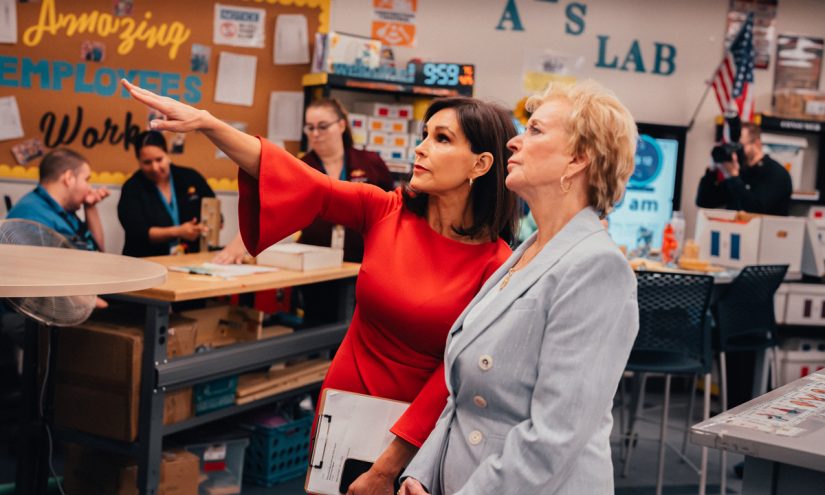
    The founder and executive director of a network of Arizona charter schools serving autistic children has been named the U.S. Education Department’s deputy assistant secretary for special education and rehabilitative services. Education Secretary Linda McMahon made the announcement while touring the Arizona Autism Charter Schools’ Phoenix location.

    Diana Diaz-Harrison, whose son is autistic, said that in her new job she hopes to continue her efforts to help others launch autism charter schools throughout the country. Her schools, she said in remarks captured on video by AZ Central, are a testament to what happens “when parents like me are empowered to create solutions.”

    “My vision is to expand school choice for special needs families — whether through charter schools, private options, voucher programs, or other parent-empowered models,” she said in a statement to The 74. .

    The five-school network uses a controversial intervention that attempts to train children to appear and behave like their neurotypical peers. Created by the researcher behind LGBTQ conversion therapy, applied behavior analysis, or ABA, is widely depicted as the gold standard despite scant independent evidence of its effectiveness and mounting research documenting its harms. 

    Diaz-Harrison opened the network’s first school in 2014 as a free, public alternative to private schools for autistic children, which are popular in Arizona but typically charge tens of thousands of dollars a year in tuition. Her Arizona charter schools are a 501(c)3 nonprofit financed by state and federal per-pupil funds. ABA is specifically endorsed by Arizona education officials as a strategy to use with autistic students.

    In the time since those charters opened, ABA has grown to be a national, multi-billion-dollar industry, with for-profit companies tapping public and private insurance to pay for as much as 40 hours a week of one-on-one therapy. The intervention uses repeated, rapid-fire commands that bring rewards and punishments to change a child’s behavior and communication style.

    A 74 investigation last year showed that most data supporting ABA’s effectiveness is drawn from research conducted by industry practitioners. Independent analyses, including a years-long U.S. Department of Defense review, found little evidence the intervention works. Former patients who underwent the therapy as children reported severe, lasting mental health effects, including PTSD.

    Diaz-Harrison told The 74 the therapy is both valuable and sought-after. “For the autism community, specifically, many families seek schools that integrate positive behavioral strategies,” she says. “The evidence supporting behavioral therapy is extensive and well-established. It has been endorsed by the U.S. surgeon general and the American Academy of Pediatrics as an effective, research-backed approach for individuals with autism.”

    During her visit, McMahon told students and staff she was eager to tell President Donald Trump about the schools. “He doesn’t believe any child, whether they have neuro-difficulties or any other problems, should be trapped in a school and not have the facilities that they need,” she said. 

    Since Trump’s second inauguration, he has issued numerous orders that have alarmed disability advocates and the autistic community. Though both edicts contradict longstanding federal laws, in March he ordered the closure of the Education Department and said responsibility for special education will be transferred to the U.S. Department of Health and Human Services.

    About half of the Education Department’s staff has been fired, including most of the people responsible for investigating what had been a backlog of some 6,000 disability discrimination complaints. Though it’s unclear whether Trump and McMahon may legally disregard special education funding laws and allow states to spend federal dollars as they see fit, both have said they favor giving local officials as much decision-making power as possible.

    Meanwhile, HHS Secretary Robert F. Kennedy Jr. has stoked fear in the autistic community by announcing a new effort to tie autism to vaccines or other “environmental toxins” — a hypothesis discredited by dozens of studies. The man he appointed to head the study has been cited for practicing medicine without a license and prescribing dangerous drugs to autistic children. 

    Last week, the new head of the National Institutes of Health announced that an unprecedented compilation of medical, pharmaceutical and insurance records would be used to create an autism “disease registry” — a kind of list historically used to sterilize, institutionalize and even “euthanize” autistic people. HHS later walked back the statement, saying the database under construction would have privacy guardrails.

    Among other responsibilities, the offices Diaz-Harrison will head identify strategies for improving instruction for children with disabilities and ensure that as they grow up, they are able to be as independent as possible. The disability community has raised concerns that the administration is retreating from these goals.   

    Advocates have said they fear the changes pave the way for a return to the practice of separating students with disabilities in dedicated special ed classrooms rather than having them attend class with typically developing peers. The Individuals with Disabilities in Education Act guarantees special education students the right to instruction in the “least restrictive environment” possible.          

    Families’ preferences vary widely, with some parents of autistic children refusing any form of behavior therapy, while others want their kids in settings with children who share their needs. Many insist on grade-level instruction in general education classrooms 

    Diaz-Harrison has a master’s degree in education and worked as a bilingual teacher in California early in her career. From the late 1990s until she began supporting her son full time, she worked as a public relations strategist and a reporter and anchor for the Spanish-language broadcast network Univision. 

    In 2014, frustrated with her son’s school options, she organized a group of parents and ABA providers who applied for permission to open what was then a single K-5 school serving 90 children. The network now has about 1,000 students in all grades and features an online program. 

    At the end of the 2023-24 academic year, 9% of the network’s students scored proficient or highly proficient on Arizona’s annual reading exam, while 4% passed the math assessments.      

    In December 2022, the network won a $1 million Yass Prize, an award created by Jeff and Janine Yass. The billionaire investors have a long track record of donating to Republican political candidates and organizations that support school choice. 

    One of the award’s creators, Jeanne Allen, is CEO of the Center for Education Reform. The center nominated Diaz-Harrison for the federal role. 

    Yass award winners were featured at the 2023 meeting of the American Legislative Exchange Council, or ALEC, a conservative forum where state lawmakers are given model bills on education and other policies to introduce in their respective statehouses. 

    Diaz-Harrison has partnered with a Florida autism school to create a national charter school accelerator program to help people start schools like hers throughout the country. She told The 74 the effort has so far supported teams of hopeful school founders from Louisiana, Texas, Florida, Alabama and Nevada. 

    Parents of young autistic children and autistic adults often disagree about ABA. Told by their pediatrician or the person who diagnosed their child as autistic that they have a narrow window in which to intervene, families fight to get the therapy. Adults who have experienced it, however, report lasting trauma and have lobbied for research — much of it now at risk of being defunded by Kennedy — into more effective and humane alternatives.


    Get stories like these delivered straight to your inbox. Sign up for The 74 Newsletter

    Source link

  • RFK Jr.’s Autism Misinformation Undermines Equity—and the Role of Higher Education

    RFK Jr.’s Autism Misinformation Undermines Equity—and the Role of Higher Education

    Dr. Yolanda WigginsRobert F. Kennedy Jr.’s recent claims about rising autism rates directly contradict the findings of a rigorous, peer-reviewed study from the Centers for Disease Control and Prevention. While the CDC attributes the increase to better diagnostic tools and broader awareness—especially among historically underdiagnosed populations—Kennedy has revived a discredited suggestion that environmental factors, including vaccines, may be responsible.

    This isn’t just political theater. It’s part of a broader and troubling pattern: a sustained attack on scientific research, the public institutions that produce it, and the higher education system that trains the researchers behind it.

    As a sociology professor at a public university, I’ve watched with concern as public trust in science and expertise has eroded. The pandemic magnified these trends, but they have long been in motion—accelerated by social media, political polarization, and the growing popularity of conspiratorial thinking. The resurgence of autism misinformation is just the latest iteration.

    The CDC’s study represents the best of public-facing science: it’s evidence-based, transparent, and focused on improving equity. The data show that more children—especially Black, Latino, and low-income children—are finally being diagnosed and receiving support. For decades, these children were overlooked in clinical research and excluded from early intervention programs. Their families often lacked access to diagnostic services, and cultural stigma around disability further compounded delays in recognition and care.

    That makes this progress all the more important. It means health and education systems are becoming more responsive to the needs of diverse communities. It’s a win for public health, for special education, and for racial equity. But Kennedy’s remarks obscure that progress and instead imply institutional deceit, further corroding the already fragile relationship between the public and research institutions.

    This moment should concern everyone in higher education. When research is publicly undermined by powerful voices, it isn’t just scientists or health experts who lose credibility—it’s the entire academic enterprise. Faculty working in controversial or misunderstood fields face online harassment. Public universities face funding cuts. Politicians introduce legislation to restrict what can be taught, who can be included, and which research is “acceptable.” These are not isolated attacks. They are part of a broader campaign to delegitimize the role of higher education in a democratic society.

    We’ve seen it before. Climate science, gender studies, and even basic public health data have been politicized and distorted. In many cases, these attacks are racialized, aimed at scholars of color or those researching topics related to race, equity, and social justice. The goal is not simply to disagree with findings—it’s to sow public doubt about the legitimacy of the research process itself.

    If higher education wants to defend its role in shaping public understanding and policy, we must do more than produce knowledge—we must also protect it. That means publicly pushing back when bad actors distort science. It means communicating our research clearly and accessibly, especially in communities where trust in institutions has historically been low. And it means preparing the next generation of students not only to be critical thinkers, but to be defenders of fact in an era that increasingly devalues it.

    The consequences of not responding are far-reaching. When misinformation takes root, it influences public health decisions, erodes confidence in life-saving vaccines, and increases distrust in institutions we rely on during crises. The damage isn’t abstract—it’s measurable in declining vaccination rates, increased health disparities, and growing skepticism toward experts in medicine, climate science, and education. The ripple effects extend into classrooms, clinics, and communities, where the stakes are all too real.

    It also threatens the progress being made in autism awareness and support, particularly in communities that have only recently gained access to diagnostic and therapeutic services. When Kennedy promotes falsehoods about the cause of autism, he doesn’t just mislead the public—he makes it harder for families to trust medical providers, harder for schools to advocate for neurodiverse students, and harder for researchers to do their work without facing backlash.

    Kennedy’s remarks may seem like a fringe view to those of us working in higher ed. But their reach—and their harm—are real. If we remain silent, we risk allowing misinformation to fill the vacuum we leave behind. That vacuum won’t remain empty. It will be filled with falsehoods that, once embedded in public consciousness, are incredibly difficult to reverse.

    This is a time for the academic community to speak clearly and often. We must show that science is not about dogma—it’s about rigor, peer review, and accountability. We must reaffirm that public universities serve not just students, but society. And we must reclaim our role in informing the public—not just in lecture halls and labs, but in newspapers, social media, and public discourse.

    We can’t afford to treat this moment as politics as usual. It’s a test of our collective commitment to truth, equity, and the public good. The integrity of science—and the credibility of higher education—depends on it.

    Dr. Yolanda Wiggins is an Assistant Professor of Sociology at San José State University.


    Source link

  • A virtual reality, AI-boosted system helps students with autism improve social skills

    A virtual reality, AI-boosted system helps students with autism improve social skills

    Key points:

    This article and the accompanying image originally appeared on the KU News site and are reposted here with permission.

    For more than a decade, University of Kansas researchers have been developing a virtual reality system to help students with disabilities, especially those with autism spectrum disorder, to learn, practice and improve social skills they need in a typical school day. Now, the KU research team has secured funding to add artificial intelligence components to the system to give those students an extended reality, or XR, experience to sharpen social interactions in a more natural setting.

    The U.S. Office of Special Education Programs has awarded a five-year, $2.5 million grant to researchers within KU’s School of Education & Human Sciences to develop Increasing Knowledge and Natural Opportunities With Social Emotional Competence, or iKNOW. The system will build on previous work and provide students and teachers with an immersive, authentic experience blending extended reality and real-world elements of artificial intelligence.

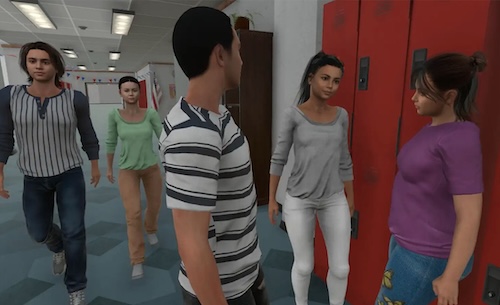
    iKNOW will expand the capabilities of VOISS, Virtual reality Opportunity to Integrate Social Skills, a KU-developed VR system that has proven successful and statistically valid in helping students with disabilities improve social skills. That system contains 140 unique learning scenarios meant to teach knowledge and understanding of 183 social skills in virtual school environments such as a classroom, hallway, cafeteria or bus that students and teachers can use via multiple platforms such as iPad, Chromebooks or Oculus VR headsets. The system also helps students use social skills such as receptive or expressive communication across multiple environments, not simply in the isolation of a classroom.

    IKNOW will combine the VR aspects of VOISS with AI features such as large language models to enhance the systems’ capabilities and allow more natural interactions than listening to prerecorded narratives and responding by pushing buttons. The new system will allow user-initiated speaking responses that can accurately transcribe spoken language in real-time. AI technology of iKNOW will also be able to generate appropriate video responses to avatars students interact with, audio analysis of user responses, integration of in-time images and graphics with instruction to boost students’ contextual understanding.

    “Avatars in iKNOW can have certain reactions and behaviors based on what we want them to do. They can model the practices we want students to see,” said Amber Rowland, assistant research professor in the Center for Research on Learning, part of KU’s Life Span Institute and one of the grant’s co principal investigators. “The system will harness AI to make sure students have more natural interactions and put them in the role of the ‘human in the loop’ by allowing them to speak, and it will respond like a normal conversation.”

    The spoken responses will not only be more natural and relatable to everyday situations, but the contextual understanding cues will help students better know why a certain response is preferred. Rowland said when students were presented with multiple choices in previous versions, they often would know which answer was correct but indicated that’s not how they would have responded in real life.

    IKNOW will also provide a real-time student progress monitoring system, telling them, educators and families how long students spoke, how frequently they spoke, number of keywords used, where students may have struggled in the system and other data to help enhance understanding.

    All avatar voices that iKNOW users encounter are provided by real middle school students, educators and administrators. This helps enhance the natural environment of the system without the shortcomings of students practicing social skills with classmates in supervised sessions. For example, users do not have to worry what the people they are practicing with are thinking about them while they are learning. They can practice the social skills that they need until they are comfortable moving from the XR environment to real life.

    “It will leverage our ability to take something off of teachers’ plates and provide tools for students to learn these skills in multiple environments. Right now, the closest we can come to that is training peers. But that puts students with disabilities in a different box by saying, ‘You don’t know how to do this,’” said Maggie Mosher, assistant research professor in KU’s Achievement & Assessment Institute, a co-principal investigator for the grant.

    Mosher, a KU graduate who completed her doctoral dissertation comparing VOISS to other social skills interventions, found the system was statistically significant and valid in improving social skills and knowledge across multiple domains. Her study, which also found the system to be acceptable, appropriate and feasible, was published in high-impact journals Computers & Education and Issues and Trends in Learning Technologies.

    The grant supporting iKNOW is one of four OSEP Innovation and Development grants intended to spur innovation in educational technology. The research team, including principal investigator Sean Smith, professor of special education; Amber Rowland, associate research professor in the Center for Research on Learning and the Achievement & Assessment Institute; Maggie Mosher, assistant research professor in AAI; and Bruce Frey, professor in educational psychology, will present their work on the project at the annual I/ITSEC conference, the world’s largest modeling, simulation and training event. It is sponsored by the National Training & Simulation Association, which promotes international and interdisciplinary cooperation within the fields of modeling and simulation, training, education and analysis and is affiliated with the National Defense Industrial Association.

    The research team has implemented VOISS, available on the Apple Store and Google Play, at schools across the country. Anyone interested in learning more can find information, demonstrations and videos at the iKNOW site and can contact developers to use the system at the site’s “work with us” page.

    IKNOW will add resources for teachers and families who want to implement the system at a website called iKNOW TOOLS (Teaching Occasions and Opportunities for Learning Supports) to support generalization of social skills across real-world settings.

    “By combining our research-based social emotional virtual reality work (VOISS) with the increasing power and flexibility of AI, iKNOW will further personalize the learning experience for individuals with disabilities along with the struggling classmates,” Smith said. “Our hope and expectation is that iKNOW will further engage students to develop the essential social emotional skills to then apply in the real world to improve their overall learning outcomes.”

    Latest posts by eSchool Media Contributors (see all)

    Source link

  • EdTech for Neurodiverse Students with Autism

    EdTech for Neurodiverse Students with Autism

    Introduction

    Neurodiverse students are encountered more frequently in today’s classrooms. Those with autism represent a particular challenge for schools and families– and edtech may be able to help. Resources for autism education have evolved significantly since FT4T’s 2009 post on this topic.  EdTech products now offer even more effective ways to support students. While trusted resources like Teaching LD, Autism Outreach, and LD Online continue to provide valuable support, new EdTech tools have emerged to offer more personalized, interactive, and efficient methods for helping students with autism thrive. From communication apps to social skills programs, these innovations are changing the way we teach and learn.

    Showcase of EdTech Tools

    Otsimo (Free)

    Otsimo offers access to various educational games designed to make learning engaging and accessible for children with autism. Created with input from educators and families, Otsimo provides language, cognitive, and social-emotional learning games to support children with different needs. Its free open-source augmentative/alternative communication (AAC) tool also helps nonverbal children express themselves.

    Speech Blubs autism edtechSpeech Blubs (Free)

    Speech Blubs is a speech therapy app designed to help children with autism improve their communication skills. It uses fun, interactive videos and activities that engage children in learning sounds, words, and phrases. The app offers a free version with limited access, making it accessible to families and educators.

    StarFall autism edtechStarfall (Free)

    Starfall is a free educational resource that helps children with autism develop literacy and math skills through interactive games and activities. Although it’s not designed exclusively for autism, its simple and engaging format is effective for students with special learning needs.

    ProLoquo2go autism edtechProloquo2Go (Paid)

    Proloquo2Go is a leading augmentative/alternative communication (AAC) app for iPad and iPhone, designed to help non-speaking children and adults express themselves confidently. It uses a large library of over 27,000 symbols to support communication, and its customization options allow users to personalize the app to fit their unique needs. Proloquo2Go also supports language development, offering research-based vocabulary that helps users progress from single words to full sentences.

    SocialExpress autism edtechThe Social Express (Paid)

    The Social Expresss teaches social skills through interactive stories, helping users navigate social situations and learn key skills such as identifying emotions, maintaining eye contact, and reading non-verbal cues. With its engaging animated format, The Social Express makes learning social skills feel like an adventure.

    Classwork autism edtechClasswork (Free and Paid)

    Classwork.com helps educators transform traditional teaching materials into interactive digital formats. This tool is invaluable for adapting lesson plans to meet the diverse learning styles of students with autism, incorporating features like instant feedback and visual aids to enhance understanding and engagement. Additionally, Classwork.com allows teachers to include audio elements, such as recording their own voices, which can provide personalized instructions and support, making learning more accessible and engaging for auditory learners.

    Financial Support and Resources

    While educational tools are important for academic and personal growth, it’s also necessary to acknowledge the financial challenges families may face. DisabilityAdvice.org  https://disabilityadvice.org/ provides resources for navigating Social Security Disability Insurance (SSDI) and other financial support systems, helping families secure a stable future. Teachers can play a key role in supporting families by sharing helpful information about these resources, ensuring that both students and their families have access to the support they need.

    Conclusion

    Educational technology is an important resource in helping students with autism succeed both academically and socially. EdTech tools make learning more accessible and help students develop essential communication and life skills. By incorporating these resources, educators and families can better support the unique needs of each student, giving them the tools and opportunities to thrive in school and beyond.

    Call to Action

    Educators and families are encouraged to explore these technologies and integrate them into their educational strategies. For those needing additional support with financial planning, DisabilityAdvice.org  is a valuable resource.

    Source link