Tag: autistic

  • Autistic College Students Face Dramatically Higher Rates of Mental Health Challenges, New Research Shows

    Autistic College Students Face Dramatically Higher Rates of Mental Health Challenges, New Research Shows

    Autistic college students are experiencing anxiety and depression at significantly higher rates than their non-autistic peers, according to new research from Binghamton University that analyzed data from nearly 150,000 undergraduate students across 342 institutions nationwide.

    The study, published in the Journal of Autism and Developmental Disorders, represents one of the most comprehensive examinations to date of mental health challenges facing autistic students in higher education—a population that researchers say has been historically underrepresented in academic research despite growing enrollment numbers.

    “What we found is really staggering—autistic individuals endorse much higher rates of anxiety and depression compared to their non-autistic peers,” said Diego Aragon-Guevara, the study’s lead author and a PhD student in psychology at Binghamton University.

    The research team analyzed data from the National Survey of Student Engagement (NSSE), which in 2021 became the first year that autism was included as an endorsable category in the survey. This milestone allowed researchers to conduct the first large-scale comparison of mental health outcomes between autistic and non-autistic college students.

    “We were really excited to see what the data would tell us. It was a big opportunity to be able to do this,” said Dr. Jennifer Gillis Mattson, professor of psychology and co-director of the Institute for Child Development at Binghamton University, who co-authored the study.

    The findings come at a critical time for higher education institutions as autism diagnoses continue to rise nationwide and more autistic students pursue college degrees. The research highlights a significant gap in support services that could impact student success and retention.

    “We know the number of autistic college students continues to increase every single year,” Gillis-Mattson noted. “We really do have an obligation to support these students, and to know how best to support these students, we need to look beyond just autism.”

    The study reveals that campus support systems may be inadvertently overlooking mental health needs while focusing primarily on autism-specific accommodations. Aragon-Guevara, whose research focuses on improving quality of life for autistic adults, said this represents a critical oversight in student services.

    “Support personnel might address an individual’s autism and, in the process, overlook their mental health issues,” he explained. “More care needs to be put into addressing that nuance.”

    The research underscores the need for institutions to develop more comprehensive support frameworks that address both autism-related needs and concurrent mental health challenges. The findings suggest that traditional disability services approaches may need significant enhancement to serve this population effectively.

    “We want to provide the best support for them and to make sure that they have a college experience where they get a lot out of it, but also feel comfortable,” Aragon-Guevara said.

    Dr. Hyejung Kim, an assistant professor in Binghamton’s Department of Teaching, Learning and Educational Leadership, noted that the complexity of factors affecting autistic students requires deeper investigation. 

    “This population often skews male, and interactions between personal factors and conditions such as anxiety and depression may shape overall well-being in college,” she said.

    Kim also pointed to additional considerations that institutions should examine. 

    “Autistic students are also more likely to pursue STEM fields, and many report different experiences with faculty and staff across institutional settings,” she said. “We still have much to learn about how these and other contextual factors relate to mental well-being.”

    The Binghamton team views this study as foundational research that confirms the scope of mental health challenges among autistic college students. Their next phase will investigate specific contributing factors, including social dynamics, faculty support, campus accessibility, and other environmental elements that influence student well-being.

    “There are so many elements that go into being comfortable in the new environment that is college,” Aragon-Guevara explained. “We want to look into that and see if there are any deficits in those areas that autistic college students are experiencing, so that we know where we can help support them, or create institutional things to help improve quality of life as a whole.”

    The research is part of a broader effort at Binghamton to better understand and support autistic students in higher education, with plans to collaborate with campus partners to develop targeted interventions based on their findings.


    Source link

  • Autistic Students are Building Community: Colleges Just Need to Listen

    Autistic Students are Building Community: Colleges Just Need to Listen

    As dangerous myths about autism circulate on the national stage, many colleges echo a quieter, yet similarly misguided assumption: that autistic students are socially isolated or incapable of forming meaningful relationships. But the 43 autistic college students we interviewed tell a very different story—one grounded in connection, authenticity, and community, built on their own terms.

    Dr. Karly Isaacson (Ball) Three years ago, we launched the Postsecondary Education: Autistic Collegians’ Experiences of Success (PEACES) national study, drawing participants from both community colleges and four-year institutions across the U.S. We invited autistic students—both self-identified and formally diagnosed—to share their experiences through annual surveys, in-depth interviews, and photo-based storytelling activities. To date, we’ve gathered over 1300 survey responses, nearly 80 interviews, and nearly 70 photo reflections across three waves of data collection, with a fourth wave launching in fall 2025.Dr. Brett Ranon NachmanDr. Brett Ranon Nachman

    As we analyzed the second wave of interviews, one theme stood out: the central role of friendship. Again and again, students described how meaningful friendships shaped their college experiences, not in spite of their autism, but through it. We used this analysis to publish a journal article on autistic college student friendship earlier this month. In this op-ed, we describe three key ways in which autistic college students foster meaningful friendships: engaging in autistic spaces, practicing autistic authenticity, and bonding over shared interests. We hope that understanding how autistic college students think about and experience friendship can ultimately guide colleges in creating more supportive, inclusive environments for this largely misunderstood, minoritized student population.Dr. Bradley E. CoxDr. Bradley E. Cox

    1. Autistic spaces offer connection without explanation.
      Contrary to the common myth that autistic students are inherently socially disconnected, many participants in our study described finding deep connections in spaces designed by and for autistic people. Whether through formal autism support programs (ASPs), campus disability centers, or informal sensory-friendly spaces, students emphasized how these environments allowed them to engage with others who shared similar communication styles, sensory needs, and lived experiences. These spaces didn’t just accommodate difference—they affirmed it.

      Catherine T. McDermottCatherine T. McDermottFor some students, these autism affirming communities were a lifeline, especially during vulnerable transitions like receiving a new autism diagnosis or navigating the pressures of living on one’s own for the first time. One student shared how knowing there was “somewhere to turn” in these difficult periods made all the difference. Others described naturally gravitating toward autistic peers before even knowing their friends’ diagnoses, drawn together by shared ways of thinking and being. Still, not every student stumbled into connection. Several expressed frustration that their schools offered few avenues to find others like them on campus. As one student put it, “you feel like the black sheep of the campus because there’s not really anything for you.” Institutions that take autistic students seriously must prioritize not just services, but creating autistic spaces on campus that are intentional, visible, and community-driven.

    2. Practicing authenticity builds deeper relationships.
      For many autistic students, friendship flourished not when they tried to hide who they were, but when they stopped trying. Students described how letting go of masking (a strategy that some autistic people use to appear non-autistic), led to stronger, more affirming relationships. As one student put it, “the more authentic in myself that I become, the stronger my relationships become.” College, for many, provided a rare opportunity to explore what it meant to show up fully as themselves, autism and all. This wasn’t always easy. Several students shared fears of judgment or past experiences of exclusion, and some still found themselves masking in certain spaces. But when peers responded with respect and curiosity—whether during a class presentation, a theater performance, or an informal hangout—autistic students said they felt “seen,” “heard,” and “valued” when they presented their autistic characteristics and were met with acceptance. Vulnerability often became a gateway to connection. One participant recounted the anxiety of playing pool with friends, worried about motor difficulties, only to be met with patience and encouragement. These moments of openness helped students discern who was safe, who cared, and who was worth pursuing as a friend. Practicing authenticity didn’t always come without cost—but for many, it made friendship more meaningful and sustainable.
    3. Shared passions spark connection.
      While autistic spaces and identity-based connections were vital, students also emphasized another major source of friendship in doing what they love. Shared interests—from playing Dungeons & Dragons to Taylor Swift fandoms—created natural entry points for relationship-building. Nearly every autistic college student we interviewed was involved in a club, job, or hobby that helped them find “their people.” These weren’t just time-fillers or a line to add to a resume—they were genuine community builders.

    Many autistic students created their own spaces when they couldn’t find an existing affinity group or organization. One started a disability advocacy club; another launched an American Sign Language (ASL) group; a third founded a fiber arts circle. Whether through casual gaming nights, photography collaborations, or cat playdates, students built friendships by doing things they genuinely cared about—often with people who shared their pace, humor, and communication style. As one student shared, it meant everything to have even “just one person to go to coffee with who actually cared about the topic.” In these spaces, autistic passions weren’t sidelined—they were celebrated. And when peers leaned into those interests too, genuine friendships blossomed.

    In a time when public discourse too often distorts what it means to be autistic, colleges have a unique opportunity—and responsibility—to listen to autistic students themselves. Our research shows that autistic students are not only capable of forming meaningful friendships, but that they do so in ways that are intentional and creative. Colleges that invest in spaces for connection, support students in showing up authentically, and celebrate shared interests will not only dismantle outdated stereotypes—they will foster communities where all students can thrive.

    Dr. Karly Isaacson (Ball) is a Postdoctoral Research Associate at Michigan State University for Project PEACES.

    Dr. Brett Ranon Nachman is an Assistant Professor of Higher Education at the University of Pittsburgh and Director of Research for College Autism Network. 

    Dr. Bradley E. Cox is an Associate Professor of Higher, Adult, and Lifelong Education (HALE) at Michigan State University and Founder of the nonprofit College Autism Network.

    Catherine T. McDermott is a consultant for Project PEACES and Founder of McDermott Autism Services.


    Source link

  • Everyone can play a role in removing barriers for autistic colleagues

    Everyone can play a role in removing barriers for autistic colleagues

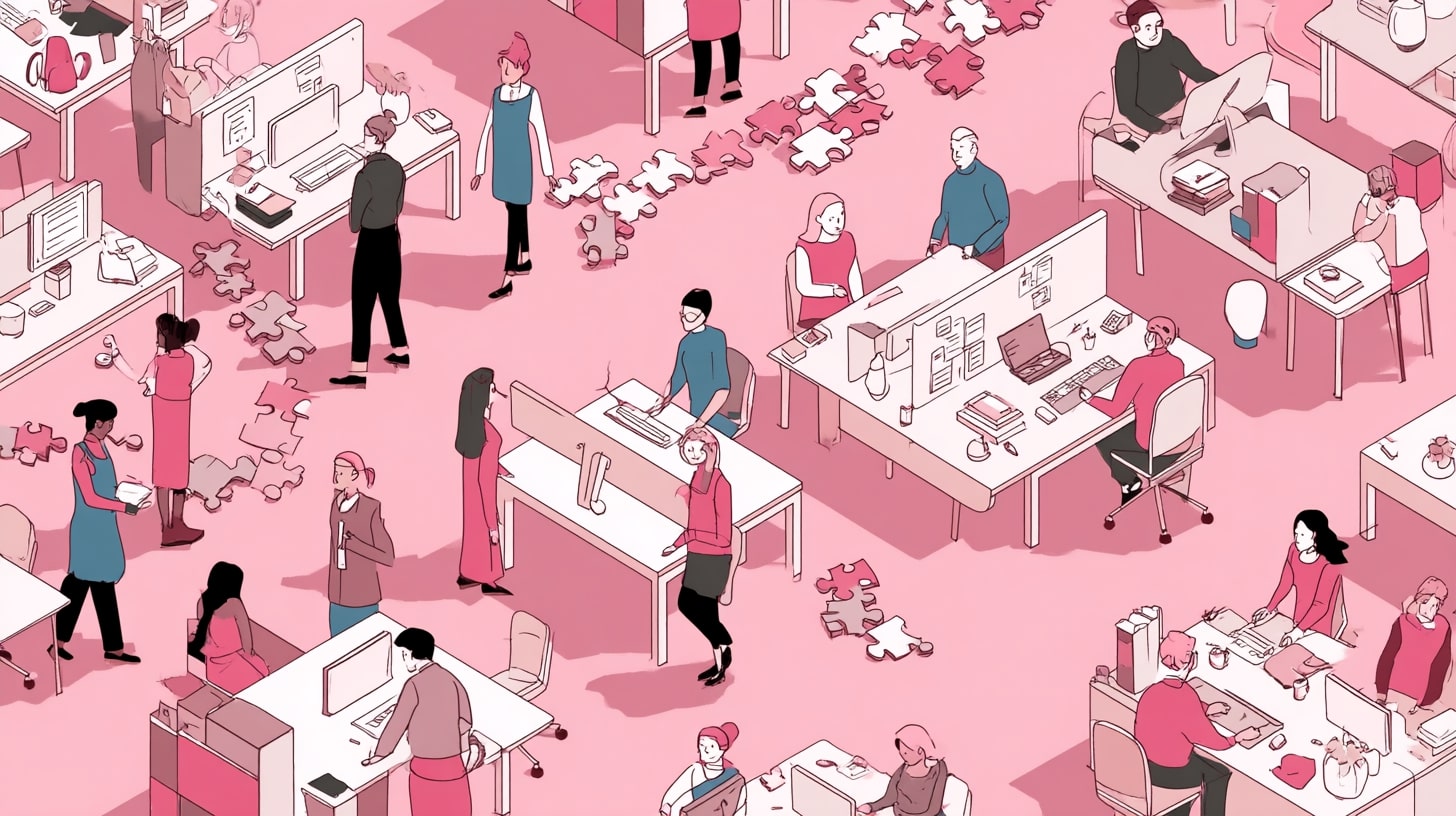
    The complex rhetoric around neurodivergence, ranging from the politically unhinged to persistent gas lighting, requires us to start by defining autism.

    Autism, a form of neurodivergence, is a naturally occurring neurodevelopmental variation that manifests in differences in how people experience and interact with the world.

    The focus is often on communication “deficits” and “repetitive and rigid” behaviour but, quite frankly, this focus and these words say more about how non-autistic (allistic) people interpret our behaviour and their own discomfort with the same.

    Our own experiences of being autistic are a lot more expansive and encompass autistic joy and strengths, alongside the significant and often unnoticed challenges we experience day-to-day.

    At different points in time, we both made the conscious, and somewhat fraught, decision to share our autism diagnoses in professional contexts. For the most part we were hugely relieved to be met with compassion from colleagues and a desire to support us to make the necessary changes to level the playing field.

    Yet, in the background of these positive experiences, there is a near-constant battle with systems, processes and neuronormative expectations that undermine individual attempts to be supportive.

    We wanted to share the biggest challenges we’ve faced in sharing our diagnoses and attempting to build afresh work practices and environments that will allow us to thrive.

    Attempts to normalise

    On more than one occasion after sharing our diagnoses, we’ve both been met with responses along the lines of “we’re all a bit like that though”.

    While we assume these comments are intended to “normalise” our experiences and perhaps reassure us that we’re not that different, such comments are somewhat missing the point.

    Firstly, autistic people are human too, so our autistic traits are very much part of the human condition. For example, the struggles we face in some social contexts may be experienced by allistic people sometimes.

    And our desire to seek refuge in routines is something many people can relate to, particularly in times of great upheaval. What sets our experiences apart is the depth, duration and the degree to which these experiences impact our capacity to thrive.

    Secondly, late discovery or diagnosis often comes about after a lifetime of deeply felt misunderstandings and a perpetual sense of being somehow wrong. The challenges autistic people face have very real implications such as significant impact on mental wellbeing alongside higher risks of substance abuse, accidents and offending behaviour as well as lower levels of income and education.

    Poor employment outcomes and high rates of autistic burnout are often part and parcel of being autistic. Notably, suicide is a leading cause of early death for autistic people.

    While finally getting answers to a lifetime’s worth of questions is broadly positive, never underestimate how earth-shattering a late discovery or diagnoses can be. It can completely unmoor you from an identity you worked hard to craft and maintain, often over many decades.

    To be set adrift whilst trying to carry on “business as usual” can be incredibly disorienting and well-meaning comments intended to find common ground can feel dismissive and leave us, once again, feeling misunderstood.

    To receive a diagnosis can be confirmation (or even a revelation) that you have been leaning on masks and performativity this whole time, borrowing bits of behaviour and social styles from others, in order to keep up with fast-paced workplace dynamics.

    But if our identity is a mosaic of other people’s characteristics, who exactly are we? We therefore often find that the diagnosis we hoped would answer our questions, instead serves up a hearty existential crisis. Coupled with the need to continue functioning both in personal and professional contexts, whilst running that background process, can be exhausting.

    The adjustments minefield

    Often a motivating factor in sharing an autism diagnosis is the need to access workplace adjustments, though it should be noted you don’t need a diagnosis to do so.

    What many people won’t realise is that identifying the adjustments you need, and getting these put in place, often feels like a full-time job in and of itself. We’ve both experienced scenarios where we’ve been encouraged to share what we need to work at our best, only to find ourselves somewhat stumped.

    We’ve defaulted to so many complex and energy-consuming workarounds to overcome the barriers in our environment, that it can be hard to pick apart common workplace challenges from those which come about from being part of a neurominority.

    Plus, autistic people aren’t often comfortable around change, so if we’ve established a workaround, it can be difficult to consider an alternative, despite how much more efficient it could be!

    This is the nature of having differences that are somewhat invisible – you don’t realise that everyone isn’t quietly battling the same complexities.

    What we have both realised is that it’s essential to have the time and space for ongoing conversations around our evolving understanding of our needs. Too often the default is to use prescriptive forms and processes to put adjustments in place, whereas we have both benefitted from ongoing dialogue with managers who are committed to ensuring the barriers we experience are removed, in as much as possible.

    Our hope is that more people will start to understand that a diagnosis or discovery, and the sharing of this new understanding, should form the start of a conversation, rather than an outcome to be compensated for.

    Neuronormative expectations

    The majority of people will be blissfully unaware of what we mean by neuronormative expectations because, if you’re neurotypical, it’s likely that you subscribe to the dominant social norms without much effort.

    Most people, for example, assume good eye contact means you’re paying attention, and arriving late, particularly persistently, indicates a lack of commitment and/or interest. If you’re autistic, lack of sustained eye contact can be used to aid concentration, especially when processing auditory information, and lateness can be down to a multitude of reasons from difficulty with transitions to the need to avoid the ‘chit chat’ that often precedes the start of something.

    It’s also worth noting that these norms are culturally located and direct eye contact, for example, is considered disrespectful or invasive in some countries. It’s a wonder to both of us then that such subjective meanings and interpretations have become normalised standards that we are somewhat required to adhere to, to be accepted.

    Indeed, research indicates that even subtle deviations from these arbitrary social norms can result in autistic adults being incorrectly perceived as being deceptive and lacking credibility and that neurotypical peers are less willing to interact with autistic people based on social assessments made in a split second.

    It is also worth noting that we may well be thinking about all of the above whilst trying to judge the correct level of eye contact to be making; this is just part of the complex backroom processing and calculations we do on a daily basis!

    With all of this in mind we’d encourage colleagues to think about assumptions around what it means, and looks like, to undertake certain activities that most assume shared understanding of.

    We can certainly identify a range of areas where our interpretations diverge, such as notions around communicating effectively, networking or being professional.

    A good example is the way in which we’ve co-written this piece, which has come about through an initial text based online interaction, followed by asynchronous collaboration. At the time of finalising this piece we have still never “met” online or in person but have engaged in a rich exchange of ideas that have allowed for meaningful collaboration.

    If colleagues could be open to alternative interpretations and manifestations of social norms, higher education would be the richer for it.

    Allyship is needed

    With these challenges in mind there are things that can be done to support late-diagnosed colleagues. Essentially these centre around allyship and actively working to acknowledge discrimination and unconscious bias.

    Consider how you respond when someone shares their autism discovery or diagnosis

    Can you approach the conversation with curiosity, accepting that the experience of being autistic might, in fact, be very different from your own? Central to this is recognising the limitations of your knowledge and experience.

    It is a natural response to want to normalise your experience with the person sharing their diagnosis with you, but that may not be the comfort you expect it to be, and might accidentally undermine the identity they are still coming to terms with.

    Rather than saying “I do that too”, or “aren’t we all a little bit like that though?”, create a space where the person sharing their diagnosis with you can take time to form their own words, and be sure to centre them in the words you use with them.

    What part do you have to play in removing barriers

    For us, everyone has a role to play in removing barriers that prevent us from thriving. Whether directly as a manager supporting autistic colleagues to navigate often overly complicated HR processes, or as a peer becoming aware that your colleagues need to do things in a different way.

    You don’t need to know someone’s diagnosis to be an ally, you can simply start by identifying if there are moments you default to your preferred ways of doing things while inadvertently overlooking a colleague’s genuine need to things differently. If you come across resistance that is inexplicable to you, withhold judgement and instead become curious about alternative ways of thinking and being.

    Reflect on what norms and expectations you assume

    Assumed shared understanding and narrow interpretations of behaviour is the space where most unconscious bias sits. The reality is that the imaginary social contract we have all supposedly signed is just that – a fiction that not all of us have been granted access to.

    Can you make space to co-create shared understanding around what it means to “communicate”, for example? Can you become aware of your bias that “good communication” manifests through narrowly defined behaviours? Or can good communication also be non-spoken, asynchronous or graciously feature enthusiastic interruption, or deep dive monologues?

    Ultimately, whether you are an individual in whom an autistic colleague quietly confides, a senior manager with the agency to affect positive change, a HR professional implementing processes, or someone involved in developing policy – everyone has a part to play in making higher education a place where autistic people can thrive.

    Source link