Researchers who developed coffee ground-infused concrete, a rust disease cure for wheat crops and an intellectual-disability friendly playground took home a Universities Australia Shaping Australia award on Tuesday night.
Please login below to view content or subscribe now.
Each year, Achieving the Dream lifts up at least one community college in its network for adopting practices and strategies leading to a student-focused culture, notable increases in student outcomes and a reduction of equity gaps.
To be eligible for the Leah Meyer Austin Award, an institution must demonstrate four-year improvement of at least three percentage points in the IPEDS on-time completion for the level of associated credential awarded, or have been selected as one of the top 150 colleges in the Aspen Prize for Community College Excellence. The achievements of this year’s honorees—Chattanooga State Community College in Tennessee and Southwestern Oregon Community College—show how a holistic approach to student success that exists through the institution can result in whole-college transformation.
Setting the bar: In evaluating applicants, ATD considers gateway metrics, including leading indicators (early momentum metrics) and lagging indicators (completion or transfer), with substantial improvement of three percentage points or more over three years.
Equity metrics may highlight data such as the equity gap improvement between part-time and full-time student outcomes or between Pell-eligible and non-Pell-eligible students. Substantial improvement means closing or narrowing equity gaps over three years by at least two percentage points.
The following data demonstrate not just what Chattanooga State Community College and Southwestern Oregon Community College did to earn their honor, but also ways that other institutions can tell their own data stories.
Chattanooga State Community College actions and results: The Vision 2027 strategic plan has inspired a shift from 15-week to seven-week terms, more personalized academic advising, strengthened commitments to basic needs assistance and wraparound support services, and implementation of an affordable course materials program.
Fall-to-fall persistence rate from the fall 2019 cohort to the fall 2022 cohort saw a 7.1-percentage-point gain.
The credit completion rate jumped from 54.6 percent among the 2020 fall cohort to 66.4 percent among the fall 2023 cohort.
Articulation agreements and course road maps related to Tennessee Transfer Pathways resulted in an 8.2-percentage-point climb in the rate of students who transfer and earn a baccalaureate degree within six years of matriculating between the fall 2015 cohort and the fall 2018 cohort.
The adoption of a co-requisite model, with embedded tutors, for gateway English and math courses led to a rise in gateway math completion from 38.5 percent for the fall 2020 cohort to 49.5 percent for the fall 2023 cohort. Completion rates for gateway English courses, meanwhile, grew from 49.3 percent to 66.6 percent in that time frame. Approximately 45 to 48 percent of the college’s student population is still developing essential college-level academic skills.
Southwestern Oregon Community College actions and results: This rural institution’s recent efforts have included engaging and supporting its community’s adult and part-time learner populations, such as by creating targeted student orientations, evaluating community practices and its portfolio of academic and workforce programs, meeting the special financial needs of first-generation adult learners, and improving online services (40 percent of Southwestern’s overall student body are online learners).
In comparing the 2017 cohort to the 2020 cohort, the four-year completion rate among part-time learners improved by 8.7 percentage points, narrowing the equity gap between adult learners and traditional-aged learners by 3.2 percentage points. Between adult learners and traditional-aged learners, the gap narrowed by 6.7 percentage points, as the rate of completion among the former rose 12.3 percentage points.
The equity gap between first-generation and continuing-generation learners in fall-to-fall persistence narrowed by three percentage points, from 8.2 percent in the fall 2019 cohort to 5.2 percent in the fall 2022 cohort.
From the fall 2017 cohort to the fall 2020 cohort, the overall four-year completion rate grew 6.6 percentage points, and the rate at which students transfer and earn a baccalaureate degree (despite severe geographical hardships) rose 3.7 percentage points from the fall 2015 cohort to the fall 2018 cohort.
More information on both winners can be found here. In a March 31 webinar, Achieving the Dream will feature both winners.
Is your institution or department tracking new KPIs related to student success, or using data in a new way? Tell us about it.
From the small town of Lyman, South Carolina, Dr. James L. Moore’s journey to success is one he attributes to the steadfast support of his mother and the historical Dr. James L. Moore IIItrailblazers whose influence shaped his path to distinction.
On Saturday, Jan. 25, Moore—a Distinguished Professor of Urban Education at The Ohio State University (OSU) and executive director of the Todd Anthony Bell National Resource Center—was awarded the Order of the Palmetto—South Carolina’s highest civilian honor established in 1971. The prestigious award is presented by the governor to individuals who have demonstrated extraordinary lifetime achievement, service, and contributions of national or statewide significance.
“To be honored and to receive the highest honor to a civilian of South Carolina is so humbling,” said Moore in an interview with Diverse. “Service to humanity is the hallmark of philosophy, and in many ways, it shaped who I am and what I’m about in my day to day. All that I am and that I hope to be, has been shaped by my experience growing up in South Carolina.”
Moore follows in the footsteps of other legendary leaders from South Carolina who’ve received the honor, many of whom broke down barriers throughout history, paving the way for him and others to succeed. Moore said that it’s not lost on him that he’s in the tradition of a long line of South Carolina humanitarians.
“The state has a complex history, some of which is painful to reflect on, but it is where my family, some of whom arrived as enslaved Africans, created community from the most difficult of circumstances,” he said. “They built opportunities for people like me. South Carolina is special to me, not only for its rich and sometimes painful history, but because 10% to 15% of all Black Americans can trace their roots here.”
The state, he said, has produced a legacy of excellence, from singer James Brown and tennis great Althea Gibson to educator Mary McLeod Bethune.
“I just want to make sure that I forever acknowledge and recognize the contributions and the giants that I stand on their shoulders,” said Moore, who pointed to the late Dr. Benjamin Elijah Mays—the former president of Morehouse College—as a model for educational and humanitarian excellence.
A nationally recognized education expert and leader, Moore has had a distinguished career in higher education and has been applauded for his work promoting educational excellence and access for all. Throughout his fabulous career, he has won numerous international and national accolades.
His research spans multiple disciplines, including school counseling, urban education, and STEM education. He has co-authored seven books and more than 160 publications, secured nearly $40 million in funding, and delivered more than 200 scholarly presentations globally. Moore’s contributions to education have earned him recognition, including being named one of Education Week’s 200 most influential scholars in the U.S. since 2018.
Dr. Jerlando F.L. Jackson, Dean of the College of Education and Foundation Professor of Education at Michigan State University, praised Moore’s impact, citing the ripple effect his leadership has created within the American education system.
“Dr. Moore’s influence extends far beyond his own accomplishments,” said Jackson, who has known Moore since their days as graduate students and have collaborated with him on a number of initiatives and projects, including the International Colloquium on Black Males in Education. “Through his leadership, he is empowering educators, policymakers, and community leaders to reimagine what is possible with South Carolina in mind,” Jackson said.
Moore’s focus on education access, preparation, innovation, and opportunities “has not only improved outcomes for today’s students but has also laid the foundation for a brighter future for generations to come,” Jackson added. “He is the kind of leader who sees potential in everyone, and he works tirelessly to help others realize their dreams, regardless of their backgrounds. Whether mentoring a young scholar or speaking at a community event, Dr. Moore connects with people in ways that are deeply inspiring and transformative.”
Moore’s work has focused on closing opportunity gaps, increasing access to quality education, and addressing disparities that disproportionately affect educational vulnerable student populations. Through his research and leadership, Jackson said that Moore has not only informed policy, but also directly influenced educational practices that all have benefited from, including South Carolina.
Dr. Eric Tucker, President & CEO of The Study Group, agrees.
“His tireless dedication to inclusive excellence proves that one visionary can unite and uplift entire communities, sparking transformative educational change at the secondary and postsecondary levels,” said Tucker, who lauded Moore’s efforts to help undergraduate scholars secure prestigious fellowships, including the Rhodes and Truman Scholarships. As executive director of the Todd Anthony Bell National Resource Center on the African American Male, he reimagined OSU’s Early Arrival Program, offering mentorship and leadership opportunities to support young Black men and boys in their pursuit of higher education.
“From a small-town upbringing to a national and international stage, Dr. Moore has used his expertise to bring fresh opportunities and shape educational transformation across the United States and other parts of the globe,” said Tucker. “His leadership and forward-thinking approaches demonstrate how determination can unite communities and open new doors for students in all zip codes, regions, and jurisdictions,” he added.
And no matter how many times you ask Moore about his own influences and success, he never forgets his family and the village who raised him. As one of three siblings, he remembers his late mother Edna, whose sacrifices and love shaped her children’s lives in South Carolina.
“My mother did everything for her three kids, and my mother was an inspiration to not only me, but for those who knew her,” Moore said. “And even though she’s not here with me, she lives inside me, and she always told me that ‘family lives inside of you, and everywhere you go, son, take family with you,’ So I can hear her. She was the best coach I ever had. This is for her,” he said.
From creating diversity efforts and development initiatives to leading change, human resources teams and HR practitioners across the country are doing great work every day.
CUPA-HR’s regional Higher Education HR Awards program recognizes some of the best and brightest in higher ed HR and honors HR professionals who have given their time and talents to the association.
Here are this year’s regional award recipients:
HR Excellence Award
Honoring transformative HR work in higher education and recognizing a team that has provided HR leadership resulting in significant and ongoing organizational change within its institution
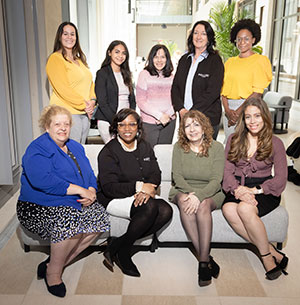
Office of Human Resources Management, Fordham University (Eastern Region)
Fordham University’s office of human resources management has transformed from a primarily transaction-focused department to a strategic partner that is relied upon throughout the university. The department has demonstrated its strategic strength on multiple fronts including the management of the university’s COVID-19 shutdown and reopening, return-to-work policies, customer service, technology, communication with employees that resulted in increased engagement and trust, anti-bias training, professional development initiatives and the performance management process. Additionally, in keeping with and living Fordham’s Jesuit mission of Cura Personalis, “caring for the whole person,” the office developed and implemented programs to help employees maintain a healthy work-life balance. Some health and wellness services that were developed include back-up childcare support, on-site and virtual physical fitness classes, and behavioral health services, such as a registered dietician available to employees. In doing so, the HR team has distinguished itself as a trusted advisor to employees, managers and senior leaders alike.
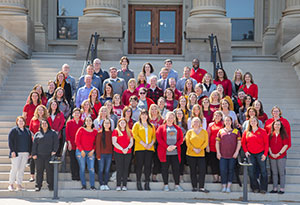
University Human Resources, Iowa State University (Midwest Region)
In 2019, Iowa State University implemented a new financial management and human capital management system. In conjunction with the new system, finance and HR service delivery teams were developed, pulling distributed customer-facing finance and HR roles into two centralized teams. University human resources’ performance through this significant and ongoing organizational change has been positive for the entire campus community. The HR delivery model has led to increased consistency and standardization in delivery of services across the university. It has also created a more well-trained and cohesive team of professionals that work together up and down the chain to find creative solutions to HR challenges and opportunities. HR support for leaders across the institution has significantly improved through better access to accurate data, streamlined processes for workforce and position planning, compensation adjustments, support addressing low-preforming employees and behavioral issues, large-scale employee movement and reorganizations, and professional human capital consulting. The new HR delivery systems have resulted in a much more efficient, collaborative and cohesive HR unit that is better equipped to serve employees and supervisors. At the same time, employees and supervisors have benefitted from HR’s reliability, transparency, accountability and consistency in its efforts to support them.
Talent and Culture Department, Broward College (Southern Region)
Recognizing that HR alone cannot create culture but that it plays a critical role in ensuring the infrastructure is in place to support the cultural aspirations of an organization, the talent and culture department at Broward College has worked over the last several years to spearhead significant organizational change. Beginning in 2019, the university launched its three-year culture transformation plan. An integral step in the transformation process was the implementation of information-gathering discussions between the HR leadership team and employee groups comprised of administrators, faculty and professional technical staff, which provided substantive feedback on areas that needed the most attention. This organizational change, led by the talent and culture department, has resulted in more substantive collaboration; stronger relationships among faculty, staff and administrators; and greater trust and communication between employees and their supervisors. It has also served as a catalyst for innovative projects throughout the organization designed to maximize the experience of employees, students and the community. Some major initiative highlights include the creation of talent business partner roles, Leadership 360 Assessments, psychological safety workshops, employee resource groups, employee onboarding, and a leadership development program called BC LEAD that educates and empowers managers at all levels to rise to leadership excellence.
HR Campus Climate Liaisons, The University of Texas Rio Grande Valley (Western Region)
After implementing a strategic action planning process, led by an internal HR workgroup called Campus Climate Liaisons, The University of Texas Rio Grande Valley saw double-digit improvements in climate survey results within three years, all amid a pandemic. The liaison group consists of individuals from various HR areas, such as talent development, organizational development, employee wellness and employee relations/business partners. The group was trained to provide support to assigned departments with result-sharing, action-planning and ongoing progress-reporting. This method ensured that all departments received the same level of support and helped the HR team better track progress toward climate goals. It also helped empower all department leaders to have conversations about campus climate and department climate. The biggest improvements were seen in areas of faculty, administration and staff relations; senior leadership; and facilities. The campus climate liaison model has been so successful that it will continue to be used for future campus climate initiatives and to provide ongoing support to all departments.
Higher Ed HR Rock Star Award
This award recognizes an individual who is serving in the first five years of a higher education HR career who has already made a significant impact.
Audrey Davis, Assistant Director of Personnel, Texas Tech University (Western Region)
With her enthusiasm and inspirational demeanor, Audrey Davis has built strong and trusting relationships with each department she works with, not only within university student housing, but within each auxiliary services area at Texas Tech University. Since taking over the personnel team, Audrey has demonstrated continuous innovation and creative thinking, which has completely changed the way the student housing personnel team operates and provides services. After only two years in her role, she has identified and eliminated major gaps in the onboarding/offboarding processes. She has also developed a collaborative hiring system that allows hiring managers to communicate efficiently with the personnel team to discuss new hires, promotions and terminations. Audrey’s initiatives have resulted in university student housing being named a center for excellence for human resourcing by the assistant vice president for auxiliary services. Audrey continues to make a positive impact with her role and demonstrates her passion through advocacy, by fostering a welcoming work environment and by building confidence in her team to serve as a one-stop shop for personnel services.



 Office of Human Resources Management, Fordham University (Eastern Region)
 University Human Resources, Iowa State University (Midwest Region)
 Talent and Culture Department, Broward College (Southern Region)
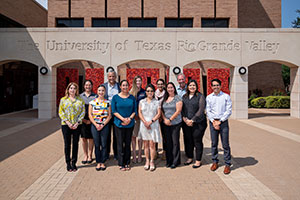 HR Campus Climate Liaisons, The University of Texas Rio Grande Valley (Western Region)
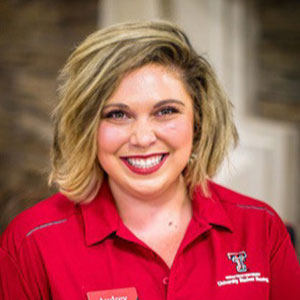 Audrey Davis, Assistant Director of Personnel, Texas Tech University (Western Region)