Tag: backs

  • Sector backs Harvard int’l students in Trump legal fight

    Sector backs Harvard int’l students in Trump legal fight

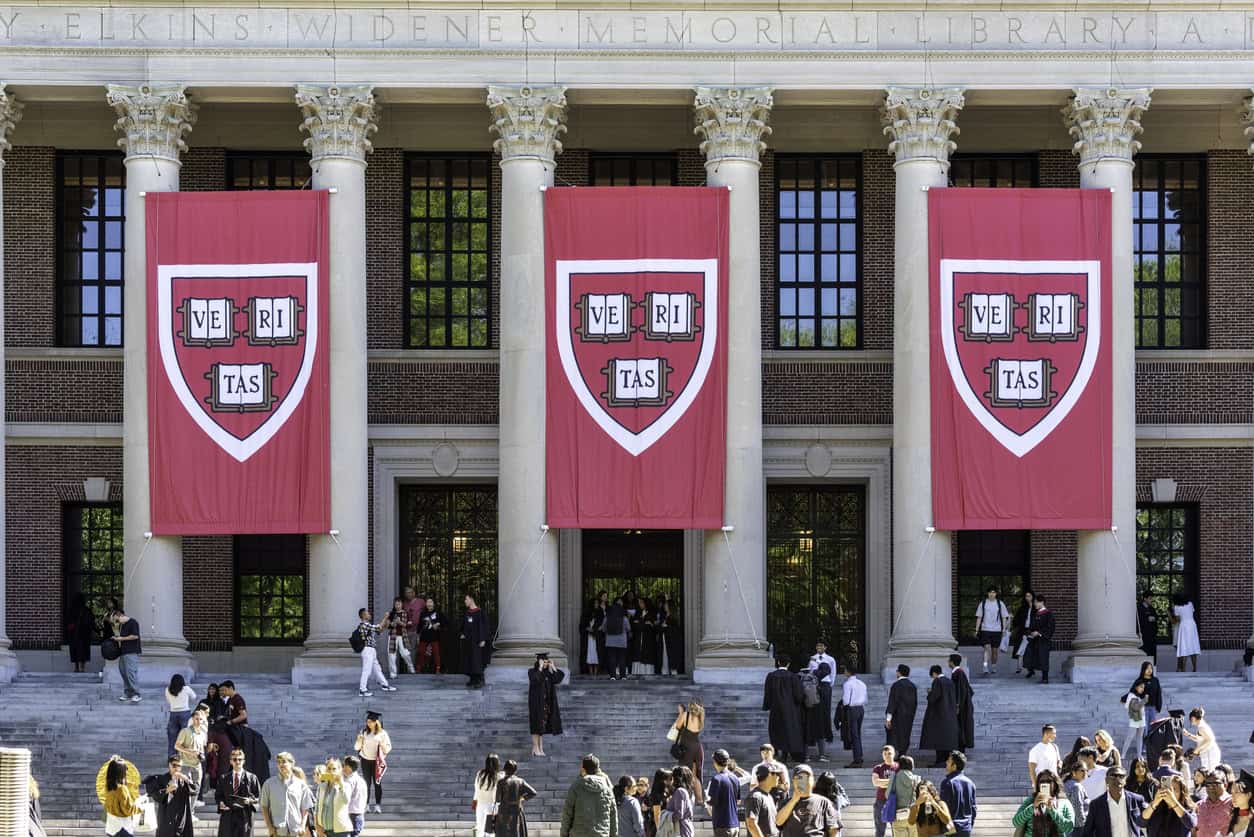
    This week, the American Council on Education (ACE) was joined by 22 higher education associations filing an amicus brief in support of Harvard against the administration’s efforts to uphold Trump’s June 2025 proclamation barring international students from the institution.  

    “If the federal government may punish a university for its perceived ideology or that of its students, then the marketplace of ideas collapses into a monopoly of dogma,” the brief warns. 

    It urges the court to affirm the preliminary injunction issued by Judge Allison Burroughs last June, which blocked Trump’s attempt to prohibit foreign nationals seeking to study at Harvard from entering the US. 

    The signatories have said the proclamation represents an unprecedented executive overreach threatening institutional autonomy and academic freedom, as well as violating the First Amendment. 

    “Over the last year, the current administration has engaged in an unprecedented effort to coerce institutions of higher education to behave in a manner that reflects the administration’s preferred ideology, including by reshaping their faculty, curriculum and student body,” the document reads

    “When Harvard resisted the administration’s unlawful demands, the administration retaliated with extreme sanctions, including the proclamation issued in this appeal.” 

    The case arises from multiple attempts by the Trump administration bar international students from attending the Ivy League institution last spring. 

    Initial efforts were led by the Department of Homeland Security (DHS) attempting to strip Harvard of its SEVP Certification, which enables US institutions to enrol international students – a move halted by federal district judge Allison Burroughs.  

    Weeks later, Trump escalated efforts and issued his own presidential proclamation aimed at achieving the same result, which was met with a preliminary injunction from judge Burroughs, who said Trump’s directive implicated core constitutional protections. 

    Appealing judge Burroughs’ decision, the administration argued the proclamation was legal under the president’s immigration authorities – citing the familiar argument relating to national security concerns. This took the case to First Circuit appeals court, where it is now being heard. 

    The White House did not immediately respond to a request for comment.

    Trump’s proclamation cites Harvard’s alleged “violent crime rates” and deficient reporting on foreign students as rationales for the directive, alongside its “entanglements” with the Chinese Communist Party and “discriminatory” admissions practices reducing opportunities for American students.

    If the federal government may punish a university for its perceived ideology or that of its students, then the marketplace of ideas collapses into a monopoly of dogma

    American Council on Education et al.

    The brief argues that the proclamation is “fundamentally inconsistent with institutional autonomy – at Harvard and other educational institutions across the country” and that the administration’s actions are unconstitutional and set a dangerous precedent for all US colleges. 

    “The administration’s actions at issue in this case are directed at Harvard, but they reverberate throughout every state in the nation,” the brief states, arguing that punishing a university for its perceived ideology is “the antithesis of American values”. 

    It highlights the targeted nature of Trump’s directive, which would allow international students into the US seeking to study at any institution but Harvard – signalling the intervention is punitive, not regulatory, the amici said.  

    They emphasise the value of international students, “who … enrich and strengthen our community in innumerable ways”.  

    “But these benefits are unattainable when schools are prohibited from enrolling international students because they do not pass the government’s ideological litmus test.” 

    The brief contextualises the case within the administration’s long-running assault on Harvard, involving the freezing of federal grant funding, threats to Harvard’s tax-exempt status and requests for information regarding Harvard’s international students.  

    The administration’s appeal is expected to be considered in the coming months.

    In the federal funding fight, judge Burroughs found in September 2025 that the administration acted unlawfully when it cut Harvard’s research grants – a case also heading to the court of appeal after the administration disputed the ruling. 

    Despite the ongoing attacks on America’s oldest institution, Harvard’s overseas enrolments rose to their highest level since 2002 this academic year, making up 28% of the total university population.  

    Source link

  • Federal court backs teachers fired over trans protest

    Federal court backs teachers fired over trans protest

    FIRE helped secure a victory this week for two educators in Oregon when the U.S. Court of Appeals for the Ninth Circuit sent Damiano v. Grants Pass School District back down to the federal district court, as FIRE had asked it to in our amicus brief.

    When their school district passed a policy requiring teachers to address transgender students by their preferred names and pronouns, the plaintiffs, Oregon assistant principal Rachel Sager and teacher Katie Medart, started the grassroots campaign “I Resolve” to voice their opposition to the policy. Following complaints by students, parents, and community members, their local school district fired the teachers but later reinstated them to different roles. 

    The teachers sued. But the lower court ruled the school district was entitled to fire the teachers and granted summary judgment, meaning it did not see a need to go to trial.

    FIRE saw things differently. And now, so has the appellate court. Our brief to the Ninth Circuit argued that Sager and Medart’s speech on a matter of public concern — as speech on the debate around gender issues undoubtedly is — must be properly balanced against the school district’s interest in providing services to the public. FIRE wrote:

    Almost twenty years ago, this Court held “it is well-settled that a teacher’s public employment cannot be conditioned on her refraining from speaking out on school matters.” … Yet the district court here held that, under Pickering, Grants Pass School District could do exactly that. The court incorrectly concluded that the district did not violate the First Amendment by firing an assistant principal (Rachel Sager, née Damiano) and teacher (Katie Medart) for speaking out against the District’s gender identity policy … because their actions—namely, publishing an alternative model gender-identity education policy and accompanying video called “I Resolve”—allegedly caused significant community disruption.

    The lower court put too much weight on the discomfort and controversy the teachers caused with their advocacy, and too little weight on their First Amendment right to speak as private citizens on a matter of public concern.

    On top of that, the court found a genuine dispute to be resolved over whether the teachers’ advocacy actually disrupted the school’s operation. As such, the Ninth Circuit reversed the lower court’s opinion — meaning the educators’ First Amendment claim can now proceed to trial.

    With its ruling, the Ninth Circuit has sent a pointed reminder that public employees don’t surrender their constitutional rights just because they work for the government. 

    Source link

  • AAUP Report Backs Tenured Pro-Palestine Prof. Who Was Fired

    AAUP Report Backs Tenured Pro-Palestine Prof. Who Was Fired

    A new American Association of University Professors investigative report concludes that Muhlenberg College violated the academic freedom of a tenured associate professor who said the institution fired her for pro-Palestinian speech.

    Maura Finkelstein’s situation made headlines last year as the first instance that major academic freedom advocacy groups had heard about of a tenured faculty member being fired for pro-Palestine or pro-Israel statements. Complaints against Finkelstein also became the subject of a U.S. Education Department Office for Civil Rights investigation.

    Finkelstein previously said she was fighting her May 2024 termination and was continuing to be paid during the appeals. But a college spokesperson told Inside Higher Ed this week that Finkelstein has now “resigned from the college to pursue other scholarship opportunities.” Finkelstein didn’t respond to Inside Higher Ed’s requests for comment.

    Finkelstein, who is Jewish, had said a panel of faculty and staff recommended axing her over her Instagram repost that told readers not to “normalize Zionists taking up space” and called Zionists “genocide-loving fascists” who shouldn’t be welcome “in your spaces.”

    Members of the college’s Faculty Personnel and Policies Committee later unanimously concluded that Finkelstein shouldn’t be fired, according to the AAUP report released Tuesday. The report is from a Committee of Inquiry composed of three faculty from other higher education institutions, and it’s been approved by the AAUP’s Committee A on Academic Freedom and Tenure.

    The report concludes, among other things, that “by initially dismissing Professor Finkelstein from the faculty solely because of one anti-Zionist repost on Instagram and without demonstrating—in fact, without ever seeking to demonstrate” that she was professionally unfit, “the Muhlenberg administration violated Professor Finkelstein’s academic freedom of extramural speech.” The report says the firing has “severely impaired the climate for academic freedom” at the college.

    A college spokesperson said the institution “has not been afforded the opportunity to review the amended report,” but pointed to the administration’s response to an earlier AAUP draft. That response, included in the final AAUP report, says Finkelstein “was afforded a fair and equitable process” and that “the cumulative effect of Professor Finkelstein’s conduct and post that called for the shaming of Zionists and to ‘not welcome them into your spaces,’ violated College policy.”

    Source link

  • UPDATE: Another federal appeals court backs academic free speech for public employees

    UPDATE: Another federal appeals court backs academic free speech for public employees

    The U.S. Court of Appeals for the Seventh Circuit just sided with free speech, joining five of its sister circuits in holding the First Amendment protects academic research, writing, and teaching at public colleges and universities. This carves out an important exception to the Supreme Court’s 2006 decision in Garcetti v. Ceballos holding that public employees’ speech pursuant to their official duties is not protected.

    This is a big deal. Just ask Jason Kilborn, a law professor at the University of Illinois Chicago suspended in late 2021 for using a redacted racial slur “n___” on a final exam question about employment discrimination. He also used the redacted term “b___” in the same question.

    UIC suspended Kilborn and launched an investigation into his (non-)use of the terms. That’s when FIRE stepped in — defending Kilborn, writing to UIC administrators, and securing him a lawyer through our Faculty Legal Defense Fund. With help from that lawyer, UIC briefly reached a resolution with Kilborn but it later reneged on that agreement and forced him to write reflection papers and participate in months-long training sessions before he could return to teaching.

    Kilborn sued, alleging administrators violated his constitutional right to academic freedom — and while the district court had dismissed the case, on Wednesday, the Chicago-based Seventh Circuit agreed the First Amendment protected Kilborn’s speech. That court rejected UIC’s “invitation to extend Garcetti to speech involving university teaching and scholarship when the Supreme Court was unwilling to do so,” and sent the case back to the district court. 

    With the rejection of that application of Garcetti, the district court will analyze this case using the balancing test from Pickering v. Board of Education, which directs courts to weigh “the interests of the [employee] in commenting upon matters of public concern” against “the interest of the state, as an employer, in promoting the efficiency of the public services it performs through its employees.” 

    This is now the sixth federal appeals court to establish this exception to Garcetti, extending academic freedom protections to public university faculty throughout Illinois, Indiana, and Wisconsin. FIRE is currently awaiting a decision from the Atlanta-based Eleventh Circuit, where we’ve asked that court to do the same with respect to the Garcetti exception. Stay tuned for more as we continue to press and follow this issue closely. 

    Source link