By now, the 2025-2026 school year is well underway. The glow of new beginnings has faded, and the process of learning has begun in earnest. No doubt there is plenty to do, but I recommend that educators take a moment and check in on their teaching toolkit.
The tools of our trade are always evolving, and if our students are going to get the most out of their time in class, it’s important for us to familiarize ourselves with the newest resources for sparking curiosity, creativity, and critical thinking. This includes the latest AI programs that are making their way into the classroom.
Here are five AI tech tools that I believe are essential for back-to-school success:
ChatGPT: ChatGPT has quickly become the all-in-one tool for generating anything and everything. Many educators are (rightly) concerned about ChatGPT’s potential for student cheating, but this AI can also serve as a built-in assistant for creating welcome letters, student-friendly syllabi, and other common documents for the classroom. If it’s used responsibly, ChatGPT can assist teachers by cutting out the busy work involved when planning and implementing lessons.
ClassroomScreen: ClassroomScreen functions as a modern-day chalkboard. This useful tool lets teachers project a variety of information on screen while simultaneously performing classroom tasks. Teachers can take straw polls, share inspiring quotes, detail the morning schedule, and even monitor volume without opening a single tab. It’s a simple, multipurpose tool for classroom coordination.
SchoolAI: SchoolAI is a resource generator that provides safe, teacher-guided interactions between students and AI. With AI becoming increasingly common, it’s vital that students are taught how to use it safely, effectively, and responsibly. SchoolAI can help with this task by cultivating student curiosity and critical thinking without doing the work for them. Best of all, teachers remain at the helm the entire time, ensuring an additional layer of instruction and protection.
Snorkl: Snorkl is a feedback tool, providing students with instant feedback on their responses. This AI program allows students to record their thinking process on a digital whiteboard using a variety of customizable tools. With Snorkl, a teacher could send students a question with an attached image, then have them respond using audio, visual tools such as highlighting, and much more. It’s the perfect way to inject a little creativity into a lesson while making it memorable, meaningful, and fun!
Suno: Suno is unique in that it specializes in creative song generation. Looking for an engaging way to teach fractions? Upload your lesson to Suno and it can generate a catchy, educational song in the style of your favorite artist. Suno even allows users to customize lyrics so that the songs stay relevant to the lesson at hand. If you need a resource that can get students excited about learning, then Suno will be the perfect addition to your teaching toolkit!
The world of education is always changing, and today’s technology may be outdated within a matter of years. Still, the mission of educators remains the same: to equip students with the skills, determination, and growth mindset they need to thrive in an uncertain future. By integrating effective tools into the classroom, we can guide them toward a brighter tomorrow–one where inquiry and critical thinking continue to flourish, both within the classroom and beyond.
Jamie MacPherson, Van Andel Institute for Education
Jamie MacPherson is a Learning Specialist at Van Andel Institute for Education, a Michigan-based education nonprofit dedicated to creating classrooms where curiosity, creativity, and critical thinking thrive.
Latest posts by eSchool Media Contributors (see all)
As summer wraps up, education marketers everywhere know what’s next? The back-to-school rush. It’s that time when inboxes fill up, campaigns go live, and every message counts. This season isn’t just about new classes or fresh notebooks; it’s the start of a new student recruitment marketing cycle, a chance to re-engage current students, attract new ones, and build momentum for the year ahead.
In a competitive space like higher education, you can’t rely on luck. You need a clear, intentional strategy that speaks directly to your students and stands out in a noisy market. Whether you’re a career college, university, or language school, this is the chance is to set the tone and build lasting connections.
In this playbook, you’ll find practical, proven back-to-school marketing strategies for success. From personalized outreach and short-form video to smart content planning and accessible design, consider this your guide to an A+ marketing season.
Struggling with enrollment?
Our expert digital marketing services can help you attract and enroll more students!
Audit Last Year’s Campaigns and Set SMART Goals
Before launching any new campaign, take a breath and look back. What worked in your student recruitment marketing last year, and what didn’t? Pull up your analytics and dig deep into the data: conversion rates, click-through rates (CTR), engagement metrics, and ROI for every channel. If your online open house had strong attendance but few follow-up applications, ask why. If your email series saw above-average opens, figure out what made it work: was it timing, tone, or topic?
Use these insights to set SMART goals: Specific, Measurable, Achievable, Relevant, and Time-bound. Avoid vague aims like “increase applications.” Instead, go for something concrete, like “increase undergraduate application starts by 15% by the end of Q3.”
Why is it important for schools to audit previous marketing campaigns before launching new ones? Auditing past campaigns helps schools understand their previous recruitment efforts. By analyzing data such as click-through rates, conversion rates, and ROI, institutions can set SMART goals for the new academic year. This ensures resources are directed toward tactics that actually drive inquiries, applications, and enrollments instead of repeating ineffective strategies.
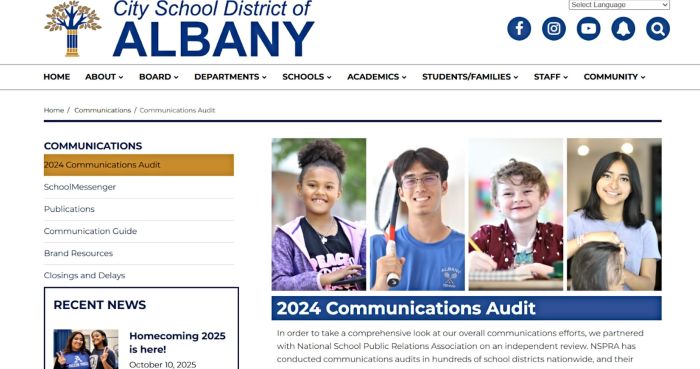
Example: City School District of Albany (NY) The district undertook a comprehensive communications audit with the National School Public Relations Association, reviewing all print and digital outreach. The 2024 audit report identified strengths and challenges and led to specific 2024–25 implementation goals, for example, hiring a new school communications specialist and streamlining internal communication protocols. These SMART goals were directly tied to audit recommendations, ensuring measurable improvements in engagement and consistency.
Tactical Tip: Create a simple scorecard or dashboard with last year’s metrics and this year’s goals. Track results on a weekly or monthly basis, and adjust tactics as needed. Data-driven agility is your best advantage.
Personalize Your Outreach to Prospective Students
Personalization should already be part of your strategy. Between 70 – 80% of students now expect it from schools. The back-to-school period is the perfect time to show you understand each prospect’s needs.
Start with your CRM data. Segment audiences by program, location, or funnel stage, then tailor messages accordingly. Send unfinished applicants a quick “deadline reminder” email, while offering current students a “Welcome Back” guide. Both feel personal and drive engagement.
Your website can do this too. Dynamic banners or content blocks that change by visitor type make a big impact. Tools like HubSpot, Slate, or Mautic by HEM help automate it all, even inserting names or programs into messages.
Example: University of Idaho. To personalize outreach at scale, U of I introduced AI-driven personalized video messages for prospective students during the 2024 recruitment cycle. Applicants received videos addressing them by name, hometown, and academic interest, creating a one-to-one connection. This individualized approach was added on top of existing personalized print and email campaigns. The results were impressive: emails containing the personalized video links saw a 45% open rate (versus 24% for standard emails), and the university reported higher application and admission rates across all student segments after launching over ten such video campaigns.
How can educational institutions use personalization to improve student engagement? Personalization allows schools to communicate directly to a student’s interests, program choices, and stage in the admissions funnel. Using CRM and marketing automation tools like Mautic by HEM, teams can segment audiences, send customized emails, and display dynamic website content based on visitor data. When prospective students receive tailored messages, like deadline reminders or personalized welcome guides, they’re more likely to respond, apply, and enroll.
Tactical Tip: Gather preferences early through short surveys (“What’s your dream career?”). Feed those insights into your campaigns, and when prospects see content that matches their interests, they’re far more likely to apply or enroll.
Engage Through Video and Social Media Content
Currently your audience is scrolling, and fast. Gen Z and Gen Alpha spend hours on TikTok, Instagram, and YouTube, where video dominates. In fact, video now makes up more than 80% of all internet traffic, so if it’s not central to your strategy, you’re already behind.
Show what campus life feels like. Create short videos that capture move-in day buzz, a lively lab session, or the roar of the first football game. Student testimonials and livestreamed Q&As work especially well because they’re authentic and emotional, two things today’s viewers respond to.
Your social media profiles are your school’s digital storefront. Keep them fresh with “Day in the Life” takeovers, campus challenges, and UGC that shows students’ real experiences. Repost their content (with credit) to build authenticity. Even micro-influencers (popular students or alumni) can amplify your reach organically.
Use social media to build community, too. Create incoming class groups groups on Facebook or Discord where students connect before arriving, or run quick Instagram polls (“What are you most excited about this fall?”) to boost engagement.
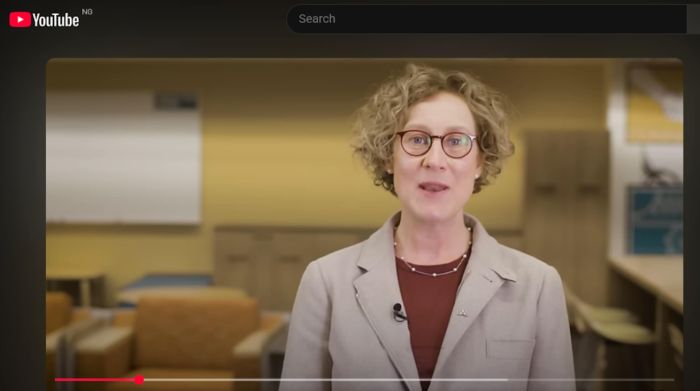
Example: University of Minnesota. The university kicked off the 2024 academic year with an energetic “Welcome Back to School 2024” video message from the new president, Dr. Rebecca Cunningham. Shared on the official UMN YouTube channel and social media, the video welcomes students and faculty to campus and sets an enthusiastic tone for the year. This engaging content, featuring the president and campus scenes, was used to boost school spirit online and was widely viewed and shared within the community.
What role do video and social media play in back-to-school marketing? Video and social media are now essential tools for reaching Gen Z and Gen Alpha students. Platforms like TikTok, Instagram, and YouTube are where prospective students spend most of their time, making short-form, authentic videos key to capturing attention. Schools can share move-in day highlights, “Day in the Life” student takeovers, or live Q&As to showcase campus life and build emotional connections with their audience before the academic year begins.
Tactical Tip: Format videos for each platform: vertical and under 60 seconds for TikTok or Reels, longer for YouTube. Post “move-in prep” content in August and “welcome week” highlights in September to match student timelines.
Visual Tip: Mix polished and raw footage. A sleek virtual tour pairs perfectly with a student’s unfiltered dorm vlog. That balance between professional and real builds trust and attention.
Plan an Integrated Content Calendar for the Academic Year
When you’re juggling multiple channels, such as email, social media, blogs, print, and events, it’s easy for campaigns to lose focus. A well-structured content calendar keeps everything aligned. It outlines what you’ll publish, when, and where, ensuring every platform supports the same strategy.
Start with a brainstorming session before fall begins. Identify monthly themes that match your recruitment cycle. August could highlight move-in and orientation, September might focus on study tips and student life, and October on deadlines and fall events. Include major dates like FAFSA deadlines, holidays, and open houses so nothing slips through the cracks.
For each theme, plan content across different stages of the funnel. During back-to-school, for instance, pair “slice of campus life” stories for awareness with targeted “why choose us” posts for decision-making prospects.
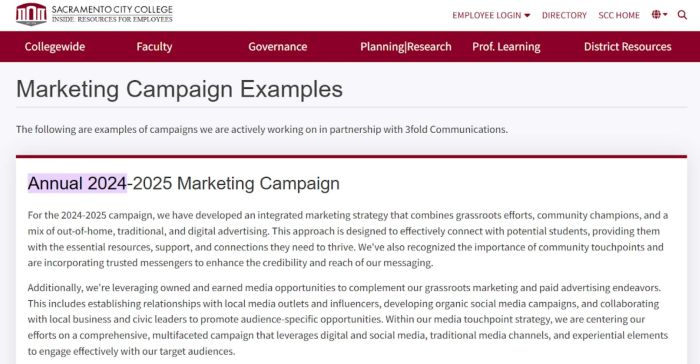
Example: Los Rios Community College District (CA). For the 2024–2025 recruitment cycle, Los Rios (a district of four colleges) developed an integrated marketing content strategy spanning grassroots outreach, traditional media, and digital channels. Their annual marketing campaign plan was managed through a central calendar and included coordinated content across platforms: social media posts, email campaigns, community events, billboards, and more.
Tactical Tip: Add columns in your calendar for audience, goal, and platform. Tools like Trello, Airtable, or even Google Sheets can help your team stay organized.
Pro Tip: Capture new assets early in the semester. Fresh photos, short videos, and student testimonials from those first lively weeks will fill your content library with authentic, high-energy material you can repurpose all year.
Maximize Reach With Targeted Digital Advertising
Even the strongest content needs help reaching the right audience. Digital advertising ensures your message gets in front of prospective students and their parents at the right time and place.
Begin by defining your audience and selecting the platforms that align with their habits. For high school seniors, Google Ads and Instagram are usually most effective. For local adult learners, Facebook or regional streaming ads may deliver better results. Match your spend to where your audience is most active.
Example: University of Texas at Dallas. In late 2024, UT Dallas launched a new branding campaign, “The Future Demands Different,” which employed highly targeted digital and media advertising to recruit students. The campaign focused heavily on specific geographic markets: primarily North Texas, with select expansion into other Texas cities and neighboring Oklahoma, where the university offers special tuition rates. UTD produced its first-ever broadly distributed TV commercial featuring current students and placed these ads strategically on local television newscasts, streaming platforms, and even during NBA game broadcasts (Dallas Mavericks) to reach its target audience.
Next, focus on timing and relevance. Seasonal messages like “Apply by October 15” or “Start your future this fall” create urgency and keep your campaigns connected to the academic calendar. Pair them with engaging, authentic visuals that reflect campus life and excitement for the new year.
Retargeting is another essential tactic. Students who visit your website or start an application are warm leads. Remind them to take the next step with a clear, encouraging ad.
Tactical Tip: Track your campaigns closely. Test headlines, images, and calls to action to see what resonates, and refine your approach as data comes in. Ensure your landing pages are fast, mobile-friendly, and consistent with your ads. That seamless experience is what turns clicks into conversions.
Streamline Marketing with Automation and AI
The back-to-school season can feel like organized chaos, with hundreds of inquiries, events to manage, and deadlines everywhere. That’s why automation and AI are no longer nice-to-haves; they’re essential for keeping communications personal while giving your team room to breathe.
Start with a strong CRM connected to a marketing automation system. Platforms like Mautic by HEM, designed for education marketers, make it easy to automate email campaigns, social posts, and lead nurturing. For example, when a student downloads your course catalog, your system can automatically follow up the next day with a webinar invite. This keeps engagement flowing without constant manual effort.
Email automation is especially effective this time of year. Set up a simple three-step sequence: welcome, tips for applying, and a deadline reminder. Keep your design clean, concise, and mobile-friendly, as most students will read emails on their phones.
AI chatbots are another huge time-saver. Schools like Georgia State University have seen success with their chatbot “Pounce,” which helped reduce summer melt by answering student questions around the clock. You can deploy similar chat tools on your website or Facebook Messenger to guide prospects when staff aren’t available.
AI can also optimize your digital ads, test creative variations, and even suggest the best posting times on social media. Just keep a human eye on the outputs. AI should assist with the creation process, not replace, a real connection.
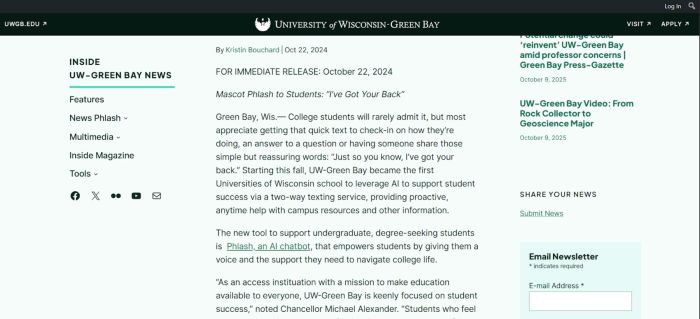
Example: University of Wisconsin–Green Bay. UW–Green Bay became the first in its state system to deploy an AI-driven chatbot for student outreach in Fall 2024. Nicknamed “Phlash,” the bot engages undergraduate students via two-way text messaging, providing 24/7 answers to common questions and proactively checking in on students’ well-being. For example, every 7–10 days, Phlash sends a brief text asking how the student is doing and offers guidance or resources based on their needs. In its first week, 96% of UWGB students opted in to receive messages from Phlash, and over 2,100 student replies were recorded within 24 hours of the first check-in text.
Tactical Tip: Use automation analytics to fine-tune your back-to-school marketing strategies. Track open rates, chatbot inquiries, and ad conversions. If you notice a drop-off, tweak timing or content. Over time, these insights will help you refine your approach and build smarter, more human campaigns.
Ensure Accessible and Inclusive Marketing Materials
When your campaigns are accessible and welcoming to everyone, you reach more prospective students and reflect the values your institution stands for.
Start with accessibility basics. Add descriptive alt text to all images so screen readers can describe visuals to users with vision impairments. Caption every video and provide transcripts. These help not only Deaf or hard-of-hearing students but also anyone watching on mute. Check color contrast, too: combinations like red on green can be hard to read for color-blind users. Use clear fonts, readable sizes, and designs that meet accessibility standards.
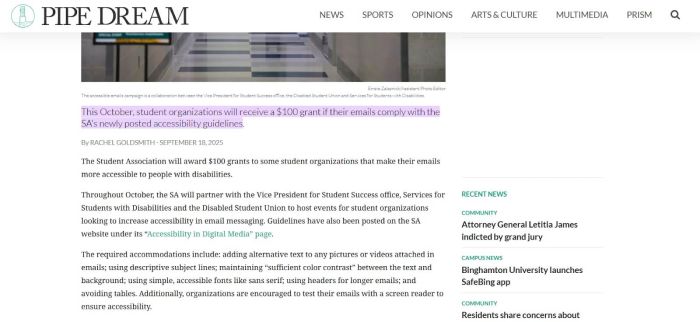
Example: Binghamton University (Student Association). At Binghamton, student leaders launched an “accessible emails” initiative in Fall 2025 to improve the inclusivity of campus communications. The Student Association (SA), in partnership with the campus disability services office, rolled out digital accessibility guidelines and challenged all student organizations to apply them in their back-to-school email newsletters. These guidelines included using alt text on images, high-contrast colors, readable fonts, and captions on videos, and simple adjustments to make emails and social posts readable by screen readers and accessible to those with disabilities. To incentivize adoption, the SA offered $100 grants (via a raffle) to clubs that complied with the new accessibility standards in their October emails.
Make sure your content works across all devices. Responsive, mobile-friendly emails and web pages prevent frustration and help more users complete inquiry forms or explore programs on their phones.
Representation matters as well. Feature students from diverse backgrounds and experiences, and consider multilingual or culturally inclusive content if you serve international audiences.
Tactical Tip: Run a quick accessibility audit using tools like WAVE or Axe to spot missing tags or low-contrast text. Train your marketing team on simple habits, like using CamelCase in hashtags (#FirstDayAtCampus), that make your content more inclusive. Small changes go a long way toward making every student feel seen and included.
Measure, Adapt, and Refine Your Strategy
Great marketing doesn’t stop at launch; it evolves. Once your back-to-school campaigns are live, monitor results closely and be ready to adjust. Use Google Analytics 4, CRM dashboards, such as HEMs Mautic, and other social insights to see what’s working. Focus on metrics that matter, like inquiries and applications.
Hold quick debriefs with your team after major pushes. Ask what content resonated, which channels drove engagement, and whether event turnout met expectations. Maybe your career-focused posts got strong traction, or your TikTok videos outperformed Facebook. Use that data to refine your next phase of content and budget allocation.
Flexibility is your biggest advantage. Test different formats, refine your messaging, and pivot when something isn’t working. Every campaign teaches you more about your audience.
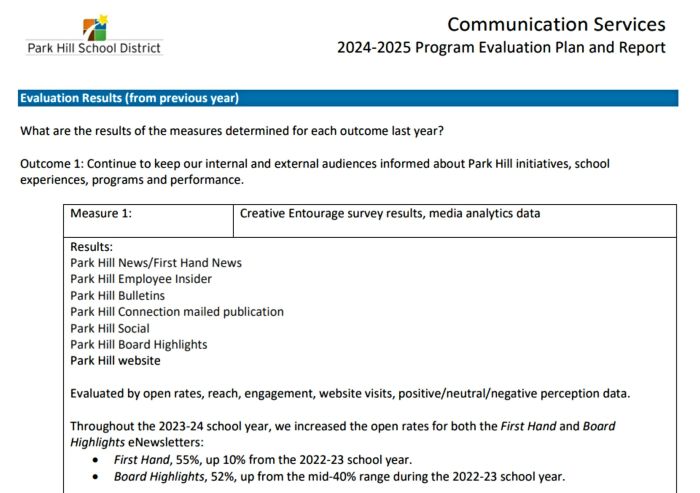
Example: Park Hill School District (MO). Park Hill’s communications department exemplifies a cycle of measurement and refinement in its marketing strategy. Each year, they collect detailed analytics on communication channels, email open rates, social media engagement, website traffic, and even advertising partnership revenue, and compare them to prior years’ benchmarks. In their 2023–24 report, for instance, the team noted improvements like an increase in the staff newsletter open rate from the mid-40% range up to 52%, and a jump in Facebook reach by 167% year-over-year. They also track outcomes of marketing initiatives (e.g., four years of in-house advertising brought in $148,800 in revenue in 2023–24) to evaluate ROI. These metrics inform mid-course corrections and the setting of new goals.
Tactical Tip: Keep communication open across teams. Marketing, admissions, and academics should share insights regularly. If your in-house resources are stretched, consider bringing in experts like HEM. Our team offers digital strategy, content, automation, and CRM support so you can scale campaigns efficiently and keep enrollment goals on track. Measure what matters, learn fast, and never stop improving.
Wrapping Up
The back-to-school season sets the tone for the entire year. When you combine strategy with creativity, the results speak for themselves. Reviewing last year’s data, setting SMART goals, personalizing outreach, producing engaging videos, organizing content calendars, and using automation or targeted ads all work together to move the needle. Add accessibility and inclusion, and your marketing becomes not just effective, but meaningful.
At the heart of it all is one principle: keep students front and center. Understand what drives them, where they spend time, and how your institution can meet their goals. That empathy fuels every great campaign.
Effective higher education marketing is a perfect blend of art and analysis. It’s about pairing strong storytelling with measurable outcomes. And when you need a partner to help balance both, Higher Education Marketing (HEM) is here. We specialize in data-driven strategy, automation, SEO, and social campaigns built to amplify your institution’s voice.
The new academic year is full of opportunities. With the right preparation and a willingness to adapt, your marketing can inspire action, drive enrollment, and welcome a new wave of students ready to thrive. Here’s to your most successful back-to-school season yet.
Struggling with enrollment?
Our expert digital marketing services can help you attract and enroll more students!
Frequently Asked Questions
Question: Why is it important for schools to audit previous marketing campaigns before launching new ones? Answer: Auditing past campaigns helps schools understand their previous recruitment efforts. By analyzing data such as click-through rates, conversion rates, and ROI, institutions can set SMART goals for the new academic year. This ensures resources are directed toward tactics that actually drive inquiries, applications, and enrollments instead of repeating ineffective strategies.
Question: How can educational institutions use personalization to improve student engagement? Answer: Personalization allows schools to communicate directly to a student’s interests, program choices, and stage in the admissions funnel. Using CRM and marketing automation tools like Mautic by HEM, teams can segment audiences, send customized emails, and display dynamic website content based on visitor data.
Question: What role do video and social media play in back-to-school marketing? Answer: Video and social media are now essential tools for reaching Gen Z and Gen Alpha students. Platforms like TikTok, Instagram, and YouTube are where prospective students spend most of their time, making short-form, authentic videos key to capturing attention.
As students and teachers prepare for a new school year, it’s important to remember that success in the classroom isn’t just about academics; it’s about supporting the whole child. From motor skills and posture to organization, focus, and sensory regulation, the right strategies can make the learning process smoother and more enjoyable for everyone.
While occupational therapy (OT) is often associated with special education, many OTs like me use and share the supportive tips and tools described below in general education settings to benefit all learners. By integrating simple, classroom-friendly strategies into daily routines, teachers can help students build independence and confidence and see long-term success.
Motor skills
One of the most crucial areas to address is motor skills. Many children entering kindergarten have not yet fully mastered tasks such as cutting or forming letters and shapes correctly. Simple strategies can encourage independence, such as using a “scissor template” taped to a desk to guide proper finger placement or offering verbal cues like “thumbs up” to remind children how to hold the tool correctly. Encouraging the use of a “helper hand” to move the paper reinforces bilateral coordination.
For writing, providing small pencils or broken crayons helps children develop a mature grasp pattern and better handwriting skills. Posture is equally important; children should sit with their feet flat on the floor and their elbows slightly above the tabletop. Adjustable desks, sturdy footrests, or non-slip mats can all help. Structured warm-up activities like animal walks or yoga poses before seated work also prepare the sensory system for focus and promote better posture while completing these tasks.
Executive function
Equally important are executive function skills–organization, planning, and self-regulation techniques–that lay the foundation for academic achievement. Teachers can support these skills by using visual reminders, checklists, and color-coded materials to boost organization. Breaking larger assignments into smaller tasks and using timers can help children manage their time effectively. Tools such as social stories, behavior charts, and reward systems can motivate learners and improve impulse control, self-awareness, and flexibility.
Social-emotional learning
Social-emotional learning (SEL) is another vital area of focus, because navigating relationships can be tricky for children. Social-emotional learning helps learners understand their emotions, express them appropriately, and recognize what to expect from others and their environment.
Traditional playground games like Red Light/Green Lightor Simon Says encourage turn-taking and following directions. Structured programs such as the Zones of Regulation use color-coded illustrations to help children recognize their emotions and respond constructively. For example, the “blue zone” represents low energy or boredom, the “green zone” is calm and focused, the “yellow zone” signals fidgetiness or loss of control, and the “red zone” reflects anger or frustration. Creating a personalized “menu” of coping strategies–such as deep breathing, counting to 10, or squeezing a stress ball–gives children practical tools to manage their emotions. Keeping a card with these strategies at their desks makes it easy to remember to leverage those tools in the future. Even something as simple as caring for a class pet can encourage empathy, responsibility, and social growth.
Body awareness
Body awareness and smooth transitions are also key to a successful classroom environment. Some children struggle to maintain personal space or focus during activities like walking in line. Teachers can prepare students for hall walking with warm-up exercises such as vertical jumps or marching in place. Keeping young children’s hands busy–by carrying books rather than using a cart–also helps. Alternating between tiptoe and heel walking can further engage students during key transitions. To build awareness of personal space, teachers can use inflatable cushions, small carpet squares, or marked spots on the floor. Encouraging children to stretch their arms outward as a guide reinforces boundaries in shared spaces as well.
Sensory processing
Supporting sensory processing benefits all learners by promoting focus and regulation. A sensory-friendly classroom might include fabric light covers to reduce glare, or subtle scent cues used intentionally to calm or energize students at different times. Scheduled motor breaks during transitions–such as yoga stretches, pushing, pulling, or stomping activities–help reset the sensory system. For students with higher sensory needs, a “calming corner” with mats, pillows, weighted blankets, and quiet activities provides a safe retreat for regaining focus.
The vital role of occupational therapists in schools
Employing OTs as full-time staff in school districts ensures these strategies and tools are implemented effectively and provides ongoing support for both students and educators alike. With OTs integrated into daily classroom activities, student challenges can be addressed early, preventing them from becoming larger problems. Skill deficits requiring more intensive intervention can be identified without delay as well. Research demonstrates that collaboration between OTs and teachers–through shared strategies and co-teaching–leads to improved student outcomes.
Wishing you a successful and rewarding school year ahead!
Linda Rini, OTD, MS, OTR/L, CLC, Touro University School of Health Sciences Occupational Therapy Program
Linda Rini, OTD, MS, OTR/L, CLC, is an assistant professor in the Touro University School of Health Sciences Occupational Therapy Program.
Latest posts by eSchool Media Contributors (see all)
As the back-to-school season begins, educators and students alike are stepping into classrooms that look and feel increasingly different from just a few years ago. Technology is no longer just a supporting tool–it is a central part of how learning is delivered, personalized, and measured. From AI that helps teachers design lessons and personalize learning, to adaptive learning platforms that meet students where they are, education technology continues to evolve at a rapid pace.
Innovation is at the forefront this year, with districts embracing tools that support academic growth, streamline workflows, and foster deeper engagement. AI-powered tutoring, immersive experiences, and tools that enhance collaboration are just a few of the technologies entering classrooms and lecture halls. These resources are not only helping educators save time but also are equipping students with critical thinking, problem-solving, and digital skills they will need for future careers.
As schools balance new opportunities with challenges around implementation, equity, and data privacy, industry leaders and educators are offering valuable insights into what’s next. Teachers are sharing how these tools reshape day-to-day instruction, while technology providers are highlighting trends that will shape the coming year. Together, these perspectives paint a picture of a learning landscape that is both dynamic and adaptable, where innovation is guided by the shared goal of supporting student success.
This back-to-school season, the conversation is not just about new devices or apps, but about how technology and thoughtful innovation can transform education for all learners–making 2025 a year of possibilities, progress, and promise.
This school year, career and technical education (CTE) won’t just be an elective, but will be a priority. As more districts recognize the powerful outcomes tied to CTE, we’ll see a shift in graduation requirements to reflect what students actually need for their futures. That might mean rethinking four years of traditional math in favor of math courses that are career-aligned to specific career pathways. Administrators and superintendents are paying attention and for good reason. The data shows CTE not only boosts student outcomes, but also brings relevance back to learning. —Edson Barton, CEO, YouScience
Throughout my administrative experience, it has become increasingly evident that many educational preparation programs fall short in emphasizing the importance of fostering connection and relevance in learning from the student’s perspective. Too often, the pedagogical approach positions educators as drivers of a rigid, outdated instructional model, centered on the teacher in a highly directive role, rather than as reflective facilitators willing to ride alongside students on a learning journey. To shift this reality, I take every opportunity to embrace and share the practices promoted by PBLWorks, which offer a framework where students not only learn content and skills but do so in ways that are connected to their own interests and community. Through the Project Based Learning (PBL) methodology, learning becomes more personal, meaningful, and accountable, with expected learning products that showcase depth in student understanding and growth. Every school-age child has personal experiences from which to make connections, and with PBL, we are better equipped to serve all children effectively. While traditional testing data has its own importance in driving strategic moves, the outcomes derived from the application of learning are immeasurable in their long-term impact on career readiness. In our MSAP Norwalk implementation, shifting the approach requires more than updating curriculum units, it also demands a redefinition of the educator’s role as a collaborative team member in the classroom. Educators must evolve into co-learners and creative engineers of dynamic, student-centered learning environments. They must become comfortable with uncertainty and confident in guiding student discovery. Such a workshop-like classroom environment is essential for authentic PBL, which demands both deep preparation and flexible facilitation. Here, success is defined not only by content mastery but also by the authentic application of knowledge and skills. Importantly to note, the teacher is also a learner in this dynamic process. Ultimately, quality teaching and learning is measured not by the delivery of instruction but by the evidence of student learning. As I have grown in my leadership and implementation of the PBL framework, the phrase “I taught it, but they didn’t get it” is beyond obsolete, replaced by a continuous cycle of reflection, refinement, and real-world, relevant outcomes. Learning is represented dually in personalized student exemplars and in improved results on high-stakes assessments. –Victor Black Ed.D., Magnet School Assistance Program (MSAP) Norwalk Project Director, Norwalk Public Schools, Connecticut
Learning is fundamentally about meaning-making. It’s a dynamic human process that involves our whole selves. It involves the brain as well as emotions, attitudes and beliefs, relationships, environments, and contexts. AI can’t make meaning for you. If the AI makes the meaning for you, you haven’t learned anything–that is the core of distinguishing between what is useful AI that is going to advance learning, and what is hype that could actually be counterproductive and destructive to learning. – Auditi Chakravarty, CEO, AERDF
Welcome to your teaching journey. As we begin the 2025-26 school year, I want to extend my heartfelt welcome to our new educators. Your passion and fresh perspectives are invaluable assets to our learning community. I encourage you to remember that teaching is about building relationships. Get to know each student, learn their interests, challenges and dreams. Strong connections create the trust necessary for meaningful learning. Don’t hesitate to lean on your colleagues and mentors. Teaching can feel overwhelming, but you’re never alone. Seek guidance, share resources and collaborate whenever possible. Be patient with yourself as you find your rhythm. Focus on progress, not perfection, and celebrate small victories along the way. Most importantly, never lose sight of why you chose this profession. You have the power to change lives, one student at a time. –Dr. Debra Duardo, Superintendent of Schools, Los Angeles County & Board Member, Association of Latino Administrators and Superintendents (ALAS)
Hello, new teachers! As a 32-year veteran of teaching, I vaguely remember those first few days and weeks, but I do remember being thoroughly overwhelmed. So, my first piece of advice is to find yourself a mentor who can help you navigate the waters. Second, think outside the box. Educational technology has exploded in the last few years and us old people can’t keep up. Find something that works and immerse yourself in it. May I make a suggestion? Creation over consumption. Let’s give an example. VR is amazing. You and your students can “visit” places that you would never be able to take them on a field trip. Awesome! Do it! But I have found that creating our own VR experiences by integrating ClassVR with tools like ThingLink or DelightEx brings a whole new level of engagement and understanding. My last piece of advice? Love it! Love those kids. They need you. Bond with your colleagues. You need each other. You got this. I’m happy you’re part of the team. –Craig Dunlap, Blended Learning Teacher, Yealey Elementary School, Kentucky
I began teaching 25 years ago, and thirteen years ago I was introduced to Project-Based Learning (PBL). From that moment, I “enrolled.” PBL is not just a strategy, it’s a mindset. It transformed not only my students, but also me as an educator. Through engaging in and witnessing PBL, I have learned that it changes the way students view their education and their place in school. They no longer see themselves as passive recipients of information, but as active learners with a voice, a purpose, and a sense of belonging. PBL builds their self-efficacy, ignites their curiosity, and turns learning into a lifelong journey. Because learning in PBL is authentic, engaging, and connected to real life, every student can access it, every student feels valued, and every student has the chance to succeed. Most importantly, every student has the opportunity to be seen and to see themselves reflected in their education, their classrooms, and their school community. And while my primary goal as an educator has always been my students, I must say that PBL also transforms teachers in deeply positive ways. Unlike a scripted, one-size-fits-all curriculum, PBL gives teachers full autonomy to design, to create, and to make learning relevant. It allows us to become problem-solvers, innovators, and true professionals. As PBL teachers, we model exactly what we want from our students. PBL isn’t about checking boxes; it’s about unleashing your craft as an educator and showing your students what authentic, meaningful work looks like. What I have come to believe, after years of teaching and leading, is that PBL is not just a method of instruction, it’s a way of seeing students, teachers, and learning itself. It is the path that allows students to fall in love with learning, and teachers to love their craft. And once you experience it, it’s hard to ever imagine teaching any other way. –Beth Furnari, Principal, P-TECH Norwalk in Norwalk Public Schools, Connecticut
For new district administrators, don’t chase every shiny object. Education is full of vendors promising silver bullets. Anchor your decisions in what solves your district’s problems, not in what looks flashy. Additionally, remember to prioritize relationships over initiatives. People will follow your lead if they believe you value them, not just their output. When you prioritize relationships, oftentimes the initiatives naturally follow. For example, our district’s performing arts manager came to me with the idea ofvirtual set design knowing I’d be open to his ideas and willing to try something new. –Tim Klan, Administrator of Information and Instructional Technology, Livonia Public Schools, Michigan
In today’s educational landscape, our instructional strategies must evolve to meet the needs of digital-native learners. While traditional resources have their place, we recognize that deep engagement often requires more immersive and interactive experiences. To bridge this gap, our school district has strategically implemented virtual reality (VR). For the past five years, our schools have been utilizing the ClassVR platform by Avantis. This technology has proven to be a powerful tool for transcending the physical limitations of the classroom. The moment students see the VR kits arrive, a visible excitement builds for the learning ahead. These curated experiences are not simply virtual field trips; they are pedagogical springboards that empower students to explore historical eras, global locations, and complex scientific concepts. Most importantly, VR provides a unique medium for fostering essential skills in observation, critical analysis, and content creation. –Kyle Kline, Director of Digital Learning, Twin Lakes School Corporation, Indiana
In the 2025 to 2026 school year, we will see a greater push for ongoing, explicit instruction in foundational literacy skills for older students. Most students need ongoing, developmentally appropriate, explicit literacy instruction in upper elementary and middle school, but very few of them receive it. Most students in grades 4-8 do not receive explicit instruction for crucial foundational skills that older students need to develop, like decoding multisyllabic words. More often than not, teachers in grades 4-8 lack the resources, time, or training to provide explicit instructional support to help their students continue to grow as readers. Giving teachers what they need to support their students will certainly be part of the solution, along with more targeted interventions that provide support to students where they need it. – Rebecca Kockler, Executive Director, AERDF’s Reading Reimagined Program
After decades of progress narrowing gender gaps in STEM, the pandemic may have set girls back significantly–and the gap is likely to grow wider unless schools and policymakers act quickly. New NWEA research reveals that pandemic-era setbacks hit middle school girls hardest in math and science, erasing decades of progress. With fewer girls now enrolling in 8th-grade Algebra–a key gateway to advanced STEM coursework–there’s a real risk that fewer young women will pursue STEM in high school, college, and careers. To reverse this trend, schools will need to closely monitor gender participation in key STEM milestones, expand access to advanced coursework, provide early interventions and academic supports, and examine classroom practices to ensure girls are being actively engaged and encouraged in math and science. Without these steps, the future STEM talent pipeline will be less diverse and less equitable. – Dr. Megan Kuhfeld, Director of Growth Modeling and Analytics, NWEA
Reliable, longitudinal student data is critical to drive strategic action. As federal support for education research is scaled back and key data collection efforts remain uncertain, districts and states may find themselves without trusted information to guide decisions. In the absence of these investments, schools will need to rely more heavily on research organizations and data partners that can offer the longitudinal insight and analytical capacity schools need to understand where students are, where they’re headed, and how to support them. With academic recovery proving slower and more uneven than expected, schools need evidence-based insights to navigate this complex landscape. Expect a growing shift toward research-backed, nonpartisan data sources to fill the vacuum and support smarter, more equitable decision-making. – Dr. Karyn Lewis, Vice President of Research and Policy Partnerships, NWEA
As cybersecurity becomes an increasing risk for K-12 districts this year, it’s more critical than ever that IT leaders establish a culture of security at the start of the school year. Schools are continuously working to maintain 1:1 technology without compromising user safety or straining budgets, and asset tracking and inventory management is an integral part of that process. With shrinking IT teams working to track thousands of devices across schools, having a centralized asset management system allows districts to avoid costly surprises and manage devices more efficiently. It helps them to monitor device location and application use, make targeted and data-backed incident response decisions, and identify assets potentially affected by a security breach. It also streamlines the inventory auditing process, which allows school IT teams to track and manage the maintenance and updating needs of deployed devices, both of which function to improve security. Cyberattacks are not only becoming more frequent, but more complex and it’s time for schools to safeguard their technology by investing in smarter, more resilient solutions that protect learning environments and support long-term success. —Bill Loller, Chief Product Officer, Incident IQ
As a new principal, your most important work is building relationships. That includes building and strengthening the trust with your staff, as well as your parents and families. Take the time to make those connections, to listen to people and get to know them. In Hawaii, we have a term “ahonui” which means “waiting for the right moment.” As a principal, you need to know when it’s the right time to act and when it’s the right time to listen. As a new leader, it’s natural to have a sense of urgency: You have a long list of things you want to do to help kids be safe and learn, but to do that you first need to honor what has been done so far. By getting to know the people who make up your school community you’ll learn how you can enhance it. To help build my relationship with my teachers, especially the new ones, we have an onboarding day the day before teachers report back. This is my chance to introduce them to some of the things that we have going on and the structures we have in place to support them as they teach. We introduce them to some tech tools that our school has that others don’t, like the AI-powered tutoring app SuperTeacher–but we try not to overload them because we understand that for a new teacher (or even a teacher who’s new to our school) it can be overwhelming if we just upload a lot of initiatives and must-dos and expectations. Instead, we get to know each other, and my vice principal and I share the theme we’ve come up with for each school year. Our theme for this year is “alu i ka hana me ke kuana’ike like,” which means “to join together in the work with a unified mindset.” – Derek Minakami, Principal, Kāneʻohe Elementary School, Honolulu, HI
Through my years of teaching, I have found myself talking less and listening to students more. It’s important to make space for student voices to help create richer discussions and more meaningful learning experiences that connect to their own lives. At the same time, grounding those experiences in strong scientific practices ensures that learning is both engaging and rigorous. As a new school year begins, I encourage every teacher to connect the learning happening in your classroom to potential career paths and help students see the real-world impact of what they’re studying. –Mike Montgomery, Natural Resources Teacher, Littleton Public Schools EPIC Campus (recently featured in the “Building High-Impact CTE Centers: Lessons from District Leaders” e-book)
Everyone is working with fewer resources this school year. As the number of bilingual and multilingual students continues to grow, it will be important for teachers to be creative and resourceful in how they are using those limited resources to support ELL students. For example, they can look outside their school for resources and partnership opportunities with businesses, non-profit associations and higher education institutions. They can also seek out grant funding that is specific for bilingual students. Multilingualism is a superpower, but English language learners face unique barriers that can put them at a disadvantage compared to their native-English-speaking peers. It is critical to continue to advocate for these students and be creative in finding ways to help them grow this superpower. Teachers: you will be key to ensuring shifting policy decisions and uncertain budgets don’t result in our most vulnerable students being left behind. –Ulysses Navarrete, Executive Director, Association of Latino Administrators and Superintendents (ALAS)
As we begin this new academic year, I want to thank you for the incredible work you do each day to inspire and shape the minds of our students. In times when our nation–and especially Los Angeles–faces critical conversations about democracy and social justice, your role is more important than ever. Let us empower our students to think critically, question thoughtfully, and express their voices in meaningful ways–whether through essays, art, letters, or dialogue. Together, we have the opportunity to guide them toward becoming informed, compassionate, and courageous leaders who can influence the future. Your dedication matters, and the impact you make will be felt far beyond the classroom walls. –Ruth Perez, Ed.D., Deputy Superintendent, Los Angeles County Office of Education & Board Member, Association of Latino Administrators and Superintendents (ALAS)
One thing we often hear from school districts is that after they purchase new technology, there is a lag in implementation. To ensure technology products improve teaching and learning in year one, I recommend district IT leaders work with companies that act as true partners with the district, offer built-in professional development, and provide opportunities for schools to learn best practices from each other. To help with adoption, districts can handle implementation in small increments to not overwhelm teachers, enlist classroom innovators who can lead the charge on integrating new technologies, and offer opportunities for teachers to learn from others who are implementing the technology. –Gillian Rhodes, Chief Marketing Officer, Avantis Education, creators of ClassVR
Students learn best when they are engaged. My advice to new teachers is to find new, innovative ways to make learning relevant to real life. This will help students get more out of their lessons and prepare them for the world. Technology is a powerful way to do this. Providing immersive experiences such as through virtual or augmented reality can help teachers connect classroom concepts with real-world experiences. Whether it’s virtually touring ancient ruins, traveling through a blood vessel to learn about the circulatory system, or visiting a job site to learn about that career path–immersive experiences like these can help improve student-engagement and take instruction to the next level. –Gillian Rhodes, Chief Marketing Officer, Avantis Education, Creators of ClassVR
While school safety conversations often focus on rare but severe emergencies, day-to-day medical incidents remain among the most frequent challenges schools face. From asthma attacks and allergic reactions to seizures, many medical emergencies occur away from the nurse’s office or outside traditional classrooms, making rapid response crucial. This school year, we will see the continued prioritization of real-time alert systems that enable immediate action in medical emergencies. Location-aware tools and mapping technology, such as the strategic placement of AEDs, help responders quickly locate life-saving equipment and reach incident scenes without delay. Since teachers and staff are often the first to respond, they need easy and accessible ways to summon help quickly. —Dr. Roderick Sams, Chief Development Officer, CENTEGIX
Reading fluency is a foundational skill for lifelong learning, even more so in an ever-changing, technology-based world. As such, supporting students in developing their reading fluency goes beyond building in time for practice. It is important for new and experienced teachers alike to understand that students need access to high-quality, research-based curriculum; differentiated lessons and small groups; multi-level systems of support; and well-implemented, quality instructional technology. It is also important for teachers to implement a repertoire of strategies and tools to specifically support literacy development. While there is no substitute for a differentiated reading lesson taught using high-quality curriculum by a highly-qualified educator, instructional technology is an excellent resource to further support student learning! When implemented effectively, and paired with teacher-led lessons, instructional technology platforms allow teachers to track student growth in real time, provide differentiated supports that target the needs and goals of individual students, and extend learning beyond teacher-led lessons. In a world of staffing shortages, larger class sizes, and ever-changing demands on educators, instructional technology can be an excellent supplemental support to further student achievement and learning. Building fluent readers sets our students up for success far beyond the classroom, empowering them to continue to challenge themselves and grow into the future with confidence and skills to succeed in a society with careers and livelihoods that will surely look very different from what we now see. –Sam Schwartz, Associate Principal,La Causa Charter School, aFluency Innovator Grant recipient
As a science teacher, I believe there is no replacement for hands-on learning experiences, so I suggest starting each year with an activity where students make measurements using tools or items around the classroom. This way, once students are given access to data-collection sensors and probeware for scientific investigations throughout the year, they have a better understanding and appreciation for why we use the technology. When it comes to labs and measurements, even for inquiry-based experiments, teachers should always do their own dry run of the data-collection process first. This allows teachers to see any stumbling blocks in the collection process and have a data set to refer to during the class discussion. Also, a class set of data gives students a basis of comparison when they are looking at their own data-collection practices and it allows students who may have been absent or unable to collect data at the time to still engage in the analysis process. –Kathleen Shreve, Physics Teacher,Homestead High School, California & Member, Vernier Trendsetters Community
There’s incredible untapped potential in the wealth of data that schools already collect. Districts are sitting on years of attendance patterns, assignment completion rates, and family engagement metrics–all of which could predict which students need support before they hit crisis mode. With federal benchmarks unreliable and new assessments being expensive, 2025-26 is going to be the year districts finally turn inward to the data they already have. The challenge isn’t collecting more information–it’s making existing data actionable for teachers and families. – Dr. Joy Smithson, Data Science Manager, SchoolStatus
As a new teacher starting the school year, remember that you can’t pour from an empty cup. Take care of yourself first—set clear work hours, protect time for rest, and don’t feel guilty about saying no when needed. Building relationships with colleagues and families is important, but healthy boundaries make those connections stronger and more sustainable. Start small: be approachable, communicate clearly, and show consistency. When you balance self-care with professionalism, you’ll create space to thrive both inside and outside the classroom. –Betsy Springer, Instructional Coach, Gull Lake Community Schools & a Teacher Leader Impact Award winner
High school attendance is in crisis, and it’s about to force the conversation we’ve been avoiding for decades. When nearly 30 percent of high schoolers are chronically absent, we’re seeing clear signals that many students need different pathways to engagement and success. The districts that survive this attendance crisis will be the ones brave enough to completely reimagine what high school looks like, with flexible schedules that let students apprentice during traditional school hours and partnerships with local employers who can show students why their education matters. – Dr. Kara Stern, Director of Education, SchoolStatus
The start of every school year is charged with possibility, with students and educators alike bringing energy, curiosity, and the excitement of new connections. That momentum can be a powerful tool as schools work to strengthen their Project Based Learning (PBL) practices. The insight is simple: PBL succeeds when schools build a culture where questions are encouraged, collaboration is natural, and feedback is welcomed. Without that culture, projects risk becoming just activities or separating into silos. With it, PBL becomes transformative–helping students see themselves as capable learners and community members who are encouraged to ask what’s possible and empowered to act. My advice is to use the energy of the new year to establish that culture early. Invite students and teachers to share their thinking openly, model vulnerability by sharing your own work-in-progress, and normalize feedback as a gift. When we frame PBL not only as project-based learning, but as possibility, belonging, and love, we create the conditions where authentic learning thrives, and we sustain that momentum from the first day of school through the last. –Taya Tselolikhina, Director of District and School Leadership, PBLWorks
Laura Ascione is the Editorial Director at eSchool Media. She is a graduate of the University of Maryland’s prestigious Philip Merrill College of Journalism.
The anticipation of a new school year brings a complex mix of emotions for both students and teachers in K-12 education. As the 2025-2026 academic year approaches, experiencing anxiety about returning to the classroom is a natural response to change that affects everyone differently.
From elementary students facing new classroom environments to high school teachers preparing for curriculum changes, these feelings manifest uniquely across age groups. Young children often worry about making new friends or adjusting to new teachers, while older students grapple with academic performance pressures and social dynamics. Teachers face their own challenges, including meeting diverse student needs, implementing new edtech tools and digital resources, and maintaining high academic standards while supporting student well-being.
Early identification of anxiety symptoms is crucial for both educator and student success. Young children might express anxiety through behavioral changes, such as becoming more clingy or irritable, while older students might demonstrate procrastination or avoidance of school-related topics. Parents and educators should remain vigilant for signs like changes in sleeping patterns and/or eating habits, unusual irritability, or physical complaints. Schools must establish clear protocols for identifying and addressing anxiety-related concerns, including regular check-ins with students and staff and creating established pathways for accessing additional support when needed.
Building strong support networks within the school community significantly reduces anxiety levels. Schools should foster an environment where students feel comfortable expressing concerns to teachers, counselors, or school psychologists. Regular check-ins, mentor programs, and peer support groups help create a supportive school environment where everyone feels valued and understood. Parent-teacher partnerships are essential for providing consistent support and understanding students’ needs, facilitated through regular communication channels, family engagement events, and resources that help parents support their children’s emotional well-being at home.
Practical preparation serves as a crucial anxiety-reduction strategy. Teachers can minimize stress by organizing classrooms early, preparing initial lesson plans, and establishing routines before students arrive. Students can ease their transition by visiting the school beforehand, meeting teachers when possible, and organizing supplies. Parents contribute by establishing consistent routines at home, including regular sleep schedules and homework times, several weeks before school starts. Schools support this preparation through orientation events, virtual tours, welcome videos, and sharing detailed information about schedules and procedures well in advance.
The importance of physical and emotional well-being cannot be overstated in managing school-related anxiety. Schools should prioritize regular physical activity through structured PE classes, recess, or movement breaks during lessons. Teaching age-appropriate stress-management techniques, such as deep breathing exercises for younger students or mindfulness practices for older ones, provides valuable tools for managing anxiety. Schools should implement comprehensive wellness programs addressing nutrition, sleep hygiene, and emotional regulation, while ensuring ready access to counselors and mental health professionals.
Creating a positive classroom environment proves essential for reducing anxiety levels. Teachers can establish predictable routines, clear expectations, and open communication channels with students and parents. Regular class meetings or discussion times allow students to express concerns and help build community within the classroom. The physical space should consider lighting, noise levels, and seating arrangements that promote comfort and focus. Implementing classroom management strategies that emphasize positive reinforcement and restorative practices rather than punitive measures helps create a safe space where mistakes are viewed as learning opportunities.
Technology integration requires careful consideration to prevent additional anxiety. Schools should provide adequate training and support for new educational technologies, introducing digital tools gradually while ensuring equitable access and understanding. Regular assessment of technology needs and challenges helps schools address barriers to effective use. Training should encompass basic operational skills, digital citizenship, online safety, and responsible social media use. Clear protocols for technology use and troubleshooting ensure that both students and teachers know where to turn for support when technical issues arise.
Professional development for teachers should focus on managing both personal and student anxiety through trauma-informed teaching practices and social-emotional learning techniques. Schools must provide regular opportunities for skill enhancement throughout the year, incorporating both formal training sessions and informal peer learning opportunities. Creating professional learning communities allows teachers to share experiences, strategies, and support, while regular supervision and mentoring provide additional support layers.
Long-term success requires commitment from all stakeholders–including administrators, teachers, support staff, students, and families–working together to create a supportive educational environment where everyone can thrive in the upcoming 2025-2026 school year.
Dr. Jason Richardson, Garden City Elementary School & the International University of the Caribbean
Dr. Jason Richardson is a Teacher Leader at the Garden City Elementary School in Savannah, Georgia and a Professor of Graduate Studies at the International University of the Caribbean (Jamaica). He holds a Diploma in Principalship from the National Leadership College of Jamaica, Bachelor of Education from the International University of the Caribbean, Master of Science in Counseling and Consulting Psychology from the International University of the Caribbean, Educational Specialist Degree and a Doctor of Education Degree in Leadership and Management from the William Howard Taft University.
Latest posts by eSchool Media Contributors (see all)