This audio is auto-generated. Please let us know if you have feedback.
Kentucky Gov. Andy Beshearon Thursday vetoed a bill aiming to ban the state’s public colleges from spending money on diversity, equity and inclusion efforts.
“We’ve worked hard to make our commonwealth a welcoming place,” the Democratic governor said in a social media post Thursday. “House Bill 4 takes us away from that. We should be embracing diversity, not banning it.”
But Beshear’s veto will likely prove to be strictly symbolic, as the state’s Republican lawmakers hold a veto-proof supermajority.
State Rep. Josh Calloway, a co-sponsor of the bill, said Thursday that the Legislature plans to override Beshear’s veto next week and blasted the governor’s decision.
“His veto of our bill to end DEI in colleges is nothing but political theater, and the people of Kentucky see right through it,” he posted on social media.
The legislation — which offered exemptions for programs required by federal and state law — also seeks to bar colleges from requiring students to take classes that would “indoctrinate participants with a discriminatory concept,” which it defines as promoting “differential treatment or benefits conferred to individuals on the basis of religion, race, sex, color, or national origin.”
And it would prohibit Kentucky’s higher education coordinating board from approving degree programs with such courses, as well as ban colleges from using diversity statements or requiring employees to undergo DEI training.
The American Civil Liberties Union of Kentucky praised Beshear’s decision.
“Thank you, Governor, for recognizing that diversity makes us stronger, equity makes us fair, and inclusion is a Kentucky value,” the organization said on social media Thursday.
Should the lawmakers enact the legislation, public colleges would have until the end of June to eliminate all DEI positions and offices.
Kentucky colleges are facing attacks on DEI at the federal level as well.
The University of Kentucky is one of more than 50 colleges facing investigations by the U.S. Department of Education over allegations that they offer programs with race-based restrictions.
On Wednesday, university President Eli Capilouto said that his institution had minimal engagement with the The PhD Project, the organization at the center of the majority of the department’s probes.
Nevertheless, Capilouto said the University of Kentucky had formally cut ties with the group and will fully cooperate with the federal investigation.
This audio is auto-generated. Please let us know if you have feedback.
Dive Brief:
Kentucky lawmakers passed a bill Thursday that would prohibit public colleges from using any funds for diversity, equity and inclusion efforts, sending the bill to the governor’s desk.
The state Senate passed the bill in a 32-6 voteWednesday night, largely along party lines. House lawmakers gave the bill their final approval Thursday morning, according to local media. If signed into law, public colleges would have until the end of June to eliminate all DEI positions and offices.
Democrat Gov. Andy Beshear, who has previously opposed efforts to limit DEI at public colleges, said Thursday that he intends to closely review the bill but appeared skeptical. “We certainly don’t want to impact the flexibility of our universities” to recruit and retain diverse student bodies, he said. However, Republican lawmakers have a veto-proof legislative supermajority.
Dive Insight:
In addition to the ban on DEI spending, the bill seeks to limit the classes that colleges could require students to take. It would prohibit courses designed primarily “to indoctrinate participants with a discriminatory concept” and bar the Council on Postsecondary Education, Kentucky’s higher education coordinating board, from approving degree programs that require students to take such classes.
The bill defines discriminatory concepts as those justifying or promoting “differential treatment or benefits conferred to individuals on the basis of religion, race, sex, color, or national origin.”
The bill would also prohibit colleges from using diversity statements — descriptions of one’s experiences with and commitment to diverse student populations. And it would bar colleges from requiring employees or students to undergo diversity training.
The legislation would exempt DEI training and programs required by federal and state law.
Additionally, the bill requires state colleges to undergo audits every four years to prove they did not spend funds on DEI.
State Sen. Stephen West, a Republican, said Wednesday that the legislation had been “fully vetted” and that every college that would be affected by the bill had the opportunity to submit input.
In support of the bill, West, the chair of the Senate education committee, cited the U.S. Supreme Court’s 2023 decision banning race-conscious admissions practices.
While the court’s ruling exclusively addressed admissions, West applied it to higher education more broadly — an interpretation also adopted by the U.S. Department of Education, and one that is becoming increasingly popular among conservative critics of DEI.
Similarly, West raised a common criticism of college DEI — alleging that it holds White students responsible for a past in which they did not play a role.
He cited his youngest son during Wednesday’s hearing. “He’s responsible for himself and should not be made to feel less than, and this applies to every student, no matter what your race, creed, national origin, sex,” West said.
Democratic State Sen. Keturah Herron pushed back against West’s argument.
“I know that you said that you are not responsible for the sins of the past, and you’re not,” Herron told West on Wednesday. “You’re not responsible for the things that have happened to my mother or my life experiences either. However, you are responsible, and we are responsible — this whole body is responsible — for what we do today moving forward.”
Student and faculty groups have also opposed the bill, saying it would eliminate grants and programs that are crucial to the success of students from underrepresented backgrounds.
But even with Beshear’s anticipated veto, some Kentucky college leaders have been operating under the assumption that HB 4 — or a bill like it — would become law this year.
At the time, Eli Capilouto, president of the University of Kentucky, said lawmakers signaled their intent to restrict diversity efforts, forcing his institution to prepare.
“Kentucky legislators have made clear to me in our conversations that they are exploring these issues again as they prepare for the 2025 legislative session,” he said. “If we are to be a campus for everyone, we must demonstrate to ourselves and to those who support and invest in us our commitment to the idea that everyone belongs — both in what we say and in what we do.”
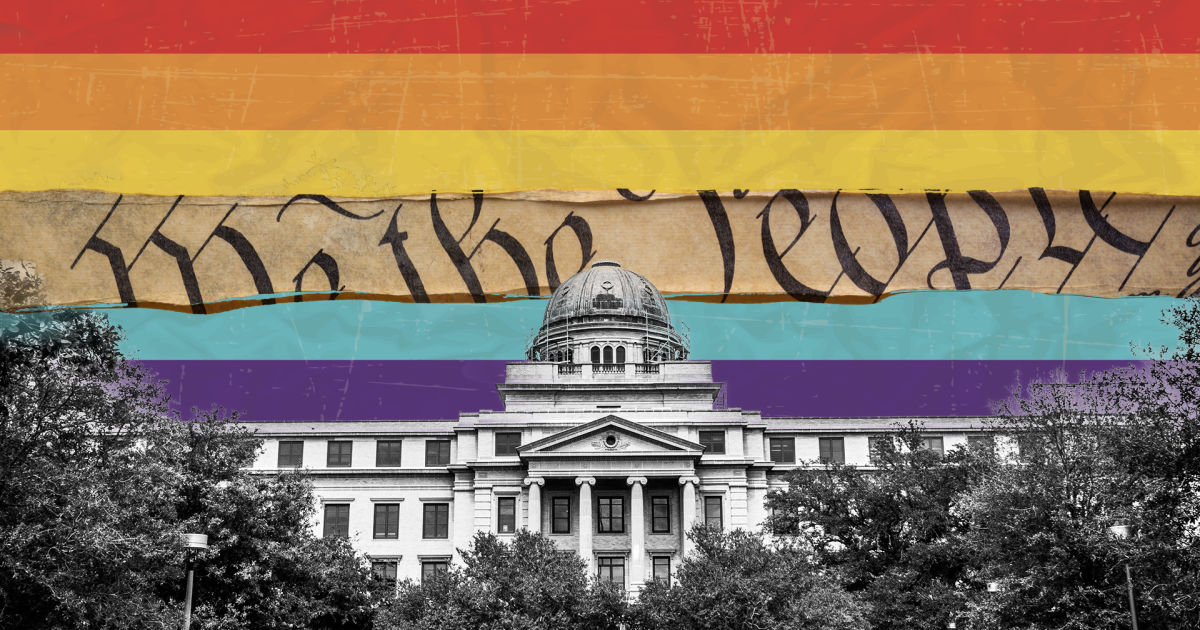
HOUSTON, Texas, March 5, 2025 — The Foundation for Individual Rights and Expression filed a federal lawsuit on behalf of an LGBTQ+ student organization to block a new policy from the Texas A&M University System that bans drag performances on its 11 public campuses — a clear violation of the First Amendment.
FIRE is asking a court in the Southern District of Texas to halt Texas A&M officials from enforcing the drag ban, abruptly adopted on Friday afternoon. The lawsuit is on behalf of the Queer Empowerment Council, a coalition of student organizations at Texas A&M University-College Station and the organizers of the fifth annual “Draggieland” event that was scheduled to be held on campus on March 27.
“We refuse to let Texas A&M dictate which voices belong on campus,” said the Queer Empowerment Council. “Drag is self-expression, drag is discovery, drag is empowerment, and no amount of censorship will silence us.”
Texas A&M students first held “Draggieland” (a portmanteau of “Drag” and “Aggieland,” a nickname for Texas A&M) at the campus theatre complex in 2020, and the event has been held on campus annually ever since. But last Friday, the Board of Regents suddenly voted to ban drag events entirely across all 11 Texas A&M campuses.
“The board finds that it is inconsistent with the system’s mission and core values of its universities, including the value of respect for others, to allow special event venues of the universities to be used for drag shows,” the board’s resolution reads. The regents also claimed that drag performances are “offensive” and “likely to create or contribute to a hostile environment for women.”
“Public universities can’t shut down student expression simply because the administration doesn’t like the ‘ideology’ or finds the expression ‘demeaning,’” said FIRE attorney Adam Steinbaugh. “That’s true not only of drag performances, but also religion, COVID, race, politics, and countless other topics where campus officials are too often eager to silence dissent.”
The regents’ attempts to justify the drag ban as anything other than illegal viewpoint discrimination are feeble. The board admits they want to ban drag on campus because they find it “demeans women,” “promotes gender ideology,” or runs contrary to their “values”—- but the First Amendment squarely protects speech that offends and even angers others. And in all cases, it prevents campus officials from silencing speech because they disagree with the “ideology.” As a taxpayer-funded university system, Texas A&M campuses cannot treat some student events differently simply because they dislike the view being expressed.
“Even putting on an on-campus production of Shakespeare or Mrs. Doubtfire, or taking part in powderpuff, could be banned at A&M if some hostile administrator thinks they ‘promote gender ideology,’” said FIRE senior attorney JT Morris. “But if the First Amendment means anything, it’s that the government can’t silence ideologies they don’t like — real or perceived.”
Title IX’s prohibition on creating a “hostile environment” also does not give public universities the ability to run around the First Amendment. FIRE has long seen efforts to suppress speech on the basis that it might contribute to a “hostile environment” because someone finds it offensive, but if speech can be suppressed because someone believes it is offensive, no speech is safe. The First Amendment does not permit public universities to suppress speech because someone thinks it is inappropriate.
In order to fit the definition of harassment the Supreme Court has established, speech must be “objectively offensive” AND “severe” AND “pervasive.” A once-a-year drag show in an enclosed theatre that requires a ticket to enter doesn’t even come close to satisfying those strict conditions.
“If other students dislike or disagree with Draggieland, the solution is simple: don’t go,” said FIRE attorney Jeff Zeman. “Or they could organize a protest, as students opposing drag have in the past. The First Amendment protects drag and the ability to criticize drag — and it forbids the government silencing the side it disagrees with.”
Finally, the regents’ motion notes that “there are alternative locations for such events off-campus.” But that violates the First Amendment, too. The government cannot censor speech in places the First Amendment protects it, just because a speaker might express themselves elsewhere. “Draggieland” highlights why that principle is so vital: if a student group can’t reach their campus community with their message, then their message can’t fulfill its purpose.
In the face of unconstitutional censorship, Draggieland organizers have remained unbowed. They have announced to supporters that they will hold an on-campus “Day of Drag” protest on Thursday and that they are committed to holding the event even if forced off-campus.
“We are committed to ensuring that our voices are heard, and that Draggieland will go on, no matter the obstacles we face,” the Queer Empowerment Council announced.
The Foundation for Individual Rights and Expression (FIRE) is a nonpartisan, nonprofit organization dedicated to defending and sustaining the individual rights of all Americans to free speech and free thought—the most essential qualities of liberty. FIRE recognizes that colleges and universities play a vital role in preserving free thought within a free society. To this end, we place a special emphasis on defending the individual rights of students and faculty members on our nation’s campuses, including freedom of speech, freedom of association, due process, legal equality, religious liberty, and sanctity of conscience.
CONTACT:
Alex Griswold, Communications Campaign Manager, FIRE: 215-717-3473; [email protected]
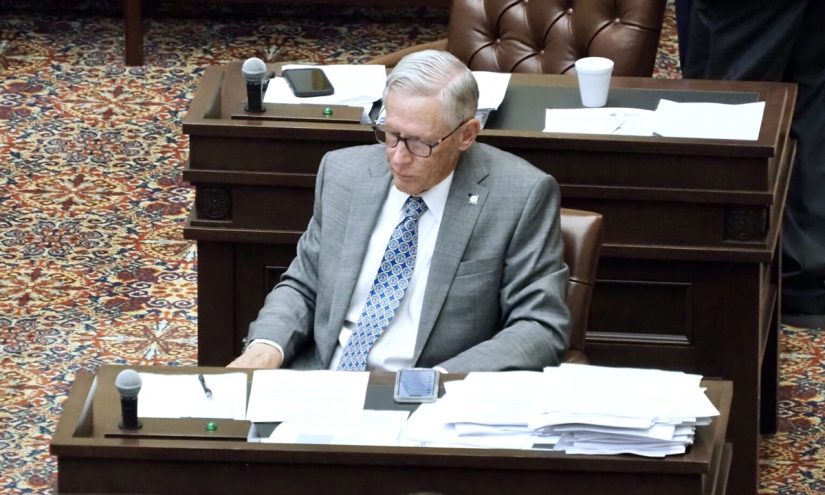
OKLAHOMA CITY – A bill that would ban schools from using corporal punishment on students with disabilities passed the Senate on Tuesday despite concerns it removes local control and could go against parental wishes.
The state Department of Education has already prohibited the practice, but Senate Bill 364 seeks to codify into state law a ban against deliberately causing pain by using physical discipline on students with federally protected disabilities.
“I have never, ever, ever met a parent of a disabled child call for the beating of their child to make them better,” said Sen. Dave Rader, R-Tulsa, the author.
Rader said some of the protected disabilities include deafness, emotional disturbance, intellectual disability, visual impairment or an orthopedic injury.
It defines corporal punishment as the deliberate infliction of pain by hitting, paddling, spanking, slapping, or any other physical force used as a means of discipline.
Rader said corporal punishment could not be used by a school even if a parent agreed to it.
“Perhaps the parent of the child, in most cases, knows best what that child is going to respond to and how the child is going to perform his or her duties in the classroom,” said Sen. Warren Hamilton, R-McCurtain, who voted against the bill.
A U.S. Supreme Court ruling in 1977 allows corporal punishment usage in schools, but leaves it to states to set their own rules.
Traditionally, Oklahoma lawmakers have left those decisions to local districts, but the state Department of Education quietly barred the practice on children with disabilities starting in the 2020-21 school year. A 2017 law also prohibits the practice on children with the most “significant cognitive disabilities.”
During the 2017-18 school year, over 20% of corporal punishments in Oklahoma schools were administered on disabled children, according to federal statistics.
Other forms of discipline are available, Rader said. The bill does not prohibit parents from using corporal punishment, Rader said.
Previous efforts to ban the practice have proven controversial. A similar effort last year cleared the state Senate, but died in the House.
Sen. Shane Jett, R-Shawnee, said Tuesday that banning the practice in schools amounts to “a top down socialist aligned ideological, unilateral divorce between parents’ ability to collaborate with their local schools to establish a disciplined regimen.”
He also said it “is a violation of scripture,” and cited Proverbs 22:15 which he said says “folly is bound up in the heart of a child, but the rod of discipline drives it far from him.”
“There are going to be times when we walk through the valley of the shadow of death, we won’t have to fear evil because your rod and your staff comfort me,” Rader responded.
Sen. Dusty Deevers, R-Elgin, said there could be negative consequences to removing a partnership between parents and local administrators and forcing the removal of a historically necessary and important disciplinary tool for order.
“This is not a blanket ban,” Rader said.
The vote was 31-16.
The measure moves to the House for possible consideration.
Oklahoma Voice is part of States Newsroom, a nonprofit news network supported by grants and a coalition of donors as a 501c(3) public charity. Oklahoma Voice maintains editorial independence. Contact Editor Janelle Stecklein for questions: [email protected].
This audio is auto-generated. Please let us know if you have feedback.
Dive Brief:
Two transgender high school athletes are challenging in federal court President Donald Trump’s Feb. 5 executive order banning transgender girls and women from participating in sports aligned with their gender identity.
Originally filed against a New Hampshire state law that bars transgender girls in grades 5-12 from playing school sports, the lawsuit filed by Parker Tirrell and Iris Turmelle, is expanding to include Trump and the federal departments of justice and education among the defendants.
Tirrell and Turmelle, represented by GLAD Law and the ACLU of New Hampshire, allege Trump’s executive order is discriminatory and violates their federal equal protection guarantees under the 14th Amendment and their rights under Title IX.
Dive Insight:
Henry Klementowicz, deputy legal director at ACLU of NH, said in a Wednesday statement that every child in the state deserves “a right to equal opportunities at school.”
“We’re expanding our lawsuit to challenge President Trump’s executive orders because, like the state law, it excludes, singles out, and discriminates against transgender students and insinuates that they are not deserving of the same educational opportunities as all other students,” Klementowicz said.
The U.S. District Court for the District of New Hampshire previously ordered in September that the two students could play sports on teams corresponding with their gender identities while Tirrell and Turmelle v. Edelblut advanced.
Trump’s “No Men in Women’s Sports” executive order, which is now being targeted by the lawsuit, calls for a recission of all federal funds from educational programs that allow transgender girls and women to participate in girls’ sports. The order also directs the U.S. secretary of education to zero in on Title IX enforcement against K-12 schools and colleges where girls and women are required “to compete with or against or to appear unclothed before males.”
The day after Trump issued that executive order, the U.S. Department of Education opened Title IX investigations into a middle and high school athletics association in Massachusetts, as well as two universities, on the basis that they allowed transgender girls and women to play on teams aligned with their gender identity.
Trump’s order further directs the U.S. Department of Justice to abide by the nationwide vacatur from a recent court order by a federal judge who struck down the Biden administration’s Title IX rule in January. The Biden-era Title IX rule was the first time protections were codified for LGBTQI+ students and employees at federally funded schools under the anti-sex discrimination law.
After that January court decision, the Education Department said it would enforce the Title IX regulations finalized in 2020 during the first Trump administration.
This audio is auto-generated. Please let us know if you have feedback.
The Ohio Senate on Wednesday passed a far-reaching higher education bill that would ban the state’s public institutions from having diversity, equity and inclusion offices or taking positions on “controversial” topics.
The bill, known as SB 1, would also establish post-tenure reviews, ban strikes by full-time faculty, and require colleges to publish a syllabus with the instructor’s professional qualifications and contact information for every class.
Colleges that fail to comply could lose or see reduced state funding.
The state Senate advanced the legislation in a 21-11 vote largely along party lines — all nine Democrats opposed it, as did two Republicans. The vote came just a day after hundreds of critics spoke out against the proposal during an hourslong hearing Tuesday.
The second life of SB 83
Ohio is one of several conservative-controlled states looking to more tightly control their public colleges. But SB 1 is notable for how much it would overhaul the state’s public higher education, including aspects that have traditionally been left to college leaders’ discretion.
For example, colleges would be unable to make institutional statements on any topic the bill deems politically controversial, such as “climate policies, electoral politics, foreign policy, diversity, equity, and inclusion programs, immigration policy, marriage, or abortion.”
The bill would create a mandatoryU.S. history college course with prescribed readings, like theU.S. Constitution and at least five essays from the Federalist Papers.
The state Senate advanced a similar 2023 bill, SB 83, from the same lawmaker, Republican state Sen. Jerry Cirino. Even though Republicans controlled both chambers of the Legislature and the governor’s mansion in Ohio, the legislation never made it to a vote in the House.
But times have changed. Matt Huffman, the previous Senate presidentand a strong supporter of the bill,is now the speaker of the House. Gov. Mike DeWine told local news outlets he was likely to sign the bill, pending a final review, should it make it to his desk.
SB 1 also goes further than its predecessor. The new bill would ban DEI offices and scholarships altogether, while the previous version only sought to prohibit mandatory DEI trainings and offered exemptions. And SB 1 includes a ban on full-time faculty strikes — a provision that was removed from SB 83 in an effort to assuage labor unions and win House approval.
Faculty reactions
Faculty groups and free speech advocates have opposed SB 1 just as they did SB 83. They argue it would chill free speech, hurt recruitment and retention of both students and faculty, and interfere with academic freedom.
The bill calls for colleges to “ensure the fullest degree of intellectual diversity” on campusand cultivate divergent and varied perspectives on public policy issues, including during classroom discussion.
“Nothing in this section prohibits faculty or students from classroom instruction, discussion, or debate, so long as faculty members allow students to express intellectual diversity,” the bill says.
The American Civil Liberties Union of Ohio lambasted the “intellectual diversity” requirements in a statement Tuesday.
“At best, this language is the micromanaging of individual courses and instructors by the General Assembly,” said Gary Daniels, the group’s chief lobbyist. At worst, he said, it will require all sides of every issue to be evenly presented by instructors, “ignoring their First Amendment right to academic freedom.”
Cirino sought to cut off some of those criticisms when he reintroduced the bill as the first measure of Ohio’s new legislative session, which started Jan. 6.
“Senate Bill 1 not only does NOT limit speech or academic freedom, it actually enhances both, but with a requirement that diversity of thought be promoted,” said a Jan. 22 press release from the state Senate.
A representative for the Ohio Conference of the American Association of University Professors spoke out against the proposal in written testimony ahead of the Senate higher education committee’s public hearing Tuesday on the bill. In total, more than 800 people objected to the measure via written testimony.
To grow our economy and keep our system of higher education strong, Ohio must do all it can to attract and retain qualified and committed faculty in all academic disciplines. Senate Bill 1 would instead send an unmistakable message to talented individuals looking to advance their careers in Ohio: go somewhere else.
Jeff Wensing
Vice president of the Ohio Education Association
David Jackson, a professor of Bowling Green State Universityand president of its AAUP faculty chapter,said Ohio-AAUP had submitted a list of suggested amendments — including removing the strike ban — to the committee in early February. He urged lawmakers to work with educators rather than pass the bill wholesale.
“While we disagree with many of the premises that underlie SB 1, we can still be partners to ensure that the foundational principles of our association are not undermined and that Ohio’s public system of higher education can thrive in the years ahead,” Jackson wrote in his testimony.
Other opponents included the Ohio Education Association, Undergraduate Student Governments of Ohio and the American Historical Association, as well as students and faculty in the state.
“To grow our economy and keep our system of higher education strong, Ohio must do all it can to attract and retain qualified and committed faculty in all academic disciplines,” Jeff Wensing, vice president of the Ohio Education Association, said in written testimony.“Senate Bill 1 would instead send an unmistakable message to talented individuals looking to advance their careers in Ohio: go somewhere else.”
Fourteen witnesses from groups like the National Association of Scholars, a conservative education advocacy group, submitted testimony supporting the bill in late January. They praised provisions such as eliminating DEI and requiring the history course.
DEI at Ohio State
Wednesday’s Senate vote on the bill came quickly — the same day it was advanced by the chamber’s higher education committee.
Ohio State University is also undergoing an evaluation of its roles and DEI work, according to a joint statement from university leadership issued the day of the Senate vote.
The review is intended to allow the institution to “make changes if state or federal law requires it or if we decide a different approach is in the university’s best interests.”
“We believe it’s appropriate to be proactive given the policy discussions happening around us,” the statement said. “Changes are almost certainly on the horizon, and the best way to manage change is to be prepared. The proactive steps we are taking now will best position us to continue our work uninterrupted in ensuring that students, faculty and staff of all backgrounds can be successful at Ohio State.”
On February 5, President Trump signed an executive order titled “Keeping Men Out of Women’s Sports.” The order aims to bar transgender women and girls from participating in women’s sports by directing agencies to withdraw federal funding from schools that refuse to comply with the order.
The EO claims that, in recent years, educational institutions and athletic associations have allowed men to compete in women’s sports, which the Trump administration believes denies women and girls equal opportunity to participate in competitive sports, thus violating Title IX. As a result, the EO sets policy to “rescind all funds from educational programs that deprive women and girls of fair athletic opportunities” and to “oppose male competitive participation in women’s sports more broadly.”
With respect to the specific actions ordered, the EO directs the secretary of education to ensure compliance with the court order to vacate the Biden administration’s Title IX rule and to take other actions to ensure that the 2024 regulations do not have effect. It also directs the secretary to take action to “protect all-female athletic opportunities” by setting forth regulations and policy guidance that clearly specifies and clarifies “that women’s sports are reserved for women.”
Notably, the EO further directs all federal agencies to review grants to educational programs and to rescind funding to programs that fail to comply with policy set forth in the EO. Institutions with grant programs deemed to be noncompliant with this order could, therefore, risk losing federal funding for that program.
The EO also seeks quick enforcement by federal agencies. The EO orders the Department of Education to prioritize Title IX enforcement actions against educational institutions and athletic associations that “deny female students an equal opportunity to participate in sports and athletic events.” The Department of Justice is also tasked with providing resources to relevant agencies to ensure “expeditious enforcement” of the policy set forth in the EO.
Finally, the EO directs the assistant to the president for domestic policy to convene both major athletic organizations and state attorneys general to promote policies consistent with Title IX and identify best practices in enforcing equal opportunities for women to participate in sports.
On February 6, the NCAA updated its policy regarding transgender student-athlete participation in response to the EO. According to the NCAA, the new policy limits competition in women’s sports to student-athletes assigned female at birth, but it allows student-athletes assigned male at birth to practice with women’s teams and receive benefits while practicing with them. For men’s sports, student-athletes may participate in practice and competition regardless of their sex assigned at birth or their gender identity, assuming all other eligibility requirements are met.
Institutions should review their policies and practices in light of the EO and the NCAA’s policy change. CUPA-HR will continue to monitor for Title IX updates and keep members apprised of new enforcement under the Trump administration.
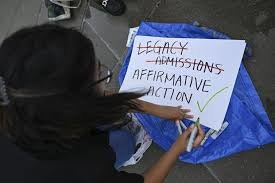
Legacy preferences in college admissions have plummeted to their lowest recorded level, with just 24% of four-year colleges still considering family alumni status in admissions decisions, according to a comprehensive new report from Education Reform Now. The dramatic decline signals a potential end to a controversial practice that critics have long condemned as perpetuating inequality in higher education.
The report, authored by James Murphy, director of Career Pathways and Postsecondary Policy, found that 420 institutions continue to provide admissions advantages to children of alumni, marking a sharp decline from previous years. The practice has seen particularly steep drops since 2015, when nearly half of all four-year colleges considered legacy status. Between 2022 and 2023 alone, 92 colleges abandoned legacy preferences, representing an 18% decrease that coincided with the Supreme Court’s landmark decision to ban race-conscious admissions.
This decline stems from both voluntary institutional decisions and new state legislation. In 2024, California, Illinois, Maryland and Virginia joined Colorado in restricting legacy admissions through state laws. The report indicates that 86% of colleges that ended legacy consideration did so voluntarily, while 14% were required by state legislation. Several more states are expected to introduce similar legislation in 2025.
Legacy preferences remain most entrenched at selective private institutions, particularly in the Northeast. More than half of colleges that admit 25% or fewer applicants still provide advantages to alumni children. The practice is now rare at public institutions, with just 11% still considering legacy status. In 24 states, no public colleges provide legacy preferences at all. New York stands out as having the highest concentration of colleges maintaining legacy admissions, with one in seven U.S. institutions still using the practice located in the Empire State.
The report challenges several common defenses of legacy admissions, including arguments that they help build campus community or are necessary for fundraising. It cites evidence that 76% of colleges successfully foster campus communities without legacy preferences, and questions whether wealthy institutions with multi-billion dollar endowments truly need to “trade admissions advantages for money.”
The analysis also addresses claims that ending legacy admissions could hurt diversity, particularly following the Supreme Court’s affirmative action ruling. The report argues that legacy preferences disproportionately benefit white and wealthy applicants, citing research showing that Asian American applicants face significantly lower odds of admission compared to white applicants with similar qualifications at selective institutions. According to one study, Asian American applicants had 28% lower odds of attending elite schools than white applicants with similar academic and extracurricular qualifications.
The report suggests that Congress could potentially impose additional endowment taxes on universities that maintain legacy preferences while offering reduced penalties to institutions that increase enrollment of Pell Grant recipients, community college transfers, and veterans. This approach would create financial incentives for institutions to abandon the practice.
“The shame of belonging to this group of colleges that think children of alumni have somehow earned an extra advantage in admissions is likely to push more colleges to drop the practice,” Murphy writes. “This is not a club that most colleges belong to or will want to belong to.”
The report also criticizes the Common Application for potentially enabling legacy admissions by requiring all applicants to identify where their parents earned bachelor’s degrees, even though this information is irrelevant for more than three-quarters of colleges. The report suggests that removing this question would be a significant step toward making college admissions more equitable.
“Ultimately, the reason to eliminate legacy preferences is not to achieve some other goal,” the report concludes. “The reason to get rid of them is that they are profoundly unfair and make a mockery of merit. Legacy preferences award some of the most advantaged students an additional advantage in the college admissions process on the basis of ancestry alone.”
Lawmakers in Idaho accused Boise State University officials of skirting a statewide ban on diversity, equity and inclusion during a House education committee meeting Tuesday, according to reporting from Idaho Education News.
Republican legislators questioned Boise State president Marlene Tromp about a sociology certificate program in DEI advertised on the university’s website as well as its Institute for Advancing American Values, the latter of which is described as encouraging “respectful dialogue” about “the issues and values that have shaped America and Americans from all walks of life.”
One representative remarked that the institute “sounds like a continuation of DEI under different labels.”
Tromp said the university had “absolutely not moved something under another name” but added that she’d have to investigate the certificate program more closely.
In December, the Idaho State Board of Education passed a resolution prohibiting “central offices, policies, procedures, or initiatives … dedicated to DEI ideology” at public higher ed institutions. Boise State shuttered two of its student equity centers a week before the vote.
Last April, Congress banned companies from distributing, maintaining or updating a “foreign adversary controlled application,” specifically those “operated, directly or indirectly” by TikTok or its parent company, ByteDance Ltd. As a result, TikTok went dark for about 12 hours two days before Trump, who had previously supported the idea of a TikTok ban, took office. Almost immediately after his inauguration, he issued an executive order halting enforcement of the ban for 75 days, while the administration determines “the appropriate course forward in an orderly way that protects national security while avoiding an abrupt shutdown” of TikTok.
Some experts say Trump’s order falls into murky legal territory, and TikTok’s fate in the U.S. remains unclear. But banning a social media app that 170 million Americans use as a tool for self-expression and self-promotion would have numerous implications for both college students and their institutions. A 2022 study found two-thirds of teenagers were using TikTok to consume a wide range of information, including news, tutorials, entertainment and advertisements, making it a vital recruiting tool for colleges.
“TikTok represents a pivotal transition point between what was the social media–driven higher ed of the last 15 years and now the artificial intelligence–powered, immersive digital future that’s going to define the next decade,” said J. Israel Balderas, an assistant professor of journalism at Elon University and a lawyer specializing in First Amendment cases. “TikTok isn’t just a social media platform somehow caught in this geopolitical battle. It represents a transition point in digital history.”
Last week, Inside Higher Ed asked Balderas five questions about what a TikTok ban would mean for students, faculty and institutions. The interview has been edited for concision and clarity.
1. What are the implications of a TikTok ban for the culture of higher education?
TikTok has become a dominant space for student expression, activism and social engagement. For professors, it also has become a place of research and AI literacy. Losing the platform means that student organizers would lose a mobilization tool. TikTok has played a critical role, not just in campus activism—from political movements to social justice campaigns—but it has also been a way for others to communicate and play a role in the marketplace of ideas.
What’s most concerning to me is the potential chilling effect on student expression. Students will start to question whether other digital spaces will face similar crackdowns. For example, if TikTok can be banned under the guise of national security, what will happen to other foreign-owned or politically sensitive platforms? Will they be next?
Universities would also lose a primary storytelling platform. You have campus life blogs; you have student-run media accounts. TikTok allows institutions and students to shape their narrative in a way that no other platform currently allows.
2. Do you think there’s justification for a TikTok ban?
It depends on how you weigh national security risks versus free speech rights. The Chinese government could potentially use TikTok’s recommendation engine to shape political discourse, suppress content or even promote certain narratives. But we’ve been here before with that. We were here in 1919 with Schenck v. United States and Abrams v. United States that questioned influence from socialists and communists. What we discovered is that the marketplace of ideas theory works and the truth rises.
While the national security argument is valid, why is TikTok being singled out when U.S.-based platforms with equally invasive data practices, like Meta, Google and X, remain untouched? The First Amendment doesn’t protect the companies from regulation, but it does protect Americans’ right to access information.
J. Israel Balderas is a journalism professor at Elon University and a First Amendment lawyer.
3.Could such a ban really be enforced? What might college students do to get around it?
Banning a social media app in a free society is incredibly difficult.
Big tech being so powerful and so close to power in Washington also creates a very gray legal area, because Apple and Google control access to mobile apps. If they refuse to reinstate TikTok, then enforcement becomes a de facto reality even without the government directly blocking access. But what we saw earlier this month, with Trump’s intervention to reinstate TikTok, shows that enforcement can be overridden by executive power. So, it’s unclear how consistently a ban could be applied, but enforcement of a ban is far more complicated than either the courts or Congress can anticipate.
College students are digital natives, and they adapt to these things by bypassing restrictions. They can use VPNs [virtual private networks], which are already widely used in countries with restricted internet laws, like China. Students could also download it from unofficial sources, instead of the traditional app stores. They can also use alternative apps, like the other, increasingly popular Chinese-owned app, RedNote.
Somebody will find an emerging app, especially now in the world of AI, where AI is open source. You can take the backbone of TikTok, and with AI and proper coding you can create the same kind of environment as TikTok. So how many more clones out there would that be, right?
4. How would a TikTok ban shape colleges’ digital literacy efforts in the age of AI?
A TikTok ban would be a blow to digital literacy and AI education. This is the moment when we need to be talking about AI education and what it means for the workforce, students and us as faculty members, who are teaching that it’s not just about facts and knowledge. It’s about teaching students how to ask the right questions and how to connect the dots.
TikTok opens the door to asking students what it is the algorithm knows about you, if that’s an ethical thing and if they want it. It’s not about shaming students for their choices. It’s about teaching them to think critically about what they’re doing and then letting them decide what it means for their lives and relationships.
If the government can decide what content is good or bad for the population, we’d have to rethink what it means to have AI literacy in the curriculum.
5. TikTok is caught in a geopolitical crossfire. Is there a teachable moment in all of this?
The fact that we are having these conversations is the best part of this entire fiasco. Because students are questioning if the government can really do these things. What about the future? What about AI? Will the government be able to say that it’s not suppressing speech, but just suppressing the person who’s writing these codes or the person who’s putting these algorithms into the marketplace? Students are at least trying to figure out what is the role the government will play going forward when it comes to ideas that are not popular.
If they’re being more critical about those things, then as a professor, I’ve done my job.