History often portrays social change as the work of seasoned leaders, elected officials, or famous intellectuals. Yet again and again, it is young people—often teenagers with little formal power—who ignite movements that reshape institutions and force nations to confront injustice. Long before they could vote, hold office, or even graduate, these teens recognized wrongs that adults had normalized and acted with courage that altered the course of history.
Among the most consequential examples in U.S. education history is Barbara Rose Johns, a 16-year-old high school student whose leadership in 1951 helped set in motion events that would culminate in Brown v. Board of Education and the formal end of legalized school segregation.
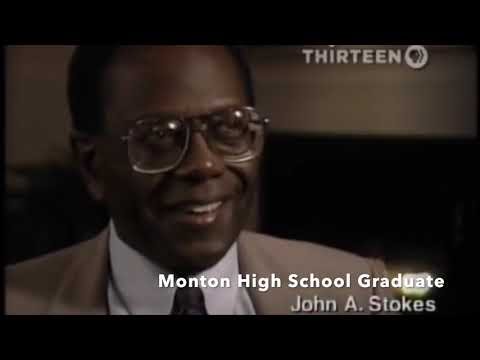
In the spring of 1951, Johns was a junior at Robert Russa Moton High School in Farmville, Virginia. The school, designated for Black students under Jim Crow law, was overcrowded and severely underfunded. Students were taught in makeshift tar-paper shacks without adequate heat. Textbooks and supplies were outdated, and facilities bore little resemblance to those at the nearby white high school. For years, parents and community leaders had petitioned local officials for improvements, but their appeals were ignored.
Johns concluded that waiting for adults or authorities to act was futile. Acting largely on her own initiative, she secretly organized a student strike. On April 23, 1951, more than 450 students walked out of their classrooms. Johns had planned an assembly in advance, arranging for a speaker and framing the protest not as a request for cosmetic improvements but as a challenge to the underlying injustice of segregation itself. At just 16 years old, she demonstrated a sophisticated understanding of how institutional inequality operated and how public action could force change.
The strike quickly attracted attention beyond Prince Edward County. It led to involvement from the NAACP, including attorneys Spottswood Robinson and Oliver Hill, and later Thurgood Marshall. What began as a protest against unsafe and unequal facilities evolved into a direct legal challenge to segregated schooling. The resulting case, Davis v. County School Board of Prince Edward County, became one of the five cases consolidated into the Supreme Court’s 1954 decision in Brown v. Board of Education, which declared that “separate educational facilities are inherently unequal.”
The personal consequences for Johns were severe. She and her family faced threats and intimidation, and she was sent to live with relatives outside Virginia for her safety. For decades, her role received relatively little public recognition, even as the Brown decision became one of the most celebrated rulings in American history. Yet without her initiative, one of the central cases behind Brown might never have existed.
Barbara Johns’ story underscores a broader truth about social change: teenagers are not merely passive recipients of policy decisions, especially in education. They experience institutional inequality firsthand, and when they organize, they often articulate moral truths that adults have learned to tolerate or rationalize. From desegregation to contemporary student movements challenging unequal funding, surveillance, gun violence, and climate inaction, youth activism has repeatedly forced institutions to confront contradictions between democratic ideals and lived reality.
More than seventy years after the Moton High School strike, American education remains deeply unequal. Schools are still segregated by race and income, facilities vary dramatically by zip code, and access to opportunity is uneven. Johns’ legacy remains relevant precisely because the conditions that provoked her action have not fully disappeared. Her story challenges educators, policymakers, and communities to ask why it so often falls to young people to demand justice—and why their leadership is so frequently overlooked.
Barbara Rose Johns did not wait for permission to make history. She organized, resisted, and changed the trajectory of American education while still a teenager. In remembering her, we are reminded that meaningful change often begins not in boardrooms or legislatures, but in classrooms where students decide that injustice is no longer acceptable.
Sources
Barbara Rose Johns, Wikipedia.
Smithsonian National Museum of American History, “The Moton School Strike, 1951.”
Library of Congress, Civil Rights History Project, Prince Edward County and Davis v. County School Board.
National Park Service, Robert Russa Moton High School National Historic Landmark.
Kluger, Richard. Simple Justice: The History of Brown v. Board of Education and Black America’s Struggle for Equality.