
Tag: began

  • 5 years after transcript withholding bans began, college students face fewer obstacles but advocates worry about enforcement

    5 years after transcript withholding bans began, college students face fewer obstacles but advocates worry about enforcement

    by Felicia Mello, The Hechinger Report
    December 23, 2025

    OAKLAND — In 2020, California led the nation in outlawing transcript-withholding, a debt collection practice that sometimes kept low-income college students from getting jobs or advanced degrees. Five years later, 24 of the state’s 115 community colleges still said on their websites that students with unpaid balances could lose access to their transcripts, according to a recent UC Merced survey. 

    The communications failure has been misleading, student advocates said, although overall, the state’s students have benefited from the law.  

    It “raises questions about what actual institutional practices are at colleges and the extent to which colleges know the law and are fully compliant with the law,” said Charlie Eaton, a UC Merced sociology professor who led the research team that conducted the survey in October. 

    California community colleges say they are following the law, which prohibits them from refusing to release the grades of a student who owes money to the school — anywhere from a $25 library fine to unpaid tuition. The misinformation on some college websites is a clerical problem that campuses have been asked to update,  the California Community Colleges chancellor’s office said in an emailed statement.   

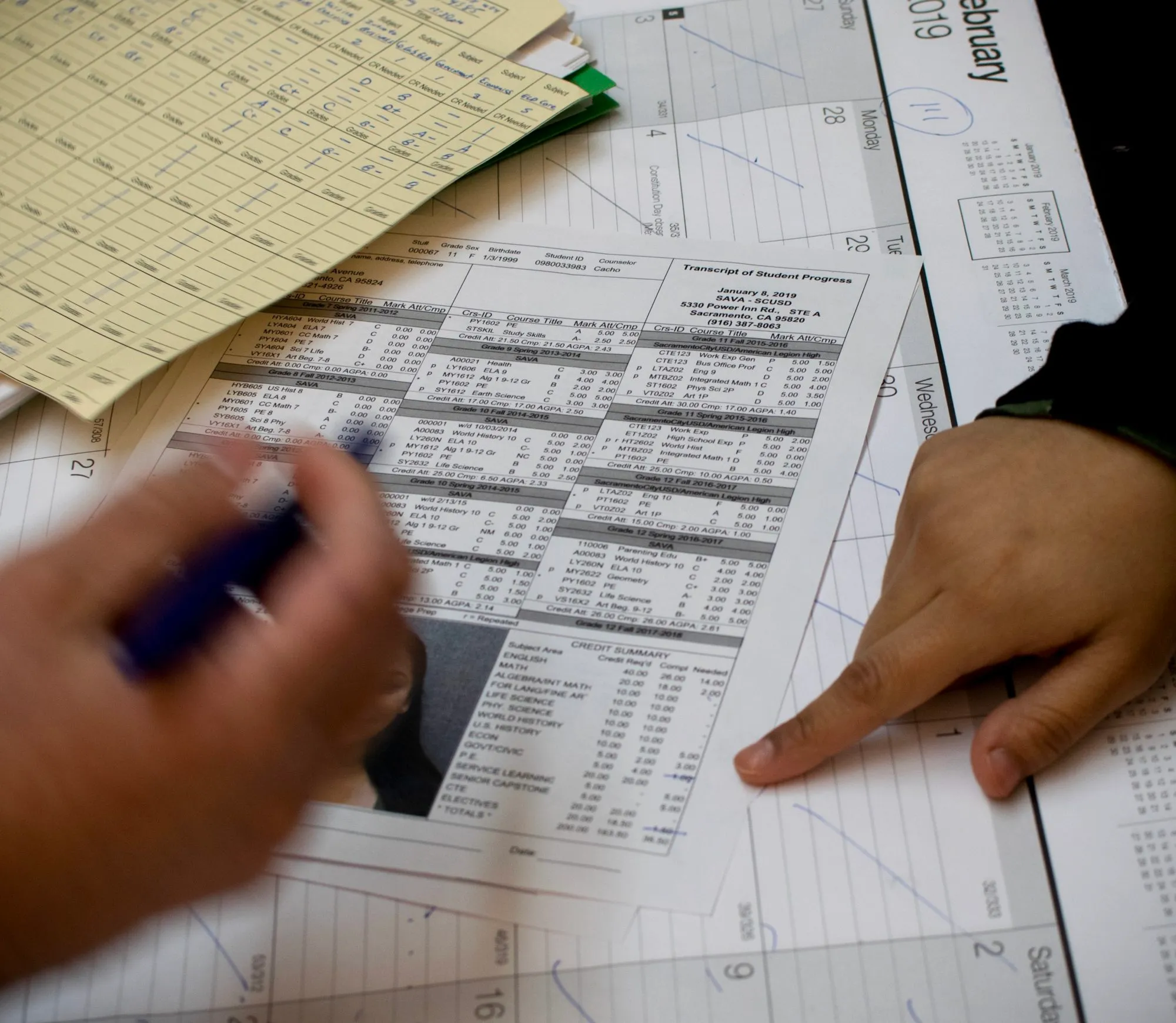
    Without an official transcript, students can’t prove they’ve earned college credits to admissions offices elsewhere or to potential employers. Millions of students nationwide have lost access to their transcripts because of unpaid fees, according to estimates from the higher education consulting firm Ithaka S+R.  

    Student advocates argued that the practice made little money for colleges, while costing graduates opportunities that could help them pay back their debts. 

    California lawmakers agreed; in 2019, they passed legislation that took effect on Jan. 1 2020, barring colleges from using transcript holds to collect debts. 

    At least 12 other states have followed California’s lead, passing laws limiting or banning colleges from withholding transcripts. 

    A similar but less stringent federal rule approved during the Biden administration took effect last year. 

    The new rules have raised awareness about colleges’ debt collection practices and inspired some to find ways to help their students avoid falling behind on their payments in the first place or to pay off what they owe — including by forgiving their debts.

    Related: Interested in innovations in higher education? Subscribe to our free biweekly higher education newsletter.

    Transcript withholding was never an especially effective collection tool, researchers have found. One 2018 study estimated that Ohio’s public colleges only netted only $127 for each transcript they withheld.

    Colleges and universities, however, argued that withholding transcripts was one of the few ways they had to prevent students from bouncing among institutions and leaving unpaid bills in their wake. Some use another tactic, blocking them from registering for new courses until bills are paid. 

    When colleges choose to withhold transcripts, the burden falls more heavily on low-income students and students of color, according to the American Association of Collegiate Registrars and Admissions Officers. Often those students accrue debts when they withdraw partway through a course, leading the college to return part of their financial aid to the federal government and charge the bill to the student. 

    In states with laws limiting transcript withholding, many colleges have begun communicating earlier and more often with students about their debts and offering flexible payment plans, said Elizabeth Looker, a senior program manager at Ithaka S+R. Some have added financial literacy training or required students with unpaid bills to meet with counselors. 

    Eight public colleges and universities in Ohio went further, offering a deal to former students with unpaid balances: Reenroll at any of the eight, and get up to $5,000 of the outstanding debt forgiven. Called the Ohio College Comeback Compact, the program, which began in 2002 and concludes this fall, was open to former students who had at least a 2.0 GPA and had been out of school a year or more.

    The program was designed to give a second chance to students whose educations stalled because of events outside their control, such as losing a job in the middle of the semester, said Steve McKellips, vice president for enrollment management at the University of Akron.

    Since the Ohio College Compact’s inception, 79 students have returned to the university under the program, at a cost to the state of $54,174 in debt forgiven. The university netted five times that, or $271,924, in additional tuition, McKellips said. More than 700 students have used the compact to reenroll, according to Ithaka S+R, which helped coordinate the program and is studying the results.

    “I think sometimes people have this image of somebody walking away from a tuition bill because they just don’t care,” McKellips said. “But sometimes there’s just a boulder in the way and somebody needs to move it. Once the boulder was moved and they could move forward, we’re finding them continuing happily along the way they always intended to.”

    Related: City University of New York reverses its policy on withholding transcripts over unpaid bills 

    Another California bill, introduced this year, would have given students a one-time pass to register for courses, even if they owed a debt. It failed after the University of California, Cal State and many private colleges and universities opposed it. 

    The University of California cited expected cuts to federal and state funding as one reason it opposed the bill. “UC believes that maintaining the ability to hold registration is essential for its ability to reasonably secure unpaid student debt,” UC legislative director Jessica Duong wrote to lawmakers.

    Cal State spokesperson Amy Bentley-Smith said that Cal State wanted a flexible approach to debt collection and that campuses had started eliminating registration holds for minor debts such as parking tickets and lost library books. 

    “Students are able to move forward with their enrollment even with institutional debts in the low hundreds to the low thousands of dollars, depending upon the university,” she said.

    Supporters of the failed bill — which also would have barred colleges from reporting a student’s institutional debt to credit agencies — said curbing aggressive debt collection doesn’t just help low-income students; it speeds up the training of workers in industries crucial to the state’s economy.

    “Schools think about these institutional debts in a way that is very penny-wise and pound-foolish, and it’s preventing people from participating in the economy,” said Mike Pierce, executive director of Protect Borrowers.

    Related: Colleges fight attempts to stop them from withholding transcripts over unpaid bills

    Annette Ayala of Simi Valley, hoping to become a registered nurse,  took her for-profit college to court to force it to comply with California’s debt collection law.  

    She had earned her vocational nursing license from the school, the Professional Medical Careers Institute, and wanted to continue her studies to become a registered nurse. But the college refused to release her transcript —  citing a $7,500 debt that Ayala argued in court records she did not owe — and without the transcript she could not apply to other colleges. 

    In her case, California’s Bureau for Private Postsecondary Education, which regulates for-profit colleges under the state’s Department of Consumer Affairs, cited her former school for violating the state’s transcript-withholding law.

    The college was fined $1,000 and ordered to update its enrollment agreement. The school forgave the debt it said Ayala owed. It’s the only case in which a school has been cited for withholding a transcript since the bureau started monitoring compliance with the law more closely two years ago, said Monica Vargas, a spokesperson for consumer affairs. 

    School officials had been unaware of the California law at the time Ayala sued, the school’s controller, Joshua Taylor, said, and have since updated their catalog to comply with it.

    With her vocational nursing license, Ayala has been working in home health care. Now that she has her transcript, she’s applying for RN programs, and said her salary would roughly double once she has the new degree, allowing her to save for the future and help her son pay for college.

    “You’ve got to give people the chance to get through their program and pay their debts as they’re working,” she said. “You can’t hold them back from being able to make top dollar with their abilities to pay back these loans.”

    Contact editor Lawrie Mifflin at 212-678-4078 or [email protected]

    This story about student debt and transcript withholding was produced by The Hechinger Report, a nonprofit, independent news organization focused on inequality and innovation in education. Sign up for our higher education newsletter. Listen to ourhigher education podcast.

    This <a target=”_blank” href=”https://hechingerreport.org/5-years-after-california-banned-holding-college-students-transcripts-hostage-for-unpaid-debt-some-colleges-neglect-the-law/”>article</a> first appeared on <a target=”_blank” href=”https://hechingerreport.org”>The Hechinger Report</a> and is republished here under a <a target=”_blank” href=”https://creativecommons.org/licenses/by-nc-nd/4.0/”>Creative Commons Attribution-NonCommercial-NoDerivatives 4.0 International License</a>.<img src=”https://i0.wp.com/hechingerreport.org/wp-content/uploads/2018/06/cropped-favicon.jpg?fit=150%2C150&amp;ssl=1″ style=”width:1em;height:1em;margin-left:10px;”>

    <img id=”republication-tracker-tool-source” src=”https://hechingerreport.org/?republication-pixel=true&post=114067&amp;ga4=G-03KPHXDF3H” style=”width:1px;height:1px;”><script> PARSELY = { autotrack: false, onload: function() { PARSELY.beacon.trackPageView({ url: “https://hechingerreport.org/5-years-after-california-banned-holding-college-students-transcripts-hostage-for-unpaid-debt-some-colleges-neglect-the-law/”, urlref: window.location.href }); } } </script> <script id=”parsely-cfg” src=”//cdn.parsely.com/keys/hechingerreport.org/p.js”></script>

    Source link

  • UK International Education Strategy – how it began and what should come next

    UK International Education Strategy – how it began and what should come next

    • By Ruth Arnold, Executive Director of External Affairs, Study Group and cofounder of the #WeAreInternational campaign

    This weekend, an American president stood on the tarmac by Air Force One and took questions from reporters. One picked on his current legal confrontation with one of the world’s most famous universities and one older than the United States itself, Harvard.

    ‘Part of the problem with Harvard,’ he said, ‘is they are almost 31% of foreigners coming to Harvard… it’s too much, because we have Americans that want to go there. No foreign government contributes money to Harvard. We do.’ Harvard’s single sentence response on X was clear, ‘Without its international students, Harvard is not Harvard.’ Within a day, the State Department had paused all US student visa appointments globally – affected students around the world immediately began rethinking their options.

    Here in Britain, politics around international students has less of the overt drama of the US. Yet even as the Immigration White Paper stepped back at the eleventh hour from the most extreme measures to curtail the Graduate Visa, a link between efforts to reduce immigration statistics and to use student levers to do so is now explicit. British universities’ pride in reaching the government’s own target of 600,000 overseas students is no longer simply applauded as a success for regional economies, research capacity and soft power, but also seen as a contributor to political risk. And if we think political narratives in the US won’t travel across the Atlantic, we’ve not understood the world we now live in.

    ‘The Overseas Student Question’ – taking a long view of UK international education strategy

    A few months ago, a friend gave me a book found in an Oxfam shop. Published in 1981 by the Overseas Student Trust, The Overseas Student Question: Studies for a Policy promised a fresh look at a growing debate – what were the costs and benefits of welcoming international students, the implications for foreign policy, the importance for ‘developing countries’ of study abroad? And what were the requirements of students themselves?

    First, though, I wanted to understand who was behind this book. The Overseas Student Trust was founded in 1961 as an educational charity by a group of leading transnational companies, many of whom sponsored international students to come to the UK – Barclays, BP, ICI, Shell and Blue Circle amongst them. There had also been a companion report, Freedom to Study, and an earlier National Union of Students (NUS) survey called International Community?. I noted the ominous question mark in the title and a link to the founding of the UK Council for Overseas Student Affairs. The author and editor was Lord Carr of Hadley – a Conservative politician, pro-European former Home Secretary and such an able reformer that when Margaret Thatcher became Prime Minister and didn’t offer him a role as Foreign Secretary, she chose not to offer him an alternative to avoid having such a capable opponent in her ranks.

    Lord Carr began with a recognition of policy failure and a need to do better: ‘The overseas student question has generated more heat than light in the recent past and therefore nothing but good can come from a long, cool look at its various aspects.’ Then as now, nobody was clear where in government international student policy should sit. For 30 years it had been led by overseas departments of state, and delegated to the British Council they funded. Yet the policies which actually impacted students were found ‘in the Department of Education and Science in respect of tuition fees, and the Home Office as regards immigration and employment’.

    There was also a shortage of reliable data to inform decisions, and it was nearly impossible to calculate their political or even trading benefits. These were ‘so far off in time that the link between cause and effect can scarcely be recognised, and the case for overseas students is thus the victim, because unfortunately in politics the short-term tends to preempt the long-term, and the urgent usurps the place of the important.’

    So Lord Carr pulled in the heavyweights of his day to make a case for the value of international education to government. In addition to the Department of Trade and CBI, the Chairmen of more than forty of Britain’s largest exporters and firms with interests abroad wrote letters to make plain the importance to their future success of ‘the foreign national who has had some of his education in Britain’. Leading industrialists argued for ‘as large a population of international students as possible in the years ahead.’

    Yet Lord Carr recognised a need for balance between national priorities and the preservation of institutional autonomy in the process of selection and admissions, and he had doubts about the ability of government to make such decisions alone. ‘These are not matters to be laid solely at government’s door. Industry and the educational world should be involved, both in the thinking and the implementation.’

    The Labour beginnings of international cross-subsidy

    The International Student Question was written at a point of inflection. In 1963, the Robbins Committee on Higher Education described subsidies to international students as a form of foreign aid, estimated to be £9 million for 20,000 students. In 1966 it was a Labour government that first announced a differential fee, £250 compared to £70 for home students, and in 1969 Shirley Williams argued for a more restrictive policy on international students.

    All this led to a change in dynamic from self-interested charity to overt trade. So Lord Carr made a new plea for ‘careful thought about how we provide for overseas students once they have arrived in this country,’ noting that students were ‘no longer subsidised objects of charity’ but have become the purchasers of services at £5000 per year. He quoted the Chairman of ICI – ‘caring pays because overseas students will expect value for money.’

    This is not to say international education had lost all ideals. Carr, a post-War Private Secretary to Anthony Eden, saw a greater prize – ‘The British experience must be seen in the wider context of the international mobility of students which is one of the foundation stones of a peaceful, stable and interdependent world.’

    International Education Strategies Globally

    Which brings us back to our own times, where questions of peace and interdependence through international mobility still matter.

    The UK refresh of the International Education Strategy is now overdue, and it will no doubt focus heavily on national priorities, on growth and innovation, inward and outbound mobility, global partnerships, transnational provision and terminology beloved of the FCDO, ‘soft power’. And yet hard forces are at play. It isn’t just a question of global trade and avoiding conflict – we now live in a multipolar era in which former colonies and adversaries are the burgeoning economic powers of the future. Our government does not act in isolation or have the ability to control the choices made by sponsors, families and students a world away. While international education strategy is written in Whitehall, the forces that drive it in actuality are global.

    Home thoughts from abroad

    A few years ago, I gave evidence to a parliamentary committee considering the local economic impact of international students with the then mayor of South Yorkshire and now a Labour government minister, Dan Jarvis. It wasn’t difficult for Dan to say what an influx of cash meant to a region like ours or the importance of cross-subsidy to research collaboration with industry. On his doorstep was a major new research campus on the formerly derelict waste ground of Orgreave. Inspiration had come from a Vietnamese PhD student on placement in a struggling local manufacturing firm. Her insights addressed live problems and the company won multiple orders against global competition, securing jobs. South Yorkshire wanted more of this.

    But what of that student’s home country? If we want our international education policies to reflect our own times rather than the age of Empire, we need take an interest in her side of the story too. Today, Vietnam is transformed from the war-torn nation that the student and her family had left behind. In common with much of ASEAN, it is now going through its own efforts to lift manufacturing capacity and transform its economy through research, education and high-value tech manufacturing. It’s got more in common with post-industrial S Yorkshire than many realise.

    Today’s Vietnamese students travel to traditional study destinations, but global education is changing. Vietnam is keen to emulate the successes of Malaysia and Singapore as a major Asian education hub. The aim is for partnerships and an education system that will lift more of its young population and so transform its prospects. We might take our own lessons from that.

    International education is increasingly seen as a key driver of global development. China and India, the two great source countries for traditional study destinations, are actively building their own domestic capacity. China invests 4% of its GDP in its universities, leading to a significant increase in research output, global rankings, and international collaborations, and it is now actively seeking to attract students and scholars from overseas, including through full and partial funding for undergraduate and postgraduate studies. Meanwhile, India’s growing reputation as a global education hub, coupled with initiatives like the ‘Study in India’ programme, is boosting its appeal. Fifteen foreign universities are opening campuses in India this year, including the Universities of Southampton and Liverpool.

    The so-called Big Four study destinations – the UK, America, Canada and Australia are now increasingly seen as the Big Ten and counting. Korea, Japan, Malaysia and Thailand are seeing the possibilities to lift their own institutions and economies by persuading talent and investment to stay closer to home. The Middle East is pursuing similar aims. For many students, the lure of the West and its freedoms continues, but it is no longer the only aspirational option, whatever those countries’ International Education Strategies say.

    In search of a double win

    One of the great challenges across the world is youth unemployment and underemployment, including among graduates. As nations all compete to move up the value chain and labour markets navigate headwinds of trade restrictions and AI disruption, old certainties about returns on higher education are taking a hit.

    International Education Strategies need to find a sweet spot, and the UK government is aiming for just that. One that meets both national and international needs and desires, which lifts local communities and sustains universities, while equipping intrepid young people across the world with the degrees and cultural agility that comes from living and working overseas, fluent in what is still the dominant language of global commerce and much innovation.

    The challenge for the International Education Strategy and its authors is to speak to more than their own ministers and domestic audiences. We should learn from the US. The news of an immediate threat to revoke international student visas at Harvard made its way around the world within hours. Universities in Hong Kong, China and Malaysia offered unconditional offers to ‘Harvard refugees’, a term worried international students had themselves used on social media. The UK has form here too. Negative rhetoric and the loss of post-study work led to a calamitous fall in international students and a brutal loss of trust. We don’t want to go back to that.

    What we need now is something better. A strategy which acknowledges both sides of an equation, what is right for the home nation, but also improves the lives and opportunities of students from around the world. Lord Carr was right. At a time of global change and complexity, knowledge and those who seek and add to it cannot be contained behind borders. The next British International Education Strategy should honour and do right by all who contribute to global education, our students and our academics. It should enable our universities to play a full part in both the success of their own communities and of the world. This is not a matter of funding alone, but of education and identity. Let’s hope it succeeds. After all, higher education is not an island; we are international.

    Source link