Tag: belonging

  • Liberating the library to foster student belonging

    Liberating the library to foster student belonging

    • By Dr Steve Briggs, Director of Learning and Teaching Excellence, University of Bedfordshire.

    There have been growing discussions, and the emergence of corroborating evidence, related to how a sense of belonging affects not only the student experience but also attainment, retention and well-being. As per the Office for Students’ (OfS) 2025-30 vision, university environments play a critical role in the student experience and have real potential to impact on belonging. Accordingly, how environments can promote a positive student experience and foster belonging should be of utmost strategic importance to university leaders.  

    Given their central position, university library environments have a significant potential to positively (or negatively) affect students’ sense of belonging. Library spaces, learning materials (both physical and digital) and operational processes all have the potential to individually or cumulatively foster a culture of belonging.

    I propose that there are traditional assumptions and modus operandi inherent with university libraries that may inadvertently be to the detriment of student belonging. While such practices are not necessarily straightforward to change (owing to issues around security and/or cost), here I consider more radical approaches that a library might employ to foster student belonging. Across all the following options, it is imperative that students are involved in re-imagination projects through facilitating co-creation and user experience design. This will serve to ensure that changes actually reflect student needs rather than becoming well-intentioned but misguided attempts to enhance belonging.

    Minimising physical barriers. Libraries have traditionally used security gates to control access. This means that most students’ first experience of a library will be a barrier. For many, this can feel intimidating, send messages of limited trust and so potentially feel very unwelcoming. Navigating barriers may also be particularly challenging for some students with a disability. Historically, gates were seen to be an effective means of protecting valuable library collections. However, the use of radio frequency identity tags, CCTV and enhanced staff monitoring will potentially serve the same purpose. Further, gates may provide a false sense of security, given that any library that has opening windows could easily provide an alternative means for library resources to be illicitly removed. As a result of many university libraries increasingly moving to a digital-first purchasing, the size and status of physical collections is likely to progressively diminish. Where there are very high-value items, it might be more appropriate to restrict access to a dedicated section rather than the entire building. Removing gates could save money in terms of security gate management and maintenance costs; it is also in keeping with the approach being increasingly adopted by public libraries, such as Luton Central Library.

    Relational customer service. Central to belonging are positive relationships between students and university staff. This may be at odds with transactional library models that focus on efficiency and rapid issue resolution, which can lead to students feeling like a number rather than individuals. Relational customer service is based on seeking to understand individual student needs (for example, is a student an employee, parent or carer?) to tailor service delivery accordingly. In doing so, they might provide a positive (and hopefully memorable) experience. As a result, students feel more valued, fostering ongoing engagement with library services. As per the Mental Health Charter, such approaches can help to combat feelings of loneliness and isolation. How library leaders can positively disrupt any prevailing transitional approaches and move to more relational working practices should be carefully considered when planning staff development.

    Simplified navigation. Complicated library resource classification schemes may be intimidating for students and a barrier to feelings of belonging. Facilitating social annotation may serve to help students better understand and navigate a library collection. By way of an example, students might work together to annotate a journal article virtually and be encouraged to include signposts to relevant library resources. There are dedicated platforms available that facilitate social annotation, as outlined by Cornell University. Likewise, the location of physical library stock could create unanticipated issues around belonging. For example, housing certain subject collections next to social learning spaces might be more conducive to promoting belonging when associated courses have the greatest emphasis on group work. Including students in the cataloguing and organisation of library stock would serve to increase awareness of how design could better promote belonging.

    Trust-based borrowing. Members have routinely needed to check learning materials out of a library. Whilst this is necessary in order to manage a library collection, there may be situations when students are very concerned about being seen to borrow certain resources or knowing their borrowing activities are being recorded. For example, a student might want to borrow materials that allow them to explore their sexuality but conflict with their religious status. In such instances, libraries may consider removing the need to check certain stock out of the library and instead operate on a ‘trust’ basis that materials will be returned.

    Blended learning enabled. Historically, individual study carrels were synonymous with libraries. Over time, there have been reductions in carrels to accommodate social learning spaces. Given the emergence of blended learning and remote working, students are increasingly meeting remotely with lecturers and peers online outside of scheduled sessions. Practically, library users are increasingly going to need access to soundproof spaces (such as individual meeting pods) to be able to meet virtually with classmates or tutors without disturbing other library users. Such implications for redesigning library spaces have previously been explored by Research Libraries UK and will need to remain an ongoing consideration for library leaders. Without such facilities, students may feel unable to fully engage in blended learning while working in a library, in turn undermining their sense of belonging.    

    Child-friendly. Public libraries will typically arrange regular programmes of activities for children and their families, especially during school holiday periods. In contrast, universities have historically been reluctant to allow students to bring their children onto campus, including into library spaces. This presents a major barrier for those with parenting or caring responsibilities. Universities currently take quite different positions in terms of allowing children into buildings. Increasingly, institutions are starting to allow students to bring children into libraries for a short-term visit and with potentially some restricted access. In contrast, select universities, including Surrey and York, have introduced family study rooms to allow students to bring children onto campus for longer periods, but these are currently exceptions rather than the norm. Were such facilities to be staffed, this could provide work experience opportunities for students studying health and social care or primary education courses.

    Commuter-ready. Traditionally, libraries have been concerned about students eating and drinking due to the risk of damage to stock and learning spaces. More recently, this position has started to soften. In light of the growing number of commuter students, access to kitchenette facilities on campus is increasingly in high demand. While examples of such provision exist within libraries, this is yet to become a standard feature of university libraries. Similarly, commuter students will need ready access to device charging stations and safe places to store items. Given the extended opening hours offered by libraries, these would be a logical place to host such facilities.

    Wellbeing-centred. Examples of traditional university library learning spaces include quiet or silent areas, social learning zones, reading rooms, group rooms, presentation rooms and computer suites. There are examples of selected university libraries expanding the range of learning spaces to meet the wellbeing needs of users. One such example is the creation of sensory spaces, which may be restricted to students with disabilities or open to all users. A second example could be the provision of exercise equipment within libraries. Such provisions would promote positive well-being, a key condition for the belonging dimension of the ‘Live’ module of the Mental Health Charter. 

    Civic centrepiece. The Secretary of State has previously highlighted that enhancing the civic role of universities was a priority. This could involve opening up library spaces to members of the local community. In addition to civic duty, opening up libraries may also support belonging. The progressive increase in the number of students who have caring responsibilities may mean that students would feel more supported by their institution, and in turn gain a great sense of belonging, should they be able to being dependents with them to university libraries. 

    Considering the current financial challenges facing the UK higher education library sector, it is reasonable to expect that any of the aforementioned actions would need to be staggered, potentially over several years, within many institutions. Accordingly, library leaders should be developing long-term student belonging strategies with clearly identified and connected work plans to ensure that there is a belonging ‘golden thread’ that links phased library developments and, in turn, ensures a coherent future library experience.

    I would like to acknowledge discussions with Janine Bhandol, Sofia Mavrogeni (Academic Liaison Librarians at the University of Bedfordshire) and Carly Ramirez-Herelle (Head of Library Services at the University of Bedfordshire) related to library futures which helped to inform this article.  

    Source link

  • A Blueprint for College Students’ Sense of Belonging

    A Blueprint for College Students’ Sense of Belonging

    A Dr. Terrell L. Strayhornfew years ago, Liu (2023) published, “Everyone is Talking about ‘Belonging’” in The Chronicle of Higher Education. Her opening lines were perennial: “It’s everywhere. College t-shirts, notepads, and posters proclaim, “You Belong!” That was true then and it still rings true today. Indeed, belonging is proudly displayed on a larger-than-life sign at Kent State’s library. It’s part of wayfinding signage at University of Washington and LeMoyne-Owen College. It’s a button at William & Mary. A landing page for student-facing websites at University of Michigan and Amherst College, just to name a few. It’s a cabinet-level position at Belmont University, Harvard University, and University of Massachusetts Boston. 

    There can be no question that this reflects a growing infrastructure to support belonging for all faculty, staff, and students in higher education. Despite these shifts and scaling of efforts, “no one has perfected a blueprint for belonging,” Liu concluded. That’s likely because though everyone is talking about it, few seem to know what to do about it. This is the topic we took to task in “Fostering Healthier Campuses: Applying Sense of Belonging Theory to Student Affairs Research and Practice” at the recent annual meeting of NASPA–Student Affairs Administrators in Higher Education. 

    2025 NASPA CONFERENCE

    NASPA brought together over 6,600 student affairs professionals from across the country to New Orleans, Louisiana for connection, reflection, and renewal, three anchors of this year’s theme. Being in “The Big Easy” is significant according to NASPA President and long-time student success champion, Dr. Amelia Parnell, who shared on LinkedIn: “I’ll tell anyone that student affairs professionals are some of the most thoughtful people in higher education and our time together in New Orleans confirmed it for me again.The 5-day annual meeting consisted of keynote speakers, sponsored receptions, and dozens of educational sessions and programs. Interestingly, dozens of conference sessions, like ours, had “belonging” somewhere in the title, according to NASPA’s mobile app.  

    Likely a testament to the urgency of the moment and relevance of the message, our 50-minute session was standing-room only. Typical of what happens when we join forces, fueled by our commitment to a shared mission, we stood on business and spoke to everyone’s mind straight from the heart in ways that would renew many souls. At one point, Terrell exclaimed, “Belonging’s a feeling so it can’t be fabricated, faked, or funked. It must be built…but building it can’t break us!” Builders need blueprints and we offered one using belonging theory as a guide, detailing how to move from having good intentions to making systemic change, from talking about belonging to creating conditions for it where all students, faculty, and staff truly feel it, just the way they are.

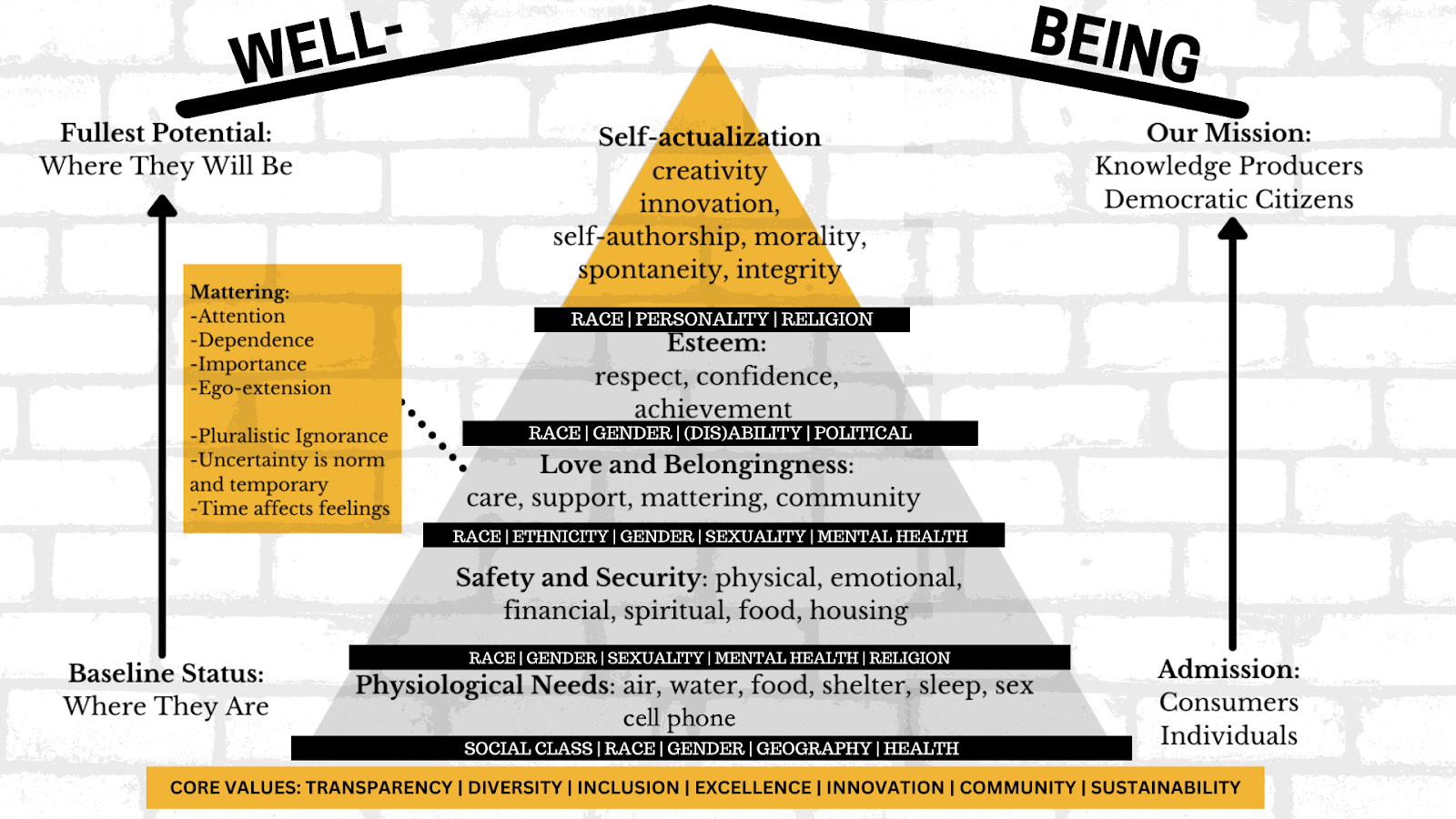
    Figure 1 is a visual representation of points shared in the session. 

    Figure 1. Sense of belonging model as a blueprint

    BELONGING 1.0

    Dozens of studies agree that sense of belonging is defined as “a basic…need [and human right], a fundamental motivation, sufficient to drive behaviors and perceptions. Its satisfaction leads to positive gains such as happiness, elation, wellbeing, achievement, and optimal functioning” (Strayhorn, 2019, p. 9). Belonging has seven core elements, one of which is it must be renewed continuously as conditions and circumstances change. For example, students may face new challenges that impact their sense of belonging at every stage of their academic journey. New challenges may require different supports that change semester to semester or year to year. Early on, students may need help navigating the physical terrain of campus, but, as seniors, they may desire coaching for career success. Any blueprint for belonging must consider these factors as part of the masterplan in design.

    J'Quen JohnsonJ’Quen JohnsonRECOMMENDATIONS: BELONGING 2.0 & BEYOND

    During Q&A, a chorus of voices confirmed that many campus professionals are convinced about the importance of belonging and what it can do for students, even some faculty and staff. But what’s much less clear is how to facilitate, engender, or boost belonging for all students, using theory as a blueprint. To this, we etched a few recommendations for “promising practices” on the canvas of gathered minds. Here are three evidence-backed ideas that hold promise for boosting students’ belonging on college campuses:

    Meeting Basic Needs. One building block for belonging is satisfying students’ basic needs: air, water, food, shelter, sleep, and personal enjoyment. When campuses take proactive steps to ensure that students have access to what they need, they open up possibilities for them to become who they are or aspire to be in terms of learning and development. Rutgers’ new, state-of-art Basic Needs Center is a prime example, offering extended operating hours, a mobile pantry, textbook loans, and life skills courses, just to name a few.

    Designing Culturally Relevant Programs. Another building block for belonging is tied to how students’ identities shape their experiences on- and off-campus. College women are more prone to feeling unsafe and recent reports show rising rates of trans violence, especially in light of anti-LGBTQ+ laws. Feeling unsafe and unwanted off campus heightens students’ need for belonging on campus. Hosting trans awareness events, safe zone training, “Take Back the Night,” and “Walk a Mile in Her Shoes,” for instance, are effective strategies for creating inclusive campus climates. University of California, Berkeley’s Center for Educational Justice and Community Engagement hosts events like Women’s Community Love and Leadership Dinner, LGBTQ+ Career Conference, and Feminist Film Fridays.

    Creating Positive Connections. A third building block for belonging is drawn from the middle of the blueprint–underscoring the importance of care, connectedness, and community. Community on campus flows from frequent, positive interactions with others, namely peers, faculty, and staff like advisors, coaches, and mentors. Architects of belonging pay attention to the quantity of students’ interactions with campus personnel, finding ways to nudge more frequent connections with academic advisors through micromessaging campaigns or faculty through first-year experience (FYE), undergraduate research, or “Take Your Professor to Lunch” initiatives. Alongside quantity, belonging builders assess the quality of such interactions to assure they’re warm, welcoming, and supportive.

    CONCLUSION

    If nothing else, we hope this provides higher education professionals a blueprint for boosting belonging on college campuses. It’s a blueprint, not the blueprint as what works best for Institution A may reap little for Institution B, and vice versa. Remember, belonging is a feeling. Just like bricks, feelings can be mixed and hardened over time. Changing people’s feelings is hard work, but that’s no excuse for retreat. Hard work is good work, and we must do good work. Anything less would be unbecoming and yes…unbelonging.

    Dr. Terrell L. Strayhorn is Professor of Education and Psychology at Virginia Union University, where he also serves as Director of Research in the Center for the Study of HBCUs.

    J’Quen Johnson is a research associate and consultant at Do Good Work Consulting Group and a Ph.D. candidate at University of the Cumberlands.

    Source link

  • Tackling accent bias in Higher Education could improve students’ success, sense of belonging, and wellbeing

    Tackling accent bias in Higher Education could improve students’ success, sense of belonging, and wellbeing

    Accent Bias in Higher Education

    UK Higher Education Institutions (HEIs) have a diverse population, encompassing students and staff from numerous linguistic backgrounds. Yet this linguistic diversity is often overlooked in university strategies, discourse, and practices, and students report experiencing accent-based stigmatisation. Worryingly, 30% of university students report having their accent mocked at university and 33% are concerned about their accent affecting their future success.

    Accent bias can have profound negative consequences throughout an individual’s life, affecting their school experience, job opportunities, work performance evaluations, and access to housing. These biases arise because accents trigger stereotypes about the social class, ethnicity, region, nationality, gender (and more) of the speakers. Such stereotypes can lead us to perceive certain speakers as more or less intelligent, competent, or fluent.

    In line with the Government’s mission to “Break Down Barriers to Opportunity”, addressing the negative consequences of accent bias in Higher Education (HE) is essential to ensure equal opportunities for young people to thrive at university and “follow the pathway that is right for them”.

    But what is the hidden impact of accent bias across UK HE? How does it influence students’ academic life, belonging and wellbeing?

    The Hidden Impact

    In our current research (Tomé Lourido & Snell, under review), we conducted an accent bias survey with over 600 students at a Russell Group University in the North of England. It showed that a significant number of students experience accent-based disadvantages that have a lasting negative impact on their academic life. Negative experiences were most frequently reported by students from the North of England, especially from working-class backgrounds, and students who did not grow up speaking English, especially from minoritised ethnic backgrounds. These include:

    • Being marked as different or inferior through negative evaluation, miscategorisation and frequent microaggressions, such as having their accent mimicked, mocked and commented on.
    • Facing barriers to academic engagement and success. Students from these groups report feeling that their contributions in academic settings are not valued because of their accent, which makes them reluctant to participate in class. Some feel pressured to change their accent, adding an additional cognitive burden to in-class participation. These students are disadvantaged because they miss opportunities to develop and refine their thinking through dialogue with others.
    • Impacts on wellbeing and career aspirations: Due to negative past experiences, some students internalise negative perceptions of their accent, affecting their confidence and wellbeing, and making them reluctant to take up new opportunities or follow certain career paths. This can have a knock-on effect on their mental health.   

    The accent-based disadvantages reported by students are not simply representative of wider societal prejudices; for many, the university context was unique in highlighting and amplifying these prejudices. Students also recognised that accent bias intersects with other forms of discrimination – class, race, ethnicity, gender, sexuality and disability – in complex ways.  Thus, we argue that HEIs should turn an analytic lens on themselves and take action to tackle accent bias and related inequities.

    From Awareness to Action: A Collaborative Approach

    There is work to be done for all of us in HEIs to embrace a true multilingual and multicultural ethos and challenge the idea that there is an idealised type of university student. We must “de-normalise” the microaggressions against students with accents perceived as “regional” or “foreign” and ensure that students from all backgrounds are able to participate in the classroom without feeling out of place. We propose four areas of interdisciplinary and collaborative work across the organisation:

    1. Raise awareness of accent bias and its negative consequences in collaboration with students and student unions. Create a communications campaign, provide targeted student and staff training, engage with career offices and employers.
    2. Tackle accent-based inequities by adopting a good practice statement about linguistic diversity and incorporating action into Equity, Diversity and Inclusion (EDI) policy and practice. Include content on linguistic diversity and discrimination in relevant university policies (e.g. mutual respect), strategies, student communications, and training (e.g. induction).
    3. Create a safe report and support route within existing systems for linguistic discrimination, bullying and harassment. Train staff supporting students, including personal tutors, on accent bias and its impact on academic life.
    4. Evaluate the effect of accent bias on students’ success, belonging and wellbeing. Track linguistic diversity. Assess the success of initiatives. 

    In addition to our own work, recent projects highlight the need for HEIs worldwide to address linguistic discrimination and its role in perpetuating existing inequalities. Initiatives led by Walt Wolfram (NC State University, US), John Hellerman and collaborators (Portland State University, US), and Christian Ilbury and Grace Mai Clark (University of Edinburgh, UK) have implemented cross-campus programs within their institutions. However, to effect sector-wide change, many more HEIs need to get involved.

    A Call for HEI Senior Leaders to Lead the Change

    Accent bias remains a largely unaddressed issue in large organisations. HEIs can play a pivotal role in leading a much-awaited societal change.

    Addressing accent bias in Higher Education is about breaking down barriers to opportunity and creating an environment in which all students, regardless of their background, can succeed in their studies, secure jobs, and contribute positively to society. By doing so, HEIs will support the employability of their students, a key metric for prospective students when selecting a university, and contribute to economic growth and social mobility.

    We encourage senior leaders to take proactive steps to tackle the negative consequences of accent bias and foster a more inclusive and equitable Higher Education system where students from all linguistic backgrounds can thrive.

    Source link

  • The value of the classroom in building belonging for commuter students

    The value of the classroom in building belonging for commuter students

    As highlighted throughout the commuter student series, the significant increase in commuters across the sector is beginning to influence many institutional approaches.

    These approaches have been varied but have included projects like making space for commuter students on campuses so that they can maximise their time and comfortably immerse themselves in the university experience.

    However, against a backdrop of a cost-of-living crisis, a cost of learning crisis has taken hold. Given the complexities of commuter students’ lives and responsibilities and the increasing costs of commuting, the “sticky campus” model is not always a viable option as the shift to a more transactional approach is becoming more prevalent.

    What educators, student-facing colleagues and decision makers need to identify is how they ensure time on campus adds value to the commuter student experience.

    The classroom as central

    My PhD research focuses on the experiences of ethnic minority commuter students, and how they develop their identity and sense of belonging whilst at university.

    Much of the research has found that commuter students are more likely to be from ethnic minority backgrounds, have employed work and caring responsibilities and come from lower socio-economic backgrounds.

    Exploring the experiences of participants in my research has revealed how the experiences within the timetabled teaching classroom carries particular significance for commuter students.

    This intersectionality of characteristics further emphasises the heterogenous nature of commuter students, and that speaking to, and understanding the experiences of students will help to understand how we can ensure their university experience is the best it can be.

    Whilst ensuring all students develop the subject specific knowledge is considered to be top of the list of how we add value, ensuring the classroom provides a space for students to develop networks and their community is one of the ways the classroom environment can better support commuters.

    Commuter students are struggling to adapt to pedagogies and policies that are typically designed for students who have relocated. This has started to come to the fore in the responses from students who are perceiving significant value of their experience in the approaches adopted within the classroom.

    Findings from my research signify that a sense of belonging is felt by commuter students, both at a course and institutional level, and that sense of belonging is very much driven by the experiences they have in the classroom.

    Finding space to belong

    To develop this sense of belonging, students often mentioned the importance of space and time.

    They spoke about the need to have space and time within their timetabled session to catch up with peers, have the time to speak to academic and professional services teams face to face and to ensure that classroom activities link to the outcomes they are hoping to achieve. To assist in facilitating this, consideration around how taught sessions are delivered, building space into weekly module delivery to maximise the potential for students to get the most out of their time on campus can develop and help foster this sense of belonging and community.

    Commuters are constantly making cost-benefit calculations, tying with the transactional approach to education. And the richness of these connections, however short and sporadic, can provide valuable outcomes and develop this sense of community.

    Not participating in activities outside of the classroom is not perceived as negatively impacting on their experience, and nor does the act of commuting always limit their ability to engage in activities, but there is an opportunity cost that is often considered.

    Differing approaches amongst tutors can impact on the experience students encounter, and the findings from my research signify a correlation between those classroom encounters and the sense of belonging for commuter students.

    Identity searching

    The institutional identity is also particularly relevant given that the students who are commuting are likely to live within the region, and this further develops the potential affinity they have with their institution.

    My research speaks to the importance of commuter students’ feelings of “we are all getting the same experience and opportunity” in ensuring they are not left feeling disadvantaged.

    This is not to suggest that engaging in activities outside of the classroom are not of value to commuter students, the benefits of engaging in extra-curricular activities is often considerable to the majority of students. The holistic experience of being in university should, however, support in developing the capital of commuter students.

    The classroom should be a space where all students enjoy the learning opportunities that higher education offers, providing the platform on which the student experience is built.

    For commuter students in particular, this space and environment is becoming increasingly important in their overall journey.

    And if we are to ensure an equitable experience for all students, providing a classroom experience which not only focusses on subject content, but provides time and space for interaction and the building of individual identity and community can help support this journey.


    This blog is part of our series on commuter students. Click here to see the other articles in the series.

    Source link