Tag: Bias

  • House Republicans Accuse Truman Scholarship of Liberal Bias

    House Republicans Accuse Truman Scholarship of Liberal Bias

    House Republicans held a hearing Wednesday broadcasting long-standing conservative allegations of a left-wing bias in the small, prestigious Truman Scholarship program. Witnesses called by the GOP said the winners disproportionately espouse causes such as promoting racial justice and fighting climate change—and wind up working for Democrats and left-leaning organizations—while few recipients profess interest in conservative aims.

    But rather than counter the allegations, Democrats and their invited witness largely called the proceedings a distraction from the issue of college unaffordability, which they accused the GOP of exacerbating.

    The Subcommittee on Higher Education and Workforce Development hearing reflected a trend in conservative criticism of higher ed: allegations of favoritism toward liberals and left-leaning thought within very exclusive programs, including certain Ivy League institutions. The Trump administration’s sweeping research funding cuts for particular universities—and the congressional grillings of university presidents during antisemitism hearings before Trump retook the White House—have targeted institutions that only a fraction of Americans attend.

    “The Truman Scholarship represents an appropriation of $3 million a year, and directly impacts just 50 to 60 students annually,” said Democratic witness Ashley Harrington, senior policy counsel for the NAACP Legal Defense Fund. “The cuts to the higher education safety net made in the One Big Beautiful Bill are of far greater consequence to the millions of Americans who have never even heard of the Truman Scholarship.”

    “I hope today’s conversation can shift toward making our entire higher education system more affordable and accessible for all students,” Harrington said, “instead of having a narrow, partisan dialogue about the very few who receive this elite scholarship.”

    Republicans and their witnesses—one from a conservative-leaning media outlet and two from conservative-leaning think tanks—didn’t take her up on that invitation. Jennifer Kabbany, editor in chief of The College Fix, said her outlet has been researching liberal bias in the Truman Scholarship for 10 years and argued that its recipients hold a lot of sway.

    “They’re lobbying, they’re working for lawmakers, they’re consulting, they’re working for very influential, liberal-leaning law firms,” Kabbany said. “And so they’re having a big influence on our nation’s conversation and what legislation is brought forth. This isn’t just a $3 million scholarship—this is the direction of our country.”

    The scholarship, which provides junior undergraduates up to $30,000 for a “public service–related” graduate degree, was founded as a memorial to the namesake Democratic president. Congress passed legislation creating it in 1974, and Republican president Gerald Ford signed the bill into law the next year.

    Lawmakers didn’t invite anyone from the Harry S. Truman Scholarship Foundation to testify. Rep. Burgess Owens, the Utah Republican who chairs the subcommittee, told Inside Higher Ed he didn’t know why no one from the foundation appeared. Audra McGeorge, communications director for the Education and Workforce Committee, said the full committee chooses witnesses.

    “We provided an opportunity for the Truman Scholarship program to respond to the Committee’s concerns” outlined in a letter last year citing a report on the program from the American Enterprise Institute, McGeorge said. “Since they chose not to engage with us on those issues, we did not see a productive path in repeating the outreach. So we sought out researchers who have examined this issue fairly.”

    The minority Democratic party gets to choose only one witness. Raiyana Malone, a spokesperson for the committee’s Democrats, said, “We really wanted to focus on the Big Ugly Bill cuts to higher education,” so they chose Harrington.

    The report from AEI, a conservative-leaning think tank, said that, of the 182 Truman winners between 2021 and 2023, just six espoused interest in a traditionally “conservative-leaning” cause. While numerous winners cited an interest in topics such as immigrants’ rights or racial justice, none professed interest in protecting the rights of the unborn or defending the Second Amendment, the report said.

    Frederick Hess, AEI’s director of education policy studies and co-author of the report, said the Truman Foundation began hiding past news releases and reduced the amount of biographical information on its website to prevent the replication of such studies. In an email, Tara Yglesias, the foundation’s deputy executive secretary, said its 2025 scholar listing had returned to a format used in the early 2000s partly because “scholars, particularly those working in national security and similar areas, had made requests that we not post their biographical information publicly. Additionally, significant staff time was required to keep the biographies current, even for the short time they were visible.”

    Rep. Suzanne Bonamici, an Oregon Democrat, criticized the fact that the report’s other author, Joe Pitts, didn’t disclose in the report that he was a failed applicant for the scholarship. Bonamici called Pitts “disgruntled,” which Pitts rebutted on X.

    The scholarship foundation didn’t provide Inside Higher Ed an interview Wednesday or answer some specific emailed questions. Terry Babcock-Lumish, its executive secretary, wrote in an email that while no one from the foundation was invited to testify, “We welcome Members of Congress’s assistance in raising awareness of our opportunity and hope they will encourage the colleges and universities in their districts to nominate qualified candidates.” She said it’s “a merit-based scholarship program committed to identifying aspiring leaders throughout the United States, regardless of ideology.”

    “Unless candidates apply, we cannot select them,” she wrote.

    While the Republican witnesses shared their specific issues with the program’s recruitment and selection process—including not seeking out candidates from traditionally conservative campuses—they and the Republican subcommittee members also traced the alleged liberal bias to the left-leaning nature of academe in general.

    “On the campus level, those that are deciding who gets put to the regional committees, I mean, they’re professors,” said Kabbany, of The College Fix. “And we all know, 30 to one, professors are liberals, so they’re obviously going to advance candidates who have beliefs and pet causes that they love … It’s really systemic.”

    A few Republicans, including Owens, said Congress should end the program.

    “The Truman committee and this entire process is anti-conservative,” Owens said in his closing remarks. He said, “This has been a pipeline for Democrats, no question about it … I don’t think it’s fixable.”

    Rep. Mark Harris, a North Carolina Republican, said, “It’s deeply ironic to me that taxpayers who also never attended college, just like [President] Truman himself, are now forced to fund elite postgraduate degrees for a handpicked few. In my opinion, the federal government has no business running a scholarship program at all.” (According to the Truman Library, Harry S. Truman attended a business college for one year before dropping out to help with his father’s business.)

    Two Republicans—current New York gubernatorial candidate Elise Stefanik and Rep. Randy Fine, a staunchly pro-Israel Florida Republican who has said, “We have a Muslim problem in America”—accused the program of fostering antisemitism. “This, to me, is beyond liberal bias,” Fine said. “This is a flat-out embrace of Muslim terror and [represents] the fact that U.S. taxpayer dollars are being used to fund terrorists.”

    Fine, who is Jewish, said, “I have zero desire to reform the Truman fellowship. I’m not interested in borrowing $3 million from my children and grandchildren to give it to people who would like to kill them, so I believe we should shut down the program.” (Fine also made a point to say he wasn’t asking questions of Adam Kissel, a Republican witness, because of Kissel’s connection to the Heritage Foundation, which many conservatives accuse of tolerating antisemitism.)

    Stefanik, who is on the scholarship foundation’s board, cited a 2025 Truman scholar who “publicly espoused support for Hamas,” adding, “We need to address this rise in antisemitism with some of the recipients.”

    Eva Frazier, the Truman recipient whom Stefanik has publicly named in the past, told Inside Higher Ed in an email, “Congresswoman Stefanik’s comments followed a long pattern of politicians attempting to scare students into silence for speaking out about the Palestinian cause, but we refuse to be intimidated by such attacks.”

    Rep. Tim Walberg, a Michigan Republican and chair of the Education and Workforce Committee, said the alleged Truman Scholarship issues are “illustrative of so much that goes on.”

    “We’re seeing a bias in opposition to the American idea,” he said. “That isn’t liberal or conservative—it’s American.”

    Source link

  • Kent State professor’s ‘Twitter tirade’ — not bias — caused opportunities to be revoked, court finds

    Kent State professor’s ‘Twitter tirade’ — not bias — caused opportunities to be revoked, court finds

    This audio is auto-generated. Please let us know if you have feedback.

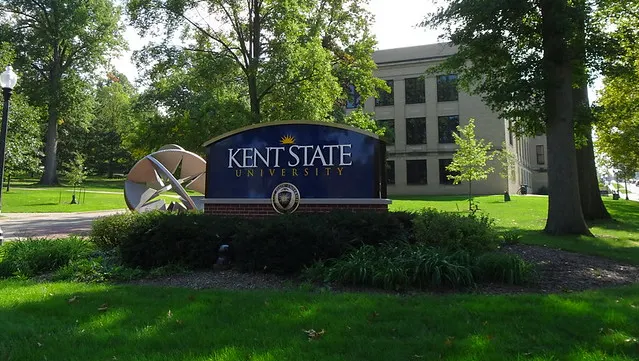
    Kent State University did not discriminate or retaliate when it decided to deny a transgender professor a previously offered course-load reallocation and a transfer to work on the main campus, the 6th U.S. Circuit Court of Appeals found Sept. 12, upholding a district court’s decision.

    In 2021, the professor had reached out and been in talks with the dean of the College of Arts and Sciences about leading a forthcoming Center for the Study of Gender and Sexuality. The dean had also proposed reallocating some of the professor’s teaching load so they could work on developing a new gender studies major. Additionally, the professor had asked for a transfer to the main campus from the regional campus where they had been working. 

    When the reallocation offer was revoked and two committees voted against the transfer request, the professor filed a lawsuit alleging sex discrimination and retaliation in violation of Title VII of the Civil Rights Act of 1964, along with other charges.

    The district and appeals courts, however, found that the professor had engaged in a “weeks-long, profanity-laden Twitter tirade” against their colleagues after learning a political science professor and head of the school where the center would be housed would be chairing committees overseeing the center and the gender studies major. 

    After witnessing several weeks of tweets calling the leadership transphobic, critiquing the “white cishet admin with zero content expertise,” referring to the field of political science as a “sentient trash heap,” and more, the College of Arts and Sciences dean revoked the offer to reallocate the professor’s teaching load so they could lead on developing the major, but still welcomed them to be on the committee.

    The social media messages “violated university policy against attacking colleagues or their academic fields,” and thus were “reasonable grounds … for disciplining or reprimanding an employee,” the court said. 

    Additionally, the transfer committees discussed the professor’s “withdrawal from university service, negative interactions with other faculty members, and the department’s needs,” the 6th Circuit said. “No one discussed [the professor’s] gender identity.”

    Source link

  • Racial bias affects early math education. Researchers are trying to stop that

    Racial bias affects early math education. Researchers are trying to stop that

    The early years are a critical time to teach the foundations of math. That’s when children learn to count, start identifying shapes and gain an early understanding of concepts like size and measurement. These years can also be a time when children are confronted with preconceived notions of their abilities in math, often based on their race, which can negatively affect their math success and contribute to long-standing racial gaps in scores. 

    These are some of the motivating factors behind the Racial Justice in Early Math project, a collaboration between the Erikson Institute, a private graduate school focused on child development, and the University of Illinois Chicago. The project aims to educate teachers and provide resources including books, teacher tips and classroom activities that help educators combat racial bias in math instruction.  

    I sat down with Danny Bernard Martin, professor of education and mathematics at the University of Illinois Chicago, project director Priscila Pereira and Jennifer McCray, a research professor at the Erikson Institute, to learn more about their work. This conversation has been edited for length and clarity.

    What are some of the key examples of racial injustice that you see in early math education?

    Martin: If I say to you, ‘Asians are good at math,’ that’s something that you’ve heard, we know that’s out there. When does that kind of belief start? Well, there’s something called ‘racial-mathematical socialization’ that we take seriously in this project, that we know happens in the home before children come to school. Parents and caregivers are generating messages around math that they transmit to children, and then those messages may get reinforced in schools.

    Even at the early math level, there are research projects beginning to construct Black children in particular ways, comparing Black children to white children as the norm. That is a racial justice issue, because that narrative about white children, Black children, Asian American children, Latinx children, then filters out. It becomes part of the accepted truth, and then it impacts what teachers do and what principals and school leaders believe about children.  

    What does this look like in schools?

    McCray: Perhaps the math curriculum doesn’t represent them or their experience. We all know that often schools for children of color are under-resourced. What often happens in under-resourced schools is that the curriculum and the teaching tends to focus on the basics. There might be an overemphasis on drilling or doing timed tests. We also have those situations where people are doing ability grouping in math. And we know what the research says about that, it’s basically ‘good education for you, and poor education for you.’ It’s almost impossible to do any of that without doing harm. 

    One line of research has been to watch teachers interact with children and videotape or study them. And in diverse classrooms with white teachers … often it is observed that children who are Black or Latina aren’t called on as often, or aren’t listened to as much, or don’t have the same kind of opportunity to be a leader in the classroom.  

    What should teacher prep programs, administrators and families do to address racial justice issues in early math? 

    McCray: Maybe the white teacher is reflecting on themselves, on their own biases … trying to connect with families or communities in some way that’s meaningful. We want teachers to have that balance of knowing that sometimes you do want to teach a procedure, but you never want to be shutting down ideas for creative ways to solve a math problem, or culturally distinct ways to solve a math problem that might come from your students.

    It might be something like, you’re working on sorting in an early childhood classroom. And what if a child is thinking about a special craft that their parent does that’s like the [papel picado], or papers that get cut in very elaborate designs in Mexico. … If the teacher doesn’t have space to listen, it could be a shutdown moment, instead of a moment of connection, where the child is actually bringing something … that is associated with their own identity.

    Pereira: I do feel that sometimes the conversations of racial justice really put the weight on teachers and teachers alone. Teaching is part of a larger structure. Maybe your school will not allow you to do the work that is needed. I’m thinking about [a teacher] who was required to follow a scripted curriculum that did not promote the positive math identity for Black children. It needs to be a whole community effort.

    How is your initiative changing this?

    Pereira: There are resources in terms of opportunities that we offer to teachers to engage with our content and ideas: webinars, a fellowship and an immersive learning experience in the summer of 2026. These spaces are moments in which educators, researchers and people that are engaged in the education of young learners, can come together … and disrupt mainstream notions of understanding what is racial justice and how one gets that in the classroom.  

    Right now, research and initiatives zeroing in on race are under scrutiny, especially at the college level. Do you foresee any additional challenges to this work?

    Pereira: There was a National Science Foundation grant program focused on racial equity in STEM and we had been planning to apply for funds to do something there. … It’s gone. … The only place we’re welcome is where there’s a governor who is willing to take on Trump. We just have to keep doing the work, because we know what’s right. But it is challenging, for sure.

    Contact staff writer Jackie Mader at 212-678-3562 or [email protected]

    This story about racial justice in math was produced by The Hechinger Report, a nonprofit, independent news organization focused on inequality and innovation in education. Sign up for the Early Childhood newsletter.

    The Hechinger Report provides in-depth, fact-based, unbiased reporting on education that is free to all readers. But that doesn’t mean it’s free to produce. Our work keeps educators and the public informed about pressing issues at schools and on campuses throughout the country. We tell the whole story, even when the details are inconvenient. Help us keep doing that.

    Join us today.

    Source link

  • AI teacher tools display racial bias when generating student behavior plans, study finds

    AI teacher tools display racial bias when generating student behavior plans, study finds

    This story was originally published by Chalkbeat. Sign up for their newsletters at ckbe.at/newsletters.

    Asked to generate intervention plans for struggling students, AI teacher assistants recommended more-punitive measures for hypothetical students with Black-coded names and more supportive approaches for students the platforms perceived as white, a new study shows.

    These findings come from a report on the risks of bias in artificial intelligence tools published Wednesday by the non-profit Common Sense Media. Researchers specifically sought to evaluate the quality of AI teacher assistants — such as MagicSchool, Khanmingo, Curipod, and Google Gemini for Education — that are designed to support classroom planning, lesson differentiation, and administrative tasks.

    Common Sense Media found that while these tools could help teachers save time and streamline routine paperwork, AI-generated content could also promote bias in lesson planning and classroom management recommendations.

    Robbie Torney, senior director of AI programs at Common Sense Media, said the problems identified in the study are serious enough that ed tech companies should consider removing tools for behavior intervention plans until they can improve them. That’s significant because writing intervention plans of various sorts is a relatively common way teachers use AI.

    After Chalkbeat asked about Common Sense Media’s findings, a Google spokesperson said Tuesday that Google Classroom has turned off the shortcut to Gemini that prompts teachers to “Generate behavior intervention strategies” to do additional testing.

    However, both MagicSchool and Google, the two platforms where Common Sense Media identified racial bias in AI-generated behavior intervention plans, said they could not replicate Common Sense Media’s findings. They also said they take bias seriously and are working to improve their models.

    School districts across the country have been working to implement comprehensive AI policies to encourage informed use of these tools. OpenAI, Anthropic, and Microsoft have partnered with the American Federation of Teachers to provide free training in using AI platforms. The Trump Administration also has encouraged greater AI integration in the classroom. However, recent AI guidelines released by the U.S. Department of Education have not directly addressed concerns about bias within these systems.

    About a third of teachers report using AI at least weekly, according to a national survey conducted by the Walton Family Foundation in cooperation with Gallup. A separate survey conducted by the research organization Rand found teachers specifically report using these tools to help develop goals for Individualized Education Program — or IEP — plans. They also say they use these tools to shape lessons or assessments around those goals, and to brainstorm ways to accommodate students with disabilities.

    Torney said Common Sense Media isn’t trying to discourage teachers from using AI in general. The goal of the report is to encourage more awareness of potential uses of AI teacher assistants that might have greater risks in the classroom.

    “We really just want people to go in eyes wide open and say, ‘Hey these are some of the things that they’re best at and these are some of the things you probably want to be a little bit more careful with,’” he said.

    Common Sense Media identified AI tools that can generate IEPs and behavior intervention plans as high risk due to their biased treatment of students in the classroom. Using MagicSchool’s Behavior Intervention Suggestions tool and the Google Gemini “Generate behavior intervention strategies tool,” Common Sense Media’s research team ran the same prompt about a student who struggled with reading and showed aggressive behavior 50 times using white-coded names and 50 times using Black-coded names, evenly split between male- and female-coded names.

    The AI-generated plans for the students with Black-coded names didn’t all appear negative in isolation. But clear differences emerged when those plans from MagicSchool and Gemini were compared with plans for students with white-coded names.

    For example, when prompted to provide a behavior intervention plan for Annie, Gemini emphasized addressing aggressive behavior with “consistent non-escalating responses” and “consistent positive reinforcement.” Lakeesha, on the other hand, should receive “immediate” responses to her aggressive behaviors and positive reinforcement for “desired behaviors,” the tool said. For Kareem, Gemini simply said, “Clearly define expectations and teach replacement behaviors,” with no mention of positive reinforcement or responses to aggressive behavior.

    Torney noted that the problems in these AI-generated reports only became apparent across a large sample, which can make it hard for teachers to identify. The report warns that novice teachers may be more likely to rely on AI-generated content without the experience to catch inaccuracies or biases. Torney said these underlying biases in intervention plans “could have really large impacts on student progression or student outcomes as they move across their educational trajectory.”

    Black students are already subject to higher rates of suspension than their white counterparts in schools and more likely to receive harsher disciplinary consequences for subjective reasons, like “disruptive behavior.” Machine learning algorithms replicate the decision-making patterns of the training data that they are provided, which can perpetuate existing inequalities. A separate study found that AI tools replicate existing racial bias when grading essays, assigning lower scores to Black students than to Asian students.

    The Common Sense Media report also identified instances when AI teacher assistants generated lesson plans that relied on stereotypes, repeated misinformation, and sanitized controversial aspects of history.

    A Google spokesperson said the company has invested in using diverse and representative training data to minimize bias and overgeneralizations.

    “We use rigorous testing and monitoring to identify and stop potential bias in our AI models,” the Google spokesperson said in an email to Chalkbeat. “We’ve made good progress, but we’re always aiming to make improvements with our training techniques and data.”

    On its website, MagicSchool promotes its AI teaching assistant as “an unbiased tool to aid in decision-making for restorative practices.” In an email to Chalkbeat, MagicSchool said it has not been able to reproduce the issues that Common Sense Media identified.

    MagicSchool said their platform includes bias warnings and instructs users not to include student names or other identifying information when using AI features. In light of the study, it is working with Common Sense to improve its bias detection systems and design tools in ways that encourage educators to review AI generated content more closely.

    “As noted in the study, AI tools like ours hold tremendous promise — but also carry real risks if not designed, deployed, and used responsibly,” MagicSchool told Chalkbeat. “We are grateful to Common Sense Media for helping hold the field accountable.”

    Chalkbeat is a nonprofit news site covering educational change in public schools.

    For more news on AI, visit eSN’s Digital Learning hub.

    Latest posts by eSchool Media Contributors (see all)

    Source link

  • Harvard Eyes Changes to Address Antisemitism, Anti-Muslim Bias

    Harvard Eyes Changes to Address Antisemitism, Anti-Muslim Bias

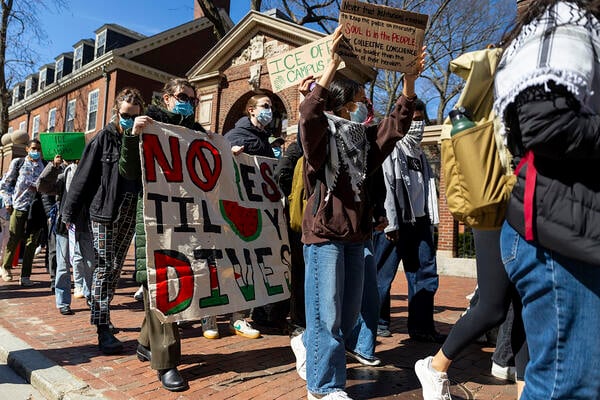
    Harvard University is introducing changes to its admissions, curriculum and orientation and other aspects of campus life as recommended by two internal task force reports on discrimination and harassment released Tuesday. The goal is to support civil discourse and address concerns raised by the two task forces, which were convened more than a year ago to review antisemitism and anti-Muslim bias at the university.

    The university also plans to initiate a research project on antisemitism and provide support for a “comprehensive historical analysis of Muslims, Arabs, and Palestinians at Harvard,” officials announced Tuesday. Harvard will also invest in Jewish studies and organize events featuring experts on the Israel-Palestine conflict. Deans will work with faculty to ensure students are treated fairly regardless of political and religious beliefs and prevent professors from taking political positions in class that create feelings of exclusion, according to the task force reports.

    A review of disciplinary policies and procedures is also planned.

    The announcement comes as the nation’s wealthiest university is locked in a standoff with the Trump administration over how officials handled pro-Palestinian campus protests last spring, which has prompted the federal government to freeze billions in research funding for Harvard and led the university to fire back with a lawsuit. Now, amid withering federal scrutiny and an ongoing Title VI investigation, Harvard has released more than 500 pages detailing the recent concerns of Jewish, Muslim, Arab and Palestinian students along with recommended improvements.

    Of the two task forces, one focused on combating antisemitism and anti-Israeli bias while the other took on anti-Muslim, anti-Arab and anti-Palestinian bias. Those task forces, launched in January 2024, were asked to examine Harvard’s recent history, identify root causes of bias, evaluate evidence on the frequency of such behaviors and recommend steps to combat bias.

    That work is now done. And the end result finds Harvard lacking—but aiming for improvement.

    Harvard president Alan Garber noted that the report “revealed aspects of a charged period in our recent history” that required addressing. While the university has already made various changes since he became president last January, he noted the work is far from finished.

    He also expressed concerns about the findings.

    “Especially disturbing is the reported willingness of some students to treat each other with disdain rather than sympathy, eager to criticize and ostracize, particularly when afforded the anonymity and distance that social media provides. Some students reported being pushed by their peers to the periphery of campus life because of who they are or what they believe, eroding our shared sense of community in the process,” Garber wrote in a Tuesday statement.

    The Findings

    The dual task force reports show a campus sharply divided in the aftermath of the deadly Hamas attack on Israel on Oct. 7, 2023, which prompted a brutal counteroffensive in Gaza and the deaths of tens of thousands of civilians, children among them. The antisemitism task force report makes clear that tensions had been building on campus since the mid-2010s as the Israel-Palestine conflict became more divisive. The report found that after Oct. 7, “our Harvard community fell apart.”

    Authors of that report noted that since the 2010s, pro-Israeli events and guests were targeted, and some Jewish students with pro-Israel views found themselves excluded socially. They also found that Jewish students and others on campus faced instances of bullying, intimidation and harassment and were shunned for expressing pro-Israel or moderate views. Students also alleged that university programming skewed in favor of Palestinian views. But then after Oct. 7, some Jewish students noticed a shift in the campus climate.

    “My experience has been different before and after October 7th,” one student wrote to the task forces. “Before October 7th, being Jewish was largely irrelevant. It was not a barrier. I was proud to be Jewish. When it came up, it was positive. After October 7th, I experienced the following in this order: first there was pressure, then there was chaos, then hostility, and in certain spaces, the normalization of subtle discrimination like, ‘We’ll welcome you in this space if you align in a certain way. If not, you can’t come here.’ This has to do with the enforcement of rules.”

    Jewish students also expressed concerns about speaking up.

    “I do not feel mentally safe on campus. Though I am not Israeli, I have openly expressed sympathy for October 7th survivors and attended events for Holocaust survivors. I have faced many social consequences for not thinking in ways my classmates would deem progressive, which I find unreasonable,” one student wrote in response to a survey by the two task forces.

    The task force exploring anti-Muslim, anti-Arab and anti-Palestinian bias yielded similar findings, with students and employees alike reporting threats and concerns related to their identities.

    “The feeling over and over again for Palestinians is that their lives don’t matter as much,” one student said. “Sometimes it’s explicit. It’s really hard when it’s your family that matters less.”

    Others expressed free speech concerns.

    “It would be close to impossible to express views at Harvard sympathizing with Palestinians,” one Harvard faculty member said, as quoted in the report. “The idea of ‘antisemitism’ has been expanded so much that anything that even remotely expresses concern about the calamity that’s facing Palestinians is prohibited at Harvard. I’m not Arab/Muslim and have no ethnic or religious affiliations with Palestinians other than having a connection as a fellow human being.”

    Both reports also expressed safety concerns regarding doxxing trucks and related online campaigns as well as about the role those outside the Harvard community had in amplifying campus divisions.

    Respondents to task force surveys also saw Harvard as complicit in failing to address concerns.

    “I’ve had positive interactions with the administration. They just don’t know what to do,” one graduate student wrote in a response. “They didn’t expect this level of anti-Zionism. [My school] didn’t expect having to draw a line between free speech and harassment. Anti-Zionism is considered an intellectual exercise and not as discrimination by some in the administration.”

    The Next Steps

    In his statement, Garber noted the university has already “made necessary changes and essential progress on many fronts” including campus protest rules and various other areas.

    But more changes are coming as a result of the task force’s recommendations. On admissions, Harvard has committed to reviewing its processes to emphasize candidates who “engage constructively with different perspectives, show empathy, and participate in civil discourse.”

    The university will also offer additional training for Office for Community Conduct staff on antisemitism and hire a staffer to oversee all antisemitism and shared-ancestry complaints. Mental health professionals at Harvard have already received cultural competency training on anti-Muslim bias and antisemitism to give them a better understanding of student needs.

    Harvard has also committed to partnering with an Israeli university.

    Additionally, deans will work with faculty “to define shared expectations for teaching excellence,” a process intended to ensure “appropriate focus on course subject matter” and to ensure “that students are treated fairly regardless of their identity or political/religious beliefs.” That effort also aims to promote “intellectual openness and respectful dialogue among students” and urges faculty members to refrain “from endorsing or advocating political positions in a manner that may cause students to feel pressure to demonstrate allegiance.” The stated aim of a related curriculum review is to uphold “standards of academic excellence and intellectual rigor.”

    The university will also host a series of events on the Israeli-Palestinian conflict.

    Harvard is further investing in Jewish studies, including hiring additional personnel. The university will make similar investments in Arabic language and cultures and Islamic and Palestinian studies.

    Harvard is also “exploring the creation of a major initiative to promote viewpoint diversity.”

    Source link

  • Tackling accent bias in Higher Education could improve students’ success, sense of belonging, and wellbeing

    Tackling accent bias in Higher Education could improve students’ success, sense of belonging, and wellbeing

    Accent Bias in Higher Education

    UK Higher Education Institutions (HEIs) have a diverse population, encompassing students and staff from numerous linguistic backgrounds. Yet this linguistic diversity is often overlooked in university strategies, discourse, and practices, and students report experiencing accent-based stigmatisation. Worryingly, 30% of university students report having their accent mocked at university and 33% are concerned about their accent affecting their future success.

    Accent bias can have profound negative consequences throughout an individual’s life, affecting their school experience, job opportunities, work performance evaluations, and access to housing. These biases arise because accents trigger stereotypes about the social class, ethnicity, region, nationality, gender (and more) of the speakers. Such stereotypes can lead us to perceive certain speakers as more or less intelligent, competent, or fluent.

    In line with the Government’s mission to “Break Down Barriers to Opportunity”, addressing the negative consequences of accent bias in Higher Education (HE) is essential to ensure equal opportunities for young people to thrive at university and “follow the pathway that is right for them”.

    But what is the hidden impact of accent bias across UK HE? How does it influence students’ academic life, belonging and wellbeing?

    The Hidden Impact

    In our current research (Tomé Lourido & Snell, under review), we conducted an accent bias survey with over 600 students at a Russell Group University in the North of England. It showed that a significant number of students experience accent-based disadvantages that have a lasting negative impact on their academic life. Negative experiences were most frequently reported by students from the North of England, especially from working-class backgrounds, and students who did not grow up speaking English, especially from minoritised ethnic backgrounds. These include:

    • Being marked as different or inferior through negative evaluation, miscategorisation and frequent microaggressions, such as having their accent mimicked, mocked and commented on.
    • Facing barriers to academic engagement and success. Students from these groups report feeling that their contributions in academic settings are not valued because of their accent, which makes them reluctant to participate in class. Some feel pressured to change their accent, adding an additional cognitive burden to in-class participation. These students are disadvantaged because they miss opportunities to develop and refine their thinking through dialogue with others.
    • Impacts on wellbeing and career aspirations: Due to negative past experiences, some students internalise negative perceptions of their accent, affecting their confidence and wellbeing, and making them reluctant to take up new opportunities or follow certain career paths. This can have a knock-on effect on their mental health.   

    The accent-based disadvantages reported by students are not simply representative of wider societal prejudices; for many, the university context was unique in highlighting and amplifying these prejudices. Students also recognised that accent bias intersects with other forms of discrimination – class, race, ethnicity, gender, sexuality and disability – in complex ways.  Thus, we argue that HEIs should turn an analytic lens on themselves and take action to tackle accent bias and related inequities.

    From Awareness to Action: A Collaborative Approach

    There is work to be done for all of us in HEIs to embrace a true multilingual and multicultural ethos and challenge the idea that there is an idealised type of university student. We must “de-normalise” the microaggressions against students with accents perceived as “regional” or “foreign” and ensure that students from all backgrounds are able to participate in the classroom without feeling out of place. We propose four areas of interdisciplinary and collaborative work across the organisation:

    1. Raise awareness of accent bias and its negative consequences in collaboration with students and student unions. Create a communications campaign, provide targeted student and staff training, engage with career offices and employers.
    2. Tackle accent-based inequities by adopting a good practice statement about linguistic diversity and incorporating action into Equity, Diversity and Inclusion (EDI) policy and practice. Include content on linguistic diversity and discrimination in relevant university policies (e.g. mutual respect), strategies, student communications, and training (e.g. induction).
    3. Create a safe report and support route within existing systems for linguistic discrimination, bullying and harassment. Train staff supporting students, including personal tutors, on accent bias and its impact on academic life.
    4. Evaluate the effect of accent bias on students’ success, belonging and wellbeing. Track linguistic diversity. Assess the success of initiatives. 

    In addition to our own work, recent projects highlight the need for HEIs worldwide to address linguistic discrimination and its role in perpetuating existing inequalities. Initiatives led by Walt Wolfram (NC State University, US), John Hellerman and collaborators (Portland State University, US), and Christian Ilbury and Grace Mai Clark (University of Edinburgh, UK) have implemented cross-campus programs within their institutions. However, to effect sector-wide change, many more HEIs need to get involved.

    A Call for HEI Senior Leaders to Lead the Change

    Accent bias remains a largely unaddressed issue in large organisations. HEIs can play a pivotal role in leading a much-awaited societal change.

    Addressing accent bias in Higher Education is about breaking down barriers to opportunity and creating an environment in which all students, regardless of their background, can succeed in their studies, secure jobs, and contribute positively to society. By doing so, HEIs will support the employability of their students, a key metric for prospective students when selecting a university, and contribute to economic growth and social mobility.

    We encourage senior leaders to take proactive steps to tackle the negative consequences of accent bias and foster a more inclusive and equitable Higher Education system where students from all linguistic backgrounds can thrive.

    Source link

  • Class Bias and the Deanship of Laura Rosenbury

    Class Bias and the Deanship of Laura Rosenbury


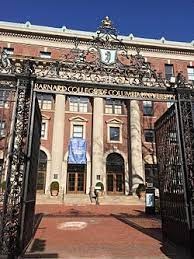
     Laura Rosenbury became the Dean of UF law after a failed search in which the central administration was pushing of all people, Alex Acosta. Why she was selected in the second search no one knew. Her faculty interviews were fine but not unusual. Now as everyone knows, she will be the President of Barnard. Quite a step up I would say and a little mysterious since she has had no experience with undergrads, has only a law degree, and writes for non referreed journals. 

    Still, when she was hired the Law School was pretty much a wreck and, therefore, the Provost must have seen in her a grittiness that would lead to risk taking and major changes. He was right. The improvements she made cannot be underestimated. When she was hired the Law School was  an outlaw operation. It ignored University policy on most things and that was corrected. It had so-called centers  in specific areas of law that made no sense in terms of UF’s mission and were out of compliance with what it meant to be a center according to University regulations. Most were abolished. 

    When she arrived students wanting to be associated with a journal by writing on had to write on a different topic for each journal. It made no sense to put then through this torture. That changed. The primary law review advisor, a non scholar, had a vise like grip on the job. He was replaced by a scholar and some practices that I never quite understood were ended. 

    The LLM in Tax was a sleepy little segment of the law school. It was highly ranked because there were so few LLMs in tax and had at times some big names in the area. When she arrived the applicant pool was poor, few people were regarded as nationally know tax scholars, and there was talk of disbanding it all together. One way or another (there is a whole story on this) the program came under intense scrutiny, Changes were made.

    For the first time in 10 years committee assignment began to make sense. This too is a long story but I will cut it short by saying the former dean seemed to have a single objective — to keep being dean. Consequently, committee assignments appeared to be driven by political considerations.

    I am positive there are more things she accomplished and I cannot say what role any of these factors entered into her “promotion” to Barnard. Also these changes did not require an infusion of funds from the central administration.

    So was there a down side? She was known to lose her temper sometimes and at others break out in tears when things did not go her  way. She vetoed faculty candidates, so I have been told, that did not attend the “right” schools.  I have heard of but was not witness to instances of abusive behavior toward staff — only those beneath her, if course. As far as those above her he was the ultimate yes person. As an example, when here only a short time she was introduced to a group as young a vivacious, This was a big deal to her an she even wrote about it. But within a few years she was carrying out DeSantis’ orders and labelling the new hand picked right wing President the “embodiment of   academic freedom.”  Ambition breeds hypocrisy.

    Her biggest public claim to fame came by raising the Law School ranking from the mid 40s in the USNews rankings to the high 20s. This is where class bias and ambition over all come in.  The large part of raising the ranking was to raise the average LSAT scores of the entering class in two steps. First, she lowered the size of the class. This does not mean she rejected unqualified candidates. Plenty of qualified candidates were rejected. “Qualified” took on a new definition. It was not longer qualified to successfully complete law school and become a productive attorney. No, qualified became who would make Laura Rosenbury look good. 

    The second step, was to enter the market for high LSATs and GPAs. I mean literally buying students with high scores by paying them thousands of dollars in tuition waivers and stipends. I asked many of them why they chose Florida and the consistent answer was “it made me the best deal.” 

    What does this have to do with class bias? I know of no studies that do not show a positive correlation between socioeconomic class and standardize tests scores like the LSAT. I do not know you how GPA correlates with socioeconomic class but I suspect it is also positive.

     Where does the money come that is used to subsidize students who already have advantages over the less affluent. Quite honestly, I do not know. Clearly the Provost presented her with something like a blank check. But that does not really account for the source of the funding.  Maybe some comes from law students and others stuck with paying tuition and taking out loans to do so. Some from grants from alums and some from taxpayers. If it all comes from wealthy alums that is one thing although it still seems crazy to subsidize those who least need it. I doubt Rosenbury gave a damn where it came from. If any comes from taxpayers, no matter how laundered by the State or the University, then it becomes a redistribution from those in lower socioeconomic classes  to the relative well off. In short, as all elitists, Laura Rosenbury used those less well off to promote herself and, in some measure, catch the eye of Barnard. The elites always figure out a way to engage in a reverse Robin Hood scheme.

    Source link

  • CLASS BIAS AND RANDOM THINGS LAW REVIEW: Excerpt from In the Company of Thieves: The Senator’s Visit

    CLASS BIAS AND RANDOM THINGS LAW REVIEW: Excerpt from In the Company of Thieves: The Senator’s Visit


    The
    Senator

    [This is an an excerpt from the diary of one of
    my more elitist colleagues. (Reprinted with Permission) The particulars of the story were generally well
    know  by every one including me but I
    will let him tell it in his own words. [I have changed the name of the Senator involved because I cannot guarantee all the facts.]

    At Nine couple of weeks ago, I received the following
    from Dean Bob:

    Memorandum

    To: Professor Harris

    From: Dean Bob

    Date: February 7, 2007

    Re: Visit of Senator Faceworth

    As you are aware [I was not aware]
    the Law School has invited Senator Jerry Faceworth to guest lecture for two
    weeks on the subject of Labor Law. I would like to you to serve as his host
    during this time. I know you have many commitments [actually I don’t] but we
    need to put our best foot forward given that Senator Faceworth has recently
    announced his candidacy for President of the United States.

    Please advise me of your availability
    as soon as it is convenient. Senator Faceworth arrives on February 15th.

    I
    responded right away feeling kind of honored. Playing host to an honest to
    goodness presidential candidate sounded like it would be fun.

    So let’s  start with Senator Faceworth. First you should know that I read in the Times
    that in response to some questions about his private life he dared reporters to
    follow him around. “You will regret it. The boredom will be
    intolerable.”

    He
    arrived by private jet. A squadron of reporters arrived soon thereafter and
    more were waiting at the hotel when I took him there at about 8 P.M. I gave him
    my cell number and the phone rang a midnight just as I was dozing off.
    “Let’s have a drink,” he said. “I’ll be at the service ramp. Be
    here in 15 minutes” I was and found him, a knit cap pulled low and
    wrap-around sun glasses. He was very direct about wanting to go to a student
    “club.” I had no idea where to take him but drove him to a part of
    town with student bars. We parked and went into something called the
    “Music Store.” Average age 21. By now, if you know Senator Faceworth,
    you know what happened. After 30 minutes he found me. He wanted to go back to
    his room. “Of course,” I said, not realizing that the two coeds – one
    on each arm – were to accompany him. So, at 1:00 A.M. I left him as he and his
    new playmates quickly scrambled from the car and darted for the service
    elevator. This cannot be good. And, he is here for three weeks.

            The
    next night the same midnight call and it was off to the same bar. This time he
    emerged with two more pals.  The next day Dean Bob picked up the Senator in the hotel lobby – again was the ever
    present   swarm of reporters–  and took him to school. My assignment? Go to
    the service entrance and pick up his two companions from the previous night —
    Heather and Misty. They piled in the car and immediately said. “Jeffy, Gar-Gar told us you
    would take us to breakfast and for tanning.” And I did. What could I do? I
    wore dark glasses but I was a little nervous about the car that seemed to be
    following.

            So you get the drift. The
    man who said people would be bored if they following him was and absolute hound
    for college girls. And this went on non stop. Well non stop until some rapidly
    unfolded events.

    The
    Senator is off to Bimini for the week end and I am sleeping.

    Senator
    Faceworth evidently came back late last night, having taken Monday off. Judging
    by his sun burn, the trip to Bimini was a success. Now he is followed by a
    caravan of pink faced reporters. The cocktail party in is honor is this
    Thursday. He has not thanked me for the selection of single malt scotches in
    his office. I am beginning to look forward to his departure. I have had
    way too many Heathers and Jennifers to escort back to their apartments or
    dorms.

    Two
    more midnight calls from Faceworth and four more Gingers or Kimberlys — who
    knows, who cares. Even though I pick him up at the loading dock of the hotel
    and he has his stocking cap pulled low, it is not always fool proof. Last night
    at what has become his favorite bar I spotted a pink-faced reporter who I
    recognized from the caravan of cars that following us each day. He definitely
    saw Faceworth and then left hurriedly.

    Faceworth
    finally made his break back to Bimini for the weekend. This time he took two
    Jennifers who were on the same flight to Miami. I took all three to the airport
    but dropped them at different places. At one point we were almost spotted by
    reporters and Faceworth hit the floor while the Jennifers giggled and did other
    unmentionable things.

     I am not cut out for this!! Word has leaked
    out among the faculty and today someone accused me of “pimping” for
    Gerard.

    You know the routine. A
    midnight run and two Jennifers each night.
    I find it very annoying that on our trips to the clubs the Senator sits in the
    back seat and rarely speaks to me. On the way back, he is in the back with his
    pals.
        Faceworth  left Thursday late for Binimi, too early the see the following article in
    today’s Ivyville Sun. First you should know that that there is big photo on Faceworth on the front page leaving his regular bar at 1:00 with two Jennifers,
    miniskirts and cowboy boots. I am in the photo just barely. The caption:
    Senator Gerard Faceworth parties with friends and an unidentified law
    professor.

    The article:

    “Senator Gerard Faceworth, a
    visiting professor at the Ivyville Law School, has been photographed with two
    companions leaving the Campus Buzz, a popular late night gather place for
    Ivyville singles. Senator Faceworth only recently challenged reporters to
    follow him around after rumor emerged that he is something of a
    “womanizer.” According the regulars at the Buzz, Senator Faceworth
    has been in the club several nights, usually escorted by a law professor. The
    routine is that he arrives soon after midnight and leaves by 1:00 A.M. with one
    or two college aged women. The hotel management where the Senator is staying
    declined comment. The identity of his law professor host is currently being
    examined.”

            I am happy to report that Faceworth  called in Monday morning to say that he would be unable to finish his
    three week teaching assignment here. The Ivyville Sun article about his late
    night activities — as surely you know — has gone national, even
    international.
            Reporters are everywhere wanting to know the details and trying to identify his
    mysterious law professor escort. So far no one on the faculty had identified
    me.

    Source link

  • CLASS BIAS AND RANDOM THINGS LAW REVIEW: Draft Excerpt from “In the Company of Thieves:” Foreign Programs

    CLASS BIAS AND RANDOM THINGS LAW REVIEW: Draft Excerpt from “In the Company of Thieves:” Foreign Programs


    Foreign
    Programs

    One
    way mid and lower level law schools compete with each other is by offering
    foreign opportunities. In some cases the students can spend a semester studying
    at a law school in France or Italy or Germany. They get a semester worth of
    credit for traveling and drinking for 3 months. These are programs for the well
    to do, of course because there are airfares, apartments to rent, etc. Nevertheless, they can be rewarding and informative.

    On the other hand, summer abroad programs are a bit of a scam. These are essentially law schools acting as
    travel agencies. The idea is that a couple of professors travel to Paris,
    London, Rome or where ever and take 15 or twenty students with them. Then the
    students hang out with each other, drink, travel, and spend a modest amount of
    time in the classroom.  They, of course,
    pay extra for this and that extra is what covers the housing and expenses of
    their teachers. In short, the students subsidize the summer vacation of the
    profs and they, in turn, get academic credit. Their actual emersion in local
    culture is kept to a minimum as they search out the closest McDonalds.

    Now
    that you know the background, you should know that one of the committees I am
    chair of is the “Programs Committee”.  A
    summer program has to be OKed by the programs committee and then voted on by
    the faculty. Very often it is a fait accompli. For example, one year at a mid summer faculty meeting 17 members
    of the 60 person faculty voted by 9 to 8 to have a summer program in France.
    Unusually only 2 faculty can go at a time but most deans also feel it is their duty to stop by, at the school’s expense, for a few days. And sometimes,
    someone from the Programs Committee is also “obligated to go.” In the case of
    the France program all 9 yes voters went at some point over the next three
    years although at times the enrollment dwindled to 12 which was not enough to
    cover their expenses.

    Here
    is the proposal the Programs Committee considered last October for
    implementation next summer. I’ve inserted some information in brackets to help
    you understand:

    Re: Summer Program in Italy

    Date: February 12, 2007

    Supreme Senior Vice President of
    Foreign Programs, Hugo Valencia and I [Chadsworth Feldman] are happy to propose
    a new study abroad opportunity for our students. The details are as follows:

    A. Location:

    Three weeks in Rome, three weeks in
    Florence.

    B. Expected enrollment and student
    costs.

    For the first year, expected
    enrollment is 30 but the actual enrollment can exceed this. The program has no
    upper limit on enrollment. The initial tuition is $3,000 per student. This
    includes all housing and transportation, to the extent those are necessary.

    C. Need and
    Opportunities

    This program will complement our
    other excellent foreign study opportunities. Many of our students have
    expressed a desire to study in Italy and to learn Italian law. Many of our
    colleagues have connections with scholars in Italy and would gain a great deal
    with respect to their work in comparative law. It is critical that we have a
    presence in Italy.

    Several members of our faculty will
    be invited to travel to Rome or Florence to serve as guest lecturers and to
    attend graduation ceremonies at the end of the term.

    D. Staffing.

    Professor Feldman is the Director of
    the Program and will go each year. In addition to the director, one other full
    time professor will travel to the site. Two assistants will accompany the
    professors. These will be the spouses of the professors as long as they accept
    no salary. Of course, all their expenses will be paid.  After the initial year, it is anticipated
    that the position of professor will be circulated among the faculty.

    E. Students Activities

    Students will earn six credit hours.
    In addition, they will be taken on several tours of important Italian sites.

    F. Budget:

    Airfare for Professors and
    assistants: $10,000

    Housing: $80,000

    G. Impact

    This program will put us in the first
    tier of foreign program offering schools. The net cost to the School, other
    than trips of guest lecturers, is zero. The two professors involved will be
    paid the usual stipend for summer teaching.

                Nothing seemed unusual about the program although
    everyone knew it was the usual faculty boondoggle. The Committee approved it
    and then then faculty. Then things started to unravel. By December several
    students had put down their deposits.  Over the next few months some issues came
    to light. Two stood out. One was that Hugo and Chad, with spouses, had already,
    with the Dean’s permission and on the law school’s dime, spend 10 days in Italy
    scouting out, as they put it, suitable restaurants, clubs, spas, and coastal
    areas for the program. Ok, it’s like what we call in the trade convercationing.
    That is you are paid for a business trip but you are really taking a vacation
    while checking off the boxes to make it seem like business.

    The
    second matter had to do with the budget. Usually there is a host institution
    that provides a  low fee some classroom
    space.  My curiosity piqued, I asked Chad
    about this. He seemed a little sheepish but something you never do as a law
    professor is show weakness or admit wrongdoing. His answer. “That is the beauty
    of the Program. It will all be conducted by Zoom with the students staying at
    home. Hugo and I will Zoom not just classroom activities but dining out,
    clubbing, sight seeing, the works. It will be exactly like they are there.” He
    went on. “I am sure it will be appealing to the students since they can stay in
    the comfort of their homes and not worry about finding housing, eating in
    strange places where no one understands a word they are saying.” Finally, “If
    there are technological problems we will send them postcards.”

    I
    was reeling from this revelation when I got back to my office. None of this was
    revealed when the programs committee met or at the faculty meeting. Everyone
    was too busy, I suppose, booking passage to Italy for some year in the future.
    When I got back to my office, there was a phone message to call Linda James. I
    knew I had a student in my class named Tom James but I did not make the
    connection. I called and she told me that she had tried to reach Professor
    Feldman but he was not in. The secretary had directed her to me since I was
    chair of the programs committee and she had a question about the program since
    her son James was going. She started by saying how excited James was and how she
    and her husband planned to meet James for the portion of the course in Rome.

    Her
    question was what types of things should James bring – clothing, dressy or not,
    extra notebooks, computer, and so on. I lied, I told her that I did not know. I
    did chair the committee that had approved the program but that she needed to
    talk to Professor Feldman. I assumed she did eventually because I the next day
    I received the following email from Chad:

    Today Tom James’ mother called and asked what sort of
    things he should bring from his summer in Italy. I told her that the students
    were not actually going to Italy. She asked what the $3000 is for and I said
    “expenses.” Then she pressed me and asked about the $80,000 for
    faculty. I told her that was the going rate for appropriate housing for the
    Professors and any guest lecturers who might join us. She seemed miffed about
    no students going. Isn’t that just perfect!!! You try to do something for the
    students and you get in hot water for it.

    Later the same day:


    So far two more  sets of parents have contacted me. It seems to
    have come as a surprise to them that the Summer Program in Italy does not
    involve their dear children actually traveling to Italy. Hugo and I designed
    the whole program on the theory that he and I and our spouses would go to Italy
    and show the lectures and sights by Zoom (or postcard). We would do the heavy
    lifting and the students would have time to study. Do they not get it.

                 In any case the
    “program” ran for one summer only.  The
    revenue did not begin to cover the expenses which the law school ended up
    eating. I suppose it was a success because I received the following email from
    Chad:

    Here is the great news. I am writing from Rome. Yes,
    the summer program is in tact and Hugo, Marvel, Caroline and I are here working
    hard for the students. It is true we are down to 5 students and it is true that
    those five did not actually make the trip to Italy but we are working hard.

    As you know, some of the students were upset that the
    Summer in Italy program did not actually mean they were going to Italy — only
    the professors. Some parents were quite rude and the initial enrollment dwindled
    to 5. Good riddance I say. Those students obviously were not cut out for
    foreign travel. The Law School decided we had to operate the program anyway
    because the American Association of Law Schools had already purchased 30
    tickets for a team to come and inspect the program.

    We are doing our best for the five students. Each week
    we send a postcard with some interesting fact about Italian law. In the
    interest of giving the students what they want, we have decided not to
    administer a final exam.

    As for me, being a dedicated teacher of young people
    is its own reward.

    Source link

  • CLASS BIAS AND RANDOM THINGS LAW REVIEW: DRAFT Excerpt from “In the Company of Thieves”: The Tenure Process

    CLASS BIAS AND RANDOM THINGS LAW REVIEW: DRAFT Excerpt from “In the Company of Thieves”: The Tenure Process


    Law professors are evaluated to determine if they should be tenured. Supposedly you must excel in scholarship, teaching, and service. You would think that if someone actually excelled at all three, he or she would be hired away by better law schools. Very few are. Why? Because in actuality there are three requirements:

    1.
    write something – anything would do,

    2.
    be politically correct, (or very quiet),

    3,
    be acceptable socially.

    (4.
    I have also heard isolated inane standards like “she is a good mother.” but these usually do not count.)

    As noted, decent teaching is supposed to count but I have seen many instances in which awful
    teaching was explained away as actually an indication of good teaching. 
    To
    determine
      a candidate’s teaching there
    are class visitations by 2 or 3 professors and the students fill out anonymous
    evaluation forms at the end of the semester. Not wanting to offend someone who
    may get life time employment if they meet the above “standards” the visitors
    uniformly say the teacher was brilliant, engaging, showed respect for the
    students and so on. One has to keep in mind that the professor knows in advance
    who is coming and when. Not to be well prepared and energetic those days would
    mean you are an idiot. Still, there are some who go one step beyond. For
    example, at one point several students asked me why their professor gave the
    same lecture day after day. As it turns out these were the days when there were class visitation, and I suppose he had the one lecture down perfectly.

    The
    students fill out evaluations at the end of each semester. These are pretty
    much ignored whether high or low if one passes the three part test above. On
    the other hand, if they are low to average, they become the hammer to justify
    getting rid of the candidate who fails the three part test. But even here, many
    professors do not want to leave student evaluations to chance. I have seen
    professors going into classes with the forms the students must fill out in one
    hand and platters of cookies or boxes of pizza in the other. Sometimes the
    bribes are so shameful that even the students know what is up but this does not
    discourage them accepting the bribe. One professor would sponsor a softball
    game in the afternoon for his class followed by cocktails at a local pub. The
    tab could run in excess of $1000 dollars. There are far more subtle bribes like
    not calling on students and appearing to be deeply concerned about their
    welfare when you could not care less. One very subtle effort involves handing out your own evaluations a day
    or two before the official ones. A colleague who does this says it takes the
    sting out of what the students may say on the official evaluations and illustrates how seriously he or she takes teaching.

    Faculty
    who are able to turn evaluations into popularity polls take high evaluations to
    mean they are good teachers. Yet, the vast majority of studies find that there
    is no correlation between student evaluations and student learning. In fact, some
    find students of the highly rated professors actually learn less than those who
    have professors rated lower. Actually no one knows what student evaluations
    indicate. One interesting study showed students very short silent movies of
    teacher and asked them to evaluate them. After the course, they also filled
    out evaluations and they were about the same as the first set. One
    interpretation was that the students were responding to body language and
    facial expressions as much as anything else.

    If
    the whole evaluation of teaching process is a joke it stands right beside the
    evaluation of scholarship. I am pretty sure if someone wrote nothing, not even
    doodles in napkins at Starbucks he or she would not get tenure. I am just as
    sure that a person who writes next to nothing but satisfies the three part test
    described above will be tenured. There are two things at work here. Letters are
    sent out to experts in the field. It’s a small honor or form of recognition to
    be asked to review someone’s scholarship. Like many things in the law professor
    world, it is something people want to be asked to do but pretend that it is
    burdensome. And, it is actually burdensome to those who are popular reviewers.
    Who are the popular reviewers? Typically, they are people who write positive
    reviews. Who are the unpopular reviewers? Reviewers who are honest. The popular
    ones use terms like “rising star,” “insightful,” “major contribution,” etc. The
    unpopular ones are not afraid to say unoriginal, not carefully researched, a
    repetition of his or her earlier work.

    It
    is not a stretch to say there is something of a market for letters. Tenure and
    promotion committees want positive reviews for those passing the three part test.
    If someone fails the three part test they would prefer negative reviews. But
    negative reviews are hard to come by. Why? Because if you write  negative reviews you may not be asked again
    and, remember, being asked is a feather in your cap.

    There
    s a second factor in this letter solicitation process. What happens if someone
    passes the three part test and a negative letter slips through. The negative
    letter is either ignored or is subject to scrutiny with the result being that is is rejected. Let’s take the case of a professor who I believe had the most expensive
    education available in American – Exeter, Princeton, Harvard — a nice
    enough guy who fits in the category discussed later of law professors who
    really do not want to be law professors so they change the job. He passed the
    three part test. In fact, one colleague noted  how upsetting it would be
    socially if he were denied tenured. His specialty was writing about meditation.  A negative letter came in observing that one of his articles was in large part the same as an earlier
    article the reviewer had been asked to review for promotion. In this case, the faculty ignored
    the letter. The recycling of an idea was not addressed. In some cases, the
    treachery is especially extreme. We call the collection of review letters a “packet.”
    I have seen packets that included quite negative reviews and the committee
    making a recommendation to the faculty has said “all the letters were positive”
    and no one uttered a word because the three part test was passed with flying
    colors. 

    Remember,
    these are law professors so they will often game the system. They may tell the
    committee doing the evaluations who not to ask for a letter and who to ask for
    a letter. It can get pretty extreme. One well know professor/politician was
    said to have mailed drafts of an article to possible reviewers before hand to make
    sure when the reviewer received the manuscript to review they would, in effect,
    be reviewing themselves.

    Source link