Tag: bill

  • Thankfully, Larry David mocks Bill Maher – First Amendment News 467

    Thankfully, Larry David mocks Bill Maher – First Amendment News 467

    “Look, I get it. It doesn’t matter who he is at a private dinner with a comedian. It matters who he is on the world stage. I’m just taking it as a positive that this person exists.” – Bill Maher, recounting his dinner with President Trump, HBO

    “I knew I couldn’t change his views, but we need to talk to the other side — even if it has invaded and annexed other countries and committed unspeakable crimes against humanity.” – Larry David, “My Dinner with Adolf,” The New York Times

    By and large, I have long appreciated Bill Maher’s “Real Time” comic stings. Just the sort of thing that social comedy should do. In 2002, we shared a stage as recipients of a Hugh Hefner First Amendment Award. It was an honor, even though I found him rather full of himself.

    That said, after watching my fill of Rachel Maddow and others, I take escapist pleasure in watching Bill slay any variety of righteous types with his comic axe. That is, until I watched the April 11 episode of “Real Time,” the one where he joked about his dinner at the White House with President Trump.

    While Maher did note Trump’s attacks on him, and his counter-attacks on Trump, he did so in a way that made Trump seem like little more than a nice guy with different views. Maher normalized the man who time and again has attacked First Amendment values with authoritarian abandon — the very values Maher champions.

    Ah, Bill’s dinner with Donald was so delightfully memorable: Donald was “gracious and measured.” And catch this: he’s no “crazy person,” said Maher, though he “plays a crazy person on TV.” Moreover, he’s “much more self-aware than he lets on.” He’s “just not as fucked up as I thought [he] was.” 

    Oh, the private Donald was so tolerant, so engaging, so rational, and so open to hearing the other side. Ya just got to get to know the guy, break bread with him, warts and all. Hell (and that’s the word), in person he is actually “measured,” even if he presents a real threat to constitutional democracy and a clear and present danger to almost every value of First Amendment law.

    The folks at “Fox And Friends” loved the Maher/Trump “Kumbaya” moment, though they did not buy Maher’s private/public distinction regarding Trump’s personality. Hardly. For them, what Maher portrayed was the real Trump: “What Bill Maher saw was what the American public as a whole has come to see. . . He’s not pretending to be something he isn’t. And that’s what stood out.” 

    All of it made me want to puke! 

    “You know,” I said to my wife Susan, “I wonder what he’d say if he met Hitler and found him to be ‘gracious.’”

    Cut to Tuesday morning: It’s early, and Susan says, “You gotta read this Larry David piece in the Times. It’s titled ‘My Dinner With Adolf.’ It tracks what Maher said about Trump while mocking Maher every inch of the way.” 

    Ok, match on! 

    Just as sometimes one must “fight fire with fire,” so too sometimes one must fight “comedy with comedy.” Enter Larry David. Here’s how his satiric response to Maher’s dinner with Trump opens:

    Imagine my surprise when in the spring of 1939 a letter arrived at my house inviting me to dinner at the Old Chancellery with the world’s most reviled man, Adolf Hitler. I had been a vocal critic of his on the radio from the beginning, pretty much predicting everything he was going to do on the road to dictatorship. No one I knew encouraged me to go. “He’s Hitler. He’s a monster.” But eventually I concluded that hate gets us nowhere. I knew I couldn’t change his views, but we need to talk to the other side — even if it has invaded and annexed other countries and committed unspeakable crimes against humanity.

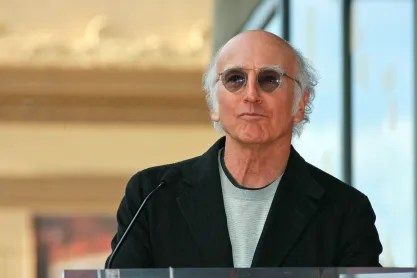
    Larry David at the induction ceremony for Mary Steenburgen into the  Hollywood Walk of Fame

    Larry David at the induction ceremony for Mary Steenburgen into the  Hollywood Walk of Fame (Shutterstock.com)

    And here’s how David ends his deliciously jeering counter to Maher:

    Two hours later, the dinner was over, and the Führer escorted me to the door. “I am so glad to have met you. I hope I’m no longer the monster you thought I was.” “I must say, mein Führer, I’m so thankful I came. Although we disagree on many issues, it doesn’t mean that we have to hate each other.” And with that, I gave him a Nazi salute and walked out into the night.

    Note to Bill: You gotta curb your enthusiasm for your “gracious” and “measured” friend. Tyranny isn’t funny, it’s evil!

    Hold on! Maher got worse when Banon arrived:

    Awful as his naïve Trump dinner fiasco was, I was nonetheless eager to hear Maher’s interview with Steve Bannon thereafter. When he wasn’t joking around, the good news was that Bill asked tough questions. The bad news was that, save for an opening exchange about Trump’s third-term aspirations, Maher really didn’t press Bannon every time he responded with an evasive answer. He just let it sit there and moved on to another tough question followed by more evasive answers . . . followed by “bro bonding.”

    Really Bill! What the fuck happened to your strong sting, bro? You were more like a soft butterfly.

    Remember:

    ‘60 Minutes’ producer quits over journalistic independence

    Bill Owens

    Bill Owens

    CBS News entered a new period of turmoil on Tuesday after the executive producer of “60 Minutes,” Bill Owens, said that he would resign from the long-running Sunday news program, citing encroachments on his journalistic independence.

    In an extraordinary declaration, Mr. Owens — only the third person to run the program in its 57-year history — told his staff in a memo that “over the past months, it has become clear that I would not be allowed to run the show as I have always run it, to make independent decisions based on what was right for ‘60 Minutes,’ right for the audience.”

    “So, having defended this show — and what we stand for — from every angle, over time with everything I could, I am stepping aside so the show can move forward,” he wrote in the memo, which was obtained by The New York Times.

    ‘60 Minutes’ has faced mounting pressure in recent months from both President Trump, who sued CBS for $10 billion and has accused the program of “unlawful and illegal behavior,” and its own corporate ownership at Paramount, the parent company of CBS News.

    Paramount’s controlling shareholder, Shari Redstone, is eager to secure the Trump administration’s approval for a multibillion-dollar sale of her company to Skydance, a company run by the son of the tech billionaire Larry Ellison.”

    Comments offered to FAN by Floyd Abrams and Ira Glasser

    “It is deeply troubling that Bill Owens, whose leadership of ‘60 Minutes’ as its executive producer has been repeatedly honored through the years, has been obliged to resign because of pressure from the Trump Administration and ABC’s new corporate owner. It is a blow to independent journalism and a great loss to the American public.” — Floyd Abrams

    “Unless the Supreme Court radically changes First Amendment law, Trump’s suit has no legal merit.  If Paramount isn’t interested in defending CBS’ right to criticize public officials, it ought to sell CBS to someone who is, and stick to the entertainment business. What Edward R. Murrow and Walter Cronkite constructed, Shari Redstone [executive chairwoman of Paramount Global] is tearing down.” — Ira Glasser

    Related


    Coming Next Wednesday

    Zick’s Resources Compilation of Executive Actions Affecting First Amendment Rights 

    Coming as soon as next Wednesday, Professor Stephen Solomon and his colleagues over at First Amendment Watch will launch Professor Timothy Zick’s invaluable Resources pages, replete with a comprehensive, topical, and hyperlinked set of references to virtually all of the Trump executive orders and related actions affecting free expression. This user-friendly and topic-specific resources page provides the most detailed and yet across-the-board account of what has happened within the last 100 days of this Administration in matters concerning the First Amendment.


    Jury rules against Palin in defamation against The New York Times

    The New York Times did not libel former Alaska Gov. Sarah Palin in a 2017 editorial that contained an error she claimed had damaged her reputation, a jury concluded Tuesday. Former Alaska Gov. Sarah Palin campaigned for the state’s U.S. House seat in 2022 with the support of President Trump. She did not win.

    The jury deliberated a little over two hours before reaching its verdict. A judge and a different jury had reached the same conclusion about Palin’s defamation claims in 2022, but her lawsuit was revived by an appeals court.

    Palin was subdued as she left the courthouse and made her way to a waiting car, telling reporters: “I get to go home to a beautiful family of five kids and grandkids and a beautiful property and get on with life. And that’s nice.”

    FIRE fires back in Trump pollster fraud suit

    “This lawsuit is, as the Bard put it, a tale ‘full of sound and fury, signifying nothing.’”

    This case is built entirely on a tissue of shopworn campaign rhetoric and fever-dream conspiracy theories, yet even accepting Plaintiffs’ wild factual assertions as true, the Complaint lacks any plausible legal theory on which to grant relief. The allegations of “fraudulent news” are an affront to basic First Amendment law, and Plaintiffs continue to butcher elementary concepts like duty, reliance, causation, and damages under Iowa law. The Court should dismiss the Amended Complaint.

    Arguments

    1. Plaintiffs’ Claim That Election Polls and the News Coverage They Generate Can Be Labelled “Fraud” Unprotected by the First Amendment is Utterly Baseless.
    2. There is No General First Amendment Exception for False Speech.
    3. Election Polling is Not Commercial Speech and is Fully Protected Election News Coverage.
    4. No Case Law Supports Plaintiffs’ Theory of Liability.
    5. Plaintiffs’ Claims are Facially Deficient Under Iowa Law
    6. Plaintiffs Fail to Plead a Cognizable ICFA Claim.
    7. Plaintiffs Fail to Plead a Fraudulent Misrepresentation Claim.
    8. Plaintiffs Fail to Plead a Negligent Misrepresentation Claim.
    9. Piercing the Corporate Veil.

    Conclusion

    This lawsuit is, as the Bard put it, a tale “full of sound and fury, signifying nothing.” William Shakespeare, Macbeth, Act 5, Scene 5. Once you get past the groundless assertions, campaign-style hyperbole, and overheated conspiracy theories, there is nothing left. No legal basis whatsoever supports the claims, and Plaintiffs’ opposition to the motions to dismiss reveals both shocking unfamiliarity with basic concepts of First Amendment law and a disregard of the pleading requirements for fraud or misrepresentation under Iowa law. As one court summed it up in another of President Trump’s attacks on free speech: “This case should never have been brought. Its inadequacy as a legal claim was evident from the start. No reasonable lawyer would have filed it. Intended for a political purpose, none of the counts of the amended complaint stated a cognizable legal claim.” Trump v. Clinton, 653 F.Supp.3d at 1207. The Court should dismiss this case with prejudice.

    Attorneys for Defendants J. Ann Selzer, and Selzer & Company: Robert Corn-Revere, Conor T. Fitzpatrick, Greg H. Greubel, and Matthew A. McGuire

    School district ordered to pay attorney fees to censored parent

    Bret Nolan of the Federalist Society

    Bret Nolan (Federalist Society)

    A federal judge has ordered that the Sheridan County (WY) School District must pay attorneys’ fees following a lawsuit with Harry Pollak, a parent censored during a 2022 school board meeting

    Following a lengthy legal dispute, the United States District Court for the District of Wyoming has awarded attorneys’ fees totaling $156,000 to the litigation team representing Harry Pollak of Sheridan County. Mr. Pollak was represented by Institute for Free Speech Senior Attorney Brett Nolan and local counsel Seth Johnson.

    Mr. Pollak initially filed suit against the Sheridan County School District in March 2022 after he was cut off from speaking from speaking critically about the superintendent at a school board meeting. The board cited a policy against discussing “personnel matters” as the reason for censoring him, and it called the police to escort him out of the building.

    Last fall, the district court ruled in favor of Mr. Pollak, declaring that the school board violated his First Amendment rights and awarded him nominal damages of $17.91 (a symbolic amount referring to the year the First Amendment was ratified). The court also permanently enjoined the board from enforcing its policy to prevent speakers like Mr. Pollak who want to criticize school staff by name.

    [ . . . ]

    To read the full fees order, Pollak v. Wilson, et al., click here.

    Mchangama and Marami on deportation and dissent

    The Trump administration is invoking a clause of the Immigration and Nationality Act of 1952 that allows the Secretary of State broad discretion to deport anyone he believes “would have potentially serious adverse foreign policy consequences for the United States.” As such, a recently released memo detailing the government’s case against the most prominent of the activists, Mahmoud Khalil, refrains from charging him with any crime. On Friday, a Louisiana immigration judge upheld the Government’s decision to deport Khalil. Constitutional scholars debate whether and to what extent the First Amendment protects noncitizens in such cases, and the Supreme Court may eventually weigh in.

    But the question is not only constitutional — it is foundational. Is deporting foreigners for expressing disfavored views compatible with a robust commitment to a culture of free speech?

    As it turns out, history has a lot to tell us about states that exclude foreigners with controversial opinions and those that welcome non-native dissenters.

    [ . . . ]

    From Zenger to Hitchens, from Abrams to Arendt, it has often been immigrants who tested the boundaries of the First Amendment — and in doing so, helped define its meaning. To now deport people for unpopular opinions is not merely a constitutional gray zone. It is a betrayal of the very idea that truth and progress emerge from argument, not conformity.

    Silencing foreign voices won’t make America safer. It will make it smaller and less resilient. A confident, free nation doesn’t banish speech — it engages it.

    The odd couple: Franks and Corn-Revere in dialogue (and debate) at Brooklyn Law School event

    Robert Corn-Revere and Mary Anne Franks at Fearless Speech

    FIRE Chief Counsel Robert Corn-Revere (left) and Professor Mary Anne Franks


    April 17, 2025: Book Talk: Dr. Mary Anne Franks’ Fearless Speech

    Featuring: 

    Dr. Mary Anne Franks — Eugene L. and Barbara A. Bernard Professor in Intellectual Property, Technology, and Civil Rights Law, George Washington Law School; President and Legislative & Tech Policy Director, Cyber Civil Rights Initiative

    Robert Corn-Revere — Chief Counsel, Foundation for Individual Rights and Expression (FIRE)

    Moderators

    William Araiza, Stanley A. August Professor of Law, Brooklyn Law School

    Joel Gora, Professor of Law, Brooklyn Law School

    Discussants

    Ron Collins, Co-founder of the History Book Festival and former Harold S. Shefelman Scholar, University of Washington Law School

    Sarah C. Haan, Class of 1958 Uncas and Anne McThenia Professor of Law, Washington and Lee University School of Law

    More in the news

    2024-2025 SCOTUS term: Free expression and related cases

    Cases decided

    • Villarreal v. Alaniz (Petition granted. Judgment vacated and case remanded for further consideration in light of Gonzalez v. Trevino, 602 U. S. ___ (2024) (per curiam))
    • Murphy v. Schmitt (“The petition for a writ of certiorari is granted. The judgment is vacated, and the case is remanded to the United States Court of Appeals for the Eighth Circuit for further consideration in light of Gonzalez v. Trevino, 602 U. S. ___ (2024) (per curiam).”)
    • TikTok Inc. and ByteDance Ltd v. Garland (9-0: The challenged provisions of the Protecting Americans from Foreign Adversary Controlled Applications Act do not violate petitioners’ First Amendment rights.)

    Review granted

    Pending petitions

    Petitions denied

    Emergency Applications

    • Yost v. Ohio Attorney General (Kavanaugh, J., “IT IS ORDERED that the March 14, 2025 order of the United States District Court for the Southern District of Ohio, case No. 2:24-cv-1401, is hereby stayed pending further order of the undersigned or of the Court. It is further ordered that a response to the application be filed on or before Wednesday, April 16, 2025, by 5 p.m. (EDT).”)

    Free speech related

    • Mahmoud v. Taylor (Free exercise case — Issue: Whether public schools burden parents’ religious exercise when they compel elementary school children to participate in instruction on gender and sexuality against their parents’ religious convictions and without notice or opportunity to opt out.)
    • Thompson v. United States (Decided: 3-21-25/ 9-0 w special concurrences by Alito and Jackson) (Interpretation of 18 U. S. C. §1014 re “false statements”)

    Last scheduled FAN

    FAN 466: “Sixty-one media organizations and press freedom advocates contest Perkins Coie executive order

    This article is part of First Amendment News, an editorially independent publication edited by Ronald K. L. Collins and hosted by FIRE as part of our mission to educate the public about First Amendment issues. The opinions expressed are those of the article’s author(s) and may not reflect the opinions of FIRE or Mr. Collins.

    Source link

  • ‘Economically Reckless’ Businesses Slam Bill to Bar Immigrant Kids From School – The 74

    ‘Economically Reckless’ Businesses Slam Bill to Bar Immigrant Kids From School – The 74


    Get stories like this delivered straight to your inbox. Sign up for The 74 Newsletter

    More than two dozen Chattanooga business owners are condemning a bill to require student immigration background checks in Tennessee’s public schools as “economically reckless.”

    The Tennessee Small Business Alliance represents restaurants, real estate firms, retail stores and other local employers operating within the district represented by Sen. Bo Watson.

    Watson, a Republican, is cosponsoring the legislation to require proof of legal residence to enroll in public K-12 and charter schools.  The bill would also give public schools the option of charging tuition to the families of children unable to prove they legally reside in the United States – or to deny them the right to a public education altogether.

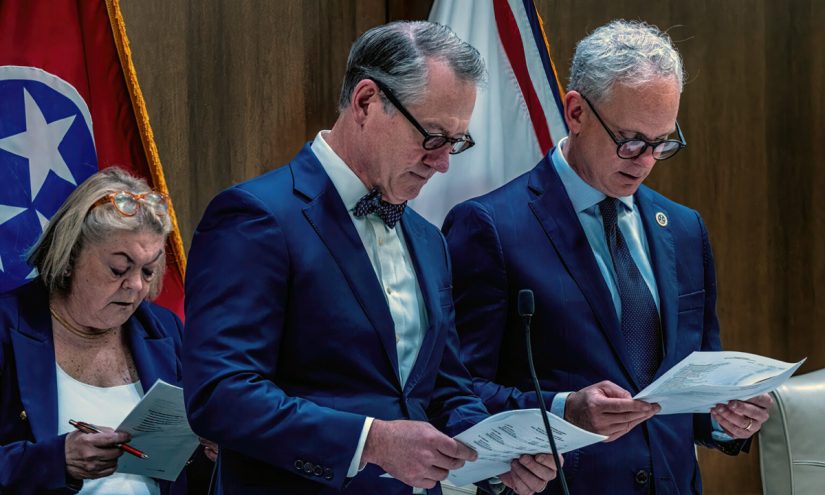
    House Leader William Lamberth of Gallatin is a co-sponsor of the bill, which has drawn significant — but not unanimous — support from fellow Tennessee Republicans. Lamberth’s version of the bill differs from Watson’s in that it would make it optional — rather than mandatory — to check students’ immigration status in all of Tennessee’s more than 1700 public schools.

    The bill, one of the most controversial being considered during the 2025 Legislative session, has significant momentum as the Legislature winds down for the year even as it has drawn raucous protests at times.  The legislation will next be debated on Monday in a House committee.

    A statement released by the business alliance described the legislation as a “political stunt that’s cruel, economically reckless, and completely out of step with local values.”

    Citing estimates compiled by the nonprofit advocacy organization, American Immigration Council, the statement noted that more than 430,000 immigrants in Tennessee paid $4.4 billion in taxes – more than $10,000 per immigrant.

    Watson, in an emailed statement from Chattanooga public relations firm Waterhouse Public Relations, said his bill “raises important questions about the financial responsibility of educating undocumented students in Tennessee—questions that have long gone unaddressed.”

    The statement said the Supreme Court’s 1982 decision in Plyler v. Doe, which established the right to a public school education for all children regardless of immigration status, has “never been re-examined in the context of today’s challenges.” The statement said Watson is committed to a “transparent, fact-driven discussion about how Tennessee allocates its educational resources and how federal mandates impact our state’s budget and priorities.”

    Watson has previously also said the legislation was prompted, in part, by the rising costs of English-language instruction in the state’s public schools.

    Democrats have criticized that argument as based on inaccurate assumptions that English language learners lack legal immigration status.

    Kelly Fitzgerald, founder of a Chattanooga co-working business and one of 27 employers that signed onto the statement of condemnation, criticized lawmakers.

    “Do our representatives believe that undocumented children — who had no say in their immigration status — should be denied a public education, even though their families already pay taxes that fund our schools?” said Fitzgerald, whose own children attend Hamilton County Public schools

    “My children are receiving a great education in our public schools, and I want every child to have the same rights and opportunities as mine do,” she said.

    “In my opinion, this is not something our legislators should be spending their resources on when there are much larger issues at hand in the current environment,” she said. “We should leave children out of the conversation.”

    Tennessee Lookout is part of States Newsroom, a nonprofit news network supported by grants and a coalition of donors as a 501c(3) public charity. Tennessee Lookout maintains editorial independence. Contact Editor Holly McCall for questions: [email protected].


    Get stories like these delivered straight to your inbox. Sign up for The 74 Newsletter

    Source link

  • Stakeholders call bluff on anti-OPT bill

    Stakeholders call bluff on anti-OPT bill

    Titled H.R. 2315, the Fairness for High-Skilled Americans Act, the bill was reintroduced by Gosar, who argued that OPT “undercuts American workers” and lets “greedy businesses hire inexpensive foreign labour” without providing benefits.

    “Never authorized by Congress, OPT circumvents the H-1B visa cap set by Congress by allowing over 100,000 aliens admitted into our country on student visas to continue working in the United States for another three years after completing their academic studies,” read a statement by Gosar.

    “The OPT program completely abandons young Americans who have spent years and tens of thousands of dollars pursuing careers in science, technology, engineering, and mathematics only to be pushed out of those fields by cheap foreigners.”

    Though the legislation has been referred to the House Committee on the Judiciary, stakeholders have already shut down any possibility of it passing the US House of Representatives in the future. 

    While proposals like this tend to generate headlines, the likelihood of this bill advancing in Congress is extremely low
    John Evans, Catalyst Gem

    “While proposals like this tend to generate headlines, the likelihood of this bill advancing in Congress is extremely low,” John Evans, co-founder and CEO, Catalyst Gem, a US-based software and services company specialising in international student admissions, told The PIE News

    “The last serious attempt to eliminate OPT came in 2020 and failed in the face of overwhelming bipartisan, legal, and economic opposition. Despite significant political pressure, the program remained fully intact, without any modifications, because of its recognised value to the US economy and workforce development.”

    This isn’t Gosar’s first attempt to target the OPT program. In 2019, he introduced similar legislation and urged its termination through an executive order by President Donald Trump, who was serving his first term at the time.

    Following Gosar’s move, WashTech – a union representing STEM workers – also took legal action, suing the US government over its 1992 rule that established the 12-month OPT program and the 2016 regulation which allows eligible STEM graduates to extend OPT by 24 months.

    But the idea that OPT displaces American workers with international graduates is far from the truth, according to Evans. 

    “As of April 2025, the US had 7.6 million job openings, with high-skill sectors such as tech, healthcare, and engineering facing some of the greatest shortages,” he explained.

    “Looking ahead, the US is projected to create 1.1 million new STEM jobs over the next decade and will need a continued pipeline of talent, including OPT, to support this growth. Failure to meet this demand will weaken the US position in the global economy, particularly if the talent is directed elsewhere.”

    Despite efforts by the Trump administration, which pushed to restrict or eliminate OPT under the direction of then senior advisor to the President, Stephen Miller, the proposed changes were ultimately abandoned due to strong opposition from universities, business leaders, and other key groups.

    Since then, OPT has remained a critical part in international appeal for US education and in 2023, the number of international students participating in the program rose to 242,782 – a 22% jump from the year before. 

    This surge played a significant role in pushing the overall international student population in the country to a record 1.1 million, with OPT participants making up a substantial portion of that total.

    “I don’t see this bill going anywhere as the US needs more highly skilled workers – both American and otherwise to fuel an economy that is moving towards doing more highly skilled work in the US,” stated Mark Kopenski, president and CEO, Global Student Recruitment Advisors, a consultancy firm handling international student recruitment and enrolment strategies for educational institutions. 

    “The (Trump) administration has been bullish on creating paths to permanent residence for highly skilled and educated individuals from around the globe. This will take some time as there is a clearing out of many individuals that have come to the US illegally and without skills, financial resources and abilities that the US desires.”

    According to Kopenski, programs like the “Gold Card Visa” are designed to attract highly skilled talent and noted that some international students in the US have already acquired or are planning to acquire these visas.

    Although programs like the H-1B visa, which allows US employers to temporarily hire international workers in specialised fields, have faced scrutiny during Trump’s second term, the former president has voiced support for granting green cards to international college graduates. 

    However, no legislation has materialised to back this proposal, and instead, international graduates are encountering growing restrictions.

    Since Trump’s inauguration in January this year, hundreds of international students have been detained and seen their visas revoked on US college and university campuses, often without any prior warning. 

    As per reports, over 80 US universities have reported visas being revoked for some of their international students. 

    Last month, US Secretary of State Marco Rubio stated that over 300 student visas had been revoked due to activities deemed “against US national interest.” 

    Experts suggest the revocations may be tied to students’ involvement in pro-Palestine protests or minor legal infractions, such as speeding, with some facing deportation or being asked to leave the country.

    The move has led to condemnation from US educators, who have slammed the “alarming” and “deeply disturbing actions” of the Trump administration. 

    The move could possibly contribute to an already declining interest in studying in the US, as highlighted by a recent survey conducted by StudyPortals. 

    Evans commented: “To rebuild confidence, the US must adopt a more consistent, transparent, and student-centred approach to international admissions and immigration, like the streamlined policies seen in Canada, the UK, and Australia. This effort must be reinforced by public messaging and policies that clearly state: ‘You are welcome here, and your contributions matter.’”

    Meanwhile, Kopenski sees this as short-term declining interest, set to “correct itself as the US strengthens its attractiveness as a destination that provides the ultimate springboard to wealth and prosperity”.

    Source link

  • Victory in Virginia! Gov. Youngkin defends free speech by vetoing bill on ‘altered’ political media

    Victory in Virginia! Gov. Youngkin defends free speech by vetoing bill on ‘altered’ political media

    If you were planning to post an edited photo online of a Virginia political candidate during the next election, you might’ve been in trouble. 

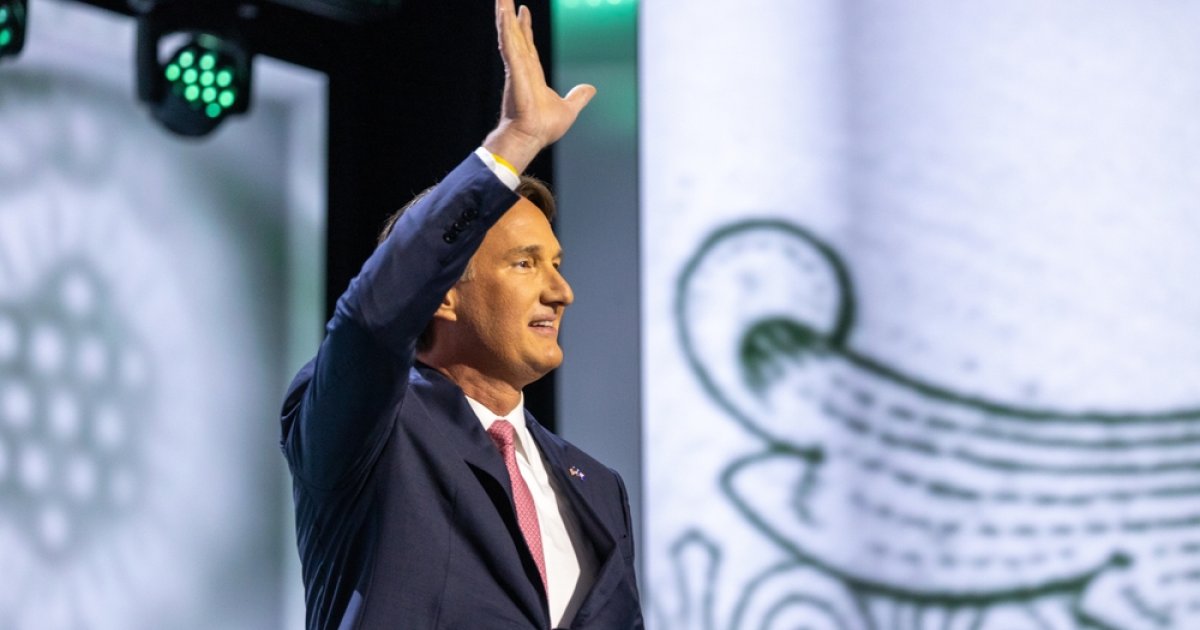
    After FIRE’s opposition and outreach on this bill, Gov. Glenn Youngkin just prevented that from happening by vetoing HB 2479. 

    The Virginia General Assembly passed HB 2479 to suppress “altered” and AI-generated depictions of candidates — enforced with threats of fines and even jail time — unless a conspicuous disclaimer was added. Instead of trusting the public to decide what’s true, false, or credible, HB 2479 would have violated the free speech rights of Virginians to make the government into the arbiter of truth. 

    This bill would’ve made it illegal for virtually any Virginian to sponsor an “electioneering communication” that contains “altered” or AI-generated images or audio recordings of identifiable candidates running for elected office. This included messages appearing in print, TV, radio, or online platforms within 60 days of an election. 

    Not only would it have included traditional paid campaign ads, but anyone’s speech expressing support for or against a candidate that involves the exchange of something of value and appears in a paper, a broadcast, or is promoted online for a fee. This could include using an AI tool that requires a paid license or even posting on a social media platform using a paid premium account that many platforms offer to extend the content’s visibility and reach.

    What “altered” means is anyone’s guess — but the government would be the decider.  Any edit that created a “fundamentally different impression” of the photo or video could count, meaning it could have covered even simple edits like cropping a photo. If an image of a candidate was cropped to fit onto a page, an aggrieved candidate could sue and argue that the crop created a “fundamentally different impression” from the original if the portion cropped out removed some kind of context — such as part of the background or another person.

    And every speaker was covered, not just mud-slinging political opponents. Suppose a small business owner buys space in a newspaper to highlight how a mayor running for reelection failed to address public safety concerns outside her shop. If she includes a slightly edited and unflattering image of the mayor, she could have been sued — even if the content is not misleading (or even relevant).

    The disclaimer requirement wouldn’t have solved the bill’s problems, and in fact created new ones. The First Amendment protects both your right to speak your mind and to hold your tongue, but disclaimers force you to utter government-mandated speech.   Even worse, the disclaimer here could have actually misled voters into thinking that someone is spreading falsehoods — even if the ad was factually accurate — simply because edited or AI-generated material was included. 

    Lawmakers certainly need to protect the electoral process, but this bill would have done the opposite, and it restricted far more speech than necessary to prevent true voter deception. It therefore was unlikely to withstand judicial scrutiny. 

    The better, constitutional way to fight falsehoods that arise during campaigns is to let candidates fight speech with more speech. If an ad is misleading or outright wrong, candidates can and should point it out. Should any depictions of candidates rise to the level of being actually defamatory, Virginia already has laws to address it. Otherwise, the First Amendment protects our right to use expressive tools like AI to enhance political communication.

    Our system of government hinges on the freedom to freely express our opinions about candidates for public office. We commend Youngkin for his veto, which will help preserve the First Amendment rights of Virginians and ensure a vibrant, open political discourse.

    Source link

  • Arkansas Passes Higher Ed “Reform” Bill

    Arkansas Passes Higher Ed “Reform” Bill

    Arkansas governor Sarah Huckabee Sanders signed a wide-ranging bill last Tuesday, upending the state’s higher education budget and clamping down on DEI and student protests, according to The Arkansas Democrat-Gazette.

    The Arkansas ACCESS Law includes a number of measures prioritizing funding for trade schools and short-term credential programs, including using the lottery system to fund school scholarships and eliminating support for Advanced Placement accelerated learning tracks in an effort to encourage career readiness over traditional college prep.

    The law also doubles funding for the state’s Academic Challenge Scholarship and expands eligibility to trade school applicants; prohibits colleges from spending on diversity, equity and inclusion initiatives or participating in any external DEI programs; and amends the state’s excused absence policies to prevent students from participating in protests.

    Source link

  • Texas Bill Would Limit Uncertified Teachers in Schools – The 74

    Texas Bill Would Limit Uncertified Teachers in Schools – The 74


    Get stories like this delivered straight to your inbox. Sign up for The 74 Newsletter

    Lawmakers want to turn the tide on the growing number of unprepared and uncertified teachers by restricting who can lead Texas classrooms. But school leaders worry those limits will leave them with fewer options to refill their teacher ranks.

    Tucked inside the Texas House’s $7.6 billion school finance package is a provision that would ban uncertified teachers from instructing core classes in public schools. House Bill 2 gives districts until fall 2026 to certify their K-5 math and reading teachers and until fall 2027 to certify teachers in other academic classes.

    Texas would help uncertified teachers pay for the cost of getting credentialed. Under HB 2, those who participate in an in-school training and mentoring program would receive a one-time $10,000 payment and those who go through a traditional university or alternative certification program would get $3,000. Special education and emergent bilingual teachers would get their certification fees waived. Educator training experts say it could be the biggest financial investment Texas made in teacher preparation. Rep. Brad Buckley, the Salado Republican who authored the bill, has signaled the House Public Education Committee will vote on HB 2 on Tuesday.

    District leaders, once reluctant to hire uncertified teachers, now rely on them often to respond to the state’s growing teacher shortage. And while they agree with the spirit of the legislation, some worry the bill would ask too much too soon of districts and doesn’t offer a meaningful solution to replace uncertified teachers who leave the profession.

    “What’s going to happen when we’re no longer able to hire uncertified teachers? Class sizes have to go up, programs have to disappear…. We won’t have a choice,” said David Vroonland, the former superintendent of the Mesquite school district near Dallas and the Frenship school district near Lubbock. “There will be negative consequences if we don’t put in place serious recruitment efforts.”

    A floodgate of uncertified teachers

    Nowadays, superintendents often go to job fairs to recruit teachers and come out empty-handed. There are not as many Texans who want to be teachers as there used to be.

    The salary in Texas is about $9,000 less than the national average, so people choose better-paying careers. Teachers say they are overworked, sometimes navigating unwieldy class sizes and using weekends to catch up on grading.

    Heath Morrison started to see the pool of teacher applicants shrink years ago when he was at the helm of Montgomery ISD. Many teachers left the job during the COVID-19 pandemic, which accelerated the problem.

    “This teacher shortage is getting more and more pronounced,” said Morrison, who is now the CEO of Teachers of Tomorrow, a popular alternative teacher certification program. “The reality of most school districts across the country is you’re not making a whole lot more money 10 years into your job than you were when you first entered … And so that becomes a deterrent.”

    As the pool of certified teachers shrunk, districts found a stopgap solution: bringing on uncertified teachers. Uncertified teachers accounted for roughly 38% of newly hired instructors last year, with many concentrated in rural districts.

    The Texas Legislature facilitated the flood of uncertified teachers. A 2015 law lets public schools get exemptions from requirements like teacher certification, school start dates and class sizes — the same exemptions allowed for open enrollment charter schools.

    Usually, to teach in Texas classrooms, candidates must obtain a certification by earning a bachelor’s degree from an accredited college or university, completing an educator preparation program and passing teacher certification exams.

    Teacher preparation experts say certifications give teachers the tools to lead a high quality classroom. To pass certification tests, teaching candidates learn how to plan for lessons and manage discipline in a classroom.

    But the 2015 law allowed districts to hire uncertified teachers by presenting a so-called “district of innovation plan” to show they were struggling to meet credential requirements because of a teacher shortage. By 2018, more than 600 rural and urban districts had gotten teacher certification exemptions.

    “Now, what we’ve seen is everyone can demonstrate a shortage,” said Jacob Kirksey, a researcher at Texas Tech University. “Almost every district in Texas is a district of innovation. That is what has allowed for the influx of uncertified teachers. Everybody is getting that waiver for certification requirements.”

    This session, House lawmakers are steadfast on undoing the loophole they created after new research from Kirksey sounded the alarm on the impacts of unprepared teachers on student learning. Students with new uncertified teachers lost about four months of learning in reading and three months in math, his analysis found. They missed class more than students with certified teachers, a signal of disengagement.

    Uncertified teachers are also less likely to stick with the job long-term, disrupting school stability.

    “The state should act urgently on how to address the number of uncertified teachers in classrooms,” said Kate Greer, a policy director at Commit Partnership. The bill “rights a wrong that we’ve had in the state for a long time.”

    The price of getting certified

    Rep. Jeff Leach, a Plano Republican who sits on the House Public Education Committee, said his wife has worked as an uncertified art teacher at Allen ISD. She started a program to get certified this winter and had to pay $5,000 out of pocket.

    That cost may be “not only a hurdle but an impediment for someone who wants to teach and is called and equipped to teach,” Leach said earlier this month during a committee hearing on HB 2.

    House lawmakers are proposing to lower the financial barriers that keep Texans who want to become teachers from getting certified.

    “Quality preparation takes longer, is harder and it’s more expensive. In the past, we’ve given [uncertified candidates] an opportunity just to walk into the classroom,” said Jean Streepey, the chair of the State Board for Educator Certification. “How do we help teachers at the beginning of their journey to choose something that’s longer, harder and more expensive?”

    Streepey sat on the teacher vacancy task force that Gov. Greg Abbott established in 2022 to recommend fixes to retention and recruitment challenges at Texas schools. The task force’s recommendations, such as prioritizing raises and improving training, have fingerprints all over the Texas House’s school finance package.

    Under HB 2, districts would see money flow in when they put uncertified teachers on the path to certification. And those financial rewards would be higher depending on the quality of the certification program.

    Schools with instructors who complete yearlong teacher residencies — which include classroom training and are widely seen as the gold standard for preparing teacher candidates — would receive bigger financial rewards than those with teachers who finish traditional university or alternative certification programs.

    Even with the financial help, lawmakers are making a tall order. In two years, the more than 35,000 uncertified teachers in the state would have to get their credential or be replaced with new, certified teachers.

    “The shortages have grown to be so great that I think none of us have a really firm handle on the measures that it’s going to take to turn things around.” said Michael Marder, the executive director of UTeach, a UT-Austin teacher preparatory program. “There is financial support in HB 2 to try to move us back towards the previous situation. However, I just don’t know whether the amounts that are laid out there are sufficient.”

    Restrictions like “handcuffs”

    Only one in five uncertified teachers from 2017 to 2020 went on to get a credential within their first three years of teaching. Texas can expect a jump in uncertified teachers going through teacher preparatory programs because of the financial resources and pressure on schools through HB 2, Marder said.

    But for every teacher who does not get credentialed, school leaders will have to go out and find new teachers. And they will have to look from a smaller pool.

    The restrictions on uncertified teachers “handcuffs us,”said Gilbert Trevino, the superintendent at Floydada Collegiate ISD, which sits in a rural farming town in West Texas. In recent years, recruiters with his district have gone out to job fairs and hired uncertified teachers with a college degree and field experience in the subjects they want to teach in.

    Rural schools across the state have acutely experienced the challenges of the teacher shortage — and have leaned on uncertified teachers more heavily than their urban peers.

    “We have to recruit locally and grow our own or hire people who have connections or roots in the community,” Trevino said. “If we hire a teacher straight out of Texas Tech University, we may have them for a year. … And then they may get on at Lubbock ISD or Plainview ISD, where there’s more of a social life.”

    Floydada Collegiate ISD recruits local high school students who are working toward their associate’s degree through what is known as a Grown Your Own Teacher program. But Trevino says HB 2 does not give him the time to use this program to replace uncertified teachers. From recruitment to graduation, it takes at least three years before students can lead a classroom on their own, he said.

    School leaders fear if they can’t fill all their vacancies, they’ll be pushed to increase class sizes or ask their teachers to prepare lessons for multiple subjects.

    “Our smaller districts are already doing that, where teachers have multiple preps,” Trevino said. “Things are already hard on our teachers. So if you add more to their plate, how likely are they to remain in the profession or remain in this district?”

    At Wylie ISD in Taylor County, it’s been difficult to find teachers to keep up with student growth. Uncertified teachers in recent years have made up a large number of teacher applicants, according to Cameron Wiley, a school board trustee.

    Wiley said restrictions on uncertified teachers is a “good end goal” but would compound the district’s struggles.

    “It limits the pot of people that’s already small to a smaller pot. That’s just going to make it more difficult to recruit,” Wiley said. “And if we have a hard time finding people to come in, or we’re not allowed to hire certain people to take some of that pressure off, those class sizes are just going to get bigger.”

    Learning suffers when class sizes get too big because students are not able to get the attention they need.

    “This bill, it’s just another obstacle that we as districts are having to maneuver around and hurl over,” Wiley said. “We’re not addressing the root cause [recruitment]. We’re just putting a Band-Aid on it right now.”

    This article originally appeared in The Texas Tribune at https://www.texastribune.org/2025/03/15/texas-school-funding-uncertified-teachers-shortage/.

    The Texas Tribune is a member-supported, nonpartisan newsroom informing and engaging Texans on state politics and policy. Learn more at texastribune.org.


    Get stories like these delivered straight to your inbox. Sign up for The 74 Newsletter

    Source link

  • llinois Community College Bachelor’s Degree Bill Stalls Amid Equity Concerns

    llinois Community College Bachelor’s Degree Bill Stalls Amid Equity Concerns

    Illinois Governor JB PritzkerA legislative initiative backed by Illinois Governor JB Pritzker that would allow community colleges to offer four-year bachelor’s degrees in high-demand fields has temporarily stalled in the state’s General Assembly, with lawmakers raising concerns about potential impacts on minority-serving institutions.

    The bill, which was one of Gov. Pritzker’s top legislative priorities announced in his February State of the State address, failed to advance from the House Higher Education Committee before Friday’s deadline for most non-spending bills.

    Rep. Katie Stuart, who chairs the committee, declined to call House Bill 3717 for a vote, though she indicated the legislation may still have a path forward this session.

    “I don’t think around here anything’s really ever dead, and I think there’s a path forward,” Stuart told reporters following last Wednesday’s committee hearing.

    Stuart, whose district includes Southern Illinois University Edwardsville, expressed specific concerns about how the proposed expansion might affect institutions that primarily serve minority students, such as Northeastern Illinois University and Chicago State University.

    “If we’re not careful about what programs are allowed, that it could collapse the existing programs in those institutions, collapse their student base, and just make them not able to be operational,” Stuart explained. “And then we wouldn’t have a four-year institution serving those communities.”

    This sentiment reflects growing concerns in higher education about maintaining equitable access while expanding educational options, particularly when considering the vital role that historically minority-serving institutions play in providing educational pathways for underrepresented populations.

    The governor’s proposal, introduced as House Bill 3717 by Rep. Tracy Katz Muhl, aims to make bachelor’s degrees more affordable and accessible, particularly in rural areas where four-year universities may not have a significant presence.

    “With lower tuition rates and a greater presence across the state — especially in rural areas — community colleges provide the flexibility and affordability students need,” Pritzker said when introducing the initiative. “This is a consumer-driven, student-centered proposal that will help fill the needs of regional employers in high-need sectors and create a pathway to stable, quality jobs for more Illinoisans.”

    The bill would allow community colleges to offer bachelor’s degrees in select fields, provided the college’s board of trustees demonstrates the program would address an “unmet workforce need” in their service area and that the institution possesses adequate resources and expertise to sustain the program.

    Following last week’s committee hearing, a coalition of presidents from several public and private universities in Illinois, including Chicago State and Northeastern Illinois University, released a statement acknowledging their concerns while expressing willingness to find a compromise.

    The university leaders noted they were concerned about “duplicating efforts and increasing costs at a time of limited resources,” but added they are “encouraged by negotiations and remain committed to working collaboratively to build a higher education ecosystem that serves all of our students and employers.”

    Despite missing the committee deadline, both Rep. Stuart and the governor’s office expressed optimism about reaching a compromise that addresses the concerns of all stakeholders.

    .

    Source link

  • Kentucky Gov. Andy Beshear vetoes bill to ban DEI at public colleges

    Kentucky Gov. Andy Beshear vetoes bill to ban DEI at public colleges

    This audio is auto-generated. Please let us know if you have feedback.

    Kentucky Gov. Andy Beshear on Thursday vetoed a bill aiming to ban the state’s public colleges from spending money on diversity, equity and inclusion efforts.

    “We’ve worked hard to make our commonwealth a welcoming place,” the Democratic governor said in a social media post Thursday. “House Bill 4 takes us away from that. We should be embracing diversity, not banning it.”

    But Beshear’s veto will likely prove to be strictly symbolic, as the state’s Republican lawmakers hold a veto-proof supermajority. 

    State Rep. Josh Calloway, a co-sponsor of the bill, said Thursday that the Legislature plans to override Beshear’s veto next week and blasted the governor’s decision.

    “His veto of our bill to end DEI in colleges is nothing but political theater, and the people of Kentucky see right through it,” he posted on social media.

    The legislation — which offered exemptions for programs required by federal and state law — also seeks to bar colleges from requiring students to take classes that would “indoctrinate participants with a discriminatory concept,” which it defines as promoting “differential treatment or benefits conferred to individuals on the basis of religion, race, sex, color, or national origin.”

    And it would prohibit Kentucky’s higher education coordinating board from approving degree programs with such courses, as well as ban colleges from using diversity statements or requiring employees to undergo DEI training.

    The American Civil Liberties Union of Kentucky praised Beshear’s decision. 

    “Thank you, Governor, for recognizing that diversity makes us stronger, equity makes us fair, and inclusion is a Kentucky value,” the organization said on social media Thursday.

    Should the lawmakers enact the legislation, public colleges would have until the end of June to eliminate all DEI positions and offices.

    Kentucky colleges are facing attacks on DEI at the federal level as well.

    The University of Kentucky is one of more than 50 colleges facing investigations by the U.S. Department of Education over allegations that they offer programs with race-based restrictions.

    On Wednesday, university President Eli Capilouto said that his institution had minimal engagement with the The PhD Project, the organization at the center of the majority of the department’s probes. 

    Nevertheless, Capilouto said the University of Kentucky had formally cut ties with the group and will fully cooperate with the federal investigation. 

    The university previously eliminated its DEI center in August, citing looming state legislation.

    Source link

  • (HR 1391). Restoring the GI Bill for Vets Ripped Off by Predatory Schools

    (HR 1391). Restoring the GI Bill for Vets Ripped Off by Predatory Schools

    The US House Bill to restore GI Bill funds to those who have been ripped off by predatory schools has had little traction so far.  While politicians like to say “thank you for your service,” only nine House members have signed on to the Bill, all Democrats. Both Republicans and Democrats have received funds by these schools, which also have lobbyists in DC to promote their agenda. 

    Source link

  • TN Schools Could Exclude Immigrant Kids Without Legal Status in GOP-Backed Bill – The 74

    TN Schools Could Exclude Immigrant Kids Without Legal Status in GOP-Backed Bill – The 74


    Get stories like this delivered straight to your inbox. Sign up for The 74 Newsletter

    Tennessee lawmakers on Wednesday voted to advance a bill that would require public K-12 and charter schools to verify student immigration status and allow them to bar children who cannot prove they lawfully reside in the United States unless they pay tuition.

    The 5-4 vote by the Senate Education Committee came despite the Legislature’s own fiscal analysis, which said the proposed legislation “may jeopardize federal funding to the state and to local governments” and violate the federal Civil Rights Act, which specifically prohibits discrimination based on national origin in programs receiving federal dollars. Three Republicans joined the committee’s sole Democrat in voting “no.”

    Immediately after the vote was cast, shouts of “so shameful” and “that’s trash” erupted inside the hearing room. Others, including school-age children in attendance, streamed out of the room in tears.

    The bill (HB793/SB836) by Sen. Bo Watson, a Hixson Republican, and House Majority Leader William Lamberth, a Portland Republican, says that local school districts and public charter schools “shall require” students to provide one of three forms of documentation: proof of U.S. citizenship, proof the student is in the process of obtaining citizenship or proof they have legal immigration status or a visa.

    Students who lack one of the three forms of documentation could then be barred by their local school district from enrolling unless their parents paid tuition.

    Watson,  the bill’s sponsor, said he brought the measure in response to the increasing cost to the state of providing English-as-a-second-language instruction.

    “Remember, we are not talking about people who are here lawfully,” Watson said. “What I’m trying to discuss here is the financial burden that exists with what appears to be an increasing number of people who are not lawfully here.”

    In response to a question from Sen. Raumesh Akbari of Memphis, the sole Democrat on the panel, Watson said he had received no formal request from any school official to introduce the measure.

    “In an official capacity, this is one of those issues people do not talk about,” Watson said. “This is a very difficult bill to present. It is very difficult to have all these eyes on you.”

    “In an unofficial capacity at numerous events, have people mentioned this problem to me? Absolutely,” Watson said.

    Akbari responded: “I’m from the largest school district in the state. I have not had those conversations.”

    “I am offended by this legislation,” Akbari said. “I find that it is so antithetical to the very foundation of this country….This is saying that babies – you start school at five years old – that you do not deserve to be educated.”

    The bill’s sponsors have acknowledged the measure is likely to face a legal challenge if enacted. The proposed legislation, they have said, is intended to serve as a vehicle to potentially overturn the Supreme Court’s Plyler v. Doe decision, which established a constitutional right to a public school education for all children. The 1982 decision was decided by a 5-4 vote, Watson noted.

    “Many 5-4 decisions taken to the court today might have a different outcome,” Watson said.

    The proposed legislation is part of an unprecedented slate of immigration-related bills introduced in the Tennessee legislature this year as Gov. Bill Lee and the General Assembly’s GOP supermajority seek to align with the Trump Administration’s immigration policies.

    Lee last month signed into law legislation to create a state immigration enforcement office to liaise with the Trump administration, create distinct driver’s licenses for noncitizens and levy felony charges at local elected officials who vote in favor of sanctuary policies.

    Among nearly three dozen other immigration-related bills still being considered is one to require hospitals that accept Medicaid payments to report on the immigration status of their patients. Another bill would open up charitable organizations, including churches, to lawsuits if they have provided housing services to an individual without permanent legal immigration status and that individual goes on to commit a crime.

    Following Wednesday’s hearing in the Senate Education Committee, hundreds congregated in a hallway of the Legislature, chanting “education for all” and pledged to return as the bill winds through the committee process.

    The bill “instills fear and hopelessness in these students,” said Ruby Aguilar, a Nashville teacher who testified against the bill during the hearing.  “Education is not merely a privilege, it is a shared human right every child should have access to.”

    Tennessee Lookout is part of States Newsroom, a nonprofit news network supported by grants and a coalition of donors as a 501c(3) public charity. Tennessee Lookout maintains editorial independence. Contact Editor Holly McCall for questions: [email protected].


    Get stories like these delivered straight to your inbox. Sign up for The 74 Newsletter

    Source link