Tag: Black

  • AI teacher tools display racial bias when generating student behavior plans, study finds

    AI teacher tools display racial bias when generating student behavior plans, study finds

    This story was originally published by Chalkbeat. Sign up for their newsletters at ckbe.at/newsletters.

    Asked to generate intervention plans for struggling students, AI teacher assistants recommended more-punitive measures for hypothetical students with Black-coded names and more supportive approaches for students the platforms perceived as white, a new study shows.

    These findings come from a report on the risks of bias in artificial intelligence tools published Wednesday by the non-profit Common Sense Media. Researchers specifically sought to evaluate the quality of AI teacher assistants — such as MagicSchool, Khanmingo, Curipod, and Google Gemini for Education — that are designed to support classroom planning, lesson differentiation, and administrative tasks.

    Common Sense Media found that while these tools could help teachers save time and streamline routine paperwork, AI-generated content could also promote bias in lesson planning and classroom management recommendations.

    Robbie Torney, senior director of AI programs at Common Sense Media, said the problems identified in the study are serious enough that ed tech companies should consider removing tools for behavior intervention plans until they can improve them. That’s significant because writing intervention plans of various sorts is a relatively common way teachers use AI.

    After Chalkbeat asked about Common Sense Media’s findings, a Google spokesperson said Tuesday that Google Classroom has turned off the shortcut to Gemini that prompts teachers to “Generate behavior intervention strategies” to do additional testing.

    However, both MagicSchool and Google, the two platforms where Common Sense Media identified racial bias in AI-generated behavior intervention plans, said they could not replicate Common Sense Media’s findings. They also said they take bias seriously and are working to improve their models.

    School districts across the country have been working to implement comprehensive AI policies to encourage informed use of these tools. OpenAI, Anthropic, and Microsoft have partnered with the American Federation of Teachers to provide free training in using AI platforms. The Trump Administration also has encouraged greater AI integration in the classroom. However, recent AI guidelines released by the U.S. Department of Education have not directly addressed concerns about bias within these systems.

    About a third of teachers report using AI at least weekly, according to a national survey conducted by the Walton Family Foundation in cooperation with Gallup. A separate survey conducted by the research organization Rand found teachers specifically report using these tools to help develop goals for Individualized Education Program — or IEP — plans. They also say they use these tools to shape lessons or assessments around those goals, and to brainstorm ways to accommodate students with disabilities.

    Torney said Common Sense Media isn’t trying to discourage teachers from using AI in general. The goal of the report is to encourage more awareness of potential uses of AI teacher assistants that might have greater risks in the classroom.

    “We really just want people to go in eyes wide open and say, ‘Hey these are some of the things that they’re best at and these are some of the things you probably want to be a little bit more careful with,’” he said.

    Common Sense Media identified AI tools that can generate IEPs and behavior intervention plans as high risk due to their biased treatment of students in the classroom. Using MagicSchool’s Behavior Intervention Suggestions tool and the Google Gemini “Generate behavior intervention strategies tool,” Common Sense Media’s research team ran the same prompt about a student who struggled with reading and showed aggressive behavior 50 times using white-coded names and 50 times using Black-coded names, evenly split between male- and female-coded names.

    The AI-generated plans for the students with Black-coded names didn’t all appear negative in isolation. But clear differences emerged when those plans from MagicSchool and Gemini were compared with plans for students with white-coded names.

    For example, when prompted to provide a behavior intervention plan for Annie, Gemini emphasized addressing aggressive behavior with “consistent non-escalating responses” and “consistent positive reinforcement.” Lakeesha, on the other hand, should receive “immediate” responses to her aggressive behaviors and positive reinforcement for “desired behaviors,” the tool said. For Kareem, Gemini simply said, “Clearly define expectations and teach replacement behaviors,” with no mention of positive reinforcement or responses to aggressive behavior.

    Torney noted that the problems in these AI-generated reports only became apparent across a large sample, which can make it hard for teachers to identify. The report warns that novice teachers may be more likely to rely on AI-generated content without the experience to catch inaccuracies or biases. Torney said these underlying biases in intervention plans “could have really large impacts on student progression or student outcomes as they move across their educational trajectory.”

    Black students are already subject to higher rates of suspension than their white counterparts in schools and more likely to receive harsher disciplinary consequences for subjective reasons, like “disruptive behavior.” Machine learning algorithms replicate the decision-making patterns of the training data that they are provided, which can perpetuate existing inequalities. A separate study found that AI tools replicate existing racial bias when grading essays, assigning lower scores to Black students than to Asian students.

    The Common Sense Media report also identified instances when AI teacher assistants generated lesson plans that relied on stereotypes, repeated misinformation, and sanitized controversial aspects of history.

    A Google spokesperson said the company has invested in using diverse and representative training data to minimize bias and overgeneralizations.

    “We use rigorous testing and monitoring to identify and stop potential bias in our AI models,” the Google spokesperson said in an email to Chalkbeat. “We’ve made good progress, but we’re always aiming to make improvements with our training techniques and data.”

    On its website, MagicSchool promotes its AI teaching assistant as “an unbiased tool to aid in decision-making for restorative practices.” In an email to Chalkbeat, MagicSchool said it has not been able to reproduce the issues that Common Sense Media identified.

    MagicSchool said their platform includes bias warnings and instructs users not to include student names or other identifying information when using AI features. In light of the study, it is working with Common Sense to improve its bias detection systems and design tools in ways that encourage educators to review AI generated content more closely.

    “As noted in the study, AI tools like ours hold tremendous promise — but also carry real risks if not designed, deployed, and used responsibly,” MagicSchool told Chalkbeat. “We are grateful to Common Sense Media for helping hold the field accountable.”

    Chalkbeat is a nonprofit news site covering educational change in public schools.

    For more news on AI, visit eSN’s Digital Learning hub.
    Latest posts by eSchool Media Contributors (see all)

    Source link

  • Black Women Reach Record State Legislative Representation Despite Persistent Gaps at Higher Levels

    Black Women Reach Record State Legislative Representation Despite Persistent Gaps at Higher Levels

    Black women achieved record-high representation in state legislatures and made historic gains in the U.S. Senate in 2025, according to a new report tracking their political progress over the past decade.

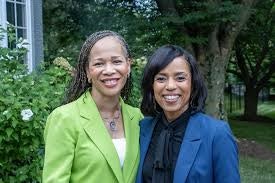
    Senators Lisa Blunt Rochester of Delaware and Angela Alsobrooks of Maryland.The “Black Women in American Politics 2025” report, released by Higher Heights Leadership Fund and the Center for American Women and Politics at Rutgers University, documents significant advances for Black women in elected office while highlighting continued underrepresentation at the highest levels of government.

    Black women now hold 401 state legislative seats nationwide, representing 5.4% of all state legislators and 16.2% of all women state legislators. This marks a 67.1% increase from 240 seats in 2014, when the organizations began tracking these statistics.

    The most dramatic change occurred in the U.S. Senate, where two Black women now serve simultaneously for the first time in American history. Angela Alsobrooks of Maryland and Lisa Blunt Rochester of Delaware both won open seats in the 2024 election, doubling Black women’s representation in the upper chamber.

    “This year also marks the first time in history that two Black women serve together in the United States Senate,” Alsobrooks and Blunt Rochester wrote in the report’s foreword. “That milestone is not a coincidence; it’s a culmination. It’s the result of investments made, barriers challenged, and generations of Black women who refused to be sidelined.”

    At the congressional level, 29 Black women currently serve as voting members, including 27 in the House and two in the Senate. This represents nearly double the 15 Black women who served in Congress when tracking began in 2014. All current Black congresswomen are Democrats except for the two senators.

    The 2024 election cycle was particularly significant because Vice President Kamala Harris became the first Black woman to head a major-party presidential ticket. Though Harris lost the election, her 107-day campaign raised $81 million in its first 24 hours and nearly doubled Democratic voter enthusiasm, according to the report.

    Black women also made notable gains in municipal leadership. Three new Black women became mayors of major cities: Cherelle Parker in Philadelphia, Sharon Tucker in Fort Wayne, and Barbara Lee in Oakland. Eight Black women now serve as mayors of the nation’s 100 most populous cities, matching their proportion of the U.S. population.

    However, significant representation gaps persist at higher levels. No Black woman has ever served as governor, and Black women remain underrepresented in statewide executive offices. Currently, 10 Black women serve in such positions nationwide, including four lieutenant governors, two attorneys general, two secretaries of state, one auditor, and one controller.

    The report notes that 34 states have never elected a Black woman to statewide executive office. Since 2014, only 25 Black women have ever held such positions across 17 states.

    “In our nation’s 249-year history, a Black woman has never served as governor of a state or as president of the United States,” the senators wrote. “That reality is a stark reminder that our work is not done.”

    The growth in Black women’s representation has occurred almost exclusively among Democratic officeholders. The report documents only seven Black Republican women state legislators nationwide and notes that all Black congresswomen are Democrats.

    State-level representation varies significantly by region. Maryland leads with Black women comprising 18.6% of state legislators, followed by Georgia at 17.4%. Conversely, five states have no Black women in their legislatures: Hawaii, Idaho, Montana, North Dakota, and South Dakota.

    The report also highlights institutional leadership gains. Twenty Black women now hold state legislative leadership positions, including six who lead their chambers. In Congress, Black women hold over 22% of House Democratic leadership positions.

    Looking ahead, the organizations identify opportunities for continued growth. Virginia Lieutenant Governor Winsome Earle-Sears, a Republican, is running for governor in 2025 and could become the first Black woman governor in U.S. history if successful. Additionally, over 200 statewide offices will be up for election in 2026.

    This marks the eighth iteration of the annual report series, which began in 2014 and has been published in 2015, 2017, 2018, 2019, 2021, and 2023. The comprehensive analysis tracks Black women’s political participation across federal, state, and local levels, providing the most detailed picture available of their representation in American politics.

    Source link

  • Rates of Admitted Students Who Are Black, Hispanic Have Decreased

    Rates of Admitted Students Who Are Black, Hispanic Have Decreased

    skynesher/E+/Getty Images

    In the wake of the Supreme Court’s 2023 decision to ban affirmative action in college admissions, no one knew exactly what the impact on Black and Hispanic enrollment might be going forward. In fall 2024, the numbers varied substantially by institution; Inside Higher Ed’s analysis of 31 institutions’ enrollment data showed massive drops in Black and Hispanic enrollment at some institutions and less drastic decreases—and even slight increases—at others.

    But enrollment data only tells part of the story. A new report from the Urban Institute, which uses data from 18 colleges and universities, highlights how the demographics of college applicants—and admits—shifted after the court’s decision in Students for Fair Admissions v. Harvard and the University of North Carolina at Chapel Hill. While the share of applicants who were Black or Hispanic increased from fall 2023 to fall 2024—by 0.47 and 0.65 percentage points, respectively—the portion who were admitted decreased.

    It marked the first time since at least 2018 that the share of admitted students who were Black had declined; Hispanic students hadn’t seen a drop since 2021, when the share of applicants also declined. White students’ share of applicants, admitted students and enrolled students has shrunk every year since 2018, a trend consistent with the declining number of white high school graduates (and of white Americans in general). White graduates are also the only group that consistently make up a larger percentage of admitted students than applicants.

    Jason Cohn, a higher education and workforce research associate for the Urban Institute and one of the report’s authors, said that these numbers shed more light on the impacts of affirmative action than enrollment figures alone.

    “We’ve seen a lot of enrollment numbers in news articles here and there since last fall. In some cases, they stay the same; in some cases, they change. But I think what these data are showing is that that’s not fully reflective of what might actually be happening,” he said. “One of the big takeaways for me is just how much can be hidden if you only look at the enrollment numbers and aren’t seeing what’s happening in the rest of the admissions pipeline.”

    For this study, the researchers partnered with two organizations, the Association of Undergraduate Education at Research Universities and the University of Southern California’s Center for Enrollment Research, Policy and Practice, to solicit data from a diverse group of 18 research universities (which they did not name). Although the sample is small, they said, it’s consistent with similar research conducted by the College Board, whose sample included about 60 institutions, indicating that the data is likely reflective of broader trends.

    It’s difficult to say definitively that the Supreme Court’s decision caused the decline in the share of admitted students from underrepresented backgrounds. That same class of high school seniors faced other barriers, including the lingering effects of the COVID-19 pandemic and delays and errors with the Free Application for Federal Student Aid. Bryan J. Cook, another author of the report and the Urban Institute’s director of higher education policy, noted that colleges in some states had begun rolling back diversity, equity and inclusion efforts at that time, including some programs aimed at recruiting students of color.

    “In this particular analysis, we’re not looking to isolate causation, but I think as we continue to look at this type of thing in future years, I think that’ll help us get a little closer,” Cohn said.

    But Robert Massa, a veteran enrollment professional, said he believes the shifts were likely caused in large part by the end of affirmative action.

    “I’m not at all surprised that Black students have increased their representation in the applicant pool and decreased their representation in the accepted pool, because universities are taking careful steps to make sure they don’t use race in and of itself as criteria in the admissions process,” he said.

    (Edward Blum, the president of SFFA, the anti–affirmative action nonprofit that was the plaintiff in the Supreme Court case, told Inside Higher Ed in an email that the organization has no opinion on the study.)

    The researchers plan to dig deeper into the data, analyzing other demographic information, including gender and family income, as well as academic variables such as the standardized test scores and grade point averages of the applicants and admitted students at these institutions.

    One possible hiccup for future research: The report also showed that post-SFFA, the share of applicants who chose not to identify their race increased, from 3.2 percent in 2023 to 5.1 percent in 2024. If that upward trend continues, Cohn said, it might make it “more difficult, over time, to unpack these trends and see who’s being served by the higher education system.”

    Source link

  • College Board cancels award program for high-performing Black and Latino students

    College Board cancels award program for high-performing Black and Latino students

    The College Board this month changed the criteria for its National Recognition Program awards in a move that could shift tens of thousands of scholarship dollars from Black and Latino students to white students.

    Colleges used the awards to recruit and offer scholarships to high-performing students from groups underrepresented in higher education. The award previously recognized academic achievement by students in five categories — Black, Hispanic, Native American, first-generation and those living in rural areas or small towns.

    The racial categories have been eliminated.

    Now, students living in small towns and rural areas can still earn the award if they score in the top 10 percent among all small-town and rural students in their state on the PSAT — a precursor to the SAT that is administered in high schools around the country. The same is true for first-generation students but not for students in underrepresented racial categories.

    Related: Interested in more news about colleges and universities? Subscribe to our free biweekly higher education newsletter.

    Critics said they were disappointed by the College Board’s decision.

    “They believed racial inequality was something important to address yesterday, and by changing that, they’re implying that it’s not something important to fight for now,” said Rachel Perera, a fellow in government studies at the liberal Brookings Institution. “That’s the heart of the question that’s being debated — although it’s not being debated in explicit terms — does racial discrimination exist?”

    In a statement on its website, the College Board noted the 2023 Supreme Court ruling that prohibited the use of race in admissions, although the National Recognition Program awards were used for scholarships and recruitment, not admissions.

    “Recent legal and regulatory actions have further limited the utility of these awards for students and colleges,” the statement says. Also, President Donald Trump has repeatedly made clear his disapproval of race-conscious policies in higher education, and some states have banned consideration of race in scholarship decisions. 

    In 2023-24, the College Board issued 115,000 recognition awards, and a little less than half were in the racial categories. The previous year there were more than 80,000 awards and the majority were for Black, Hispanic and Native American students. While the College Board doesn’t hand out money itself, universities use it to select students for scholarships. The Board has not maintained a list of which institutions used the racial categories, according to Holly Stepp, College Board’s director of communications.

    The College Board started the program in 1983 to recognize high-performing Hispanic students. In 2020, the other two racial categories and the small town and rural designations were added. First-generation students could win the award starting last year. Small towns could include those with modest incomes or wealthy enclaves like Aspen, Colorado. All students must also have at least a B+ average.

    Related: Cutting race-based scholarships blocks path to college, students say

    While students of all races can now earn the awards, the removal of the racial categories will likely disproportionately affect Black and Hispanic students.

    On average, Asian and white students score higher on PSATs. White students’ average score on the PSAT last year was 994 last year compared with 821 for Black students — a gap of 173 points. Asian students’ average was even higher at 1108 while Hispanic and Native American students averaged 852 and 828 respectively.

    “It’s a move towards race-blind categories when we know that education and access to education isn’t race-blind,” said Wil Del Pilar, senior vice president at the left-leaning policy and advocacy group EdTrust.

    Some conservatives praised the move, however, arguing that race-conscious scholarship and recruitment programs were ways to get around the Supreme Court’s rulings on affirmative action and that they were a form of reverse discrimination.

    Jonathan Butcher, senior research fellow in education policy at the conservative Heritage Foundation, said he believes that racial discrimination does exist and should be addressed, but that race-conscious education policies were both illegal and ineffective.

    “If you are using racial preferences, you are setting students up for a loss of confidence when they struggle in a situation they’re not prepared for,” Butcher said.

    Related: How did students pitch themselves to colleges after last year’s affirmative action ruling?

    In place of the racial categories, a new designation has been added this year that recognizes students who score in the top 10 percent of their high school on the PSAT.

    Experts say colleges are unlikely to offer scholarships to all students who score in the top 10 percent of every high school in the country, given the cost that would entail. Officials at the University of New Mexico, for example, said they would stop using the College Board designations beginning in the 2026-27 school year.

    “We’re currently analyzing our scholarship strategy, but changes will be made across the board,” said Steve Carr, the university’s director of communications, in an email.

    In 2023-24, the University of New Mexico awarded scholarships based on the College Board designations worth $15,000 each to 149 Black, Hispanic and Native American students.

    The University of Arizona also offered scholarships to students who earned National Recognition Program awards in the racial designations last year.

    “The university was already evaluating its scholarship strategy and will consider the College Board’s announcement as we determine how best to move forward and support our students,” said Mitch Zak, spokesman for the University of Arizona, in an email.

    In addition to the PSAT scores, students are eligible for the College Board award if they score a 3 or higher out of 5 on two Advanced Placement exams taken during their ninth and/or 10th grade year, although many high schools don’t uniformly offer AP courses to freshmen and sophomores.

    “We can’t really have a conversation around merit if we’re not all at the same starting point in terms of what we receive from our K-12 education,” said Del Pilar, “and how we’re able to navigate the test prep environment, or the lack of test prep that certain communities receive.”

    Contact senior investigative reporter Meredith Kolodner at 212-870-1063 or [email protected] or on Signal at merkolodner.04

    This story about the College Board was produced by The Hechinger Report, a nonprofit, independent news organization focused on inequality and innovation in education. Sign up for the Hechinger newsletter.

    The Hechinger Report provides in-depth, fact-based, unbiased reporting on education that is free to all readers. But that doesn’t mean it’s free to produce. Our work keeps educators and the public informed about pressing issues at schools and on campuses throughout the country. We tell the whole story, even when the details are inconvenient. Help us keep doing that.

    Join us today.

    Source link

  • Liberty University in Black and White

    Liberty University in Black and White

    Liberty University, one of the largest Christian universities in the world, presents a striking contrast between its largely white residential campus and a more diverse, working-class population studying online. This divide highlights ongoing questions about race, access, and culture in American higher education—especially in religious institutions that promote traditional values while navigating a changing demographic and social landscape.

    A Whiter Campus

    As of 2021, Liberty’s Lynchburg, Virginia, residential campus remains overwhelmingly white. Seventy-four percent of students living and studying on campus are white, with only 4% identifying as Black or African American, 5% as Latino, and 2% as Asian or Pacific Islander. Less than 1% of residential students identify as Native American. In contrast to the national trend of increasing diversity on college campuses, Liberty appears to be growing whiter. In fact, the number of African American students on campus has declined in recent years, raising concerns about how welcoming the university is to students of color.

    This demographic imbalance is not new. Liberty University has a long history of racial segregation and discrimination, particularly in its formative years under founder Jerry Falwell Sr., who defended segregation in the 1960s and opposed civil rights legislation. While Liberty’s public stance has changed over the decades, the legacy of those positions still casts a long shadow.

    A More Diverse Virtual World

    Meanwhile, Liberty University Online (LUO) paints a different picture. In 2017, only 51% of its undergraduate population identified as white, compared to 15.4% who were Black or African American. Hispanic and Latino students made up 1.7%, and students of two or more races, 2.3%. A significant 26.5% of LUO students were categorized as “race/ethnicity unknown,” potentially obscuring additional diversity. These students come from all 50 states, Washington, D.C., and 86 countries, with more than 30,000 military students and over 850 international students among them.

    LUO students are also disproportionately older, more likely to be working full-time, and often seeking degrees for career advancement or personal growth rather than the traditional “college experience.” Many are first-generation college students or part of the educated working-class navigating life through faith, family, and financial constraints. In contrast to the traditional campus, LUO’s virtual classrooms are where Liberty more closely resembles the multiracial and socioeconomically diverse America it often claims to serve.

    The Racial and Class Divide

    This bifurcation between Liberty’s on-campus and online populations underscores a larger tension within the university: a cultural and racial divide that mirrors the broader fissures in U.S. society. The residential campus, steeped in conservative Christian traditions and a homogeneous student body, promotes a culture aligned with white evangelicalism. Meanwhile, its online division serves a more varied student population—many of whom are drawn to Liberty for its affordability, flexibility, and religious identity, but may not share in the campus culture or feel represented by its leadership and branding.

    Reports of problems faced by Black students on campus—including concerns over campus climate, lack of representation among faculty, and curriculum that minimizes racial history—suggest that Liberty’s commitment to diversity is uneven at best. While the university has made modest gestures toward inclusion, critics argue that these efforts are often performative and fail to address systemic issues rooted in the institution’s founding principles.

    Conclusion

    Liberty University’s dual identity—as a white-dominated, conservative campus and a more diverse, online workforce training hub—raises difficult but necessary questions about race, class, and the role of religion in higher education. For an institution that claims to train “Champions for Christ,” the challenge remains whether it can reconcile these differences or if the divide will only grow starker in the years ahead.

    Source link

  • Five colleges Impacting Black Student Achievement

    Five colleges Impacting Black Student Achievement

    Tashi-Delek/E+/Getty Images

    Higher education can be an agent for positive change in students’ lives, providing personal, intellectual and socioeconomic growth opportunities. But not all of these outcomes are realized by every student.

    An April report by the Campaign for College Opportunity outlines some of the challenges Black students face in pursuit of higher education, as well as measures that colleges can take to address disparities in completion and persistence rates.

    What’s the need: Since fall 2019, Black enrollment in higher education has declined more rapidly than that of other races. Black students currently make up about 10 percent of all undergraduates enrolled in the U.S., but roughly 14 percent of the total U.S. population.

    Once enrolled, Black students are also less likely to complete a degree compared to their peers, which students of color say is tied to high costs, a lack of support and forms of racial discrimination, according to a 2023 survey.

    Among U.S. adults, about 32 percent of Black Americans have completed some college but have yet to earn a bachelor’s degree—four percentage points higher than the average American (28 percent) but roughly the same as people belonging to two or more races (32 percent), Native Hawaiians and Pacific Islanders (32 percent), and American Indian and Alaska Native populations (34 percent).

    Despite the challenges students of color face while pursuing a degree, most learners say college is worth it in the long run for their careers. Still, balancing academics and other obligations, strains on mental health and feelings of isolation can be unexpected costs associated with college, according to a 2024 report from the Pell Institute.

    DEI Under Attack

    Since Trump retook office in January, his administration has sought to eliminate diversity, equity and inclusion practices. A Feb. 14 Dear Colleague letter from the Department of Education to colleges and universities sought to issue guidance on which race-based practices besides those used in admissions—which the Supreme Court struck down in 2023—would no longer be permitted. The letter cited scholarships and programs that were exclusively available to students based on their race. An FAQ page from the department notes that race or cultural heritage education or celebrations are not prohibited, so long as they are open to everyone on campus.

    Federal courts blocked enforcement of the Dear Colleague letter in April.

    Recommendations: Based on existing research, the report authors outlined six strategies to improve Black student outcomes.

    1. Demystify the college experience. High school partnerships and pathway programs, including summer programs and dual-enrollment opportunities, can positively impact Black students’ college trajectories.  
    2. Improve transfer. Invest in two-year colleges as access points and transfer launchpads for Black students who may want to earn a bachelor’s degree at four-year institutions. Additionally, strong partnerships between two- and four-year colleges can address culture gaps and ensure the four-year institution is equipped to help Black and other transfer students thrive.  
    3. Address college affordability. Institutions should invest in avenues and resources to ensure Black students, and others, can pay for tuition, fees, technology, supplies, living experiences and other costs associated with college. “Having a robust portfolio of grants, scholarships and other financial support for Black and low-income students is essential,” according to the report. Students of color are also more likely to report basic needs insecurity, so creating holistic financial resources that ensure students have suitable food, housing and transportation is critical. 
    4. Invest in representation. Establishing “Black-affirming” spaces, including resource centers, honors colleges, studies programs and media and art collections can improve students’ sense of belonging on campus, as well as counter negative stereotypes regarding Black students. Similarly, ensuring Black students have a seat at the table for decision-making processes allows them opportunities to advocate for their needs. 
    5. Prioritize faculty development. Centers for teaching and learning can provide educators with resources and guidance on how to best serve underrepresented minority groups, including Black students. 
    6. Create co-curricular learning opportunities. Faculty-led research, pre-apprenticeship programs and workforce development programs can engage Black students on campus and give them the necessary skills to launch their careers.  

    Examples of success: In addition to highlighting initiatives that can promote student success, the report also names five institutions that have developed effective programs to improve Black student outcomes.

    1. Compton College provides no-cost food to students through a variety of ways, including an on-campus food pantry, a partnership with the Los Angeles Regional Food Bank and free meals at the Everytable Cafeteria on campus. The college also broke ground on its first student housing facility earlier this year, creating more opportunities to minimize the risk of housing insecurity or homelessness for vulnerable students.
    2. Last year Sacramento State University established the Black Honors College, which provides wraparound support for students interested in learning about Black history and culture. The program, which is open to all students, celebrates Black excellence through mentorship by hand-selected faculty and staff, designated housing and personalized support for participants.
    3. The City University of New York created the Black Male Initiative in 2005, an inclusive 15-project initiative focused on improving enrollment and graduation rates of students from underrepresented populations. Most recently, the program has evolved to include wellness and career development.
    4. Spelman College invested millions of dollars in promoting holistic student wellness, in part by creating a new fitness center and introducing fitness classes, cooking demonstrations and mental health workshops. The initiative is designed to address health concerns that disproportionately impact Black women, including high blood pressure, Type 2 diabetes, heart disease, breast cancer and strokes.
    5. The University of California, San Diego, is home to the Black Academic Excellence Initiative, which strives to improve the experiences of Black students, faculty and staff members on campus. The initiative provides scholarship funds for students and has established a hub for historically Black fraternities and sororities, called the Divine Nine.

    Get more content like this directly to your inbox. Subscribe here.

    Source link

  • Historic Black Church Eliminates Student Debt for SAU Seniors

    Historic Black Church Eliminates Student Debt for SAU Seniors

    Rev. Dr. Howard-John Wesley, Senior Pastor of Alfred Street Baptist Church.Alfred Street Baptist Church of Alexandria, Virginia, a prominent Black congregation located just outside Washington D.C., has donated $132,469 to Saint Augustine’s University (SAU) to eliminate the outstanding debt of 11 graduating seniors, enabling them to receive their diplomas debt-free at the May 3rd commencement ceremony.

    The timely donation comes as SAU faces a litany of challenges, including an appeal to hold on to its accreditation.

    The 222-year-old church, one of the nation’s oldest and largest predominantly African American congregations with approximately 13,000 members, has a long history of supporting historically Black colleges and universities (HBCUs). Church officials estimate about 60% of Alfred Street’s members are HBCU graduates themselves.

    “This act of grace by Alfred Street Baptist Church is nothing short of transformative for our students and our institution,” said SAU Interim President Dr. Marcus H. Burgess. “We are immensely grateful for this demonstration of faith and partnership.”

    The donation comes at a critical time when many small private colleges and HBCUs face financial challenges. The university had initially informed the entire graduating class that students with unpaid tuition balances could not participate in the commencement ceremony. While more than half of SAU’s graduating class managed to settle their balances independently, 11 students still needed assistance.

    “This is what ministry looks like,” said Rev. Dr. Howard-John Wesley, Senior Pastor of Alfred Street Baptist Church. “We believe in investing in students, in HBCUs, and in a future where financial hardship should never be a barrier to graduation.”

    This isn’t the first time Alfred Street Baptist Church has stepped up to support HBCU students. In 2019, the church raised $150,000 in a single weekend to pay off account balances for 34 graduating seniors at Howard University while also contributing $50,000 to assist Bennett College.

    The connection between SAU and Alfred Street was nurtured by SAU alumni Gilbert and Carolyn Knowles, who are members of the church.

    “When my wife and I discovered that our church, Alfred Street, approved the donation and the amount they would give to SAU, we cried tears of joy out of love for our church and our alma mater,” said Gilbert Knowles, a 1976 graduate.

    For students like SGA President Tillia Leary, a graduating senior from The Bahamas majoring in accounting, the donation has been life changing. “This incredible act of kindness lifted a major burden and affirmed my belief in the power of community and faith,” said Leary, who plans to attend Ball State University for her master’s degree.

    The timing of this gift coincides with SAU’s efforts to overcome recent challenges and chart a course forward. Representatives from Alfred Street Baptist Church will attend SAU’s commencement ceremony to celebrate with the students whose burdens they’ve helped lift.

    While this donation covers 11 seniors’ debt, many other SAU students still face financial hurdles totaling approximately $230,000. The university is calling on others moved by the church’s act of philanthropy, to contribute to their student relief funds or scholarship programs.

    Source link

  • Black Colleges Ponder Their Future As Trump Makes Cuts to Education Dollars – The 74

    Black Colleges Ponder Their Future As Trump Makes Cuts to Education Dollars – The 74


    Get stories like this delivered straight to your inbox. Sign up for The 74 Newsletter

    The nation’s historically Black colleges and universities, known as HBCUs, are wondering how to survive in an uncertain and contentious educational climate as the Trump administration downsizes the scope and purpose of the U.S. Department of Education — while cutting away at federal funding for higher education.

    In January, President Donald Trump signed an executive order pausing federal grants and loans, alarming HBCUs, where most students rely on Pell Grants or federal aid. The order was later rescinded, but ongoing cuts leave key support systems in political limbo, said Denise Smith, deputy director of higher education policy and a senior fellow at The Century Foundation, a left-leaning think tank.

    Leaders worry about Trump’s rollback of the Justice40 Initiative, a climate change program that relied on HBCUs to tackle environmental justice issues, she said. And there’s uncertainty around programs such as federal work-study and TRIO, which provides college access services to disadvantaged students.

    “People are being mum because we’re starting to see a chilling effect,” Smith said. “There’s real fear that resources could be lost at any moment — even the ones schools already know they need to survive.”

    Most students at HBCUs rely on Pell Grants or other federal aid, and a fifth of Black college graduates matriculate from HBCUs. Other minority-serving institutions, known as MSIs, that focus on Hispanic and American Indian populations also heavily depend on federal aid.

    “It’s still unclear what these cuts will mean for HBCUs and MSIs, even though they’re supposedly protected,” Smith said.

    States may be unlikely to make up any potential federal funding cuts to their public HBCUs. And the schools already have been underfunded by states compared with predominantly white schools.

    Congress created public, land-grant universities under the Morrill Act of 1862 to serve the country’s agricultural and industrial industries, providing 10 million acres taken from tribes and offering it for public universities such as Auburn and the University of Georgia. But Black students were excluded.

    The 1890 Morrill Act required states to either integrate or establish separate land-grant institutions for Black students — leading to the creation of many HBCUs. These schools have since faced chronic underfunding compared with their majority-white counterparts.

    ‘None of them are equitable’

    In 2020, the average endowment of white land-grant universities was $1.9 billion, compared with just $34 million for HBCUs, according to Forbes.

    There are other HBCUs that don’t stem from the 1890 law, including well-known private schools such as Fisk University, Howard University, Morehouse College and Spelman College. But more than three-fourths of HBCU students attend public universities, meaning state lawmakers play a significant role in their funding and oversight.

    Marybeth Gasman, an endowed chair in education and a distinguished professor at Rutgers University, isn’t impressed by what states have done for HBCUs and other minority-serving institutions so far. She said she isn’t sure there is a state model that can bridge the massive funding inequities for these institutions, even in states better known for their support.

    “I don’t think North Carolina or Maryland have done a particularly good job at the state level. Nor have any of the other states. Students at HBCUs are funded at roughly 50-60% of what students at [predominately white institutions] are funded. That’s not right,” said Gasman.

    “Most of the bipartisan support has come from the U.S. Congress and is the result of important work by HBCUs and affiliated organizations. I don’t know of a state model that works well, as none of them are equitable.”

    Under federal law, states that accept federal land-grant funding are required to match every dollar with state funds.

    But in 2023, the Biden administration sent letters to 16 governors warning them that their public Black land-grant institutions had been underfunded by more than $12 billion over three decades.

    Tennessee State University alone had a $2.1 billion gap with the University of Tennessee, Knoxville.

    At a February meeting hosted by the Tennessee Black Caucus of State Legislators, Tennessee State interim President Dwayne Tucker said the school is focused on asking lawmakers this year for money to keep the school running.

    Otherwise, Tucker said at the time, the institution could run out of cash around April or May.

    “That’s real money. That’s the money we should work on,” Tucker said, according to a video of the forum.

    In some states, lawsuits to recoup long-standing underfunding have been one course of action.

    In Maryland, a landmark $577 million legal settlement was reached in 2021 to address decades of underfunding at four public HBCUs.

    In Georgia, three HBCU students sued the state in 2023 for underfunding of three HBCUs.

    In Tennessee, a recent state report found Tennessee State University has been shortchanged roughly $150 million to $544 million over the past 100 years.

    But Tucker said he thinks filing a lawsuit doesn’t make much sense for Tennessee State.

    “There’s no account payable set up with the state of Tennessee to pay us $2.1 billion,” Tucker said at the February forum. “And if we want to make a conclusion about whether [that money] is real or not … you’re going to have to sue the state of Tennessee, and I don’t think that makes a whole lot of sense.”

    Economic anchors

    There are 102 HBCUs across 19 states, Washington, D.C., and the U.S. Virgin Islands, though a large number of HBCUs are concentrated in the South.

    Alabama has the most, with 14, and Pennsylvania has the farthest north HBCU.

    Beyond education, HBCUs contribute roughly $15 billion annually to their local economies, generate more than 134,000 jobs and create $46.8 billion in career earnings, proving themselves to be economic anchors in under-resourced regions.

    Homecoming events at HBCUs significantly bolster local economies, local studies show. North Carolina Central University’s homecoming contributes approximately $2.5 million to Durham’s economy annually.

    Similarly, Hampton University’s 2024 homecoming was projected to inject around $3 million into the City of Hampton and the coastal Virginia region, spurred by increased visitor spending and retail sales. In Tallahassee, Florida A&M University’s 2024 homecoming week in October generated about $5.1 million from Sunday to Thursday.

    Their significance is especially pronounced in Southern states — such as North Carolina, where HBCUs account for just 16% of four-year schools but serve 45% of the state’s Black undergraduate population.

    Smith has been encouraged by what she’s seen in states such as Maryland, North Carolina and Tennessee, which have a combined 20 HBCUs among them. Lawmakers have taken piecemeal steps to expand support for HBCUs through policy and funding, she noted.

    Tennessee became the first state in 2018 to appoint a full-time statewide higher education official dedicated to HBCU success for institutions such as Fisk and Tennessee State. Meanwhile, North Carolina launched a bipartisan, bicameral HBCU Caucus in 2023 to advocate for its 10 HBCUs, known as the NC10, and spotlight their $1.7 billion annual economic impact.

    “We created a bipartisan HBCU caucus because we needed people in both parties to understand these institutions’ importance. If you represent a district with an HBCU, you should be connected to it,” said North Carolina Democratic Sen. Gladys Robinson, an alum of private HBCU Bennett College and state HBCU North Carolina A&T State University.

    “It took constant education — getting folks to come and see, talk about what was going on,” she recalled. “It’s like beating the drum constantly until you finally hear the beat.”

    For Robinson, advocacy for HBCUs can be a tough task, especially when fellow lawmakers aren’t aware of the stories of these institutions. North Carolina A&T was among the 1890 land-grant universities historically undermatched in federal agricultural and extension funding.

    The NC Promise Tuition Plan, launched in 2018, reduced in-state tuition to $500 per semester and out-of-state tuition to $2,500 per semester at a handful of schools that now include HBCUs Elizabeth City State University and Fayetteville State University; Western Carolina University, a Hispanic-serving institution; and UNC at Pembroke, founded in 1887 to serve American Indians.

    Through conversations on the floor of the General Assembly, and with lawmakers on both sides of the aisle, Robinson advocated to ensure Elizabeth City State — a struggling HBCU — was included, which helped revive enrollment and public investment.

    “I’m hopeful because we’ve been here before,” Robinson said in an interview.

    “These institutions were built out of churches and land by people who had nothing, just so we could be educated,” Robinson said. “We have people in powerful positions across the country. We have to use our strength and our voices. Alumni must step up.

    “It’s tough, but not undoable.”

    Meanwhile, other states are working to recognize certain colleges that offer significant support to Black college students. California last year passed a law creating a Black-serving Institution designation, the first such title in the country. Schools must have programs focused on Black achievement, retention and graduation rates, along with a five-year plan to improve them. Sacramento State is among the first receiving the designation.

    And this session, California state Assemblymember Mike Gipson, a Democrat, introduced legislation that proposes a $75 million grant program to support Black and underserved students over five years through the Designation of California Black-Serving Institutions Grant Program. The bill was most recently referred to the Assembly’s appropriations committee.

    Stateline is part of States Newsroom, a nonprofit news network supported by grants and a coalition of donors as a 501c(3) public charity. Stateline maintains editorial independence. Contact Editor Scott S. Greenberger for questions: [email protected].


    Get stories like these delivered straight to your inbox. Sign up for The 74 Newsletter

    Source link

  • Encouraging Families to Promote Racial Identity and Pride in Black and Other Minoritized Children

    Encouraging Families to Promote Racial Identity and Pride in Black and Other Minoritized Children

    Dr. Donna Y. FordNow more than ever, race has become salient in politics, higher education, P-12, and the workforce, especially in this anti-DEI era. It is not uncommon for Black and other minoritized individuals to have feelings of anxiety about discussions around race, particularly for families (e.g., parents, caregivers, guardians, etc.). Having “the talk” about racism and bias has been a rite of passage for many Black children and youth in which their parents/caregivers have to discuss the intersection of race and U.S. societal issues such as how to interact with law enforcement because navigating these circumstances can easily lead to imprisonment or a life-or-death situation. Trauma is undeniable. 

    Keeping “the talk” at the forefront of this op-ed, it is imperative that families have the resources to properly discuss, show, and engage their children in active conversation about race relations so Black and other minoritized youth and families can respond appropriately, particularly in proactive ways. Moreover, families must continue to instill confidence and pride in racial identity. To set the tone, we are eager to share this Sesame Street video “Elijah Explains Race to His Son, Wes, and Elmo.”

    Children are Ready, Caregivers (and Educators) Must Be Too

    Here is an overview from Traci BaxleyResearch shows that children form race-related ideas long before they can verbalize about race and racism. It may surprise readers to know that racial awareness begins in infancy. Regardless of their age, all children get clues from their experiences (inside and outside of home) to make sense of the world. Therefore, early, intentional/proactive, honest, and age-appropriate conversations are important for promoting racial identity and pride. Here is a developmental look at children’s understanding.

    Infants show a preference for the faces of people from their own racial group as early as six months. Babies gaze longer and show happy expressions more frequently with people who look like them. Start early by introducing children to people who don’t look like them, and let children see pictures of people with a variety of skin tones and facial features.

    Toddlers use social cues such as body language and facial expressions to make sense of their world. They watch the way adults respond to differences in people and mimic our attitudes and racial biases without us even realizing it. As young as three, toddlers associate some racial groups with negative traits and use these associations to develop their own understanding about the world/environment around them. As caregivers, we need to be aware of our own biases and reactions to people whose skin color is different. Using books, videos, and music that highlight and celebrate differences.

    Preschoolers become even more aware of differences such as skin color and hair texture. They are increasingly observant of how others are similar and different from them. Toddlers compare and group/categorize people by race. Note that some children also begin to show a “pro-white” bias. Thus, they may begin to include or exclude playmates on the basis of race. Furthermore, minoritized children may associate White with wealth, power, and/or beauty.

    Dr. Erik M. HinesDr. Erik M. HinesKindergartners and first graders are beginning to notice that race is often a taboo topic – the proverbial elephant in the room. They may continue to include and exclude peers based on race. They are more aware of disturbing news, and they often ask questions about it. This is a timely opportunity to have meaningful conversations about race and racism.

    In summary, as soon as children can ask race-based questions and make comments, support their natural curiosity by answering them, even the most difficult ones.  Let them know that it’s fine/not wrong to notice skin color and to talk about race. We concur with Baxley that “the idea is to make differences normal and good!”  We are uncomfortable and not prepared, our children will notice, and experience discomfort. It will be difficult to promote racial understanding and pride, which is so needed for minoritized children in these turbulent times.

    A Final Word

    We are staunch advocates of appreciating Black culture and its legacy of innovation, education, and significant contributions to the history of the United States. Broaching race with children is imperative to ensure that they have the confidence and belief in themselves with no limitations to their talents, creativity, brilliance and genius. These conversations around race not only prepares our youth to thrive but it also normalizes how conversations on race can be proactive as opposed to reactive.

     Dr. Donna Y. Ford is Distinguished Professor of Education and Human Ecology at The Ohio State University.

    Dr. Erik M. Hines is Professor of Counseling in the College of Education and Human Development at George Mason University.

    Dr. Tanya J. Middleton is a Clinical Assistant Professor in the Department of Educational Studies at The Ohio State University. 

    Source link

  • Ohio University puts Black alumni reunion weekend on hold

    Ohio University puts Black alumni reunion weekend on hold

    Ohio University has postponed its annual Black alumni reunion weekend while it reviews the event in light of the Office for Civil Rights’ Feb. 14 Dear Colleague letter, which declared illegal virtually all race-based activities at public institutions.  

    While the Black alumni reunion “has always been open to all individuals who have an interest in the event,” read a statement from the university, “based on OCR’s recent guidance related to Title VI compliance, some of the programming historically included in the event may need to be reimagined. The University is obligated to follow OCR’s guidance in order to protect our access to critical federal funding, including students’ continued access to federal financial aid.”

    The statement also cited the impact of “proposed State of Ohio legislation,” without specifically mentioning SB 1, a bill the Senate has passed that calls for the elimination of DEI statements, offices and trainings.

    “Without question, should this bill pass the House in its current form and be signed into law by the Governor, it will bring changes for all of us,” university president Lori Stewart Gonzalez wrote in an earlier message to the campus community. “However, to define today the specific changes we might make would preempt the legislative process on a bill that is not finalized.”

    Still, all signature events planned for Black alumni reunion weekend, which was scheduled for April 10–13 in Athens, were canceled.

    “While this is difficult news to share, we remain committed to honoring the legacy and accomplishments of Ohio University’s Black alumni,” said planning committee co-chairs Terry Frazier and Jillian Causey in the statement. “We will continue working with the University to develop a plan that aligns with evolving federal and state guidelines while preserving the significance of this gathering.”

    Source link