Tag: board

  • College Board Ends Tool to Share Geographic Context With Colleges

    College Board Ends Tool to Share Geographic Context With Colleges

    Landscape, a College Board tool for providing colleges with information about the educational environment of an applicant’s high school and neighborhood based on publicly available information, has been discontinued, the organization announced this week.

    “As federal and state policy continues to evolve around how institutions use demographic and geographic information in admissions, we are making a change to ensure our work continues to effectively serve students and institutions,” College Board wrote in the short announcement.

    Geographic recruitment has come under fire from the Trump administration. Attorney General Pamela Bondi, in a memo declaring various diversity, equity and inclusion initiatives unconstitutional, said that recruiting from specific areas or neighborhoods could be unlawful when it’s being done as a proxy for race. Experts have said that doing so is not a standard practice for universities.

    Jon Boeckenstedt, a longtime enrollment manager, criticized the decision to discontinue Landscape in a post on LinkedIn.

    “I’m no fan of College Board of course … but I thought Landscape was a good and thoughtful product,” he wrote. “Now, it’s going away. You don’t have to be Wile E. Coyote to figure out why. Someone in DC has suggested it’s too close to ‘race based admissions’ (a thing that does not exist) and ‘it’d be a shame if something happened to your company.’ Or their lawyers rolled over voluntarily.”

    Edward Blum, the founder of Students for Fair Admissions, the group that successfully challenged affirmative action at the Supreme Court, lauded the decision.

    “Since the 2023 Supreme Court opinion in our Harvard and UNC cases, Students for Fair Admissions raised has concerns that Landscape was little more than a disguised proxy for race in the admissions process. We are gratified that this problematic tool will no longer be used to influence who is and who is not admitted to America’s colleges and universities,” he wrote in a statement. “This decision represents another important step toward ensuring that all students are treated as individuals, not as representatives of a racial or ethnic group.”

    Source link

  • George Mason University’s board looks to negotiate with Trump administration

    George Mason University’s board looks to negotiate with Trump administration

    This audio is auto-generated. Please let us know if you have feedback.

    Dive Brief:

    • George Mason University’s governing board said late last week that it wants to negotiate with the Trump administration to resolve allegations that it violated civil rights law. 
    • In late August, the U.S. Department of Education alleged that George Mason has illegally used race and other protected characteristics in hiring and promotions, a conclusion reached just six weeks after the agency announced a probe into the university. 
    • An attorney for university President Gregory Washington, who is at the center of the probe, has repudiated the agency’s allegations, describing them as “a legal fiction.” Washington’s attorney will also be involved in talks with the Education Department, according to the board’s statement.

    Dive Insight:

    Over a period of weeks this summer, the Trump administration ramped up pressure on George Mason. The departments of Education and Justice opened at least four probes between them into the university, often citing comment from Washington in support of diversity initiatives.

    Washington’s attorney, Douglas Gansler, took the Education Department to task for how quickly it determined George Mason violated the law.

    “It is glaringly apparent that the OCR investigation process has been cut short, and ‘findings’ have been made in spite of a very incomplete fact-finding process, including only two interviews with university academic deans,” Gansler wrote.

    The attorney also described some of the evidence cited by the Education Department as “gross mischaracterizations of statements made by Dr. Washington” that didn’t lead to policy changes. 

    For example, when the Education Department concluded that George Mason violated civil rights law, it linked to a statement Washington made in 2021 in support of having faculty reflect the diversity of the student body and broader community. The department took the statement as expressing “support for racial preferencing” in hiring. 

    But, as Gansler highlighted, Washington specifically said in the statement that the diversity principles he was promoting were “not code for establishing a quota system.”

    Gansler also warned the university’s board against requiring Washington to apologize, which was among the demands made by the Education Department. The lawyer pointed out that such an apology could open the university up to liability.

    Through all of this, George Mason’s board of visitors — headed by Charles Stimson, who holds leadership positions at The Heritage Foundation, a right-wing think tank — has been relatively quiet. 

    To represent it in dealings with the Trump administration, the board hired Torridon Law, which was co-founded by William Barr, formerly U.S. attorney general during the first Trump administration. The firm also has several prominent Republican lawyers on staff. 

    In July, the university’s chapter of the American Association of University Professors voted no confidence in the board and called its response to the Trump administration’s actions to that point “inadequate and deeply troubling.”

    And yet, in August — at a meeting that the AAUP chapter warned could set the stage for Washington’s ouster — George Mason’s board voted to give the leader a raise

    Since then, Democrat members of a Virginia Senate committee have blocked six appointees to George Mason’s board picked by the state’s Republican governor, Glenn Youngkin. The move has left the board of visitors without a quorum for conducting official business. 

    In announcing plans to negotiate with the Education Department, the board said Friday that it “remains committed to ensuring that George Mason complies with all federal civil rights law and remains hopeful that a favorable resolution can be reached.”

    George Mason is just the latest in an expanding set of colleges targeted by the Trump administration over allegations related to racial preferencing, campus antisemitism and policies supporting transgender student athletes. 

    Some universities, including Columbia and Brown, have paid hefty sums to settle allegations and have at least some of their federal research funding restored. The administration is also seeking some $500 million from Harvard University and $1 billion from the University of California, Los Angeles.

    Source link

  • Iowa board approves course policy change after stripping anti-DEI references

    Iowa board approves course policy change after stripping anti-DEI references

    This audio is auto-generated. Please let us know if you have feedback.

    The Iowa Board of Regents on Tuesday approved a policy change that requires public university faculty to “present coursework in a way that reflects the range of scholarly views and ongoing debate in the field.” 

    Under the change, effective immediately, the board will also audit the three universities it oversees — the University of Iowa, Iowa State University and the University of Northern Iowa — at least every two years for compliance with the new directive.

    The policy change significantly revises the original proposal’s language, which included references to diversity, equity and inclusion and critical race theory. Tuesday’s 7-1 vote came after public pushback over that proposal and two postponements by the board to approve the policy.

    The initial version of the proposal would have barred Iowa university academic programs from requiring courses containing “substantial content that conveys DEI or CRT.” As examples of DEI, it lists systemic oppression, anti-racism, social justice, and unconscious or implicit bias. Universities would have been able to apply to regents for exemptions.

    The wide-reaching language prompted criticism from academic groups, students and those who argued it would undermine free speech.

    In one example, five state educator groups launched a joint petition urging “the Iowa Board of Regents to firmly reject efforts to restrict what students can learn.” The petition, which does not address the updated policy, noted that the original language would have affected at least a dozen academic programs. 

    “Students in certain fields — such as social work and nursing — would have been at a special disadvantage, since those professions’ standards require graduates to show competency in various topics banned under the policy,” it said.

    Board President Sherry Bates said the regents delayed the vote at their July meeting so they could review the policy. The board then set a special August meeting for the vote.

    In the intervening weeks, the board released a new version of the proposal. The updated language — which ultimately passed Tuesday — states that “faculty may teach controversial subjects” when relevant to course content, but they must present such topics from multiple and opposing viewpoints.

    “University teachers shall be entitled to academic freedom in the classroom in discussing the teachers’ course subject, but shall not introduce into the teaching controversial matters that have no relation to the subject,” the updated version says.

    It also states that students’ grades should reflect their “mastery of course content and skills,” not their “agreement or disagreement with particular viewpoints expressed during instruction or in their work.”

    ‘What exactly is controversial, and who will decide?’

    The new policy addresses how topics are taught rather than what is taught, Regent Robert Cramer argued.

    “Personally, I don’t want any of the DEI/CRT woke left stuff being taught in our classes,” he said. “But this policy is not my personal beliefs.

    But Regent Nancy Dunkel, the sole member of the board to vote against the policy, raised concern about the ambiguity of the policy’s language.

    “What exactly is controversial, and who will decide? Can anyone declare something as controversial?” she asked. She also noted that the policy change in and of itself has become controversial among Iowa constituents. 

    Dunkel further raised questions about the requirement for faculty to present a range of viewpoints.

    “If a professor has to present both sides to an issue, does that mean a marketing professor must also include anti-capitalist arguments to students?” she asked. “Do anti-evolution arguments have to be presented in biology classes? How do we present both sides of the Holocaust?”

    The board voted immediately after Dunkel’s comments.

    ‘I will not be passive’ 

    The regents also made clear to Iowa’s three universities — the leaders of which joined Tuesday’s meeting — that they have been put on notice regarding DEI efforts.

    Two of Iowa’s public universities have become a talking point among conservative media outlets. In recent weeks, conservative outlets and anti-DEI watchdog groups published a series of videos — the most recent of which was released Sunday — that appear to show two officials at the University of Iowa and one at Iowa State discussing how they could work around state DEI restrictions.

    Source link

  • Iowa board reworks anti-DEI course policy proposal following pushback

    Iowa board reworks anti-DEI course policy proposal following pushback

    This audio is auto-generated. Please let us know if you have feedback.

    Dive Brief:

    • The Iowa Board of Regents has removed references to “critical race theory” and “diversity, equity and inclusion” from a controversial proposal to limit what courses the state’s three public universities can require. The regents plan to vote on the issue during a special meeting on Tuesday.
    • Under the original proposal, academic programs would not have been able to require students to take classes containing “substantial content that conveys DEI or CRT.” Universities that wanted an exemption would have had to gain board approval every other year.
    • Following public pushback, the board reworked the proposal to state that “faculty may teach controversial subjects” when relevant to course content, but they are expected to “present coursework in a way that reflects the range of scholarly views and ongoing debate in the field.” The revision also leaves the board the option to “periodically” review the universities’ compliance.

    Dive Insight:

    The Iowa Board of Regents — which oversees the University of Iowa, Iowa State University and the University of Northern Iowa — has so far delayed the vote on the proposal twice, last postponing the decision at its July 30 meeting. 

    The original language included extensive examples of DEI topics that would have been restricted, including anti-racism, “transgender ideology,” systemic oppression, and unconscious or implicit bias.

    “One of the primary reasons we are not taking up the DEI/CRT policy is that the discussions on how to best implement the ideas that were brought forward are still ongoing,” Board President Sherry Bates said in prepared remarks, citing responses from the community. “It has become clear that we would be better served by something more comprehensive.”

    Much of the local response has been negative.

    Five Iowa educator advocacy groups joined together to form the Iowa Higher Education Coalition to oppose the policy and launched a petition “to urge the Iowa Board of Regents to firmly reject efforts to restrict what students can learn.” The petition, which does not address the updated policy, had garnered 470 signatures as of Friday afternoon.

    The faculty union at the University of Northern Iowa, one of the members of the coalition, voiced opposition at the board’s June meeting, when it was first scheduled to vote on the proposal.

    “There is no middle position, no position of slight appeasement,” United Faculty President Christopher Martin told board members at the meeting. “Either you stand for free expression at Iowa’s universities or you don’t. And God help Iowa, its public universities and all the citizens of this state if you don’t.”

    Martin said that the proposal came from two out-of-state think tanks’  generic recommendations, and he alleged that it runs contrary to state law.

    Since that meeting, the board has reworked the language significantly.

    “University teachers shall be entitled to academic freedom in the classroom in discussing the teachers’ course subject, but shall not introduce into the teaching controversial matters that have no relation to the subject,” the updated version said.

    Regardless of how the board votes next week, the Iowa Legislature may step in.

    State Rep. Taylor Collins, chair of the Legislature’s newly created Higher Education Committee and an avid opponent of DEI efforts, voiced support for the board’s original policy proposal last month.

    “If this policy is not adopted, the House Committee on Higher Education stands ready to act,” he said on social media after the board delayed a vote on the policy for the second time.

    Iowa Gov. Kim Reynolds signed a bill in May 2024 that prohibits public universities from maintaining or funding DEI offices or from officially weighing in on a wide array of issues. The list includes allyship, cultural appropriation, systemic oppression, social justice, racial privilege or “any related formulation” of the listed topics. 

    The law prompted PEN America, a free expression advocacy group, to include Iowa on its yearly list of states that enacted “educational gag orders.”

    The board of regents has also moved to limit diversity work on campus. In 2023, it ordered the universities under its purview to cut all campuswide DEI efforts not required to comply with the law or accreditation standards.

    Source link

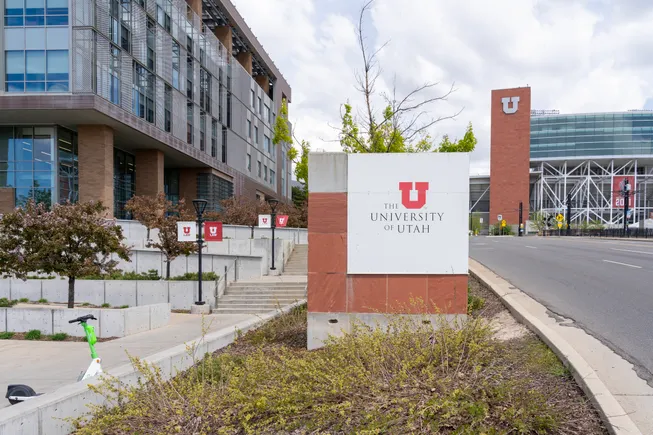
  • University of Utah board moves to cut 81 academic programs

    University of Utah board moves to cut 81 academic programs

    Dive Brief: 

    • The University of Utah’s trustee board approved plans Tuesday to discontinue 81 courses and degree programs in response to a new state law ordering public colleges to cut funding for certain academic offerings and administrative functions and invest in high-demand fields. 
    • The programs up for elimination range from a bachelor’s in chemistry teaching to a Ph.D. in theater. Most of them are graduate programs, and about one-quarter are in the university’s humanities college. The programs can be discontinued once the Utah System of Higher Education and state lawmakers sign off on the plan, according to a Tuesday announcement from the university. 
    • Each of the programs graduated at most one student over the past eight years, Richard Preiss, president of the university’s Academic Senate, said in a July 22 letter to the board. Students in affected programs will either be given pathways to complete their studies or referred to “academically appropriate alternatives,” the university said. 

    Dive Insight: 

    Earlier this year, Utah lawmakers cut 10% from the instruction budgets for each of the state’s eight public colleges, The Salt Lake Tribune reported. The cuts amounted to $60.5 million, with University of Utah facing the largest budget reduction of $19.6 million. 

    To reclaim the funding, the legislation orders colleges to craft three-year plans for cutting certain academic programs and administrative expenses and redirecting the money to high-demand programs. 

    In guidance released earlier this year, the Utah System of Higher Education said the funds could be reinvested in programs that meet the state’s workforce needs, lead to high-wage careers, teach students “durable skills” such as critical thinking and problem-solving, or focus on services to increase student retention. 

    The law came on the heels of a 2024 legislative audit that said the state’s public universities were losing students to “private non-traditional” colleges, such as Western Governors University, a large online institution. The audit also found that university leaders largely weren’t able to calculate program-level data about costs, enrollment and completion rates. 

    Because institutions currently lack metrics required to calculate program-level efficienciesincluding returns on investmentpresidents are unable to fully understand the degree to which programs maximize their use of student and taxpayer resources,” the audit stated. 

    The University of Utah submitted a draft of its three-year plan to the state’s higher education board in May. 

    Under the plan, the university said it would cut $7.5 million from its fiscal 2026 budget— including reductions in academic support services and administrative costs — and reallocate that money to instruction aligned with the state’s workforce needs. 

    The university said it plans to devote more money to instruction in engineering, artificial intelligence, nursing, biotechnology and behavioral health, as well as to provide more support for general education about civic engagement. 

    Utah lawmakers aren’t the only ones ordering public colleges to shed certain programs. Six of Indiana’s public institutions are moving to either cut or consolidate over 400 programs to comply with a new state law aiming to end academic offerings that award low numbers of degrees. 

    The impacted programs account for 19% of all degree offerings at Indiana’s public colleges.

    Source link

  • ‘Inadequate and deeply troubling’: George Mason AAUP votes no confidence in board

    ‘Inadequate and deeply troubling’: George Mason AAUP votes no confidence in board

    This audio is auto-generated. Please let us know if you have feedback.

    Dive Brief:

    • A faculty group at Virginia’s George Mason University this week adopted a no-confidence resolution aimed at the institution’s board for its handling of recent attacks on the university by the Trump administration. 
    • George Mason’s chapter of the American Association of University Professors described the board’s response to four government investigations, launched in less than a month, as “inadequate and deeply troubling” in a letter Tuesday to members of George Mason’s board of visitors and state officials. 
    • The group called on the board to publicly defend George Mason President Gregory Washington and to “reaffirm the university’s unwavering commitment to academic freedom, diversity, equity, and inclusive excellence.”

    Dive Insight:

    Over the course of roughly three weeks, the Trump administration has opened multiple civil rights probes into George Mason through the U.S. Department of Education and U.S. Department of Justice. 

    The most recent investigation, launched by the Justice Department’s civil rights unit, is looking at whether George Mason’s admissions and scholarship practices violate Title VI, which forbids discrimination based on race, color or national origin at federally funded institutions. It is also probing the university’s response to antisemitism. 

    A letter this week to the head of George Mason’s board from Harmeet Dhillon, the assistant attorney general for the Justice Department’s civil rights division, didn’t contain any specific allegations against the university, but stated that “a school administration’s deliberate indifference to a racially hostile educational environment is illegal.” 

    It followed the Justice Department’s earlier announcement of a probe into racial discrimination in George Mason’s employment practices. In informing officials of that investigation, Dhillon cited past comments by Washington about George Mason’s efforts to diversify its ranks and support women and faculty members of color.   

    The probes come just weeks after former University of Virginia President Jim Ryan abruptly announced his resignation in June amid pressure from Trump’s Justice Department and a similar investigation into the public institution’s diversity efforts.

    In public statements, George Mason’s board — headed by Charles Stimson, who holds leadership positions at The Heritage Foundation, a conservative think tank — has said little beyond that it will provide government agencies with requested information and comply with law.

    In a statement Tuesday in response to the latest probe, the board said it will “ensure GMU complies with all federal anti-discrimination laws.” In an earlier statement, it said it had a fiduciary obligation to “ensure that the University continues to thrive as the largest public university in Virginia.”

    George Mason’s board did not immediately respond to a request for comment.

    Washington himself has defended the university’s diversity efforts, writing last week, “It is inaccurate to conclude that we created new university policies or procedures that discriminated against or excluded anyone.”

    In the resolution, the George Mason AAUP chapter defended Washington’s record at the university where the board has been publicly silent. 

    “President Washington has demonstrated exceptional leadership by advancing the university’s longstanding commitment to inclusion and diversity, overseeing significant improvements in the university’s national rankings, while still maintaining Mason’s ethos of access and affordability, particularly for first-generation students,” it stated.

    The resolution also blasts the board as having “utterly failed to support President Washington and George Mason University during this period of unprecedented and increasing federal scrutiny and political targeting,” adding that “the silence from the Board has become deafening.”

    The faculty group additionally called out the board’s choice of attorneys to represent it in talks with the Trump administration, noting that the firm Torridon Law was co-founded by former Attorney General Bill Barr, who served under Trump, and has several prominent Republican lawyers on staff. 

    Among them is Mike Fragoso, who is handling communications about the investigations for George Mason and was previously chief counsel to former Senate Republican Leader Mitch McConnell.

    “The hiring of Torridon Law PLLC to defend GMU against the Trump administration’s ideological attacks is like hiring a wolf to protect the sheep,” the faculty group wrote. 

    Torridon’s Fragoso did not immediately respond to a request for comment.

    The George Mason AAUP “overwhelmingly” voted in favor of the no-confidence resolution, according to the letter to the university’s board.

    Source link

  • Savvy Cyber Kids Appoints New Members to Board of Directors

    Savvy Cyber Kids Appoints New Members to Board of Directors

    Atlanta, Georgia,(GLOBE NEWSWIRE) — Savvy Cyber Kids, a 501(c)(3) non-profit organization, appointed new members to the Board of Directors starting July, 1, 2025. 

    Joining the Board of Directors for Savvy Cyber Kids are James Azar, Anne-Marie Brockwell, Jason Cenamor, Nelson Soares, and Dr. Jasyn Voshell. 

    Savvy Cyber Kids enables youth, families and school communities empowerment through technology by providing age-appropriate cyber safety, cyber ethics and digital parenting resources and education starting at three years old.

    ———-

    “As a father, cybersecurity practitioner, and advocate for creating a safer digital environment for all children, I was compelled to join the board of Savvy Cyber Kids,” states James Azar, CISO and Host, CyberHub Podcast. “The organization’s mission, under the leadership of Ben Halpert, deeply resonates with me. Promoting responsible internet use begins at home, and Savvy Cyber Kids equips parents with the guidance and talking points they need to raise digitally aware and cyber-safe children.”

    James Azar is a dedicated cybersecurity practitioner and CISO in industries like FinTech, Banking, Energy and Oil and Gas with over 20 years of experience. He has a passion for aligning security and business goals, believing that innovation and creative thinking are key to solving today’s security challenges. As the host of the CyberHub Podcast, James enjoys sharing insights and fostering conversations around cybersecurity, technology, and business. He’s had the privilege of speaking at industry-leading events like RSA and CyberTech Israel and contributing to well-known publications. When not immersed in security, James enjoys espresso, good food, and a fine whiskey.

    ———-

    “I’m thrilled to join the board of Savvy Cyber Kids, where I can further my commitment to empowering families, educators, and students with the knowledge to navigate the digital world safely and responsibly,” states Anne-Marie Brockwell, Account Executive, Microsoft. “Through my advocacy for proactive digital learning and community engagement, I aim to expand awareness and foster a more inclusive, ethical online future. I look forward to using my network to amplify this vital mission.”

    Anne-Marie Brockwell is a seasoned Account Executive and strategic education leader with a deep commitment to empowering learners and advancing digital citizenship. At Microsoft, she leads partnerships with premier higher education institutions across New England, helping them accelerate AI innovation, modernize infrastructure, transform data strategies, and strengthen cybersecurity postures—all in service of their ultimate stakeholders: the students. With over a decade of experience spanning education technology and enterprise sectors, Anne-Marie brings a global, cross-industry perspective shaped by leadership roles at Rosetta Stone, Sanofi/Genzyme, Imagine Learning, and Deloitte. Her career has consistently focused on consulting selling, strategic partnerships, and operational excellence, underpinned by a passion for equity, access, and innovation in education.

    ———-

    “As technology becomes increasingly more prominent in our everyday lives, so does the need for increased education around cybersecurity,” states Jason Cenamor, Founder, Confide Group and The CISO Society. “Like all important things, cybersecurity education starts at the grassroots, and organizations like Savvy Cyber Kids will ensure cyber safety becomes as natural as looking both ways before you cross the road. Witnessing so many people fall victim to bad actors every day, I could not be more passionate about ensuring the next generation is prepared to navigate the new world equipped with the knowledge and tools to avoid the same fate.”

    Jason is the Founder and CEO of Confide Group – a cybersecurity advisory firm, and the Founder and Chief Community Officer of The CISO Society – a private community where members collaborate and share expertise on security strategy, project roadmaps, technology partners, CISO jobs, talent acquisition, industry news, and more. As a community figurehead and advocate, Jason possesses a passion for relationship building, networking, events, and providing an environment for security leaders to connect and learn from one another.

    ———-

    “As a father, cybersecurity advocate, and entrepreneur passionate about digital education, I’m honored to join the Board of Directors at Savvy Cyber Kids,” states Nelson Soares, Founder & CEO, C-Vision International and CEO, NS Advisory Group Inc. “Today’s children are growing up in a world shaped by rapid technological change—one that demands both awareness and resilience. I’ve spent my career helping organizations navigate innovation responsibly, and I believe there’s no greater mission than empowering our youth to do the same. I look forward to contributing to this critical cause and supporting Savvy Cyber Kids in building a safer digital future for families everywhere.”

    Nelson Soares is a dynamic entrepreneur and executive with deep expertise in leadership, consulting, and go-to-market strategy. As the Founder & CEO of C-Vision International, he has played a pivotal role in producing global thought leadership experiences for C-suite executives. He is also the CEO of NS Advisory Group Inc., where he advises startups and enterprise technology providers on scale, sales, and strategic growth. Nelson’s work bridges innovation and executive influence, particularly in cybersecurity and enterprise software, and his network spans the U.S., EMEA, LATAM, and APAC. He also serves on the board of Pocket Security, a nonprofit. A proud husband and father of two daughters, Nelson brings a personal and professional commitment to helping the next generation thrive in the digital age.

    ———-

    “I’ve had the privilege of knowing and working with Ben Halpert for over 20 years, including some of his earliest projects in cybersecurity education,” states Dr. Jasyn Voshell, Senior Director, Products and Solutions Security, Zebra Technologies. “Joining the Savvy Cyber Kids Board is especially meaningful to me as an uncle to nieces and nephews who are growing up in a world where digital technology is ever-present. Being part of an organization that empowers families to navigate the online world safely and confidently is both a personal passion and professional commitment I hold close to my heart.”

    Dr. Jasyn Voshell is the Senior Director of Products and Solutions Security at Zebra Technologies, where he leads the global Product & Solutions Security Program. He is responsible for the strategy, planning, and execution of Zebra’s enterprise-wide security initiatives across all products and solutions. Jasyn works closely with engineering and business teams to ensure security is embedded throughout the product lifecycle—secure by design, secure in use, and secure through trust. Jasyn was instrumental in establishing the Product Security Organization at Zebra, significantly reducing risk exposure while reinforcing customer trust in Zebra’s solutions. Under his leadership, the organization has delivered measurable improvements in secure software development practices, vulnerability management, and risk governance across the product portfolio. He holds bachelor’s degrees in Mathematics and Physics, a master’s degree in Applied Mathematics and Computer Information Systems, and a doctorate in Civil Law and Cybersecurity. Jasyn also maintains numerous industry-recognized certifications in cybersecurity and audit.

    ———-

    “Our children are frontline warriors pitted against threats delivered by today’s latest technology they can’t even comprehend,” states Ben Halpert, Founder, Savvy Cyber Kids. “Parents and schools unwittingly place the children they are responsible for up against harms they are not equipped to triumph over in their daily battles, both physically and mentally.” 

    Making meaningful, long term, generational change for the world’s most vulnerable population which is young children, takes dedication. “In today’s reality of youth sextortion related suicide, AI suicide encouragement, 24/7 cyberbullying, and the realization of harms against our children delivered through technology, educating young children starting at age three is paramount,” said Ben Halpert.

    “Most people want to believe quick fixes will work; when it comes to shaping human behaviors to build individual resilience, that is not the case. Our dedicated team looks forward to expanding our reach for the benefit of the world’s children,” said Ben Halpert.

    Learn more about the Board of Directors and their passion for Savvy Cyber Kids at https://savvycyberkids.org/about/board-of-directors/

    Savvy Cyber Kids is grateful for the ongoing support of its sponsors: CISO Horizon, C-Vision International, VIPRE Security Group, PWC US, Yass Partners, Jodi Fink Halpert Berkshire Hathaway HomeServices Georgia Properties, Vercel,and SecurityScorecard.

    About Savvy Cyber Kids

    Savvy Cyber Kids (SCK), a 501(c)(3) nonprofit organization whose mission is to enable youth, families, and school communities to be empowered by technology, recognizes that children may be Digital Natives but are also “Digital Naives”, who, without intervention, completely lack understanding of the implications of their digital actions. Founded in 2007 by noted speaker and author Ben Halpert, Savvy Cyber Kids resources are used in 50 states and 54 countries around the world to help parents and teachers educate today’s youth on cyber safety and cyber ethics topics of cyberbullying, digital reputation, technology and screen-time balance, mental health, body and self-image, physical safety, sexting, privacy, gaming, child sexual predators, and more starting at 3 years old.

    eSchool News Staff
    Latest posts by eSchool News Staff (see all)

    Source link

  • Fla. Board of Governors to Vote on Creating New Accreditor

    Fla. Board of Governors to Vote on Creating New Accreditor

    Photo illustration by Justin Morrison/Inside Higher Ed | Joe Raedle/Getty Images | ricul/iStock/Getty Images 

    The governing board of the State University System of Florida is set to vote Friday on whether to form a new accrediting agency focused on public universities, known as the Commission for Public Higher Education. While some accreditation experts say the move could be a positive development, they also worry it may lead to undue political influence in the accreditation process.

    If the vote goes as planned, the Florida governing board will create the proposed agency along with five other public university systems: the University System of Georgia, University of North Carolina system, University of South Carolina, University of Tennessee system and the Texas A&M University system.

    “The launching of a new institutional accreditor is a major undertaking, and CPHE’s Founding University Systems have not undertaken it lightly,” reads the business plan for the Commission for Public Higher Education. “Growing dissatisfaction with current practices among the existing institutional accreditors and the desire for a true system of peer review among public institutions have led to this endeavor.” The plan accuses some existing accreditors of “bureaucratic bloat, delays, and increased costs.”

    University of North Carolina system president Peter Hans dropped the news in May that UNC was in talks with other public university systems to launch a new accrediting agency—an idea Inside Higher Ed discovered they’d been discussing for at least a year. The project has taken on distinct political undertones; last month Florida governor Ron DeSantis announced the effort in a speech largely focused on what he calls “woke ideology.”

    “What we’ve seen develop is an accreditation cartel,” he said in his address. “And the accreditors by and large are all singing from the same sheet of music, and it’s not what the state of Florida wants to see reflected in its universities in many different respects.”

    According to the business plan, the new agency “will laser-focus on student outcomes, streamline accreditation standards, focus on emerging educational models, modernize the accreditation process, maximize efficiency without sacrificing quality, and ensure no imposition of divisive ideological content on institutions.”

    How It Would Work

    The Commission for Public Higher Education would be incorporated as a nonprofit organization in Florida, initially funded by a $4 million appropriation from the Florida State Legislature, according to the business plan. Other involved higher ed systems are expected to cough up similar funds. A board of directors representing each of the founding systems would oversee the new accreditor.

    The goal is to accredit six institutions by next summer and secure Department of Education recognition by June 2028, according to the business plan. (A new accreditor typically has two years to prove it is operating in accordance with federal regulations to receive federal approval.)

    In the meantime, higher ed institutions pursuing accreditation from CPHE can retain their current accreditors, the plan notes. Later, when CPHE gains department recognition, they can adopt CPHE as their primary accreditor.

    Accreditation experts say that the time frame is doable but optimistic if the Department of Education maintains the rigor of its current recognition process for new accreditors.

    “The timeline proposed by Florida seems aggressive since in the past, it usually took the [Education Department] more time to approve new accreditors,” Cynthia Jackson Hammond, president of the Council for Higher Education Accreditation, wrote in a statement to Inside Higher Ed.

    But the Trump administration has shown interest in making it easier for new accreditors to form. President Trump signed an executive order in April that spoke of “recognizing new accreditors” among other reforms.

    Mixed Views

    Jackson Hammond said CHEA isn’t against new accreditors, as long as they go through the standard recognition process and show they’re following federal regulations for ensuring institutions’ quality. But she and her colleagues have qualms about the idea of state-sponsored accrediting bodies like the Commission for Public Higher Education.

    “CHEA does not believe that states are likely to be effective accreditors,” she wrote. “Historically, states have not had the staff, experience, or knowledge necessary to create a higher education accreditor. It is critically important that higher education reflects an impartial and unbiased accrediting review process that is focused on student learning outcomes. To date, there has not been a state that has accomplished this.”

    Robert Shireman, a senior fellow at the Century Foundation, a progressive think tank, worries the structure of the new accrediting agency may make unbiased evaluations more challenging, given the involvement of state policymakers.

    State university systems are “essentially run by the governors and their appointees,” said Shireman, who was a deputy under secretary at ED during the Obama administration. So “it really detracts from the independence of public institutions from political meddling. This feels like it’s part of an effort for closer political control over colleges and that would just embroil them in culture war issues and sort of the political issue of the day.”

    But he doesn’t rule out the potential positives of having an accreditor focused on public universities. He said such an agency could emphasize college access and affordability in ways that accreditors that oversee private colleges don’t.

    As state higher ed systems, “they’re all government actors,” he said. In an ideal scenario, “they can work together [to say], ‘Let’s be affordable. Let’s make sure students get served.’”

    Jamienne Studley, former president of the WASC Senior College and University Commission, also emphasized that agencies that accredit “like-type” institutions can benefit from their similarities—“as long as the federal oversight of agencies is consistent, the standards are solid and their application is rigorous.”

    Source link

  • Florida university system’s board to vote on creation of accrediting agency

    Florida university system’s board to vote on creation of accrediting agency

    This audio is auto-generated. Please let us know if you have feedback.

    Dive Brief: 

    • The State University System of Florida’s governing board plans to vote Friday to approve the creation of the Commission for Public Higher Education, a new accreditor formed by the state university system and five other Southern public higher education networks. 
    • The state’s Legislature has devoted $4 million to the Florida governing board to help with startup costs for the new accreditor, according to CPHE’s business plan. The accreditor expects the other five university systems to devote a similar level of resources to the effort. 
    • CPHE hopes to begin accrediting six institutions by June 2026 and to become recognized by the U.S. Department of Education by June 2028. Accreditors must operate for two years before the Education Department will recognize them. 

    Dive Insight: 

    Florida Gov. Ron DeSantis announced the formation of the new accreditor for public colleges in late June, criticizing diversity, equity and inclusion standards at existing agencies and framing the effort as a way to focus more on student outcomes. 

    The new accreditor’s business plan echoes those aims. 

    CPHE will laser-focus on student outcomes, streamline accreditation standards, focus on emerging educational models, modernize the accreditation process, maximize efficiency without sacrificing quality, and ensure no imposition of divisive ideological content on institutions,” it states. 

    Still, the new agency is a long way off from getting the Education Department’s recognition, which is required before its accreditation can grant colleges access to federal financial aid. The business plan notes that the Education Department usually takes at least two years to recognize a new accreditor after it submits its application, which it plans to submit in 2026

    The Education Department currently recognizes about two dozen institutional accreditors, according to a federal database. 

    Colleges that want to be accredited by CPHE will be able to retain their current agency while the new accreditor seeks the Education Department’s recognition, according to the business plan. Once it becomes federally recognized, colleges can make CPHE their primary accreditor and shed their other agency, if they wish.

    The founding members of the new accreditor are the State University System of Florida, the Texas A&M University System, the University System of Georgia, the University of North Carolina System, the University of South Carolina system and the University of Tennessee System

    Each system will appoint someone to sit on CPHE’s board of directors, which will establish accreditation standards and policies. 

    The new accreditor will also create a paid Interim Review Committee, which will conduct peer reviews of colleges and make recommendations to the board of directors about accreditation actions. The committee will report to CPHE’s board of directors and include academic experts, auditors and compliance officers

    The business plan credits recent federal policy changes for making it easier for colleges to jump to new accrediting agencies. 

    That includes a regulatory change during President Donald Trump’s first term that removed regional restrictions on the nation’s seven major accreditors, meaning they each can now represent colleges nationwide instead of only those located in their traditional geographic territories. 

    The business plan also points to May guidance from the Education Department to make it easier for colleges to switch accreditors and revoked more rigorous Biden-era policies on changing agencies. It also mentions a recent executive order from Trump that in part aims to streamline the process for recognizing new accrediting agencies. 

    The Education Department said it will decide on accreditation change requests within 30 days. If the agency doesn’t respond by that deadline, colleges will receive automatic approval unless they don’t meet the eligibility requirements. 

    One higher education expert has described the deadline as a “30-day rubber stamp,” arguing that it takes time and expertise to conduct such reviews. Yet the procedural changes are coming even as the Education Department attempts to shed roughly half of its staff

    Colleges will not be eligible to switch if they’ve faced accreditor sanctions within the last two years. However, they will be able to switch for a litany of other reasons, including objecting to their current accreditors’ standards. 

    Both Florida and North Carolina legislators have passed laws in recent years requiring public colleges to switch accreditors each cycle, which usually run between six to 10 years. The changes came after each state’s public university systems publicly spat with their accreditor, the Southern Association of Colleges and Schools Commission on Colleges. 

    SACSCOC accredits each college within the six founding members’ university systems. However, some institutions in Florida and Texas have begun the process of switching to new agencies, according to CPHE’s business plan.

    Source link

  • RFK Jr. Falsely Claims New Vax Board Member Works at GWU

    RFK Jr. Falsely Claims New Vax Board Member Works at GWU

    Robert F. Kennedy Jr., secretary of the Department of Health and Human Services, falsely said he named a doctor from George Washington University to a federal vaccine advisory board, reported News 4, the NBC affiliate in Washington, D.C. 

    Last Monday, Kennedy, who denies that vaccines are safe and effective and whose department has previously cited fake studies to support parts of its public health agenda, fired all 17 members of the federal Advisory Committee on Immunization Practices. By Wednesday, he posted on X that he had “repopulated” it with eight new members.

    “The slate includes highly credentialed scientists, leading public-health experts, and some of America’s most accomplished physicians,” he wrote. “All of these individuals are committed to evidence-based medicine, gold-standard science, and common sense.”

    One of them, according to Kennedy, is Michael A. Ross, a clinical professor of obstetrics and gynecology at George Washington University and Virginia Commonwealth University, with a career spanning clinical medicine, research and public health policy.

    But a GWU spokesperson told News 4 that Ross hasn’t taught there in eight years; a VCU spokesperson also said Ross hasn’t taught there for four years. Instead, Ross is listed as an operating partner for the private equity fund Havencrest, and his company bio says he “serves on the boards of multiple private healthcare companies.”

    Kennedy’s post on X made no mention of Ross’s current involvement with the company.


    Source link