Tag: board

  • Fulbright Board Resigns En Masse Over Political Interference

    Fulbright Board Resigns En Masse Over Political Interference

    John McDonnell/Getty Images

    All 12 members of the Fulbright Foreign Scholarship Board have resigned over what they say is political interference in the selection process for recipients of the prestigious international grant, according to sources familiar with the program and a letter announcing their resignation Wednesday morning.

    The FFSB normally has final say in the selection process, after initial application reviews by the Institute for International Education and host countries’ Fulbright commissions. This year was different. Inside Higher Ed broke the story last month that Secretary of State Marco Rubio directed State Department officials to intervene in the final stages of the selection process, adding a new step to cull proposals they felt did not comply with President Trump’s anti-DEI executive orders.

    In their letter, posted to Substack on Wednesday, the former board members wrote that the State Department’s “unprecedented” intervention in the selection process was illegal and unethical and compromised national diplomatic and research interests.

    “Under Democratic and Republican administrations alike, the Board has followed the law, operating with independence pursuant to its statutory mandate,” they wrote. “The current administration has usurped the authority of the Board and denied Fulbright awards to a substantial number of individuals who were selected.”

    Sources familiar with the program, who spoke with Inside Higher Ed on background to avoid retaliation, said that State Department officials—led by Darren Beattie, under secretary for diplomacy and public affairs—ultimately rejected more than 20 percent of the FFSB’s selected finalists in a last-minute intervention. Of the approximately 900 approved applicants for the U.S. Visiting Scholars program, for example, Beattie vetoed roughly 200.

    Many of the proposals that were cut focused on the effects of climate change or gender disparities; others seemed to have been denied based on their inclusion of words that triggered an anti-DEI keyword search that State Department officials used to conduct their final review, according to sources inside the selection process who shared details with Inside Higher Ed in May.

    A person familiar with the program said the board members were stonewalled by high-level State Department officials throughout the process. When they learned that many of their selected finalists hadn’t received their acceptance letters by late May—more than a month later than anticipated—they wrote multiple letters to department officials asking for an explanation. None came; in fact, the person familiar with the program said the members only learned about the new step in the selection process from rumored communications between foreign Fulbright commissions and outside media reports.

    Eventually, the person familiar with the FFSB said, the board members felt they had no choice but to resign.

    The source also said that 1,200 applications from foreign faculty and researchers to the Fulbright Foreign Scholars program—all of which were reviewed and accepted by the FFSB—were still “sitting on Beattie’s desk,” and that he seemed poised to feed them through the same content filters he used on Americans’ applications.

    A senior State Department official confirmed the board members’ resignations in an email to Inside Higher Ed, calling the move “nothing but a political stunt.” The spokesperson also said that the statute in the “Fulbright Hayes Act [sic]” does not give the FFSB “exclusive and final say” in the selection process, as the members argue.

    “The 12 members of the Fulbright Board were partisan political appointees of the Biden Administration,” the official wrote. “It’s ridiculous to believe that these members would continue to have final say over the application process, especially when it comes to determining academic suitability and alignment with President Trump’s Executive Orders.”

    The FFSB is a politically appointed board; the members who just resigned were indeed all appointed by President Biden. They include some big names in Democratic Party politics, such as Jen O’Malley Dillon, former White House deputy chief of staff and chair of the Harris-Walz campaign; Mala Adiga, Biden’s former deputy assistant; and Louisa Terrell, former White House director of legislative affairs. Others are business leaders and philanthropists.

    Their resignations now open up all 12 seats, which are usually term-limited, to Trump appointees. One person familiar with the Fulbright program said the board members had factored this into their decision to resign. But after being shut out from the end of the selection process, the board members felt they had to leave.

    “To continue to serve after the Administration has consistently ignored the Board’s request that they follow the law would risk legitimizing actions we believe are unlawful and damage the integrity of this storied program and America’s credibility abroad,” the members wrote in their letter.

    President Trump’s proposed fiscal year 2026 budget eliminates nearly all Fulbright funding and would gut the Bureau of Educational and Cultural Affairs, which houses the scholarship. The person familiar with the program said they believe the Trump administration is narrowing the funnel for Fulbright recipients and upending the selection process in order to undermine the program without eliminating it entirely, which only Congress can do.

    If the administration continues unwinding the program, they said, they worry that the recently selected cohort will be left stranded without funding or resources once the new budget takes effect.

    Source link

  • Florida Board Rejects Ono for UF Job

    Florida Board Rejects Ono for UF Job

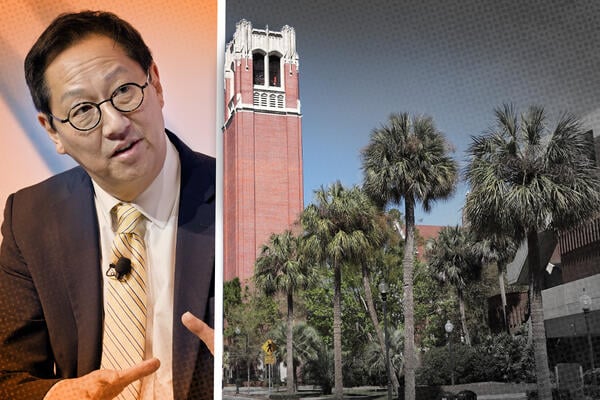
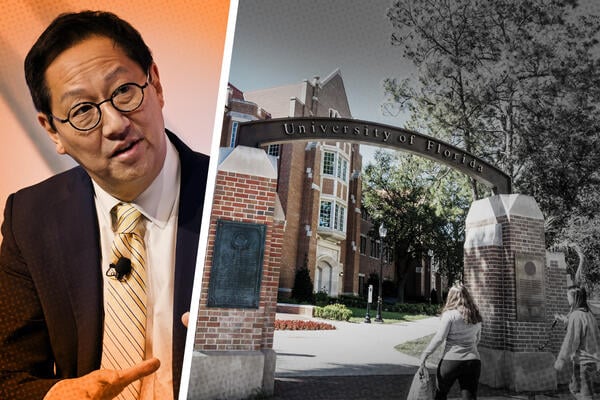
    The Florida Board of Governors voted Tuesday to reject Santa Ono as the next president of the University of Florida, bowing to opposition from conservatives over his past support of diversity, equity and inclusion initiatives.

    Anti-DEI activist Chris Rufo led the conservative backlash, while multiple elected officials in Florida alleged that Ono failed to protect Jewish students during his time as president of the University of Michigan.

    Amid those concerns, the Board of Governors voted 10 to 6 to reject Ono for the UF job.

    That process included a no vote from Paul Renner, a former Republican lawmaker in the state who had previously angled for the UF presidency, as became clear during board discussions. Throughout the meeting Renner grilled Ono on his past support for DEI, prompting fellow board members to push back, accusing him of “interrogating” Ono and questioning the fairness of his inquiries.

    The vote comes after the UF Board of Trustees approved Ono’s hire last week following a public interview that focused largely on DEI. Ono distanced himself from DEI in that interview, arguing that the initiatives began with good intentions but ultimately became divisive. He said they siphoned resources away from student success efforts and stifled dialogue, which he said prompted his decision to close Michigan’s DEI office this spring. (Ono resigned from the Michigan presidency in May to pursue the UF job.)

    “I am here to ensure that DEI never returns to the University of Florida,” Ono said Tuesday.

    In the past, Ono had condemned systemic racism and argued for the necessity of DEI. But Tuesday—as he did in his public interview with UF’s Board of Trustees last week—Ono emphasized his ideological evolution, which ultimately failed to convince the board.

    A Contentious Meeting

    In the public comments portion of the meeting, both Ono’s supporters and detractors made their case.

    Michael Okun, director of the Norman Fixel Institute for Neurological Diseases at UF, disputed claims that Ono failed to protect Jewish students. Okun, who is Jewish, argued Ono is an ally to the Jewish community, “and suggesting otherwise is factually incorrect and deeply harmful.”

    But University of Michigan Medical School professor Joshua Rubin countered that claim, arguing that Ono had failed to stymie a culture in Michigan where antisemitism thrived. Rubin argued that Ono failed to fix problems at UM and “is complicit in that culture.”

    Other speakers included Kent Fuchs, the former UF president called out of retirement to helm the university again when Ben Sasse exited the job abruptly last year. Fuchs, who is currently serving as interim president, supported Ono’s hire, telling the board the candidate was “unmatched nationally in both his credentials and his experience and his track record.”

    UF Board of Trustees chair Mori Hosseini also made an impassioned plea to hire Ono.

    “The bottom line is that Dr. Ono is globally recognized as one of the most respected leaders in higher education, and we are lucky to have him. Outside of Dr. Ono, there are very few people, if any, with a combination of ideological alignment in Florida and the operational experience to run a research powerhouse like you are,” Hosseini said in remarks to the Board of Governors.

    He added that “the UF presidency is not a position where someone can learn on the job.”

    But the Board of Governors bombarded Ono with a series of sharp questions.

    Few had to do with how he would run the University of Florida; student and faculty representatives on the board asked how he would support and include their respective groups in his decision-making process, but most questions focused on DEI.

    Jose Oliva, a former Republican lawmaker, told Ono his ideological shift was “nothing short of incredible.” He also asked Ono, who has a background in ophthalmology, what science his “decades-long, enthusiastic support and advocacy” for DEI initiatives was based on.

    Ono argued that he was “not an expert in that area” and had not created any DEI programs; he said such efforts were already in place when he arrived at UM and his previous institutions, such as the University of British Columbia.

    “Your words simply don’t support that you were just kind of sailing along,” Oliva responded.

    Some trustees also pressed Ono on transgender care at University of Michigan Health, questioning whether the hospital had “cut off” the breasts or genitals of transitioning patients, particularly children.

    As with many other questions, Ono demurred. In that case, he said he didn’t want to misspeak.

    “I’m not an expert,” Ono said, in what became a common refrain throughout the day.

    Hosseini, who was seated next to Ono and involved in the conversation at times—including when he revealed that Renner, who was one of Ono’s fiercest inquisitors of the day, had inquired about the UF job—appeared to bristle at the Board of Governors’ sharp questions for the candidate.

    “You all decided today is the day you’re going to take somebody down,” Hosseini told the board.

    Ono had been set to make up to $3 million a year as UF president. Now it appears Hosseini and the rest of the board will have to restart the search process.

    Ono’s Opponents Celebrate

    As news of Ono’s rejection spread, conservative critics took a victory lap.

    “This is a massive win for conservatives—and an act of courage by the board,” Rufo posted.

    Florida’s elected officials also weighed in.

    “This is the right decision for @UF. UF’s students, faculty, and staff deserve a president who will stand for Florida values and against antisemitism,” Republican senator Rick Scott posted on X. (Scott had previously called for an investigation into the search that yielded Ono.)

    But conservatives weren’t the only ones celebrating.

    Multiple academics on BlueSky also seemed to take satisfaction in the news, with some indicating they thought Ono had done an about-face on DEI, only for the move to backfire.

    “I don’t know how many times this needs to be said: there is no winning with these people. If you’re willing to sell your soul to try and appease them, then I’m sorry but you deserve whatever they do to you,” Neil Lewis Jr., a communication professor at Cornell University, wrote online.

    Outside experts also noted how the Ono vote reflected the influence of state-level politics on decisions.

    James Finkelstein, a professor emeritus of public policy at George Mason University who studies presidential contracts and hiring processes, told Inside Higher Ed by email that the outcome illustrated the growing complexity and politicization of picking a college leader.

    “This episode is a stark reminder of how state-level politics are reshaping the presidential search process. The lesson is clear: until a contract is signed, nothing is guaranteed,” Finkelstein wrote.

    Source link

  • El College Board cancela programa de premios para estudiantes negros y latinos de alto rendimiento 

    El College Board cancela programa de premios para estudiantes negros y latinos de alto rendimiento 

    El College Board modificó este mes los criterios de concesión de becas del Programa Nacional de Reconocimiento o National Recognition Program, en una medida que podría desplazar decenas de miles de dólares de becas de estudiantes negros y latinos a estudiantes blancos. 

    Las universidades utilizaban los premios para contratar y ofrecer becas a estudiantes de alto rendimiento procedentes de grupos subrepresentados en la enseñanza superior. Anteriormente, el premio reconocía los logros académicos de estudiantes de cinco categorías: negros, hispanos, indígenas americanos, de primera generación y residentes en zonas rurales o ciudades pequeñas.  

    Las categorías raciales fueron eliminadas.  

    Ahora, los estudiantes que viven en ciudades pequeñas y zonas rurales pueden seguir obteniendo el premio si obtienen en el PSAT -precursor del SAT que se administra en las escuelas secundarias de todo el país- una puntuación que se sitúe en el 10% superior de todos los estudiantes de ciudades pequeñas y zonas rurales de su estado. Lo mismo ocurre con los estudiantes de primera generación, pero no con los de categorías raciales subrepresentadas. 

    Relacionados: ¿Le interesan más noticias sobre universidades? Suscríbase a nuestro boletín sobre educación superior quincenal gratuito

    Los críticos se mostraron decepcionados por la decisión del College Board. 

    “Creían que la desigualdad racial era algo importante que había que abordar ayer, y al cambiar eso, están dando a entender que no es algo importante por lo que luchar ahora”, dijo Rachel Perera,  investigadora de estudios gubernamentales en la liberal Brookings Institution.  “Esa es la cuestión central que se debate, aunque no se haga de forma explícita: ¿existe la discriminación racial?”.  

    En una declaración en su sitio web, el College Board recordó la sentencia del Tribunal Supremo de 2023 que prohibió el uso de la raza como criterio en las admisiones, aunque los premios del Programa Nacional de Reconocimiento se utilizaban para becas y contratación, no para admisiones. 

    “Las recientes acciones legales y regulatorias han limitado aún más la utilidad de estos premios para los estudiantes y las universidades”, dice la declaración. Además, el presidente Donald Trump ha dejado claro en repetidas ocasiones que desaprueba las políticas que tienen en cuenta la raza en la educación superior, y algunos estados han prohibido la consideración de la raza en las decisiones sobre becas.   

    En 2023-24, el College Board concedió 115.000 premios de reconocimiento y algo menos de la mitad correspondieron a categorías raciales. El año anterior hubo más de 80.000 premios y la mayoría fueron para estudiantes negros, hispanos e indígenas americanos. Aunque el College Board no reparte dinero por sí mismo, las universidades lo utilizan para seleccionar a los estudiantes que recibirán becas. Según Holly Stepp, directora de comunicaciones del College Board, éste no mantiene una lista de las instituciones que utilizaron las categorías raciales. 

    El College Board inició el programa en 1983 para reconocer a los estudiantes hispanos de alto rendimiento. En 2020, se añadieron las otras dos categorías raciales y las designaciones de ciudad pequeña y rural. Los estudiantes de primera generación pudieron ganar el premio a partir del año pasado. Las ciudades pequeñas podían incluir aquellas con ingresos modestos o enclaves ricos como Aspen (Colorado). Además, todos los estudiantes deben tener al menos una media de B+. 

    Relacionado: El recorte de las becas basadas en la raza bloquea el acceso a la universidad,  los estudiantes según

    Aunque ahora estudiantes de todas las razas pueden obtener los premios, la supresión de las categorías raciales afectará probablemente de forma desproporcionada a los estudiantes negros e hispanos.  

    En promedio, los estudiantes asiáticos y blancos obtienen puntuaciones más altas en el PSAT. La puntuación media de los estudiantes blancos en el PSAT del año pasado fue de 994, frente a los 821 de los estudiantes negros, lo que supone una diferencia de 173 puntos. La media de los estudiantes asiáticos fue aún mayor, 1108, mientras que la de los hispanos y los indígenas americanos fue de 852 y 828 puntos, respectivamente.  

    “Se trata de un avance hacia las categorías que no tienen en cuenta la raza, cuando sabemos que la educación y el acceso a la educación no son independientes de la raza”, afirmó Wil Del Pilar, vicepresidente senior de EdTrust, un grupo político de tendencia izquierdista. 

    Sin embargo, algunos conservadores elogiaron la medida, argumentando que los programas de becas y contratación en función de la raza eran formas de eludir las sentencias de la Corte Suprema sobre la acción afirmativa y que constituían una forma de discriminación inversa. 

    Jonathan Butcher, investigador principal de política educativa en la conservadora Heritage Foundation, dijo que cree que la discriminación racial existe y debe abordarse, pero que las políticas educativas que tienen en cuenta la raza son ilegales e ineficaces. 

    “Si se utilizan preferencias raciales, se está preparando a los estudiantes para que pierdan la confianza en sí mismos cuando se enfrenten a una situación para la que no están preparados”, afirma Butcher. 

    Relacionado: Cruzaron la frontera en busca de mejores escuelas. Ahora, algunas familias dejan EEUU

    En lugar de las categorías raciales, este año se ha añadido una nueva designación que reconoce a los estudiantes que obtienen una puntuación en el PSAT dentro del 10% de los mejores de su escuela secundaria.  

    Los expertos afirman que es poco probable que las universidades ofrezcan becas a todos los estudiantes que obtengan las mejores notas del 10% de todos las escuelas secundarias del país, dado el coste que ello supondría. Funcionarios de la Universidad de Nuevo México, por ejemplo, dijeron que dejarían de utilizar las designaciones del College Board a partir del año escolar 2026-27. 

    “Actualmente estamos analizando nuestra estrategia de becas, pero se harán cambios en todos los ámbitos”, dijo Steve Carr, director de comunicaciones de la universidad, en un correo electrónico. 

    En 2023-24, la Universidad de Nuevo México concedió becas por valor de 15.000 dólares cada una a 149 estudiantes negros, hispanos e indígenas americanos. 

    La Universidad de Arizona también ofreció becas a los estudiantes que obtuvieron premios del Programa de Reconocimiento Nacional en las designaciones raciales el año pasado. 

    “La universidad ya estaba evaluando su estrategia de becas y tendrá en cuenta el anuncio del College Board a la hora de determinar la mejor manera de avanzar y apoyar a nuestros estudiantes”, dijo Mitch Zak, portavoz de la Universidad de Arizona, en un correo electrónico. 

    Además de las puntuaciones obtenidas en el PSAT, los estudiantes pueden optar al premio del College Board si obtienen una puntuación de 3 o más en dos de los cinco exámenes de Colocación Avanzada o Advanced Placement realizados durante su noveno y/o décimo curso, aunque muchas escuelas secundarias no ofrecen de manera uniforme cursos AP a los estudiantes de primer y segundo año.  

    “No podemos hablar de méritos si no estamos todos en el mismo punto de partida en cuanto a lo que recibimos de nuestra educación primaria y secundaria”, dijo Del Pilar, “y cómo podemos desenvolvernos en el entorno de preparación de exámenes, o la falta de preparación de exámenes que reciben ciertas comunidades”. 

    Comunícate Meredith Kolodner en el 212-870-1063 o en [email protected] o en Signal en merkolodner.04 

    Esta historia sobre el College Board fue producida por The Hechinger Report, una organización de noticias independiente y sin ánimo de lucro centrada en la desigualdad y la innovación en la educación. Suscríbase al boletín de Hechinger

    The Hechinger Report provides in-depth, fact-based, unbiased reporting on education that is free to all readers. But that doesn’t mean it’s free to produce. Our work keeps educators and the public informed about pressing issues at schools and on campuses throughout the country. We tell the whole story, even when the details are inconvenient. Help us keep doing that.

    Join us today.

    Source link

  • UF Board Votes Unanimously to Hire Ono

    UF Board Votes Unanimously to Hire Ono

    Despite mounting conservative criticism over Santa Ono’s stance on diversity, equity and inclusion, the University of Florida Board of Trustees on Tuesday overwhelmingly voted to hire the former University of Michigan president as its next leader.

    Ono, who held three prior presidencies, was named the sole finalist for the top job at Florida in early May. As a traditional academic, Ono marks a break from the norm at Florida’s public universities, where the emphasis in the past few years has been on hiring former Republican lawmakers and others with political connections.

    But his candidacy faced heavy criticism from conservative critics such as anti-DEI activist Chris Rufo, Heritage Foundation president Kevin Roberts and several Florida lawmakers, including Republican U.S. senator Rick Scott, who called for an investigation into the search that yielded Ono due to his past remarks on DEI. Some critics have claimed that Ono is a radical liberal academic who made an about-face on DEI due to careerist ambitions.

    Ono, who made more than $1.3 million a year at Michigan, where he was under contract until 2032 before he stepped down to pursue the Florida job, could earn up to $3 million a year at UF, according to the salary range.

    Ono’s Evolution on DEI

    Rufo has led the charge among Ono’s conservative critics.

    “Woke is threatening a return to power,” Rufo declared in an opinion piece in the conservative City Journal in which he argued that Ono’s noted past support of DEI policies was disqualifying.

    (Although Rufo argued that Ono’s presidency would threaten to undo changes to education in the state driven by Republican Ron DeSantis, the governor has defended the pick.)

    Prior to Tuesday’s meeting, Rufo circulated various videos of Ono speaking in favor of DEI policies and against systemic racism. While those videos gained traction on social media, the posts did not sway the UF Board of Trustees, which voted unanimously to hire Ono.

    But Ono’s changing stances on DEI did hang over much of Tuesday’s meeting, popping up in multiple questions where Ono discussed his evolution on the issue and noted that he dismantled DEI initiatives at the University of Michigan after his perspective began to shift in late 2023.

    “I did not come to bring DEI back; I came to make sure it never returns,” Ono told UF trustees.

    Ono argued that while he initially agreed with the aims of DEI programs, while president of the University of Michigan he came to see that such initiatives were divisive and diverted resources from student success, leading to his decision to shutter the DEI office there earlier this year.

    He argued that “large DEI bureaucracies” stifle open dialogue and erode trust on campus and that “it became clear to me through experience, not theory, that something had gone wrong.”

    Ono sought to distance himself from his prior statements, arguing that what matters “is not what I said two to six years ago,” as depicted in the videos, but rather what he has done in the last 18 months, which includes winding down the DEI office at Michigan before he resigned last month. Although the move came after increased criticism of DEI spending at Michigan, Ono cast it as a move that grew out of conversations he began having in late 2023 in which he questioned the efficacy of such initiatives.

    He also stressed again how his vision aligns with the goals of UF and DeSantis.

    “I understand and support what Florida’s vision for higher education represents: a decisive move away from ideological bias and activist-driven culture that has come to define too many colleges and universities in this country and abroad,” Ono said. “The goal is not to replace one orthodoxy with another. It is to restore balance, to protect the pursuit of truth and create a university environment where all students can thrive, regardless of their viewpoint. Florida is showing the nation that it’s possible to elevate academic excellence without ideological indoctrination.”

    While issues like faculty recruiting and retention, post-tenure review, college athletics, and other aspects of running the university were addressed in an almost three-hour public interview, much of that time, and the board’s questions, centered on DEI and campus protests.

    For instance, Ono was asked multiple times about concerns of rising antisemitism on campus.

    He responded that antisemitism is “a persistent threat, especially on college campuses” that “too often hides behind the language of political critique” and has been “normalized in the name of activism.” Ono also emphasized a commitment to keeping Jewish students safe at UF.

    Asked about his decision to allow a pro-Palestinian encampment to remain at Michigan for 30 days, Ono said that the university did not want to escalate the situation and create an atmosphere of unrest close to commencement. He added that he spoke with Jewish students who were worried about how removing the encampment might disrupt commencement. Ono also said that Michigan subsequently updated its time, place and manner policies to prevent future encampment protests.

    A Looming Battle?

    Although the UF Board of Trustees approved the Ono hire, it’s not a done deal, as the Florida Board of Governors has the final say.

    That board will meet in either mid-June or at a special meeting to consider Ono. That could provide another opportunity for Ono’s conservative critics to derail the hire if the Board of Governors comes out against the selection.

    Florida representative Greg Steube, a Republican, immediately called for the board to block the hire.

    “The @UF Board of Trustees has made a grave mistake. Today, Dr. Ono gave it his best ‘college try’ walking back his woke past, claiming he’s now ‘evolved.’ But I’m not sold. This role is too important to gamble on convenient conversions,” Steube wrote on social media Tuesday.

    At least one member of the Board of Governors noted over the weekend that concerns about Ono will be addressed.

    “The UF Board of Trustees is responsible for vetting the issues raised by concerned stakeholders, which their fiduciary obligations require they do, and which they need to do before making a decision. If/when the BOT acts, it will come to the Board of Governors, where the Board of Governors must agree to confirm the candidate for President of UF. The BOG takes this responsibility seriously, and issues will likely be fully reviewed and discussed publicly,” FLBOG member Alan Levine wrote in a Sunday social media post before Ono was hired.

    While the Board of Governors does have the power to derail Ono’s selection, members could have done so earlier—and behind closed doors—if they had concerns. Under a policy established last year, the Board of Governors must sign off on a list of presidential finalists identified by search committees before those candidates can be considered by individual boards. So the board could’ve wielded that veto power of sorts to remove Ono before he was named as a sole finalist.

    If confirmed, Ono will replace interim president Kent Fuchs, who came out of retirement after then-president Ben Sasse stepped down last July, weeks before a spending scandal emerged.

    Elsewhere in the state, the University of West Florida tapped former Republican lawmaker and current Florida commissioner of education Manny Diaz Jr. as its interim president in a process some trustees argued was rushed and lacked transparency. As the fifth president hired to lead a public university in Florida this year (including those serving in an interim capacity), Ono is the only one who is not either a former Republican lawmaker or connected to the governor’s office.

    Source link

  • College Board cancels award program for high-performing Black and Latino students

    College Board cancels award program for high-performing Black and Latino students

    The College Board this month changed the criteria for its National Recognition Program awards in a move that could shift tens of thousands of scholarship dollars from Black and Latino students to white students.

    Colleges used the awards to recruit and offer scholarships to high-performing students from groups underrepresented in higher education. The award previously recognized academic achievement by students in five categories — Black, Hispanic, Native American, first-generation and those living in rural areas or small towns.

    The racial categories have been eliminated.

    Now, students living in small towns and rural areas can still earn the award if they score in the top 10 percent among all small-town and rural students in their state on the PSAT — a precursor to the SAT that is administered in high schools around the country. The same is true for first-generation students but not for students in underrepresented racial categories.

    Related: Interested in more news about colleges and universities? Subscribe to our free biweekly higher education newsletter.

    Critics said they were disappointed by the College Board’s decision.

    “They believed racial inequality was something important to address yesterday, and by changing that, they’re implying that it’s not something important to fight for now,” said Rachel Perera, a fellow in government studies at the liberal Brookings Institution. “That’s the heart of the question that’s being debated — although it’s not being debated in explicit terms — does racial discrimination exist?”

    In a statement on its website, the College Board noted the 2023 Supreme Court ruling that prohibited the use of race in admissions, although the National Recognition Program awards were used for scholarships and recruitment, not admissions.

    “Recent legal and regulatory actions have further limited the utility of these awards for students and colleges,” the statement says. Also, President Donald Trump has repeatedly made clear his disapproval of race-conscious policies in higher education, and some states have banned consideration of race in scholarship decisions. 

    In 2023-24, the College Board issued 115,000 recognition awards, and a little less than half were in the racial categories. The previous year there were more than 80,000 awards and the majority were for Black, Hispanic and Native American students. While the College Board doesn’t hand out money itself, universities use it to select students for scholarships. The Board has not maintained a list of which institutions used the racial categories, according to Holly Stepp, College Board’s director of communications.

    The College Board started the program in 1983 to recognize high-performing Hispanic students. In 2020, the other two racial categories and the small town and rural designations were added. First-generation students could win the award starting last year. Small towns could include those with modest incomes or wealthy enclaves like Aspen, Colorado. All students must also have at least a B+ average.

    Related: Cutting race-based scholarships blocks path to college, students say

    While students of all races can now earn the awards, the removal of the racial categories will likely disproportionately affect Black and Hispanic students.

    On average, Asian and white students score higher on PSATs. White students’ average score on the PSAT last year was 994 last year compared with 821 for Black students — a gap of 173 points. Asian students’ average was even higher at 1108 while Hispanic and Native American students averaged 852 and 828 respectively.

    “It’s a move towards race-blind categories when we know that education and access to education isn’t race-blind,” said Wil Del Pilar, senior vice president at the left-leaning policy and advocacy group EdTrust.

    Some conservatives praised the move, however, arguing that race-conscious scholarship and recruitment programs were ways to get around the Supreme Court’s rulings on affirmative action and that they were a form of reverse discrimination.

    Jonathan Butcher, senior research fellow in education policy at the conservative Heritage Foundation, said he believes that racial discrimination does exist and should be addressed, but that race-conscious education policies were both illegal and ineffective.

    “If you are using racial preferences, you are setting students up for a loss of confidence when they struggle in a situation they’re not prepared for,” Butcher said.

    Related: How did students pitch themselves to colleges after last year’s affirmative action ruling?

    In place of the racial categories, a new designation has been added this year that recognizes students who score in the top 10 percent of their high school on the PSAT.

    Experts say colleges are unlikely to offer scholarships to all students who score in the top 10 percent of every high school in the country, given the cost that would entail. Officials at the University of New Mexico, for example, said they would stop using the College Board designations beginning in the 2026-27 school year.

    “We’re currently analyzing our scholarship strategy, but changes will be made across the board,” said Steve Carr, the university’s director of communications, in an email.

    In 2023-24, the University of New Mexico awarded scholarships based on the College Board designations worth $15,000 each to 149 Black, Hispanic and Native American students.

    The University of Arizona also offered scholarships to students who earned National Recognition Program awards in the racial designations last year.

    “The university was already evaluating its scholarship strategy and will consider the College Board’s announcement as we determine how best to move forward and support our students,” said Mitch Zak, spokesman for the University of Arizona, in an email.

    In addition to the PSAT scores, students are eligible for the College Board award if they score a 3 or higher out of 5 on two Advanced Placement exams taken during their ninth and/or 10th grade year, although many high schools don’t uniformly offer AP courses to freshmen and sophomores.

    “We can’t really have a conversation around merit if we’re not all at the same starting point in terms of what we receive from our K-12 education,” said Del Pilar, “and how we’re able to navigate the test prep environment, or the lack of test prep that certain communities receive.”

    Contact senior investigative reporter Meredith Kolodner at 212-870-1063 or [email protected] or on Signal at merkolodner.04

    This story about the College Board was produced by The Hechinger Report, a nonprofit, independent news organization focused on inequality and innovation in education. Sign up for the Hechinger newsletter.

    The Hechinger Report provides in-depth, fact-based, unbiased reporting on education that is free to all readers. But that doesn’t mean it’s free to produce. Our work keeps educators and the public informed about pressing issues at schools and on campuses throughout the country. We tell the whole story, even when the details are inconvenient. Help us keep doing that.

    Join us today.

    Source link

  • Indiana governor sued by state ACLU over university board control

    Indiana governor sued by state ACLU over university board control

    This audio is auto-generated. Please let us know if you have feedback.

    Dive Brief:

    • The American Civil Liberties Union of Indiana is suing the state’s governor, Mike Braun, over a new law giving him full control over the selection of Indiana University’s trustee board.
    • Last month, Republican lawmakers added several last-minute changes to Indiana’s budget bill that expanded the state’s control over its public colleges. Braun signed the budget into law Tuesday.
    • One provision empowers the governor to appoint all nine members of Indiana University’s board, eliminating the institution’s longstanding tradition of alumni trustee elections. That change illegally targets Indiana University and violates the state’s constitution, ACLU of Indiana’s lawsuit argues.

    Dive Insight:

    Indiana University has held alumni trustee elections since 1891, with the process codified into state law. Board members oversee everything from admissions standards to presidential appointments to faculty promotions and tenure. 

    Prior to the change in law this month, three trustees on the university’s nine-person were elected by alumni. The governor appointed the rest.

    ACLU of Indiana is suing Braun on behalf of a candidate who was vying for a board position this summer, Justin Vasel.

    “This challenge addresses a law that strikes at the heart of democratic governance at Indiana’s flagship university,” Vasel said in a statement Wednesday. “This unconstitutional legislation threatens IU’s 134-year-old tradition of alumni representation while an election for those very positions is already underway.”

    Before the change in law, the university’s over 790,000 graduates were eligible to cast a ballot, according to the university’s alumni association, making the voter pool larger than the populations of Wyoming, Vermont or Alaska.

    Six members of the university’s alumni association had announced their candidacy for trustee, and the month-long election was set to begin in June. Had it gone on as scheduled, the winner would have joined the board July 1.

    Now, Braun has the power to appoint who he wishes, so long as five trustees are university alumni and five are Indiana residents. The governor also received the power to remove any previously elected members at his discretion. 

    Braun defended the change during an April 30 press conference, citing low alumni voter turnout in the trustee elections, according to the Indiana Capital Chronicle.

    “It wasn’t representative. It enabled a clique of a few people to actually determine three board members. And I don’t think that is real representation,” the governor told reporters.

    The university’s next trustee meeting is set to take place June 12.

    The lawsuit castigated lawmakers for not following the normal legislative process when approving the change, instead relying on last-minute amendments.

    “No hearings were held concerning the proposal,” it said. “Instead the change was inserted at the eleventh hour deep within a lengthy budget bill that otherwise would have nothing to do with the election of members of the boards of trustees of Indiana’s higher education institutions.”

    Vasel and the ACLU of Indiana also questioned the constitutionality of the budget’s targeting of Indiana University’s board selection.

    The process for appointing trustees varies among the state’s other public universities. But the alumni of each institution have the ability to vote on or nominate graduates to the board, the lawsuit said. The change Braun signed into law takes that ability away from Indiana University alone.

    “Every other four-year public university in the state has a process for allowing alumni to select at least some members of the board of trustees, and there is no justification for denying that ability to the alumni of IU,” Ken Falk, legal director of ACLU of Indiana, said in a Tuesday statement.

    Indiana Republicans, who control both chambers of the Legislature and the governor’s mansion, have attempted to control other aspects of Indiana University.

    Earlier this year, the state comptroller and two lawmakers joined an event where an advocacy group questioned if the university was illegally routing state funds to the Kinsey Institute, a sexuality and gender research center housed on its Bloomington campus.

    Lt. Gov. Micah Beckwith joined the opposition of the institute and said he and Braun are committed to ensuring Indiana University “is not using taxpayer dollars to fund something that is rooted in this wickedness,” according to WFYI.

    Beckwith also threatened the university and its editorially independent student newspaper, the Indiana Daily Student, over the publication’s coverage of President Donald Trump. 

    The lieutenant governor derided a November cover story that showcased quotes critical of the president made by former Trump officials, though Beckwith misattributed the quotes as from the paper’s staff. He went on to call the story “WOKE propaganda at its finest.”

    “This type of elitist leftist propaganda needs to stop or we will be happy to stop it for them,” Beckwith said in a social media post.

    Source link

  • Georgia Southern and East Georgia State merger gets green light from system board

    Georgia Southern and East Georgia State merger gets green light from system board

    Dive Brief:

    • Georgia Southern University is poised to absorb East Georgia State College after the University System of Georgia governing board approved a merger plan Tuesday. 
    • The board’s vote follows USG Chancellor Sonny Perdue’s recommendation for the consolidation last week. Tuesday’s action marks “the first step in a careful process that will take more than a year,” the system said. 
    • The new institution will retain the “identity” of East Georgia State, which has struggled with enrollment declines in recent years. At the same time, it will become part of Georgia Southern and will be led by the latter’s president, Kyle Marrero, according to the announcement. The consolidation requires the approval of the institutions’ accreditor. 

    Dive Insight:

    Perdue trumpeted the consolidation of Georgia Southern and East Georgia State as a way to invest in key higher education functions — especially student success and degree accessby saving on administrative costs and reducing academic program overlap.

    “By using public resources as efficiently as possible, we’re making sure every dollar saved is reinvested into those programs that truly empower our students, support our faculty and strengthen our communities for a brighter future,” Perdue said in Tuesday’s announcement.  

    Georgia state Rep. Butch Parrish — who represents Swainsboro, which is home to East Georgia State and 40 miles from Georgia Southern praised the plan. 

    “It’s essential that as the system streamlines and operates more efficiently, we safeguard access to higher education in the local area and keep the EGSC spirit going,” Parrish said in a statement. 

    Now that the board has greenlit the merger, the institutions plan on quickly forming an implementation team with representatives from both colleges to work out details, the system said. That team will also prepare and submit the required paperwork for approval by their accreditor,  the Southern Association of Colleges and Schools Commission on Colleges.

    USG and the institutions plan on holding campus and community listening sessions to seek input on the new institution’s design, with the first one slated for Wednesday on East Georgia State’s campus.  

    Of the two, Georgia Southern is by far the larger institution. As of fall 2023, the university enrolled 26,041 students to East Georgia State’s 1,756, according to federal data. Georgia Southern’s enrollment has been relatively stable, declining 1.4% between 2018 and 2023, while East Georgia State’s fell by 40.3%. 

    The larger university also has a much deeper catalog of programs compared to East Georgia State, which according to its website offers six associate and three bachelor’s degree programs. 

    The planned consolidation is the latest move in an effort going back nearly 15 years to pare down Georgia’s state university system. So far, USG has undertaken 13 consolidations. From these, it has saved $30 million in administrative expenses that it said it has reinvested into student services and faculty and staff hires

    Once the Georgia Southern and East Georgia State combination completes, USG will have 25 institutions, the system said.

    Source link

  • FIRE welcomes Allison Hayward to board of directors

    FIRE welcomes Allison Hayward to board of directors

    FIRE is thrilled to announce that professor Allison Hayward has joined our board of directors.

    Allison is the former head of case selection for the Meta Oversight Board, where she played a critical role in shaping the platform’s approach to content moderation. She also previously served as a commissioner on the California Fair Political Practices Commission and co-chaired the Board of the Office of Congressional Ethics.

    “Allison brings an extraordinary depth of experience at the intersection of law, media, policy, and free expression,” said FIRE President and CEO Greg Lukianoff. “At a time when the future of open discourse is being shaped by institutions both public and private, her insight will be invaluable in guiding FIRE’s mission.”

    Additionally, Allison is the former vice president of policy at the Center for Competitive Politics (now the Institute for Free Speech).

    With a robust background in academia, Allison taught constitutional law, election law, ethics, and civil procedure as an assistant law professor at George Mason University School of Law from 2006 to 2010. She also served as counsel to Commissioner Bradley A. Smith at the Federal Election Commission.

    Allison was also an associate at the law firm Wiley, Rein & Fielding in Washington, D.C., and counsel at Bell, McAndrews, and Hiltachk in Sacramento, California.

    Allison has written widely on election law and ethics topics and has been published in a variety of law journals. Before attending law school, she served as staff in the California legislature and managed a state assembly campaign. 

    She earned her bachelor’s degree in political science and economics from Stanford University, and her J.D. from the University of California, Davis. She has clerked for Judge Danny J. Boggs of the U.S. Court of Appeals for the Sixth Circuit and as chair of the Federalist Society’s Free Speech and Election Law Practice Group.

    Allison is a member of the ABA Standing Committee on Election Law and the American Law Institute. She is also an active member of the California bar.

    Apart from law and politics, Allison is passionate about music. She sings, plays fiddle and keyboards, and sits on the board of a fiddle camp and a bluegrass festival.

    She lives in Cambria, California, with her husband Steve, who teaches at the Pepperdine School of Public Policy, and is the proud mother of two adult children.

    “One of the things I most respect about FIRE is its non-partisan mission,” said Allison. “Threats to speech are ultimately nonsectarian and what comes around certainly goes around. FIRE understands that the liberty long-game is critical to freedom and sound governance.”

    Source link

  • University of New Orleans should rejoin LSU system, state board says

    University of New Orleans should rejoin LSU system, state board says

    This audio is auto-generated. Please let us know if you have feedback.

    Dive Brief:

    • The struggling University of New Orleans should return to the Louisiana State University system, the state’s higher education board has recommended. 
    • UNO, founded in 1956 as part of the LSU system, transferred to the University of Louisiana system in 2011 amid enrollment declines stemming from Hurricane Katrina damage.
    • Transferring the institution back to the LSU system would require state legislation, which Louisiana’s board of regents voted unanimously to recommend at a meeting on Wednesday. 

    Dive Insight:

    UNO’s enrollment has never fully recovered from the disaster of Katrina nearly two decades ago. The university even grew its student body slightly after the hurricane but has since lost those gains. For the 2023-24 academic year, full-time equivalent enrollment stood at 5,114 students — just over a third of what it was in 2004-05. 

    Accompanying those declines has been financial instability. Between fiscal years 2015 and 2024, UNO’s tuition and fee revenue fell about 20% to $65 million.

    State fiscal support has also collapsed. Louisiana has gone through “one of the largest higher education disinvestments in the nation,” according to a March feasibility study from the regents on returning UNO to the university system. For UNO, state funding has fallen by just under 45% from two decades ago. 

    In addition to cost increases felt throughout higher education, UNO also faces contractual debt obligations such as for bookstore and dining services and a deferred maintenance backlog exceeding $2 billion. 

    The report also laid blame with the university, stating that “UNO’s lack of aggressive action to address these issues immediately as they arose has resulted in a deep budget deficit that must be strategically repaired.”

    Amid all its many revenue and expense challenges — and despite job cuts and other budget efforts — UNO’s budget gap has reached $30 million, according to the study. 

    All of those problems indicate failed thinking behind the university’s transfer into the UL system, according to the regents’ report. Moving UNO into UL’s fold came with an “expectation that new governance would assist in reversing declining enrollment and graduation rates to yield a stronger and more vibrant UNO,” it noted. 

    But things did not turn out as planned. “Instead, the institution’s fiscal condition has deteriorated to its current dire state, challenging UNO’s ability to meet its academic, research and community service missions,” the report said

    Yet the university “plays a significant role in advancing the intellectual and economic development of the City of New Orleans,” the study argued, pointing to well-regarded programs in jazz studies, naval architecture and marine engineering, hospitality and cybersecurity

    While the regents voted to recommend the university’s transfer to the LSU system, some board members expressed concern that doing so would just make UNO’s financial troubles a systemwide problem. 

    I just worry that, when you look at the shortfall, you’re taking the shortfall from one area and transferring it to the other,” Regent Dallas Hixson said at Wednesday’s meeting. 

    The point of transferring the university to the LSU system would be to “unlock the full potential of UNO, fostering regional prosperity while ensuring a smooth and efficient transfer of governance and leadership,” the feasibility study stated. It offered few details, however, for how that would occur. 

    To ensure a smooth transfer, the regents recommended setting up a transition team that would engage the system and UNO leadership. It also called for an in-depth third-party forensic financial audit, as well as program and facilities assessments, to help enumerate and address UNO’s challenges.

    Source link

  • Youngkin Removes Controversial UVA Board Member

    Youngkin Removes Controversial UVA Board Member

    Virginia’s Republican governor, Glenn Youngkin, abruptly removed Bert Ellis—one of his own appointees—from the University of Virginia Board of Visitors, The Washington Post reported Wednesday.

    Youngkin confirmed the move in a letter to Ellis posted online.

    “While I thank you for your hard work, your conduct on many occasions has violated the Commonwealth’s Code of Conduct for our Boards and Commissions and the Board of Visitors’ Statement of Visitor Responsibilities,” Youngkin wrote.

    Youngkin, who appointed Ellis to UVA’s board in June 2022, reportedly disapproved of his combative style. The Post reported that the governor had asked him to step down, but Ellis balked at working with the administration to craft a statement about his resignation. Following that hesitation, Youngkin reportedly took the unusual step of removing Ellis from UVA’s board.

    Ellis was serving a four-year term set to end next June.

    As a member of UVA’s Board of Visitors, Ellis frequently caused controversy. Among other things, he insulted university staffers and sought to downplay the history of slavery at UVA, which was founded by Thomas Jefferson. Before he was appointed to the board, Ellis, who is a UVA graduate, sparked controversy for removing a poster that read “fuck UVA” from a student’s door on campus. Ellis has also been criticized for his connections to the Jefferson Council, a conservative alumni organization, which he led, that is frequently critical of UVA leadership.

    Neither UVA nor Ellis responded to requests for comment from Inside Higher Ed.

    Source link