Tag: border

  • Universities are not border agents – but they do have a duty

    Universities are not border agents – but they do have a duty

    As summer draws to a close, the UK finds itself in the grip of growing public frustration over the slow processing of asylum claims and the perceived misuse of the student visa system. With over 111,000 asylum applications recorded in the year to June 2025 – the highest number ever recorded in the UK – the pressure is growing on the UK government, local councils and public services to reduce both processing times and the cost of housing asylum seekers.

    Currently, the UK is facing a backlog of more than 106,000 asylum cases, including 51,0000 appeals, with average wait times stretching to 53 weeks. The use of hotels to accommodate asylum seekers – originally a temporary measure introduced by the last government – has become a flashpoint for anti-migrant protests nationwide.

    Spotlight on international education

    As the asylum debate intensifies, UK universities are increasingly being drawn into the spotlight. This is largely due to recent Home Office data revealing that 16,000 student visa holders claimed asylum in 2024 – more than any other visa category. Nearly 40% of these individuals had entered the UK legally from countries including Pakistan, Nigeria and Sri Lanka.

    These figures have already prompted the government to introduce a new wave of visa reforms in its Immigration White Paper, including reducing the post-study work entitlement from two years to 18 months and imposing sanctions on universities with high rates of post-study asylum claims. From September 2025, UK universities may face fines, public naming or even temporary bans on international student recruitment if they fail to meet new compliance standards.

    The risk of reputational fallout

    For universities already navigating considerable financial pressures, the implications of these restrictions could be severe. Just one year’s intake of international students contribute almost £42 billion annually to the UK economy and represent a vital segment of enrolments across the sector. The growing association between universities and fraudulent asylum claims nevertheless risks undermining public trust and casting doubt on the integrity of university admissions processes.

    This reputational risk also extends beyond domestic borders. If the UK is perceived globally as hostile or unpredictable in its treatment of international students, competitor destinations such as Canada, Australia and New Zealand may stand to gain from the UK’s inability to get its house in order and bring its asylum system under control. Moreover, the Graduate Route, once a cornerstone of the UK’s appeal to global talent, remains under constant threat of review, further fuelling uncertainty among prospective applicants.

    Lessons for the academic year ahead

    So, what should UK universities do in response to growing concerns about illegal immigration? First, universities must strengthen their admissions oversight. Higher education institutions must ensure robust financial and academic checks, particularly for applicants from high-risk regions, and be transparent about any shortcomings and plans for improvement to maintain government goodwill and reassure the public.

    Second, universities must continue to support vulnerable students wherever in the world they may come from. Not all asylum claims are opportunistic. With the world around us changing apace, some students face genuine threats to their lives from political upheaval, persecution or conflict. This means universities should be prepared to offer legal guidance and pastoral support to those at risk and add legitimacy to the asylum claims of those in genuine danger.

    Third, universities need to speak with a unified voice and collectively defend the value of international education. This includes countering populist narratives about fraudulent asylum claims and backdoor immigration with evidence-based accounts of how international students contribute to the economy, innovation and a flourishing society.

    Finally, universities should be prepared to step up and engage with their local communities. The distinction between economic migrants, asylum seekers and international students is sadly all-too-often blurred in public discourse and populist rhetoric. Yet, with their strong and vibrant international communities, universities can help clarify these differences and highlight the positive contributions of their international students and staff, including through stories of civic engagement, volunteering and career successes.

    Compliance calls

    With no quick fixes to the asylum system in sight and public protests continuing as we head into the autumn, UK universities must not allow fear and frustration to erode the foundations of international education. While universities are not border agents, they do have a duty to comply with the systems that enable them to remain places of learning, inclusion and opportunity for people from across the world.

    As we enter a new academic year, the challenge is therefore clear: UK universities must find ways to balance compassion with control, ensuring that future international admissions processes meet the expectations of both government and the society they serve.


    Source link

  • Juggling risk and convenience in cross border payments

    Juggling risk and convenience in cross border payments

    The globalised education landscape continues to grow. According to ICEF Monitor, the volume of students studying abroad is expected to reach more than 9 million by the year 2030. And for education sectors around the world, international students are a major financial pillar. For example, in the 2021/22 academic year, non-EU students generated almost £9bn in tuition for UK universities.

    Pursuing academic goals abroad is an exciting prospect for students. However, the financial intricacies of international tuition payments can quickly turn to stress in the face of unpredictable currency fluctuations, communication hurdles, and complex administrative procedures. Meanwhile, for education institutions there is a fine art to balancing the need for secure and compliant cross-border transactions, with demand from students, their families, and agents for a seamless, user-friendly payments experience.

    The risks behind international tuition payments

    Handling cross border payments can be a tightrope walk for education institutions. When it comes to Gen Z and Gen Alpha, there’s an expectation that any sort of payment will be digital first, and seamless. However, there are several inherent risks to cross border transactions that finance teams can’t ignore.

    Topping the list would be payments fraud and scams. From phishing to fake agents, students are susceptible to schemes that lead to misdirected funds and enrolment issues – a threat that continues to escalate in the age of AI deepfakes.

    Currency volatility can surprise students and institutions alike. In the time between a student calculating their fees, and initiating a payment, the whims of the market can increase costs. For the institution, this can equate to payments arriving short, especially if intermediaries have deducted fees along the way.

    The challenge of managing international anti-money laundering (AML) and know your customer (KYC) regulations is another consideration. Plus, manual process for reconciliation and other administrative tasks can lead to errors, delays and financial discrepancies. The headaches for students and finance teams are real.

    Digital natives want seamless experiences

    Today’s international students expect cross-border payments to mirror modern eCommerce platforms. They want to make a payment online, from any device in a their method of choice, from bank transfers to e-wallets.

    Fast processing and real-time tracking are critical. For many international students, tuition fees are a major investment, and they want to see their funds are on track to reach their destination on time.

    Handling cross border payments can be a tightrope walk for education institutions

    Most of all, international payments should look and feel like local transactions. Payment platforms should accommodate diverse backgrounds for clear communication and support multiple currencies so students and their families know exactly how much their payment will cost. Even better if they get real-time rates.

    Failure to meet these demands can have real repercussions. Students are an institution’s greatest ambassador, and any negative experience can tarnish reputation and influence enrolment decisions.

    Find balance with the right payment provider

    Harmony between risk management and user convenience is increasingly critical for education institutions, and the best place to start is by partnering with a payment provider you can trust. Experienced international payments specialists offer robust fraud detection and compliance support, instilling confidence in students and institutions alike.

    Platforms that offer clear, up-front information about fees, exchange rates, and payments processes goes a long way towards building trust with students and their families. Combine this with advanced technology that delivers real-time tracking, and integration with financial systems for automated reconciliation, and your institution is well positioned to succeed in the digital age.

    To discover how Convera can help you offer a seamless payment experience for your international students, and reduce administrative burden for your teams, please get in touch here.

    About the author: Joanne McChrystal, originally from Ireland, is an alumna of Sheffield Hallam University, UK and the University of Economics in Vienna, Austria. With nearly three decades in financial services and a deep expertise in international payments, she has lived and worked across four European countries. Now, as the global head of education at Convera, Joanne drives forward initiatives that support educational institutions and their partners globally. She is fervently committed to facilitating seamless student journeys through innovative technology and robust partnerships.

    Source link

  • Trump’s border czar is wrong about AOC

    Trump’s border czar is wrong about AOC

    One of the most Orwellian stories in American history — where telling people about their rights and urging them to speak out became a thoughtcrime — was that of the socialist Eugene Debs. 

    Debs was sentenced to 10 years in prison for criticizing U.S. involvement in World War I and for telling Americans about their constitutional right to protest the draft. The Supreme Court infamously ruled his speech posed a “clear and present danger.” Today, that ruling is widely regarded as a grave violation of free speech and a stain on the history of American justice.

    Last week, Congresswoman Alexandria Ocasio-Cortez wrote a letter asking Attorney General Pam Bondi if she is now under investigation for telling people their constitutional rights when interacting with Immigration and Customs Enforcement (ICE) officers.

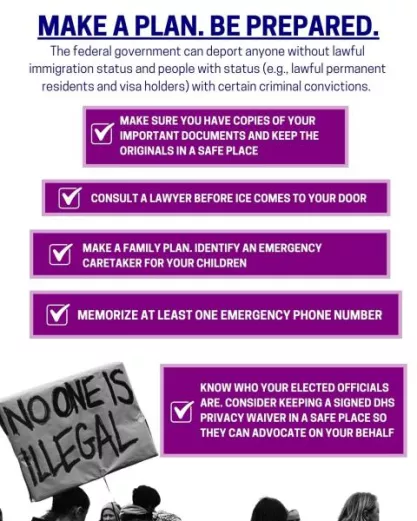
    She asked because President Trump’s border czar Tom Homan said he recently asked the Department of Justice whether Ocasio-Cortez is “impeding our law enforcement efforts” by putting out a webinar and a flyer in which she reminded anyone interacting with ICE that they need not open the door, speak, or sign anything, among other basic rights. 


    AOC flyer 2

    Informing people about their constitutional rights is plainly lawful and any effort to punish Ocasio-Cortez for doing so would unquestionably violate the First Amendment. 

    This isn’t a hard case or a close call. As my colleague Aaron Terr has pointed out, “This intimidation tactic is likely to discourage others from simply educating people about their fundamental rights.”

    But what is the line between protected speech and obstruction? The answer is that the Constitution protects a significant amount of expression, including abstract advocacy of unlawful acts, providing information about the presence of law enforcement officers, and promoting civil disobedience.

    Free speech protects discussing illegal behavior

    The Supreme Court has repeatedly explained that “the mere tendency of speech to encourage unlawful acts is not a sufficient reason for banning it.” It has long distinguished between “the mere abstract teaching … of the moral propriety or even moral necessity” of violating the law and the actual incitement of lawless action. Only the latter is unprotected by the First Amendment. This is a high bar that requires speech to be “directed to inciting or producing imminent lawless action and is likely to incite or produce such action.” 

    This is true even for speech advocating unquestionably unlawful behavior. For instance, in United States v. Williams, the Court held that “abstract advocacy” related to child pornography, such as the phrase “I encourage you to obtain child pornography,” was protected speech. And in Hess v. Indiana, the Court found that an anti-war protester urging his comrades to “take the fucking street again” was not sufficiently imminent to fall into the incitement exception. 

    But the most directly relevant example is the 2023 case United States v. Hansen, when the Court decided a law that criminalized encouraging illegal immigration was not unconstitutionally overbroad. FIRE and the Rutherford Institute wrote an amicus brief warning that the law, if interpreted broadly, could penalize speech urging civil disobedience.

    In upholding the law, the Court interpreted its scope extremely narrowly to apply only to “the intentional solicitation or facilitation of … unlawful acts” — not to “abstract advocacy or general encouragement” — and it left the door open for further First Amendment challenges if the law was applied to constitutionally protected advocacy.

    In other words, the Supreme Court recognized that advocacy like Ocasio-Cortez’s is clearly protected. Indeed, even more pointed advice on how to avoid arrest by ICE would also be protected. Only speech that intentionally directs an individual to engage in a specific illegal act crosses the line.

    Warning people about the presence of law enforcement is also protected

    The First Amendment also generally protects telling people that ICE is in a certain area, even if that allows people to evade ICE or other law enforcement. For example, in Friend v. Gasparino, the U.S. Court of Appeals for the Second Circuit held that the First Amendment protected a man standing on a sidewalk with a “Cops Ahead” sign. As the Supreme Court has said, someone “might constitutionally be punished under a tailored statute that prohibited individuals from physically obstructing an officer’s investigation,” but “he or she may not be punished under a broad statute aimed at speech.”

    This isn’t to say speech can never constitute obstruction of law enforcement. In limited circumstances, such as when speech is integral to the underlying crime like a robber demanding “your money or your life,” or someone in a criminal conspiracy warning his co-conspirators how to evade arrest, speech can lose First Amendment protection. Also, if someone is physically obstructing officers or refuses to leave when lawfully instructed to do so, that person’s actions won’t become protected even if those actions include otherwise protected speech. 

    But in general, warning people about law enforcement is constitutionally protected.

    Advocating civil disobedience is a historically important form of free speech

    Homan’s remarks and actions are particularly disturbing because they could chill speech encouraging civil disobedience, which has played a vital and noble role in American history — from the Boston Tea Party and the abolition of slavery to women’s suffrage and the civil rights movement and beyond. 

    It could even be said that there is nothing so quintessentially American as advocating for civil disobedience — and nothing more un-American than efforts to censor it.


    Source link

  • Decoder Replay: Bacteria doesn’t stop at the border

    Decoder Replay: Bacteria doesn’t stop at the border

    During the Covid pandemic, nations realized they needed to work together to keep their people safe. That’s where the World Health Organization comes in. 

    Source link