

Tag: Brandeis

  • Madison College, Brandeis, Murray State

    Madison College, Brandeis, Murray State

    Susan A. Andrzejewski left her role as dean of California State University Channel Islands’ Martin V. Smith School of Business and Economics to be interim president on Aug. 4. 

    Jennifer Berne assumed the role of president at Madison College in Wisconsin on July 1. Previously, Berne was provost at Oakland Community College in Michigan. 

    Jim Burkee has been selected to lead Saint Leo University in Florida. He is stepping down as the president of Avila University in Missouri and will start in his new position on Sept. 1. 

    Frederick Bonato was named the 22nd president of Manhattan University on July 16 after serving as interim since September 2024. 

    Selena Grace is the new president and CEO of the Northwest Commission on Colleges and Universities. She previously served as executive vice president of NWCCU. 

    Andy Jett, currently the executive vice president and chief innovation officer at Avila University, will take up the post of interim president at the Kansas City, Mo., institution on Sept. 1. 

    Arthur Levine was named president of Brandeis University on July 21 after serving as interim president for nine months. Levine previously served as president of the Woodrow Wilson National Fellowship Foundation and as president of Teachers College at Columbia University.

    Ron K. Patterson, the previous president of Chadron State College in Nebraska, assumed the role of president of Murray State University in Kentucky on July 1. 

    Christina Royal was named interim president of Connecticut State Community College. She previously served as president of Holyoke Community College and was selected as a 2024–2025 Judith Block McLaughlin President-in-Residence in the Harvard Graduate School of Education. Her term started on Aug. 1 and will end on June 30, 2026. 

    Alan Smith became Gadsden State Community College’s permanent president on Aug. 1 after serving as interim for two months. Smith has held various positions at the Alabama college, including adjunct instructor, dean of workforce development and most recently vice president of capital projects, community relations and workforce development.

    Susan D. Stuebner began her duties as interim president of Simpson College in Iowa on July 28. Stuebner most recently served as president and professor of business and social sciences at Colby-Sawyer College in New London, N.H., for eight years.

    Sinda K. Vanderpool has been named the 10th president of the University of St. Thomas–Houston. She is also the first female president in the institution’s 77-year history. Most recently, Vanderpool served as president and vice chancellor of St. Mary’s University in Alberta, Canada.
    Source link

  • Antisemitic beliefs rare among faculty, Brandeis University study finds

    Antisemitic beliefs rare among faculty, Brandeis University study finds

    Dive Brief:

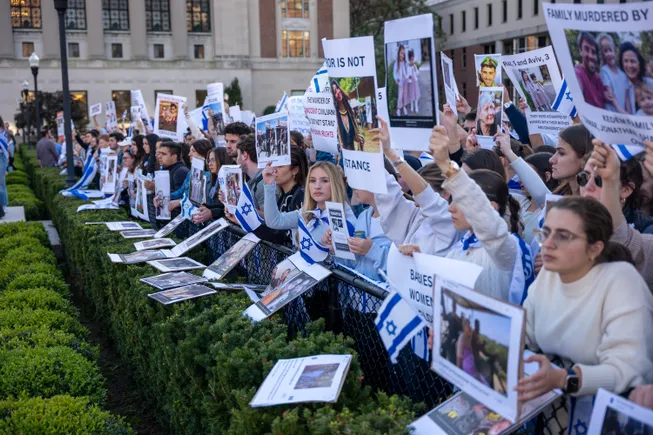
    • Just 3% of non-Jewish faculty members hold views about Israel that would fit definitions of antisemitism put forward by Jewish groups, according to a spring survey of over 2,300 faculty members at 146 research universities released by Brandeis University in July. 
    • Less than 10% of faculty reported actively teaching about the Israel-Palestine conflict. Despite widespread media attention to campus protests and targeted attacks on universities by the Trump administration over allegations of antisemitism, more than three-fourths said the Israel-Palestine conflict never came up in class discussions. 
    • Only a minority of faculty were politically active or posted on social media about major current issues, including the Israel-Palestine conflict, racism in America, climate change and President Donald Trump’s impact on American democracy, the survey found. 

    Dive Insight:

    The new study comes at a time of roiling political tensions around college campuses. 

    On the campaign trail, Trump described colleges as being “dominated by Marxist maniacs and lunatics.” Since taking office in January, his administration has launched investigations and pulled research funding from major institutions — Columbia and Harvard universities, among others — over claims of rampant antisemitism on campus. 

    The administration has also sought to impose “intellectual diversity” on college faculties, including through an executive order on accreditation and in its dealings with individual universities. 

    While the Brandeis study found that nearly three-quarters of faculty — 72% — identify as liberal, they also hold “a wide range of views on controversial political issues,” the researchers wrote.

    For instance, when looking at the intensity of opinions, over 60% said they “strongly” believed that climate change was a crisis requiring immediate attention and that Trump represented a threat to democracy. 

    But only 33% expressed strong belief that racism was widespread in America and 14% that Israel is an apartheid state. (Overall, a majority of faculty backed those statements, including only those who somewhat agreed, with a much larger majority agreeing with the racism statement.) 

    That said, activism around any of those topics was relatively scant. With the Israel-Palestine conflict, 78% of faculty reported no activism at all, including on social media. Around two-thirds reported no activism around racism or climate change. 

    When it comes to teaching, a majority of faculty said they would present a variety of perspectives on those news topics, with the exception of climate change. Only 45% of faculty said they would present a variety of perspectives on climate change while another 40% said they would do so but with some perspectives “more justified than others.”

    When it came to the Middle East conflict, even among the 14% of faculty who said they strongly believed Israel to be an apartheid state, a majority (56%) said they would present a variety of perspectives when teaching about the issue.

    The researchers posed questions intended to study when faculty views of Israel veered into antisemitism as defined by Jewish groups, including the International Holocaust Remembrance Alliance, and that Jewish students frequently agree are antisemitic. They also used the definition by the Jerusalem Declaration on Antisemitism, which has accused the IHRA’s version of blurring the line between antisemitism and criticism of Israel. 

    The researchers asked whether survey respondents agreed with statements such as “Israel does not have the right to exist,” “all Israeli civilians should be considered legitimate targets for Hamas,” and “I wouldn’t want to collaborate with a scholar who supports the existence of Israel as a Jewish state.”

    Large majorities strongly disagreed with those statements, and fewer than 10% agreed with them with any intensity. Those who did were more likely to identify as liberal. 

    Likewise, a small minority of non-Jewish faculty — 7% — expressed views considered antisemitic about Jewish people as a group rather than Israel. Those faculty were more likely to be politically conservative, according to the study. 

    Amid the Trump administration’s attacks on colleges, close to half (46%) of faculty and a majority of those identifying as liberals expressed serious concerns about being targeted by the federal government for their political views, the study found.

    Source link