
This audio is auto-generated. Please let us know if you have feedback.
Most clicked story of the week:
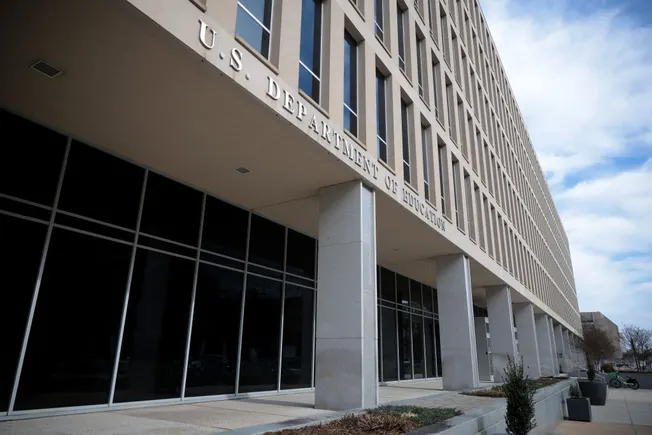
The U.S. Department of Education announced Tuesday that it is transferring management of six programs to other federal agencies as the Trump administration continues pushing toward the agency’s closure. The move, the administration said, will give states more control over education funding decisions.
Among the program shifts are the Office of Elementary and Secondary Education to the U.S. Department of Labor, and international education and foreign language studies programs to the U.S. Department of State.
Number of the week:
58%
The percentage of schools in the U.S. that offer algebra by the 8th grade, according to a study released Tuesday by assessment and research organization NWEA. Beyond that slim majority, access to 8th grade algebra is much lower in rural areas, high-poverty schools and schools with more than 75% Black or Latino students, the study said. High-achieving Black students in particular are “systematically less likely” than other high-achievers to be placed in 8th grade algebra when it is offered.
Ed Dept split raises concerns
Reaction to the Education Department’s announcement that it is shifting the management of a handful of programs to other federal agencies ranged from celebration to condemnation. As many stakeholders praised or criticized the management shift, several others said they want more details about logistics and exactly what would change.
On Thursday morning, a coalition of more than 850 local, state and national organizations released a joint commitment to support federal special education law and to protest any move that separates services for students with disabilities from the Education Department. Coalition members, who also include individual advocates, support keeping the department as an independent agency that is fully staffed and funded to oversee federal laws including the Individuals with Disabilities Education Act and Section 504.
Religion in schools is once again in front of the courts
The U.S. Supreme Court on Nov. 17 refused to hear a case on whether a Christian school should be allowed to broadcast a pregame prayer over a football stadium’s loudspeaker before a state championship game. The decision comes on the heels of several other First Amendment decisions by the high court in recent years related to school prayer and speech.
A federal judge on Nov. 18 ordered about a dozen Texas school districts to remove any displays of the Ten Commandments in classrooms by Dec. 1. The preliminary injunction temporarily prohibits these districts from carrying out a state law that requires the schools to display the religious text while related cases are pending in the 5th U.S. Circuit Court of Appeals.
Another religious school — this time Jewish — has applied to operate a virtual public charter school in Oklahoma next year, reviving the debate of whether religious schools can be considered public just months after a similar effort by a Catholic school was blocked by a deadlocked U.S. Supreme Court.

This audio is auto-generated. Please let us know if you have feedback.
Reaction to the U.S. Department of Education’s announcement this week that it is shifting management of a handful of programs to other federal agencies ranged from celebration to condemnation.
The moves fulfill “a promise made and a promise kept to put students first and return education to the states,” said Rep. Burgess Owens, R-Utah, on X on Tuesday.
Jeanne Allen, founder and CEO of the Center for Education Reform, applauded the federal education management shifts in a Tuesday statement. “It won’t be seamless, and it won’t succeed unless the new agencies clearly communicate with states, communities, and parents about their new flexibility — how funds can be better spent, and how to avoid getting snared in fresh compliance traps. But shifting power closer to communities is the right direction.”
But opponents say the transfers will create more burdens and inefficiencies.
MomsRising, a grassroots organization focused on economic security and anti-discrimination practices against women and moms, called the moves “reckless, harmful, and unlawful” in a Wednesday statement.
“Further dismantling the Department of Education will undermine learning opportunities for children in every state, harming families and undermining our workforce, our economy, and our country as a whole for generations to come,” MomsRising said.
Although management of special education, civil rights enforcement and federal student aid is not moving out of the Education Department, the agency is still exploring the best options for the structure of those activities, a senior department official said during a press call on Tuesday.
The six new interagency agreements will help “break up the federal education bureaucracy, ensure efficient delivery of funded programs, activities, and move closer to fulfilling the President’s promise to return education to the states,” the Education Department said in a Tuesday statement.
Management of career and technical education moved out of the Education Department to the U.S. Department of Labor earlier this year. CTE and K-12 administrative organizations had voiced reservations, saying they feared CTE would lose its education and career exploration focus and that programming would be driven solely by workforce needs.
Spreading education responsibilities across agencies
Interagency agreements and other cross-agency collaborations have been used by the Education Department in the past, under both Democratic and Republican administrations. These practices typically have broad support, because they address alignment on specific programs between two or more agencies through shared funding and programming.
Tuesday’s announcement was significant for the large-scale movement of certain core programs out of the agency. Included in the new partnerships is an IAA with the U.S. Department of Labor to handle the management of about $28 billion in K-12 funding for low-income school districts, homeless youth, migrant students, academic support, afterschool programs, districts receiving Impact Aid, as well as other activities.
This partnership, the Education Department said, would streamline the administration of K-12 programs and align education programs with DOL’s workforce programs to improve the nation’s education and workforce systems.
Denise Forte, president and CEO of EdTrust, a nonprofit that seeks to eliminate economic and racial barriers in schools, said in a Tuesday statement that the changes will exacerbate hardships faced by underserved students.
“These new directives only serve to further distance students — particularly students of color, those from low-income backgrounds, students with disabilities, and multilingual learners — from educational opportunities,” Forte said. “The other agencies that are now charged with protecting students’ educational civil rights simply do not have the relationships, expertise, or staff capacity to do so.”
On the flip side, the America First Policy Institute applauded the changes in a Thursday statement, saying the move would “preserve program service levels and responsiveness while reducing costs and giving states more flexibility to meet the needs of students and families.”
While many organizations and individuals praised or criticized the shift in management, several others said they want more details about logistics and exactly what would change.
For example, would the education secretary need to call the labor secretary if a decision needs to be made? And what agency would be tapped by staff seeking policy or procedure clarifications? This scenario was brought up by Braden Goetz — senior policy advisor at the Center on Education and Labor at New America and a previous director of the policy and research team in the Office of Career, Technical, and Adult Education at the Education Department — during a Wednesday House Education and Workforce subcommittee hearing on CTE.
Goetz predicted that state officials in North Dakota, which passed a public charter school bill this year, will now need to seek clarity from the Labor Department on understanding Education Department regulations for charter schools.
“Good luck to them,” Goetz said.
The senior Education Department official on Tuesday’s press call said more details about operations and staffing for the IAAs will be better known in the coming weeks or months.