Tag: Bridges

  • A Conversation With Dr. Brian K. Bridges

    A Conversation With Dr. Brian K. Bridges

    Nearly three decades ago, I went to graduate school at Indiana University with many brilliant people who have remained amazing friends. We motivated each other then and have consistently reciprocated inspiration along our professional paths. These dear friends are now in high-impact roles in our field. 

    For example, one is vice president for student life at the University of Oregon. Another is an education school dean. Two are provosts at historically black universities. And then there is my bestie, who is a tenured full professor with an endowed chair at the University of California Los Angeles; she also was the first Black woman elected president of the Association for the Study of Higher Education and is a National Academy of Education inductee. I always knew these IU alumni, like so many others who came before and after us, would be extraordinarily successful. I am proud of them.

    Brian K. Bridges is one of those friends and colleagues. In my early 20s, I looked up to him, somewhat like a big, but only slightly older brother. I have continued to be in awe and inspired by his character, achievements and enormous contributions to higher education. After earning our doctorates in 2003, Brian went on to a fantastic trio of administrative roles at the American Council on Education, Ohio University (where he was vice provost) and the United Negro College Fund (UNCF) (where he served as Vice President). He also has taught at George Washington University.

    Here, I engage with Brian about his most recent role as New Jersey Secretary of Higher Education.

    Resident Scholar: When you were 18-years-old, what did you think you’d be when you grew up?

    Brian K. Bridges

    Brian K. Bridges: You’re taking me back 40 years, so I had to think about this a bit! I remember telling people I would become a lawyer without fully knowing what that entailed. I knew I had to go to law school, but beyond that I didn’t have a clue about the breadth and scope of what it meant to be a lawyer. I think I chose that because it was one of the popular, high-profile professions that was regularly on TV. However, I didn’t have a clear plan for what type of attorney I would be.

    RS: When we left IU, looking 20–25 years ahead into your professional future, where did you think your career would take you?

    BKB: After completing my doctorate at IU, I remained in Bloomington for a couple years working at the National Survey of Student Engagement [NSSE]. That’s an important distinction because when I finished my dissertation, I thought I would work on campuses the rest of my life, culminating as a college president somewhere. However, during those two additional years that I worked at NSSE, I got exposure to the scope of career possibilities in higher education, particularly in the association, advocacy and philanthropic worlds. After that exposure, I wasn’t wedded to being solely on a campus the rest of my career. So, I left Bloomington thinking all possibilities within higher ed and adjacent were on the table.

    RS: What about your career surprises you?

    BKB: If anything comes close to surprising me, it’s my most recent role as secretary of higher education for New Jersey. I had entertained the idea of working for the federal government, but never thought about being employed by a state to oversee its higher ed sector. So, that comes closest to being surprising. I’ve always been attracted to work that I find interesting. Working in a state is one context that is different from a campus or association.

    RS: Reflecting on your five years as New Jersey’s top higher education leader, what is the one accomplishment of which you are most proud?

    BKB: I’m really proud of a number of accomplishments that include re-enrolling almost 15,000 stopped-out learners, implementing a telehealth platform that is serving over 20,000 college students across the state, and distributing over $700 million in capital improvement bonds to colleges and universities across New Jersey, among other wins. However, I’m most proud of the internal work within the Office of the Secretary of Higher Education. We more than doubled the number of staff lines, significantly improved salaries and created a culture of collegiality that enhanced the working experience and output of the staff. That’s what I think of first when I reflect on my time as New Jersey’s top higher ed leader.

    RS: What advice would you offer a brand new state higher education executive officer [SHEEO]?

    BKB: Learn the particular politics of your state and who the power brokers are, whether they’re in the governor’s office, in the legislature, in unions, or in local advocacy organizations. Every policy proposal will have supporters and opponents—understanding why certain individuals and groups will fall on one side or the other can be the difference between success and failure. Also, make certain that you surround yourself with an effective team of people who are as invested in your success as they are in that of the agency.

    RS: Not many professionals of color have served as state higher education executive officers. How can greater racial diversity be achieved in these positions, especially in this anti-DEI political climate?

    BKB: SHEEO roles are tricky because they tend to go to people who are state-based and who are known by or connected to political movers and shakers in those state contexts. So building a national pipeline is difficult and the current anti-DEI climate makes diversifying these positions even more challenging. I would encourage people who might be interested in serving as a future SHEEO to seek out roles in their current SHEEO office or within their governor’s office to gain exposure to the issues, understand how politics work at that level, and strategically position themselves for consideration as potential future candidates. Working high-level on a campaign is another way to gain visibility, but you want to hedge your bets to work with a successful campaign. Of course, the requisite experience and sector knowledge is necessary, but the credibility as a valued commodity who delivers results in a policy context cannot be underestimated.

    RS: Who are your top five favorite rappers?

    BKB: Not necessarily in order: Rakim, The Notorious B.I.G., A Tribe Called Quest, De La Soul and Mobb Deep (I know the last three are groups, but I’d rather listen to them than any other single artist.)

    ——————————

    Nothing about Secretary Bridges’ career surprises me. I could have easily predicted in 1998, the first year we met at IU, that he would ascend to huge, high-impact roles in higher education. It has been wonderful to see the secretary lead so magnificently in New Jersey. As the state’s newly elected governor took office last month, Brian transitioned out of the role. I am excited to see what my big brother does next.

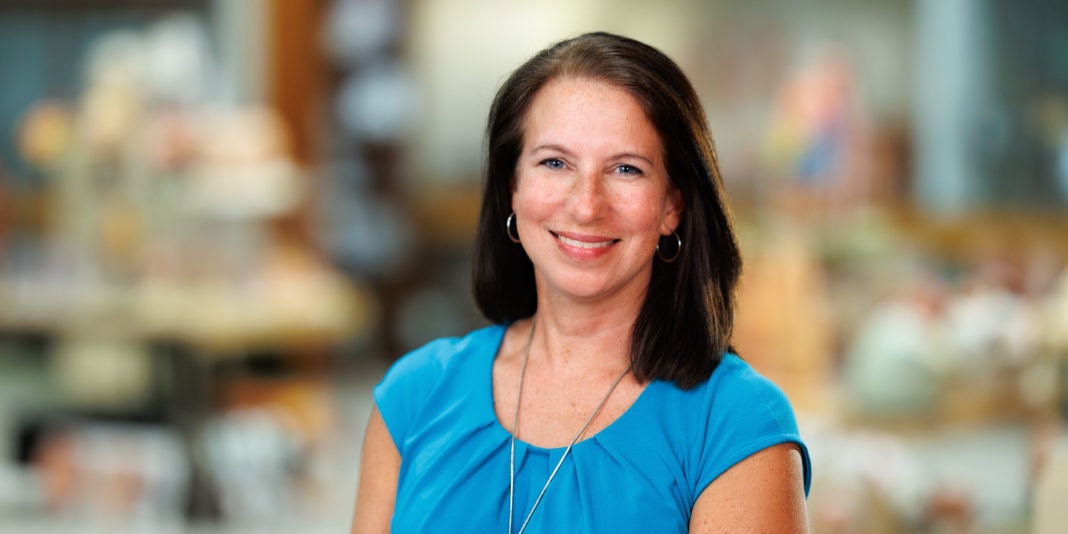
    Shaun Harper is University Professor and Provost Professor of Education, Public Policy and Business at the University of Southern California, where he holds the Clifford and Betty Allen Chair in Urban Leadership. His most recent book is titled Let’s Talk About DEI: Productive Disagreements About America’s Most Polarizing Topics.

    Source link

  • Regulation builds walls between different levels of education, but universities can build bridges

    Regulation builds walls between different levels of education, but universities can build bridges

    Education in England remains segmented by regulation.

    Schools operate within Ofsted’s education inspection framework and the statutory regimes of the DfE. FE colleges navigate the new suite of Ofsted frameworks alongside funding and skills accountability structures. Universities face OfS oversight, TEF metrics, and the expectations of the professional standards framework (PSF).

    Even within universities, initial teacher training (ITT) can sit slightly apart. It is tightly regulated, operationally complex, and often detached from wider higher education teaching development.

    This fragmentation undermines the very professional identity that all sectors claim to cultivate. Educators, whether in early years, FE, HE or the workplace, share core capabilities: pedagogical reasoning, reflective practice, evidence-informed decision-making and relational skill. Yet current inspection and quality structures often privilege compliance over coherence. The new regulatory climate – with Ofsted’s expanded reach and the Office for Students’ growing emphasis on outcomes – risks hardening rather than healing these divides.

    Connected teacher formation

    The development of educators should be understood as a connected professional landscape spanning all phases of education. Early-years practitioners cultivate curiosity and foundational learning; FE teachers integrate academic knowledge with technical and vocational practice; HE staff foster critical inquiry and disciplinary expertise; workplace trainers translate theory into competence and innovation.

    These contexts differ, yet the core professional capabilities – reflective practice, relational pedagogy, and evidence-informed judgement – are deeply aligned. It is this alignment that offers the potential for genuine coherence across the system.

    Yet policy and regulation often pull in the opposite direction. Current agendas, including the post-16 white paper and recent ITT reforms, prioritise measurable outcomes and workforce supply. While these imperatives matter, they risk reducing professional formation to a compliance exercise they privilege evidence collection over reflection and credentials over capability. Entrenching directive, overly prescribed curricula that constrain professional judgement rather than deepen it.

    The challenge for higher education is not to reject accountability, but to reclaim its meaning: to own, shape, and model what intelligent, developmental regulation could look like in practice for our educational professionals.

    Connecting silos

    Higher education institutions are uniquely positioned to reconcile accountability with professional growth across sectors. They already engage in ITT partnerships with schools, support FE teacher education through validated programmes, and offer HE teaching qualifications, from PGCerts to Advance HE fellowships.

    Yet in practice these streams often operate in splendid isolation, reinforcing sector barriers, constraining professional mobility, and limiting opportunities for genuine cross-sector learning.

    Recognising teacher formation as relational and interconnected allows universities to model genuine professional coherence. QTS, QTLS and HE-specific qualifications should not be seen as separate territories – but as mutually informing frameworks that share a commitment to learning, reflection and the public good. At their best, reflective and research-informed practices become the collaborative engine that drives dialogue and professional mobility to connect schools, FE and HE teaching, fostering shared inquiry, and generating innovation that travels across boundaries rather than staying within them.

    The central challenge is one of narrative and ownership. Policy discourse too often frames teacher education as a workforce pipeline and a mechanism for filling vacancies, meeting recruitment targets whilst delivering standardised outputs. While workforce priorities matter, they must not be allowed to define the profession. The new Ofsted frameworks for ITT and FE, and the emerging regulatory language in HE, offer a moment of reckoning: will these instruments shape teachers, or will teachers and universities shape them?

    Universities have the intellectual capital, research capacity, and civic role to do the latter. They can reposition teacher education as the means by which professional agency is restored. They can demonstrate that robust accountability can coexist with autonomy, and that inspection need not stifle innovation.

    As I’ve set out, ITT, education and training, and HE teaching frameworks share a foundational logic: reflective practice, evidence-informed professionalism, and a commitment to learner outcomes. Treating these frameworks as interdependent rather than siloed gives HEIs the permission to shape, not just satisfy, regulation.

    Bridging the gaps

    The spaces between sectors – the school-to-FE transition, FE-to-HE pathways, and workplace interfaces – are where professional formation is most fragile. Policy and inspection regimes often treat these spaces as administrative handovers, yet they are precisely where higher education can add value.

    Universities can convene cross-sector networks, support shared professional learning, and promote collaborative research that spans education from the early years to lifelong learning. In doing so, teacher education becomes both the hub and the bridge: a central space where insight, evidence and practice converge, and a connective route through which ideas, people and purpose move freely.

    When universities play this role with intent, they enable knowledge, skill and reflective practice to travel with educators, strengthening the coherence of teaching as a truly lifelong, connected profession.

    Looking forward

    Teaching is the connective tissue of education, yet current regulatory and inspection frameworks continue to partition the profession into sector-specific silos, limiting transitions and weakening shared professional identity. The post-16 white paper, ITT reforms, and evolving HE teaching frameworks present more than compliance obligations – they offer a pivotal moment to restructure teacher education towards collaborative, cross-sector and shared professional agency.

    HEIs are uniquely positioned to seize this opportunity. By bringing schools, FE, and HE into constructive dialogue, aligning teaching pathways, and engaging inspection regimes strategically, universities can model a profession that is both coherent and adaptive. In doing so, they can collectively lead the sector in addressing complex challenges, ensuring teacher education supports not just quality, but innovation, inquiry, and resilience across the system.

    The pressing question is this: if teaching is the thread that binds the system, will higher education step forward to unite the sectors, shape regulation, and demonstrate what it truly means to teach without borders?

    Source link

  • Christy Chancy Bridges | Diverse: Issues In Higher Education

    Christy Chancy Bridges | Diverse: Issues In Higher Education

    Dr. Christy Chancy BridgesChristy Chancy Bridges has been appointed associate dean of graduate programs at Mercer University School of Medicine.

     Bridges, a professor of histology, also served as director of MUSM’s Ph.D. in biomedical sciences program and had been serving as interim chair of the biomedical sciences department since 2022. She served as director of the Master of Science in preclinical sciences program from 2018-25. She joined the MUSM faculty in 2006.

    Bridges earned her bachelor’s degree in biology from Berry College and her Ph.D. in cellular biology from the Medical College of Georgia at Augusta University. She completed postdoctoral training at the Medical College of Georgia in the Department of Biochemistry and Molecular Biology and at MUSM in the Department of Biomedical Sciences.

    Source link

  • Building Bridges: Enhancing employability through practically-based higher education

    Building Bridges: Enhancing employability through practically-based higher education

    In the last few weeks we have heard the worrying news that the number of young people aged 16 to 24 not in education, employment or training (NEET) in the UK is close to one million. This is almost 300,000 higher than the same period in 2021 when the UK was contending with the scarred job market after Covid-19.

    The reasons for this trend are multi-faceted, including factors such as mental health issues and insecure and poor employment opportunities. However, in the face of a difficult and competitive job market, universities have their role to play in bridging this divide between higher education and the workplace.

    The need for innovative approaches to bridge this divide by enhancing graduate employability and addressing employer demands for work-ready graduates has never been more pressing. Recent research by the Edge Foundation, in collaboration with UCL’s Institute of Education, sheds light on the transformative potential of practically-based higher education models.

    The research took a case study approach using qualitative methods, looking at two post-92 higher education institutions in England, which included collecting empirical data using semi-structured interviews with a range of stakeholders from the two universities, including members of the senior leadership teams, teaching staff, other professionals and students. In this blog, I will go on to discuss some of the key findings from this research, including some of the challenges and opportunities for universities.

    Supporting employability through collaboration

    The creation of new staff roles has been pivotal in driving the employability agenda. These roles focus on developing opportunities such as placements, mentorships, and employer engagement, while traditional academic roles are evolving to integrate practical, work-focused elements. This holistic approach ensures that curricula are not only theoretical but also aligned with real-world applications.

    Industry partnerships play a crucial role in this effort. By involving industry advisors in curriculum design and creating spaces for students to engage directly with professionals through projects and networking, universities are building a meaningful ecosystem that bridges theory and practice. These collaborations enhance students’ employability and foster sustainable partnerships between education and industry.

    Creating effective learning spaces

    Diversifying learning spaces, both formal and informal, is important to ensure that students are not only taught subject-specific expertise but also equipped with the skills to effectively apply such knowledge in real-world contexts. From practical lab work and virtual simulations to client-facing projects and digital tools, these approaches provide students with hands-on, career-relevant skills. Broader assessment methods – like portfolio work, project-based evaluations, and even film development – align better with employer expectations, allowing students to showcase critical thinking, creativity and applied knowledge.

    Students highlighted how these methods built their confidence – often cited as a key attribute for career success. Exposure to professionals through guest lectures, career fairs and mentorship programmes was particularly impactful in empowering students to navigate the complexities of their future careers.

    In the case study universities, confidence building and the development of transferable skills were further integrated into the curriculum through interpreting and tailoring practice to the sector that is relevant to individual students. Therefore, all courses were developed and updated in line with students’ ‘pathway to professionalism’.

    Yet this is manifested differently for different disciplines to ensure it is relevant and closely links the theory to practice. For example, in the business school at one of the case study universities, students establish a LinkedIn profile and begin to form professional networks through it whilst at university.

    By contrast, the professional landscape exists very differently in arts and media, with professional networks being established in different ways. Students in arts are taught the skill of networking in person and conversational skills. Activities in this discipline have included practice dinner parties with the aim to collect others’ business cards. The activities in these two examples are vastly different, but both help build the social capital of the student, which has the most currency for their industry.

    The challenges and opportunities ahead

    While we witnessed in our case study universities a promising shift towards a practical and collaborative model, challenges remain. Employer engagement, for example, can be fragmented when universities rely on individual academic links without coordinated efforts. Listening to employers as equal partners and ensuring mutual benefit is critical for sustained collaboration.

    Universities must also balance top-down initiatives with bottom-up innovation, ensuring that work placements and experiences are meaningful and adaptable. Structured dialogue and collaboration between all stakeholders—students, educators and industry partners—are vital to refining these opportunities.

    A vision for the future

    As the job market evolves, the traditional academic model must adapt to meet the demands of employers and the aspirations of students. Practically-based HE models offer a pathway to achieving this balance, ensuring that graduates are not only knowledgeable but also work-ready. In today’s dynamic and rapidly changing workplace, employability is no longer confined to the domain of careers service teams. Instead, it has become a strategic priority embedded across all disciplines and interwoven into teaching and learning. The findings shed light on how universities are reimagining employability as a broader part of their agenda, through fostering collaborations and creating innovative pathways between academia and the workplace.

    Furthermore, this research explores how universities can integrate theory and practice to better prepare graduates for the workforce. By fostering collaboration between academia and industry, these models not only enhance employability but also empower students with the confidence and skills needed to thrive in a dynamic job market. As students pursue diverse goals through their education, universities are tasked with striking a balance between career-focused preparation and academic enrichment. By embedding employability throughout the curriculum and fostering collaboration across industries, higher education institutions can empower students with the skills, confidence, and connections they need to succeed.

    Source link