Tag: Building

  • Building a Foundation for Innovation and Empathy Through Arts Education

    Building a Foundation for Innovation and Empathy Through Arts Education

    From fostering creativity and critical thinking to enhancing emotional intelligence and cultural awareness, arts education plays a crucial role in shaping future leaders.

    Martine Kei Green-Rogers, Ph.D.

    Dean, The Theatre School at DePaul University

    Artists want to be in conversation with other artists, artforms, and disciplines of study. An arts education is valuable because we need people who are interested in exploring, highlighting, and sharing our collective humanity. We need people to tell the history of our global societies and help us recognize how to make what may seem foreign to us more familiar.  

    A conservatory model encourages other artforms and disciplines to play together by establishing a place where artists can fail miserably, pick back up, and start again. Students not only learn the technical skills of their craft, but they also learn creative problem-solving, collaboration and communication, and discipline and adaptability. These are the skills needed for a person to be successful, no matter what they decide to do later in life.  

    100 years of arts education

    At The Theatre School at DePaul University, modeling new paths for what one can do with conservatory training is our future. We are an amazing school with a rich heritage. This year, we celebrate 100 years of training theatre professionals, and this milestone has given us an opportunity to reflect on how our students have taken their training and gone on to do so many phenomenal things both inside and out of the theatre world. Our graduates use their arts training to make the world a better place and to provide opportunities for the next generation of artists.  

    At the heart of who we are as an educational institution, and as a value based collective of artists, we embody in our spaces everyday why the arts are necessary.

    Rebecca Ryan, the director of admissions for The Theatre School, summarizes who we are succinctly: ”Nestled in the heart of Chicago, a city renowned for its vibrant and diverse theatre scene, The Theatre School at DePaul University offers a cutting-edge education with 15 highly specialized Bachelor of Fine Arts programs ranging from Acting and Comedy Arts to Projection Design and Theatre Management, a Master of Fine Arts program in Acting, and a new Certification for Intimacy Professionals in Theatre & Cinema.

    “With over 30 productions each year, students engage in immersive, hands-on experiences. Faculty — all professional theatre artists active in the industry — bring their real-world expertise to the classroom, along with their professional network and connections. Students develop skills that prepare them to innovate and excel in the dynamic entertainment landscape.”

    More than art for art’s sake

    We help students find their path by providing numerous opportunities to delve into the real-world applications for their art that goes beyond “art for art’s sake” (not that this is a bad thing). For example, we devised a theatrical piece in May 2024 as a response to an exhibition by Selva Aparicio at the DePaul Art Museum to bring awareness to domestic violence, we are currently partnering with the College of Science and Health at our university to train emerging healthcare professionals, and provoking conversations about our contemporary society through the lens of historical events via our partnership with the american vicarious and TimeLine Theatre.   

    These kinds of collaborative projects expand the world of possibilities for our students and the ability to experiment allows for someone to have the fortitude to carve their own paths and create their own opportunities. 

    While resilience, emotional intelligence, and critical-thinking skills might not be in the course catalog per se, these transferable skills not only prepare students for a wide range of careers, but an education in the arts also deeply connects students to our shared humanity. The world needs more innovators who lead with empathy.


    Click here to learn more about The Theatre School at DePaul University


    Author bio

    Martine Kei Green-Rogers is the dean at The Theatre School at DePaul University in Chicago. She earned her Ph.D. from the Department of Theatre and Drama at the University of Wisconsin-Madison. She received her bachelor’s in theatre from Virginia Wesleyan College and her master’s in theatre history and criticism from The Catholic University of America. A director and writer, Martine has a long history in the theatre. She has held several positions in dramaturgy, literary management, writing, directing and creative storytelling in the professional theatre and entertainment industries. Her portfolio includes positions at the Oregon Shakespeare Festival and the Court Theatre in Chicago. Martine previously served as interim dean of the Division of Liberal Arts at the University of North Carolina School for the Arts. She also is the immediate past president of the Literary Managers and Dramaturgs of the Americas and the current President-Elect of the Association for Theatre in Higher Education (ATHE).

    Source link

  • Sensors help building operators detect vaping

    Sensors help building operators detect vaping

    This audio is auto-generated. Please let us know if you have feedback.

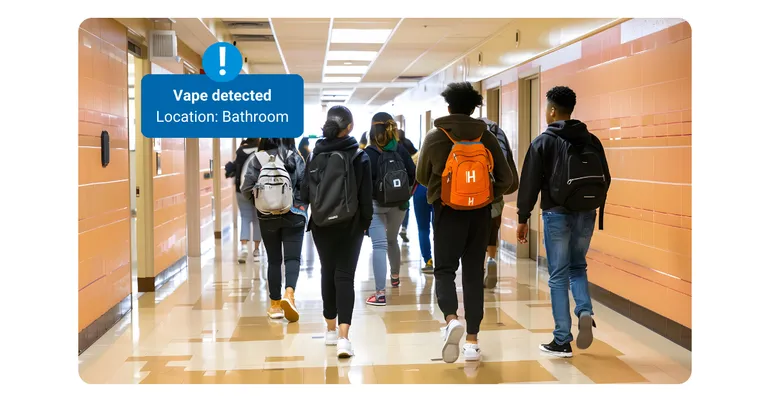
    Facilities managers can use air quality sensors to detect vaping in restrooms and other areas in which video cameras can’t be used, says a video systems company that has released a sensor product. 

    “Sensors are ideal for monitoring sensitive areas … such as restrooms, locker rooms, health care facilities and secure storage areas,” Eagle Eye Networks says in an announcement

    The company touts the sensors as especially suitable for schools, where vaping isn’t allowed. 

    The “sensors help school officials address vaping by detecting, alerting and providing … information about incidents while maintaining privacy,” the company says.

    The sensors integrate with the company’s flagship product, a cloud-based video management system. By combining the information provided by the sensors with information provided by video cameras outside of sensitive areas, officials can gain a more complete picture of unauthorized activity to determine if action is necessary, the company says. 

    air sensors

    The Eagle Eye Sensor, shown here, is capable of detecting vaping, noise, temperature and humidity in sensitive area like locker rooms and bathrooms, the company says.

    Courtesy of Eagle Eye Networks


    If a “sensor detects vape smoke in a school locker room, the system automatically triggers an alert,” the company says. “School authorities verify the event and gain additional information from security cameras located in hallways or outside of the locker room.”

    The sensors can be used in other contexts, the company says. They can track noise, temperature, humidity, and other factors that can impact indoor air quality, like volatile organic compounds, carbon monoxide, carbon dioxide and smoke. Other types of sensors can detect the presence of water, which can aid in detecting leaks, and whether doors are being left open. Alerting managers to open doors can help reduce energy use, especially in climate controlled locations like server rooms. 

    Mike Intag, managing partner at Gardient, a systems integration company, says he’s introducing the sensors to schools to help them control vaping, a “longstanding challenge in K-12 settings.” The sensors will also be used to monitor temperature, humidity and door use. “This advances our offering [to school clients] beyond security,” he said.

    Source link

  • ‘Building Balance’ at Harvard: Allison Pillinger Choi’s bid for alumni leadership

    ‘Building Balance’ at Harvard: Allison Pillinger Choi’s bid for alumni leadership

    Since its founding in 1836, the Harvard Alumni Association (HAA) has sought to “renew that interest in Harvard’s welfare and glory which separation and absence have hitherto caused too long and lamentably to slumber.”

    Today, as Harvard faces mounting challenges to its foundational commitment to Veritas (Truth) — steadily being replaced, it seems, by Pontius Pilate’s cynical sneer: Quid est veritas? (What is truth?) — a renewed interest among alumni in their alma mater’s “welfare and glory” is more vital than ever.

    And the upcoming HAA Board elections offer Harvard alumni the perfect place to start. The task is to elect leaders who will champion free expression, viewpoint diversity, civil discourse, and academic freedom — the very tools that make the pursuit of Veritas possible.

    Among the candidates seeking an elected director position, Allison Pillinger Choi, A.B. 2006, stands out with a compelling vision. Under the banner of “Building Balance,” Choi is campaigning for a Harvard where “all truth-seeking ideas — whether conservative, liberal, or otherwise — are heard, valued, and respected.”

    Choi’s life story exemplifies the very balance she aims to promote. Born and raised in South Florida to a Korean immigrant mother and a third-generation Jewish American father, she mastered the art of equilibrium early on. This instinct for poise carried her through Harvard, where she balanced an economics degree, Division I varsity tennis, editorship on The Crimson’s business board, and shifts at various Cambridge eateries.

    Allison Pillinger Choi with her husband, Brian, and two children in the Dunster House library at Harvard. 

    After a successful postgraduate career in finance and fitness — balancing checkbooks and barbells — she now lives in New York with her husband and two children while serving on local nonprofit boards dedicated to the arts, civics, and the environment. Most notably, she is the co-founder of Experiment in Dialogue, an initiative promoting conversations across ideological divides.

    Choi is also the author of the book “Bleeding Heart Conservatives,” a defense of compassionate conservatism, and a regular contributor to City Journal and the San Francisco Chronicle, where she writes on polarization and viewpoint diversity.

    FIRE recently sat down with Choi to discuss her campaign for the HAA Board, her thoughts on free expression at Harvard, and how she envisions bringing balance to her alma mater. Below is our conversation, edited for readability. 


    How has your experience at Harvard, both as a student and alum, shaped your views on free expression and intellectual diversity?

    As an undergraduate, I sensed unspoken limits on which political views were acceptable. In one instance, I remember taking a class on labor markets where the professor made it clear how he felt about unions. While I respected his research and affable style of teaching, as the daughter of a union worker, I knew the issue was more complex. 

    My father had explained to me and my brother that while unions can be a force for good, they also have downsides. I knew there was more to the argument than was offered in class, but I didn’t want to cross that invisible line — so I often just stayed quiet, went along with the prevailing view, and answered questions accordingly.

    That experience stayed with me. Over the years, as an alum, I’ve heard even more troubling stories — students and faculty feeling pressured to hide their beliefs or adjust how they talk about certain issues to avoid backlash. It made me realize that maybe I was part of the problem by staying silent. 

    Now, I want to be part of the solution — not only by encouraging people to speak up but also by helping others see that viewpoint diversity is essential for genuine intellectual growth.

    Your campaign focuses on “Bringing Balance.” Can you explain what that means and why you think it’s important right now, especially at Harvard?

    The theme of my campaign, “Building Balance,” carries several layers of meaning. For one, it’s about fostering a diversity of viewpoints. This doesn’t mean insisting on a strict 50/50 split or symmetrical representation. Rather, it’s about broadening the spectrum of perspectives and opinions. It ensures that a wide range of voices are present. This approach helps prevent institutions from falling into the trap of echo chambers, where only reinforcing viewpoints are heard and where growth is limited.

    “Building Balance” also refers to finding stability. Many higher education institutions today are navigating heightened tensions. I believe that embracing viewpoint diversity — by welcoming advocates from various personal and political backgrounds — can contribute to a healthier, more stable environment where all sincere, truth-seeking perspectives are respected and considered.

    Finally, “Building Balance” is about recognizing and strengthening the extraordinary elements present at Harvard. It’s not about dismantling, it’s about building upon a strong foundation. I believe that viewpoint diversity, civil discourse, and academic freedom are the foundational elements of our university community, and integral to continued success.

    What role do you see alumni playing in promoting free expression and viewpoint diversity at Harvard?

    Alumni have numerous ways to contribute to the promotion of free expression and viewpoint diversity at Harvard. One of the most simple and effective actions is to just show up. Attend HAA events and broader Harvard community gatherings that highlight heterodox thinkers and speakers. And why not invite an alumni friend along? Extra credit if that friend brings a different political perspective!

    The HAA is always looking for new ways to engage alumni and increase participation. With the growing number of initiatives supporting the classical liberal values of freedom and expression at Harvard, our community has more opportunities for anyone eager to champion viewpoint diversity. As an HAA elected director, I would support and expand these initiatives.

    One of the unique — and often overlooked — aspects of being a viewpoint diversity advocate is that there’s no requirement to hold any particular opinion. All that’s needed is curiosity. However, if a viewpoint diversity advocate does have strong convictions, that’s perfectly fine, too. The key is to approach differing views with humility and charity. With these qualities, every alumnus is capable of both promoting and exercising free expression and viewpoint diversity.

    Indeed, it’s an “exercise.” As Harvard professor Eric Beerbohm, head of the university’s new Civil Discourse Initiative, aptly puts it, “The ability to engage in empathetic disagreement is like a muscle — it grows stronger with deliberate practice. These kinds of scenarios, where participants are challenged to consider new perspectives and make tough decisions, provide exactly that kind of exercise.”

    How can the HAA better engage alumni who feel disconnected or frustrated with the current campus climate?

    As an elected director, I would love to help the HAA deepen alumni engagement and re-engage those who feel disconnected or frustrated. One effective approach is to expand the variety of event themes, particularly by hosting panel discussions that feature diverse viewpoints on a range of important topics. 

    While the panelists would be experts in their fields, each would offer a unique perspective and set of beliefs. The common thread among them would be their shared commitment to open inquiry and civil discourse.

    These events could be modeled after the spirit of professor Michael Sandel’s renowned undergraduate course, “Justice,” one of Harvard’s most popular classes. In Sandel’s lectures, he regularly invited professors with opposing viewpoints to debate controversial topics, with the goal of seeking truth. Professors like Sandel understand that complex issues rarely have clear-cut answers. 

    It is only through the rigorous process of challenging and questioning that we improve our understanding, move closer to truth, and expand our communities. Alumni groups could carry forward Sandel’s legacy of viewpoint diversity by hosting events where renowned thinkers debate significant topics, fostering a space for respectful and productive dialogue among heterodox thinkers and doers.

    If elected, what would success look like for you at the end of your term as an elected director?

    If elected, success at the end of my three-year term would mean accomplishing at least two key goals. The first would be seeing more HAA volunteers actively contributing to viewpoint diversity initiatives within their areas of interest. With roughly 200 Harvard clubs and 60 shared interest groups covering a range of professional fields, academic disciplines, and personal identity backgrounds, there is so much opportunity to foster diverse perspectives! 

    While these HAA groups share common interests, each alumnus brings something unique. I believe we can proactively seek and encourage a diversity of viewpoints across our HAA communities. 

    The second goal is to establish an alumni event series that pays homage to the deep friendship between Justices Ruth Bader Ginsburg and Antonin Scalia — both former Harvard Law students. Their remarkable bond transcended the controversial issues they often disagreed on in their judicial decisions. 

    United by their shared love of country and opera, among other interests, they demonstrated how mutual respect and admiration can flourish despite ideological differences. I want to celebrate this sentiment through events that feature speakers of opposing views, followed by a post-debate social.


    Allison Pillinger Choi’s candidacy for HAA Board is a call to action –– to awaken alumni from their “slumber” and take an interest in the “welfare and glory” of Harvard. If you are a Harvard alum and are interested in supporting Choi’s vision for “Building Balance,” be sure to make your voice heard in this important election. 

    The HAA Board election begins on April 1 and will remain open until 5 p.mEST on May 20th. All Harvard degree holders as of Jan. 1, 2025 are eligible to vote. Alumni can cast their ballots online, via the alumni portal, or by paper ballot, which you will receive in the mail, to fill six openings among the HAA elected directors.

    Source link

  • Bridging Further and Higher Education: Building a Truly Tertiary Education System

    Bridging Further and Higher Education: Building a Truly Tertiary Education System

    • Professor David Phoenix OBE is Vice-Chancellor of London South Bank University and Chief Executive of LSBU Group.
    • Dr Katerina Kolyva is Chief Executive Officer of The Education and Training Foundation.

    Post-16 education in England is at a pivotal moment, with increasing efforts to create a more integrated and collaborative system. While elements of competition remain, the reintegration of the sector into the Department for Education presents new opportunities for colleges and universities to enhance their contributions to local communities. Both further and higher education providers play distinct yet complementary roles in supporting diverse learners, but significant challenges remain in achieving a fully joined-up system. The establishment of Skills England, along with the skills and industrial strategies, signals a growing recognition of these complexities, highlighting the need for a cross-government approach. Achieving greater alignment across the post-16 landscape could provide an opportunity to shape a system that empowers learners, strengthens local economies, and supports national prosperity.

    In February, the Education and Training Foundation and London South Bank University therefore brought together a range of relevant stakeholders to discuss existing models of best practice and the workforce characteristics needed to help develop an effective tertiary education system.

    University and college mergers, franchise agreements, Institutes of Technology and Group models are all examples of imaginative approaches to post-16 collaboration. Workforce characteristics found within these models include a leadership team with a clear vision, strong awareness of institutional values, and resilience against the prevailing winds of policy. Having the correct personnel with a positive and creative mindset can foster strategic risk-taking and allow for continuous learning with the avoidance of blame, though people and culture initiatives alone cannot be relied upon to deliver a coherent system.

    Our marketised higher education system and a focus on further-higher education transitions around level 4 could risk missing the bigger picture. We need government to develop a national framework within which local skills and innovation strategies can be developed. Such strategies would seek to consider issues related to the skills pipeline (including key areas such as adult education and gateway qualifications) but would also look at job creation by leveraging universities to drive innovation with business. Such a system-based approach needs to also consider what post-16 provision in the schools sector looks like and how this interfaces with further education, as well as the interface between further and higher education. This is essential if we are to provide alternative study pathways that meet the needs of the majority whilst also preventing duplication and redundancy at all levels.

    Published in December 2024, the government’s Devolution White Paper could be a first step towards establishing a framework for regional collaboration and addressing these missing elements. Strategic Authorities could take an important role in working alongside further and higher education providers and employers to identify skills shortages and promote clear pathways from education and training into employment through a combination of specialist institutions. The government, through a coordinated approach across departments, could use various regulatory and financial levers to encourage genuine collaboration between providers where there is a mismatch between skill demands and provision, while also simplifying the complex regulatory landscape.

    A greater level of specialisation and the recognition of the importance of different institutional missions has the potential to support a greater diversity of missions and a shift to a more collaborative framework. When combined with designing a corresponding careers, information, advice and guidance service, this will allow institutions to build more pathways for learners, meaning a more inclusive system. Those who are educationally disenfranchised would have more options to re-enter education and work, breaking down a key barrier to opportunity and, in the long term, boosting economic growth.

    Regulation, market forces, and financial constraints can both foster and hinder collaboration. If government can find the correct balance, post-16 education will better serve learners and employers, boosting equality of opportunity and economic growth. Government commitments to boost devolution, publish an industrial strategy and reduce intra-governmental bureaucracy tacitly acknowledge the problem, but an overarching framework for addressing this is lacking. Once the IFATE Bill, which will formally establish Skills England, achieves Royal Assent, government must establish a mechanism to ensure cross-departmental coordination, bringing together Skills England, regional authorities, education providers, and employers to drive structural change.

    Source link

  • Columbia Sanctions Students Who Occupied Campus Building

    Columbia Sanctions Students Who Occupied Campus Building

    Columbia University handed down sanction decisions for student protesters who occupied Hamilton Hall in April of last year, the university announced in a statement Thursday.

    The sanctions come as the university faces crippling attacks from the Trump administration over its handling of the protests last year, including the loss of $400 million in federal funding, which could lead to mass layoffs and program cuts.

    The university has not released the names of affected students, nor more details about how many will be expelled or suspended.

    The punishments, determined by the university judiciary board, are unusually harsh, ranging from multiyear suspensions and expulsions to temporary degree revocations for graduates, according to the email. While occupying the building—which students renamed Hind Hall in honor of a 5-year-old Palestinian girl killed by Israeli soldiers—students damaged property and broke windows. 

    Last year, only a few of the students who occupied the building were punished, and most remained in good standing with the university, according to documents the university gave to Congress last year. Of the 22 students who occupied the hall, only three received sanctions, the most severe being short-term suspension. At the time, Columbia said the disciplinary process was “ongoing for many students.”

    University spokespeople told Inside Higher Ed that the decisions were the culmination of a months-long investigation. For all other student protests last spring, the judiciary board “recognized previously imposed disciplinary action,” according to the email.

    Last weekend, Columbia graduate and legal U.S. permanent resident Mahmoud Khalil was arrested and threatened with deportation for his role in the pro-Palestine protests. Yesterday, Khalil sued the university, along with Barnard College, for allegedly sharing private student disciplinary records with members of Congress and other third-party groups.

    Source link

  • Building Infrastructure for Non-Degree Credentials

    Building Infrastructure for Non-Degree Credentials

    Title: A Global Review of Non-degree Credential Quality Frameworks: Matching Aspirations to Available Data

    Authors: Kyle Albert and Thomas Weko

    Source: George Washington University (GWU) Program on Skills, Credentials & Workforce Policy (PSCWP)

    With the continued increase of alternative, non-degree credentials, education and professional stakeholders have developed quality frameworks meant to guide these credentials.

    The authors of a new report from PSCWP examine and evaluate criteria and data used in current credential quality frameworks. The brief highlights the growing need for institutions to consider and build out data sources for these non-degree frameworks. Whereas foundations, nonprofits, and policy organizations shape frameworks in the United States, government ministries do so outside of the U.S. The U.S. does not recognize non-degree credentials in the Higher Education Act, meaning that such credentials are not required to be reported to the Integrated Postsecondary Education Data System and other government databases.

    A 2024 GWU/UPCEA survey showed that for non-degree, credit-based credentials, quality standards and procedures are primarily established at the institutional level and are modified forms of standards for degree programs. For non-degree, non-credit credentials, however, there is a “far greater decentralization of responsibility” (p.15). Standards for these programs are often established at the faculty or departmental level, and only about 10 percent of respondents reported that their institution could link learner data from these programs to external data systems.

    Given the variation among commonly used datasets as well as processes within institutions, private actors hold substantial power in refining quality frameworks. The authors suggest the following ways to improve data standardization when it comes to quality frameworks:

    • Use consistent language: Using consistent language across non-degree credentials can support organizations not only in how they describe and distinguish between programs but also in how they measure outcomes.
    • Make data accessible: Membership and research-based organizations can empower the field to be more transparent and develop legal and technical guidelines for data sharing beyond the confines of the organization.

    To see the full report, click here.

    —Kara Seidel


    If you have any questions or comments about this blog post, please contact us.

    Source link

  • Building inclusive research cultures– How can we rise above EDI cynicism?

    Building inclusive research cultures– How can we rise above EDI cynicism?

    • Dr Elizabeth Morrow is Research Consultant, Senior Research Fellow Royal College of Surgeons in Ireland, & Public Contributor to the Shared Commitment to Public Involvement on behalf of National Institute for Health and Care Research.
    • Professor Tushna Vandrevala is Professor of Health Psychology, Kingston University.
    • Professor Fiona Ross CBE is Professor Emerita Health and Social Care Kingston University, Deputy Chair Westminster University Court of Governors & Trustee Great Ormond Street Hospital Charity.

    Commitment and Motivation for Inclusive Research

    The commitment to inclusivity in UK research cultures and practices will endure despite political shifts abroad and continue to thrive. Rooted in ethical and moral imperatives, inclusivity is fundamentally the right approach. Moreover, extensive evidence from sources such as The Lancet, UNESCO and WHO highlights the far-reaching benefits of inclusive research practices across sectors like healthcare and global development. These findings demonstrate that inclusivity not only enhances research quality but also fosters more equitable outcomes.

    We define ‘inclusive research’ as the intentional engagement of diverse voices, communities, perspectives, and experiences throughout the research process. This encompasses not only who conducts the research but also how it is governed, funded, and integrated into broader systems, such as policy and practice.

    Beyond higher education, corporate leaders have increasingly embraced inclusivity. Research by McKinsey & Company shows that companies in the top quartile for gender diversity are 25% more likely to outperform their peers in profitability, while those leading in ethnic diversity are 36% more likely to do so. This clear link between inclusivity, innovation, and financial success reinforces the value of diverse teams in driving competitive advantage. Similarly, Egon Zehnder’s Global Board Diversity Tracker highlights how diverse leadership enhances corporate governance and decision-making, leading to superior financial performance and fostering innovation.

    Inclusion in research is a global priority as research systems worldwide have taken a ‘participative turn’ to address uncertainty and seek solutions to complex challenges such as Sustainable Development Goals. From climate change to the ethical and societal implications of Artificial Intelligence (AI), inclusive research is a track that ensures that diverse perspectives shape solutions that are effective, fair and socially responsible.

    Take the example of AI and gender bias – evidence shows that women are frequently not included in technology research and are underrepresented in data sets. This creates algorithms that are biased and can have negative consequences of sensitivity, authenticity, or uptake of AI-enabled interventions by women. Similar biases in AI have been found for other groups who are often overlooked because of their age, gender, sexuality, disability, or ethnicity, for example.

    Accelerating Inclusion in UK Research

    A recent horizon scan of concepts related to the UK research inclusion landscape indicates domains in which inclusive research is being developed and implemented, illustrated by Figure 1.

    Inclusion is being accelerated by the Research Excellence Framework (REF) 2029, with a stronger focus on assessing People, Culture, and Environment (PCE). REF 2029 emphasises the integration of EDI considerations across research institutions, with a focus on creating equitable and supportive cultures for researchers, participants and communities. The indicators and measures of inclusion that will be developed and used are important because they can encourage diversity of perspectives, knowledge, skills and worldviews into research processes and institutions, thereby increasing relevance and improved outcomes. All units of assessment and panels involved in the REF process will have guidance from the People and Diversity Advisory Panel and the Research Diversity Advisory Panel. This means that inclusion will develop in both the culture of research institutions and the practices that shape research assessment.

    The National Institute for Health Research, which is the largest funder of health and social care research, has pioneered inclusion for over 30 years and prioritises inclusion in its operating principles (see NIHR Research Inclusion Strategy 2022-2027). NIHR’s new requirements for Research Inclusion (RI) will be a powerful lever to address inequalities in health and care. NIHR now requires all its domestic commissioned research to address RI at the proposal stage, actively involve appropriate publics, learn from them and use this learning to inform impact strategies and practices.

    Given the learning across various domains, we ask: How can the broader UK system share knowledge and learn from the setbacks and successes in inclusion, rather than continually reinventing the wheel? By creating space in the system between research funders and institutions to share best practices, such as the Research Culture Enablers Network, we can accelerate progress and contribute to scaling up inclusive research across professional groups and disciplines. There are numerous examples of inclusive innovation, engaged research, and inclusive impact across disciplines and fields that could be shared to accelerate inclusion.

    Developing Shared Language and Inclusive Approaches

    Approaches to building inclusive cultures in research often come with passion and commitment from opinion leaders and change agents. As often happens when levering change, a technical language evolves that can become complex and, therefore, inaccessible to others. For example, acronyms like RI can apply to research inclusion, research integrity and responsible innovation. Furthermore, community-driven research, public and community engagement, and Patient and Public Involvement (PPI) have become synonymous with inclusive research, and such participation is an important driver of inclusion.

    The language and practices associated with inclusive research vary by discipline to reflect different contexts and goals. This can confuse rather than clarify and form barriers that possibly get in the way of trust and more effective inclusion strategies and practices. We ask: How can we establish shared understanding, methods of participation, accountability pathways and mechanisms that will promote inclusion in the different and dynamic contexts of UK research?

    With over 20 years of experience in the fields of inclusion and equity, like other researchers, we have found that interdisciplinary collaboration, participatory methods, co-production, and co-design offer valuable insights by listening to and engaging with publics and communities on their own terms and territory. An inclusive approach has deepened our understanding and provided new perspectives on framing, methodological development, and the critical interpretation of research.

    Final reflection

    Key questions to overcome EDI cynicism are: How can we deepen our understanding and integration of intersectionality, inclusive methods, open research, cultural competency, power dynamics, and equity considerations throughout research processes, institutions, and systems? There is always more to learn and this can be facilitated by inclusive research cultures.

    Figure 1. Inclusive Research Dimensions

    Source link

  • Five keys to success in Evaluation Capacity Building for widening participation

    Five keys to success in Evaluation Capacity Building for widening participation

    Evaluate, evaluate, evaluate is a mantra that those engaged in widening participation in recent years will be all too familiar with.

    Over the past decade and particularly in the latest round of Access and Participation Plans (APP), the importance of evaluation and evidencing best practice have risen up the agenda, becoming integral parts of the intervention strategies that institutions are committing to in order to address inequality.

    This new focus on evaluation raises fundamental questions about the sector’s capacity to sustainably deliver high-quality, rigorous and appropriate evaluations, particularly given its other regulatory and assessment demands (e.g. REF, TEF, KEF etc.).

    For many, the more exacting standards of evidence have triggered a scramble to deliver evaluation projects, often facilitated by external organisations, consultancies and experts, often at considerable expense, to deliver what the Office for Students’ (OfS) guidance has defined as Type 2 or 3 evidence (capable of correlative or causal inference).

    The need to demonstrate impact is one we can all agree is worthy, given the importance of addressing the deep rooted and pervasive inequalities baked into the UK HE sector. It is therefore crucial that the resources available are deployed wisely and equitably.

    In the rush for higher standards, it is easy to be lured in by “success” and forget the steps necessary to embed evaluation in institutions, ensuring a plurality of voices can contribute to the conversation, leading to a wider shift in culture and practice.

    We risk, in only listening to those well placed to deliver large-scale evaluation projects and communicate the findings loudest, of overlooking a huge amount of impactful and important work.

    Feeling a part of it

    There is no quick fix. The answer lies in the sustained work of embedding evaluative practice and culture within institutions, and across teams and individuals – a culture that imbues values of learning, growth and reflection over and above accountability and league tables.

    Evaluation Capacity Building (ECB) offers a model or approach to help address these ongoing challenges. It has a rich associated literature, which for brevity’s sake we will not delve into here.

    In essence, it describes the process of improving the ability of organisations to do and use evaluation, through supporting individuals, teams and decision makers to prioritise evaluation in planning and strategy and invest time and resources into improving knowledge and competency in this area.

    The following “keys to success” are the product of what we learned while applying this approach across widening participation and student success initiatives at Lancaster University.

    Identify why

    We could not have garnered the interest of those we worked with without having a clear idea of the reasons we were taking the approach we did. Critically, this has to work both ways: “why should you bother evaluating?” and “why are we trying to build evaluation capacity?”

    Unhelpfully, evaluation has a bad reputation.

    It is very often seen by those tasked to undertake it as an imposition, driven by external agendas and accountability mandates – not helped by the jargon laden and technical nature of the discipline.

    If you don’t take the time to identify and communicate your motivations for taking this approach, you risk falling at the first hurdle. People will be hesitant to invest their time in attending your training, understanding the challenging concepts and investing their limited resources into evaluation, unless they have a good reason to do so.

    “Because I told you so” does not amount to a very convincing reason either. When identifying “why”, it is best you do so collaboratively and consider the specific needs, values and aspirations of those you are working with. To those ends, you might want to consider developing a Theory of Change for your own ECB initiative.

    Consider the context

    When developing resources or a series of interventions to support ECB at your institution, you should at all times consider the specific context in which you find yourself. There are many models, methods and resources available in the evaluation space, including those provided by organisations such as TASO, the UK Evaluation Society (UKES) or the Global Evaluation Initiative (BetterEvaluation.org), not to mention the vast literature on evaluation methods and methodologies. The possibilities are both endless and potentially overwhelming.

    To help navigate this abundance, you should use the institutional context in which you are intending to deliver ECB as your guide. For whom are you developing the resources? What are their needs? What is appropriate? What is feasible? How much time, money and expertise does this require? Who is the audience for the evaluation? Why are they choosing to evaluate their work at this time and in this way?

    In answering these and other similar questions, the “why” you identified above, will be particularly helpful. Ensuring the resources and training you provide are suitable and accessible is not easy, so don’t be perturbed if you get it wrong. The key is to be reflective and seek feedback from those you are working with.

    Surround yourself with researchers, educationalists and practitioners

    Doing and using evaluation are highly prized skills that require specific knowledge and expertise. The same applies to developing training and educational resources to support effective learning and development outcomes.

    Evaluation is difficult enough for specialists to get their heads around. Imagine how it must feel for those for whom this is not an area of expertise, nor even a primary area of responsibility. Too often the training and support available assumes high levels of knowledge and does not take the time to explain its terms.

    How do we expect someone to understand the difference between correlative and causal evidence of impact, if we haven’t explained what we mean by evaluation, evidence or impact, not to mention correlation or causation? How do we expect people to implement an experimental evaluation design, if we haven’t explained what an evaluation design is, how you might implement it or how “experimental” differs from other kinds of design and when it is or isn’t appropriate?

    So, surround yourself with researchers, educators and practitioners who have a deep understanding of their respective domains and can help you to develop accessible and appropriate resources.

    Create outlets for evaluation insight

    Publishing findings can be daunting, time-consuming and risky. For this reason, it’s a good idea to create more localised outlets for the evaluation insights being generated by the ECB work you’ve been doing. This will allow the opportunity to hone presentations, interrogate findings and refine language in a more forgiving and collaborative space.

    At Lancaster University, we launched our Social Mobility Symposium in September 2023 with this purpose in mind. It provided a space for colleagues from across the University engaged in widening participation initiatives and with interests in wider issues of social mobility and inequality to come together and share the findings they generated through evaluation and research.

    As the title suggests, the event was not purely about evaluation, which helped to engage diverse audiences with the insights arising from our capacity building work. “Evaluation by stealth,” or couching evaluative insights in discussions of subjects that have wider appeal, can be an effective way of communicating your findings. It also encourages those who have conducted the evaluations to present their results in an accessible and applied manner.

    Establish leadership buy in

    Finally, if you are planning to explore ECB as an approach to embedding and nurturing evaluation at an institutional level (i.e. beyond the level of individual interventions), then it is critical to have the buy in of senior managers, leaders and decision makers.

    Part of the why for the teams you are working with will no doubt include some approximation of the following: that your efforts will be recognised, the insights generated will inform decision making, the analyses you do will make a difference, and will be shared widely to support learning and sharing of best practice.

    As someone who is supporting capacity building endeavours you might not be able to guarantee these objectives. It is important therefore to focus equal attention on building the evaluation capacity and literacy of those who can.

    This can be challenging and difficult to control for. It depends on, among other things: the established culture and personnel in leadership positions, their receptiveness to new ideas, the flexibility and courage they have to explore new ways of doing things, and the capacity of the institution to utilise the insights generated through more diverse evaluative practices. The rewards are potentially significant, both in supporting the institution to continuously improve and meet its ongoing regulatory requirements.

    There is great potential in the field of evaluation to empower and elevate voices that are sometimes overlooked, but there is an equal and opposite risk of disempowerment and exclusion. Reductive models of evaluation, preferencing certain methods over others, risk impoverishing our understanding of the world around us and the impact we are having. It is crucial to have at our disposal a repertoire of approaches that are appropriate to the situation at hand and that fosters learning as well as value assessment.

    Done well, ECB provides a means of enriching the narrative in widening participation, as well as many other areas, though it requires a coherent institutional and sectoral approach to be truly successful.

    Source link

  • Motivational Force: Building a Foundation for Student Success – Faculty Focus

    Motivational Force: Building a Foundation for Student Success – Faculty Focus

    Source link

  • Building tiny chips that can handle enormous data

    Building tiny chips that can handle enormous data

    In the not-so-distant future, really big disasters, such as wildfires in California or floods in Spain or an earthquake in Japan will be monitored and perhaps anticipated by a technology so small it is difficult to even imagine.

    This new technology, called quantum computing, is enabled by nanotechnology — a way of designing technology by manipulating atoms and molecules. Paradoxically, this ultra small technology enables the processing of massively large data sets needed for complex artificial intelligence algorithms.

    There is a growing consensus that AI will quickly change almost everything in the world.

    The AIU cluster, a collection of computer resources used to develop, test and deploy AI models at the IBM Research Center upstate New York. (Credit: Enrique Shore)

    The AI many people already use — such as ChatGPT, Perplexity and now DeepSeek — is based on traditional computers. To process the data analysis needed to answer questions put to these AI programs and to handle the tasks assigned to them takes an enormous amount of energy. For example, the current energy consumption from OpenAI to handle ChatGPT’s prompts in the United States costs some $139.7 million per year.

    Several large private companies, including Google, Microsoft and IBM, are leading the way in this development. The International Business Machines Corp., known as IBM, currently manages the largest industrial research organization, with specialized labs located all over the world.

    Glimpsing the world’s most powerful computers

    The global headquarters of IBM Research are located in the company’s Thomas J. Watson Research Center. Located about one hour north of New York City, it is an impressive building designed in 1961 by Eero Saarinen, an iconic Finnish-American architect who also designed the Dulles International Airport in Washington, D.C., the Swedish Theater in Helsinki and the U.S. Embassy in Oslo.

    A sign at the front door at IBM's research headquarters: “Inventing what’s next”.

    At the entrance of the IBM research headquarters a simple statement sums up what research scientists are trying to achieve at IBM: “Inventing what’s next.”

    At the heart of the IBM Research Center is a “Think Lab” where researchers test AI hardware advancements using the latest and most powerful quantum computers. News Decoder recently toured these facilities.

    There, Shawn Holiday, a product manager at the lab’s Artificial Intelligence Unit (AIU) said the challenge is scaling the size of semiconductors to not only increase performance but also improve power efficiency.

    IBM was the first to develop a new transistor geometry called the gate. Basically, each transistor has multiple channels that are parallel to the surface. Each of those channels has a thickness that is about two nanometers. To try to grasp how small this is consider that one nanometer is about a billionth of a meter.

    This new technology is not just a faster or better version of traditional computers but a totally new way of processing information. It is not based in the traditional bits that are the basis of modern binary computers (meaning bits can be either in the state zero or one) but in qubits, for quantum bits, a different and more complex concept.

    The IBM Quantum System Two

    The IBM Quantum System Two, a powerful quantum computer, operating in the IBM Research Center in Yorktown Heights in upstate New York. (Credit: Enrique Shore)

    A quantum processor with more gates can handle more complex quantum algorithms by allowing for a greater variety of operations to be applied to the qubits within a single computation.

    A new way of processing data

    The change is much more than a new stage in the evolution of computers. Nanotechnology has enabled for the first time in history an entirely new branching in computing history. This new technology is exponentially more advanced; it is not just a faster or better version of traditional computers but a totally new way of processing information.


    A replica of the first quantum computer

    A replica of the IBM Quantum System One, the first quantum computer, on display at the IBM Research Center in Yorktown Heights New York. (Credit: Enrique Shore)

    The quantum bit is a basic unit of quantum information that can have many more possibilities, including being in all states simultaneously — a state called superposition — and combining with others, called entanglement, where the state of one qubit is intimately connected with another. This is, of course, a simplified description of a complex process that could hold massively more processing power than traditional computers.

    The current architecture of existing quantum computers require costly, large and complex devices that are refrigerated at extremely low temperatures, close to absolute zero (-459º F, or -273ºC) in order to function correctly. That extremely low temperature is required to change the state of certain materials to conduct electricity with practically zero resistance and no noise.

    Even though there are some prototypes of desktop quantum computers with limited capabilities that could eventually operate at room temperature, they won’t likely replace traditional computers in the foreseeable future, but rather they will operate jointly with them.

    IBM Research is a growing global network of laboratories around the world that are interconnected.

    While IBM is focused on having what they call a hybrid, open and flexible cloud, meaning open-source platforms that can interact with many different systems and vendors, it is also pushing its own technological developments in semiconductor research, an area where its goal is to push the absolute limits of transistor scaling.

    Shrinking down to the quantum realm

    At the lowest level of a chip, you have transistors. You can think of them as switches. Almost like a light switch, they can be off or they can be on. But instead of a mechanical switch, you use a voltage to turn them on and off — when they’re off, they’re at zero and when they’re on, they’re at one.

    A 133-qubit tunable-coupler quantum processor

    IBM Heron, IBM Heron, a 133-qubit tunable-coupler quantum processor (Credit: Enrique Shore)

    This is the basis of all digital computation. What’s driven this industry for the last 60 years is a constant shrinking of the size of transistors to fit more of them on a chip, thereby increasing the processing power of the chip.

    IBM produces wafers in partnership with foundry partners like Samsung and a Japanese startup called Rapidus. Consider that the two-nanometer semiconductor chips which Rapidus is aiming to produce are expected to have up to 45% better performance and use 75% less energy compared to seven-nanometer chips on the market in 2022.


    George Tulevski stands next to a world map

    Dr. George Tulevski, IBM Research scientist and manager of the IBM Think Lab, stands next to a world map showing their different labs at the IBM Research Center in Yorktown Heights in New York. (Credit: Enrique Shore)

    IBM predicts that there will be about a trillion transistors on a single die by the early 2030s. To understand that consider that Apple’s M4 chip for its latest iPad Pro has 28 billion transistors. (A die is the square of silicon containing an integrated circuit that has been cut out of the wafer).

    There may be a physical limit to the shrinking of transistors, but if they can no longer be made smaller, they could be stacked in a way that the density per area goes up.

    With each doubling of the trend, there is always a tradeoff of power and performance. Depending on if you tune for power or you tune for performance, with each of these technology nodes, you get either roughly a 50% increase in efficiency or a 50% increase in performance.

    A roadmap for advanced technology

    The bottom line is that doubling the transistor count means being able to do more computations with the same area and the same power.

    Dr. Jay M. Gambetta.

    Dr. Jay M. Gambetta, IBM’s Vice President in charge of IBM’s overall Quantum initiative. explains the expected quantum development roadmap. (Credit: Enrique Shore)

    The roadmap of this acceleration is impressive. Dr. Jay Gambetta, IBM’s vice president in charge of IBM’s overall quantum initiative, showed us a table that forecasts the processing capabilities increasing from the current 5,000 gates to an estimated 100 million gates by 2029, reaching possibly one billion gates by 2033.

    A quantum gate is a basic quantum circuit operating on a small number of qubits. Quantum logic gates are the building blocks of quantum circuits, like classical logic gates are for conventional digital circuits.

    But that will radically diminish with the new more efficient quantum computers, so the old assumptions that more capacity requires more power is being revised and will be greatly improved in the near future — otherwise this development would not be sustainable.

    A practical example of a current project made possible thanks to quantum computing and AI is Prithvi, a groundbreaking geospatial AI foundation model designed for satellite data by IBM and NASA.

    The model supports tracking changes in land use, monitoring disasters and predicting crop yields worldwide. At 600 million parameters, it’s current version 2.0 introduced in December 2024 is already six times bigger than its predecessor, first released in August 2023.

    It has practical uses like analyzing the recent fires in California, the floods in Spain and the crops in Africa — just a few examples of how Prithvi can help understand complex current issues at a rate that was simply impossible before.

    The impossible isn’t just possible. It is happening now.


    Three questions to consider:

    1. How is quantum computing different from traditional computing?
    2. What is the benefit of shrinking the size of a transistor?
    3. If you had access to a supercomputer, what big problem would you want it to solve?


    Source link