

Tag: buildings

  • New test tubes or shiny buildings? The choice facing policymakers when it comes to funding research

    New test tubes or shiny buildings? The choice facing policymakers when it comes to funding research

    Let me start with a vignette. Back in 2017, we published a brilliant award-winning report on TRAC written by a young intern. This looked specifically at cross-subsidies in universities from Teaching (international students) to Research.

    Back then, there was no clear cross subsidy towards home students, as they (more than) paid for themselves due to £9,000 fees. But the subsidy from international students towards research was large, as it remains today.

    We held a launch event at the LSE for the paper. This remains seared on my mind for, instead of being impartial, the eminent professor in the Chair attacked our young intern for having the temerity to publicise the split in resources for teaching and research.

    His (widely shared) view was that, at an institution like the LSE, research informs teaching and teaching informs research, so policy makers should not look too closely under the bonnet but instead let universities spend their resources as they see fit.

    The interesting part of this story is that the person who asked us to write the report was the LSE’s own Director of Research. He was frustrated that his colleagues seemed not to understand the financial flows in their own institution.

    A second reason why we should shine a spotlight on how universities work is that teaching and research are now split down the middle when it comes to political oversight:

    • we have one Minister for teaching and another for research;
    • we have one Whitehall Department for teaching and another for research; and
    • we have one regulator / funder for teaching and another for research.

    We might prefer it if it were not so, but it is naïve to think substantial cross-subsidies within institutions fit as naturally with these arrangements as they did with the arrangements in place back at the turn of the millennium, when TRAC was first mooted.

    In our 2017 report, we showed that, according to TRAC, only 73% of research costs were recovered. On revisiting the issue in another report three years later, we found cost recovery had fallen to 69%. Today, as the KCL report shows, the number is just 66%.

    In other words, during a decade when politicians have exalted the power of R&D to transform Britain, the level of cost recovery has been falling at almost 1 percentage point a year.

    However, what has changed over time is that this is now fairly well understood. For example, TRAC data were heavily used to show the sector’s challenges in both the Universities UK Blueprint and the recent Post-16 Education and Skills white paper.

    Let me focus on that white paper for a second. It is a slightly odd document, where you can see the joins between the three Secretaries of State (for Education, Work and Pensions and Science, Innovation and Technology) who share responsibility for it.

    In particular, the white paper recommits to improving cost recovery for research while simultaneously looking for new ways to crack down on the international students who currently provide big cross-subsidise for research.

    The end result, as the white paper itself admits, is likely to be less research:

    We will work with the sector and other funders to address the cost recovery of research. … We recognise that this may result in funding a lower volume of research but at a more sustainable level.

    While some research-intensive institutions may celebrate this concentration, it does not feel like we have talked enough about the consequences in terms of what it could mean:

    • for research capacity in each region;
    • for the pipeline of new researchers; and
    • for the likelihood of missing out on new discoveries that may otherwise happen.

    In other words, what we have in the white paper is the perhaps inevitable result of giving the Minister for Science, Research and Innovation, Lord Vallance, the additional role of champion for the ‘Oxford-Cambridge corridor’.

    So far, I have assumed the TRAC numbers are accurate, yet we all know they are rough – or worse. A 10-year old piece on TRAC in Times Higher Education quotes one university finance director as saying: ‘if you put garbage [data] in, you will get garbage out.’

    In preparation for this session, I spoke to one academic at a research-intensive university, who even argued: ‘TRAC is a piece of fiction to conceal how much teaching subsidises research.’

    He went on to explain that your contract might say 40% of time should be on Teaching and 40% on Research (with 20% for admin): ‘If you spend 60% on Research and 20% on Teaching, you would be in violation of contract so no one will admit to it.’

    A second academic I contacted was similarly scathing:

    ‘I think it is a classic case of looking for a lost wedding ring under the lamppost, even when you lost it a mile away. Universities obviously have an incentive to say that teaching UK students and doing research is more expensive, because they hope to get more money from the government. That is why TRAC does not lead to better business models – the stuff is known to be suspect.’

    Such criticisms may explain why I have only ever been able to find one university that has followed the logic of their own TRAC numbers by refusing to take on any major new research projects (and even they only had the ban in force temporarily).

    The lesson I take from all this is that TRAC is useful, but not enough. Some sort of calculation needs to occur to inform policy makers, funders and managers. But TRAC is not the slam dunk that people sometimes like to think it is because:

    1. the process is neither liked nor trusted by those it measures;
    2. institutions do not respond to what the data say, so look guilty of crying wolf; and
    3. every sector in search of public money does its own calculations, so the fact that TRAC exists and shows a substantial shortfall in the full economic costs of research and, increasingly, teaching home students too does not automatically give higher education institutions a leg up over other areas of when lobbying the Government.

    Finally, TRAC is meant to help politicians understand the world but I think we also need to recall the motivations of political leaders. When I was in Whitehall, we struggled to persuade the Treasury to move towards full economic costing. They caricatured it as buying new test tubes when the alternative was shiny new buildings. In the end, politicians in hard hats cannot go to topping-out ceremonies for new test tubes.
    Source link

  • Indianapolis Public Schools to Transfer Two Closed School Buildings to Settle Legal Battle – The 74

    Indianapolis Public Schools to Transfer Two Closed School Buildings to Settle Legal Battle – The 74


    Get stories like this delivered straight to your inbox. Sign up for The 74 Newsletter

    Indianapolis Public Schools will put one closed school building up for lease or sale to charter schools for $1 and will sell another to a local nonprofit, the district announced Friday.

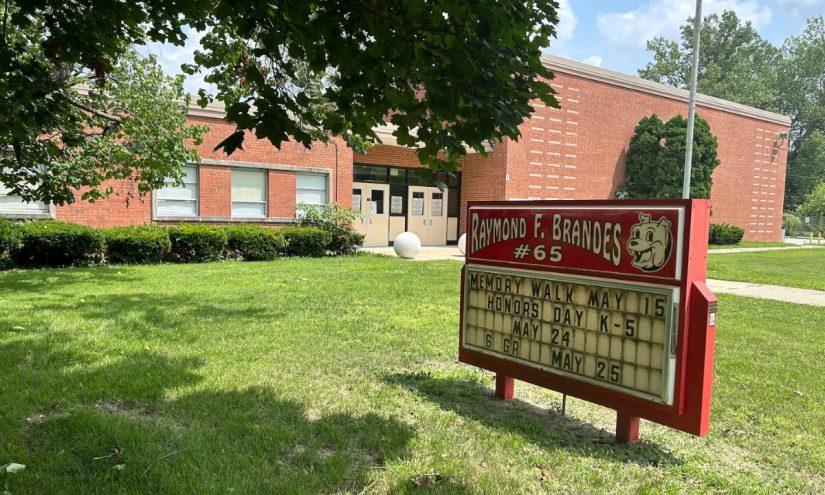
    The transfer of the buildings that used to house Raymond Brandes School 65 and Francis Bellamy School 102 stems from an Indiana Court of Appeals ruling in a lengthy battle over the state’s so-called $1 law, which requires districts to transfer unused school buildings to charter schools for the sale or lease price of $1. The court ruled in May that IPS must sell School 65.

    The announcement also comes as the Indianapolis Local Education Alliance ponders how to solve facility challenges for both IPS, which continues to lose students in its traditional schools every year, and charters, which frequently struggle to acquire school buildings.

    The district said in a statement that Damar Charter Academy, a school for students with developmental and behavioral challenges in Decatur Township, had reached out to IPS to express interest in School 65 — which is located on the southeast side of IPS. The district does not have the power to pick which charter school it will sell a building to — if more than one charter school is interested, state law requires a committee to decide.

    On Monday, Damar confirmed to Chalkbeat that it is interested in School 65.

    In the statement, the district said it would prefer to “move forward with disposition” of School 65 through a collaborative community process.

    “But, we respect the court’s decision and will proceed in full compliance with that order,” IPS Superintendent Aleesia Johnson said. “If the building is claimed by a charter school, we think Damar has a strong record of serving some of the most vulnerable and underserved students in our city and I have confidence that acquiring Raymond Brandes will allow them to expand their operations to serve even more students.”

    Meanwhile, the district will sell School 102 to Voices, a nonprofit that works with youth, for $550,000. The district had already leased the school on the Far Eastside to Voices, which also shares the space with two other youth programs.

    “Indianapolis Public Schools is committed to continuing to engage with our community on thoughtful re-use of our facilities and to being good stewards of our public assets,” Johnson said in a statement. “We are excited to move forward with our planned sale of the Francis Bellamy 102 building to VOICES and to see their impact in serving our community continue for many years into the future.”

    This story was originally published on Chalkbeat. Chalkbeat is a nonprofit news site covering educational change in public schools.


    Get stories like these delivered straight to your inbox. Sign up for The 74 Newsletter

    Source link

  • University of the Arts unloads 2 buildings for $10.3M in auctions

    University of the Arts unloads 2 buildings for $10.3M in auctions

    This audio is auto-generated. Please let us know if you have feedback.

    Dive Brief:

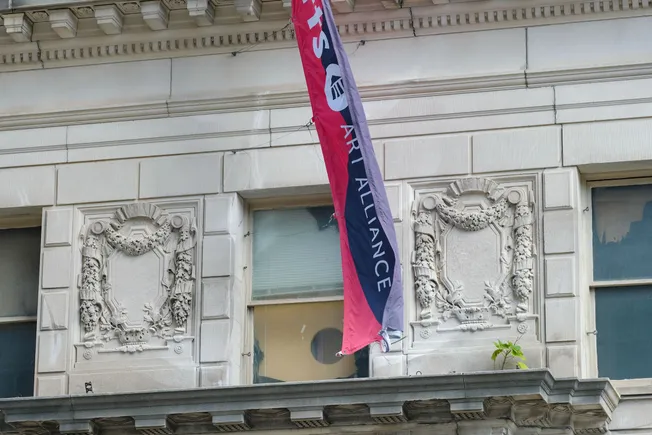
    • The University of the Arts Tuesday sold one of its prized properties, the Arts Alliance building in Philadelphia’s Rittenhouse Square neighborhood, in a bankruptcy liquidation auction run by its Chapter 7 trustee. 
    • The Philadelphia-based nonprofit Curtis Institute of Music offered $7.6 million for the building at auction, topping the previous high bid from real estate developer Allan Domb. The bankruptcy judge overseeing UArts’ case approved the sale Wednesday.
    • UArts’ Arts Bank building also sold in a separate auction for $2.7 million to the firm Quadro Bay, which beat out a bid from the nonprofit Lantern Theater Co. The sale still needs court approval.

    Dive Insight:

    The fate of a failed college’s property often draws interest from the surrounding community. In UArts’ case, the university — which shocked Philadelphia with its sudden closure last summer — occupied several historic buildings in the city’s downtown.

    The case’s trustee, Alfred Giuliano, said previously in court papers that efforts to sell the properties involved 27,000 emails to prospective buyers and more than 150 confidentiality and nondisclosure agreements signed with prospects. 

    One of the key players so far has been nearby Temple University, which has enrolled hundreds of UArts’ former and prospective students. The university has bid $18 million for UArts’ Terra Hall, which sits on the university’s main South Broad Street campus. 

    A one-time hotel, Terra Hall served as UArts’ primary academic building. In a statement last week, Temple leadership described the possible acquisition as an “exciting prospect as it allows us to establish a prominent Temple presence in an iconic Philadelphia building.”

    The public university added that buying Terra Hall would create “an opportunity for the university to be part of the continued revitalization of the Avenue of the Arts — an important cultural corridor — while opening the door for additional academic opportunities for our students.”

    Temple also offered $6.2 million for the Arts Alliance building, which UArts acquired through a 2018 merger. The university was narrowly beaten out by Domb’s bid. However, Pennsylvania Attorney General Michelle Henry objected to the developer’s bid Monday, arguing that Temple should be given priority because of restrictions on the sale of charitable assets in state law and the building’s deed covenants. After the auction, the trustee deemed Temple the backup bidder should the sale to the Curtis Institute fail to close.

    Domb reportedly withdrew from bidding during the bankruptcy auction. 

    What attracted me to it was the potential of the building, how beautiful it is, the ability to use it for mostly arts, culture and possibly music,” the developer told WHYY, Philadelphia’s NPR affiliate. But he added of the winning bidder, “Curtis is a gem and I’m really pleased they got it.”

    Until Wednesday, the Lantern Theater Co. led the bidding for UArts’ Arts Bank building on South Broad Street with an offer of nearly $1.8 million. Giuliano named the nonprofit as the backup buyer if the deal with auction winner Quadro Bay falls through.

    As with the Arts Alliance building, the attorney general during a Wednesday hearing raised concerns selling Arts Bank to a for-profit company, WHYY reported. However, the building does not carry the same restrictive deed covenants as Arts Alliance.

    UArts has several other buildings in its portfolio left to be sold, including the columned Dorrance Hamilton Hall and other facilities on its main campus. When it filed for bankruptcy in September, the university listed nine properties that it owned, valuing them collectively at $87.1 million. Terra Hall came in highest at $48.4 million.

    Source link