
Tag: bully

  • The United States as guardian or bully

    The United States as guardian or bully

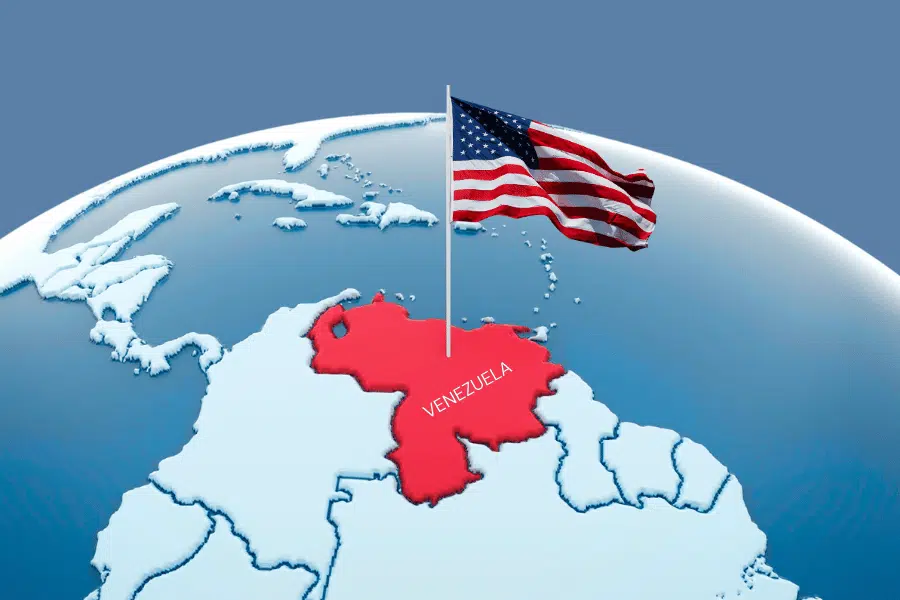
    The recent United States military incursion into Venezuela and abduction and subsequent arrest of its President Nicolás Maduro and his wife in New York is a major geopolitical event. Like all major geopolitical events, it has several components — historical, legal, political and moral.

    And like all major geopolitical events, it has very different points of view. There is no grandiose “Truth” about what happened. There are many truths and points of view.

    What can be said is that on 3 January 2026, the United States military carried out strikes on Venezuela and captured its president, Nicolás Maduro, and his wife Cilia Flores. The two were then flown to the United States where they were arrested and charged with issues related to narcoterrorism.

    The United States’ intervention in a Latin American country has historical precedents as well as current foreign policy implications.

    Under President James Monroe, the United States declared in 1823 that it was opposed to any outside colonialism in the Western Hemisphere. Now known as the Monroe Doctrine, it established what political scientists refer to as a “sphere of influence”; No foreign country could establish control of a country in the United States-dominated Western Hemisphere.

    (This was indeed one of the central issues in the 13-day October 1962 Cuban Missile Crisis when the United States established a blockade outside Cuba to stop the installation of Soviet missiles on the island.)

    The Trump Corollary

    In the latest U.S. official security strategy document — National Security Strategy 2025 — the Monroe Doctrine was presented in what has been labelled “The Trump Corollary.” In it, the government said that defending territory and the Western Hemisphere were central tasks of U.S. foreign policy and national interest. The document clearly stated that activities by extra-hemispheric powers would be considered serious threats to U.S. security.

    As such, the “Trump Corollary” of the Monroe Doctrine is the justification of the military action in Venezuela based on stopping Russian and Chinese influence in Venezuela. In addition, it can be seen as the justification for the U.S. to acquire Greenland, resume control of the Panama Canal and stop narcotics and illegal migrants coming into the United States from anywhere in the Western Hemisphere.

    But the Corollary and Doctrine are mere national strategic statements. Are they legally justified? The U.S. military operation in Venezuela has been highly criticized by international lawyers as well as United Nations officials. The United Nations Charter, of which the United States is a signatory, clearly forbids the use of force by one country against another country except in the case of self-defense and imminent threat.

    In an interview with New Yorker magazine reporter Isaac Chotiner on 3 January, Yale Law School Professor Oona Hathaway noted that when the UN Charter was written 80 years ago, it included a critical prohibition on the use of force by states. “States are not allowed to decide on their own that they want to use force against other states,” she told Chotiner. “It was meant to reinforce this relatively new idea at the time that states couldn’t just go to war whenever they wanted to.”

    Hathaway said that in the pre-UN Charter world, you could use force if you felt like drug trafficking was hurting you and come up with legal justification that that was the case. “But the whole point of the UN Charter was basically to say, ‘We’re not going to go to war for those reasons anymore’,” she said.

    The legality of an ouster

    Besides the international legal issue, there is also a domestic legal question about the Venezuelan military action. The 1973 War Powers Act was enacted to limit the power of the U.S. president to use military forces with the approval of the Congress.

    It was enacted following the Vietnam War during which the president engaged troops without Congressional approval or a formal declaration of war. The Act clearly requires the president to notify Congress before committing armed forces to military action.

    Trump did not consult with members of Congress before and during the military action in Venezuela. The political implications of the Venezuelan strikes and abduction also have international as well as domestic implications. Internationally, there is a dangerous precedent being set.

    If the United States asserts its sphere of influence in the Western Hemisphere, what is to stop the Russian Federation from claiming a similar sphere of influence in the Baltic countries of Latvia, Lithuania and Estonia as well as Ukraine?

    Similarly, what about Chinese influence in the Indo-Pacific region and especially Taiwan? If the United States claims domination in one geographic region, why can’t other powers like Russia and China do the same?

    The Westphalian system

    Within the United States, there have also been serious reservations about President Trump’s actions. That was to be expected from the opposing Democratic Party. But, several members of Trump’s Republican Party as well as loyal members of his Make America Great Again (MAGA) movement argue that Trump was elected on the slogan “Make America Great Again.” One of the pillars of that movement is a focus on internal problems instead of foreign interventions.

    Republican U.S. Representative Marjorie Taylor Greene used to be one of Trump’s staunchest supporters. On 3 January she told interviewer Kristen Walker on the NBC show “Meet the Press” that America First should mean what Trump promised on the campaign trail in 2024.

    “So my understanding of America First is strictly for the American people, not for the big donors that donate to big politicians, not for the special interests that constantly roam the halls in Washington and not foreign countries that demand their priorities put first over Americans,” Greene said.

    Other criticisms have centered on President Trump’s focus on restoring business in Venezuela for the U.S. oil industry, which has the world’s largest oil reserves. Republican U.S. Representative Thomas Massie warned that “lives of U.S. soldiers are being risked to make those oil companies (not Americans) more profitable.”

    Finally, there are moral arguments against the use of force in Venezuela as well as Trump’s threats of the use of force in Colombia, Cuba and elsewhere. There is no question that Venezuelans had suffered under the rule of Maduro; statistics show the rapid decline in the economy as well as a significant democratic deficit.

    Fundamental to today’s notion of international order is what’s known as the Westphalian system of the integrity of state sovereignty. The world has seen an order since the end of World War II and the establishment of the United Nations. That order was based on respect for the rule of law. There are other means for states to act against other states, such as sanctions, below military intervention. One country invading another goes against the basis of the Westphalian system.

    The Venezuelan strikes and abduction have set a dangerous precedent.


    Questions to consider:

    1. What is meant by the “Monroe Doctrine”?

    2. When is one country considered part of a “sphere of influence” of another country?

    3. How do you define “national security”?
    Source link

  • US Attorney Ed Martin’s bully tactics have no place in America

    US Attorney Ed Martin’s bully tactics have no place in America

    As the federal government’s chief prosecutors, United States attorneys wield significant power. The Constitution charges them with using that power to ensure “that the laws be faithfully executed.” And as any reasonable federal prosecutor would know, the First Amendment bars them from abusing their power to intimidate government critics.

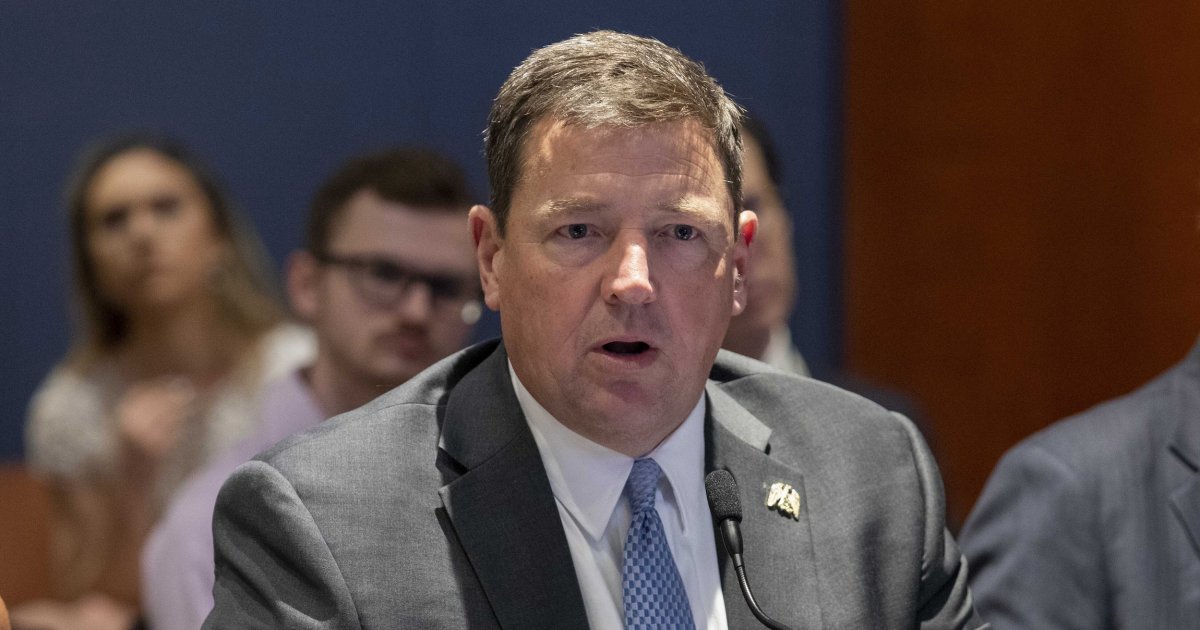
    But one U.S. Attorney, Edward R. Martin Jr., doesn’t seem to have gotten the Constitution’s message or taken his oath seriously. Instead, Martin has emphasized political grandstanding and chilling dissent. Even though he’s been in office for only a few weeks, he’s unleashed the power of his office to go after speakers critical of Department of Government Efficiency, Elon Musk, and Supreme Court justices. And more troublingly, Martin has threatened to “chase” those critics “to the ends of the Earth,” sending a clear message: Shut up, or else. 

    So FIRE is here to remind Ed Martin — and any other prosecutor thinking about following Martin’s lead — that threatening government critics is not only inexcusable, it’s unconstitutional.

    Let’s start with a fundamental principle: Criticizing the government is not a crime. It’s free speech. And the First Amendment fiercely protects it. In fact, the First Amendment protects a lot of sharp-edged political rhetoric. That’s true whether you’re an elected official, a college student or faculty member, or just somebody posting on social media. 

    Of course, the First Amendment doesn’t protect true threats. But there’s a narrow legal definition of true threats, per the Supreme Court: statements intended “to communicate a serious expression of an intent to commit an act of unlawful violence to a particular individual or group of individuals.” Only if speech meets that exacting standard — and the speaker knew or ignored a real risk their statement would be “viewed as threatening violence” — can prosecutors like Martin target it. If not, it’s protected by the First Amendment.

    No reasonable listener could conclude Garcia was donning brass knuckles and seriously expressing, over CNN’s airwaves, an intent to beat up Elon Musk.

    Above all, in no case does an American’s protected speech turn into a “threat” just because a prosecutor disagrees with it, doesn’t find it funny, or dislikes his political pals being criticized. Any other outcome would empower the government to intimidate or jail political opponents simply by labeling dissent a “threat.” Those authoritarian tactics call to mind places like China and North Korea, but they have no place in the United States of America. 

    That’s why two weeks ago, FIRE joined a letter to Martin penned by the Freedom of the Press Foundation and Demand Progress. We expressed concern over posts by Martin on the social media platform X that appeared to promise prosecution against DOGE critics. As the letter pointed out: “Threatening to file frivolous charges against Americans and vaguely insinuating that wide swaths of constitutionally-protected speech and activity could invite criminal investigations and prosecutions” defies both the First Amendment and Martin’s professional and ethical obligations.

    Rather than heed that letter, Martin has doubled down. Yesterday, he opened a federal investigation targeting two members of Congress — part of what Martin dubs “Operation Whirlwind” — for past public statements that Martin claims threatened fellow government officials. But none of the statements come close to an unprotected true threat.

    Martin’s inquiry into Sen. Charles Schumer of New York reportedly centers on a March 2020 remark the Democratic minority leader made at an abortion rights rally outside the Supreme Court: “I want to tell you, Gorsuch, I want to tell you Kavanaugh, you have released the whirlwind and you will pay the price. You won’t know what hit you if you go forward with these awful decisions.” (Schumer’s remarks are the namesake of Martin’s “Operation Whirlwind.”)

    And Martin’s office is investigating Rep. Robert Garcia of California for a comment the Democratic congressman made last week during a CNN interview about Elon Musk. Garcia, who posted the letter he received from Martin on X, said: “What the American public wants is for us to bring actual weapons to this bar fight. This is an actual fight for democracy.”

    It’s not a close call: Neither statement meets the definition of a true threat. Each is core political speech, fully protected by the First Amendment.

    Far from free speech savior, Elon Musk increasingly looks like a false prophet 

    News

    Twitter suspended the accounts of numerous journalists who Twitter owner Elon Musk accused of doxing him and his family.


    Read More

    Schumer’s remark is plain old political hyperbole. Sure, saying justices will “pay the price” and “won’t know what hit them” as a result of their decisions might be described by some as intemperate. The statement drew criticism from other members of Congress, and even condemnation from the bench: Chief Justice John Roberts chastised Schumer for the tenor of his remarks, and Schumer in turn apologized. But in no way was it “a serious expression of an intent to commit an act of unlawful violence to a particular individual or group of individuals,” let alone grounds for a federal investigation, nearly five years after the fact.

    The First Amendment also protects Garcia’s political rhetoric — and again, it’s not a close call. Garcia’s comparison of the current political moment to a “bar fight,” requiring “actual weapons” for “an actual fight for democracy,” is plainly metaphorical, not literal. This is especially clear from the context of Garcia’s remarks, made during a CNN interview about politics. No reasonable listener could conclude Garcia was donning brass knuckles and seriously expressing, over CNN’s airwaves, an intent to beat up Elon Musk.

    Simply put, there’s nothing to investigate.

    Neither Schumer’s nor Garcia’s remarks are true threats. If they really were actionable threats, our nation’s capital would be a far different place. From the top down, Washington is chock-full of politicians using charged language, allusions to fighting, and sometimes even explicit invitations to drop the gloves. That’s how it’s been since the beginning, as Patrick Henry and Thomas Jefferson would confirm.

    If Martin really wanted to prioritize officials’ safety, he’s got plenty of actual work to do. He could start with the real bomb threatsdeath threats, and swatting attacks federal lawmakers and officials have reported receiving over the past year. Instead, he’s targeting standard-issue political rhetoric from partisans on the other side of the aisle.

    It’s bad enough when a dean of students distorts the line between protected speech and true threats. But a federal prosecutor? That’s indefensible — and dangerous to a free society.

    That all leaves one conclusion. Martin’s “Operation Whirlwind” is a political stunt — and a dangerously unconstitutional one, threatening to blow a chilling wind across our nation’s political debate. Government investigations that target plainly protected expression violate the First Amendment. And any reasonable government official, especially a federal prosecutor, would know as much.

    To be sure, Martin’s not the first prosecutor to target protected political speech in recent months. Last November, Arizona Attorney General Kris Mayes launched an investigation into then-candidate Donald Trump’s sharp-but-protected comments about former Rep. Liz Cheney. Mayes was as wrong to do so then as Martin is now.

    “Whatever one might think of Trump’s rhetoric here, it’s not a true threat,” wrote FIRE’s Aaron Terr at the time. “It’s constitutionally protected political speech.” The partisan coordinates may have flipped, but the same conclusion holds.

    Other government officials have followed the same playbook. For instance, FIRE could fill a book with examples of campus administrators shutting down plainly protected student and faculty speech by claiming it was somehow “threatening.”

    Take student Hayden Barnes, expelled for a Facebook collage criticizing his university’s plan to spend $30 million on a new parking garage. Or Austin Tong, barred from campus for his anti-communist Instagram post commemorating the anniversary of the Tiananmen Square massacre. FIRE has defended faculty members disciplined for “threats” for caustic but protected criticism of both President Trump and Black Lives Matter protesters. We’ve even seen students and faculty punished for obvious jokes and political satire. The list goes on and on.

    Here’s the bottom line: When government officials cynically mislabel protected speech as a “threat” to silence speech with which they disagree, it’s classic censorship that the First Amendment forbids. It’s bad enough when a dean of students distorts the line between protected speech and true threats. But a federal prosecutor? That’s indefensible — and dangerous to a free society.

    Source link