Tag: Business

  • Higher education governance needs the conflict between academic and business imperatives to be successful

    Higher education governance needs the conflict between academic and business imperatives to be successful

    The sector’s financial challenges have shone a spotlight on governance effectiveness in higher education in England.

    When the incoming government tasked the Office for Students (OfS) with directing more of its energy towards financial sustainability in the summer of 2024, it was only a matter of months before director of regulation Philippa Pickford put forward the view that the sector needed “a conversation” about governance, specifically about how robustly boards had tested some of the financial projections they had been prepared to sign off.

    That signal of concern about governance has clearly manifested in the corridors of the Department for Education (DfE), if these words from the Secretary of State to the Commons Education Committee in May are anything to go by:

    The government is clear that there needs to be a focus on and improvement in providers’ governance. Planning and strategy development within higher education providers, including financial planning, should be supported by the highest standards of governance to ensure realistic planning, robust challenge and the development of sustainable business models.

    The sector has not been unresponsive to these cues – Advance HE in partnership with the wider sector is (taking the conversation metaphor literally) curating a “big conversation” about governance and the Committee of University Chairs (CUC) has pledged to review the higher education code of governance – which for a large number of institutions acts as a reference document for compliance with OfS’ conditions of registration on governance.

    The implicit underpinning premise from OfS and DfE is fairly stark: the government is disavowing any responsibility it might have to come up with a financial settlement that would shore up higher education finances while retaining the current delivery model; nor is it especially keen to have to deal with institutional bailouts arising from institutional inability to manage the changed funding landscape. The strong signal is that it is up to higher education institutions to work out how to survive in this environment – and if boards are not up to the task of finding the answers then it’s the boards that need reforming.

    Business acumen

    I read this communication as part of a discursive stand off between government and the sector in which the lines between the role of government and role of individual institutions in securing the future of higher education is contested. Within that context, the validity of the implied criticism – that boards are insufficiently businesslike and strategic – needs to be interrogated.

    There was a fascinating piece on The Critic last week by University of Buckingham academic Terence Kealey bemoaning the rise of the managerialist board. In Kealey’s analysis, when the balance of power in governance tilted towards the Senate – the governing body of academics – the institution thrived, as evidenced by strong performance in NSS and a financial surplus. But when the Council flexed its muscles, the university faltered, dropping in the league tables and spending more than it brought in.

    Kealey’s core argument – that academics are best placed to steward the core higher education mission of excellent teaching and research – picks up a longer standing critique of higher education governance that perceives organisational strategic objectives as articulated by institutional boards and executive teams as frequently in opposition to the academic endeavour, being far too concerned with financial efficiency, performance management, reputation/league tables, and capturing market share. Echoes of aspects of this critique appear in the recent Council for the Defence of British Universities’ proposed code of ethical university governance, which urges boards to adhere to high standards of transparent, principled, and public-spirited conduct.

    At the other end of the spectrum, the criticism of higher education governance – including sometimes from governors themselves – is that boards are insufficiently businesslike, fail to articulate long-term strategic objectives that will secure the institution’s sustainability, and have limited entrepreneurial spirit that would allow the institution to adapt to adverse headwinds. A more moderate version of this criticism argues that it is very difficult to convene the diverse skillset that could allow for effective board oversight of the wide range of activities that higher education institutions do.

    Thinking about activities like academic and knowledge exchange partnerships, the creation of new campuses or the erection of new buildings, or civic and international engagement, all of these have the the academic endeavour at their core but are mostly about deploying the knowledge and reputational assets of the institution to generate additional value – and they each carry complicated associated legal and regulatory compliance expectations and reputational risk. It’s not clear that developing those strategies and managing those risks and expectations coheres well with academic professional practice – though some academics will obviously have a keen interest and want to develop knowledge in these areas.

    The worst of both

    There has always been an expectation that higher education institutions need to be simultaneously academically excellent and sufficiently business savvy to make sure the institution remains financially stable. Both academic and institutional governance can fail – the latter often more spectacularly and with greater reputational impact – but the impact of academic governance failure is arguably greater overall both on the long term health of the institution and on the lives of the staff and students affected.

    So you could argue that it’s odd and/or problematic that the sector has witnessed the erosion of the power of senates and academic boards as part of a wider set of trends towards a more executive style of higher education leadership, the rise of metrics, league tables and more managerial approaches to institutional performance, the intensification of regulatory expectations, and the steady withdrawal of direct public funding from the sector. It’s telling that under the current regulatory regime in England institutional boards have had to master new expectations of oversight of academic quality, on the presumption that all institutional accountability should sit in one place, rather than being distributed – suggesting that quality is now seen as part of the wider business imperative rather than a counterweight to it.

    But simply pivoting the balance of power back to senates and the academic community doesn’t necessarily address the problem. It’s possible, I suppose, to imagine a relatively benign or at least predictable funding and regulatory environment in which some of the pressing strategic questions about institutional size and shape, partnerships, or external engagement are answered or moot, and in which knowledge stewardship, academic excellence, and (one would hope) student learning experience are the primary purpose of higher education governance.

    But even if that environment was plausible – I’m not sure it has ever existed – it doesn’t really address the more existential contemporary questions that governments and the public seem to be putting to higher education: how does the country see, and experience the value of all this knowledge stewardship and academic excellence? To realise that value and make it visible in more than an ad hoc way – to be institutionally accountable for the systematic manifestation of public value from academic knowledge – requires knowledge and professional practice beyond individual teaching and research excellence. And, more prosaically but equally importantly, buildings, infrastructure, and systems that create the environment for effective knowledge stewardship. Without a functioning institution there can be no knowledge stewardship.

    There’s a reason, in other words, even if you strip out all the neoliberal value propositions from higher education governance, why higher education institutions need a “business” arm and associated governance structures. And that’s before you confront the actual reality of the current situation where the funding and regulatory environment is neither benign nor predictable – and the need for effective external relationship-building and systematic collaboration is greater than it has been in decades.

    On the other hand, some of the business decisions that are made to secure financial sustainability or long term institutional success put the academic imperative at risk. Rapid growth in student numbers, redundancy programmes, departmental or services cuts or new strategic partnerships can compromise quality, as we have seen in a number of recent cases. There may be mitigations or the impact may be worth the reward, but there can be no meaningful strategic decision without being able to weigh up both.

    Yet where we have ended up, I fear, is in the worst of both worlds – institutional boards that are neither sufficiently academically robust to have a grip of academic excellence nor sufficiently strategic and entrepreneurial to ensure institutions are able to thrive in the current higher education landscape. This is no shade to the immense talent and knowledge of the individuals who take up roles as higher education governors – it is a structural critique.

    Creative tension

    Where I end up is with the question – if there is really an inbuilt tension between the academic and business imperatives of higher education institutions, what would it look like for that tension to be a productive one in higher education governance rather than a source of toxicity?

    I suspect – though I’ve not (yet) asked – many vice chancellors and their executive teams would argue that in their individual experience and team skillset they manifest both academic and business imperatives – that in fact, it is their job to reconcile these two aspects of institutional leadership in their daily practice, decisions, and communications.

    Yet if that reconciliation of two competing imperatives is the job of leadership, arguably it’s not going all that well. While this experience is by no means universal, it’s clear that at times both academic and professional staff can feel sidelined and disempowered in the tug of war for day to day resource – but also at a deeper level for a recognition of their purpose and contribution to the higher education endeavour. Each can feel subordinated to the other in the institutional hierarchy – yet while there are outliers on both sides I’d put money on the majority of individuals on both sides accepting and embracing the value and contribution of the other. Yet at the same time the real tensions and contradictions that manifest in the pursuit of the two parallel imperatives are deeply felt by staff yet not always acknowledged by leadership.

    What if the job of leadership and boards of governors was not to seek to reconcile academic and business imperatives, but to actively manage the conflicts that arise at times? Where strategic questions arise related to either opportunities or risks, boards need to understand the perspective of both “sides” before being able to judge whether the executive team’s decisions are appropriate. And for institutional staff (and students, to the extent they have a role in institutional governance) there needs to be confidence that the governors have the skills and understanding of the value and importance of both imperatives and the relationship between them – so that there is the trust that decisions have been made in the most effective and transparent way possible.

    There might even be a case for institutions to convene internal business strategy boards as part of the governance structure as a counterweight to academic boards – actively empowering both equally as sites of knowledge, expertise and influence – and potentially reducing the strategic burden on institutional boards through creating a more transparent and maybe even more democratic or at least representative forum for internal governance of strategic business development.

    It seems likely that the next academic year will see the higher education sector in England move on from “conversations” about governance into something more systematically developmental, whether that’s via the mechanism of the CUC’s review of the Higher Education Code of Governance, or a policy agenda from one of the sector bodies. This is one of those areas where the sector can help itself with government by taking a lead on reform.

    Yet there’s a risk that the financial pressures on the sector lead to too close a focus on the strategic business imperatives and not enough on the academic excellence imperative. Institutions need both to be successful, and boards and executive teams – as well as any reviewing organisation – need to give deep consideration to how those can – even if not always peacefully – coexist.

    Source link

  • Ohio District Awarded CoSN Trusted Learning Environment Mini Seal for Student Data Privacy Practices

    Ohio District Awarded CoSN Trusted Learning Environment Mini Seal for Student Data Privacy Practices

    Washington, D.C.    CoSN today awarded Delaware Area Career Center in Delaware, Ohio, the Trusted Learning Environment (TLE) Mini Seal in the Business Practice. The CoSN TLE Seal is a national distinction awarded to school districts implementing rigorous privacy policies and practices to help protect student information. Delaware Area Career Center is the sixth school district in Ohio to earn a TLE Seal or TLE Mini Seal. To date, TLE Seal recipients have improved privacy protections for over 1.2 million students.

    The CoSN TLE Seal program requires that school systems uphold high standards for protecting student data privacy across five key practice areas: Leadership, Business, Data Security, Professional Development and Classroom. The TLE Mini Seal program enables school districts nationwide to build toward earning the full TLE Seal by addressing privacy requirements in one or more practice areas at a time. All TLE Seal and Mini Seal applicants receive feedback and guidance to help them improve their student data privacy programs.

    “CoSN is committed to supporting districts as they address the complex demands of student data privacy. We’re proud to see Delaware Area Career Center take meaningful steps to strengthen its privacy practices and to see the continued growth of the TLE Seal program in Ohio,” said Keith Krueger, CEO, CoSN.

    “Earning the TLE Mini Seal is a tremendous acknowledgement of the work we’ve done to uphold high standards in safeguarding student data. This achievement inspires confidence in our community and connects us through a shared commitment to privacy, transparency and security at every level,” said Rory Gaydos, Director of Information Technology, Delaware Area Career Center.

    The CoSN TLE Seal is the only privacy framework designed specifically for school systems. Earning the TLE Seal requires that school systems have taken measurable steps to implement, maintain and improve organization-wide student data privacy practices. All TLE Seal recipients are required to demonstrate that improvement through a reapplication process every two years.

    To learn more about the TLE Seal program, visit www.cosn.org/trusted.

    About CoSN CoSN, the world-class professional association for K-12 EdTech leaders, stands at the forefront of education innovation. We are driven by a mission to equip current and aspiring K-12 education technology leaders, their teams, and school districts with the community, knowledge, and professional development they need to cultivate engaging learning environments. Our vision is rooted in a future where every learner reaches their unique potential, guided by our community. CoSN represents over 13 million students and continues to grow as a powerful and influential voice in K-12 education. www.cosn.org

    About the CoSN Trusted Learning Environment Seal Program The CoSN Trusted Learning Environment (TLE) Seal Program is the nation’s only data privacy framework for school systems, focused on building a culture of trust and transparency. The TLE Seal was developed by CoSN in collaboration with a diverse group of 28 school system leaders nationwide and with support from AASA, The School Superintendents Association, the Association of School Business Officials International (ASBO) and ASCD. School systems that meet the program requirements will earn the TLE Seal, signifying their commitment to student data privacy to their community. TLE Seal recipients also commit to continuous examination and demonstrable future advancement of their privacy practices. www.cosn.org/trusted

    About Delaware Area Career Center Delaware Area Career Center provides unique elective courses to high school students in Delaware County and surrounding areas. We work in partnership with partner high schools to enhance academic education with hands-on instruction that is focused on each individual student’s area of interest. DACC students still graduate from their home high school, but they do so with additional college credits, industry credentials, and valuable experiences. www.delawareareacc.org

    Connect With Us

    Facebook,Twitter, LinkedIn

    eSchool News Staff
    Latest posts by eSchool News Staff (see all)

    Source link

  • Optoma Announces Launch of the New 3-Series Interactive Displays with Google Certification and AI-Enabled Tools

    Optoma Announces Launch of the New 3-Series Interactive Displays with Google Certification and AI-Enabled Tools

    FREMONT, CA – Optoma, a world-leading provider of visual solutions, today announced its latest Creative Touch 3-Series Interactive Displays designed to empower educators and business professionals with new tools and features to enhance learning, make presentations more effective, and increase collaboration in classrooms, lecture halls, boardrooms, remote working and other business environments.

    With Google’s Enterprise Device Licensing Agreement (EDLA) Certification and added functionality, the new 3-Series empowers professionals and educators to deliver dynamic and impactful content by providing cutting-edge tools that streamline management and elevate engagement. The advanced capabilities of the new 3-Series simplify planning and workflow through wireless collaboration, screen sharing, and innovative meeting solutions in both corporate and educational environments alike, all packed into a robust yet user-friendly platform.

    The 3-Series: Purpose-Built for Corporate and Education Environments

    New features and key highlights include:

    Google EDLA Certification: Ensures compatibility and optimized performance with thousands of educational applications and services available directly from the pre-installed Google Play Store allowing users to experience the full Google Suite for real-time collaboration from practically anywhere in the world.  Without compatibility issues or the hassle of connecting an external PC, users can easily access the entire suite of Google-based applications they are accustomed to – including Google Drive, Google Docs, YouTube, and more!

    The Optoma Solution Suite (OSS®): User-friendly software featuring Artificial Intelligence (AI) enabled tools, such as Sticky Notes* and AI Handwriting Recognition, the OSS package also includes:

    • Whiteboard: Unleash creativity through a digital whiteboard packed with tools that make learning and sharing ideas engaging – facilitating collaboration in real-time from anywhere.
      • Smart Sketch tool is ideal for drawing diagrams as it recognizes shapes and drawings and converts them into clipart images.
      • Floating Toolbar and Infinity Canvas allow you to seamlessly switch between tools to suit your tasks with a virtually limitless writing space.
      • Innovative Annotation and Highlighter Tools make underlining key points or annotating complex diagrams a breeze.
    • File Manager: Easily save, organize, or move files from local storage to networkable storage or to popular cloud services in seconds.
    • Display Share: Connect any device to wirelessly broadcast, share, or stream your content to the big screen. Bringing your own device has never been easier.

    Exceptional Performance: Seamless performance with an 8-core processor, Android 14 OS, and Zero Bonding screen for that natural writing experience.

    “We are excited to announce our new 3-Series and partnership with Raptor Technologies which truly embodies our commitment to supporting education through cutting-edge visual solutions, enhanced software packages and safety and security,” said Maria Repole, Head of Marketing at Optoma.

    A value-added solution, Optoma Management Suite (OMS®) is available out of the box on the 3-Series Interactive Displays, with a free trial available.** OMS offers IT administrators and technicians a real time remote platform to monitor, manage, diagnose, and update multiple or entire fleets of displays simultaneously that are either on the same network or connected through the cloud. OMS makes it easy to broadcast emergency messages, alerts, or announcements across displays worldwide.

    Optoma is thrilled to partner with Raptor® Technologies, the leading innovator in school safety solutions, redefining the landscape of school security with its Raptor School Safety Software Suite. By integrating Raptor’s software with Optoma’s interactive displays, school administrators and students can receive real-time alerts and emergency notifications using CAP protocols to improve the overall safety of the school.

    To experience a demonstration and learn more about Optoma’s new Creative Touch 3-Series Interactive Displays, please schedule a demo or visit: https://www.optomausa.com/products/interactive-flat-panel-displays-3-series/education https://www.optomausa.com/products/interactive-flat-panel-displays-3-series/corporate

    *Some AI features may require the use of an Optoma (OSS) account.

    **Free trial licenses are available for a limited time. Please register your OMS® Cloud account at https://oms.optoma.com or speak with your local representative.

    OMS and OSS are registered trademarks of Optoma Corporation

    DLP is a registered trademark of Texas Instruments

    About Optoma Technology, Inc.  

    Optoma combines cutting-edge technology and innovation to deliver remarkable visual display products designed to connect audiences with engaging video experiences. From the company’s ProScene projectors to its Creative Touch interactive, Professional LCD and LED displays, Optoma’s suite of products can meet the demands of nearly any professional environment, including conference rooms and classrooms, digital signage, corporate, houses of worship, retail, simulation environments and control rooms. Optoma Technology is the U.S. headquarters for The Optoma Group, with continental headquarters also in Europe and Asia. For more information, visit optomausa.com.   

    eSchool News Staff
    Latest posts by eSchool News Staff (see all)

    Source link

  • Otus Wins Gold Stevie® Award for Customer Service Department of the Year

    Otus Wins Gold Stevie® Award for Customer Service Department of the Year

    CHICAGO, IL (GLOBE NEWSWIRE) — Otus, a leading provider of K-12 student data and assessment solutions, has been awarded a prestigious Gold Stevie® Award in the category of Customer Service Department of the Year at the 2025 American Business Awards®. This recognition celebrates the company’s unwavering commitment to supporting educators, students, and families through exceptional service and innovation.

    In addition to the Gold award, Otus also earned two Silver Stevie® Awards: one for Company of the Year – Computer Software – Medium Size, and another honoring Co-founder and President Chris Hull as Technology Executive of the Year.

    “It is an incredible honor to be recognized, but the real win is knowing our work is making a difference for educators and students,” said Hull. “As a former teacher, I know how difficult it can be to juggle everything that is asked of you. At Otus, we focus on building tools that save time, surface meaningful insights, and make student data easier to use—so teachers can focus on what matters most: helping kids grow.”

    The American Business Awards®, now in their 23rd year, are the premier business awards program in the United States, honoring outstanding performances in the workplace across a wide range of industries. The competition receives more than 12,000 nominations every year. Judges selected Otus for its outstanding 98.7% customer satisfaction with chat interactions, and exceptional 89% gross retention in 2024. They also praised the company’s unique blend of technology and human touch, noting its strong focus on educator-led support, onboarding, data-driven product evolution, and professional development.

    “We believe great support starts with understanding the realities educators face every day. Our Client Success team is largely made up of former teachers and school leaders, so we speak the same language. Whether it’s during onboarding, training, or day-to-day communication, we’re here to help districts feel confident and supported. This recognition is a reflection of how seriously we take that responsibility and energizes us to keep raising the bar,” said Phil Collins, Ed.D., Chief Customer Officer at Otus.

    Otus continues to make significant strides in simplifying teaching and learning by offering a unified platform that integrates assessment, data, and instruction—all in one place. Otus has supported over 1 million students nationwide by helping educators make data-informed decisions, monitor progress, and personalize learning. These honors reflect the company’s growth, innovation, and steadfast commitment to helping school communities succeed.

    About Otus

    Otus, an award-winning edtech company, empowers educators to maximize student performance with a comprehensive K-12 assessment, data, and insights solution. Committed to student achievement and educational equity, Otus combines student data with powerful tools that provide educators, administrators, and families with the insights they need to make a difference. Built by teachers for teachers, Otus creates efficiencies in data management, assessment, and progress monitoring to help educators focus on what matters most—student success. Today, Otus partners with school districts nationwide to create informed, data-driven learning environments. Learn more at Otus.com.

    Stay connected with Otus on LinkedIn, Facebook, X, and Instagram.

    eSchool News Staff
    Latest posts by eSchool News Staff (see all)


    Source link

  • Small Business Administration to Take Over Student Loans

    Small Business Administration to Take Over Student Loans

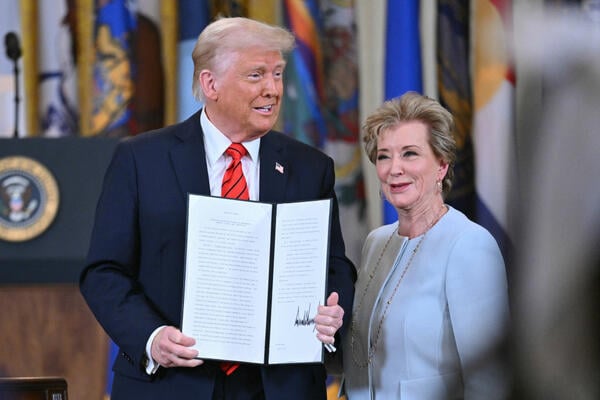
    A day after White House officials said the Education Department would administer the student loan program, President Donald Trump announced that the Small Business Administration would be taking over the $1.7 trillion portfolio.

    He told White House reporters that the move would happen “immediately,” though he didn’t say how that process would work. Currently, federal law requires the Education Department to manage student loans, so the president doesn’t have the authority for the move, several experts and advocates said Friday.

    Neither the White House nor the Small Business Administration responded to requests for more information or details about the plan.

    In response to questions about how moving loans to SBA would work, the Education Department referred Inside Higher Ed to an interview that Education Secretary Linda McMahon did Friday with Fox News. McMahon said she’s working with the SBA on a strategic plan.

    The announcement follows Trump’s executive order, signed Thursday, directing McMahon to close her department “to the maximum extent of the law.” McMahon and others have said a smaller version of the department would focus on core functions, which many experts presumed to include the student loan program. (Trump also said Friday that the Department of Health and Human Services would take over programs that support students with disabilities.)

    Kelly Loeffler, who leads the SBA, wrote on social media that her agency “stands ready to take the lead on restoring accountability and integrity to America’s student loan portfolio.” Whether the department has the capacity to take on the program is an open question; Loeffler is planning to cut 43 percent of the staff, Politico and other news outlets have reported. The SBA runs several programs to support small businesses, including providing loans and helping with disaster recovery.

    The Education Department issues about $100 billion in student loans each year and disburses $30 billion in Pell Grants. That funding is crucial to students who rely on the government to help pay for college.

    But borrowers have struggled over the years to navigate the cumbersome student loan system and often have faced difficulty in repaying their loans. Meanwhile, the federal government’s growing loan portfolio has become a key issue for lawmakers on both sides of the political aisle. Former president Joe Biden’s fix was in part to make student loan forgiveness more accessible and make loan payments more affordable.

    Trump said Friday that the loan system “will be serviced much better than it has in the past,” adding, “it’s been a mess.”

    Agency Blindsided

    It wasn’t clear Friday afternoon whether SBA would also take over the Pell Grant program and the Free Application for Federal Student Aid—a form that millions of students rely on to access federal, student and institutional aid. Currently, the Office of Federal Student Aid, which is part of the Education Department, administers those programs. That office was hit hard by recent mass layoffs at the department, and experts have questioned whether it will be able to fulfill its many responsibilities, which also include overseeing colleges and rooting out fraud in the federal student aid system.

    Trump’s executive order pointed out that the Education Department manages a portfolio the size of Wells Fargo but with significantly fewer employees. “The Department of Education is not a bank, and it must return bank functions to an entity equipped to serve America’s students,” the order said.

    An official high up at Federal Student Aid said Friday that the office was blindsided by the announcement. Just a day before, the official said, the plan was to move the loans to the Treasury Department. Agency officials have yet to receive any plans or communication about handing over the reins to SBA or what that would entail, the official said.

    ‘Clear Violation’

    The federal statute that created FSA specifically gives that office authority to administer student financial assistance programs. Additionally, laws dictating how federal funding is allocated explicitly send money to the Education Department for the student aid programs. A former department staffer told Inside Higher Ed that the administration is “clearly circumventing the spirit and intent of the law if you were to move to functions.”

    Sen. Patty Murray, a Democrat from Washington State, agreed, writing on social media that the announcement “is a clear violation of education [and] appropriations law.”

    Beth Maglione, interim president of the National Association of Student Financial Aid Administrators, added in a statement that only Congress can move the student loan portfolio to a different agency; if the legislative branch agreed, doing so would take time.

    “The administration would first need to articulate a definitive strategy outlining how the work of administering student aid programs would be allocated within the SBA, determine the necessary staffing and resources, and build the requisite infrastructure to facilitate the transition of these programs to another federal agency,” she said. “In the absence of any comprehensive plan, a serious concern remains: how will this restructuring be executed without disruption to students and institutions?”

    Not a ‘Crazy Idea’

    Some conservative policy experts who support shutting down the department cheered the move. Lindsey Burke, director for the Center for Education Policy at the Heritage Foundation, wrote on social media that “without student loans at ED, there will be little left at the agency. Just a few programs—certainly not enough to justify a cabinet-level agency.”

    Beth Akers, a senior fellow at the American Enterprise Institute, like the Heritage Foundation a conservative think tank, acknowledged in an email to Inside Higher Ed that there are a lot of open questions about how the SBA move would work. But she said the announcement shows that the Trump administration understands that the recent staffing cuts “will likely make it too difficult to keep these programs properly administered otherwise,” she wrote.

    Akers noted that since SBA currently manages its own loans, “it isn’t a crazy idea that they could pull this off.”

    “Frankly, the department has handled student loan administration poorly, so the bar is pretty low on what would constitute an improvement,” she added. “I expect that the existing student loan infrastructure (and remaining staff) will likely move over to SBA, and there won’t be immediate changes in how these programs are run. That’s my hope. Because if things change too quickly, I expect that students will see disruptions that could affect their enrollments and personal finances.”

    Liam Knox contributed to this report.

    Source link

  • Accelerated Business Degree Reduces Student Debt

    Accelerated Business Degree Reduces Student Debt

    As more students and parents consider the value of higher education and the cost of a four-year degree, interest has grown in three-year degree opportunities that allow students to complete their education in less time for a lower tuition rate.

    Westminster College in Pennsylvania launched a new Degree in Three program in the School of Business this year, allowing learners to graduate with 125 credits and shave a year off their time in undergraduate education. Additionally, the program pairs with the college’s master of business administration, so learners can complete two degrees in four years if they so choose.

    The background: There were a few catalysts for creating a formal three-year degree program, explains Robert Badowski, Westminster’s school of business chair. First, more students were coming in with credits from high school from AP or dual-enrollment programs, making their degree progress quicker. Second, more students and parents had noted the high cost of education and concerns about student debt.

    A May 2024 Student Voice survey by Inside Higher Ed and Generation Lab found seven in 10 respondents say higher education institutions in general charge too much for an undergraduate education.

    Westminster isn’t the only college facing pressure to get students to graduation sooner: Interest in formalized three-year degree programs has grown in recent years, and more institutions are looking to get in the game, even medical schools.

    At Westminster, the college had helped students shape their own schedules to graduate in three years rather than four, but a curriculum review and restructuring of elective courses has helped make this accessible to all students.

    What’s different: Westminster students can take up to 19 credit hours per semester and be considered full-time, but the business program offered primarily four-credit courses, making it difficult for students to max out their credit load.

    “You could take four classes, but if you took the fifth class, you were paying extra money, and most students don’t want to take on that burden, even if it was cutting off a year,” Badowski explains.

    Many three-year degree programs reduce the total number of credits students have to complete, but Westminster accelerated business students still complete at least 125 credits. To do so, faculty members reimagined their four-credit elective courses to be worth either one or two credits instead.

    Now, instead of engaging in a deep dive into an elective topic, students receive greater breadth in a variety of areas and are able to hit that 19-credit threshold exactly.

    “We had a meeting [with faculty members] as far as which courses made sense to do this with, and we found out in the process that a lot of [content] was stretched out purposefully just to be stretched out,” Badowski says. The process of removing content or packing it into seven or eight weeks, therefore, made more sense in many cases.

    The restructuring of elective courses is something that will benefit all business students, not just those participating in the accelerated degree program, giving them greater flexibility in scheduling.

    BOGO deal: In addition to removing costs associated with attending college, the Degree in Three program allows students to pair their undergraduate and graduate degrees in a four-year timeline.

    “We have a pretty neat deal that if students want to take one of their M.B.A. classes the last semester of their senior year, they can,” Badowski says. “We don’t charge for the M.B.A. course, so that gets them kind of jettisoned into the program.”

    The offering is particularly attractive to student athletes at the college, many of whom want to use all four years of eligibility.

    The price of an M.B.A. at Westminster is also around $10,000, so students spend less for a three-plus-one M.B.A. degree than four years in their undergraduate program, Badowski says.

    What’s next: Administrators are working on creating awareness of the offering among prospective students and particularly parents, who “are going to look at this and hopefully go, ‘I can help my kids save a year of tuition, maybe get them out of college a year faster,’” Badowski says.

    The college doesn’t have specific goals for enrollment, but Badowski would like to see 20 in the first year and consistent growth after that. “I’m hoping that people find it useful for them, [because] they’re still getting the same amount of credits. They’re taking the same classes as everybody else, it’s just faster.”

    Get more content like this directly to your inbox. Subscribe here.

    Source link

  • U of Delaware Business School Gifted a Historic $71.5M

    U of Delaware Business School Gifted a Historic $71.5M

    The University of Delaware has received a $71.5 million gift, the largest single donation in the university’s history, according to a news release Monday.

    The donation is from alumni Robert Siegfried Jr. and Kathleen (Horgan) Siegfried and will benefit the institution’s Alfred Lerner College of Business and Economics.

    As owners of the Siegfried Group LLP, an entrepreneurial leadership organization that advises financial executives, the couple have long been key donors to the university, but UD president Dennis Assanis said this gift in particular would be “transformative.”

    “The Siegfrieds’ generosity will significantly advance Lerner’s critical mission of preparing the next generation of leaders, change-makers and entrepreneurs to make an impact in the rapidly evolving world of business and economics,” Assanis said.

    UD plans to put the funding toward a state-of-the-art, student-centric learning space with modern classrooms, research and teaching labs, a student-run cafe, and an auditorium. The money will also be spent on developing a new Siegfried Institute for Leadership and Free Enterprise where students can develop as business leaders and study “the critical role [of] basic principles of limited government, rule of law, and free enterprise.”

    The university will commission the design process for Siegfried Hall this spring, with a goal of breaking ground within the next four years, the news release said.

    Source link

  • How AI is Changing the Way I Teach Business Law

    How AI is Changing the Way I Teach Business Law

    Reading Time: 5 minutes

    AI has taken the world by storm, and the education field is no exception. After over two decades teaching at The Paul Merage School of Business at the University of California, Irvine, I have seen lots of changes related to curriculum, teaching resources and students. However, I’ve seen nothing quite like the wave of AI tools popping up in classrooms. It’s exciting, a little daunting and definitely something we all need to talk about.

    So, here’s the deal: I’m not an AI expert. But I have spent a lot of time experimenting with AI, learning from my mistakes and figuring out what works and what doesn’t. I’d like to share some of these experiences with you.

    AI in education: What’s the big deal?

    AI is already here, whether we’re ready for it or not. According to Cengage research, use of AI has nearly doubled among instructors, from 24% in 2023, to 45% in 2024. Many of us are using AI to create lectures, craft assignments and even grade assessments. The challenge is not whether we adopt AI. Rather, it’s doing so in a way that enhances our students’ learning outcomes, while maintaining academic integrity in our courses.

    In my online undergraduate business law course, I have always required my students to take written assessments, where they analyze a set of facts to reach a legal conclusion. Not only am I trying to teach them the principles of law, but I want them to improve their writing skills.

    A shift in focus

    A few years ago, I noticed a subtle increase in the overall scores for these written assessments. I have taught this course for over 20 years, so I knew what the historical scores were. Looking into it further, I started hearing about how some students were using ChatGPT in their courses. This got me wondering whether some of my students had already been using it to take my written assessments. Quick answer: yes, they were. This now presented a problem: what do I do about it? In an online course, how can I prohibit the use of AI tools on a written assessment while effectively enforcing that ban?  I shifted my focus from policing and enforcing a ban on the use of AI in my courses to teaching my students how to use AI responsibly.

    Teaching students to use AI responsibly

    In my course, I developed assignments called “Written ApprAIsals.” These three-part writing assignments combine traditional learning with AI-assisted refinement. These teach students how to use AI responsibly while improving their critical thinking and writing skills. Here’s how it works:

    Step 1: Write a first draft without AI

    Students are given a law and related news article about a current legal issue. They must write a memo which analyzes the constitutionality of this law. I also provide them with guidance on utilizing the standard legal memo format, known as IRAC (Issue, Rule, Analysis, Conclusion), to help organize their thoughts and writing.

    Students are permitted to use whatever materials they have, including eBooks, my lecture videos and outlines, Cengage’s online learning platform, MindTap and its resources, and any other information they ethically obtain online. But, they’re not permitted to use AI.

    The purpose of this first draft is for them to demonstrate the foundational knowledge they should have already learned. Students must attest to completing this first draft without using AI, and it’s worth 30% of the total “Written ApprAIsal” grade.

    Step 3: Integrate AI to resolve deficiencies

    Once I have given them feedback on their first drafts, students are required to use AI to improve their first draft. Students must submit the URL to their AI queries and responses (“AI log”). Or less ideally, they can submit a PDF or screenshot of them. I can assess the effort they put in, evaluate their queries, and provide guidance on how to more effectively use AI. This part is worth 40% of the total “Written ApprAIsal” grade.

    Step 3: Use AI to help write a final draft

    Using what they’ve obtained from AI, along with my feedback, students must transform their first draft into an improved final draft. Students are permitted to continue using AI as well.  They must turn on track changes in their document so I can see what changes they’ve made to the first draft.

    Why has this approach worked in my course?

    1. It makes students aware of my familiarity with AI and how it’s used. Students now know I am on the lookout for improper usage of AI in our course.
    2. It encourages their acquisition of foundational knowledge. Students quickly figure out that they must know the basic legal principles. Without them, they will have no idea if AI is providing them with inaccurate information, which can happen sometimes, especially when it comes to legal cases
    3. This approach promotes academic integrity. Students recognize their first drafts must reflect their genuine understanding. There is no benefit to using AI for the first draft. Because the remaining parts are based on their use of AI to improve the first draft, there will not be much room for improvement if the first draft is too good. And because students must submit their AI logs, I can easily ascertain if they actually did the work.
    4. Students build necessary skills for their future careers. They can improve their writing and analysis skills in a low stakes’ way, while receiving useful feedback.
    5. It helps me focus my efforts on helping them understand the law, rather than having to enforce a ban on the use of AI.

    Issues related to this approach

    It takes a lot of effort to find the right law and related news article to use. Not only does the law have to be current, but it also must be interesting and relevant to the students. Legal issues must be presented in a way which are factually neutral to avoid bias. And, the news articles must be factual and not cluttered with distracting commentary or opinions.

    Additionally, rapid feedback is required. With up to 150 students in my course, I only have a little more than 24 hours to turn around written feedback and comments on their first drafts and AI logs. Frankly, it can be overwhelming.

    Tips on integrating AI into your course

    I have learned a few things along the way about integrating AI into my courses.

    Establish clear rules: Be upfront and clear about when, and how, AI can be used. Stick to those rules and enforce them.

    Consider accessibility: Not every student has easy or affordable access to AI tools. Make sure you have alternatives available for these students.

    Teach foundational knowledge first: Students need to know the core concepts so they can critically evaluate any AI-generated content.

    Require transparency: Students must show how they used AI. It is a great way to keep them honest.

    Be flexible and open to experimentation, most importantly: Mistakes are inevitable. There will be times where something you thought would work just doesn’t. That’s ok. Adjust and keep innovating.

    Final Thoughts

    AI is here to stay, and that’s not necessarily a bad thing. AI is a tool that can help students learn. But, it’s up to us to show our students how to use AI responsibly. Whether it’s helping them improve their writing skills, gain foundational knowledge or develop critical thinking skills, AI has so much potential in our courses. Let’s embrace it and figure out how to make it work for each of us.

    Got ideas or experiences with AI in your courses? Let’s connect. I would love to hear how you are using it!

    Machiavelli (Max) Chao is a full-time Senior Continuing Lecturer at the Paul Merage School of Business at the University of California, Irvine and Cengage Faculty Partner. 

    Source link

  • James Goodale on Trump: ‘He’d sue everybody . . . in the media business’ and their ‘response has been pathetic’ — First Amendment News 460

    James Goodale on Trump: ‘He’d sue everybody . . . in the media business’ and their ‘response has been pathetic’ — First Amendment News 460

    Recently, on a WBUR public radio program with Willis Ryder Arnold and Deborah Becker, author and leading First Amendment attorney James Goodale had some things to say about Donald Trump’s attempts to intimidate the press.

    First a bit about the man. From the Wikipedia entry on Goodale:

    James Goodale

    James Goodale is the former vice president and general counsel for The New York Times and, later, the Times’ vice chairman. He is the author of “Fighting for the Press: The Inside Story of the Pentagon Papers and Other Battles.”

    Goodale represented The New York Times in four of its United States Supreme Court cases, including Branzburg v. Hayes, in which the Times intervened on behalf of its reporter Earl Caldwell. The other cases were New York Times v. SullivanNew York Times Co. v. United States (the Pentagon Papers case), and New York Times Co. v. Tasini

    He has been called “the father of the reporter’s privilege” in the Hastings Law Journal because of his interpretation of the Branzburg case.

    And now on to Goodale’s comments on WBUR regarding Trump: 

    So, if you’re not going to fight for your creativity, you’re not going to have a company left. And that applies not only to newspapers, but obviously movies, too. And let me say also, finally, that if you don’t fight, what Trump is going to do, he’s going to go from media company to media company with quasi true cases and pick up money. He’s just on a . . . bribery trail. And I say that from some experience here in New York City, which is exactly what he did before he ran for president. He’d sue everybody who was in the media business and drive them nuts, and the cases would finally go away.

    But guess what? It cost the media company some bucks to defend it.

    [. . .]

    I believe that once the press starts making settlements where it has no real basis, in my humble opinion, for making them, it undercuts that whole role, and more importantly, I think it encourages someone like Trump to keep on doing it.

    Similarly, in an exchange with Trevor Timm for The Freedom of the Press Foundation on Feb. 12, Goodale had this to say:

    If CBS decides to settle [the “60 Minutes” lawsuit], it will be an absolute disaster for the press. It would be one more domino falling down, handing Trump an undeserved victory against the press. . . . [ABC’s] cowardly settling its case in which George Stephanopoulos said “rape” instead of “sexual abuse,” but since then, Facebook has settled Trump’s even more outlandish suit, and for what? CBS should be standing up and fighting Trump. If I’m them, I’m not letting Trump make me look foolish. Because if it happens, there will be no end. Trump will bring lawsuits against every part of the media, and it will put pressure on everyone else to settle.

    Let me make clear that the lawsuit is a bunch of nonsense. Trump’s legal theory doesn’t exist anywhere in the law, and so not only is the settlement bad in terms of putting the onus on everyone else to settle, but the entire premise of the lawsuit is ridiculous. News outlets are allowed to edit interviews! Hard to believe it even has to be said.

    [ . . . ]

    The suit is from Mars. To my knowledge, I’ve never seen a suit brought like this one where editing is being criticized as constituting consumer fraud. It has no basis in law as far as I’m concerned, and what’s going to happen — if, in fact, the case is settled — is there will be more consumer fraud cases every time the media edits an interview, not only with Trump, but other politicians. And the First Amendment will suffer.

    [ . . . ] 

    [And] the response by the press as we speak has been pathetic. There’s no spokesperson for the press who is out there leading the charge and coordinating a united front with all the news outlets on the same page.

    Related

    Revenge Storm: ‘Chill all the Lawyers’

    “Under my watch, the partisan weaponization of the Department of Justice will end. America must have one tier of justice for all.” — Pamela Bondi (Confirmation hearing for U.S. Attorney General, Jan. 15)

    “There are a lot of people in the FBI and also in the DOJ who despise Donald Trump, despise us, don’t want to be there. We will find them. Because you have to believe in transparency, you have to believe in honesty, you have to do the right thing. We’re gonna root them out and they will no longer be employed.” — Pamela Bondi (March 3)


    WATCH VIDEO: Trump Signs Anti-Weaponization Executive Order: ‘The Deranged Jack Smith Signing!’

    The administration is acting in ways that will necessarily chill a growing number of lawyers from participating in any litigation against the federal government, regardless of who the client is. That, in turn, will make it harder for many clients adverse to the Trump administration to find lawyers to represent them — such that at least some cases either won’t be brought at all or won’t be brought by the lawyers best situated to bring them.

    [ . . . ]

    [W]hat the Trump administration is doing is far more than just bad behavior; it’s a direct threat to the rule of law—almost as much as defying court orders would be.

    Related

    Executive Watch

    President Donald Trump and his ally Elon Musk portray themselves as near-absolutists when it comes to free speech, engaged in an epic fight to let Americans speak openly again after years of enduring liberal efforts to shut down conservative voices. 

    But since taking office, the president has mounted what critics call his own sweeping attack on freedom of expression. Some of it aims to stamp out diversity, equity and inclusion and what he terms “radical gender ideology.” Some of it is aimed at media organizations whose language he dislikes. In other cases, the attacks target opponents who have spoken sharply about the administration.

    Together, critics — and in some cases, judges — have said Trump’s efforts have gone beyond shaping the message of the federal government to threaten the First Amendment rights of private groups and individuals.

    New report on state threats to free speech advocacy and donor privacy

    Hurt feelings from the campaign trail fuel retaliatory disclosure demands across the U.S.

    Legislative and regulatory proposals in as many as 34 states pose a potential threat to the privacy and free speech rights of donors to the nonprofit community, a new report finds. People United for Privacy Foundation (PUFPF), a national privacy rights advocacy group, warns that state officials are increasingly targeting the ability of nonprofit supporters to maintain their privacy as political polarization rises.

    “After a bruising campaign season, many politicians are out for revenge against the groups and donors that dared to criticize them. These efforts reach far beyond traditional political committees to target nonprofits that discuss elected officials’ voting records or advocate on policy issues. Forcing nonprofits to publish their supporters’ names and home addresses is an intimidation tactic that chills free speech and violates personal privacy,” said PUFPF Vice President Matt Nese, a co-author of the report.

    The report, “2025 State Threats to Donor Privacy and Nonprofit Advocacy,” analyzes current and past legislation, regulatory proposals, and statements by public officials to catalog potential threats to donor privacy in state legislative sessions occurring across the country.

    Forthcoming book on how foreign authoritarian influence undermines freedom and integrity within American higher education

    Sarah McLaughlin

    Sarah McLaughlin

    A revealing exposé on how foreign authoritarian influence is undermining freedom and integrity within American higher education institutions.

    In an era of globalized education, where ideals of freedom and inquiry should thrive, an alarming trend has emerged: foreign authoritarian regimes infiltrating American academia. In Authoritarians in the Academy, Sarah McLaughlin exposes how higher education institutions, long considered bastions of free thought, are compromising their values for financial gain and global partnerships. 

    This groundbreaking investigation reveals the subtle yet sweeping influence of authoritarian governments. Universities leaders are allowing censorship to flourish on campus, putting pressure on faculty, and silencing international student voices, all in the name of appeasing foreign powers. McLaughlin exposes the troubling reality where university leaders prioritize expansion and profit over the principles of free expression. The book describes incidents in classrooms where professors hesitate to discuss controversial topics and in boardrooms where administrators weigh the costs of offending oppressive regimes. McLaughlin offers a sobering look at how the compromises made in American academia reflect broader societal patterns seen in industries like tech, sports, and entertainment. 

    Meticulously researched and unapologetically candid, Authoritarians in the Academy is an essential read for anyone who believes in the transformative power of education and the necessity of safeguarding it from the creeping tide of authoritarianism.

    Sarah McLaughlin is a senior scholar of global expression at the Foundation for Individual Rights and Expression

    Nadine Strossen on ‘The Weimar Fallacy’

    FIRE Senior Fellow and former ACLU President Nadine Strossen discusses what is commonly known as The Weimar Fallacy: The idea that, if only the Weimar Republic in Germany had tamped down on Nazis and anti-Semitic speech, Hitler’s rise and the horrors of the Holocaust could have been averted.

    As the daughter of a Holocaust survivor, Nadine knows just how ugly anti-Semitism can be — but censorship only makes it worse.

    The truth is, there were many hate speech laws in Weimar Germany, and they were strongly enforced against the Nazis — including Hitler himself.

    Not only did those hate speech laws help the Nazis gain power, they also helped the Nazis censor anyone who challenged it.


    WATCH VIDEO: Would “hate speech” laws have stopped the Nazis?

    NAACP-LDF’s Janai Nelson on racism and book banning

    LDF Associate Director-Counsel Janai Nelson speaks on the legal challenges to banned books, LDF’s legacy of using the law in order to transform society, and why progress toward racial justice requires we tell the truth about our nation’s history.


    WATCH VIDEO: Banned Books Week: Janai Nelson on Ideas & Action

    New Book by Gene Policinski traces history of First Amendment

    First amendment, threats and defenses have, for much of the past 100 years, largely focused on protecting individual speech, the right of any one of us to express ourselves without interference or punishment by the government. But there is an increasing danger to our core freedoms from systemic challenges, which often involve other issues or circumstances, but which carry a First Amendment impact, if not wallop. – Gene Policinski

    Photo of Gene Policinski and Kevin Goldberg on Feb. 26, 2025

    Gene Policinski (left) and Kevin Goldberg at Freedom Forum on Feb. 26, 2025. (Credit: Ron Collins)

    This fast-paced history of the First Amendment will engage students, educators, scholars and other fans of our nation’s most fundamental freedoms.

    In “The First Amendment in the 21st Century,” Gene Policinski, Freedom Forum senior fellow for the First Amendment and past First Amendment Center president, traces the history of the First Amendment through its winding social and legal paths as it has intertwined with world events and cultural change.

    He explores how this history shows today’s potential for a First Amendment renaissance even amid new technological challenges.

    Deeply researched and clearly written, “The First Amendment in the 21st Century” reconciles the past and the present and opines on the future of our First Amendment freedoms — from the courtroom to the chat room.

    New scholarly article: First Amendment Right to Affirmative Action

    In the wake of Students for Fair Admissions, Inc. v. President & Fellows of Harvard College, affirmative action proponents should pursue a First Amendment approach. Private universities, which are speaking associations that express themselves through the collective speech of faculty and students, may be able to assert an expressive association right, based on Boy Scouts of America v. Dale, to choose their faculty and students. This theory has been recently strengthened by 303 Creative LLC v. Elenis.

    I discuss various complexities and counterarguments: (1) Race is not different from sex or sexual orientation for purposes of the doctrine. (2) The market context may not matter, especially after 303 Creative. (3) The conditional-federal-funding context does give the government more power than a simple regulatory context; the government will still be able to induce race-neutrality by the threat of withdrawing federal funds, but the unconstitutional conditions doctrine precludes draconian penalties such as withdrawing all funds from the entire institution based only on affirmative action in some units. (4) This theory doesn’t apply to public institutions.


    I also explore the potential flexibilities of this theory, based on recent litigation. The scope of the Boy Scouts exception might vary based on (1) what counts as substantial interference with expressive organizations, (2) what counts as a compelling governmental interest, and, most importantly, (3) what it takes for activity to be expressive.

    More in the news

    2024-2025 SCOTUS term: Free expression and related cases

    Cases decided

    • Villarreal v. Alaniz (Petition granted. Judgment vacated and case remanded for further consideration in light of Gonzalez v. Trevino, 602 U. S. ___ (2024) (per curiam))
    • Murphy v. Schmitt (“The petition for a writ of certiorari is granted. The judgment is vacated, and the case is remanded to the United States Court of Appeals for the Eighth Circuit for further consideration in light of Gonzalez v. Trevino, 602 U. S. ___ (2024) (per curiam).”)
    • TikTok Inc. and ByteDance Ltd v. Garland (The challenged provisions of the Protecting Americans from Foreign Adversary Controlled Applications Act do not violate petitioners’ First Amendment rights.)

    Review granted

    Pending petitions

    Petitions denied

    Last scheduled FAN

    FAN 459: “Alex Kozinski on JD Vance’s censorship speech

    This article is part of First Amendment News, an editorially independent publication edited by Ronald K. L. Collins and hosted by FIRE as part of our mission to educate the public about First Amendment issues. The opinions expressed are those of the article’s author(s) and may not reflect the opinions of FIRE or Mr. Collins.

    Source link

  • The Business Plots, Then and Now

    The Business Plots, Then and Now

    In 1933, a group of American businessman planned a coup to take down the new President, Franklin Roosevelt. In this scheme, General Smedley Butler would be tasked with orchestrating the overthrow. This attempted coup was called the Business Plot.  

    College students today may ask, so what’s so important about this moment in history?  The point is that we have entered an era again where big business has a dominating influence over American politics. In the case of the 1933 moment, the coup was reactive. American business had failed, a Great Depression was in progress, and businessmen were fighting to maintain control, a control that they were used to having under Harding, Coolidge, and Hoover. The man tasked to lead the plot, General Butler, squashed it before it happened. And the story largely faded away. 

    Eight years later, in 1941, the US would be fighting a world war against global fascism and imperialism.  In the aftermath of the war, a stronger nation would arise. Today, we are also a nation facing intense competition and conflict, this time against China, Russia, India and other nations, with global climate change being a factor that wasn’t apparent back then. 

    In 2024, US business people, some of the richest people in the world,
    did something similar, but more proactive and less controversial. Today, folks, in general are OK with American businessmen pulling the strings. The most wealthy man have succeeded where big banks and big business failed before. And they have elected a friend. Today, cryptocurrency is booming. The stock market is booming for now. Unemployment is at record lows–for now. Big business has managed to gain greater control of the US government with little or no uproar. 


    Source link