Tag: California

  • California Schools Brace for Fallout from SCOTUS Decision on Religious Rights – The 74

    California Schools Brace for Fallout from SCOTUS Decision on Religious Rights – The 74

    Two months after the U.S. Supreme Court granted public school parents the right to withdraw their children from materials and discussions on LGBTQ+ issues and other subjects that conflict with their “sincerely held religious beliefs,” conservative leaders in California are predicting schools will be swamped with opt-out demands. 

    That hasn’t happened yet, but attorneys agree that this latest escalation of the culture wars will likely cause turmoil, confusion, and years of litigation, largely because the court offered no guidance on how opt-out requests should be handled, how religious belief claims can or should be verified, and how schools should handle potential logistical issues.

    “There is a lot of trepidation about how to handle this issue in a way that is legally compliant and doesn’t trigger a backlash from one side of the issue or the other,” Troy Flint, a spokesperson for the California School Boards Association, told EdSource via email Saturday night.

    “Superintendents have concerns about how to make a fact-specific determination regarding parent requests, and we have heard of districts getting threats of litigation from both sides,” he said.

    LGBTQ+ advocates and defenders of the state’s progressive school standards are threatening discrimination lawsuits if opt-outs are granted, Flint said. Parents are threatening to sue if they aren’t granted immediately.

    In most districts, he added, leaders “are hesitant to address this publicly for fear of attracting more scrutiny and making the issue even more difficult to manage.”

    A leading academic on education law said that while the Supreme Court decision was based on parental objections to LGBTQ+ books and lessons, the religious opt-outs are likely to have a broader reach.

    “It is deeply misguided for people to believe that this case is only about LGBTQ+ and equality,” Yale Law School professor Justin Driver told EdSource. The decision “sweeps, given the prevalence of deeply felt religious objections, to lots of material,” he said.

    It could “affect everything from reading to science, to literature to history. It’s difficult to overstate the significance of the decision,” Driver said. “Some people think Bert and Ernie are gay. Is ‘Sesame Street’ now suspect?”

    California, for instance, requires students to learn the history of gay people fighting for civil rights and the story of the country’s first openly gay elected official, Harvey Milk. The San Francisco supervisor was assassinated in 1978 and posthumously awarded the Presidential Medal of Freedom by former President Barack Obama.

    Flint said that parents “in at least one district have hinted at trying to expand the opt-out requests to other types of instructional materials.” He did not identify those materials.

    Meanwhile, as school administrators ponder their next steps, firebrand social conservatives are seizing the moment that the nation’s highest court created.

    “There should be opt-outs. There are things that go against what God laid down,” pastor Angelo Frazier, of Bakersfield’s RiverLakes Community Church, said of what’s taught in California schools. 

    “It’s not education. It’s ‘You can touch me here.’ It’s very suggestive and inappropriate.” He said the ruling was a relief to frustrated parents in his congregation. “It gives them breathing room.”

    The leader of a Fresno-based Christian group, long involved in parental rights advocacy, said the state is no longer in charge of what children learn in school.

    The ruling shows that “parents are the ultimate determination of whose values get taught to the child,” said Greg Burt of the California Family Council. “We’re now in charge of deciding what we think is good and what we think is not good.”

    But as opt-outs begin to play out across California’s more than 10,000 public schools as the 2025-26 academic year opens, the only certainty from the case, Mahmoud v. Taylor, is that uncertainties abound — and may for years.

    They include:

    • Can or should parents file blanket opt-out requests stating they want their child removed from any and all instruction about LGBTQ+ topics, and leave school personnel to sort it out? Or should schools ask parents to review reading lists — often available online — and let parents flag those items to which they object? 
    • What do school leaders do with students whose parents opt them out of a class? Their class time still needs to be used for instruction. Where do they go?
    • Who watches or instructs the youngest of removed students, who can’t be left unsupervised? Some of the books cited in the Supreme Court case, including ones about a child’s favorite uncle marrying a man and a puppy getting lost at a Pride parade, are used in kindergarten and even transitional kindergarten classes.
    • Will school districts need to budget money to defend lawsuits from parents whose opt-out requests may be denied? 
    • Can parents even attempt to opt out their child from exposure to an LGBTQ+ teacher, or a teacher who displays a Pride flag in a classroom?

    Lawyers and academics interviewed for this story said that Justice Samuel Alito’s decision, joined by the court’s five other conservatives, offered little guidance on how opt-outs should work.  

    Mahmoud v. Taylor happened because the Montgomery County schools in suburban Maryland created an opt-out program to appease parents who objected to the teaching of LGBTQ+ materials on religious grounds. But the program ended in less than a year. Alito noted in his decision that school officials found that “individual principals and teachers could not accommodate the growing number of opt-out requests without causing significant disruptions to the classroom environment.” Parents then sued.

    Focusing largely on principles of religious freedom, Alito’s decision doesn’t specifically address how opt-outs might work given the Maryland situation, or how claims of a sincerely held religious belief might be evaluated. 

    The high court has long recognized the rights of parents to “direct the religious upbringing of their children,” he wrote, a principle at the case’s core.

    But in a dissenting opinion, Justice Sonja Sotomayor predicted opt-outs would cause “chaos for this nation’s public schools.”

    Giving parents the chance to opt out of all lessons and story times that conflict with their beliefs “will impose impossible administrative burdens,” Sotomayor wrote. It threatens the very essence of public education.

     “The reverberations of the court’s error will be felt, I fear, for generations.”

    Opting out in California

    Conservative groups in California opposed to LGBTQ+ themed teaching materials are generating letters and emails to school districts for parents to use to demand that school leaders proactively remove children from classes where there might be any mention of gay or transgender people, same-sex marriage and other related topics.

    A nonprofit Riverside County law firm, Advocates for Faith & Freedom, created one such letter, calling for children to be removed from any teaching involving “gender identity, the use of pronouns inconsistent with biological sex, sexual activity or intercourse of any kind, sexual orientation, or any LGBTQ+ topics” so parents can raise children “in the fear and knowledge of the Lord.”

    The letter gives principals 10 calendar days to respond in writing. Lack of a response “will be considered a denial” that will cause parents to “proceed accordingly.”  

    Erin Mersino, an attorney at the firm, said via email, “responses were just starting to come in,” and that it was too soon to discuss the letter’s effectiveness. Other groups are circulating at least four similar opt-out templates or email forms.  

    The 10-day response demand in the nonprofit’s letter “is insufficient in my opinion,” said Mark Bresee, a La Jolla attorney specializing in education law.

    Bresee also questioned if “a blanket, year-long ‘opt-out’ demand” is consistent with Alito’s decision, noting that the justice wrote that the “religious development of a child will always be fact-intensive. It will depend on the specific religious beliefs and practices asserted, as well as the specific nature of the educational requirement or curricular feature at issue.”

    It’s unclear how far and fast those letters are circulating. Some school officials said they have received a few opt-out notices.

    Conservative activist Brenda Lebsack, a Santa Ana Unified School District board member, said mass opt-out requests are unlikely to come until school districts themselves notify parents of the new right the court granted. “Opt-out forms should really be coming from the schools because if you’re getting opt-out forms from all these different law firms, and they’re all different, that could get really confusing,” she said. 

    At the Manteca Unified School District in San Joaquin County, Assistant Superintendent Victoria Brunn said late last week that only one “opt-out request has been received so far. She said the parents who made it were told it would be granted. 

    A spokesperson for the Turlock Unified School District in Stanislaus County said it had received a single inquiry about the opt-out process and created a standard form for requests, but that no requests had been received. Parents can either use the form or email a teacher, citing “specific instructional content” a student should not receive, according to a copy provided to EdSource.

    “Teachers can also provide notice of upcoming curriculum,” the spokesperson wrote in an email.

    At the Hope Elementary School District in Santa Barbara County, Superintendent Anne Hubbard created an opt-out form. As of Friday, it had been used once to opt out two children in the same family, she said. 

    Last week, the board of the 85-student Howell Mountain Elementary School District in Napa County canceled plans to create an opt-out form after community objections.

    “Howell Mountain Elementary respects and values the LGBTQ+ community. We will not be adopting any type of opt-out form that specifically targets LGBTQ+ curriculum,” Superintendent Joshua Munoz said in a statement. Instead, the district will remind parents annually that the right to opt out exists, but will not cite any specific curriculum.

    The Press Democrat reported that among those who spoke to the board was a St. Helena High School junior who’d attended Howell Mountain.

    “When I was in seventh grade, I realized that I liked girls,” she said. “In school, the times that we were taught about LGBTQ+ people would remind me that I was not alone. I was not a freak or an alien. I was just me. And I could still do anything I wanted in my life.”

    In San Francisco, Mawan Omar, the parent of a sixth grader, told EdSource he intends to opt his son out of LGBTQ+ materials because the teaching contradicts his family’s Muslim faith.  

    Omar said his son, Hezma, objected on his own to an LGBTQ+ lesson in elementary school because it was contrary to what he had learned from the Holy Quran. “He just didn’t want to be around it because he knows our religion,” Omar said. After what he described as a dispute with the school’s principal, it was agreed informally that Hezma would be allowed to leave any classes involving similar materials.  

    Now, Alito’s decision, Omar said, is gratifying. “We knew all along we were right.”

    But Lebsack, who focuses on transgender issues and has formed an interfaith coalition primarily around them, said Alito’s decision isn’t enough.

    “I think Mahmoud versus Taylor is throwing us crumbs,” she said in an interview. “I mean, I’m grateful for it, but it needs to go much further than that.”

    Lebsack, a special education teacher and former Orange County probation officer, claimed the California Department of Education is ripe to be sued under the First and 14th amendments for “compelling public school students to accept and affirm extremist ideologies of unlimited gender identities” and for “bringing extremist forced teachings into K-12 public education.”

    Asked to respond to Lebsack’s assertion, a spokesperson for the state Education Department directed a reporter to guidance posted online about Alito’s decision. It states, in part, “The California Department of Education and California law continue to promote a safe, fair, and welcoming learning environment in all schools. It is important to note that Mahmoud does not invalidate or preempt California’s strong protections for LGBTQ+ youth from discrimination, harassment, and bullying.” 

    The goal: Banning books?

    Other conservatives said they see a path where Alito’s decision could lead to the removal of books and teaching they oppose by overwhelming schools with opt-outs to the point where the best option is to remove the materials.

    “If there are so many people who want to opt out of this curriculum, maybe we should stop teaching it,” said Julie Hamill, an attorney and president of the California Justice Center. School leaders, she said, should be reflecting on whether they are “doing something wrong as a district and educational entity. Those are questions that are not being asked right now. It’s very obvious that’s what needs to happen.”

    Sonja Shaw, a Chino Valley Unified School District board member running for state superintendent of public instruction in next year’s election, said she wants opt-outs to “overtax the system to where they just give up, and they stop teaching this stuff.”

    If so many opt-outs were filed that books are removed from curricula, that would help, said Burt of the California Family Council, which has urged parents to flood districts with opt-outs. “We’re advocating for good books in school, and we think these are bad books, so we’re not going to be sad if we see them go.”

    But an anti-censorship advocate said that would amount to book banning by a different name. 

    “I’m not at all surprised that this is their plan of attack,” Tasslyn Magnusson, senior adviser to the Freedom to Read team at PEN America, an anti-censorship group, said of conservative activists. “These are books about families. These are books about how we experience the world, and they’re beautiful and well written,” she said. “Remember that it’s important for kids to have a variety of materials in front of them that resonate with their lives and their experiences.”

    Another impact of the opt-outs will be how LGBTQ+ students and students from families with LGBTQ+ members will react when classmates leave and when teaching materials reflecting their lives are presented.

    That could make “a child feel they’re not only different, but that they’re not accepted or that they should be ashamed of the family that they have,” said Jorge Reyes Salinas,  a spokesperson for Equality California, a civil rights group. Although the opt-outs promise to be disruptive, he said, they won’t end the state’s use of an inclusive curriculum. “We’re talking about a very small population of parents that are ignorant and full of hate.”

    The presidents of California’s two largest teachers unions both said educators are not going to fold under pressure created by the high court’s decision.

    “The role of the public school is to help students develop the critical thinking skills and knowledge necessary to engage in a pluralistic democracy,” said Jeff Freitas, president of the California Federation of Teachers. “We cannot have individuals dictating what is the good of the public. It’s also important that our public schools avoid over-compliance and refuse to capitulate to the weaponization of this decision.”

    David Goldberg, president of the California Teachers Association, said that teachers “will obviously follow the law, but we want to make it clear to our members that there are other laws in California around kids’ ability to learn about their own identity, cultures, or all kinds of identities. We’re going to still honor kids’ ability to learn about their own identity and all kinds of identities.”

    Goldberg also said it would be a mistake for school administrators to place the burden of opt-outs on teachers. “Teachers are overwhelmed already, just getting through the curriculum,” he said. Opt-outs are “a compliance thing that districts are going to need to figure out.”

    The Scopes Monkey Trial

    The country has a long history of science clashing with religion.

    Driver, the Yale law professor, noted that in a 1987 decision, the U.S. Court of Appeals for the Sixth Circuit overturned a lower court that ruled fundamentalist Christians could remove their children from public school lessons that depicted women working outside the home, which they argued conflicted with their religious beliefs. 

    Now, following Alito’s decision in the Maryland case, the losing argument in that case could be successful, Driver said. “It seems to me the Mahmoud versus Taylor decision empowered these sorts of objections to potentially carry the day.”

    Alito’s decision also came 100 years after the landmark court case on the teaching of evolution in public schools — the epic clash of science versus religion known as the Scopes Monkey Trial that pitted legendary lawyers Clarence Darrow and William Jennings Bryan against each other. 

    Jennings, hired to prosecute a high school biology teacher, John Scopes, for teaching evolution against state law, won. But Tennessee’s Supreme Court later overturned Scopes’ conviction, ruling that a state law banning the teaching of evolution in public schools was unconstitutional.

    But it didn’t end the debate over teaching science in the face of religious beliefs, said Pepperdine University law and history professor Edward Larson, author of a Pulitzer Prize-winning book on the trial. When it ended, “school districts all over the country and some states banned the teaching of the theory of human evolution,” he said.

    Even when religious objections were later banned, “a series of state laws and local actions calling for balanced treatment of either teaching creation science, along with evolution, or later intelligent design” followed, Larson said. Several states, including Alabama, require disclaimers in biology books stating evolution “is just a theory,” he said.

    “The issue of evolution in public schools remains a flash point,” Larson said. “It has been for a hundred years, it still is today.”

    As the Alito decision plays out in the coming years, Larson said, “Schools may want to force people to provide all sorts of evidence” to prove their sincerely held religious beliefs. “But I’m thinking that most won’t feel it’s worth their time to get too engaged,” he added. 

    “That’s just inviting trouble.” 


    Get stories like these delivered straight to your inbox. Sign up for The 74 Newsletter

    Source link

  • 4-Year-Olds Now Eligible – The 74

    4-Year-Olds Now Eligible – The 74


    Join our zero2eight Substack community for more discussion about the latest news in early care and education. Sign up now.

    This story was originally published by CalMatters. Sign up for their newsletters.

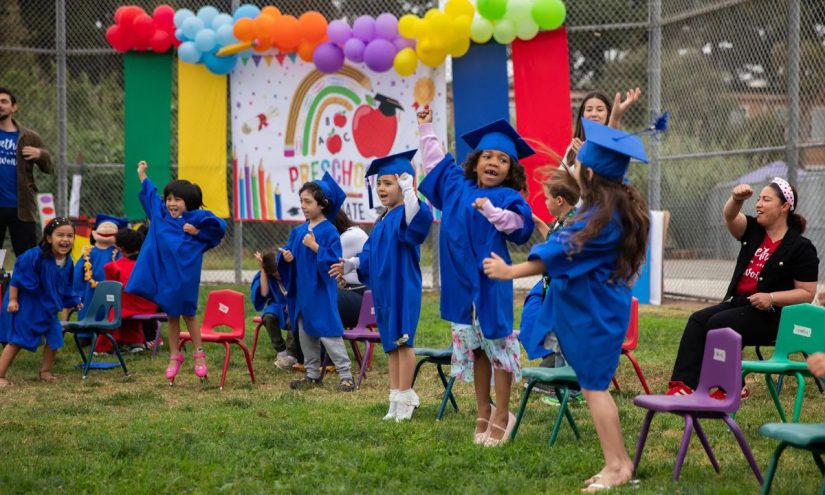
    Break out the crayons and finger paint: Every 4-year-old in California is now eligible for transitional kindergarten.

    Fifteen years after a handful of school districts opened the first TK classrooms, California now has the largest — and fastest growing — early education program in the country. At least 200,000 youngsters will attend TK this fall, enjoying low teacher-student ratios, age-appropriate curriculum and plenty of music, art and circle time.

    “This really is something to celebrate,” said Carolyne Crolotte, policy director for Early Edge California, an advocacy group. “Now, there’s no question about who’s eligible and who isn’t. Everyone is eligible.”

    TK is meant to be a bridge between preschool and kindergarten, preparing 4-year-olds for the routine and expectations of elementary school while honing their social skills and self-confidence. In TK, children learn how to make friends, write their names and do basic math. Mostly, they’re supposed to fall in love with learning.

    Source link

  • L.A. County’s Failure to Educate Incarcerated Youth is ‘Systemic – The 74

    L.A. County’s Failure to Educate Incarcerated Youth is ‘Systemic – The 74


    Get stories like this delivered straight to your inbox. Sign up for The 74 Newsletter

    Local government agencies in charge of youth violated the educational and civil rights of students in Los Angeles County’s juvenile justice facilities for decades by punting responsibility and inaction, according to a report released Wednesday.

    Who has the power? Chronicling Los Angeles County’s systemic failures to educate incarcerated youth” blames the disconnected, vast network of local and state agencies — from the board of supervisors to the local probation department to the county office of education and more — that play one role or another in managing the county’s juvenile legal system, for the disruption in the care and education of youth in one of the nation’s largest systems.

    “This broken system perpetuates a harmful cycle of ‘finger-pointing,’ often between Probation and Los Angeles County Office of Education, which hinders the resolution of issues that significantly affect the education of incarcerated youth,” wrote the Education Justice Coalition, authors of the report.

    The coalition includes representatives from Children’s Defense Fund-California, ACLU of Southern California, Arts for Healing and Justice Network, Disability Rights California, Youth Justice Education Clinic at Loyola Law School, and Public Counsel.

    The authors listed three demands for the board of supervisors, including reducing youth incarceration by way of implementing the previously approved Youth Justice Reimagined plan, providing access to high-quality education, and adopting transparency and accountability measures.

    Decades of documented rights violations

    A timeline outlines repeated student rights violations, some of which have resulted in class-action lawsuits and settlements requiring the county to be monitored by the federal and state departments of justice for years at a time.

    Since 2000, the timeline notes that Los Angeles County has faced:

    • A civil grand jury report calling on the board of supervisors to “improve collaboration” between the probation and education departments in order to address unmet educational needs
    • An investigation by the federal Department of Justice — and subsequent settlements — found significant teacher shortages, lack of consistency in daily instruction, and issues with support for students with special needs
    • A class action lawsuit against the county office of education and the probation department
    • An investigation by the state Department of Justice, followed by settlements, found excessive use of force and inadequate services
    • Multiple findings by a state agency of L.A. County juvenile facilities being “unsuitable for the confinement of minors”

    Most recently, the state attorney general has requested receivership, which would mean full state ownership of the county’s juvenile halls.

    The Los Angeles Board of Supervisors, the probation department, and the Office of Education did not immediately respond to a request for comment.

    The lasting impact of academic disruptions

    Dovontray Farmer experienced the mismanaged system when he entered Los Padrinos Juvenile Hall a second time as a 10th grader. Now 24 and serving as a youth mentor with the Youth Justice Coalition, Farmer said that his time in L.A. County facilities “played a major role in not being able to get properly educated — I felt betrayed, honestly.”

    Returning to school after being released was difficult, he said, because he quickly realized he was several grade levels below his classmates at his local high school.

    He’d also been part of his school’s football team before his detention at Los Padrinos when he was 17, and said he tried returning to the team once released but wasn’t allowed back.

    He said the disruption to his education and participation on the football team, which he saw as a positive influence, affected how he viewed his life.

    “There was nothing I really could do, so I was really giving up,” he said. “Like, everything that I really cared for was already gone.”

    The environment at the juvenile facilities didn’t help matters. 

    Los Padrinos recently came under fire after a video published by the Los Angeles Times showed probation officers standing idle as detained youths fought. Thirty officers have been indicted on criminal charges for encouraging or organizing gladiator-style fights among youths.

    Farmer said he was put through those same types of fights when he was at Los Padrinos as a teenager.

    “A lot of the coverage recently has been about the recent gladiator fights in 2023, but clearly this is a very systemic issue that even when a problem is resolved in the short term, we’re uncovering that it’s really indicative of a larger systemic problem,” said Vivian Wong, an education attorney and director of the Youth Justice Education Clinic at Loyola Law School, whose recent clients have included Los Padrinos students.

    Education data across several years backs Farmer’s experiences while detained.

    The most recent state data available when Farmer was detained at Los Padrinos is from 2018, when 39% of students were chronically absent, less than 43% graduated, and 12% were suspended at least once.

    That same year, the state’s average was 9% for chronic absenteeism, 83.5% for graduation, and 3.5% for suspension.

    Ongoing education concerns

    The report’s authors note that students across several facilities have lost thousands of instructional minutes, with a “lack of transparency and concrete planning to ensure that the missed services are adequately made up for, leaving students at risk of falling further behind educationally.”

    While compensatory education has typically been used to resolve instructional minutes owed, “I am not sure that’s the most realistic way to remedy the injustice that young people face, because they have endured so much abuse in these facilities,” said Wong. “It’s much more than just a loss of instruction.”

    A more appropriate response to the loss of instructional time would be a consistent investment in avoiding detention and keeping young people in their communities to maintain school stability, she added.

    Past attempts at reform have often been “done without community input or leadership, both in the design and in the implementation of those reforms,” Wong said.

    The new report, she added, is meant to be a tool toward implementing Youth Justice Reimagined, or YJR, a model against punitive measures that was largely developed with input from community organizations to restructure the local juvenile legal system.

    Three demands

    Youth Justice Reimagined, approved by the Los Angeles County Board of Supervisors in November 2020 to reform the local juvenile legal system, would move the county away from punitive approaches, such as detention, and toward rehabilitative support through counseling, family and vocational programming, small residential home placements, and more.

    Youth detention results in “severe disconnection from and disruption to their education trajectory,” wrote the report’s authors, as they urged the board to address abysmal educational access and achievement by fully funding and implementing YJR.

    The disconnect, they added, is exacerbated by delayed school enrollment when detained and upon release, the constant presence of probation officers, and turnover of educators and classmates.

    These common experiences are particularly difficult for students with learning disabilities or a history of trauma, they wrote.

    “After more than a decade of incremental reform, it is time for the County to truly reimagine youth justice,” wrote Supervisors Sheila Kuehl and Mark Ridley-Thomas in their November 2020 motion to approve YJR. “In the same way that the Board has embraced a care first, jail last approach to the criminal justice system, it is incumbent upon the Board to embrace a care first youth development approach to youth justice.”

    Despite the approval, a report published in August 2024 by the state auditor found that less than half of the YJR recommendations had been implemented by mid-2024.

    To address the high rates of chronic absenteeism, poor testing results and instructional minutes owed, the Education Justice Coalition’s second demand is to adapt educational opportunities “to address the unique and significant needs of the court school population.”

    They listed 18 actions the county probation and education departments should work together on, including:

    • Appropriate education support for students with disabilities 
    • Access to A-G approved courses for every student in a juvenile facility
    • Classrooms led by educators, rather than probation officers
    • Appropriately credentialed and culturally competent educators
    • Education access that is not disrupted due to probation staffing issues

    The coalition’s third demand centered on transparency and accountability measures by providing families with access to education planning for their children and establishing work groups that include community members.

    This story was originally published on EdSource.


    Get stories like these delivered straight to your inbox. Sign up for The 74 Newsletter

    Source link

  • Will Trump Try to Ban Immigrants from Public Schools? – The 74

    Will Trump Try to Ban Immigrants from Public Schools? – The 74


    Get stories like this delivered straight to your inbox. Sign up for The 74 Newsletter

    This story was originally published by CalMatters. Sign up for their newsletters.

    Funding cuts. Raids near campuses. Exclusion from programs like Head Start and career training. For months, the Trump administration has been chipping away at the rights of students without legal status in public schools.

    Could the administration take away those students’ right to free public school entirely? Experts say that may be the next step.

    “People have worried about this for a couple decades, but this is different,” said Patricia Gándara, education professor and co-director of the Civil Rights Project at UCLA. “Right now we have to be extremely vigilant. These people will stop at nothing.”

    A 1982 U.S. Supreme Court ruling, Plyler v. Doe, guarantees all students, regardless of immigration status, the right to a free public education in K-12 schools. But last year the conservative Heritage Foundation called for the Supreme Court to overturn the ruling and for states to charge tuition to immigrant families, even if their children are U.S. citizens. The rationale is that schools spend billions of dollars educating those students — money that instead should be spent on students who, along with their parents, are native-born U.S. citizens.

    Project 2025, also published by the Heritage Foundation, echoes that vision.

    Such a policy would have an outsized impact in California, where nearly half of the state’s children have at least one immigrant parent, according to the Public Policy Institute of California.

    “This would have tremendous negative impacts,” said Megan Hopkins, chair of the education department at UC San Diego. “For starters, we’d have a less educated, less literate populace, which would affect the economy and nearly every other aspect of life in California.”

    Tuition for noncitizens

    Plyler v. Doe stemmed from a case in Texas in the early 1980s. The state had passed a law allowing schools to charge tuition to students who weren’t citizens. The Tyler Independent School District in Tyler, Texas, a small city about 100 miles southeast of Dallas, was among the districts that tried, triggering a lawsuit that eventually brought the case to the Supreme Court.

    The Supreme Court ruled in favor of the plaintiffs, arguing that children who aren’t citizens are entitled to equal protection under the law. Still, the ruling was close — 5 to 4 — even though the court was more liberal than it is today.

    Since then, the ruling has been mostly forgotten. But there have been occasional attempts to restrict immigrants in schools, in California and elsewhere. In 1994 California voters passed Proposition 187, which banned immigrants living illegally in the U.S. from receiving public benefits, including access to public schools. A federal court blocked it before it went into effect.

    In 2011, Alabama passed a law requiring schools to collect students’ immigration status. That law was later blocked by a federal court. In 2022, Texas Gov. Greg Abbott said he’d favor revisiting Plyler v. Doe and that states should not have to pay to educate students without legal status.

    Since the Heritage Foundation published its report, about a half-dozen states have attempted to pass laws that would allow schools to charge tuition to noncitizens. None passed last year, but advocates said they plan to keep trying.

    Route to Supreme Court

    They’re likely to have a sympathetic supporter in President Donald Trump, who’s so far followed many of the policies put forward by Project 2025. In the past few months, his administration has amped up immigration arrests and said it would no longer honor schools as safe havens from enforcement. It also cut (although later reinstated after states sued) funding for migrant students and barred students without legal status from Head Start, adult education and career and technical education.

    The issue could land before the Supreme Court in at least two ways. A state could pass a law allowing public schools to charge tuition, leading to a lawsuit which could end up before the Supreme Court. Or Trump could issue an executive order that could also trigger a lawsuit.

    Erwin Chemerinsky, dean of the UC Berkeley Law School, said some of Trump’s actions, such as barring children without legal status from Head Start, is already a violation of Plyler.

    “There’s no doubt that the Trump administration has increased pressure on Plyler,” Chemerinsky said. “Certainly, what Trump is doing could lead to cases that would get to the Supreme Court. Could this court overturn Plyler? Of course they could. … all it would take is five justices wanting to overrule it.”

    Even if it’s not overturned, the current policy shifts have had a chilling effect on schools and immigrant families, said Hopkins, at UC San Diego. School attendance has dropped in communities experiencing immigration crackdowns, which has caused academic repercussions for some students and widened the achievement gap between Latino students and other groups. A recent report by Policy Analysis for California Education found that Latino students and English learners fared worse in math and English in the wake of immigration arrests in their communities, and reported a significant increase in bullying at school.

    Hopkins also said the policies aren’t especially effective. If the goal is to encourage immigrants to return to their home countries voluntarily, research has shown that doesn’t often happen. After Alabama passed its anti-immigrant law in 2011, many families simply moved to Mississippi.

    ‘Our biggest fear’

    In Monterey County, the new policies have led to widespread fear and confusion among immigrant families, said Monterey County Office of Education Superintendent Deneen Guss. Attendance has dropped not only in schools, but at community events as well.

    To support families, schools have been hosting “Know Your Rights” information nights (in-person and virtually), encouraged parents to submit child care plans to schools in case a parent is arrested, given out booklets in Spanish on how to help children experiencing anxiety, and provided a wide array of legal and other resources.

    But when the Trump administration announced it was barring students without legal status from Head Start, “that gave me pause,” Guss said. “That made me think they really were going after Plyler. That’s our biggest fear.”

    She worries about the impact that would have on families, as well as school staff who would suddenly be responsible for checking students’ citizenship paperwork. Currently, schools don’t ask for students’ immigration status.

    “Educators’ jobs are hard enough,” Guss said. “Our job is to give children the best possible education. Don’t make us become immigration officers. It’s a position we do not want.”

    She’s been urging parents, and the public, to stay informed and speak out. Regardless of whether the Supreme Court overturns Plyler, anti-immigrant policies are almost certain to continue, with devastating consequences for students.

    “You can’t sit back and pretend everything is going to be OK,” Guss said. “People need to ensure their voices are heard. And we have to fight for our kids.”

    This article was originally published on CalMatters and was republished under the Creative Commons Attribution-NonCommercial-NoDerivatives license.


    Get stories like these delivered straight to your inbox. Sign up for The 74 Newsletter

    Source link

  • $584M on the line as University of California agrees to negotiate with Trump administration

    $584M on the line as University of California agrees to negotiate with Trump administration

    This audio is auto-generated. Please let us know if you have feedback.

    Dive Brief: 

    • The University of California system agreed this week to enter negotiations with the Trump administration in an attempt to have $584 million in suspended federal funding restored to the University of California, Los Angeles. 
    • The funding cut came after the U.S. Department of Justice alleged last week that UCLA broke civil rights law by not doing enough to protect Jewish and Israeli students from harassment. The agency also launched a probe into whether the UC system discriminates against employees by allowing an antisemitic, hostile work environment. 
    • In announcing the negotiations Wednesday, UC President James Milliken called the UCLA cuts “a death knell for innovative work” and pushed back on the Trump administration’s justification for the revoked funding. These cuts do nothing to address antisemitism,” he said. “Moreover, the extensive work that UCLA and the entire University of California have taken to combat antisemitism has apparently been ignored.” 

    Dive Insight: 

    Many of the Justice Department’s allegations against UCLA stem from a pro-Palestinian encampment erected on its campus in the spring 2024 term. 

    University leaders allowed the encampment to remain for nearly a week, citing a need to balance safety with free speech protections. They ultimately asked the Los Angeles Police Department to clear the encampment following a violent night in which counterprotesters attempted to tear down the encampment’s barricades, launched fireworks into it and hit pro-Palestinian demonstrators with sticks and other objects. 

    The pro-Palestinian protesters at times fought back, though video footage from the night shows few instances of them initiating confrontations, according to reporting from The New York Times. When police arrived — hours after violence first broke out — they didn’t step in immediately. 

    According to the Justice Department, at least 11 complaints were filed with UCLA alleging that students experienced discrimination based on race, religion or national origin from encampment protesters. 

    The agency also cited a UCLA task force report that found some encampment protesters formed human blockades to stop people — including students wearing the Star of David or those who refused to denounce Zionism — from freely moving throughout Royce Quad. 

    Milliken noted in his statement that UCLA has taken several steps since then to tighten campus protest policies and combat antisemitism. The university instituted a systemwide ban on encampments and launched a campus initiative in March to fight antisemitism, including through training and an improved system for handling complaints. 

    UCLA also agreed last month to pay $6 million to settle a lawsuit brought by three Jewish students and a Jewish professor who alleged the university violated their civil rights by allowing the encampment protesters to impede their access to the campus. Over one-third of the settlement payment will go toward organizations that fight antisemitism, The Associated Press reported. 

    Meanwhile, the university is facing a separate lawsuit brought by about three dozen pro-Palestinian students, faculty and others who allege that UCLA’s leaders didn’t protect them from the counterprotesters and failed to uphold their right to free expression. The lawsuit also names the counterprotesters as defendants. 

    Their lawsuit says UCLA police merely “stood and watched” for hours while counterprotesters “ruthlessly attacked” the encampment demonstrators, alleging the group broke their bones, burned their eyes with chemicals, and hit them with metal rods and other weapons. 

    The next day, the LAPD and the California Highway Patrol cleared the encampment at the request of university leaders. According to the lawsuit, law enforcement hurled flashbangs, shot powerful kinetic impact projectiles at peoples’ heads and faces, and used excessive physical force against and falsely arrested students, faculty, and concerned community members.” 

    Police arrested over 200 people while clearing the encampment. Those detained faced “invasive searches, false arrests, sexual assaults, and prolonged detentions,” and hijab-wearers were forced to remove their head coverings “infringing on their religious practices,” the lawsuit alleged.

    The pro-Palestinian plaintiffs suing UCLA are seeking damages and for the judge to declare the clearing of the encampment illegal, among other measures.

    Source link

  • LA Preschool Teacher Closed Her Doors After Almost 20 Years. What It Says About the State of Childcare – The 74

    LA Preschool Teacher Closed Her Doors After Almost 20 Years. What It Says About the State of Childcare – The 74


    Get stories like this delivered straight to your inbox. Sign up for The 74 Newsletter

    After almost 20 years in business, Milestones Preschool in Inglewood closed its doors this month.

    It was a decision that preschool director Milena Bice had been putting off for years. She’d turned her family home into a small business, transforming the house on a quiet tree-lined street into a playground of childish delights, complete with a sand pit, fruit trees and even a brood of chicks waddling around a small pen.

    Bice loved her preschool. She loved the way it allowed her to care for her own kids when they were little, and how she could continue to apply therapeutic approaches to her work long after they’d outgrown preschool. Over the years, she developed a reputation for her care for children with neurological differences.

    But child care is no easy business. Margins were about as slim as can be. When parents couldn’t afford to pay full tuition, Bice felt it was her duty to keep caring for their kids anyway. The question of closing loomed over her as her business survived the ups and downs of the global economy: first, the 2008 recession, and the COVID-19 pandemic more than a decade later.

    But this month, Bice finally called it quits. She was sick of charging families high fees and still struggling to pay herself at the end of the month. And for the first time this year, she said her preschool didn’t have anyone on her waitlist. One reason is universal transitional kindergarten — or TK — no-cost public kindergarten that becomes an option for all California 4-year-olds this fall.

    “ I can’t compete with free,” she told LAist in a recent interview. “And in this economy, I think a lot of families are hurting.”

    Bice’s predicament mirrors a statewide challenge. As families sign their 4-year-olds up for TK, some childcare and preschool providers say they’re losing enrollment and it’s threatening their businesses. While teachers struggle to adjust, childcare remains an unaffordable and unmet need for many families across California, especially with very young children.

    Child care is still a major need for CA families

    Even as transitional kindergarten expands, there’s no shortage of need for child care. The California Budget & Policy Center estimates that just 19% of infants, toddlers and preschool-aged children who are eligible for state subsidized care are enrolled. The need is especially great for children age 2 or younger — the most expensive age group to care for.

    recent report from the Center for the Study of Child Care Employment found that most early education programs will need to pivot to younger kids to meet the need and stay in business, and that centers and home-based childcares are hurting from declined enrollment since the pandemic.

    Anna Powell, the lead author of that report, said early educators struggling to adapt to the changing landscape of their industry are a byproduct of the state’s massive investment in universal TK, but lack of similar investment in others.

    “ If one area, for example TK, receives a lot of resources to scale up to reach demand, in theory, that is positive,” she said. “What happens when you don’t invest in all the quadrants at the same time is that there can be these unintended consequences.”

    Transitioning to younger kids is a challenge

    Powell said that caring for younger kids requires a number of shifts in how child care programs operate. Teaching expertise is different for younger children, and staffing ratios are smaller. The time a provider might expect to have a child enrolled is also shorter, since kids are heading to the public school system earlier. This means early educators could face more turnover.

    There’s also the matter of teaching preferences. Caring for a 3- or 4-year-old is very different from taking care of a 1-year-old. In a survey of nearly 1,000 early educators, just 20% said they’d be interested in teaching infants and toddlers.

    David Frank, who runs a preschool in Culver City, told LAist in April that he’s also closing his doors this year. He said that 4-year-olds used to make up a third of the school’s students, and his enrollment was down from 34 to 13. His preschool already took 2 -year-olds, but he didn’t want to go any younger. One reason is it would require him to reconfigure the school to create a separate space for the youngest children.

    Frank said he’s not against TK, but he couldn’t keep making it work.

    “ I’m happy that children will have good, free education,” he said. “But as a person trying to run a business … it’s just no longer a viable plan to stay open anymore.”

    Advocates say even more investment is needed

    California’s transitional kindergarten is a plan years in the making, and, despite kinks, it has achieved a big goal: offering a free option for every family with a 4-year-old in the state.

    That program runs through the public school system, but child care and early education offerings for the state’s youngest children continue to be a patchwork of different types of care with no similar central system. The state funds a public preschool program for 2- to 5-year-olds for low-income families, which has received more money in recent years. Many private programs receive state subsidies for serving low-income families, and the state has increased the number of seats it funds in recent years.

    It also bumped up reimbursement rates for 3-year-olds to entice more providers to take younger kids.

    Gov. Gavin Newsom’s office pointed to these changes, telling LAist that it has invested heavily in a universal Pre-K program that extends beyond transitional kindergarten.

    Some advocates and childcare providers say still more game-changing investment is needed. The state has promised the childcare providers that receive its subsidies to overhaul its payment system to reflect the “true cost” of care, but this year deferred offering them pay bumps. The union representing those workers is currently bargaining with the state, saying providers can’t wait for a raise.

    Patricia Lozano, the executive director of advocacy organization Early Edge California, said TK’s ripple effect on early education programs shows that the state needs to do more to provide for its youngest children.

    “ TK was one of the key things we’ve been advocating since it was passed,” she said. “But that’s just one piece. I think the whole system itself is problematic. It’s underfunded.”

    Lozano pointed to New Mexico as a potential model for California. The state has boosted teacher pay and expanded eligibility for free care by directing gas and oil revenue to state childcare programs. She said this type of consistent source of money is especially important amid threats to federal funding and state budget cuts.

    “The  bottom line is we need to have that source of funding protected,” she said.

    In the meantime, Milena Bice’s preschool in Inglewood is closed. She’s not sure exactly what happens next. She can’t go work at a public school. Despite decades in the business, she doesn’t have a bachelor’s degree or teaching credential.

    While she debates the future, Bice is holding onto her childcare license. Who knows? Maybe she’ll want to reopen someday.


    Get stories like these delivered straight to your inbox. Sign up for The 74 Newsletter

    Source link

  • California Increased Paid Family Leave Payments. Now More Parents Are Taking Advantage – The 74

    California Increased Paid Family Leave Payments. Now More Parents Are Taking Advantage – The 74


    Get stories like this delivered straight to your inbox. Sign up for The 74 Newsletter

    More Californians are using paid family leave benefits to care for a child after a new state law that increased payments for parents went into effect in January, according to new state data.

    Claims in the first two quarters this year were up about 16%, compared with the same time period last year, according to data provided to LAist from the California Employment Development Department.

    Anne Chapuis, public information officer for EDD, said several factors contributed to the uptick.

    “The January 2025 benefit rate adjustment has led to higher benefit amounts for eligible customers. Also, we typically see a higher seasonal number of claims submitted near the end of each calendar year,” Chapuis said in an email.

    While claims tend to tick up at the beginning of every calendar year, the uptick in the first quarter of 2025 was nearly 25% higher than the same period last year.

    Before this year’s change, most workers got up to 60% of their income when they took time off to care for a new baby. Now, many workers can get up to 90% of their wages.

    The changes stemmed from legislation in 2022 that aimed to allow more families to be able to take leave, especially low-income workers. Prior analysis showed that higher-income workers were using paid family leave benefits at much higher rates than workers making less than $20,000 a year.

    For those making under $20,000, claims were up about 2%, while claims for those making under $60,000 were up 17%.

    How paid family leave works

    Currently, moms and dads can get up to eight weeks of paid family leave to bond with a new child. That’s in addition to the paid time off pregnant people get before and after giving birth to a child.

    The paid family leave program in California is funded through the State Disability Insurance program, which covers about 18 million employees in the state. Workers pay into this fund with 1.2% taken out of their paychecks (it usually shows up on paystubs as “CASDI”).

    Workers who make less than $63,000 a year can get up to 90% pay — workers who make above that get 70%.


    Get stories like these delivered straight to your inbox. Sign up for The 74 Newsletter

    Source link

  • PBLWorks Announces its 2025 Award Winners

    PBLWorks Announces its 2025 Award Winners

    Novato, CA – The Buck Institute for Education (dba PBLWorks), a national provider of professional development and curriculum for high-quality Project Based Learning (PBL), has announced the recipients of its 2025 PBL Champions and John Larmer “JL” Lifelong Learning Awards.

    The recipients were honored during the organization’s 2025 PBL World conference in Napa Valley, California.

    The 2025 PBL Champions

    The PBL Champions program recognizes an individual, a school, and a school district that have demonstrated a commitment to PBL; have done quality, lasting work; and have shown evidence of impact on students. The 2025 recipients are:

    • District PBL Champion: Lynn Public Schools in Lynn, Massachusetts

    This 16,000-student district is transforming teaching and learning through its implementation of PBL. In a little over a year, the team at Lynn established high-functioning district and school leadership teams and trained a cadre of educators who have designed more than 70 projects for students. The district has implemented PBL at all seven of its secondary schools with a goal of having all students participate in two or more high-quality PBL experiences per year by the end of the 2029-30 school year.

    • School PBL Champion: University Prep Academy (UPA) High School in Detroit, Michigan

    University Prep Schools (UPrep) stands among Detroit’s earliest and longest-running charter school networks. Known for its unwavering commitment to student success, UPrep (UPA) has proudly upheld its signature “90/90 promise”—ensuring that at least 90% of students graduate from high school and 90% of those graduates go on to enroll in college. UPA teachers and leaders have leveraged PBL as a way that empowers students to be a part of the future of their city – from working on keeping their unhoused population warm in the winter through a physics project on heat transfer, to urban gardens that allowed students to provide farm-to-table food to local food pantries and shelters. PBL has opened their eyes to the challenges students face, encouraged them to see and explore those challenges through the lens of solutionists, and has brought UPA closer to the community it serves.

    • Individual PBL Champion: Kim Mishkin, Head of School at the Hudson Lab School (HLS) in Hastings, New York

    Kim Mishkin has been instrumental in embedding Project Based Learning as the foundation of the school’s curriculum. As both an educator and school leader, she has built structures, cultivated partnerships, and championed interdisciplinary, real-world learning experiences that empower students and educators alike. Through her leadership, HLS has become a model for how schools can integrate PBL at every level, ensuring that learning is not just about content, it is about empowering students to be problem-solvers, leaders, and changemakers.

    The John Larmer “JL” Lifelong Learning Award

    The John Larmer “JL” Lifelong Learning Award, named after PBLWorks’ Senior Fellow John “JL” Larmer, recognizes educators who are impacting and expanding the work of Project Based Learning. A significant advocate and thought leader in the field, JL has dedicated decades to advancing high-quality PBL and is the author of several foundational books that have shaped how educators design and facilitate high-quality PBL. This award celebrates those who carry forward that legacy with passion, purpose, and an unwavering commitment to deeper learning. The 2025 recipients are:

    • Rue Graham, Project Based Learning lead advisor and coach at the Pagosa Peak Open School, Archuleta County School District in Pagosa Springs, Colorado
    • Stephanie Tuttle, fourth grade teacher at Fairfield Elementary School, Rockbridge County Public Schools in Rockbridge, Virginia

    “Project Based Learning is an incredibly powerful way to engage students and ignite their passion for learning – and it all starts with having administrators and teachers who are committed to its success,” said PBLWorks CEO Bob Lenz. “Our awards programs recognize the incredible passion and hard work demonstrated by schools, districts, and individuals in implementing PBL. Congratulations to our 2025 award recipients!”

    About PBLWorks

    The Buck Institute for Education/ PBLWorks believes that all students, especially Black and Brown students, should have access to high-quality Project Based Learning to deepen their learning and achieve success in college, career, and life. Its focus is on building the capacity of teachers to design and facilitate high-quality Project Based Learning, and on supporting school and system leaders in creating the conditions for these teachers to succeed with all students.

    eSchool News Staff
    Latest posts by eSchool News Staff (see all)

    Source link

  • Homeless Student Counts in California Are Up. Some Say That’s a Good Thing – The 74

    Homeless Student Counts in California Are Up. Some Say That’s a Good Thing – The 74


    Get stories like this delivered straight to your inbox. Sign up for The 74 Newsletter

    In Kern County, the first rule in counting homeless students is not saying “homeless.”

    Instead, school staff use phrases like “struggling with stable housing” or “families in transition.” The approach seems to have worked: More families are sharing their housing status with their children’s schools, which means more students are getting services.

    “There’s a lot of stigma attached to the word ‘homeless,’” said Curt Williams, director of homeless and foster youth services for the Kern County Office of Education. “When you remove that word, it all changes.”

    Largely as a result of better identification methods, Kern County saw its homeless student population jump 10% last year, to 7,200. Those students received transportation to and from school, free school supplies, tutoring and other services intended to help them stay in school. For the purposes of this data, the definition of homelessness is broader than the state’s point in time count.

    The trend is reflected statewide. In the latest state enrollment data released last month, California had 230,443 homeless students — a 9.3% increase from the previous year. Some of the increase is due to the state’s ongoing housing shortage, but most of the increase is because of better identification, advocates and school officials said.

    Homeless students face numerous obstacles in school. They have higher rates of discipline and absenteeism, and fare worse academically. Last year, only 16% of homeless students met the state’s math standard, some of the lowest scores of any student group.

    “Schools can’t solve homelessness, but they can ensure the students are safe in the classroom and getting the education they need to get out of homelessness,” said Barbara Duffield, executive director of Schoolhouse Connection, a national homeless youth advocacy group. “That starts with identifying the child who’s homeless.”

    Challenges of counting homeless students

    Under the federal McKinney-Vento Act, schools are required to count their homeless students throughout the school year and ensure they receive services. Homeless students also have the right to stay enrolled in their original school even if they move.

    For many years, schools struggled to identify homeless students. Under state law, schools must distribute forms at the beginning of the school year asking families where they live — in their own homes, in motels, doubled-up with other families, in shelters, cars or outdoors.

    Some schools were less-than-diligent about collecting the form, or reassuring families understood the importance. Often, homeless families were reluctant to submit the form because they were afraid the school might contact a child welfare agency. Immigrant families sometimes feared the school might notify immigration authorities. And some families didn’t realize that sharing quarters with another family — by far the most common living situation among homeless families – is technically defined as homeless, at least under McKinney-Vento.

    A 2021 bill by former Assemblymember Luz Rivas, a Democrat from Arleta in the San Fernando Valley, sought to fix that problem. The bill requires schools to train everyone who works with students — from bus drivers to cafeteria workers to teachers — on how to recognize potential signs of homelessness. That could include families who move frequently or don’t reply to school correspondence.

    The bill seems to have helped. Last year, the state identified 21,000 more homeless students than it had the previous year, even as overall enrollment dropped.

    Still, that’s probably an undercount, researchers said. The actual homeless student population is probably between 5% and10% of those students who qualify for free or reduced-price lunch, according to the National Center for Homeless Education. In California, that would be a shortfall of up to 138,713 students.

    Influx of funding

    Another boost for identifying homeless students came from the American Rescue Plan, the federal COVID-19 relief package. The plan included $800 million for schools to hire counselors or train existing staff to help homeless students. Nearly all schools in California received some money.

    About 120 districts in California won grant money through the McKinney-Vento Act, which last year dispersed about $15.9 million in California to pay for things like rides to school, backpacks, staff and other services. Districts are chosen on a competitive basis; not all districts that apply receive funds.

    But those funding sources are drying up. Most of the pandemic relief money has already been spent, and President Donald Trump’s recently approved budget does not include McKinney-Vento funding for 2026-27.

    The cuts come at a time when advocates expect steep increases in the number of homeless families over the next few years, due in part to national policy changes. Republican budget proposals include cuts to Medicaid, food assistance and other programs aimed at helping low-income families, while the immigration crackdown has left thousands of families afraid to seek assistance. For families living on tight budgets, those cuts could lead to a loss of housing.

    And in California, the shortage of affordable housing continues to be a hurdle for low-income families. Even Kern County, which has traditionally been a less pricey option for families, has seen a spike in housing costs as more residents move there from Los Angeles.

    Joseph Bishop, an education professor at UCLA and co-author of a recent report on homeless students nationwide, said the loss of government funding will be devastating for homeless students.

    “California is the epicenter of the homeless student crisis, and we need targeted, dedicated support,” Bishop said. “Folks should be extremely alarmed right now. Will these kids be getting the education they need and deserve?”

    Better food, cleaner bathrooms

    In Kern County, identification has only been one part of the effort to help homeless students thrive in school. Schools also try to pair them with tutors and mentors, give them school supplies and laundry tokens, and invite them to join a program called Student Voice Ambassadors. There, students can tour local colleges, learn leadership skills and explore career options.

    As part of the program, staff ask students what would make school more enticing — and then make sure the suggestions happen. At one school, students said they’d go to class if the bathrooms were cleaner. So staff improved the bathrooms. At another school, students wanted better food. They got it.

    Williams credits the program with reducing absenteeism among homeless students. Two years ago, 45% of Kern County’s homeless students were chronically absent. Last year, the number dropped to 39% – still too high, he said, but a significant improvement.

    “Without McKinney-Vento funds, the Student Voice Ambassador program would go away,” Williams said. “How will we keep it going? I don’t know.”

    This article was originally published on CalMatters and was republished under the Creative Commons Attribution-NonCommercial-NoDerivatives license.


    Get stories like these delivered straight to your inbox. Sign up for The 74 Newsletter

    Source link

  • University of Southern California signals layoffs amid $200M budget gap

    University of Southern California signals layoffs amid $200M budget gap

    This audio is auto-generated. Please let us know if you have feedback.

    Dive Brief: 

    • The University of Southern California plans to use layoffs and other budget austerity measures to tackle a $200 million operating deficit and gird against a massive blow to federal funding, Interim President Beong-Soo Kim said in a community message on Monday
    • On top of USC’s growing budget shortfall, which ballooned from $158 million in fiscal year 2024, officials are now grappling with federal headwinds affecting the outlook for research support, student financial aid and international enrollment, Kim said.
    • Lower federal research funding could cost the highly selective private university $300 million — or more — each year, Kim said. “To deal decisively with our financial challenges, we need to transform our operating model, and that will require layoffs,” he said. 

    Dive Insight: 

    Kim pointed out that USC isn’t alone in making painful budget decisions — but said that didn’t make the news any easier to hear. Indeed, many other well-known research universities have also been tightening their budgets and signaling layoffs amid the Trump administration’s widespread federal grant terminations. 

    That includes Stanford University, a fellow California college, and Brown University, in Rhode Island, which have both signaled potential staff reductions as they contend with federal funding shifts. Boston University, another private nonprofit, recently cut 120 employees and eliminated an equal number of vacant positions to deal with those challenges. 

    Kim did not disclose how many employees the university plans to lay off, and a USC spokesperson did not provide more details in response to questions Tuesday. But Kim said in his message to faculty and staff that USC has also taken other measures to shore up its budget. 

    The university will forego merit raises for the 2026 fiscal year, has ended certain services from third parties, and tightened discretionary and travel spending. It’s also planning to sell unused properties, streamline operations and adjust pay for the most highly compensated employees. 

    Kim, however, said it wasn’t feasible to bank on increased tuition revenue, drawing down more on the university’s endowment or taking out additional debt. 

    “Each of these ‘solutions’ would simply shift our problem onto the backs of future generations of Trojans,” Kim said, referring to the university’s mascot and student body nickname. 

    He also noted that the university could not likely count on federal funding returning to prior norms. “While we will continue to advocate for the vital importance of research and our academic mission, we cannot rely on the hope that federal support will revert to historical levels,” he said. 

    Kim’s message comes just two weeks into his tenure as the college’s interim leader, making it one of his first acts. 

    USC depends heavily on federal research funding. In fiscal 2024, the university received $569 million for federally funded research, according to a recent FAQ posted to its website. Overall, the university brought in nearly $7.5 billion in operating revenue that year and had $7.6 billion in operating expenses.

    Source link