Tag: California

  • Designed in California but made … all over the world

    Designed in California but made … all over the world

    Most of us spend a good part of our lives glued to our iPhone or other similar devices. It seems as if we cannot survive without being connected to cyberspace.

    It turns out that Apple, a U.S.-based company which makes the iPhone and depends on its sale, cannot survive without being connected to China, which is a key partner in the production of most every iPhone that people use. And that puts the iPhone at the center of the great power struggle underway between the United States and China.

    One of the earliest insights into iPhone production came along in 2010 thanks to research by economists Yuqing Xing and Neal Detert. They lifted the veil off the mystery behind the iPhone label “Designed by Apple in California, Assembled in China”.

    The iPhone model 3G was indeed designed in Cupertino, California, by Apple. But the vast majority of components were sourced from Japan, South Korea, Germany and elsewhere in the United States.  All iPhone components were then shipped for assembly to Foxconn, a Taiwanese contract manufacturer based in Shenzhen, China.

    Less than 4% of the iPhone manufacturing value came from the assembly in China.

    Manufacturing capability

    The iPhone was only first launched in 2007, and iPhones were not sold in China until late 2009. At the time, there was no production of Chinese smartphones. Since those days, the iPhone and other smartphones have become ubiquitous in modern life. Apple now sells 230 million iPhones annually, each one of which has one thousand components and about 90% of them are produced in China.

    Financial Times journalist Patrick McGee, in his recent book “Apple in China“, explained how Apple began assembling iPhones in China for its cheap labour costs but that came with a different cost: China’s labour was not of high quality.

    In contrast to the general impression, China does not have great vocational training systems. So Apple became China’s vocational school.

    Although Apple did not own any factories, it assumed close control over the factories of Foxconn and other companies to ensure its traditional perfectionist quality control. This included sending over planeloads of high-level engineers from the United States to train Chinese workers and investing in machinery for production lines.

    Further, while components from foreign companies are still used in Apple products, these companies are now increasingly based in China. Over time Chinese companies have played a growing role in the production of the iPhone and other devices. Workers from all these companies have also been trained by Apple engineers.

    Over the past decade, Apple invested some $55 billion a year for staff training and machinery. Since 2008, 28 million Chinese have received training from Apple — a figure larger than the workforce of California.

    Human capital

    But there is more to China’s human capital than training offered by Apple. A key element has been China’s investment in human capital more generally, notably education and health.

    Chinese students participating in the OECD’s Programme for International Student Assessment — from Beijing, Shanghai, Jiangsu and Zhejiang, collectively home to nearly 200 million people — have outperformed the majority of students from other education systems, including the United States.

    China has also made extraordinary progress in lifting its life expectancy, which is now the same as that of the United States at 78 years, even though the gross domestic product per capita in the United States  — a key measure of the economic health of a country — at $83,000, is more than six times that of China. For the first time, China has overtaken the United States in healthy life expectancy at birth,  according to World Health Organization data.

    Apple CEO Tim Cook has said that there is a popular conception that companies come to China because of low labour cost. Cook argues that the truth is China stopped being a low labor cost country many years ago.

    He insists that Apple is motivated by the quantity and type of skill that China offers. For example, while it requires really advanced tooling engineers, Cook is not sure the United States could fill a room with such engineers, while in China you could fill multiple football fields. Such vocational expertise is now very, very deep in China.

    India and the United States

    U.S. President Donald Trump insists that Apple must “reshore” its production to the United States. This is not realistic. The United States does not have the capacity to produce Apple’s products at scale and at competitive cost. It most certainly does not have the same competitive cost, well-trained engineering workforce as China, which has some three million people working in Apple’s supply chain.

    Under Trump 1.0, Apple made a commitment to build “three big, beautiful factories” (in Trump’s words) in the United States. But that was just hot air, as none were built. Now, Trump has threatened to impose a 25% tariff on iPhones if they are not made in the United States.

    In response, Apple said that phones sold there would be labelled “Made in India” (although this is unacceptable for Trump), and has pledged to invest $500 billion in the United States. What this pledge means in reality is still unclear. Apple may ultimately need to build a token factory or two, with limited production functions, to pander to Trump.

    Many commentators are suggesting India as an alternative production base for Apple. And some assembly functions are indeed being shifted to India. But these are just the very final assembly phase of production, which are sufficient to justify attaching an “Assembled in India” label.

    All the pre-assembly activities remain in China. At this stage, India is not a viable option for replacing China because of deficiencies in human capital, infrastructure and logistics systems.

    A close partnership

    In many ways, modern China and Apple have made each other.

    Technology and knowledge transfer have underpinned China’s growing contribution to the iPhone and other Apple products — as well as the Chinese smartphone brands like Huawei, Xiaomi and Oppo, which now dominate world markets. Moreover, Chinese engineers are capable of building all sorts of electronic products, some of which could be used in military conflicts.

    In sum, Apple has made a major contribution to the rise of China as a technological powerhouse. China has been a key factor in the rise of Apple as one of the world’s most successful companies. Apple has a Chinese system for producing the iPhone and other products that works like a song.

    No other country has the human capital, and production and logistics systems for producing Apple products at scale and at a competitive cost. Thus, Apple is in a way now trapped in China, which makes it vulnerable to coercion from China’s authoritarian government.

    It should try to make greater efforts to de-risk itself from China, although that is not easy and might provoke the ire of the Chinese authorities.

    Apple now finds itself caught between a rock and a hard place — meaning President Xi and President Trump.


    Questions to consider:

    1. Where is the iPhone made?

    2. What would make a device that is made outside the United States more expensive to buy in the United States?

    3. Should people be able to buy anything from anywhere without any extra costs from governments? Why?


    Source link

  • Trump Wants to Cut Funding for California Schools Over One Trans Athlete. It’s Not So Easy – The 74

    Trump Wants to Cut Funding for California Schools Over One Trans Athlete. It’s Not So Easy – The 74


    Get stories like this delivered straight to your inbox. Sign up for The 74 Newsletter

    This story was originally published by CalMatters. Sign up for their newsletters.

    California’s schools and colleges receive billions in federal funding each year — money that President Donald Trump is threatening to terminate over the actions of one student. AB Hernandez, a junior from Jurupa Valley High School, is transgender, and on May 31 she won first- and second-place medals at the state track and field championship.

    “A Biological Male competed in California Girls State Finals, WINNING BIG, despite the fact that they were warned by me not to do so,” Trump said in a social media post last week. “As Governor Gavin Newscum (sic) fully understands, large scale fines will be imposed!!!”

    Despite this post and a similar threat a few days earlier to withhold “large-scale” federal funding from California, Trump lacks the authority to change the state’s policy toward transgender athletes without an act of Congress or a decision by the U.S. Supreme Court. And recent court cases suggest that Trump also may have a hard time withholding money from California.

    California state law explicitly allows transgender students in its K-12 school districts to compete on the team that matches their preferred gender, but the Trump administration has issued multiple directives that restrict access to girls’ sports, including a letter last week from the U.S. Department of Justice telling high schools to change their policies.

    On Monday, California Attorney General Rob Bonta sued the Justice Department over its letter, saying it had “no right to make such a demand.”

    “Let’s be clear: sending a letter does not change the law,” said State Superintendent of Public Instruction Tony Thurmond in a statement to school districts. “The DOJ’s letter to school districts does not announce any new federal law, and state law on this issue has remained unchanged since 2013.” On Monday, Thurmond sent his own letter to the Trump administration, refuting its legal argument.

    California receives over $2 billion each year for its low-income Title I schools, as well as over $1 billion for special education. At the college level, students receive billions in federal financial aid and federal loans. Even if Trump lacks the legal authority to change state law, he could still try to withhold funding from California, just like he tried with Maine. In February, Trump asked Maine Gov. Janet Mills if her state was going to comply with a presidential executive order — which is not a law — that directed schools to bar transgender girls from certain sports. Mills said she’d comply with “state and federal laws,” effectively rebuking the president.

    The Trump administration has since tried to withhold funding from Maine, but legal challenges have prevented it.

    The NCAA vs. California state law

    Trump made banning transgender youth athletes a centerpiece of his 2024 presidential campaign, and it’s remained a focal point for his administration this year. Nationally, Americans increasingly support restrictions on transgender athletes, according to surveys from the Pew Research Center. Gov. Gavin Newsom, who last year signed legislation supporting trans students, spoke out against transgender athletes in a podcast this March, saying it was “deeply unfair” to allow transgender girls to compete in girls’ sports.

    Female athletes with higher levels of testosterone or with masculine characteristics have long faced scrutiny, biological testing and disqualification. Debates about who gets to participate in girls’ or women’s sports predate the Trump administration — and Newsom — and policies vary depending on the athletic institution.

    In 2004, the International Olympic Committee officially allowed transgender athletes to compete in the sport that aligned with their gender identity, as long as the athlete had sex reassignment surgery, only to change that policy in 2015 and require hormone testing. In 2021, the committee changed the policy again, creating more inclusive guidelines but giving local athletic federations the power to create their own eligibility criteria.

    Across California, youth leagues, private sports leagues and other independent athletic associations all have their own policies. Some allow transgender women and men to participate; some restrict who can compete. Some require “confirmation” of a participant’s gender, such as a government ID or statements from health care professionals, while other associations take the athletes at their word.

    California’s colleges and universities are not allowed to discriminate against transgender students but state law doesn’t provide any guidance beyond that. After the presidential executive order in February, the National Collegiate Athletic Association (NCAA), which independently regulates college sports, changed its rules, prohibiting transgender women from competing and putting colleges in a bind. Roughly 60 California universities are part of the NCAA, including almost all of the UC and many Cal State campuses. Community colleges, which represent the bulk of the state’s undergraduates, are not part of the NCAA.

    “There’s a strong argument (the NCAA rules) could violate state law and federal equal protection,” said Elana Redfield, the federal policy director at UCLA’s Williams Institute, which studies LGBTQ+ issues.

    Amy Bentley-Smith, a spokesperson for the California State University system, declined to comment about how the NCAA policy conflicts with state and federal regulations. She said the Cal State campuses abide by the NCAA rules — preventing transgender athletes from competing — while still following state and federal non-discrimination laws regarding trans students.

    Stett Holbrook, a spokesperson for the University of California system, said the UC does not have a system-wide policy for transgender athletes. He did not respond to questions about whether the campuses abide by NCAA rules.

    Unlike the NCAA, the California Community College Athletic Association allows transgender athletes to compete. A spokesperson for the association, Mike Robles, said he’s aware of the NCAA rules and the Trump administration’s priorities but he did not say whether the association will modify its own policy.

    The U.S. Constitution is silent on trans students

    In February, just days after the president’s inauguration and the executive order regarding transgender athletes, the U.S. Department of Education launched an investigation into San Jose State after a women’s volleyball player outed her teammate as transgender. The education department has yet to provide an update on that investigation.

    With the Trump administration’s focus now on CA K-12 school districts, the legal debate has intensified. In its letter to the state’s public schools last week, Assistant U.S. Attorney General Harmeet Dhillon said allowing transgender girls to compete in girls’ sports is “in violation” of the Equal Protection Clause of the U.S. Constitution and asked schools to change their policies.

    But the U.S. Constitution doesn’t say anything about transgender athletes, at least not explicitly.

    Instead, Dhillon is offering an interpretation of the Constitution, “which doesn’t carry the full force of law,” Redfield said. The laws that do govern transgender athletes, such Title IX, aren’t clear about what schools should do, and the U.S. Supreme Court — the entity with the power to interpret federal law and the Constitution — has yet to decide on the matter.

    That said, many lower level judges have already weighed in on whether the Constitution or Title IX law protects transgender students or athletes.“The preponderance of cases are in favor of trans plaintiffs,” Redfield said. “The federal government is contradicting some pretty strong important precedent when they’re making these statements.”

    After Trump’s comments about AB Hernandez, the nonprofit entity that regulates high school sports, the California Interscholastic Federation, changed its policy, slightly. For the state’s track and field championship, the federation said it would implement a new process, whereby AB Hernandez would share her award with any “biological female” that she beat. All “biological female”  athletes below Hernandez would also move up in ranking.

    On May 31, Hernandez shared the first-place podium twice and the second-place podium once, each time with her competitors smiling supportively, the San Francisco Chronicle reported.

    A spokesperson for the governor, Izzy Gardon, said that approach is a “reasonable, respectful way to navigate a complex issue without compromising competitive fairness.”

    This article was originally published on CalMatters and was republished under the Creative Commons Attribution-NonCommercial-NoDerivatives license.


    Get stories like these delivered straight to your inbox. Sign up for The 74 Newsletter
    Source link

  • 700 US Marines in California ordered to assist in Los Angeles during protests (ABC News)

    700 US Marines in California ordered to assist in Los Angeles during protests (ABC News)


    Seven-hundred Marines in California have been ordered to assist in Los Angeles and they’re expected to arrive over the next 24 hours, a U.S. official confirmed. The Marines are from the 2nd Battalion, 7th Marines at Twentynine Palms, California, whom U.S. Northern Command had said Sunday were on a “prepared to deploy status” if the Defense Department needed them.

    Source link

  • It’s Expensive to Become a Teacher in California. This Bill Would Pay Those Who Try – The 74

    It’s Expensive to Become a Teacher in California. This Bill Would Pay Those Who Try – The 74


    Get stories like this delivered straight to your inbox. Sign up for The 74 Newsletter
    This story was originally published by CalMatters. Sign up for their newsletters.

    When Brigitta Hunter started her teaching career, she had $20,000 in student loans and zero income – even though she was working nearly full time in the classroom.

    “We lived on my husband’s pathetic little paycheck. I don’t know how we did it,” Hunter said. “And we were lucky – he had a job and my loans weren’t that bad. It can be almost impossible for some people.”

    Each year, about 28,000 people in California work for free for about a year as teachers or classroom aides while they complete the requirements for their teaching credentials. That year without pay can be a dire hardship for many aspiring teachers, even deterring them from pursuing the profession.

    A new bill by Assemblymember Al Muratsuchi, a Democrat from Torrance, would set aside money for school districts to pay would-be teachers while they do their student teaching service. The goal is to help alleviate the teacher shortage and attract lower-income candidates to the profession.

    “Nothing makes a bigger difference in improving the quality of public education than getting highly qualified teachers in the classroom,” Muratsuchi said. “This bill helps remove some of the obstacles to that.”

    Big loans, low pay

    To be a K-12 public school teacher in California, candidates need a bachelor’s degree and a teaching credential, typically earned after completing a one-year program combining coursework and 600 hours of classroom experience. During that time, candidates work with veteran teachers or lead their own classes.

    Teacher credential programs cost between $20,000 and $40,000, depending on where a student enrolls and where they live. In 2020, about 60% of teachers borrowed money to finish their degrees, according to a recent study by the Learning Policy Institute, with loans averaging about $30,000 for a four-year bachelor’s degree and a credential program.

    Entering the profession with hefty student loans can be demoralizing and stressful, the report said, adding to the challenges new teachers face. The average starting teacher salary in California is $58,000, according to the National Education Association, among the highest in the country but still hard to live on in many parts of the state. It could take a decade or more for teachers to pay off their loans.

    Muratsuchi’s bill, AB 1128, passed the Assembly on Monday and now awaits a vote in the Senate. It would create a grant program for districts to pay student teachers the same amount they pay substitute teachers, which is roughly $140 a day. The overall cost would be up to $300 million a year, according to Assembly analysts, but Gov. Gavin Newsom has set aside $100 million for the program in his revised budget.

    Muratsuchi has another bill related to teacher pay, also working its way through the Legislature. Assembly bill 477, which passed the Assembly this week, would raise teacher salaries across the board.

    Paying teachers, saving money

    Christopher Carr, executive director of Aspire Public Schools in Los Angeles, a network of 11 charter schools, called the bill a potential “game changer.”

    Teacher candidates often have to work second jobs to make ends meet, and sometimes finish with debt of $70,000 or more, he said. That can be an insurmountable barrier for people with limited resources. Paying would-be teachers would attract more people to the teaching profession, especially Black and Latino candidates, he said.

    School districts around the state have been trying to diversify their teacher workforces, based on research showing that Black and Latino students tend to do better academically when they have at least one teacher of the same race.

    Carr’s schools pay their teachers-in-training through grants and a partnership with a local college, which has led to more of them staying on to teach full time after they receive their credentials, he said. That has saved the schools money by reducing turnover.

    “This could open doors and be a step toward racial justice,” Carr said. “California has a million spending priorities, but this will lead to better outcomes for students and ultimately save the state money.”

    Tyanthony Davis, chief executive director of Inner City Education Foundation, a charter school network in Los Angeles, put it this way: “If we have well paid, qualified, happy teachers, we’ll have happier classrooms.”

    No opposition, yet

    Muratusuchi’s bill has no formal opposition. The California Taxpayers Association has not taken a position. The California Teachers Association, the state’s largest teachers union, is a supporter.

    “This legislation comes at a critical time as we continue to face an educator recruitment and retention crisis,” said David Goldberg, the union president. “Providing new grants to compensate student teachers for important on-the-job training is a strong step forward in the right direction to strengthening public education.”

    Hunter survived her student-teaching experience and went on to teach fourth grade for 34 years, retiring last year from the Mark West Union School District in Santa Rosa. The last 15 years of her career she served as a mentor to aspiring teachers. She saw first-hand the stress that would-be teachers endure as they juggle coursework, long days in the classroom and often second jobs on nights and weekends.

    But paying student-teachers, she said, should only be the beginning. Novice teachers also need  smaller class sizes, more support from administrators and more help with enrichment activities, such as extra staff to lead lessons in art and physical education.

    “We definitely need more teachers, and paying student teachers is a good start,” Hunter said. “But there’s a lot more we can do to help them.”

    This article was originally published on CalMatters and was republished under the Creative Commons Attribution-NonCommercial-NoDerivatives license.


    Get stories like these delivered straight to your inbox. Sign up for The 74 Newsletter

    Source link

  • Another Casualty of Trump Research Cuts? California Students Who Want To Be Scientists – The 74

    Another Casualty of Trump Research Cuts? California Students Who Want To Be Scientists – The 74


    Get stories like this delivered straight to your inbox. Sign up for The 74 Newsletter
    This spring, the National Institutes of Health quietly began terminating programs at scores of colleges that prepared promising undergraduate and graduate students for doctoral degrees in the sciences.

    At least 24 University of California and California State University campuses lost training grants that provided their students with annual stipends of approximately $12,000 or more, as well as partial tuition waivers and travel funds to present research at science conferences. The number of affected programs is likely higher, as the NIH would not provide CalMatters a list of all the cancelled grants.

    Cal State San Marcos, a campus in north San Diego County with a high number of low-income learners, is losing four training grants worth about $1.8 million per year. One of the grants, now called U-RISE, had been awarded to San Marcos annually since 2001. San Marcos students with U-RISE stipends were often able to forgo part-time jobs, which allowed them to concentrate on research and building the skills needed for a doctoral degree.

    The cuts add to the hundreds of millions of dollars of grants the agency has cancelled since President Donald Trump took office for a second term.

    To find California campuses that lost training grants, CalMatters looked up known training grants in the NIH search tool to see if those grants were still active. If the grant’s award number leads to a broken link, that grant is dead, a notice on another NIH webpage says.

    The NIH web pages for the grants CalMatters looked up, including U-RISE, are no longer accessible. Some campuses, including San Marcos, Cal State Long Beach, Cal State Los Angeles and UC Davis, have updated their own websites to state that the NIH has ended doctoral pathway grants.

    “We’re losing an entire generation of scholars who wouldn’t have otherwise gone down these pathways without these types of programs,” said Richard Armenta, a professor of kinesiology at San Marcos and the associate director of the campus’s Center for Training, Research, and Educational Excellence that operates the training grants.

    At San Marcos, 60 students who were admitted into the center lost grants with stipends, partial tuition waivers and money to travel to scientific conferences to present their findings.

    From loving biology to wanting a doctoral degree

    Before the NIH terminations, Marisa Mendoza, a San Marcos undergraduate, received two training grants. As far back as middle school, Mendoza’s favorite subjects were biology and chemistry.

    To save money, she attended Palomar College, a nearby community college where she began to train as a nurse. She chose that major because it would allow her to focus on the science subjects she loved. But soon Mendoza realized she wanted to do research rather than treat patients.

    At Palomar, an anatomy professor introduced her to the NIH-funded Bridges to the Baccalaureate, a training grant for community college students to earn a bachelor’s and pursue advanced degrees in science and medicine.

    “I didn’t even know what grad school was at the time,” she said. Neither of her parents finished college.

    The Bridges program connected her to Cal State San Marcos, where she toured different labs to find the right fit. At the time she was in a microbiology course and found a lab focused on bacteria populations in the nearby coastal enclaves. The lab was putting into practice what she was learning in the abstract. She was hooked.

    “It just clicked, like me being able to do this, it came very easily to me, and it was just something that I came to be very passionate about as I was getting more responsibility in the lab,” Mendoza said.

    Marisa Mendoza, right, and Camila Valderrama-Martínez, left, get ready to demonstrate how they use lab equipment for their research work at Cal State San Marcos on May 6, 2025. Photo by Adriana Heldiz, CalMatters

    From Palomar she was admitted as a transfer student to San Marcos and more selective campuses, including UCLA and UC San Diego. She chose San Marcos, partly to live at home but also because she loved her lab and wanted to continue her research.

    She enrolled at San Marcos last fall and furthered her doctoral journey by receiving the U-RISE grant. It was supposed to fund her for two years. The NIH terminated the grant March 31, stripping funds from 20 students.

    For a school like San Marcos, where more than 40% of students are low-income enough to receive federal financial aid called Pell grants, the loss of the NIH training awards is a particular blow to the aspiring scientists.

    The current climate of doctoral admissions is “definitely at a point where one needs prior research experience to be able to be competitive for Ph.D. programs,” said Elinne Becket, a professor of biological sciences at Cal State San Marcos who runs the microbial ecology lab where Mendoza and other students hone their research for about 15 hours a week.

    San Marcos doesn’t have much money to replace its lost grants, which means current and future San Marcos students will “100%” have a harder time entering a doctoral program, Becket added. “It keeps me up at night.”

    Research is ‘a missing piece’

    In a typical week in Becket’s lab, Mendoza will drive to a nearby wetland or cove to retrieve water samples — part of an ongoing experiment to investigate how microbial changes in the ecosystem are indications of increased pollution in sea life and plants. Sometimes she’ll wear a wetsuit and wade into waters a meter deep.

    The next day she’ll extract the DNA from bacteria in her samples and load those into a sequencing machine. The sequencer, which resembles a small dishwasher, packs millions or billions of pieces of DNA onto a single chip that’s then run through a supercomputer a former graduate student built.

    “Once I found research, it was like a missing piece,” Mendoza, a Pell grant recipient, said through tears during an interview at Cal State Marcos. Research brought her joy and consumed her life “in the best way,” she added. “It’s really unfortunate that people who are so deserving of these opportunities don’t get to have these opportunities.”

    A side-view of a person looking down at a piece of tissue as tears stream down their face.
    Student Marisa Mendoza gets emotional while she speaks about her research at Cal State San Marcos on May 6, 2025. Photo by Adriana Heldiz, CalMatters

    The origins of the San Marcos training center date back to 2002. Through it, more than 160 students have either earned or are currently pursuing doctoral degrees at a U.S. university.

    The grant terminations have been emotionally wrenching. “There had been so many tears in my household that my husband got me a puppy,” said Denise Garcia, the director of the center and a professor of biological sciences.

    Garcia recalls that in March she was checking a digital chat group on Slack with many other directors of U-RISE grants when suddenly the message board lit up with updates that their grants were gone. At least 63 schools across the country lost their grants, NIH data show.

    In the past four years of its U-RISE grant the center has reported to the NIH that 83% of its students entered a doctoral program. That exceeds the campus’s grant goal, which was 65% entering doctoral programs.

    Mendoza is grateful: She was one of two students to win a campus scholarship that’ll defray much, but not all, of the costs of attending school after losing her NIH award. That, plus a job at a pharmacy on weekends, may provide enough money to complete her bachelor’s next year.

    Others are unsure how they’ll afford college while maintaining a focus on research in the next school year.

    Student Camila Valderrama-Martínez in a lab at Cal State San Marcos on May 6, 2025. Photo by Adriana Heldiz, CalMatters

    “You work so hard to put yourself in a position where you don’t have to worry, and then that’s taken away from you,” said Camila Valderrama-Martínez, a first-year graduate student at San Marcos who also earned her bachelor’s there and works in the same lab as Mendoza. She was in her first year of receiving the Bridges to the Doctorate grant meant for students in master’s programs who want to pursue a biomedical-focused doctoral degree. The grant came with a stipend of $26,000 annually for two years plus a tuition waiver of 60% and money to attend conferences.

    She can get a job, but that “takes away time from my research and my time in lab and focusing on my studies and my thesis.” She relies solely on federal financial aid to pay for school and a place to live. Getting loans, often anathema for students, seems like her only recourse. “It’s either that or not finish my degree,” she said.

    Terminated NIH grants in detail

    These grant cancellations are separate from other cuts at the NIH since Trump took office in January, including multi-million-dollar grants for vaccine and disease research. They’re also on top of an NIH plan to dramatically reduce how much universities receive from the agency to pay for maintaining labs, other infrastructure and labor costs that are essential for campus research. California’s attorney general has joined other states led by Democrats in suing the Trump administration to halt and reverse those cuts.

    In San Marcos’ case, the latest U-RISE grant lasted all five years, but it wasn’t renewed for funding, even though the application received a high score from an NIH grant committee.

    Armenta, the associate director at the Cal State San Marcos training center, recalled that his NIH program officer said that though nothing is certain, he and his team should be “cautiously optimistic that you would be funded again given your score.” That was in January. Weeks later, NIH discontinued the program.

    He and Garcia shared the cancellation letters they received from NIH. Most made vague references to changes in NIH’s priorities. However, one letter for a specific grant program cited a common reason why the agency has been cancelling funding: “It is the policy of NIH not to prioritize research programs related to Diversity (sic), equity, and inclusion.”

    That’s a departure from the agency’s emphasis on developing a diverse national cadre of scientists. As recently as February, the application page for that grant said “there are many benefits that flow from a diverse scientific workforce.”

    Future of doctoral programs unclear

    Josue Navarrete graduated this spring from Cal State San Marcos with a degree in computer science. Unlike the other students interviewed for this story, Navarrete, who uses they/them pronouns, was able to complete both years of their NIH training grant and worked in Becket’s lab.

    But because of the uncertain climate as the Trump administration attempts to slash funding, Vanderbilt University, which placed Navarrete on a waitlist for a doctoral program, ultimately denied them admission because the university program had to shrink its incoming class, they said. Later, Navarrete met a professor from Vanderbilt at a conference who agreed to review their application. The professor said in any other year, Navarrete would have been admitted.

    The setback was heartbreaking.

    A person -- with short black hair and wearing a black jacket and green shirt, leans against a light brown concrete column while looking straight into the camera.
    Josue Navarrete at the Cal State San Marcos campus on May 6, 2025. Photo by Adriana Heldiz, CalMatters

    “I’m gripping so hard to stay in research,” Navarrete said. With doctoral plans delayed, they received a job offer from Epic, a large medical software company, but turned it down. “They wanted me to be handling website design and mobile applications, and that’s cool. It’s not for me.”

    Valderrama-Martinez cited Navarrete’s story as she wondered whether doctoral programs at universities will have space for her next year. “I doubt in a year things are going to be better,” she said.

    She still looks forward to submitting her applications.

    So does Mendoza. She wants to study microbiology — the research bug that bit her initially and brought her to San Marcos. Eventually she hopes to land at a private biotech firm and work in drug development.

    “Of course I’m gonna get a Ph.D., because that just means I get to do research,” she said.

    This article was originally published on CalMatters and was republished under the Creative Commons Attribution-NonCommercial-NoDerivatives license.


    Get stories like these delivered straight to your inbox. Sign up for The 74 Newsletter
    Source link

  • San Jose Middle School Offers College Class to 13-Year-Olds – The 74

    San Jose Middle School Offers College Class to 13-Year-Olds – The 74


    Get stories like this delivered straight to your inbox. Sign up for The 74 Newsletter
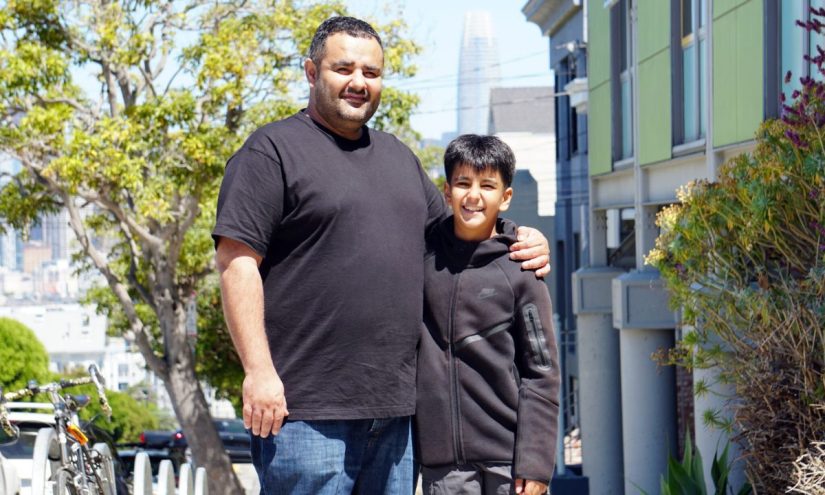
    This story was originally published by CalMatters. Sign up for their newsletters.

    By 2:45 p.m. the regular school day at August Boeger Middle School had already ended, but one class is about to start. More than 20 eighth graders drop their backpacks and settle into desks — not for extra credit but for college credit.

    These 13- and 14-year-old students in East San Jose are taking their first college course, an entry-level class on career planning. This middle school is one of the first in the state to offer a college-level course. In the coming years, the San Jose Evergreen Community College District wants all middle school students in this school district to be able to complete three college courses before they start high school, and soon, the district plans to offer other courses, such as sociology and ethnic studies, said Beatriz Chaidez, the chancellor for the community college district.

    Middle schoolers have long been eligible to enroll in college classes in California, though only a few, high-achieving students actually do it. By offering a college class at a middle school — especially one in a high-poverty area — the community college district is looking to make that enrollment easier. The class is taught by a middle school staff member, and it’s reserved exclusively for middle school students.

    But with so few programs, there is little research about whether students are benefitting, and the local faculty union is worried middle school students might not be ready.

    Chaidez disagrees. “Navigating (college) as early as middle school is unheard of in their community,” she said. “So when they experience success, it really motivates them to continue.”

    California is increasingly pushing high schools to offer community college classes directly to students during the regular school day, a set-up known as “dual enrollment.” Unlike AP classes, which include expensive exams and are limited to certain subjects and high-performing students, these community college classes cover a range of topics and are open to all students. By 2030, California Community Colleges Chancellor Sonya Chiristian wants all high school students to graduate with at least four college courses completed.

    Chaidez wants to go further. She wants every local high school student to be able to complete about 20 college courses by the time they graduate — enough to earn an associate’s degree.

    CalMatters reached out to the college district’s faculty union, which was surprised to learn the district is offering classes at a middle school.

    “This opens up some problems,” said Jessica Breheny, an English professor and the union’s vice president. “I’m sure there are 12-year-olds that are college-ready, but there are just less of them and it’s less likely. Developmentally, they have other things going on.”

    Research shows that high schoolers who take college classes are more likely to attend college and graduate, but there’s little research on how middle school students fare, said John Fink, a senior researcher at Columbia University’s Community College Research Center. “Nationally, and in most states, this is very, very rare, and in many states this is not allowed.” Instead, he said the focus is typically on enrolling more 10th, 11th and 12th graders in college courses.

    A college-level course, with a few middle school games

    About 10% of California’s high school students took a community college class in the 2021-22 school year, according to an analysis by professors at UC Davis using the most recent data. California’s community college system doesn’t track how many middle school students take college courses.

    So far, the Mount Pleasant Elementary School District, which includes August Boeger Middle School, offers only one college course, called “Career Planning,” and it’s almost indistinguishable from any other class on its campus. The college course is taught in a regular middle school classroom, and the professor, Oscar Lamas, already works at the middle school, where he’s a counselor. Perhaps the only noticeable difference is the timing: The middle school day ends at 2:30 p.m. and Lamas’ course starts at 2:45. He’s paid separately by the community college to teach the course.

    Career Planning helps students learn about career paths, practice resume-writing and learn psychological theories related to professional success. A governing board of college district professors, known as the Academic Senate, sets the objectives for each college course, but Lamas has broad discretion in teaching it. The Academic Senate responsible for setting the parameters of Lamas’ course did not respond to multiple requests for comment.

    The dean of the community college’s counseling department, Victor Garza, refused an interview request from CalMatters but issued a written statement. Garza said the middle school class is akin to other dual enrollment courses, which maintain the college’s “academic rigor.”

    “Some adjustments might be needed to cater to the unique needs and experiences” of students, he added.

    On a Thursday before spring break, Lamas tries to make his class more fun by breaking the students into five teams to play a Jeopardy-style quiz game on the topic of the day, Maslow’s Hierarchy of Needs.

    Natalie Mendoza, 14, becomes the default spokesperson of her team, named the “Tacos R Us Club,” but she answers the first question wrong, putting her team back 300 points and prompting her classmates to burst into chatter and analyze their mistakes.

    As part of the class, she has to study a career, write a short essay about it and present it at a career fair. She picked intellectual property law. “A lot of people say I’m assertive,” she said. “I think that’s a really good trait for a lawyer, and I think it’d be fun to fight for people who have created stuff.”

    Natalie said she’d be the first in her family to attend college but she’s already planning to go and has a few schools in mind, including UC Berkeley and San Jose State. If she does attend one of those schools, her grade in this counseling class would be part of her official college transcript.

    Breheny, with the union, said she’s concerned about the quality of the classes, especially once the college district begins teaching other subjects, such as ethnic studies.

    “Faculty designed their courses for adult learners,” Breheny said. An ethnic studies class may cover topics such as sexual violence and genocide, she added — topics that may be difficult to convey to a middle schooler. “Some of the material assumes a certain knowledge about the world, about politics, which you may not have at 11, 12, 13 years old.”

    High schools offer few dual enrollment classes

    August Boeger Middle School sits at the base of the Diablo Range mountains, tucked between the ranch-style homes and strip malls that color East San Jose. Teachers and staff greet each other with mucho gusto instead of hello. All around the open-air campus, murals tell the story of the region’s multi-cultural heritage, especially its Mexican and Chicano roots.

    That celebration of culture is a direct response to a history of adversity, Lamas said. “East San Jose has always been a marginalized, disadvantaged environment.” As a result, schools in the community contend with education disparities, he said, such as a high dropout rate and a high teen pregnancy rate.

    Offering a college class to these middle school students allows them to “see a possibility for their future that doesn’t exist within these walls here” and can inspire them to reach for a higher goal, said Marisa Peña, a school advisor.

    Male students, Black and Latino students and students from rural areas are underrepresented in the community college courses offered at California’s school districts. California lawmakers have signed numerous bills in the hopes of expanding access but certain regions in the state, such as Los Angeles, enroll a higher percentage of students.

    Natalie said she hopes to continue taking college courses when she starts at Mount Pleasant High School this fall, which is just around the corner from her middle school. But her options are limited.

    Mount Pleasant High School offers just three community college courses, which serve about 10% of the school’s roughly 1,000 students, said Kyle Kleckner, the school district’s director of instructional services. All of the classes are in “multimedia” studies, he said, which teaches students how to create their own podcasts or YouTube channels, along with other digital marketing skills. 

    Although Mount Pleasant High School’s dual enrollment is about on par with the state average, it trails other districts in the region. Less than 20 miles away, at high schools in the Milpitas Unified School District, roughly 25% of students enrolled in a community college class in 2021-22, according to the UC Davis analysis.

    Finding professors to teach middle school

    Part of the dual enrollment challenge is finding qualified college professors who are willing and able to work at a high school or middle school. Existing middle and high school teachers are allowed to teach college courses but they have to meet the qualifications, which usually include a master’s degree in the area of instruction. Most of California’s high school and middle school instructors lack a master’s degree, according to a study by the Public Policy Institute of California.

    “We have graduation requirements that students have to accomplish,” Kleckner said. “The trick is finding that community college course that also fulfills those requirements and also finding a teacher who can teach it.” He said Mount Pleasant High School is committed to expanding the number of college courses but noted that it’s smaller and therefore has fewer teachers who meet the requirements to teach a college course.

    In turn, many college professors lack experience teaching children, said Breheny, who teaches at San Jose City College. “We have had some problems already with dual enrollment where faculty have gone to different (high schools) to teach and have dealt with classroom management issues that they wouldn’t have in a college course.” In one case, she said a college faculty member saw bullying in a high school classroom but didn’t feel equipped to respond.

    Lamas has a master’s degree, which is required for most school counselors. He’s gentle with the middle school students in his class, occasionally awarding points in the Jeopardy game even when the answer isn’t perfect. Lamas had two quiz games planned that day, each one covering a different topic, but the first game took up almost all of the class time.

    He ends class by taking questions about the upcoming final project. Although spring break is minutes away, the students sit still through the final minutes, except for the occasional joke and bursts of laughter. Not a single phone was in sight.

    Once class ends, however, chatter ensues, the students pull out their phones, and staff escort them to the parking lot. While they may be taking a college course, they still must wait for their parents to pick them up.

    This article was originally published on CalMatters and was republished under the Creative Commons Attribution-NonCommercial-NoDerivatives license.


    Get stories like these delivered straight to your inbox. Sign up for The 74 Newsletter
    Source link

  • California State Bar Admits to Using AI for Exam Questions

    California State Bar Admits to Using AI for Exam Questions

    The State Bar of California sparked outrage after it admitted to using artificial intelligence to help craft some of its multiple-choice exam questions, the Los Angeles Times reported. The Monday announcement came after test takers complained of glitches and irregularities while taking the California bar exam in February.

    In a news release, the State Bar of California promised to petition the California Supreme Court to adjust test scores for those who took the exam in February. The release detailed that the test’s multiple-choice questions were mostly developed by the test company Kaplan, while some were recycled from the First-Year Law Students’ Exam and others were developed by ACS Ventures, the State Bar’s independent psychometrician, hired to assess questions. ACS Ventures used AI.

    But State Bar officials defended the veracity of the exam’s questions.

    “We have confidence in the validity of the MCQs to accurately and fairly assess the legal competence of test-takers,” State Bar executive director Leah Wilson said in the release. “Lessons learned are being incorporated into the July exam, and all future tests will include additional levels of independent review and validation.” 

    Test takers and law school faculty have reacted with shock.

    Katie Moran, an associate professor at the University of San Francisco School of Law who specializes in bar exam preparation, told the Los Angeles Times that the announcement was a “staggering admission.”

    “The State Bar has admitted they employed a company to have a non-lawyer use AI to draft questions that were given on the actual bar exam,” she said. “They then paid that same company to assess and ultimately approve of the questions on the exam, including the questions the company authored.”

    Source link

  • As More High Schoolers Earn College Credit, Some Miss Out – The 74

    As More High Schoolers Earn College Credit, Some Miss Out – The 74


    Get stories like this delivered straight to your inbox. Sign up for The 74 Newsletter
    This story was originally published by CalMatters. Sign up for their newsletters.

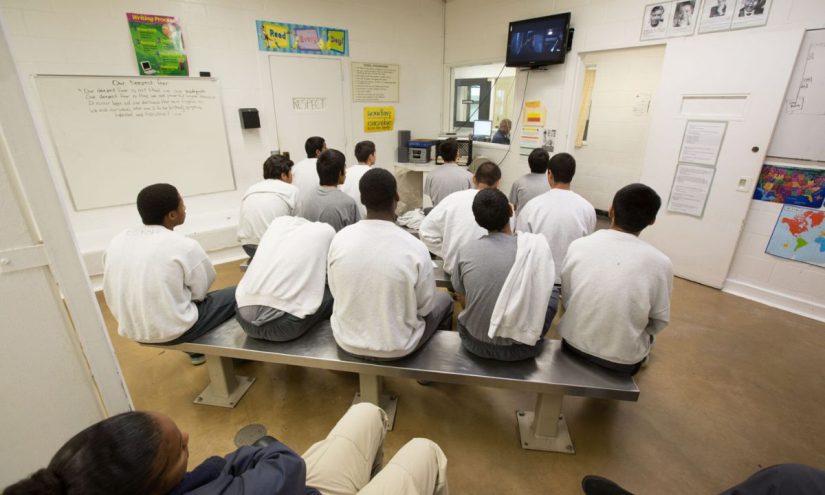
    Students tap on their keyboards as a professor lectures at the front of the room. It looks like any other college course, except that it’s taking place at a high school. This year, more than 150,000 California teens are earning college credit in dual enrollment courses.

    Dual enrollment offers high schoolers the chance to attend community college, typically for free, often without having to leave their campuses. By helping students tackle the college academic experience, the programs increase the likelihood that students attend college after graduating high school.

    About 80% of California’s dual enrolled high school students go on to a community college or university, compared to 66% of California 12th grade students in general, the Public Policy Institute of California found. More than a third of California’s dual enrolled students go on to attend the same community college they attended while in high school after they graduate, according to the Community College Research Center.

    Many college and high school administrators have pushed to increase students’ college attainment rates, and the state has invested more than $700 million in dual enrollment, leading to a significant expansion. The number of students in these courses tripled between spring 2015 and spring 2024, according to state data. The Public Policy Institute of California found that about 30% of California’s high school graduating class of 2024 took at least one dual enrollment course.

    The growth of high schoolers is a bright spot in overall student totals at the state’s community colleges, which have struggled to fully rebound after enrollment tanked during the pandemic. However, some community college faculty have pushed back against widespread dual enrollment due to concerns about academic rigor and working conditions for educators.

    Furthermore, data shows that some of California’s rural students, as well as males and students of color, don’t enroll in and complete these courses at the same rate as others. Some experts and administrators say they’re not just missing out on a couple of college credits, they’re not getting the same opportunities to envision themselves as future college students.

    “When high schoolers complete these courses, they are able to fulfill requirements that help them access associate degrees and bachelor’s degrees,” said Daniel Payares-Montoya, a PPIC research associate. “The students benefit, but so do the community colleges, because it helps them enroll more students.”

    Rural schools and colleges face dual enrollment hurdles 

    In Siskiyou County, at the northern tip of California, the only community college serves a sprawling region that covers mountains, forests and rural towns. Although the county has a population of just 43,000, it is the fifth largest county in California by area, meaning that often the hardest part of supporting dual enrolled students isn’t the actual teaching — it’s having the right technology and transportation to reach them in the first place.

    “The personal interaction is a challenge, because we have high schools that are two hours away,” said Kim Peacemaker, a counselor and dual enrollment coordinator at College of the Siskiyous. The college currently has about 230 dual enrolled high school students and about 2,390 students total, based on state data.

    Peacemaker said the college has worked to make dual enrollment accessible by allowing professors to meet virtually with students in their high school classrooms. However, she added that some students don’t have reliable internet access at home for homework or tutoring. In Siskiyou County, 13.7% of households don’t have broadband internet.

    On a sunny day on a community college campus, students walk along a concrete path flanked by rows of light poles and between more buildings. Two students are wearing bright tie-dyed shirts and holding coffee cups as they walk.
    Students walk through one of the main walkways onto Bakersfield College on June 14, 2023. (Larry Valenzuela, CalMatters/CatchLight Local)

    California’s rural colleges generally lag behind urban colleges in dual enrollment. Kern Community College District in the southern Central Valley and the Compton Community College District near Los Angeles had the two highest percentages of high school students in 2024, at 41%  and 36%  respectively, based on state data. In comparison, 9.7% of students at College of the Siskiyous are dual enrolled high schoolers, and this drops to about 5% in some other parts of the state.

    Sonya Christian, the chancellor of the California Community College system, previously led the Kern Community College District, spearheading its expansion of dual enrollment. Now, dual enrollment in the district is “one of the most successful models in the state,” Christian said in an emailed statement to CalMatters.

    “I prioritized dual enrollment because I saw it as a potential pathway to increase college-going rates, accelerate degree completion and provide students — especially those in rural and low-income communities — with early exposure to college-level coursework,” Christian said in the statement.

    For many high school students in the small city of Blythe, which sits along California’s border with Arizona, the only people they know with bachelor’s degrees are their teachers. That’s why Clint Cowden, the vice president of instruction and student services at Palo Verde College, said the exposure to college that dual enrollment provides these students can be transformative.

    “It’s really a win-win for the community,” Cowden said.

    A recent alumnus of Palo Verde College’s dual enrollment program, Manuel Milke earned his high school diploma and his associate degree simultaneously, while juggling varsity soccer and football. Now Milke, who is 19, is set to graduate in the fall from San Diego State with a bachelor’s degree in kinesiology. Milke said he chose to attend San Diego State to stay close to his family in Blythe, and aspires to work as a physical therapist somewhere nearby.

    “Everyone should do dual enrollment,” said Milke. “It saved me time, it saved me money and it made me feel more prepared for college.”

    Student gaps remain in dual enrollment

    As a Latino male, Milke is in the minority for dual enrollment. Based on state data, Black and Latino students are both underrepresented in dual enrollment courses. In the spring 2024 semester, 41% of dual enrollment students were male, while 56% were female. According to Payares-Montoya, these gaps in access to dual enrollment can make it so Black, Latino and male students are less likely to see higher education as an option, compared to their dual enrolled peers.Range plot comparing dual enrollment students and high school students by gender (male, female) and race/ethnicity (Black, Latino, White). Male, Black and Latino students are underrepresented in dual enrollment.

    For Jesse Medrano, an 18-year-old senior at Daniel Pearl Magnet High School in the Los Angeles Unified School District, dual enrollment has provided “a good outline of what college is like.” His high school first placed him in dual enrollment in ninth grade, and since then he has taken five classes, covering topics including economics and political science.

    “I didn’t have the drive to seek these courses out, so the fact that they put me in them set this standard for me, and now I’m meeting it,” said Medrano, who is Latino and plans to study accounting at Cal State Northridge. “I didn’t have the motivation, but now I do, and I’m able to succeed.”

    At Compton College more than a third of the current students are still in high school, according to state data. Latino and Black students comprise 75% and 9% of dual enrollees, respectively, which are significantly higher than state averages. Keith Curry, the college’s president, said that when students of color complete dual enrollment courses, this gets them comfortable with college academics and leads to better representation at colleges and universities.

    Some faculty push back against expansion

    Some community college faculty have raised concerns about the process by which dual enrollment partnerships are established, the level of readiness of high school students for college courses, and who teaches these classes. In many districts across the state, some dual enrollment courses are not taught by community college faculty, but by existing high school teachers who hold the credentials required to teach at a college level. In the Kern Community College District, about 60% of dual enrollment courses held on high school campuses are taught by high school teachers who meet the college qualifications, according to district spokesperson Norma Rojas.

    Tim Maxwell, an English professor at College of San Mateo, is a “conscientious objector” to California’s expansion of dual enrollment. Maxwell said he is concerned about what he sees as a focus to get as many students to graduate and earn college credits as quickly as possible, sacrificing college-level rigor and evaluation.

    “Completion is important, but our primary responsibility is for students to learn something along the way,” said Maxwell, who has taught community college courses for about 30 years.

    Maxwell has taught creative writing courses on his college campus with several dual enrolled students, one as young as 15 years old, and he said these students are “phenomenal.” But, he added, there’s a difference between a handful of proactive high schoolers going to a community college campus and a high school classroom that “switches to a college class during fifth period.” He said he is concerned about poor working conditions for professors, primarily adjunct faculty, who have to travel to high schools and teach without the proper background or support.

    “We need to resist this, and we need lawmakers who understand something about education and not just spreadsheets,” Maxwell said.

    Wendy Brill-Wynkoop, the president of the Faculty Association of California Community Colleges, said dual enrollment is beneficial for students, but that she has “heard grumblings” about a need for faculty to have a more active role in setting standards and policies for dual enrollment.

    A person holding a skateboard walks by a white mission-style building surrounded by palm trees on a sunny and clear day.
    Students walk near Hepner Hall at San Diego State University in San Diego on Oct. 10, 2024. (Adriana Heldiz/CalMatters)

    While in high school in Blythe, Milke said his dual enrollment courses were generally easier than the courses he takes at San Diego State. But they still challenged him and prepared him for a college-level workload, he said.

    Lawmakers work to continue growth

    Several state laws have been enacted in the past decade to expand dual enrollment in California. In 2015, Assembly Bill 288 established the College and Career Access Pathways program, allowing community colleges and high schools to enter into dual enrollment partnerships. These institutions bring the courses to students, as opposed to those students having to seek them out. The state streamlined the pathways program with the passage of Assembly Bill 30 in 2019, allowing students to submit fewer forms to enroll. Assembly Bill 731, which is currently in committee, would, among other changes, increase the number of units that students in the program can take.

    Based on PPIC research, students in the College and Career Access Pathways program now account for about 37% of dual enrollees. This program has a higher percentage of underrepresented students compared to other dual enrollment programs, in part because it eliminates some of the restrictions that can make it hard for schools to offer broad and barrier-free dual enrollment.

    As dual enrollment continues to expand, it increases costs to California beyond the more than $700 million that the state has already invested. That’s because both community colleges and high school districts are typically both able to receive state funding for dual enrolled students, according to the Legislative Analyst’s Office.

    According to the statement from Christian, state leaders are working to increase dual enrollment access by expanding partnerships between high schools and colleges.

    “My vision is to make dual enrollment a standard opportunity for all California students, not just an option for a select few, increasing equitable access to higher education and workforce-aligned learning,” Christian said in the statement.

    Alana Althaus-Cressman, who runs the dual enrollment program at Golden Eagle Charter School, a K-12 school in Siskiyou County, markets the program to all students, not just those who already have a record of high achievement. She studied dual enrollment access for rural students for her graduate school dissertation at Sacramento State University, and started the early college high school program at Golden Eagle Charter in 2024. Students in the program take dual enrollment courses for part of the school day, and high school courses for the rest.

    Althaus-Cressman said that because dual enrollment offers students a glimpse of college, it’s important that the classes aren’t only filled with students who already plan to attend college. Some high schools require minimum grade point averages or have other barriers to entry for dual enrollment, which Althaus-Cressman said can perpetuate inequalities.

    The early college high school program enrolls about a third of Golden Eagle Charter’s ninth graders. Althaus-Cressman attributes this level of participation to extensive outreach, which included working with school staff to call the families of every incoming high school student to invite them to a dual enrollment orientation.

    “We don’t want students to think that they aren’t the type of student for this program,” Althaus-Cressman said. “It’s for everybody.”

    This article was originally published on CalMatters and was republished under the Creative Commons Attribution-NonCommercial-NoDerivatives license.


    Get stories like these delivered straight to your inbox. Sign up for The 74 Newsletter
    Source link

  • College Athletes Can Now Make Millions Off Sponsorship Deals – The 74

    College Athletes Can Now Make Millions Off Sponsorship Deals – The 74


    Get stories like this delivered straight to your inbox. Sign up for The 74 Newsletter
    $390,000 to Jaylon Tyson, a former basketball guard at UC Berkeley, from a group of private donors.

    $3,000 to Jordan Chiles, a UCLA gymnast and Olympic gold-medal winner, from Grammarly, an AI writing company. 

    $390 to Mekhi Mays, a former Cal State Long Beach sprinter, from a local barbecue joint. 

    These payments — derived from data that public universities provided to CalMatters — were part of “name, image and likeness deals” requiring students to create favorable posts on social media. 

    Such sponsorship deals were unheard of just four years ago. In 2021, California enacted a law allowing athletes to make these kinds of brand deals. It was the first state to pass such a law, prompting similar changes across the country. 

    This is the first-ever look at what many California athletes have actually made. University records show that money is flowing, but how much college athletes earn depends largely on the popularity of the sport, the gender and star power of its players and the fanbase of the university. While UCLA gymnasts earned over $2 million in the last three school years, university records show that players on the UCLA women’s water polo team earned just $152 during the same time frame, despite winning the national championship last year. 

    For companies, these name, image and likeness deals are akin to paying any other celebrity or professional athlete to promote a product. University alumni and sports fans can’t give money directly to a student athlete — at least not yet — but they are allowed to make name, image and likeness deals. Many universities have private donor groups, known as collectives or booster clubs, that offer athletes money, sometimes more than $400,000 in a single transaction, in exchange for an autograph or participation in a brief charity event. Often, those deals are a pretext to send money to top-tier players and discourage them from seeking better deals at other colleges.

    CalMatters reached out to every public and private university in the state with Division 1 teams, where the potential for profit is typically highest, and requested data that shows how much money each of its student athletes have made since 2021. State law requires all student athletes to report to their school any compensation they receive from their name, image and likeness, and public universities are required to disclose certain kinds of data upon request. Private universities, such as Stanford University and the University of Southern California, are not required to disclose any data about their students’ earnings. 

    All of the public Division 1 universities responded to CalMatters’ inquiry, though they did not all provide the same degree of transparency. San Jose State and Cal State Northridge said they had no records of any deals.

    There’s no consequence for students who fail to report what are known as NIL deals, so the data from public institutions may be incomplete. Still, certain trends emerge: 

    • College athletes at the state’s public universities received millions of dollars from collectives or booster clubs. At four University of California schools, around 70% or more of all compensation came from these collectives, according to university records. That’s just below national trends, according to a report by Opendorse, a tech company that tracks students’ deals. 
    • Male basketball players earned the most. While football is more popular and lucrative, nationally, many public Division 1 schools in California lack a football team. The football data may also be incomplete. For instance, all football players at UC Berkeley reported making a total of just over $113,000 since 2021 — less than what all San Diego State players made — even though Berkeley is in a more prominent conference. 
    • For high-profile football or basketball players in particular, it’s becoming more common for students to transfer multiple times, often in search of better name, image and likeness deals. Some California institutions, such as UC Davis and Cal Poly San Luis Obispo, have seen top athletes transfer colleges or threaten to transfer in order to attain better compensation elsewhere.
    • Except for a few star players, such as Chiles, most female college athletes made very little, according to the data provided to CalMatters. 
    • Collectively, athletes at UCLA and UC Berkeley earned more than double what those attending other UC and California State University campuses made. Some donors, such as those supporting Sacramento State and UC San Diego, have rapidly raised money to compete, while at other schools, athletic directors say they’ll never be able to guarantee such high-dollar deals. 

    Schools often removed any information that could identify an individual student. While UCLA generally did not provide the individual names of its athletes, the school was more transparent than most and shared the date of each transaction, the name of the brand or company, the amount of money it gave, and the sport. In February, a UCLA gymnast reported receiving $250,000 from the beverage company Bubbl’r. Since then, Chiles has promoted that brand, repeatedly. In May, a UCLA gymnast reported receiving $210,000 from the cosmetic brand Milani for “social media” — just a few months before Chiles posted a video on Instagram, promoting its makeup. One or more members of the UCLA gymnastics team have also reported deals with the food company Danone for $300,000 and with the health care company Sanofi for $285,000. 

    Fresno State shared less information. In the 2021-22 academic year, the Fresno State women’s basketball team raked in over $1.1 million from multiple name, image and likeness deals, but the university did not disclose which players were involved or how many were paid. After influencers and former basketball players Haley and Hanna Cavinder transferred to the University of Miami in April 2022, the number and dollar amount of deals for the Fresno team diminished. In the 2023-24 academic year, the team made just over $1,000 from 10 different deals.

    Money from boosters or collectives is the hardest to trace. In May, for example, a group of UCLA donors gave an undisclosed football player $450,000 for “social media.” 

    While private universities are not required to disclose students’ earnings, market estimates from On3, a media and technology company focused on college sports, say the highest-earning Stanford University athlete, basketball player Maxime Raynaud, could collect $1.5 million in the next 12 months. The top USC athlete, football player Jayden Maiava, could make $603,000 in the next year, according to the same estimates. These numbers are based on an algorithm that uses aggregate deals from college athletes across the country. Nationwide, the Opendorse report estimates that college athletes will earn $1.65 billion in the 2024-25 academic year. 

    Soon, college athletes may make even more. A high-profile class-action lawsuit will likely allow schools to pay athletes directly, while still classifying them as students, not employees. If the proposed settlement agreement goes into effect, students could see payouts as early as this fall. 

    If a school pays a student directly, the money should be divided roughly proportional to the number of male and female athletes, the Biden administration said in a U.S. Department of Education fact sheet issued in January. The page no longer exists

    In the last few months, attorneys have rescinded federal labor petitions asking that USC and Dartmouth College student athletes be reclassified as employees, but new cases are likely on the horizon, said Mit Winter, an attorney who specializes in name, image and likeness law: “I do think at some point — two years, five years, whatever it is — at least some college athletes will be employees.”

    A Times Square billboard reads: NIL has begun

    For decades, college sports have been a big business, though most of the money flowed to universities, not students. Nationally, Division 1 universities reported $17.5 billion in athletic revenue in 2022, according to the National Collegiate Athletic Association (NCAA). That’s more than the gross domestic product of 83 countries. For schools with top-performing football programs, such as UCLA and Berkeley, broadcast deals and other kinds of marketing represent over a third of total revenue. 

    Before California’s law went into effect, college athletes weren’t allowed to profit off their sport, though they frequently received scholarships equal to the cost of college tuition. On July 1, 2021 the new law took effect, and Haley and Hanna Cavinder were the first to benefit, signing deals with Boost Mobile, a cell phone company, and Sixstar, a nutrition company, just after the stroke of midnight. A Times Square billboard proclaimed they were the first such deals in the country. 

    Over the past four years, other California college athletes have signed advertising deals with clothing brands such as Crocs, Heelys and Aeropostale and food brands such as Liquid I.V. and Jack in the Box. FTX, the now-bankrupt cryptocurrency exchange, signed contracts with at least six players on the UCLA women’s basketball team in 2021. In 2022, the Biden campaign gave a UCLA gymnast $7,000, but public records did not disclose the purpose of the transaction. No other politicians appeared in any university’s data.

    Last year, Visit Fresno County, a nonprofit that promotes tourism, paid former Fresno State football players Dean Clark and Kosi Agina just under $10,000 to post Instagram videos about a local farmer’s market and a minor league baseball team, according to President and CEO Lisa Oliveira. She said the posts were so successful that she asked Agina to make another video, promoting a hiking trail in the Sierra National Forest

    But much of the money for students’ name, image and likeness doesn’t come from brands at all — it’s from private donors. Philanthropist and entertainment lawyer Mark Kalmansohn has given nearly $150,000 in 12 different transactions to athletes on UCLA’s volleyball, softball and women’s basketball teams since 2022, according to the data, which runs through May of last year. In an interview with CalMatters, Kalmansohn said he’s given more than $175,000 since May. “Women’s sports were almost always treated in a second-hand nature and given inferior resources,” he said, adding that his philanthropy is about “women’s rights.”

    In exchange for money, he asks each recipient to issue a free license of their name, image and likeness to a nonprofit organization that’s relevant to the athlete’s sport. But he said that’s not the norm. “In men’s football and men’s basketball, it’s pretty obvious that money is not for an ‘appearance’.” Instead, he explained that it’s a way to support the player and keep the team competitive. 

    Most donors give money to specific athletes through a collective, where the donors’ identities are largely hidden. At UCLA, public data through the 2023-24 academic year shows that a collective known as the Men of Westwood channeled nearly $2 million in private donations to the football, basketball and baseball teams. At Berkeley, collectives gave over $1.3 million to athletes since the 2022-23 academic year — the vast majority of which went to the men’s basketball team. 

    Supporting ‘elite talent’ at UC and Cal State

    For years, NCAA rules made it difficult for college athletes to transfer schools, but in 2021, right around the time that California started to allow name, image and likeness deals, the NCAA eased those rules. The number of students who transfer suddenly jumped in 2021 and has ticked up each year since, according to NCAA data. In practice, the new rules means that a well-endowed collective can lure athletes who want to make more money. 

    This year, over 11% of all Division 1 football players have tried to transfer colleges, an increase from the previous year, said Matt Kraemer, whose organization, The Portal Report, uses social media posts and tips from insiders to gauge college athletes’ transfer activity. Quarterbacks are even more likely to try to transfer, Kraemer said.

    For institutions like UC Davis, the threat of losing a top athlete can be costly. Late in the 2023-24 academic year, donors from other universities promised top athletes lucrative deals if they agreed to transfer, so UC Davis formed a collective, Aggie Edge, to make counter-offers, said Athletic Director Rocko DeLuca. “It’s a means to retain elite talent here at Davis.”

    DeLuca said the collective gave men’s basketball guard TY Johnson $50,000 and UC Davis running back Lan Larison $25,000. Those transactions were for “social media, appearances, autographs,” according to the university’s data. 

    So far, all other UC Davis athletes — more than 700 students over 25 sports — have reported just under $19,000 in deals since 2021. A few other athletes received products, such as a free cryotherapy session or a commission based on sales.

    In December, former UC Berkeley quarterback Fernando Mendoza transferred to Indiana University, where he later signed a name, image and likeness deal with a collective for an undisclosed amount. UC Berkeley then recruited former Ohio State quarterback Devin Brown the day after he won a national championship. It’s not clear if the Berkeley collective offered Brown a deal, since the university’s data doesn’t name Brown. 

    Justin DiTolla, Berkeley’s associate athletic director, said the university is “not affiliated with the collective” and that the university provides “equal support to all student athletes.” “We recognize that there is a difference in NIL support,” he said, “But it isn’t under our scope or umbrella.” The Berkeley collective, California Legends, declined to comment.

    At Cal Poly San Luis Obispo, some football players sought more money through a name, image and likeness deal by transferring to another school, but they didn’t all succeed, said Don Oberhelman, the university’s athletic director. “That’s the dirty little secret of all of this: the number of kids who blow an opportunity.”

    This fall, nine football players at Cal Poly San Luis Obispo announced their intention to transfer, he said. Six of them found a new university, he said, including University of Texas El Paso, San Diego State, Stanford, and Washington State — but three of them never received an offer from another school. 

    Oberhelman said that his football coach begins recruiting a replacement the moment a player announces his intention to transfer. If that student doesn’t end up transferring, he may lose his spot on the football team and the entirety of his athletic scholarship, which can be up to $30,000 a year. 

    “There’s raw emotion involved in these kinds of decisions,” he said. “I don’t think that’s how we would operate, but I can see a lot of people say, ‘You broke up with us.’” 

    Oberhelman said he doesn’t know what happened to the three players from the football team who failed to transfer. “For me, it would boil down to: Did we promise that money to someone else? Did we find another transfer or a high school person to replace you? If we did, that would put your future financial aid with us in jeopardy.”

    Small-town name, image and likeness deals 

    Outside of top football and men’s basketball programs, many of California’s college athletes vie for smaller name, image and likeness deals, often with local businesses, lesser-known clothing or athletic brands, or anything else they can find.

    Former Berkeley softball player Randi Roelling got $50 from one woman to give a pitching lesson to her daughter. In July 2023, chiropractor Lance Casazza started giving out free sessions to at least one Sacramento State football player in exchange for social media posts.

    Annika Shah, a basketball player at Cal Poly San Luis Obispo, got her first deal through a local restaurant, Jewel of India, which occasionally has a pop-up tent outside the college gym. “I just said, ‘Hey I can market you. Let’s think of a cool slogan to put out.’” Customers who ask to “swish with Shah” at the checkout counter get a discount on their meal, she said. Shah doesn’t get any money, she said, but she does get free food whenever she visits. 

    “It was just a cool relationship and connection that I made with this family and the owners of Jewel of India, where they just want to help me out and I want to help them.” 

    Walking around campus, friends jokingly refer to Shah as their own “Jewel of India” and she likes it. “It’s such a marketable slogan now, and it kind of identifies who I am.”

    Many Division 1 schools have their own websites where customers can buy gear with an athlete’s name on it, but last fall, no such platform existed at Cal Poly San Luis Obispo, said Shah, so she created her own. She partnered with a company, Cloud 9 Sports, and launched her own apparel brand. It’s brought in about $2,000 in sales so far, but after the university and Cloud 9 Sports take a cut, Shah said she’s left with about $800. 

    Shah said she was never told to report any of her monetary or in-kind contributions. After CalMatters asked, Oberhelman, the athletic director, said the school is now requiring it. “We haven’t done a great job following up because we’re just not going to have student athletes that are getting even five-figure deals,” he said. 

    Oberhelman said he only knew of eight deals, each for $2,000, all to the men’s football team from a group of private donors.

    Fresno State provided more data than Cal Poly San Luis Obispo, but it did not designate which deals came from its collective, known as Bulldog Bread. On its website the collective says it has raised more than $690,000 in corporate donations for Fresno State. At the top tier, that includes money from former Fresno State quarterbacks David and Derek Carr, property developer Lance Kashian, and construction company Tarlton and Son, Inc. The collective recently launched a vodka brand in partnership with a distillery, where a portion of all proceeds support students’ name, image and likeness deals.

    Athletes at UC Santa Barbara have reported $1,800 from their collective, Gold & Blue, but many other transactions reported by the school provide few details. According to the school’s data, an unnamed person or group made 15 deals with one or more members of the UC Santa Barbara men’s basketball team, totaling over $50,000 in “appearance fees” for an event last August associated with Heal the Ocean, a local environmental nonprofit. 

    The organization’s executive director, Hillary Hauser, said the nonprofit made no such contribution and had no events in August. University spokesperson Kiki Reyes said it’s “possible” that a collective made those payments, but she refused to respond to CalMatters’ questions regarding Hauser’s statement the event never occurred. 

    From August 2023 to August 2024, male basketball and baseball athletes at UC Santa Barbara reported roughly $500,000 in compensation for appearance fees related to various charities. Over the same time frame, all other athletes reported receiving free products, sales referrals, and cash payments totaling about $1,000.

    At UCLA, the CEO of the Men of Westwood collective, Ken Graiwer, is listed in university records as the “point of contact” for a $450,000 contribution, distributed over six transactions in the 2023-24 academic year, to the men’s basketball team for “public appearances.” For each of those transactions, the university’s data lists the Team First Foundation, a sports nonprofit, as the vendor. Neither UCLA nor the Team First Foundation responded to questions about who made the payment. 

    A few months before those transactions, the Men of Westwood posted a few photos on its Instagram account, showing UCLA men’s basketball players on the court with smiling children from the Team First Foundation programs. In the post, the Men of Westwood said it was “NIL outreach.” 

    California universities try to ‘stay competitive’

    Since becoming legal in 2021, the market for name, image and likeness compensation has exploded. Sports commentators, attorneys, and athletic directors say the landscape is a kind of “wild West” or “gold rush”: The money is pouring in, but the regulations are sparse or evolving.

    CalMatters has partial data from the 2024-25 academic year, but early indicators suggest that even more cash will soon flow to players. In September, a group of Sacramento State alumni, including some state lawmakers, said they raised over $35 million in one day for name, image and likeness deals. Cal State Bakersfield and UC San Diego recently formed their own collectives too.

    Last year, former Democratic Sen. Nancy Skinner of Berkeley — one of the co-authors of the watershed name, image and likeness law — proposed a new bill to gather more data about spending by collectives and its impact on women’s sports. Newsom vetoed the bill, saying “Further changes to this dynamic should be done nationally.” 

    Initially, the NCAA tried to prevent colleges from directly assisting athletes with deals, but the association has eased those regulations recently, blurring the lines between universities and the private collectives that support them. Many states have passed laws explicitly allowing universities to make deals directly with students. In October, Skinner and former Democratic Sen. Steven Bradford wrote a letter to California universities, encouraging them to do the same. 

    “I strongly urge California schools to make full use of (the watershed law) to stay competitive in college sports, especially now that other states are copying California and allowing their schools to make direct NIL deals with their student athletes,” said Skinner in a press release about the letter.

    This spring, California District Judge Claudia Wilken is expected to approve a settlement between athletes and the NCAA that would further expand the ways universities can pay their players. In the proposed settlement, a college could directly spend up to a combined $20.5 million per year on payments to all of its athletes. The spending limit would grow over time.

    Regardless of the settlement, athletic directors at many of California’s public institutions, such as Cal Poly San Luis Obispo and Cal State Bakersfield, said they don’t plan on giving any more money directly to students because their athletic programs lack the cash. “They’re already on full scholarship, so there aren’t any more existing dollars we can really offer that person,” said Oberhelman, with Cal Poly San Luis Obispo. Even if the university did have the money, he said he’s concerned about the legal implications of paying students directly. “Are they going to get a W-2 now? Are we paying workers comp? Nobody seems to have answered a lot of these questions.”

    DiTolla, at Berkeley, said the university will start paying its athletes once the settlement is finalized. UC San Diego joined Division 1 sports last year, and Athletic Director Earl Edwards said it is “seriously considering” paying its athletes too “if that’s what we need to do to be competitive.” UCLA refused to comment on the proposed settlement.

    USC Senior Associate Athletic Director Cody Worsham said the university will “invest the full permissible $20.5 million in 2025-26.” Stanford refused to answer any questions.

    While no Division 1 school in California has shared details about how it plans to pay its athletes, experts, such as attorney Mit Winter, say the proposed settlement is unlikely to change the current disparities in college sports, especially within the four most lucrative and dominant athletic conferences, known as the Power Four. Stanford, USC, UC Berkeley and UCLA are all in the Power Four. 

    For female rowers like Anaiya Singer, a freshman at UCLA, the disparities among men’s and women’s sports — and between football, basketball and everyone else — are no surprise. “Those big sports do bring in the most revenue, and they’re the most watched,” she said, while acknowledging that other athletes, such as fellow rowers, “deserve much more than we’re getting.” 

    Singer said she’s been working on building her social media brand and has nearly 3,000 followers on TikTok and just over 1,300 on Instagram. A few “very small companies” reached out to her through TikTok about promoting beauty products, but none of the brands felt like a good fit, she said. She has yet to agree to any deals or receive any funding from a collective.

    Neither have most of her peers. The UCLA women’s rowing team has reported less than $500 in name, image and likeness compensation since 2021.

    In the proposed settlement, each school will each be able to independently determine how to distribute their funds, but Winter said universities will likely follow their peers. “If you’re in UCLA, Berkeley….you’re in the Power Four and you’re going to have to stay competitive in recruiting,” he said. 

    “Most of the Power Four schools have all sort of landed on a similar way they’re going to pay that money out,” he added: 75% to the football team, 15% to the basketball team, around 5% to women’s basketball, and 5% to all other sports.

    This article was originally published on CalMatters and was republished under the Creative Commons Attribution-NonCommercial-NoDerivatives license.


    Get stories like these delivered straight to your inbox. Sign up for The 74 Newsletter


    Source link

  • Cal State is Automatically Admitting High School Students With Good Grades – The 74

    Cal State is Automatically Admitting High School Students With Good Grades – The 74


    Get stories like this delivered straight to your inbox. Sign up for The 74 Newsletter

    More than 17,400 high school seniors last fall got the sweetest news any anxious student can get: Congratulations, because of your high school GPA, you’re automatically admitted to one of 10 California State University campuses of your choice — and they’re all relatively affordable.

    Even with less than a week to go before the campuses wrap their final decisions about whom to admit, a pilot program focusing on Riverside County is already showing that more students have been admitted from the county than last year, about 10,600 so far in 2025 compared to last year’s roughly 9,800.

    The pilot builds on Cal State’s efforts to enroll more students and works like this: High school seniors receive a notice in the mail that they’re automatically admitted as long as they maintain their grades, finish the 15 mandatory courses necessary for admission to a Cal State, and complete an admissions form to claim their spot at a campus. Cal State was able to mail the notices because it signed an agreement with the Riverside County Office of Education that gave the university eligible students’ addresses.

    Now in the program’s first year, Cal State joins other public universities across the country in a growing national movement to automatically admit eligible students. From November through January, Cal State informed students they were accepted to the 10 campuses. To claim a spot, students needed to go online and pick at least one campus.

    If past admissions and enrollment trends hold, Cal State as a system will educate hundreds of more students, all from Riverside, than they would have without the pilot. That’d be a boon for a system that prides itself on its affordability and motto that it’s the people’s university; Cal State admits a far higher percentage of students than the University of California. It also could serve as a much-needed budget boost from the extra tuition revenue those students bring, especially at campuses with sinking enrollment.

    Eight campuses — Channel Islands, Chico, East Bay, Humboldt, Maritime Academy, Monterey Bay, San Francisco​, and Sonoma — are so under-enrolled that Cal State is pulling some of their state revenues to send to campuses that are still growing. Cal Maritime is soon merging with another campus because of its perilous finances. The pilot also includes the two closest campuses to the county, San Bernardino and San Marcos.

    The system chose Riverside County because all of its public high school students were already loaded onto a state data platform that can directly transmit student grades to Cal State — a key step in creating automatic admissions. Riverside is also “ethnically and economically representative of the diversity of California — many of the students the CSU is so proud to serve,” a spokesperson for the system, Amy Bentley Smith, wrote in an email.

    At Heritage High School, a public school in Riverside County, the pilot encouraged students who previously didn’t even consider attending a public four-year university to submit the automatic admission forms to a Cal State.

    Silvia Morales, a 17-year-old senior at Heritage, got an automatic admissions letter. “I was pretty set on going to community college and then transferring, because I felt like I wasn’t ready for the four-year commitment to a college,” she said.

    Even with a 3.0 GPA, higher than the 2.5 GPA Cal State requires for admission, she nearly didn’t submit the forms to secure her admission until early January. That’s well past the standard Nov. 30 admissions deadline.

    It wasn’t until her counselor, Chris Tinajero, pulled her into a meeting that she decided to opt into the pilot. “I went through the sales pitch like, ‘Hey, you get this guaranteed admission, you’re an amazing student,’” he recounted.

    The pitch worked. Though Cal State sent a physical pamphlet and her high school also emailed her about the pilot, “I wasn’t really paying attention,” Morales said. She needed an adult she trusted at the school to persuade her that the applications were worth the effort, she said.

    Morales applied to three Cal State campuses in the pilot plus two outside the program that were still accepting late applications — Chico, Humboldt, Los Angeles, Northridge and San Bernardino. She got into each one, she said.

    Her parents are “proud of me because I want to go to college,” Morales said. Neither went to college, she added.

    Final enrollment figures won’t be tallied until August, including how many of the students admitted through the pilot attended one of the 10 campuses. But the system’s chancellor’s office is already planning to replicate the pilot program in a Northern California county, which will be named sometime in April, Cal State officials said.

    A bill by Christopher Cabaldon, a state senator and Democrat from Napa, would make automatic enrollment to Cal State for eligible students a state law. The bill hasn’t been heard in a committee yet.

    A boost in application numbers

    Of the 17,000 students who received an invitation to secure their automatic admissions, about 13,200 submitted the necessary forms. That’s about 3,000 more students who applied from the county than last year.

    Those who otherwise wouldn’t have applied to a Cal State include students who were eyeing private colleges, said Melina Gonzalez, a counselor at Heritage who typically advises students who are already college-bound.

    Nearby private colleges offer all students application fee waivers; at Cal State, typically only low-income students receive fee waivers. But the pilot provided each Cal State student one fee waiver worth $70, which was a draw to students and their parents who don’t qualify for the fee waiver but might struggle to pay.

    Last year, 10 of the 100 senior students Gonzalez counseled didn’t apply to a Cal State. This application season, all her students submitted at least one Cal State application, she said.

    “It was big, it was really cool, their eyes, they were so excited,” she said of the automatically admitted students. “They would come in and show me their letters.”

    Parents called her asking if the pamphlet from Cal State was authentic. With guaranteed admission, some parents ultimately decided to pay for additional applications to campuses in the pilot, knowing it wasn’t in vain.

    At Heritage, high school counselors reviewed Cal State’s provisional list of students eligible for the pilot to add more seniors, such as those who hadn’t yet completed the mandatory courses but were on track to do so.

    Tinajero was also able to persuade some students who hadn’t completed all the required courses for Cal State entry to take those, including online classes. Still, others with qualifying grades didn’t apply because they weren’t persuaded that a four-year university was for them. Tinajero sees program growth in the coming years, assuming Cal State continues with the pilot. Younger high school students who witnessed the fanfare of automatic admissions may take more seriously the need to pass the 15 required courses to be eligible for a Cal State or University of California campus, he said.

    That’s part of Cal State’s vision for this pilot, said April Grommo, the system’s assistant vice chancellor of strategic enrollment management: Begin encouraging students to take the required courses in ninth grade so that by 11th and 12th grade they’re more receptive to applying to Cal State.

    Pilot leads to more applications

    The automatic admissions pilot is likely what explains the jump in overall applicants, said Grommo. “If you look at the historical numbers of Riverside County students that have applied to the CSU, it’s very consistent at 10,000, so there’s no other accelerator or explanation for the significant increase in the applications,” she said.

    Some campuses in the pilot are probably going to see more students from Riverside County than others. The eight under-enrolled Cal State campuses each enrolled fewer than than 100 Riverside students as freshmen, a CalMatters review of 2024 admissions data show. Two enrolled fewer than 10 Riverside students as freshmen.

    Cal State isn’t solely relying on past trends to enroll more students. Grommo cited research that suggests direct admissions programs are associated with increases in student enrollment, but not among low-income students, who are less familiar with the college-going process or have additional economic and family demands, like work and child care.

    The quad at San Francisco State University in San Francisco on July 7, 2023. Photo by Semantha Norris, CalMatters

    Even after students are admitted, some don’t complete key steps in the enrollment process, such as maintaining their grades in the second semester, completing registration forms to enroll, and paying deposits. Others, especially low-income students, have a change of heart over summer about attending college, which scholars call “summer melt.” Then there are the students who got into typically more selective campuses, such as at elite private schools and the University of California, and choose instead to go to those.

    To prompt more students to actually enroll, Cal State officials in early March hosted two college fairs in Riverside County for students admitted through the pilot. About 2,600 students signed up to be bussed from their high schools to large venues, including the Riverside Convention Center, where they met with staff, alumni and current students from all 10 Cal State campuses participating in the program. Those were followed by receptions with students and parents.

    Grommo said they maxed out capacity at both venues for the student events. While it’s common for individual campuses to host events for admitted students, it was a first for Cal State’s central office.

    The event costs, physical mailers to students about their admissions guarantee, invitation to the college fairs and another flyer about the relative affordability of a Cal State cost the system’s central office around $300,000, Grommo estimates. But if the event moves the needle on students agreeing to attend a Cal State, the tuition revenue at the largely under-enrolled campuses alone would be a huge return on investment.

    The effort is a far more targeted approach than another admissions outreach effort Cal State rolled out last fall to inform students who started but didn’t finish their college applications that they’re provisionally accepted, as long as they complete and send their forms. The notification went to 106,000 students and was the result of a $750,000 grant Cal State won from the Lumina Foundation, a major higher education philanthropy. The system will know by fall if this notification resulted in more students attending a Cal State.

    But that was aimed at students who already applied. The Riverside pilot brings in students, like Morales, who wouldn’t have applied without the mailers and entreaties from counselors. She’s leaning toward picking Cal State San Bernardino for next fall. It’s close to home and an older cousin recently graduated who had a good experience there, she said.

    Her next task? Working with her parents to complete the federal application for financial aid by April 2, the deadline for guaranteed tuition waivers for low- and middle-income students.

    It’s possible that Cal State may take the direct admissions pilot statewide. All counties are required by state law to join the state-funded data system that Riverside is already a part of to electronically transmit students’ high school grades to Cal States and UCs. Doing so removes the need for schools to send campuses paper transcripts. The deadline for all counties to join the state data system is summer of 2026.

    This article was originally published on CalMatters and was republished under the Creative Commons Attribution-NonCommercial-NoDerivatives license.


    Get stories like these delivered straight to your inbox. Sign up for The 74 Newsletter

    Source link