Tag: California

  • LA Preschool Teacher Closed Her Doors After Almost 20 Years. What It Says About the State of Childcare – The 74

    LA Preschool Teacher Closed Her Doors After Almost 20 Years. What It Says About the State of Childcare – The 74


    Get stories like this delivered straight to your inbox. Sign up for The 74 Newsletter

    After almost 20 years in business, Milestones Preschool in Inglewood closed its doors this month.

    It was a decision that preschool director Milena Bice had been putting off for years. She’d turned her family home into a small business, transforming the house on a quiet tree-lined street into a playground of childish delights, complete with a sand pit, fruit trees and even a brood of chicks waddling around a small pen.

    Bice loved her preschool. She loved the way it allowed her to care for her own kids when they were little, and how she could continue to apply therapeutic approaches to her work long after they’d outgrown preschool. Over the years, she developed a reputation for her care for children with neurological differences.

    But child care is no easy business. Margins were about as slim as can be. When parents couldn’t afford to pay full tuition, Bice felt it was her duty to keep caring for their kids anyway. The question of closing loomed over her as her business survived the ups and downs of the global economy: first, the 2008 recession, and the COVID-19 pandemic more than a decade later.

    But this month, Bice finally called it quits. She was sick of charging families high fees and still struggling to pay herself at the end of the month. And for the first time this year, she said her preschool didn’t have anyone on her waitlist. One reason is universal transitional kindergarten — or TK — no-cost public kindergarten that becomes an option for all California 4-year-olds this fall.

    “ I can’t compete with free,” she told LAist in a recent interview. “And in this economy, I think a lot of families are hurting.”

    Bice’s predicament mirrors a statewide challenge. As families sign their 4-year-olds up for TK, some childcare and preschool providers say they’re losing enrollment and it’s threatening their businesses. While teachers struggle to adjust, childcare remains an unaffordable and unmet need for many families across California, especially with very young children.

    Child care is still a major need for CA families

    Even as transitional kindergarten expands, there’s no shortage of need for child care. The California Budget & Policy Center estimates that just 19% of infants, toddlers and preschool-aged children who are eligible for state subsidized care are enrolled. The need is especially great for children age 2 or younger — the most expensive age group to care for.

    recent report from the Center for the Study of Child Care Employment found that most early education programs will need to pivot to younger kids to meet the need and stay in business, and that centers and home-based childcares are hurting from declined enrollment since the pandemic.

    Anna Powell, the lead author of that report, said early educators struggling to adapt to the changing landscape of their industry are a byproduct of the state’s massive investment in universal TK, but lack of similar investment in others.

    “ If one area, for example TK, receives a lot of resources to scale up to reach demand, in theory, that is positive,” she said. “What happens when you don’t invest in all the quadrants at the same time is that there can be these unintended consequences.”

    Transitioning to younger kids is a challenge

    Powell said that caring for younger kids requires a number of shifts in how child care programs operate. Teaching expertise is different for younger children, and staffing ratios are smaller. The time a provider might expect to have a child enrolled is also shorter, since kids are heading to the public school system earlier. This means early educators could face more turnover.

    There’s also the matter of teaching preferences. Caring for a 3- or 4-year-old is very different from taking care of a 1-year-old. In a survey of nearly 1,000 early educators, just 20% said they’d be interested in teaching infants and toddlers.

    David Frank, who runs a preschool in Culver City, told LAist in April that he’s also closing his doors this year. He said that 4-year-olds used to make up a third of the school’s students, and his enrollment was down from 34 to 13. His preschool already took 2 -year-olds, but he didn’t want to go any younger. One reason is it would require him to reconfigure the school to create a separate space for the youngest children.

    Frank said he’s not against TK, but he couldn’t keep making it work.

    “ I’m happy that children will have good, free education,” he said. “But as a person trying to run a business … it’s just no longer a viable plan to stay open anymore.”

    Advocates say even more investment is needed

    California’s transitional kindergarten is a plan years in the making, and, despite kinks, it has achieved a big goal: offering a free option for every family with a 4-year-old in the state.

    That program runs through the public school system, but child care and early education offerings for the state’s youngest children continue to be a patchwork of different types of care with no similar central system. The state funds a public preschool program for 2- to 5-year-olds for low-income families, which has received more money in recent years. Many private programs receive state subsidies for serving low-income families, and the state has increased the number of seats it funds in recent years.

    It also bumped up reimbursement rates for 3-year-olds to entice more providers to take younger kids.

    Gov. Gavin Newsom’s office pointed to these changes, telling LAist that it has invested heavily in a universal Pre-K program that extends beyond transitional kindergarten.

    Some advocates and childcare providers say still more game-changing investment is needed. The state has promised the childcare providers that receive its subsidies to overhaul its payment system to reflect the “true cost” of care, but this year deferred offering them pay bumps. The union representing those workers is currently bargaining with the state, saying providers can’t wait for a raise.

    Patricia Lozano, the executive director of advocacy organization Early Edge California, said TK’s ripple effect on early education programs shows that the state needs to do more to provide for its youngest children.

    “ TK was one of the key things we’ve been advocating since it was passed,” she said. “But that’s just one piece. I think the whole system itself is problematic. It’s underfunded.”

    Lozano pointed to New Mexico as a potential model for California. The state has boosted teacher pay and expanded eligibility for free care by directing gas and oil revenue to state childcare programs. She said this type of consistent source of money is especially important amid threats to federal funding and state budget cuts.

    “The  bottom line is we need to have that source of funding protected,” she said.

    In the meantime, Milena Bice’s preschool in Inglewood is closed. She’s not sure exactly what happens next. She can’t go work at a public school. Despite decades in the business, she doesn’t have a bachelor’s degree or teaching credential.

    While she debates the future, Bice is holding onto her childcare license. Who knows? Maybe she’ll want to reopen someday.


    Get stories like these delivered straight to your inbox. Sign up for The 74 Newsletter

    Source link

  • California Increased Paid Family Leave Payments. Now More Parents Are Taking Advantage – The 74

    California Increased Paid Family Leave Payments. Now More Parents Are Taking Advantage – The 74


    Get stories like this delivered straight to your inbox. Sign up for The 74 Newsletter
    More Californians are using paid family leave benefits to care for a child after a new state law that increased payments for parents went into effect in January, according to new state data.

    Claims in the first two quarters this year were up about 16%, compared with the same time period last year, according to data provided to LAist from the California Employment Development Department.

    Anne Chapuis, public information officer for EDD, said several factors contributed to the uptick.

    “The January 2025 benefit rate adjustment has led to higher benefit amounts for eligible customers. Also, we typically see a higher seasonal number of claims submitted near the end of each calendar year,” Chapuis said in an email.

    While claims tend to tick up at the beginning of every calendar year, the uptick in the first quarter of 2025 was nearly 25% higher than the same period last year.

    Before this year’s change, most workers got up to 60% of their income when they took time off to care for a new baby. Now, many workers can get up to 90% of their wages.

    The changes stemmed from legislation in 2022 that aimed to allow more families to be able to take leave, especially low-income workers. Prior analysis showed that higher-income workers were using paid family leave benefits at much higher rates than workers making less than $20,000 a year.

    For those making under $20,000, claims were up about 2%, while claims for those making under $60,000 were up 17%.

    How paid family leave works

    Currently, moms and dads can get up to eight weeks of paid family leave to bond with a new child. That’s in addition to the paid time off pregnant people get before and after giving birth to a child.

    The paid family leave program in California is funded through the State Disability Insurance program, which covers about 18 million employees in the state. Workers pay into this fund with 1.2% taken out of their paychecks (it usually shows up on paystubs as “CASDI”).

    Workers who make less than $63,000 a year can get up to 90% pay — workers who make above that get 70%.


    Get stories like these delivered straight to your inbox. Sign up for The 74 Newsletter

    Source link

  • PBLWorks Announces its 2025 Award Winners

    PBLWorks Announces its 2025 Award Winners

    Novato, CA – The Buck Institute for Education (dba PBLWorks), a national provider of professional development and curriculum for high-quality Project Based Learning (PBL), has announced the recipients of its 2025 PBL Champions and John Larmer “JL” Lifelong Learning Awards.

    The recipients were honored during the organization’s 2025 PBL World conference in Napa Valley, California.

    The 2025 PBL Champions

    The PBL Champions program recognizes an individual, a school, and a school district that have demonstrated a commitment to PBL; have done quality, lasting work; and have shown evidence of impact on students. The 2025 recipients are:

    • District PBL Champion: Lynn Public Schools in Lynn, Massachusetts

    This 16,000-student district is transforming teaching and learning through its implementation of PBL. In a little over a year, the team at Lynn established high-functioning district and school leadership teams and trained a cadre of educators who have designed more than 70 projects for students. The district has implemented PBL at all seven of its secondary schools with a goal of having all students participate in two or more high-quality PBL experiences per year by the end of the 2029-30 school year.

    • School PBL Champion: University Prep Academy (UPA) High School in Detroit, Michigan

    University Prep Schools (UPrep) stands among Detroit’s earliest and longest-running charter school networks. Known for its unwavering commitment to student success, UPrep (UPA) has proudly upheld its signature “90/90 promise”—ensuring that at least 90% of students graduate from high school and 90% of those graduates go on to enroll in college. UPA teachers and leaders have leveraged PBL as a way that empowers students to be a part of the future of their city – from working on keeping their unhoused population warm in the winter through a physics project on heat transfer, to urban gardens that allowed students to provide farm-to-table food to local food pantries and shelters. PBL has opened their eyes to the challenges students face, encouraged them to see and explore those challenges through the lens of solutionists, and has brought UPA closer to the community it serves.

    • Individual PBL Champion: Kim Mishkin, Head of School at the Hudson Lab School (HLS) in Hastings, New York

    Kim Mishkin has been instrumental in embedding Project Based Learning as the foundation of the school’s curriculum. As both an educator and school leader, she has built structures, cultivated partnerships, and championed interdisciplinary, real-world learning experiences that empower students and educators alike. Through her leadership, HLS has become a model for how schools can integrate PBL at every level, ensuring that learning is not just about content, it is about empowering students to be problem-solvers, leaders, and changemakers.

    The John Larmer “JL” Lifelong Learning Award

    The John Larmer “JL” Lifelong Learning Award, named after PBLWorks’ Senior Fellow John “JL” Larmer, recognizes educators who are impacting and expanding the work of Project Based Learning. A significant advocate and thought leader in the field, JL has dedicated decades to advancing high-quality PBL and is the author of several foundational books that have shaped how educators design and facilitate high-quality PBL. This award celebrates those who carry forward that legacy with passion, purpose, and an unwavering commitment to deeper learning. The 2025 recipients are:

    • Rue Graham, Project Based Learning lead advisor and coach at the Pagosa Peak Open School, Archuleta County School District in Pagosa Springs, Colorado
    • Stephanie Tuttle, fourth grade teacher at Fairfield Elementary School, Rockbridge County Public Schools in Rockbridge, Virginia

    “Project Based Learning is an incredibly powerful way to engage students and ignite their passion for learning – and it all starts with having administrators and teachers who are committed to its success,” said PBLWorks CEO Bob Lenz. “Our awards programs recognize the incredible passion and hard work demonstrated by schools, districts, and individuals in implementing PBL. Congratulations to our 2025 award recipients!”

    About PBLWorks

    The Buck Institute for Education/ PBLWorks believes that all students, especially Black and Brown students, should have access to high-quality Project Based Learning to deepen their learning and achieve success in college, career, and life. Its focus is on building the capacity of teachers to design and facilitate high-quality Project Based Learning, and on supporting school and system leaders in creating the conditions for these teachers to succeed with all students.

    eSchool News Staff
    Latest posts by eSchool News Staff (see all)

    Source link

  • Homeless Student Counts in California Are Up. Some Say That’s a Good Thing – The 74

    Homeless Student Counts in California Are Up. Some Say That’s a Good Thing – The 74


    Get stories like this delivered straight to your inbox. Sign up for The 74 Newsletter

    In Kern County, the first rule in counting homeless students is not saying “homeless.”

    Instead, school staff use phrases like “struggling with stable housing” or “families in transition.” The approach seems to have worked: More families are sharing their housing status with their children’s schools, which means more students are getting services.

    “There’s a lot of stigma attached to the word ‘homeless,’” said Curt Williams, director of homeless and foster youth services for the Kern County Office of Education. “When you remove that word, it all changes.”

    Largely as a result of better identification methods, Kern County saw its homeless student population jump 10% last year, to 7,200. Those students received transportation to and from school, free school supplies, tutoring and other services intended to help them stay in school. For the purposes of this data, the definition of homelessness is broader than the state’s point in time count.

    The trend is reflected statewide. In the latest state enrollment data released last month, California had 230,443 homeless students — a 9.3% increase from the previous year. Some of the increase is due to the state’s ongoing housing shortage, but most of the increase is because of better identification, advocates and school officials said.

    Homeless students face numerous obstacles in school. They have higher rates of discipline and absenteeism, and fare worse academically. Last year, only 16% of homeless students met the state’s math standard, some of the lowest scores of any student group.

    “Schools can’t solve homelessness, but they can ensure the students are safe in the classroom and getting the education they need to get out of homelessness,” said Barbara Duffield, executive director of Schoolhouse Connection, a national homeless youth advocacy group. “That starts with identifying the child who’s homeless.”

    Challenges of counting homeless students

    Under the federal McKinney-Vento Act, schools are required to count their homeless students throughout the school year and ensure they receive services. Homeless students also have the right to stay enrolled in their original school even if they move.

    For many years, schools struggled to identify homeless students. Under state law, schools must distribute forms at the beginning of the school year asking families where they live — in their own homes, in motels, doubled-up with other families, in shelters, cars or outdoors.

    Some schools were less-than-diligent about collecting the form, or reassuring families understood the importance. Often, homeless families were reluctant to submit the form because they were afraid the school might contact a child welfare agency. Immigrant families sometimes feared the school might notify immigration authorities. And some families didn’t realize that sharing quarters with another family — by far the most common living situation among homeless families – is technically defined as homeless, at least under McKinney-Vento.

    A 2021 bill by former Assemblymember Luz Rivas, a Democrat from Arleta in the San Fernando Valley, sought to fix that problem. The bill requires schools to train everyone who works with students — from bus drivers to cafeteria workers to teachers — on how to recognize potential signs of homelessness. That could include families who move frequently or don’t reply to school correspondence.

    The bill seems to have helped. Last year, the state identified 21,000 more homeless students than it had the previous year, even as overall enrollment dropped.

    Still, that’s probably an undercount, researchers said. The actual homeless student population is probably between 5% and10% of those students who qualify for free or reduced-price lunch, according to the National Center for Homeless Education. In California, that would be a shortfall of up to 138,713 students.

    Influx of funding

    Another boost for identifying homeless students came from the American Rescue Plan, the federal COVID-19 relief package. The plan included $800 million for schools to hire counselors or train existing staff to help homeless students. Nearly all schools in California received some money.

    About 120 districts in California won grant money through the McKinney-Vento Act, which last year dispersed about $15.9 million in California to pay for things like rides to school, backpacks, staff and other services. Districts are chosen on a competitive basis; not all districts that apply receive funds.

    But those funding sources are drying up. Most of the pandemic relief money has already been spent, and President Donald Trump’s recently approved budget does not include McKinney-Vento funding for 2026-27.

    The cuts come at a time when advocates expect steep increases in the number of homeless families over the next few years, due in part to national policy changes. Republican budget proposals include cuts to Medicaid, food assistance and other programs aimed at helping low-income families, while the immigration crackdown has left thousands of families afraid to seek assistance. For families living on tight budgets, those cuts could lead to a loss of housing.

    And in California, the shortage of affordable housing continues to be a hurdle for low-income families. Even Kern County, which has traditionally been a less pricey option for families, has seen a spike in housing costs as more residents move there from Los Angeles.

    Joseph Bishop, an education professor at UCLA and co-author of a recent report on homeless students nationwide, said the loss of government funding will be devastating for homeless students.

    “California is the epicenter of the homeless student crisis, and we need targeted, dedicated support,” Bishop said. “Folks should be extremely alarmed right now. Will these kids be getting the education they need and deserve?”

    Better food, cleaner bathrooms

    In Kern County, identification has only been one part of the effort to help homeless students thrive in school. Schools also try to pair them with tutors and mentors, give them school supplies and laundry tokens, and invite them to join a program called Student Voice Ambassadors. There, students can tour local colleges, learn leadership skills and explore career options.

    As part of the program, staff ask students what would make school more enticing — and then make sure the suggestions happen. At one school, students said they’d go to class if the bathrooms were cleaner. So staff improved the bathrooms. At another school, students wanted better food. They got it.

    Williams credits the program with reducing absenteeism among homeless students. Two years ago, 45% of Kern County’s homeless students were chronically absent. Last year, the number dropped to 39% – still too high, he said, but a significant improvement.

    “Without McKinney-Vento funds, the Student Voice Ambassador program would go away,” Williams said. “How will we keep it going? I don’t know.”

    This article was originally published on CalMatters and was republished under the Creative Commons Attribution-NonCommercial-NoDerivatives license.


    Get stories like these delivered straight to your inbox. Sign up for The 74 Newsletter

    Source link

  • University of Southern California signals layoffs amid $200M budget gap

    University of Southern California signals layoffs amid $200M budget gap

    This audio is auto-generated. Please let us know if you have feedback.

    Dive Brief: 

    • The University of Southern California plans to use layoffs and other budget austerity measures to tackle a $200 million operating deficit and gird against a massive blow to federal funding, Interim President Beong-Soo Kim said in a community message on Monday
    • On top of USC’s growing budget shortfall, which ballooned from $158 million in fiscal year 2024, officials are now grappling with federal headwinds affecting the outlook for research support, student financial aid and international enrollment, Kim said.
    • Lower federal research funding could cost the highly selective private university $300 million — or more — each year, Kim said. “To deal decisively with our financial challenges, we need to transform our operating model, and that will require layoffs,” he said. 

    Dive Insight: 

    Kim pointed out that USC isn’t alone in making painful budget decisions — but said that didn’t make the news any easier to hear. Indeed, many other well-known research universities have also been tightening their budgets and signaling layoffs amid the Trump administration’s widespread federal grant terminations. 

    That includes Stanford University, a fellow California college, and Brown University, in Rhode Island, which have both signaled potential staff reductions as they contend with federal funding shifts. Boston University, another private nonprofit, recently cut 120 employees and eliminated an equal number of vacant positions to deal with those challenges. 

    Kim did not disclose how many employees the university plans to lay off, and a USC spokesperson did not provide more details in response to questions Tuesday. But Kim said in his message to faculty and staff that USC has also taken other measures to shore up its budget. 

    The university will forego merit raises for the 2026 fiscal year, has ended certain services from third parties, and tightened discretionary and travel spending. It’s also planning to sell unused properties, streamline operations and adjust pay for the most highly compensated employees. 

    Kim, however, said it wasn’t feasible to bank on increased tuition revenue, drawing down more on the university’s endowment or taking out additional debt. 

    “Each of these ‘solutions’ would simply shift our problem onto the backs of future generations of Trojans,” Kim said, referring to the university’s mascot and student body nickname. 

    He also noted that the university could not likely count on federal funding returning to prior norms. “While we will continue to advocate for the vital importance of research and our academic mission, we cannot rely on the hope that federal support will revert to historical levels,” he said. 

    Kim’s message comes just two weeks into his tenure as the college’s interim leader, making it one of his first acts. 

    USC depends heavily on federal research funding. In fiscal 2024, the university received $569 million for federally funded research, according to a recent FAQ posted to its website. Overall, the university brought in nearly $7.5 billion in operating revenue that year and had $7.6 billion in operating expenses.

    Source link

  • Designed in California but made … all over the world

    Designed in California but made … all over the world

    Most of us spend a good part of our lives glued to our iPhone or other similar devices. It seems as if we cannot survive without being connected to cyberspace.

    It turns out that Apple, a U.S.-based company which makes the iPhone and depends on its sale, cannot survive without being connected to China, which is a key partner in the production of most every iPhone that people use. And that puts the iPhone at the center of the great power struggle underway between the United States and China.

    One of the earliest insights into iPhone production came along in 2010 thanks to research by economists Yuqing Xing and Neal Detert. They lifted the veil off the mystery behind the iPhone label “Designed by Apple in California, Assembled in China”.

    The iPhone model 3G was indeed designed in Cupertino, California, by Apple. But the vast majority of components were sourced from Japan, South Korea, Germany and elsewhere in the United States.  All iPhone components were then shipped for assembly to Foxconn, a Taiwanese contract manufacturer based in Shenzhen, China.

    Less than 4% of the iPhone manufacturing value came from the assembly in China.

    Manufacturing capability

    The iPhone was only first launched in 2007, and iPhones were not sold in China until late 2009. At the time, there was no production of Chinese smartphones. Since those days, the iPhone and other smartphones have become ubiquitous in modern life. Apple now sells 230 million iPhones annually, each one of which has one thousand components and about 90% of them are produced in China.

    Financial Times journalist Patrick McGee, in his recent book “Apple in China“, explained how Apple began assembling iPhones in China for its cheap labour costs but that came with a different cost: China’s labour was not of high quality.

    In contrast to the general impression, China does not have great vocational training systems. So Apple became China’s vocational school.

    Although Apple did not own any factories, it assumed close control over the factories of Foxconn and other companies to ensure its traditional perfectionist quality control. This included sending over planeloads of high-level engineers from the United States to train Chinese workers and investing in machinery for production lines.

    Further, while components from foreign companies are still used in Apple products, these companies are now increasingly based in China. Over time Chinese companies have played a growing role in the production of the iPhone and other devices. Workers from all these companies have also been trained by Apple engineers.

    Over the past decade, Apple invested some $55 billion a year for staff training and machinery. Since 2008, 28 million Chinese have received training from Apple — a figure larger than the workforce of California.

    Human capital

    But there is more to China’s human capital than training offered by Apple. A key element has been China’s investment in human capital more generally, notably education and health.

    Chinese students participating in the OECD’s Programme for International Student Assessment — from Beijing, Shanghai, Jiangsu and Zhejiang, collectively home to nearly 200 million people — have outperformed the majority of students from other education systems, including the United States.

    China has also made extraordinary progress in lifting its life expectancy, which is now the same as that of the United States at 78 years, even though the gross domestic product per capita in the United States  — a key measure of the economic health of a country — at $83,000, is more than six times that of China. For the first time, China has overtaken the United States in healthy life expectancy at birth,  according to World Health Organization data.

    Apple CEO Tim Cook has said that there is a popular conception that companies come to China because of low labour cost. Cook argues that the truth is China stopped being a low labor cost country many years ago.

    He insists that Apple is motivated by the quantity and type of skill that China offers. For example, while it requires really advanced tooling engineers, Cook is not sure the United States could fill a room with such engineers, while in China you could fill multiple football fields. Such vocational expertise is now very, very deep in China.

    India and the United States

    U.S. President Donald Trump insists that Apple must “reshore” its production to the United States. This is not realistic. The United States does not have the capacity to produce Apple’s products at scale and at competitive cost. It most certainly does not have the same competitive cost, well-trained engineering workforce as China, which has some three million people working in Apple’s supply chain.

    Under Trump 1.0, Apple made a commitment to build “three big, beautiful factories” (in Trump’s words) in the United States. But that was just hot air, as none were built. Now, Trump has threatened to impose a 25% tariff on iPhones if they are not made in the United States.

    In response, Apple said that phones sold there would be labelled “Made in India” (although this is unacceptable for Trump), and has pledged to invest $500 billion in the United States. What this pledge means in reality is still unclear. Apple may ultimately need to build a token factory or two, with limited production functions, to pander to Trump.

    Many commentators are suggesting India as an alternative production base for Apple. And some assembly functions are indeed being shifted to India. But these are just the very final assembly phase of production, which are sufficient to justify attaching an “Assembled in India” label.

    All the pre-assembly activities remain in China. At this stage, India is not a viable option for replacing China because of deficiencies in human capital, infrastructure and logistics systems.

    A close partnership

    In many ways, modern China and Apple have made each other.

    Technology and knowledge transfer have underpinned China’s growing contribution to the iPhone and other Apple products — as well as the Chinese smartphone brands like Huawei, Xiaomi and Oppo, which now dominate world markets. Moreover, Chinese engineers are capable of building all sorts of electronic products, some of which could be used in military conflicts.

    In sum, Apple has made a major contribution to the rise of China as a technological powerhouse. China has been a key factor in the rise of Apple as one of the world’s most successful companies. Apple has a Chinese system for producing the iPhone and other products that works like a song.

    No other country has the human capital, and production and logistics systems for producing Apple products at scale and at a competitive cost. Thus, Apple is in a way now trapped in China, which makes it vulnerable to coercion from China’s authoritarian government.

    It should try to make greater efforts to de-risk itself from China, although that is not easy and might provoke the ire of the Chinese authorities.

    Apple now finds itself caught between a rock and a hard place — meaning President Xi and President Trump.


    Questions to consider:

    1. Where is the iPhone made?

    2. What would make a device that is made outside the United States more expensive to buy in the United States?

    3. Should people be able to buy anything from anywhere without any extra costs from governments? Why?


    Source link

  • Trump Wants to Cut Funding for California Schools Over One Trans Athlete. It’s Not So Easy – The 74

    Trump Wants to Cut Funding for California Schools Over One Trans Athlete. It’s Not So Easy – The 74


    Get stories like this delivered straight to your inbox. Sign up for The 74 Newsletter

    This story was originally published by CalMatters. Sign up for their newsletters.

    California’s schools and colleges receive billions in federal funding each year — money that President Donald Trump is threatening to terminate over the actions of one student. AB Hernandez, a junior from Jurupa Valley High School, is transgender, and on May 31 she won first- and second-place medals at the state track and field championship.

    “A Biological Male competed in California Girls State Finals, WINNING BIG, despite the fact that they were warned by me not to do so,” Trump said in a social media post last week. “As Governor Gavin Newscum (sic) fully understands, large scale fines will be imposed!!!”

    Despite this post and a similar threat a few days earlier to withhold “large-scale” federal funding from California, Trump lacks the authority to change the state’s policy toward transgender athletes without an act of Congress or a decision by the U.S. Supreme Court. And recent court cases suggest that Trump also may have a hard time withholding money from California.

    California state law explicitly allows transgender students in its K-12 school districts to compete on the team that matches their preferred gender, but the Trump administration has issued multiple directives that restrict access to girls’ sports, including a letter last week from the U.S. Department of Justice telling high schools to change their policies.

    On Monday, California Attorney General Rob Bonta sued the Justice Department over its letter, saying it had “no right to make such a demand.”

    “Let’s be clear: sending a letter does not change the law,” said State Superintendent of Public Instruction Tony Thurmond in a statement to school districts. “The DOJ’s letter to school districts does not announce any new federal law, and state law on this issue has remained unchanged since 2013.” On Monday, Thurmond sent his own letter to the Trump administration, refuting its legal argument.

    California receives over $2 billion each year for its low-income Title I schools, as well as over $1 billion for special education. At the college level, students receive billions in federal financial aid and federal loans. Even if Trump lacks the legal authority to change state law, he could still try to withhold funding from California, just like he tried with Maine. In February, Trump asked Maine Gov. Janet Mills if her state was going to comply with a presidential executive order — which is not a law — that directed schools to bar transgender girls from certain sports. Mills said she’d comply with “state and federal laws,” effectively rebuking the president.

    The Trump administration has since tried to withhold funding from Maine, but legal challenges have prevented it.

    The NCAA vs. California state law

    Trump made banning transgender youth athletes a centerpiece of his 2024 presidential campaign, and it’s remained a focal point for his administration this year. Nationally, Americans increasingly support restrictions on transgender athletes, according to surveys from the Pew Research Center. Gov. Gavin Newsom, who last year signed legislation supporting trans students, spoke out against transgender athletes in a podcast this March, saying it was “deeply unfair” to allow transgender girls to compete in girls’ sports.

    Female athletes with higher levels of testosterone or with masculine characteristics have long faced scrutiny, biological testing and disqualification. Debates about who gets to participate in girls’ or women’s sports predate the Trump administration — and Newsom — and policies vary depending on the athletic institution.

    In 2004, the International Olympic Committee officially allowed transgender athletes to compete in the sport that aligned with their gender identity, as long as the athlete had sex reassignment surgery, only to change that policy in 2015 and require hormone testing. In 2021, the committee changed the policy again, creating more inclusive guidelines but giving local athletic federations the power to create their own eligibility criteria.

    Across California, youth leagues, private sports leagues and other independent athletic associations all have their own policies. Some allow transgender women and men to participate; some restrict who can compete. Some require “confirmation” of a participant’s gender, such as a government ID or statements from health care professionals, while other associations take the athletes at their word.

    California’s colleges and universities are not allowed to discriminate against transgender students but state law doesn’t provide any guidance beyond that. After the presidential executive order in February, the National Collegiate Athletic Association (NCAA), which independently regulates college sports, changed its rules, prohibiting transgender women from competing and putting colleges in a bind. Roughly 60 California universities are part of the NCAA, including almost all of the UC and many Cal State campuses. Community colleges, which represent the bulk of the state’s undergraduates, are not part of the NCAA.

    “There’s a strong argument (the NCAA rules) could violate state law and federal equal protection,” said Elana Redfield, the federal policy director at UCLA’s Williams Institute, which studies LGBTQ+ issues.

    Amy Bentley-Smith, a spokesperson for the California State University system, declined to comment about how the NCAA policy conflicts with state and federal regulations. She said the Cal State campuses abide by the NCAA rules — preventing transgender athletes from competing — while still following state and federal non-discrimination laws regarding trans students.

    Stett Holbrook, a spokesperson for the University of California system, said the UC does not have a system-wide policy for transgender athletes. He did not respond to questions about whether the campuses abide by NCAA rules.

    Unlike the NCAA, the California Community College Athletic Association allows transgender athletes to compete. A spokesperson for the association, Mike Robles, said he’s aware of the NCAA rules and the Trump administration’s priorities but he did not say whether the association will modify its own policy.

    The U.S. Constitution is silent on trans students

    In February, just days after the president’s inauguration and the executive order regarding transgender athletes, the U.S. Department of Education launched an investigation into San Jose State after a women’s volleyball player outed her teammate as transgender. The education department has yet to provide an update on that investigation.

    With the Trump administration’s focus now on CA K-12 school districts, the legal debate has intensified. In its letter to the state’s public schools last week, Assistant U.S. Attorney General Harmeet Dhillon said allowing transgender girls to compete in girls’ sports is “in violation” of the Equal Protection Clause of the U.S. Constitution and asked schools to change their policies.

    But the U.S. Constitution doesn’t say anything about transgender athletes, at least not explicitly.

    Instead, Dhillon is offering an interpretation of the Constitution, “which doesn’t carry the full force of law,” Redfield said. The laws that do govern transgender athletes, such Title IX, aren’t clear about what schools should do, and the U.S. Supreme Court — the entity with the power to interpret federal law and the Constitution — has yet to decide on the matter.

    That said, many lower level judges have already weighed in on whether the Constitution or Title IX law protects transgender students or athletes.“The preponderance of cases are in favor of trans plaintiffs,” Redfield said. “The federal government is contradicting some pretty strong important precedent when they’re making these statements.”

    After Trump’s comments about AB Hernandez, the nonprofit entity that regulates high school sports, the California Interscholastic Federation, changed its policy, slightly. For the state’s track and field championship, the federation said it would implement a new process, whereby AB Hernandez would share her award with any “biological female” that she beat. All “biological female”  athletes below Hernandez would also move up in ranking.

    On May 31, Hernandez shared the first-place podium twice and the second-place podium once, each time with her competitors smiling supportively, the San Francisco Chronicle reported.

    A spokesperson for the governor, Izzy Gardon, said that approach is a “reasonable, respectful way to navigate a complex issue without compromising competitive fairness.”

    This article was originally published on CalMatters and was republished under the Creative Commons Attribution-NonCommercial-NoDerivatives license.


    Get stories like these delivered straight to your inbox. Sign up for The 74 Newsletter
    Source link

  • 700 US Marines in California ordered to assist in Los Angeles during protests (ABC News)

    700 US Marines in California ordered to assist in Los Angeles during protests (ABC News)


    Seven-hundred Marines in California have been ordered to assist in Los Angeles and they’re expected to arrive over the next 24 hours, a U.S. official confirmed. The Marines are from the 2nd Battalion, 7th Marines at Twentynine Palms, California, whom U.S. Northern Command had said Sunday were on a “prepared to deploy status” if the Defense Department needed them.

    Source link

  • It’s Expensive to Become a Teacher in California. This Bill Would Pay Those Who Try – The 74

    It’s Expensive to Become a Teacher in California. This Bill Would Pay Those Who Try – The 74


    Get stories like this delivered straight to your inbox. Sign up for The 74 Newsletter

    This story was originally published by CalMatters. Sign up for their newsletters.

    When Brigitta Hunter started her teaching career, she had $20,000 in student loans and zero income – even though she was working nearly full time in the classroom.

    “We lived on my husband’s pathetic little paycheck. I don’t know how we did it,” Hunter said. “And we were lucky – he had a job and my loans weren’t that bad. It can be almost impossible for some people.”

    Each year, about 28,000 people in California work for free for about a year as teachers or classroom aides while they complete the requirements for their teaching credentials. That year without pay can be a dire hardship for many aspiring teachers, even deterring them from pursuing the profession.

    A new bill by Assemblymember Al Muratsuchi, a Democrat from Torrance, would set aside money for school districts to pay would-be teachers while they do their student teaching service. The goal is to help alleviate the teacher shortage and attract lower-income candidates to the profession.

    “Nothing makes a bigger difference in improving the quality of public education than getting highly qualified teachers in the classroom,” Muratsuchi said. “This bill helps remove some of the obstacles to that.”

    Big loans, low pay

    To be a K-12 public school teacher in California, candidates need a bachelor’s degree and a teaching credential, typically earned after completing a one-year program combining coursework and 600 hours of classroom experience. During that time, candidates work with veteran teachers or lead their own classes.

    Teacher credential programs cost between $20,000 and $40,000, depending on where a student enrolls and where they live. In 2020, about 60% of teachers borrowed money to finish their degrees, according to a recent study by the Learning Policy Institute, with loans averaging about $30,000 for a four-year bachelor’s degree and a credential program.

    Entering the profession with hefty student loans can be demoralizing and stressful, the report said, adding to the challenges new teachers face. The average starting teacher salary in California is $58,000, according to the National Education Association, among the highest in the country but still hard to live on in many parts of the state. It could take a decade or more for teachers to pay off their loans.

    Muratsuchi’s bill, AB 1128, passed the Assembly on Monday and now awaits a vote in the Senate. It would create a grant program for districts to pay student teachers the same amount they pay substitute teachers, which is roughly $140 a day. The overall cost would be up to $300 million a year, according to Assembly analysts, but Gov. Gavin Newsom has set aside $100 million for the program in his revised budget.

    Muratsuchi has another bill related to teacher pay, also working its way through the Legislature. Assembly bill 477, which passed the Assembly this week, would raise teacher salaries across the board.

    Paying teachers, saving money

    Christopher Carr, executive director of Aspire Public Schools in Los Angeles, a network of 11 charter schools, called the bill a potential “game changer.”

    Teacher candidates often have to work second jobs to make ends meet, and sometimes finish with debt of $70,000 or more, he said. That can be an insurmountable barrier for people with limited resources. Paying would-be teachers would attract more people to the teaching profession, especially Black and Latino candidates, he said.

    School districts around the state have been trying to diversify their teacher workforces, based on research showing that Black and Latino students tend to do better academically when they have at least one teacher of the same race.

    Carr’s schools pay their teachers-in-training through grants and a partnership with a local college, which has led to more of them staying on to teach full time after they receive their credentials, he said. That has saved the schools money by reducing turnover.

    “This could open doors and be a step toward racial justice,” Carr said. “California has a million spending priorities, but this will lead to better outcomes for students and ultimately save the state money.”

    Tyanthony Davis, chief executive director of Inner City Education Foundation, a charter school network in Los Angeles, put it this way: “If we have well paid, qualified, happy teachers, we’ll have happier classrooms.”

    No opposition, yet

    Muratusuchi’s bill has no formal opposition. The California Taxpayers Association has not taken a position. The California Teachers Association, the state’s largest teachers union, is a supporter.

    “This legislation comes at a critical time as we continue to face an educator recruitment and retention crisis,” said David Goldberg, the union president. “Providing new grants to compensate student teachers for important on-the-job training is a strong step forward in the right direction to strengthening public education.”

    Hunter survived her student-teaching experience and went on to teach fourth grade for 34 years, retiring last year from the Mark West Union School District in Santa Rosa. The last 15 years of her career she served as a mentor to aspiring teachers. She saw first-hand the stress that would-be teachers endure as they juggle coursework, long days in the classroom and often second jobs on nights and weekends.

    But paying student-teachers, she said, should only be the beginning. Novice teachers also need  smaller class sizes, more support from administrators and more help with enrichment activities, such as extra staff to lead lessons in art and physical education.

    “We definitely need more teachers, and paying student teachers is a good start,” Hunter said. “But there’s a lot more we can do to help them.”

    This article was originally published on CalMatters and was republished under the Creative Commons Attribution-NonCommercial-NoDerivatives license.


    Get stories like these delivered straight to your inbox. Sign up for The 74 Newsletter
    Source link

  • Another Casualty of Trump Research Cuts? California Students Who Want To Be Scientists – The 74

    Another Casualty of Trump Research Cuts? California Students Who Want To Be Scientists – The 74


    Get stories like this delivered straight to your inbox. Sign up for The 74 Newsletter
    This spring, the National Institutes of Health quietly began terminating programs at scores of colleges that prepared promising undergraduate and graduate students for doctoral degrees in the sciences.

    At least 24 University of California and California State University campuses lost training grants that provided their students with annual stipends of approximately $12,000 or more, as well as partial tuition waivers and travel funds to present research at science conferences. The number of affected programs is likely higher, as the NIH would not provide CalMatters a list of all the cancelled grants.

    Cal State San Marcos, a campus in north San Diego County with a high number of low-income learners, is losing four training grants worth about $1.8 million per year. One of the grants, now called U-RISE, had been awarded to San Marcos annually since 2001. San Marcos students with U-RISE stipends were often able to forgo part-time jobs, which allowed them to concentrate on research and building the skills needed for a doctoral degree.

    The cuts add to the hundreds of millions of dollars of grants the agency has cancelled since President Donald Trump took office for a second term.

    To find California campuses that lost training grants, CalMatters looked up known training grants in the NIH search tool to see if those grants were still active. If the grant’s award number leads to a broken link, that grant is dead, a notice on another NIH webpage says.

    The NIH web pages for the grants CalMatters looked up, including U-RISE, are no longer accessible. Some campuses, including San Marcos, Cal State Long Beach, Cal State Los Angeles and UC Davis, have updated their own websites to state that the NIH has ended doctoral pathway grants.

    “We’re losing an entire generation of scholars who wouldn’t have otherwise gone down these pathways without these types of programs,” said Richard Armenta, a professor of kinesiology at San Marcos and the associate director of the campus’s Center for Training, Research, and Educational Excellence that operates the training grants.

    At San Marcos, 60 students who were admitted into the center lost grants with stipends, partial tuition waivers and money to travel to scientific conferences to present their findings.

    From loving biology to wanting a doctoral degree

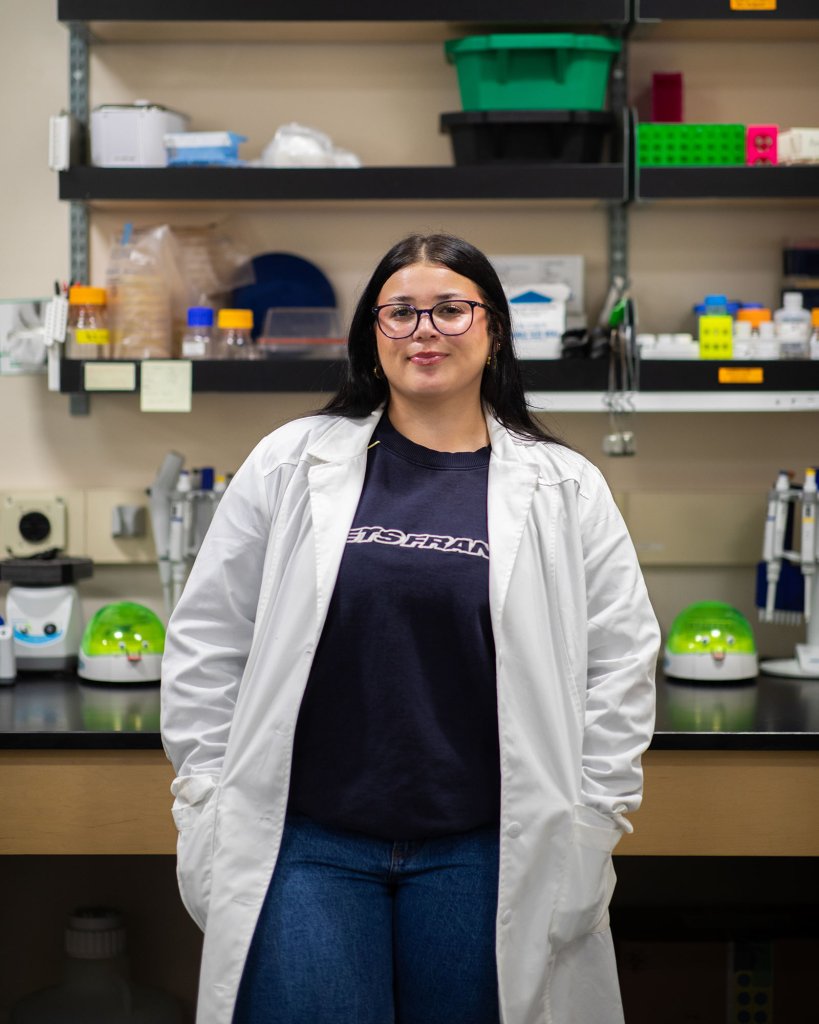
    Before the NIH terminations, Marisa Mendoza, a San Marcos undergraduate, received two training grants. As far back as middle school, Mendoza’s favorite subjects were biology and chemistry.

    To save money, she attended Palomar College, a nearby community college where she began to train as a nurse. She chose that major because it would allow her to focus on the science subjects she loved. But soon Mendoza realized she wanted to do research rather than treat patients.

    At Palomar, an anatomy professor introduced her to the NIH-funded Bridges to the Baccalaureate, a training grant for community college students to earn a bachelor’s and pursue advanced degrees in science and medicine.

    “I didn’t even know what grad school was at the time,” she said. Neither of her parents finished college.

    The Bridges program connected her to Cal State San Marcos, where she toured different labs to find the right fit. At the time she was in a microbiology course and found a lab focused on bacteria populations in the nearby coastal enclaves. The lab was putting into practice what she was learning in the abstract. She was hooked.

    “It just clicked, like me being able to do this, it came very easily to me, and it was just something that I came to be very passionate about as I was getting more responsibility in the lab,” Mendoza said.

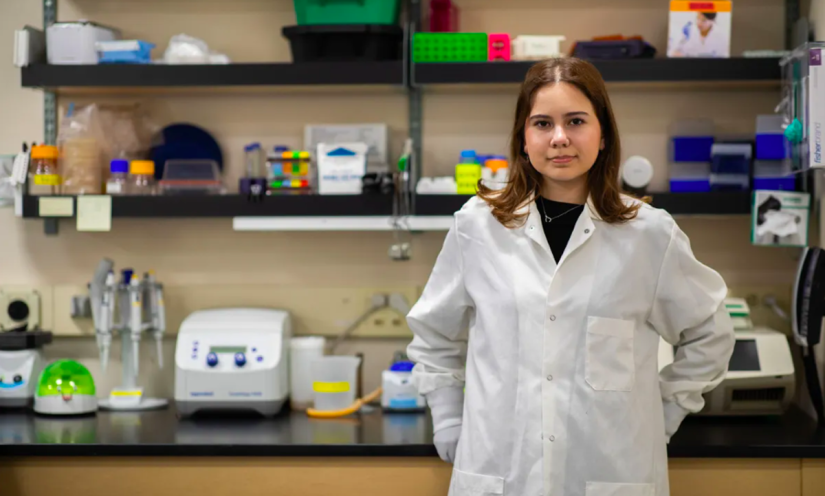
    Marisa Mendoza, right, and Camila Valderrama-Martínez, left, get ready to demonstrate how they use lab equipment for their research work at Cal State San Marcos on May 6, 2025. Photo by Adriana Heldiz, CalMatters

    From Palomar she was admitted as a transfer student to San Marcos and more selective campuses, including UCLA and UC San Diego. She chose San Marcos, partly to live at home but also because she loved her lab and wanted to continue her research.

    She enrolled at San Marcos last fall and furthered her doctoral journey by receiving the U-RISE grant. It was supposed to fund her for two years. The NIH terminated the grant March 31, stripping funds from 20 students.

    For a school like San Marcos, where more than 40% of students are low-income enough to receive federal financial aid called Pell grants, the loss of the NIH training awards is a particular blow to the aspiring scientists.

    The current climate of doctoral admissions is “definitely at a point where one needs prior research experience to be able to be competitive for Ph.D. programs,” said Elinne Becket, a professor of biological sciences at Cal State San Marcos who runs the microbial ecology lab where Mendoza and other students hone their research for about 15 hours a week.

    San Marcos doesn’t have much money to replace its lost grants, which means current and future San Marcos students will “100%” have a harder time entering a doctoral program, Becket added. “It keeps me up at night.”

    Research is ‘a missing piece’

    In a typical week in Becket’s lab, Mendoza will drive to a nearby wetland or cove to retrieve water samples — part of an ongoing experiment to investigate how microbial changes in the ecosystem are indications of increased pollution in sea life and plants. Sometimes she’ll wear a wetsuit and wade into waters a meter deep.

    The next day she’ll extract the DNA from bacteria in her samples and load those into a sequencing machine. The sequencer, which resembles a small dishwasher, packs millions or billions of pieces of DNA onto a single chip that’s then run through a supercomputer a former graduate student built.

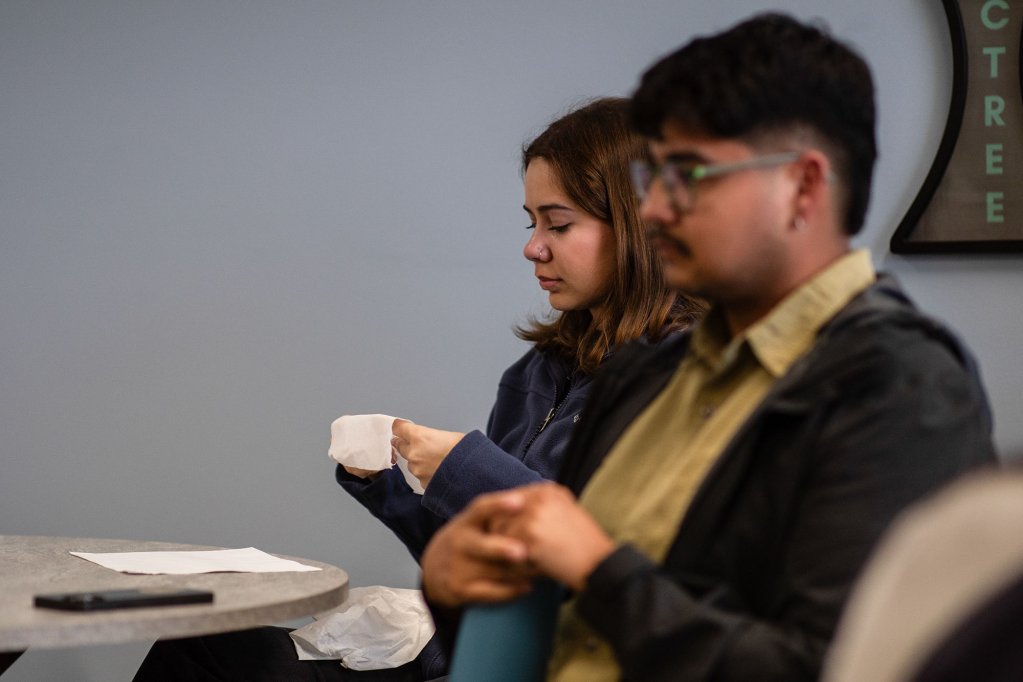
    “Once I found research, it was like a missing piece,” Mendoza, a Pell grant recipient, said through tears during an interview at Cal State Marcos. Research brought her joy and consumed her life “in the best way,” she added. “It’s really unfortunate that people who are so deserving of these opportunities don’t get to have these opportunities.”

    A side-view of a person looking down at a piece of tissue as tears stream down their face.
    Student Marisa Mendoza gets emotional while she speaks about her research at Cal State San Marcos on May 6, 2025. Photo by Adriana Heldiz, CalMatters

    The origins of the San Marcos training center date back to 2002. Through it, more than 160 students have either earned or are currently pursuing doctoral degrees at a U.S. university.

    The grant terminations have been emotionally wrenching. “There had been so many tears in my household that my husband got me a puppy,” said Denise Garcia, the director of the center and a professor of biological sciences.

    Garcia recalls that in March she was checking a digital chat group on Slack with many other directors of U-RISE grants when suddenly the message board lit up with updates that their grants were gone. At least 63 schools across the country lost their grants, NIH data show.

    In the past four years of its U-RISE grant the center has reported to the NIH that 83% of its students entered a doctoral program. That exceeds the campus’s grant goal, which was 65% entering doctoral programs.

    Mendoza is grateful: She was one of two students to win a campus scholarship that’ll defray much, but not all, of the costs of attending school after losing her NIH award. That, plus a job at a pharmacy on weekends, may provide enough money to complete her bachelor’s next year.

    Others are unsure how they’ll afford college while maintaining a focus on research in the next school year.

    Student Camila Valderrama-Martínez in a lab at Cal State San Marcos on May 6, 2025. Photo by Adriana Heldiz, CalMatters

    “You work so hard to put yourself in a position where you don’t have to worry, and then that’s taken away from you,” said Camila Valderrama-Martínez, a first-year graduate student at San Marcos who also earned her bachelor’s there and works in the same lab as Mendoza. She was in her first year of receiving the Bridges to the Doctorate grant meant for students in master’s programs who want to pursue a biomedical-focused doctoral degree. The grant came with a stipend of $26,000 annually for two years plus a tuition waiver of 60% and money to attend conferences.

    She can get a job, but that “takes away time from my research and my time in lab and focusing on my studies and my thesis.” She relies solely on federal financial aid to pay for school and a place to live. Getting loans, often anathema for students, seems like her only recourse. “It’s either that or not finish my degree,” she said.

    Terminated NIH grants in detail

    These grant cancellations are separate from other cuts at the NIH since Trump took office in January, including multi-million-dollar grants for vaccine and disease research. They’re also on top of an NIH plan to dramatically reduce how much universities receive from the agency to pay for maintaining labs, other infrastructure and labor costs that are essential for campus research. California’s attorney general has joined other states led by Democrats in suing the Trump administration to halt and reverse those cuts.

    In San Marcos’ case, the latest U-RISE grant lasted all five years, but it wasn’t renewed for funding, even though the application received a high score from an NIH grant committee.

    Armenta, the associate director at the Cal State San Marcos training center, recalled that his NIH program officer said that though nothing is certain, he and his team should be “cautiously optimistic that you would be funded again given your score.” That was in January. Weeks later, NIH discontinued the program.

    He and Garcia shared the cancellation letters they received from NIH. Most made vague references to changes in NIH’s priorities. However, one letter for a specific grant program cited a common reason why the agency has been cancelling funding: “It is the policy of NIH not to prioritize research programs related to Diversity (sic), equity, and inclusion.”

    That’s a departure from the agency’s emphasis on developing a diverse national cadre of scientists. As recently as February, the application page for that grant said “there are many benefits that flow from a diverse scientific workforce.”

    Future of doctoral programs unclear

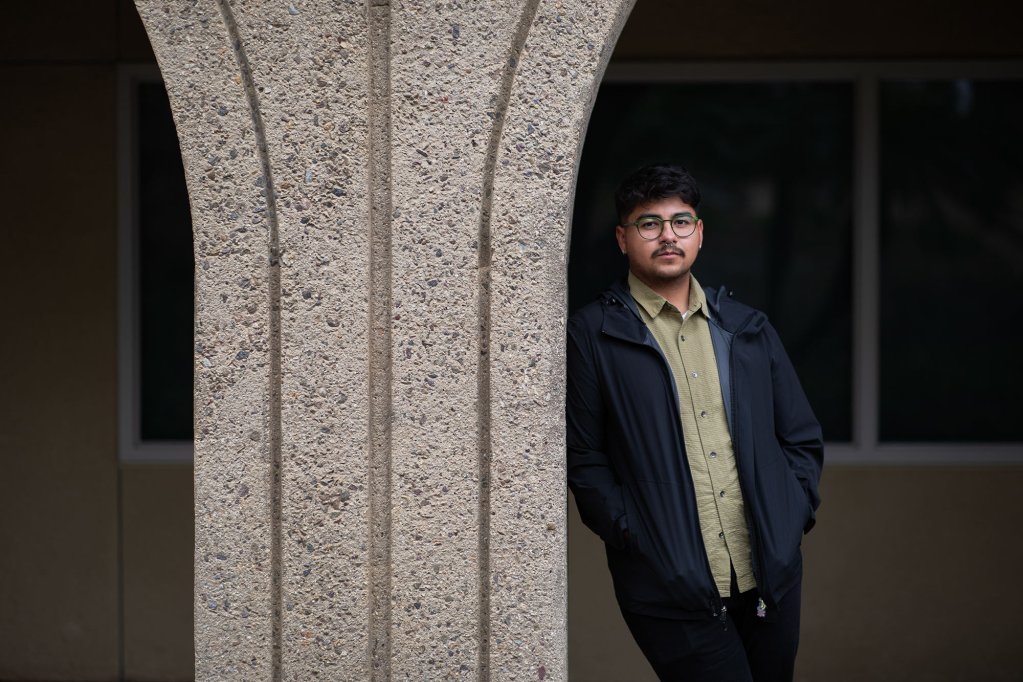
    Josue Navarrete graduated this spring from Cal State San Marcos with a degree in computer science. Unlike the other students interviewed for this story, Navarrete, who uses they/them pronouns, was able to complete both years of their NIH training grant and worked in Becket’s lab.

    But because of the uncertain climate as the Trump administration attempts to slash funding, Vanderbilt University, which placed Navarrete on a waitlist for a doctoral program, ultimately denied them admission because the university program had to shrink its incoming class, they said. Later, Navarrete met a professor from Vanderbilt at a conference who agreed to review their application. The professor said in any other year, Navarrete would have been admitted.

    The setback was heartbreaking.

    A person -- with short black hair and wearing a black jacket and green shirt, leans against a light brown concrete column while looking straight into the camera.
    Josue Navarrete at the Cal State San Marcos campus on May 6, 2025. Photo by Adriana Heldiz, CalMatters

    “I’m gripping so hard to stay in research,” Navarrete said. With doctoral plans delayed, they received a job offer from Epic, a large medical software company, but turned it down. “They wanted me to be handling website design and mobile applications, and that’s cool. It’s not for me.”

    Valderrama-Martinez cited Navarrete’s story as she wondered whether doctoral programs at universities will have space for her next year. “I doubt in a year things are going to be better,” she said.

    She still looks forward to submitting her applications.

    So does Mendoza. She wants to study microbiology — the research bug that bit her initially and brought her to San Marcos. Eventually she hopes to land at a private biotech firm and work in drug development.

    “Of course I’m gonna get a Ph.D., because that just means I get to do research,” she said.

    This article was originally published on CalMatters and was republished under the Creative Commons Attribution-NonCommercial-NoDerivatives license.


    Get stories like these delivered straight to your inbox. Sign up for The 74 Newsletter
    Source link