Tag: California

  • After FIRE lawsuit, California community colleges will not enforce DEI mandate in classroom

    After FIRE lawsuit, California community colleges will not enforce DEI mandate in classroom

    FRESNO, Feb. 10, 2025 — After a lawsuit from the Foundation for Individual Rights and Expression challenged regulations mandating the evaluation of professors based on their commitment to “diversity, equity, inclusion, and accessibility” (DEIA), the California Community Colleges system and a community college district attested in court that the regulations do not require community college professors to teach and endorse the state’s pro-DEIA views in the classroom.

    In March 2023, the California Community College system amended its tenure and employee review guidelines to “include diversity, equity, inclusion, and accessibility standards in the evaluation and tenure review of district employees.” The new regulations stated that faculty members “shall employ teaching, learning, and professional practices that reflect DEIA and anti-racist principles” and mandated they “promote and incorporate culturally affirming DEIA and anti-racist principles.”

    That August, FIRE filed suit against California Community Colleges and the State Center Community College District on behalf of six Fresno-area community college professors who oppose the highly politicized concepts of “DEIA” (more often called “DEI”) and “anti-racism” and thus did not want to incorporate them into their teaching.

    Forced to defend the regulations in court, the state chancellor and district quickly disclaimed any intention to use the state guidelines or the district’s faculty contract to police what professors teach in the classroom or to punish them for their criticism of DEI. 

    Specifically, the Chancellor’s Office “disavowed any intent or ability to take any action against Plaintiffs” for their classroom teaching. The district likewise confirmed that none of the plaintiffs’ “proposed future actions” for their courses violate the rules or the faculty contract. It added that plaintiffs are not “prohibited from presenting” their “viewpoints or perspectives in the classrooms” and will not “be disciplined, terminated, or otherwise punished for doing so.” 

    In particular, the Defendants denied they would punish Plaintiffs for any of their proposed speech, including “assigning certain literary works, such as Martin Luther King Jr.’s Letters from Birmingham Jail,” using “methodologies and course materials in their classroom” intended to encourage debate and discussion about the merits of DEI viewpoints, criticizing concepts like “anti-racism,” or supporting a color-blind approach to race in their self-evaluations. 

    On Jan. 28, U.S. District Judge Kirk E. Sherriff relied on those assurances to hold as a legal matter that because of the college officials’ disavowals, the professors had not suffered a harm sufficient to challenge the regulations’ constitutionality. In dismissing the lawsuit, Judge Sherriff emphasized that neither the DEI Rules nor the faculty contract “mandate what professors teach or how any DEIA principles should be implemented.”

    “FIRE filed suit to prevent California’s community colleges from evaluating our faculty clients on the basis of their classroom commitment to a political ideology, and that’s exactly the result we’ve achieved,” said FIRE attorney Daniel Ortner. “As a result of our suit, the state and the district promised a federal judge they won’t interfere with our clients’ academic freedom and free speech rights. The classroom is for discussion and exploration, not a top-down mandate about what ideas must take priority. We’ll make sure it stays that way.”

    “FIRE will be watching like a hawk to ensure that the state chancellor and district live up to their word,” said FIRE attorney Zach Silver. “If they force any professors to parrot the state’s DEI views, or punish them for criticizing the state’s position, we’ll be ready to stand up for their rights.”

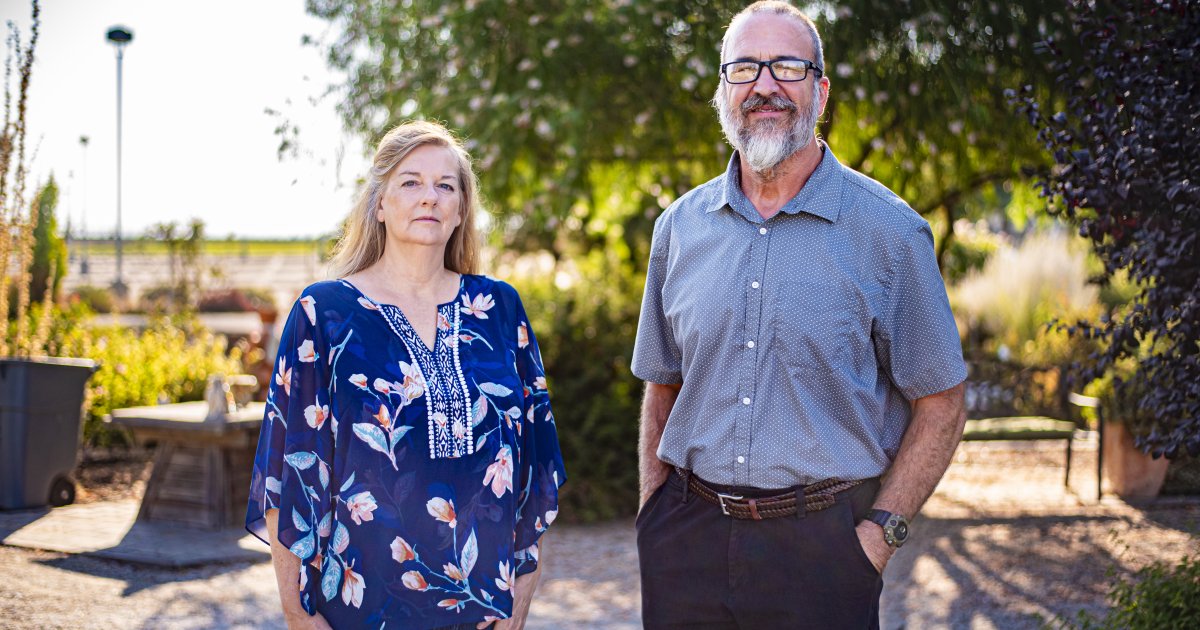
    COURTESY PHOTOS OF PLAINTIFFS FOR MEDIA USE

    Despite unobjectionable-sounding labels, “diversity, equity, and inclusion” and “anti-racism” frameworks often encompass political topics and ideology that are contested and controversial. The glossary of DEI terms put out by California Community Colleges, for example, stated that “persons that say they are ‘not a racist’ are in denial,” while denouncing “colorblindness” as a concept for “perpetuat[ing] existing racial inequities.”

    DEI requirements are also highly controversial within academia. FIRE’s most recent faculty survey indicated that half of faculty think it is “rarely” or “never” justifiable for universities to make faculty candidates submit statements pledging commitment to DEI before being considered for a job (50%) or to be considered for tenure or promotion (52%).

    Since FIRE filed its lawsuit in 2023, many top universities and university systems have voluntarily moved away from mandatory DEI, including Harvard, the Massachusetts Institute of Technology, and the University of Arizona system. Most recently, the University of Michigan dropped the use of diversity statements in hiring and firing in December 2024 following a viral New York Times article that detailed how the school’s DEI practices stifled academic freedom and discourse at the school.

    FIRE sued on behalf of six professors, James Druley, David Richardson, Linda de Morales, and Loren Palsgaard of Madera Community College, Bill Blanken of Reedley College, and Michael Stannard of Clovis Community College. (Professors Stannard and Druley withdrew from the case in 2024 upon retiring from teaching.)

    “Wherever you stand on the debate over DEI, the important thing is there is a debate in the first place,” said Palsgaard. “I’m happy that thanks to our lawsuit, we know that debate will continue in California, both inside and outside the classroom.”


    The Foundation for Individual Rights and Expression (FIRE) is a nonpartisan, nonprofit organization dedicated to defending and sustaining the individual rights of all Americans to free speech and free thought — the most essential qualities of liberty. FIRE recognizes that colleges and universities play a vital role in preserving free thought within a free society. To this end, we place a special emphasis on defending the individual rights of students and faculty members on our nation’s campuses, including freedom of speech, freedom of association, due process, legal equality, religious liberty, and sanctity of conscience.

    CONTACT:

    Alex Griswold, Communications Campaign Manager, FIRE: 215-717-3473; [email protected]
    Source link

  • LA Schools Reopen, But Recovery Will Be Long and Painful – The 74

    LA Schools Reopen, But Recovery Will Be Long and Painful – The 74


    Get stories like this delivered straight to your inbox. Sign up for The 74 Newsletter

    It was just after 1 am when Los Angeles charter school superintendent Ian Mcfeat started getting text messages and phone calls at a relative’s house where he was sheltering from the fires. 

    His neighbors said his house was burning down in the wildfires – along with his entire Altadena neighborhood of Los Angeles.

    Aveson School of Leaders, which McFeat runs and where his kids attended school just three blocks from his house, was also burning.

    Unable to sleep, Mcfeat drove away from his in-law’s house that he’d been evacuated to and made the drive back to Altadena.

    He drove through the fire lines and into his neighborhood to see if he could salvage anything, save anyone, or put out the fires that had raged on the east side for more than 48 hours straight, and decimated the Palisades in the west. 

    He was greeted with a scene out of a horror movie. Fueled by a violent windstorm and piles of brush left from a particularly wet winter last year, the firestorm was like a tornado shooting flames, blasting through his neighborhood.

    “It was like driving through a bomb scene,” said Mcfeat. “There were homes exploding. I probably shouldn’t have been there.” 

    Despite the devastating losses, Mcfeat can’t imagine not rebuilding his home and school right where they were in Altadena. But the road to recovery will be a long and painful one.

    “No doubt about it. We are going to rebuild,” said Mcfeat. Aveson has started a GoFundMe. At this point, a new site for the school has not been identified. The district hasn’t been able to help them yet.

    “I don’t know what we’re going to do,” said Mcfeat.

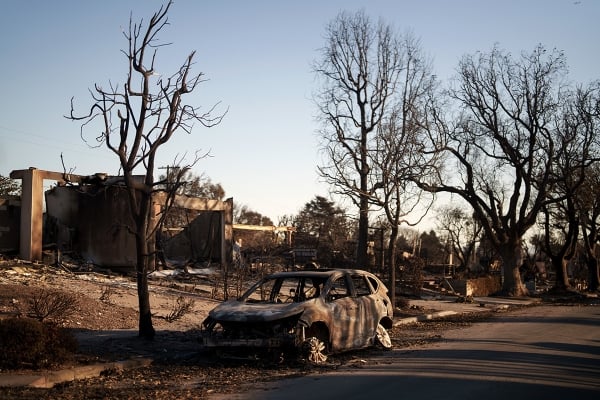
    The wildfires that burned Los Angeles this month are the costliest and most destructive in the city’s history, displacing more than 150,000 residents and killing at least 25 people. Two massive blazes fed by windstorms, the Palisades Fire and the Eaton Fire, simultaneously scorched the city from the sea to the mountains, filling the air with vast plumes of ash and smoke.

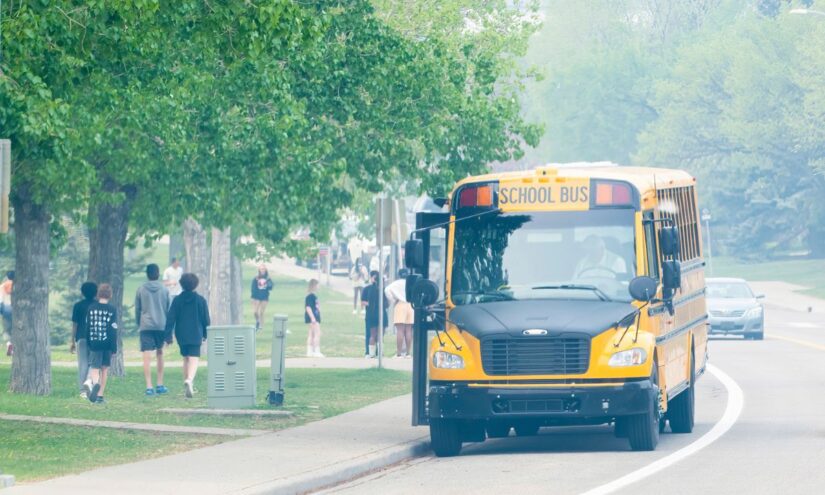
    As the wind and flames began to retreat last week, and firefighters gained control of the fires, schools began to reopen. And the kids began to return to class.

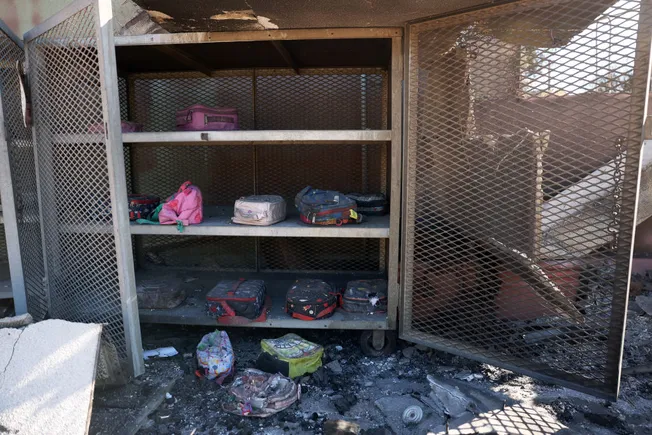
    The Los Angeles Unified School District, which is by far the largest district of about 80 in Los Angeles County, resumed instruction Monday after being totally closed since last Thursday. Seven schools remain shut because they’re located in evacuation zones. Another three won’t reopen because their buildings were badly burned or destroyed in the fires.  

    Dozens of much smaller districts in Los Angeles County also reopened this week, with the exceptions of two districts, Pasadena Unified, which encompasses Altadena, and La Cañada Unified, which neighbors Altadena to the west. 

    The Eaton fire has destroyed at least five schools but was mostly contained by Friday. 

    Kids from two of the LAUSD schools that burned in the Palisades, Marquez Charter Elementary School and Palisades Charter Elementary School, were placed, with intact school rosters, in close-ish LAUSD school buildings that already had other schools in them.

    The students who attended the burned schools were given their own entrances, classrooms and courtyards for kids to play. When parents dropped them off at class this week, there were a lot of tearful reunions.

    Families from Palisades Charter were somber, but excited to return to normalcy with their new space located inside of Brentwood Science Magnet School.  

    Joseph Koshki, a parent from the Palisades whose son attends third grade at Palisades Charter, walked holding hands with his son to their new classroom at Brentwood Science, which had been stacked with balloons.

    “When he saw his school burned on the news he was crying for days,” Koshki said of his child. “But when he heard that he was going to his new school with his old friends, he was so happy”.

    Nina Belden, a parent of a Palisades Charter student who had made an emergency evacuation from her house in the Palisades with her family, said it was important for the students at her daughter’s school to stay together and receive in-person instruction.

    “We were worried they were going to do something like remote learning,” said Beldon.

    Marquez Charter, which also burned in the Palisades fire, has a long history in the community, having opened in 1955 when the Palisades still had a frontier feel, before the neighborhood became a favorite of Hollywood stars and media execs.

    For Victoria Flores, who works as a paraeducator at Marquez, the school is part of her family. Flores went to Marquez when she was in elementary school, and her mother works in the cafeteria.

    “It was my home away from home. We are devastated by what happened,” Flores said.

    But Flores said she and the rest of the staff were glad to be relocated together at a LAUSD school called Nora Sterry, about ten miles from the burned Marquez campus.

    “We are a really close family,” said Flores. “That’s helped us a lot.”

    Upstairs at Nora Sterry, Clare Gardner’s class had about eight of twenty students show up on the first day of relocation.

    Her third-grade class was playing with clay and Mrs. Gardner, who is a twenty-seven-year veteran of Marquez, held back her tears as she helped students arrive into class.

    “We always call it the Marquez family,” Gardner said as the children greeted each other.

    One boy in Mrs. Gardner’s class said he was happy to be around his friends and teacher but sad about his classroom fish and books, which were lost in the fire.

    Later in the morning, LAUSD Superintendent Alberto Carvalho went to visit parents at Nora Sterry.

    After nearly a week off school, Carvalho says attendance is still below normal.

    “I think where that attendance is lacking is in schools that were directly affected” by the fires, Carvalho said.

    Also hurting attendance, Carvalho said, is the fact that many families are enduring temporary relocations, while others lack stable housing entirely.

    LAUSD staff attendance is back to normal, he said, while student attendance is about 88% — down from an average of about 90%, representing about 10,000 fewer students than normal.

     “As conditions of the families begin to normalize and stabilize, those [attendance] numbers will rise,” said Carvalho.

    For other schools in other areas of Los Angeles, recovery may be longer in the making. 

    Bonnie Brinecomb, principal of Odyssey Charter School – South in Altadena, which burned to the ground in the Eaton Fire, estimates that the homes of 40% of the students enrolled in the school also burned.

    Families and school staffers are scrambling to ensure displaced families have food, shelter and clothing, Brinecomb said. Some students are turning up for daycare at a nearby Boys and Girls Club that offered to take them in.  

    Brinecomb said Odyssey has partnered with McFeat’s school Aveson to search for new facilities. But the double loss of students’ homes and the schools’ campuses is a gutpunch.  

    “It’s just heartbreak. Pure shock,” she said. “You don’t even process how bad of a situation just happened.”

    Like Aveson, Odyssey has launched an online fundraiser and Brinecomb says the school will rebuild. How long that will take, though, remains an open question.  

    From the perspective of displaced children and families, the faster things return to normal, the better, said Dr. Frank Manis, professor emeritus of psychology at the University of Southern California. 

    The experience of trauma can intensify if routines are disrupted for longer periods, and the intensity of the disruption matters as well, said Manis. Kids who lost their homes to fires may have a harder time bouncing back than those who only lost their schools, he said.    

    “It’s sort of on that spectrum of wartime PTSD, but not as bad,” said Manis. “So what it could lead to is nightmares, difficulty sleeping, and emotional or behavior problems that can last for quite a while.”

    Children fighting post-traumatic stress from the fires may become withdrawn, or act out in class, said Manis. But mostly, he said, the research from past natural disasters shows that even children badly impacted by the fires may begin to feel normal within a few months. 

    “Kids are pretty resilient,” said Manis. “But trauma can disappear for a while, and then it can resurface later. When everyone’s forgotten how bad it was, it can resurface.” 


    Get stories like these delivered straight to your inbox. Sign up for The 74 Newsletter

    Source link

  • Wildfire aid coming to California schools as educators plan to restart learning

    Wildfire aid coming to California schools as educators plan to restart learning

    This audio is auto-generated. Please let us know if you have feedback.

    Schools across Southern California impacted by devastating wildfires this month are working to ensure students, families and staff are safe and have basic needs — all while attempting to restart instruction and as-normal-as-possible school routines after school closures. 

    At least 335 schools from Los Angeles, San Bernardino, Riverside, Ventura and San Diego counties had closed temporarily when fires broke out last week, affecting more than 211,000 students, according to the California Department of Education. 

    Two schools in the Los Angeles Unified School District — Palisades Charter Elementary and Marquez Charter Elementary — will need to be rebuilt due to fire damage, LAUSD said in a Jan. 13 statement. 

    At an event Tuesday in Washington, D.C., to highlight U.S. Department of Education initiatives under the Biden administration, Deputy Secretary of Education Cindy Marten, who previously served as superintendent of San Diego Unified School District, said the area is close-knit and that people have been “deeply affected” by the destructive wildfires. 

    “What we know is that precious schools have burned down and communities are reeling,” said Marten, adding that the U.S. Education Department will provide training and funding to communities affected by the disaster.

    According to the California Department of Forestry and Fire Protection, known as CAL FIRE, 40,695 acres have burned and more than 12,300 structures have been destroyed. Several fires that started Jan. 7 or after still have not been fully contained. 

    Most schools in LAUSD — the second largest school system in the nation — reopened Monday after district employees cleaned schools and others worked “around the clock” over the weekend to ensure campuses were safe for students and staff, a Jan. 13 district statement said. By Wednesday, outdoor activities including P.E. and recess could resume at all campuses pending local conditions, and students at the two schools destroyed by fire were relocated to two other campuses, the district said.

    “We have a unique opportunity to show the strength and resilience of our community in the face of adversity,” said Pamela Magee, executive director and principal of Palisades Charter High School, in a statement Jan 13. “By coming together, we can ensure that our students can stay in their learning environment, with their friends and mentors, at a time when they need it most.” 

    Schools in Malibu are closed through at least Jan. 21, while Santa Monica schools are open, according to the Santa Monica-Malibu Unified School District. The district and its partners have organized optional gathering spaces for children and teens displaced by the fires and not in school.

    In the Pasadena Unified School District, more than 1,300 Pasadena USD staff members had homes within the burn zone, and the district is still determining the exact number of students and families impacted. That number is anticipated to be in the thousands, according to the California Department of Education. 

    The district is closed through Jan. 17, although students had access to optional, self-directed learning options, Superintendent Elizabeth Blanco wrote in a statement to the school district community Jan. 10. 

    The health and safety of our PUSD community remain our highest priority as we navigate the significant impact of the fire on so many of our students, families, and staff,” said Blanco, adding that nearly half of the district’s employees live within the fire evacuation zone and that many staff, students and families lost their homes.

    Odyssey Charter Schools, South Campus, in Altadena, California, and authorized by PUSD, was destroyed by the Eaton fire on Jan. 8. The 7-year-old school served about 375 students in grades TK-8. 

    “While our campus is closed, Odyssey Charter Schools South continues and will move forward stronger than ever. We’ve already built this school from an idea to a full institution. Then we rebuilt it again online during COVID and we built it a third time when we had to relocate so we are a resilient community and we already weathered many challenges,” said a video showing the fire’s destruction to the campus.

    https://www.youtube.com/watch?v=/Q9sOZLdDcBg

    Providing basic needs, making adjustments

    With the widespread impact of the wildfires and ongoing firefighting, the focus on learning is taking a backseat to supplying students, families and school employees with basic needs.  

    Source link

  • California colleges confront loss as Los Angeles burns

    California colleges confront loss as Los Angeles burns

    The past week has been a blur for Fred Farina, the California Institute of Technology’s chief innovation officer, who lost his home in the fires still tearing through Los Angeles.

    “Things turned on a dime. One evening we were sitting in our living room and within 10 minutes we had to evacuate,” said Farina, who lived in Altadena, one of the neighborhoods hardest hit by the Eaton fire. “The loss of everything you have is hard to deal with.”

    Farina is one of hundreds of faculty, staff and students from colleges and universities across Los Angeles who have been displaced by the wildfires.

    While most institutions were spared burn damage to their physical plants, many spent the last week entrenched in immediate recovery efforts. Numerous colleges are raising money to help students and staff secure housing and other basic needs.

    Others are opening shelters and food pantries. Pepperdine University’s law school is hosting free remote legal clinics to educate homeowners and lawyers about federal emergency assistance and related issues such as insurance, leases and mortgages. And the University of California, Los Angeles, opened space at its research park for the Federal Emergency Management Agency to use as a disaster recovery center for fire victims living on the city’s Westside.

    Flexibility and Compassion

    But beyond efforts to meet their communities’ most pressing needs, colleges in Los Angeles are also figuring out how to move forward and get through a semester already scarred by more than one of the most destructive fires in California history. The priority emerging for most college leaders is moving forward with flexibility and compassion.

    “Words seem inadequate to capture the scale of the devastation,” said Thomas F. Rosenbaum, president of Caltech in Pasadena, near where the Eaton fire destroyed 1,400 homes. “The Caltech community has responded with compassion and generosity, seeking to help each other and working heroically to permit Caltech and [the Jet Propulsion Laboratory] to resume their fundamental missions of learning and discovery. We are in this for the long term, and the closeness of our community gives us hope for the future.”

    The blaze didn’t reach the Caltech campus itself, but the institute estimates that more than 1,000 students and employees live in an evacuation zone. Of those, more than 90 employees have lost their homes, along with at least 200 employees—many of whom live in the decimated nearby enclave of Altadena—of the Caltech-managed Jet Propulsion Lab.

    Caltech was one of the many colleges in Southern California that closed down last week—in addition to Santa Monica College, Pasadena City College and Glendale Community College—as strong winds accelerated the Palisades and Eaton fires and displaced scores of people affiliated with those campuses.

    Caltech resumed in-person classes Monday, and most other local colleges have done the same or are planning to in the coming days as the air quality continues to improve. But hundreds of students, staff and faculty are far from resuming life as it was before the fire.

    “It’s pretty overwhelming, the things that have to be done to get back to a good situation,” said Farina, who is in the throes of dealing with insurance and disaster relief logistics after losing his home. “There’s so many decisions that have to be made so quickly.”

    Although Farina is uncertain about when he’ll find permanent new housing for his family—apartments are scarce and rents have skyrocketed in the past week—Caltech helped him and many other employees secure a temporary place to live. So far, the Caltech and JPL Disaster Relief Fund has raised about $2 million, and the fund is giving that money to help displaced people meet their basic needs in the aftermath of the fires.

    Numerous other L.A.-area colleges are also helping their students and employees get access to cash and safe housing, which have emerged as two of the most needed resources more than a week after the fires started.

     At California State University at Los Angeles, at least 60 faculty, staff and students lost their homes, and college officials expects that number to grow. The university is raising money and offering basic needs support for those most affected, which includes grants for housing and food as well as adjustments to teaching and learning, as needed. Cal State LA President Berenecea Johnson Eanes said in a memo Wednesday that the institution “will continue to harness the healing power of our university for the long road to recovery.” (This paragraph was updated with information provided after publication.)

    The L.A. Foundation for Los Angeles Community Colleges launched the L.A. Strong: Disaster Response Fund, which is raising money to give people financial assistance for housing, transportation, clothing, food and other basic needs.

    “What’s most important right now is financial support,” said Alberto J. Román, chancellor of the Los Angeles Community College District, who expected the first round of assistance to be distributed by the end of the week. “We consider these really unprecedented times with an impact, and that’s why we are compassionate and empathetic of individual situations.”

    None of LACCD’s nine campuses sustained fire damage, and Román said he doesn’t believe any of the district’s more than 200,000 students and 9,000 employees were injured as a result of the disaster, either.

    “The impact that we’ve had has been on folks who’ve been evacuated or lost their homes, road closures preventing people from coming to work or power outages and being without internet,” he said, noting that the colleges transitioned to remote work last week.

    Although LACCD resumed in-person operations this week, Román said the district wants to be flexible with students and staff whose lives have been upended by the fires.

    “It is important for us to continue instruction,” he said. “It’s a balance between health and safety and ensuring that students can finish their courses.”

    Glendale Community College reopened for in-person classes Wednesday, though at least a dozen employees and 20 students lost their homes and dozens more had to evacuate. While officials continue to try and make contact with the 600 students who live in evacuation ZIP codes, the college is also offering extra paid leave for some employees, raising money, supplying students with laptops and helping people connect with other resources.

    Smoke and fire could be seen from the Glendale Community College’s Verdugo campus last week.

    Glendale Community College

    Tzoler Oukayan, dean of student affairs at Glendale CC, said the college is allowing students to withdraw from their classes without facing a penalty.

    “The challenge is that a lot of our students in these areas didn’t—and some still don’t—have power. Access to the internet and their classes has been very challenging,” she said. “It was important for us to open up campus and give people a place to just be.”

    Empathy and compassion will also be a priority for Mount St. Mary’s University president Ann McElaney-Johnson when her campus reopens. As of Thursday, the university’s Chalon campus—which is about three miles from the burn path of the Palisades fire—was still under evacuation orders and four faculty members so far have lost their homes.

    “The impact of the fire—once we’ve ascertained what it is—is going to be tremendous. So, we really want to make sure we’re caring for our community as we move forward,” McElaney-Johnson said, adding that the university is using money from its operations budget to provide staff and students with financial assistance. “We’ll pick up where we need to, but there will be special attention. Some of the plans for different projects can get put on hold. Right now, the only thing that really matters is the safety and well-being of this community.”

    ‘Healing More Than Academics’

    That’s the approach California State University, Chico, took in 2018, when it reopened two weeks after the Camp fire destroyed the homes of more than 300 faculty, staff and students.

    “We made sure that we had all of the exceptions and support systems in place to prioritize the people who were part of our community, to make sure our eye was on their long-term success,” said Ashley Gebb, executive director of communications at Chico State. “We were focused on healing more than academics. It was about how we could get students to the end of semester with their well-being as a priority.”

    While Gebb said Chico State was “one of the first to have a community leveled by a fire like this,” the fires in Southern California this month have proven that catastrophes of this scale are becoming more common.

    Meredith Leigh, climate programs manager for Second Nature, a nonprofit focused on higher education’s role in climate action, said it’s a signal that higher education institutions across the country should be prepared to navigate increasingly drastic events.

    “While campuses across our network have taken steps to increase climate resilience and adaptation, the scale and impact of the current fires (as well as recent floods in the East) is novel in its intensity,” she said. “In this way, the biggest lesson for campuses across the nation is to shift the mental model for resiliency and emergency management—away from planning and implementation based on what has happened in the past, toward what are certain to be more frequent and intense events that previously seemed ‘unimaginable.’”

    Source link

  • Extreme drought, high winds helped spark the California fires (CBS News)

    Extreme drought, high winds helped spark the California fires (CBS News)

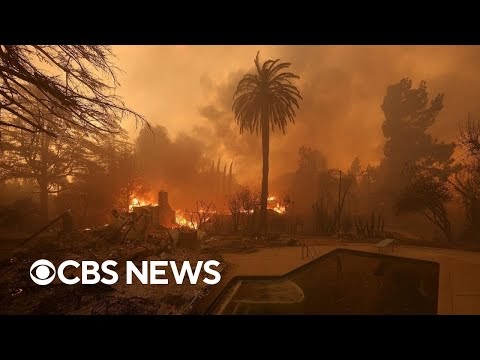
    High winds intersecting with historic drought levels are contributing to the dangerous conditions that sparked the multiple fires raging in the Los Angeles area. Dr. Helen Holmlund, an assistant professor of biology at Pepperdine University, joins CBS News with more on the extreme conditions. 

    Related link:

    Shall we all pretend we didn’t see it coming, again?: higher education, climate change, climate refugees, and climate denial by elites 

    Thinking about climate change and international study (Bryan Alexander)

    Source link

  • California and other states are rushing to regulate AI. This is what they’re missing

    California and other states are rushing to regulate AI. This is what they’re missing

    This article was originally published in December 2024 in the opinion page of The Los Angeles Times and is republished here with permission.


    The Constitution shouldn’t be rewritten for every new communications technology. The Supreme Court reaffirmed this long-standing principle during its most recent term in applying the 1st Amendment to social media. The late Justice Antonin Scalia articulated it persuasively in 2011, noting that “whatever the challenges of applying the Constitution to ever-advancing technology, the basic principles of freedom of speech and the press … do not vary.”

    These principles should be front of mind for congressional Republicans and David Sacks, Trump’s recently chosen artificial intelligence czar, as they make policy on that emerging technology. The 1st Amendment standards that apply to older communications technologies must also apply to artificial intelligence, particularly as it stands to play an increasingly significant role in human expression and learning.

    But revolutionary technological change breeds uncertainty and fear. And where there is uncertainty and fear, unconstitutional regulation inevitably follows. According to the National Conference of State Legislatures, lawmakers in at least 45 states have introduced bills to regulate AI this year, and 31 states adopted laws or resolutions on the technology. Congress is also considering AI legislation.

    Many of these proposals respond to concerns that AI will supercharge the spread of misinformation. While the worry is understandable, misinformation is not subject to any categorical exemption from 1st Amendment protections. And with good reason: As Supreme Court Justice Robert Jackson observed in 1945, the Constitution’s framers “did not trust any government to separate the true from the false for us,” and therefore “every person must be his own watchman for truth.”

    California nevertheless enacted a law in September targeting “deceptive,” digitally modified content about political candidates. The law was motivated partly by an AI-altered video parodying Vice President Kamala Harris’ candidacy that went viral earlier in the summer.

    Two weeks after the law went into effect, a judge blocked it, writing that the “principles safeguarding the people’s right to criticize government … apply even in the new technological age” and that penalties for such criticism “have no place in our system of governance.”

    Ultimately, we don’t need new laws regulating most uses of AI; existing laws will do just fine. Defamation, fraud, false light and forgery laws already address the potential of deceptive expression to cause real harm. And they apply regardless of whether the deception is enabled by a radio broadcast or artificial intelligence technology. The Constitution should protect novel communications technology not just so we can share AI-enhanced political memes. We should also be able to freely harness AI in pursuit of another core 1st Amendment concern: knowledge production.

    When we think of free expression guarantees, we often think of the right to speak. But the 1st Amendment goes beyond that. As the Supreme Court held in 1969, “The Constitution protects the right to receive information and ideas.”

    Information is the foundation of progress. The more we have, the more we can propose and test hypotheses and produce knowledge.

    The internet, like the printing press, was a knowledge-accelerating innovation. But Congress almost hobbled development of the internet in the 1990s because of concerns that it would enable minors to access “indecent” content. Fortunately, the Supreme Court stood in its way by striking down much of the Communications Decency Act.

    Indeed, the Supreme Court’s application of the 1st Amendment to that new technology was so complete that it left Electronic Frontier Foundation attorney Mike Godwin wondering “whether I ought to retire from civil liberties work, my job being mostly done.” Godwin would go on to serve as general counsel for the Wikimedia Foundation, the nonprofit behind Wikipedia — which, he wrote, “couldn’t exist without the work that cyberlibertarians had done in the 1990s to guarantee freedom of expression and broader access to the internet.”

    Today humanity is developing a technology with even more knowledge-generating potential than the internet. No longer is knowledge production limited by the number of humans available to propose and test hypotheses. We can now enlist machines to augment our efforts.

    We are already starting to see the results: A researcher at the Massachusetts Institute of Technology recently reported that AI enabled a lab studying new materials to discover 44% more compounds. Dario Amodei, the chief executive of the AI company Anthropic, predicts that “AI-enabled biology and medicine will allow us to compress the progress that human biologists would have achieved over the next 50-100 years into 5-10 years.”

    This promise can be realized only if America continues to view the tools of knowledge production as legally inseparable from the knowledge itself. Yes, the printing press led to a surge of “misinformation.” But it also enabled the Enlightenment.

    The 1st Amendment is America’s great facilitator: Because of it, the government can no more regulate the printing press than it can the words printed on a page. We must extend that standard to artificial intelligence, the arena where the next great fight for free speech will be fought.

    Source link

  • VICTORY: FIRE lawsuit leads California to halt law penalizing reporters, advocates, and victims who discuss publicly known information about sealed arrest records

    VICTORY: FIRE lawsuit leads California to halt law penalizing reporters, advocates, and victims who discuss publicly known information about sealed arrest records

    SAN FRANCISCO, Dec. 19, 2024 — A federal court, acting on a stipulation agreed to by the California attorney general and San Francisco city attorney, today halted enforcement of a California law that officials deployed to suppress journalism about a controversial tech CEO’s sealed arrest records. 

    Under the law, any person — including journalists, advocates, witnesses, and victims of crimes — faced a civil penalty of up to $2,500 for sharing public information. The court order results from a First Amendment lawsuit filed by the Foundation for Individual Rights and Expression in November, which led the California attorney general and San Francisco city attorney to agree not to enforce the law while the lawsuit is pending.

    “The press and public have a constitutional right to discuss what’s publicly known,” said FIRE attorney Adam Steinbaugh. “Government officials can’t punish the press and public when officials fail to safeguard information. That responsibility starts and ends with the government.”

    In October 2023, journalist Jack Poulson published articles about a controversial tech CEO’s arrest, sharing a copy of the arrest report sent to him by an unidentified source. The San Francisco Police Department had previously made that report public, even though the executive had successfully petitioned a state court to seal the record. 

    Almost a year after Poulson published the report, the city attorney of San Francisco — working with the tech executive — sent three letters to Poulson and his webhost, Substack, demanding they remove articles and the sealed report. Those letters threatened enforcement of California’s anti-dissemination statute, Penal Code § 851.92(c). The law imposes a civil penalty of up to $2,500 on any person (except the government officials charged with maintaining the secrecy of sealed records) who shares a sealed arrest report or any information “relating to” the report — even if the information is already publicly available.

    Concerned by the implications of the statute, FIRE sued the San Francisco city attorney and the California attorney general on behalf of the Bay Area-based First Amendment Coalition, its Director of Advocacy Ginny LaRoe, and legal commentator Eugene Volokh. Each regularly comments on censorship campaigns precisely like the one the tech CEO and city attorney launched against Paulson and Substack. But the anti-dissemination statute prohibited them from covering the CEO story, even though the information has been publicly available for over a year.

    Today, the court entered a preliminary injunction agreed to by both California and the city attorney that prohibits them from enforcing the law with respect to publicly available information. 

    The preliminary injunction protects not only FAC and Volokh, but anyone — including journalists like Poulson — who publishes information made available to the public. 

    “Discussing and sharing lawfully obtained information about arrests is not a crime — it’s a core First Amendment right,” said FIRE Staff Attorney Zach Silver. “The rich and powerful shouldn’t have the luxury of deploying the government to put their skeletons back in the closet. By standing up for their own rights, the First Amendment Coalition and Eugene Volokh have helped to protect others from facing legal action under California’s anti-dissemination law.”

    The Foundation for Individual Rights and Expression (FIRE) is a nonpartisan, nonprofit organization dedicated to defending and sustaining the individual rights of all Americans to free speech and free thought — the most essential qualities of liberty. FIRE educates Americans about the importance of these inalienable rights, promotes a culture of respect for these rights, and provides the means to preserve them.

    CONTACT:

    Jack Whitten, Communications Campaign Specialist, FIRE: 215-717-3473; [email protected]
    Source link

  • NLRB Region Files Complaint Against the NCAA, Pac-12 and the University of Southern California – CUPA-HR

    NLRB Region Files Complaint Against the NCAA, Pac-12 and the University of Southern California – CUPA-HR

    by CUPA-HR | December 21, 2022

    On December 15, the National Labor Relations Board (NLRB)’s Region 31 announced it will pursue a complaint against the National Collegiate Athletic Association (NCAA), the Pac-12 Conference and the University of Southern California (USC) for violating the National Labor Relations Act (NLRA) by misclassifying student-athletes as non-employees, unless the matter is settled. On February 8, the National College Players Association filed an unfair labor practice (ULP) charge with the region alleging that USC; the University of California, Los Angeles; the Pac-12 Conference; and the NCAA are “joint employers” who violated the NLRA by “repeatedly misclassifying employees as ‘student-athlete’ non-employees.”

    Region 31 is part of the NLRB’s Office of General Counsel, which is responsible for receiving charges from employees, unions or employers that allege violations of the NLRA. The region decides whether to issue a complaint on charges it receives. If the region does not issue a complaint, the matter is generally closed. If the region decides to file a complaint, however, the case is litigated before an administrative law judge.

    Region 31’s complaint is the latest development regarding the employment status of student-athletes. The National College Players Association’s February 8 charge followed NLRB General Counsel Jennifer Abruzzo’s memorandum issued last September in which she argues that student-athletes are employees under the NLRA and are therefore afforded all statutory protections as prescribed under the law.

    The region’s decision in response to the February ULP charge means the NCAA, Pac-12 Conference and USC can either settle or litigate the case. A final ruling could take years to come to fruition, however, as both parties in the case could appeal the decisions made by the administrative law judge to the five-member NLRB. The NLRB’s decision can be appealed to federal appellate courts  and from there all the way up to the Supreme Court.

    The news of the region’s complaint follows the announcement earlier in the day that Massachusetts Governor Charlie Baker would be the NCAA’s next president in March after his last term in office expires in January. Baker, a Republican, is known for his work to build bipartisan consensus on policy in Massachusetts, which the NCAA may recognize as a strength as they continue to engage Congress on other issues related to student-athlete compensation. It is unclear what, if any, impact this will have on the ULP charges.

    CUPA-HR will continue to keep members apprised of this case and others involving student-athlete employment classification that may emerge in the future.


    Source link