In 2025, schools are sitting on more data than ever before. Student records, attendance, health information, behavioral logs, and digital footprints generated by edtech tools have turned K-12 institutions into data-rich environments. As artificial intelligence becomes a central part of the learning experience, these data streams are being processed in increasingly complex ways. But with this complexity comes a critical question: Are schools doing enough to protect that data?
The answer, in many cases, is no.
The rise of shadow AI
According to CoSN’s May 2025State of EdTech District Leadership report, a significant portion of districts, specifically 43 percent, lack formal policies or guidance for AI use. While 80 percent of districts have generative AI initiatives underway, this policy gap is a major concern. At the same time,Common Sense Media’s Teens, Trust and Technology in the Age of AI highlights that many teens have been misled by fake content and struggle to discern truth from misinformation, underscoring the broad adoption and potential risks of generative AI.
This lack of visibility and control has led to the rise of what many experts call “shadow AI”: unapproved apps and browser extensions that process student inputs, store them indefinitely, or reuse them to train commercial models. These tools are often free, widely adopted, and nearly invisible to IT teams. Shadow AI expands the district’s digital footprint in ways that often escape policy enforcement, opening the door to data leakage and compliance violations. CoSN’s 2025 report specifically notes that “free tools that are downloaded in an ad hoc manner put district data at risk.”
Data protection: The first pillar under pressure
TheU.S. Department of Education’s AI Toolkit for Schools urges districts to treat student data with the same care as medical or financial records. However, many AI tools used in classrooms today are not inherently FERPA-compliant and do not always disclose where or how student data is stored. Teachers experimenting with AI-generated lesson plans or feedback may unknowingly input student work into platforms that retain or share that data. In the absence of vendor transparency, there is no way to verify how long data is stored, whether it is shared with third parties, or how it might be reused. FERPA requires that if third-party vendors handle student data on behalf of the institution, they must comply with FERPA. This includes ensuring data is not used for unintended purposes or retained for AI training.
Some tools, marketed as “free classroom assistants,” require login credentials tied to student emails or learning platforms. This creates additional risks if authentication mechanisms are not protected or monitored. Even widely-used generative tools may include language in their privacy policies allowing them to use uploaded content for system training or performance optimization.
Data processing and the consent gap
Generative AI models are trained on large datasets, and many free tools continue learning from user prompts. If a student pastes an essay or a teacher includes student identifiers in a prompt, that information could enter a commercial model’s training loop. This creates a scenario where data is being processed without explicit consent, potentially in violation of COPPA (Children’s Online Privacy Protection Act) and FERPA. While theFTC’s December 2023 update to the COPPA Rule did not codify school consent provisions, existing guidance still allows schools to consent to technology use on behalf of parents in educational contexts. However, the onus remains on schools to understand and manage these consent implications, especially with the rule’s new amendments becoming effective June 21, 2025, which strengthen protections and require separate parental consent for third-party disclosures for targeted advertising.
Moreover, many educators and students are unaware of what constitutes “personally identifiable information” (PII) in these contexts. A name combined with a school ID number, disability status, or even a writing sample could easily identify a student, especially in small districts. Without proper training, well-intentioned AI use can cross legal lines unknowingly.
Cybersecurity risks multiply
AI tools have also increased the attack surface of K-12 networks. According toThreatDown’s 2024 State of Ransomware in Education report, ransomware attacks on K-12 schools increased by 92 percent between 2022 and 2023, with 98 total attacks in 2023. This trend is projected to continue as cybercriminals use AI to create more targeted phishing campaigns and detect system vulnerabilities faster. AI-assisted attacks can mimic human language and tone, making them harder to detect. Some attackers now use large language models to craft personalized emails that appear to come from school administrators.
Many schools lack endpoint protection for student devices, and third-party integrations often bypass internal firewalls. Free AI browser extensions may collect keystrokes or enable unauthorized access to browser sessions. The more tools that are introduced without IT oversight, the harder it becomes to isolate and contain incidents when they occur. CoSN’s 2025 report indicates that 60 percent of edtech leaders are “very concerned about AI-enabled cyberattacks,” yet 61 percent still rely on general funds for cybersecurity efforts, not dedicated funding.
Building a responsible framework
To mitigate these risks, school leaders need to:
Audit tool usage using platforms likeLightspeed Digital Insight to identify AI tools being accessed without approval. Districts should maintain a living inventory of all digital tools. Lightspeed Digital Insight, for example, is vetted by 1EdTech for data privacy.
Develop and publish AI use policies that clarify acceptable practices, define data handling expectations, and outline consequences for misuse. Policies should distinguish between tools approved for instructional use and those requiring further evaluation.
Train educators and students to understand how AI tools collect and process data, how to interpret AI outputs critically, and how to avoid inputting sensitive information. AI literacy should be embedded in digital citizenship curricula, with resources available from organizations like Common Sense Media andaiEDU.
Vet all third-party apps through standards like the1EdTech TrustEd Apps program. Contracts should specify data deletion timelines and limit secondary data use. The TrustEd Apps program has vetted over 12,000 products, providing a valuable resource for districts.
Simulate phishing attacks and test breach response protocols regularly. Cybersecurity training should be required for staff, and recovery plans must be reviewed annually.
Trust starts with transparency
In the rush to embrace AI, schools must not lose sight of their responsibility to protect students’ data and privacy. Transparency with parents, clarity for educators, and secure digital infrastructure are not optional. They are the baseline for trust in the age of algorithmic learning.
AI can support personalized learning, but only if we put safety and privacy first. The time to act is now. Districts that move early to build policies, offer training, and coordinate oversight will be better prepared to lead AI adoption with confidence and care.
Rishi Raj Gera, Magic Edtech
Rishi Raj Gera is the Chief Solutions Officer at Magic Edtech. Rishi brings over two decades of experience in designing digital learning systems that sit at the intersection of accessibility, personalization, and emerging technology. His work is driven by a consistent focus on building educational systems that adapt to individual learner needs while maintaining ethical boundaries and equity in design. Rishi continues to advocate for learning environments that are as human-aware as they are data-smart, especially in a time when technology is shaping how students engage with knowledge and one another.
Latest posts by eSchool Media Contributors (see all)
Imagine that you lead a team whose job is to generate qualified applicants for your institution’s online degree programs. Challenges abound. Post-pandemic, the supply of new online degree programs has grown faster than student demand. Inflation and job insecurity have stressed and immobilized the potential online master’s applicant population of working adults. Prospective applicants have low-cost master’s and alternative online credential options. The job of online program recruitment has never been more challenging.
Being the wayward academic you are, you believe that the answer to any question and the solution to any problem can be found in a book. You need the right book for you and your team to read and discuss, out of which a strategy will emerge to engage and inspire online program applicants. What book do you choose? (Any nominations?).
I recommend Chris Hayes’s The Sirens’ Call: How Attention Became the World’s Most Endangered Resource.
As a fan of lateral thinking, the working hypothesis that I’ve been testing over my career is that the best way to understand how to make a positive impact from within colleges and universities on our institutions is to read books that have nothing to do with colleges and universities. (Of course, I also read college- and university-focused books, which is a both/and sort of hypothesis). The effort required to apply books not about universities to universities often yields productive ideas that can be used for non-incremental organizational and institutional change efforts. Of course, it is possible to go horribly wrong with this approach, as with almost every attempted application of Christensen’s The Innovator’s Dilemma to university innovation efforts, but that is another story.
I’m recommending The Sirens’ Call, which has nothing to do with higher education or online program marketing, because this book is about attention. The reality that we live in an attention economy will come as no surprise to anyone even remotely involved in the business of persuasion. What is excellent about Hayes’s book is how he expertly unpacks how we arrived at this place of universal distraction, the impact that divided and fragmented attention has on individuals and society, and how we might extricate ourselves from this (largely self-imposed) mess.
For teams looking to find ways to move prospective students through the admissions funnel (as we say in the biz), The Sirens’ Call provides an attention-centric framework to which to structure our campaigns. As Hayes writes about his world as a cable TV news host, his competition for viewers’ attention is not only the competing news programs but every video, article, post and scrolling feed available on the screen in the smartphone slot machine that never leaves our hands.
Suppose the battle to generate prospective student interest in online programs is part of a larger war for attention. In that case, there are some steps that university marketing teams can take. First, it is essential to understand that deciding to apply to an online program—and even learning about which programs to potentially apply—is part of a much broader set of choices. Working adults thinking about upgrading their credentials and skills are thinking first about their careers. Their focus is not on universities, degrees or programs but on career progression. Getting and keeping the attention of these working adults may be easier if universities focus first on providing practical and actionable information and resources that directly address the career-related challenges and aspirations of workers.
How many online degree program university websites also contain articles, videos and data related to the careers that the master’s program is designed to prepare graduates to enter? We collect much of that data, including employment trends and projections, in the market research that underpins the decisions about which online programs to roll out. But how often do we make all that data available to prospective applicants?
As Hayes describes in The Sirens’ Call, a divided attention landscape changes the metabolism in which we all engage with information. Today, we might take weeks or months to finish a book, as we read in small chunks whenever we can find the time. Movies that once were watched in a single sitting in a theater (or on a Netflix DVD) are now viewed over days or weeks in small chunks across multiple screens.
We must keep the new pace of abundance-driven information consumption and absorption in mind as we communicate our online programs. Today’s full-time working adults thinking about applying to an online master’s degree (the population we are all competing to gain attention from) will likely research schools and programs over many months. They will secretly shop these programs first, not wanting to commit their attention to filling out expression of interest (EOI) online forms embedded on our sites, as they are not ready to receive the outbound admissions counseling calls, emails, and texts they know will be coming.
Understanding that the drawn-out decision-making process of potential online program applicants has everything to do with attention might change how we practice the art of digital marketing. A long game requires providing value at each step of the discovery, research, action and decision process. Anything that feels transactional will be a turn-off when everyone feels so much pressure to transact. Prospective students will not be persuaded to become applicants unless they believe that the online program on offer was designed to meet their needs. This new understanding may require rethinking how much information about our online programs we share pre-EOI, as working adults become ever-more reluctant to give those forms their scarce attention.
How are you thinking about online program marketing in the context of our attention economy?
This audio is auto-generated. Please let us know if you have feedback.
Dive Brief:
Ten Republican senators on Wednesday urged the White House budget director to unfreeze over $6 billion in already appropriated federal education funds that the Trump administration has been withholding.
Withholding the funds, which states were to receive July 1, “is contrary to President Trump’s goal of returning K-12 education to the states,” the GOP letter said.
Their plea follows a similar request from the other side of the aisle, made in a July 10 letter from 32 Democratic senators to both the Office of Management and Budget the U.S. Department of Education.
Dive Insight:
In the Republican senators’ letter to OMB Director Russell Vought, they said they want to work with him and U.S. Education Secretary Linda McMahon to ensure all of the federal education dollars “help states and school districts provide students an excellent education.”
While they said they share concerns about using federal dollars to fund “radical left-wing programs,” they said they don’t believe that’s happening with these funds meant to support after-school and summer programming as well as adult learners.
The GOP senators emphasized the money had already won approval from Congress and President Donald Trump through the continuing resolution enacted earlier this year.
Other programs at risk — if the funds are not released — include English learner services, academic supports, migrant student assistance and professional development.
“We want to see students in our states and across the country thrive, whether they are adult learners, students who speak English as a second language, or students who need after-school care so that their parents can work,” the senators wrote to Vought. “We believe you share the same goal.”
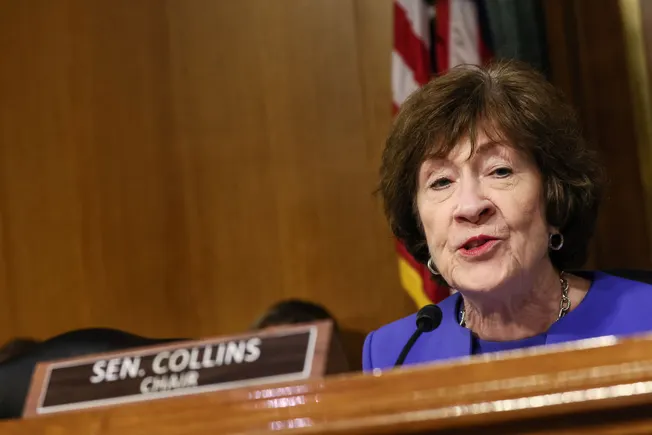
The signees include Shelley Moore Capito (W.Va.), Susan Collins (Maine), John Boozman (Ark.), Katie Boyd Britt (Ala.), Deb Fischer (Neb.), John Hoeven (N.D.), Jim Justice (W.Va.), Mitch McConnell (Ky.), Lisa Murkowski (Alaska) and Mike Rounds (S.D.).
Last week’s letter from 32 Democratic senators charged that OMB and the Education Department are illegally withholding funds. “It is unacceptable that the administration is picking and choosing what parts of the appropriations law to follow, and you must immediately implement the entire law as Congress intended and as the oaths you swore require you to do,” the Democrats wrote to Vought and McMahon.
Additionally, 24 states and the District of Columbia on Monday sued Trump, the Education Department and OMB over the funding freeze. Students and schools are already beginning to feel the impacts of the freeze, which has disrupted student programs for summer services and supports for English learners, according to the lawsuit.
In a July 17 statement to K-12 Dive, an OMB spokesperson said no funding decisions had been made and that it was still reviewing education funding. The spokesperson added that its preliminary findings show the grant programs “have been grossly abused to promote a radical leftwing DEI agenda” and directly violate Trump’s executive orders.
The OMB spokesperson said it found examples of funds being used by schools to “promote illegal immigrant advocacy organizations” and “conduct a seminar on ‘queer resistance in the arts.’”
The bipartisan calls to unfreeze the funds come as public pushback mounts against the Trump administration over the situation.
On Thursday, 600 local, state and national organizations representing districts, teachers, families and students sent a letter to McMahon and Vought urging them to immediately disburse the funds. The “damage has already been done,” the groups said, as K-12 leaders have had to lay off staff, cancel programs, and terminate contracts “that will impact more than 95,000 schools, nearly 55 million K-12 students, and 1.2 million adult learners.”
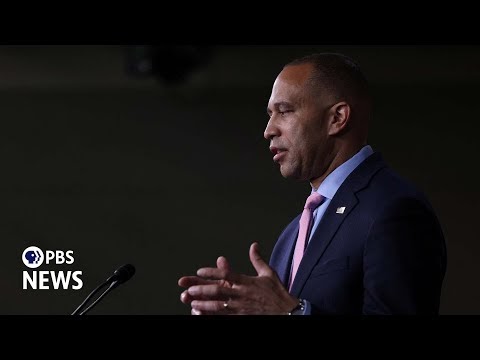
In a fiery and prophetic address, the House Minority Leader Hakeem Jeffries invoked the memory of America’s original struggle for freedom, branding the tyranny of King George III in the years before the American Revolution as “Project 1775.” With bold clarity, he drew a straight line from that era of oppression to today’s rising authoritarianism—what he identified as “Donald Trump’s Project 2025” and the accompanying Trump Spending Bill. But rather than ending in despair, his speech was a call to courage and hope: just as Project 1775 gave birth to the Revolution of 1776, we are called to give birth to a new movement—Project 2026, a revolutionary vision of democracy, justice, and renewal.
His message resonates beyond politics—it speaks deeply to the state of American higher education, which now stands at a crossroads. Under siege from authoritarian impulses, stripped of funding, and commodified by corporate greed, our colleges and universities reflect a nation in spiritual crisis. But as the Minority Leader reminded us, this moment is also one of great opportunity.
“For God has not given us a spirit of fear, but of power and of love and of a sound mind.” (2 Timothy 1:7)
Project 2026 is not merely a reaction to tyranny—it is a faith-driven declaration of agency. It is a call to restore education as a public good, not a private racket. It is a rejection of robocolleges, shadowy online program managers, and predatory lenders that have turned learning into a means of lifelong debt. And it is a stand against those who weaponize ignorance and rewrite history for their own gain.
We are reminded in the New Testament that resistance is righteous, and that reform must be rooted in love, justice, and truth.
“And you will know the truth, and the truth will set you free.” (John 8:32)
This truth must guide the next phase of the American experiment—a truth that recognizes students not as consumers but as citizens; that sees teachers not as disposable labor but as bearers of light; and that understands education as liberation, not subjugation.
Project 2026 can become our modern Sermon on the Mount, a blueprint for building a nation where colleges nurture both critical thinking and spiritual compassion, where public funding is a covenant—not a weapon—and where we “do justice, love mercy, and walk humbly with our God” (Micah 6:8).
For decades, institutions of higher learning have drifted toward elitism, exclusion, and exploitation. Many have served as tools of empire, not vessels of enlightenment. Project 2026 offers a rebirth—a Great Awakening that opens the doors of education wide to the poor, the marginalized, and the weary. It speaks to the tired adjunct, the indebted graduate, the first-generation student, and the worker seeking dignity.
“Blessed are those who hunger and thirst for righteousness, for they will be filled.” (Matthew 5:6)
This is the moment to stand together. Project 2026 must not be left to chance or left in the hands of the powerful alone. It is a grassroots revolution of the mind and spirit—a multiracial, multigenerational, moral movement that calls upon students, faculty, parents, and communities to say: No more.
No more austerity cloaked as fiscal responsibility.
No more censorship masquerading as patriotism.
No more debt for a degree that leads to precarious work and empty promises.
Instead, let us build an education system worthy of democracy—a system animated by the values that once inspired a ragtag group of rebels in 1776. Let us be the generation that reclaims education as the soul of the Republic.
“Do not conform to the pattern of this world, but be transformed by the renewing of your mind.” (Romans 12:2)
The struggle ahead will not be easy. But neither was 1776. And yet from that fire emerged a new nation. With faith and fierce love, Project 2026 can become a new declaration—not just of independence, but of interdependence. A declaration of solidarity with the forgotten, the silenced, and the struggling.
Let the tyrants tremble. Let the profiteers beware.
A revolution is stirring in our hearts.
And as Scripture reminds us:
“If God is for us, who can be against us?” (Romans 8:31)
A conservative research centre has recommended initial teacher education (ITE) courses be removed from universities and be once again set up through independent colleges.
Please login below to view content or subscribe now.
In 2020, I was asked to sign a pledge that felt more like an empty confession of guilt than a productive call to action—an admission that my university, and I, were complicit in white supremacy. Signing the pledge, backed by our Faculty Senate, meant acknowledging “the University of Cincinnati is an institution founded on white supremacist values in a country founded on the same … that we have benefitted and continue to benefit from white supremacy through the opportunities, advancements, inclusion, sense of self-worth, and freedom it has allowed us … that in our complicity [with white supremacy] we have likely contributed to emotional suffering in Black people, including UC faculty, staff, and students.” The roster of university employees who signed the pledge would be posted publicly.
I was told that my discontent was just a symptom of my white privilege and spent ample time exploring whether this was true. I put in the work, a popular phrase at the time, by reading How to Be an Antiracist and White Fragility. Maybe I had missed something and Ibram X. Kendi and Robin DiAngelo would provide clarity.
The ideas I found were poorly constructed and dehumanizing. Ideology aside, signing a public loyalty pledge felt dystopian and counterproductive. I imagined myself as a first-year student of color who saw that my white faculty had signed a pledge admitting that the education system was designed for me to fail and that they had actively supported my failure. Why bother trying to succeed when university employees were willfully admitting to violating my civil rights?
Over the next couple of years, I chose to remain silent whenever these ideas resurfaced out of fear that speaking out could jeopardize my career. I was told that my silence was complicity, and indeed I had been complicit in letting these toxic ideas echo without so much as a whimper. As the 2020s stretched onward, though, I noticed the loudest and most extreme voices that sometimes dominated the conversation were largely ignored, and their demands were not met. Despite calls by a vocal few, there wasn’t much appetite on campus for the “antiracist discrimination” that Kendi called for or the white saviorism promoted by DiAngelo.
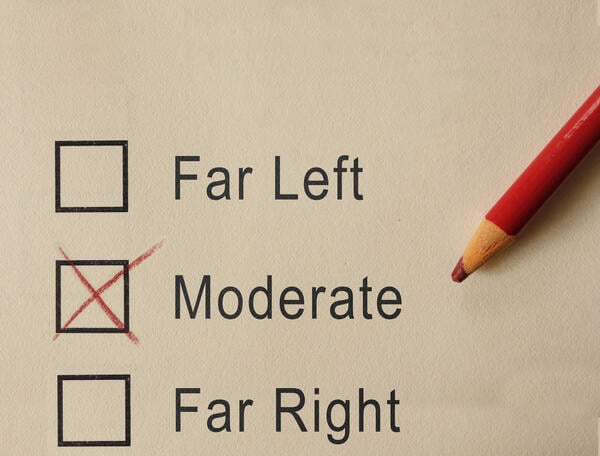
The university held firm in its moderate approach to diversity, equity and inclusion and mostly expanded resources for all students without restricting access by identity group. It is worth noting that most DEI initiatives and offices on campus offer noncontroversial services like tutoring, mental health counseling and accessibility services like sign language interpreters. But the public and politicians were forming their opinions of DEI based on the voices of those with the megaphones and lucrative book contracts.
Last year, I enrolled in a graduate program in urban educational leadership and dived into the very discussions I had avoided for so long. I read the foundational critical race theory literature, one of the predominant theories in the DEI realm. Although I found many ideas with which I disagreed, I also found a robust field that has much to offer in terms of the ways we think about educating our students, understanding the needs of diverse communities and working together to create better opportunities for everyone. Most importantly, when I actively pushed back on concepts that I found disagreeable, it resulted in great discussions with instructors and in developing more robust ideas. I discovered there is room for debate in the DEI space and my own silence had been self-imposed.
Many of my classmates are running the very DEI programs under threat by legislation and funding cuts. These programs provide educational resources to the underemployed and mentorship and financial resources to students who desperately need it, and they encourage student civic engagement—the very thing lauded by the Ohio Senate bill banning DEI offices and the use of DEI considerations in hiring, scholarships and trainings. (The bill, signed by the governor in March, goes into effect at the end of this month.)
Since 2020, I have been slowly forced to confront my own fundamental assumptions that might have once led me to support legislation like Ohio’s Senate Bill 1. Blockbuster voices like Kendi’s and DiAngelo’s are not reflective of the everyday practices within my institution, and the few moments that deterred me from speaking were just moments, likely caused by the same flavor of polarization that impacts the entire country. Polarization is not just a higher ed problem, but a national problem that has been simmering for more than a decade.
Current legislation targeting DEI upholds the most radical media-amplified voices as representative of the whole, even though these voices have been largely unsuccessful on many public campuses. Our university is not Columbia or Harvard, yet it seems as if legislators are attempting to punish our institution for the sins of its private counterparts. But when there are no loud moderate voices, how can we expect the public to see anything other than the extremes?
I find myself at a crossroads again. I could stay silent, as I did in 2020, but the silence of moderate voices has gotten us here, and silence will only result in negative outcomes for our students, faculty and staff. The time for silence is over—was over—long ago. The caricature of higher ed that you see in political rhetoric is not reflective of my university. We must be more vocal in challenging the narrative that our institutions are ideologically captured.
We still have much work to do in higher ed, and it’s not good enough to simply resist legislation without acknowledging the need for a renewed call for moderation. This moderation only comes when those with diverse viewpoints work together to ensure the success of all our students. This means reaffirming our commitment to understanding and addressing the unique needs of our student populations.
We must also come to terms with emerging research that shows some practices designed to challenge oppression on campus may promote its proliferation and thoroughly analyze the impact of our actions on student success. To quote U.S. Supreme Court Justice Louis Brandeis, “If there be time to expose through discussion the falsehood and fallacies, to avert the evil by the processes of education, the remedy to be applied is more speech, not enforced silence.”
We need brave, diverse voices and productive disagreement, not legislation, to bolster higher education’s mission to pursue the truth for the sake of human flourishing.
Chris Cooper is unit head and professor in the Engineering and Applied Science Co-op Program at the University of Cincinnati.
Professor Jack Lipton scored a victory for free speech last week after a federal court allowed his lawsuit to move forward against two Michigan State University trustees who he claims not only urged students to call him racist, but told them how to phrase it.
In his lawsuit, Lipton alleged that two trustees, Rema Vassar and Dennis Denno, met with MSU students, encouraged them to file complaints against Lipton with MSU’s internal civil rights office, and asked students to condemn Lipton as racist in public statements, op-eds, and on social media. MSU hired the law firm Miller & Chevalier to conduct an independent investigation, producing a report you can read online. According to Lipton, it found that Vassar and Denno planned the attacks and even provided others with specific language to paint Lipton as racist, anti-Palestinian, and anti-Muslim.
For example, in one recorded conversation, Denno told students, “The other thing you can do to help us is attack Jack Lipton, the Chair of the Faculty Senate . . . call him out, call him a racist.”
What was Lipton’s “racist” crime?
In October 2023, at a public Board of Trustees meeting that followed an open letter accusing then-BOT Chair Vassar of ethics violations, Lipton read a resolution on behalf of faculty calling for Vassar’s resignation. The meeting erupted in chaos, marked by jeers from Vassar’s supporters.
The Constitution doesn’t cease to exist just because someone’s feelings got hurt at a trustee meeting.
The next day, while making clear he was speaking in his personal capacity and not as a faculty representative, Lipton told a reporter that Vassar could have stopped the chaos of the meeting with “a single statement … yet she elected to let the mob rule the room.”
That single word — mob — triggered what Lipton describes as a coordinated retaliation campaign by Vassar and Denno.
Lipton apologized for using the word “mob,” as well as for any unintended racial undertones, but did not stop calling for accountability over Vassar’s alleged ethics violations — and he says Vassar and Denno’s harassment of him continued.
In November 2023, the NAACP Michigan State Conference Youth & College Division released a statement accusing Lipton of “racial terrorism.” Also that month, the organization Diverse: Issues In Higher Education published an op-ed arguing that Lipton had used the word “mob” because he wanted to traumatize black and Palestinian students. At a BOT meeting that December, Denno read a statement accusing Lipton of “criminalizing students” and described his use of the word “mob” as “racism and violent language.”
What’s more, even though the board eventually voted to censure both Vassar and Denno, as advised by investigators for a range of misconduct including their attacks on Lipton, Vassar didn’t stop there. At a meeting in September 2024, she mocked Lipton and questioned his right to speak on matters of civil discourse, which he cites as yet another effort to chill his speech.
In language as dry as it was devastating, the court summarized the allegations that these trustees abused their power to carry out what amounts to a smear campaign. Lipton claims that Vassar and Denno “used their positions as BOT members to attack Lipton for the comment he made as a private citizen” and “used their BOT pulpit to funnel adverse action towards Lipton via proxies, leveraging their BOT membership to speak through students, supporters, and members of the public.”
The court also noted that Lipton’s original “mob” comment was “speech regarding matters of public concern,” as it critiqued the behavior of a public official at a public meeting, and Lipton made the remark as a private citizen. The First Amendmentprotectsfaculty when they speak as private citizens on matters of public concern, such as raising state university ethics violations to the media, as Lipton did.
UPDATE: Another federal appeals court backs academic free speech for public employees
After FIRE secured a lawyer for a law professor at the University of Illinois Chicago, the school reached a resolution but later reneged on the deal. That’s when the professor sued.
While the court dismissed MSU and its Board of Trustees as defendants, Lipton is now free to pursue his claims against Vassar and Denno themselves — and they have not exactly covered themselves in glory. The university investigation that recommended their censure found that Vassar had taken courtside tickets and free flights while Denno had pressured consultants reviewing MSU’s response to the 2023 mass shooting on campus to tone down any criticism of the trustees. In fact, just this week, Gov. Gretchen Whitmer declined the MSU board’s official request to remove Vassar and Denno, though the governor’s counsel said this “by no means indicates a condoning of the conduct alleged in the referral.” Vassar and Denno may have retained their seats on the board, but they are hardly out of the woods.
Now, Lipton’s case moves to discovery, where we’ll get a closer look at how MSU’s top brass reacted when a faculty member stepped out of line by doing his civic duty, and potentially to trial. While this week’s court decision is far from a final ruling, it shows the court believes Lipton’s allegations deserve to be heard, and it’s a reminder that the Constitution doesn’t cease to exist just because someone’s feelings got hurt at a trustee meeting.
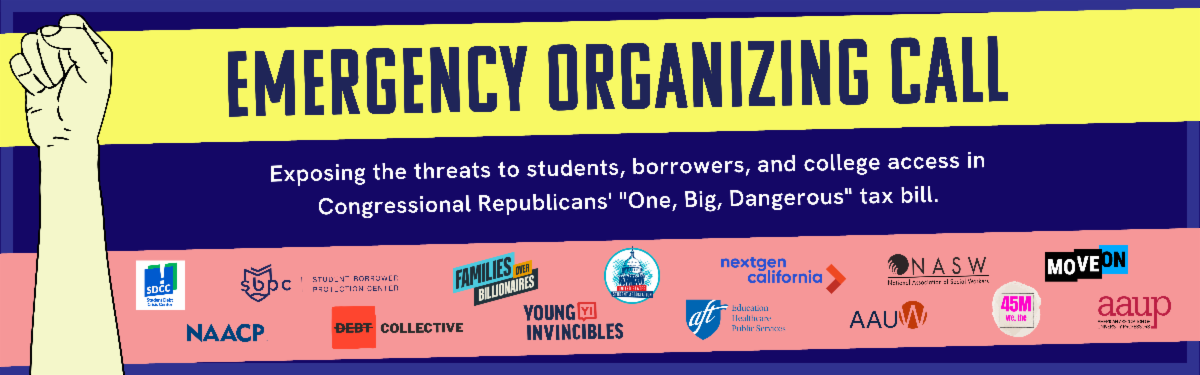
This bill threatens to gut $350 BILLION in critical education programs to deliver $4.5 TRILLION in tax cuts to billionaires. House Republicans’ plan to slash the Pell Grant and other financial aid programs and eliminate basic protections for students—this will only make college more expensive and force millions of working families with student debt further into the red.
So far, we have nearly 1,000 (!) RSVPs from all over the country planning to take part in this call. We will hear from policymakers, movement leaders, and affected students and borrowers on how this bill will harm our communities and how you can get more involved to protect students and working families—NOT billionaires.
You won’t want to miss this—make sure to RSVP below and clear your calendar for TOMORROW at 7PM ET.
A coalition of labor unions representing faculty and other higher education workers called for free college and more Thursday—the same day House Republicans passed their reconciliation bill, which would cut Pell Grants and target postsecondary education in other ways.
The federal policy agenda is from Higher Ed Labor United (HELU), which seeks to unify all types of higher ed workers—academic and nonacademic, unionized or not—in a single national coalition that can organize together.
The other broad prongs of HELU’s agenda are to:
Establish strong labor standards on every campus
End the crises of student and institutional debt
Rebuild and expand the nation’s research infrastructure
Enshrine and protect the right to learn, speak freely and teach without fear or retaliation
Ensure democracy and shared governance for those who work, learn and live alongside colleges and universities
“Now is the time to rally our forces and offer a different vision of higher education and a positive path forward,” said Todd Wolfson, president of the American Association of University Professors and a founder of HELU, at a news conference in Washington, D.C.
“Higher ed is under a withering assault right now,” Wolfson said. “But it’s important for us to be clear: The assault on higher ed did not begin with Trump.”
“As a sector, we have suffered through 50 years of federal and state divestment,” Wolfson continued. He said this has led to, among other things, “skyrocketing tuition” and a lack of job security for campus workers.
“The corporatization and neoliberal attacks on our universities are entwined with the right-wing authoritarian attacks,” Wolfson said. “They want to stop political dissent,” and, “as higher education goes, so goes democracy.”
Two Democratic politicians—Rep. Mark Takano of California and Sen. Ed Markey of Massachusetts—spoke at Thursday’s event alongside leaders from multiple unions. Markey said House Republicans “have proposed a budget that will decimate the Pell Grants, leaving colleges out of reach for hundreds of thousands of low-income and first-generation students.”
“Donald Trump and Republicans don’t want freedom, they don’t want democracy, they want control,” including over curricula, research and student speech, Markey added.
There’s some very weird, strange and dangerous shit going on out there right now. In America, they are persecuting people for using their right to free speech and voicing their dissent. This is happening now. — Bruce Springsteen (May 14)
Was “the Boss” being partisan there? Donald Trump thought so:
“This dried out ‘prune’ of a rocker (his skin is all atrophied!) ought to KEEP HIS MOUTH SHUT until he gets back into the Country, that’s just ‘standard fare.’ Then we’ll all see how it goes for him!”
Just goes to show that there are two sides, both of them “partisan.” The singer has his partisan views, and so does the suppressor. We just need to chill, get along, and hear both sides. Ah yes, a Kumbaya embrace — yuck!
The ‘Big Chill’
Do you remember those “nonpartisan” folks who were so outraged by what was going on in the cancel culture world of college campuses? How they lamented the way the censorial mindset was choking the First Amendment? Oh, those First Amendment champions were so incensed.
And fair enough, things were wildly out of control and those liberals responsible for supporting or allowing such censorship had to be called out. Again, fair enough. Of course, those who tolerated college censorship (dare I say “liberals”?) are now livid by what is going on. Rightfully so.
But where are those guardians of free speech (dare I say “conservatives”) now? When never a day goes by when the Trump administration does not abridge the First Amendment with wild abandon?
Censorship is censorship!
Given where we are today, I’m tired of such rhetorical gaming. Censorship is censorship, period! The hell with the thinking that one must walk on “nonpartisan” eggshells before speaking too loudly or too often against censorship when it is as constant as it is today under this administration.
Take heed: It was not partisan to boldly condemn John Adams or Woodrow Wilson or Joseph McCarthy for their crusades of suppression. And it was not partisan to call out their supporters who sat silently in the face of such tyranny. In such a world, there are not “two sides” such that the likes of Bill Maher could dine with “nonpartisan” delight with a “measured” opponent of free expression.
Seven free expression groups speak out — Yes!
Thus, I was delighted to learn that seven groups had written an open letter to “universities, media organizations, law firms, and businesses” to stand up against the “Trump administration’s multi-front assault on First Amendment freedoms.”
Before I say more, let me quote from the timely and important open letter that these seven groups just released. First this: “In little more than 100 days, President Trump and the agencies under his control have threatened First Amendment rights through a breathtaking array of actions.”
After that introduction, they listed an indictment of free speech abridgments, and in a style reminiscent of the indictment in the Declaration of Independence, they have delineated specific things the administration has done (I have added bullets to their text):
They have sought to control speech and association by imposing unconstitutional conditions on a wide range of federal grantees and contractors.
They have sanctioned lawyers for their representation of people whom the president views as political enemies.
They have arrested, detained, and threatened to deport international students — including lawful permanent residents — solely because of their participation in lawful political protest.
They have purged crucial datasets from government websites, gutted agency offices responsible for compliance with the Freedom of Information Act, and imposed new and indefensible restraints on public employees’ right to speak on matters of public concern.
They have invoked civil rights laws to justify extensive and unwarranted intrusions into universities’ autonomy and academic freedom.
Resurrecting a policy introduced during President Trump’s first term, they have barred legal scholars from providing information and expertise to the International Criminal Court.
They have banned the Associated Press from the White House press pool because it declined to update its stylebook to refer to the Gulf of Mexico as the “Gulf of America.”
Books have been removed from U.S. military service academy libraries, and other federally operated educational institutions, because they do not conform to the administration’s ideological preferences, and federal funds are being used as a cudgel to censor curriculum and promote the administration’s viewpoints in schools.
The Federal Communications Commission has threatened to revoke the licenses of television and radio networks and stations whose reporting the administration disfavors.
As Professor Timothy Zick has so ably documented, the Trump administration’s assault on free expression is unprecedented. The following assessment from the seven groups echoes what is reliably set off in detailed form in Zick’s repository over at First Amendment Watch:
There have been other times in our nation’s history that witnessed sustained and misguided efforts to suppress speech. All of our organizations have opposed both Democratic and Republican administrations when they abridged First Amendment freedoms — as all of them, at various points, have done. But we share the view that the Trump administration’s actions, taken together, represent an extraordinary and in some ways unprecedented challenge to First Amendment rights and the values they embody [emphasis added]. These actions call for a forceful, uncompromising response. Some institutions have countered in exactly this way, to their credit.
Where the hell are other free speech groups and individuals?
Against that backdrop, I ask: where the hell are all those other groups, who when it came to campus censorship were so outspoken in defense of free expression? Why don’t they have their own open letters? Why are so many of those groups not openly endorsing the courageous assessments of those who, like Judge Michael Luttig, condemn the tyranny that is Trump? Too many conservative and liberal groups are afraid to speak out, afraid to put their names on the line.
Judge Michael Luttig
What we are witnessing today is a BIG CHILL effect of enormous magnitude. Some liberals (in law firms, universities, think tanks, and elsewhere) are afraid to speak out, lest they be attacked by one of the president’s executive orders. By the same token, some conservatives are afraid to speak out (on their blogs or elsewhere) for fear that they will lose stock in their ideological world, or fall victim to Trump’s wrath.
Bottom line: Tyranny is tyranny, and condemning it is not partisan — it’s American!
Recent samples of the BIG CHILL in suppressive operation
The decision by nine of America’s biggest law firms to “bend the knee” to President Trump drew condemnation among lawyers across the political spectrum, including from attorneys inside the firms who quit or launched resistance campaigns. Others have chosen a less career-limiting form of rebellion.
That would be offering leaks to Above the Law, a pugnacious legal industry website best known for scoops about law firm annual bonuses, snarky coverage of legal news and salacious stories of barristers behaving badly. But since March, when Mr. Trump began targeting for retribution top law firms whose clients and past work he does not like, Above the Law has become a rage read for lawyers incensed at the firms that accommodated him.
Fueled by a stream of inside-the-conference-room exclusives, Above the Law delivers a daily public spanking to what it calls “The Yellow-Bellied Nine.” Those are the elite firms that pledged a collective $1 billion in free legal work to Mr. Trump after he signed executive orders threatening to bar their lawyers from federal buildings, suspend their security clearances and cancel their government contracts.
Coming next week on FAN: Timothy Zick on institutional independence and democratic backsliding
Although the Trump Administration’s agenda regarding freedom of expression can appear chaotic, one consistent strategy has been attacking institutions that are essential to checking executive power. It is no accident that many of President Trump’s Executive Orders and the agency actions they direct have targeted the media, universities and faculty, law firms, libraries, and museums. These and other entities are sometimes referred to as “First Amendment institutions” or “knowledge institutions,” because they contribute to and facilitate public discourse and are necessary to a free and open society.
‘[Re]Distributed for Conference’ — SCOTUS mantra in some First Amendment cases
Apparently, the Justices are so overworked with all the Trump emergency appeals that they have to continue to pause on what to do with some of the First Amendment cases on their docket. For example, consider the following petitions:
Jessica Levinson on Comey, protected speech, and DOJ investigation
Professor Jessica Levinson
Questions are swirling following the launch of a federal investigation into former FBI Director James Comeyover a now-deleted social media post of seashells arranged in the numbers “8647” on the beach. (“Eighty-six” is commonly understood to mean “get rid of.” President Trump is the 45th and 47th President of the United States.) Was Comey calling for the assassination of Trump? Or was he, as he has since stated, expressing a political opinion about Trump?
If Comey’s post amounted to a siren song, beseeching others to kill the president, he can be punished for his speech. But should Comey’s post be viewed as political advocacy, which I argue it should, he is entitled to the full protection of the First Amendment.
The genuine threat is not that a president’s life is in danger, but that the Trump administration is attempting to silence the speech of political adversaries. Even if it is unlikely that Comey faces anything more than a slap on the wrist for his post, the decision to open an investigation in and of itself should be worrisome. Comey has access to the media and resources to defend himself. Not everyone does. And the prospect of chilling political speech critical of government officials should concern all of us.
Statement from the Institute for Free Speech on party coordination limits
The Institute for Free Speech commends the Department of Justice’s decision in National Republican Senatorial Committee v. FEC to acknowledge that federal limits on coordinated expenditures between political parties and their candidates violate the First Amendment. In a dramatic and unusual shift, the DOJ is now asking the Supreme Court to overturn its 2001 decision in Colorado Republican Federal Campaign Committee v. FEC (Colorado II).
“The Solicitor General’s recommendation that the Court grant the petition is a commendable move that acknowledges the First Amendment flaws in these limits,” said Institute President David Keating. “As we argued in our amicus brief, the factual basis underpinning Colorado II has been proven wrong by real-world evidence.”
The Institute’s brief demonstrated that over half the states allow unlimited party coordination, including 17 states that also restrict individual contributions—yet there is no evidence of these arrangements leading to corruption. The DOJ’s brief now acknowledges this reality, recognizing that the law represents a “prophylaxis-upon-prophylaxis approach” that fails heightened First Amendment scrutiny.
“When more than half the states manage to operate elections without restricting coordinated party expenditures and without giving rise to any relevant quid pro quo corruption, it is hard to believe that the law is ‘necessary to prevent the anticipated harm,’” noted the Institute’s brief.
The NRSC case challenges federal limits on how much political parties can spend in coordination with their candidates under 52 U.S.C. 30116(d). These restrictions severely burden the core function of political parties—to support and promote their candidates.
[ . . . ]
To read the Institute’s amicus brief in the case National Republican Senatorial Committee v. FEC, click here. To read the Solicitor General’s just-filed brief, click here. To read Institute Senior Attorney Brett Nolan’s expert analysis on the Sixth Circuit’s decision in NRSC, click here.
Claim: The ‘deluge of pornography has had a negative impact on modern society’
Christine Emba
It’s hard not to see a connection between porn-trained behaviors — the choking, slapping and spitting that have become the norm even in early sexual encounters — and young women’s distrust of young men. And in the future, porn will become only more addictive and effective as a teacher, as virtual reality makes it more immersive and artificial intelligence allows it to be customizable. (For a foretaste of where this might end up, you can read a recent essay by Aella, a researcher and sex worker, on Substack defending A.I. child porn.)
In her new book “Girl on Girl: How Pop Culture Turned a Generation of Women Against Themselves,” Sophie Gilbert critiques the mass culture of the 1990s and 2000s, noting how it was built on female objectification and hyperexposure. A generation of women, she explains, were persuaded by the ideas that bodies were commodities to be molded, surveilled, fetishized or made the butt of the joke, that sexual power, which might give some fleeting leverage, was the only power worth having. This lie curdled the emerging promise of 20th-century feminism, and as our ambitions shrank, the potential for exploitation grew.
[ . . . ]
[W]hile Ms. Gilbert is unsparing in her descriptions of pornography’s warping effect on culture and its consumers, she’s curiously reluctant to acknowledge what seems obvious: Porn hasn’t been good for us. While her descriptions of the cultural landscape imply that the mainstreaming of hard-core porn has been a bad thing, she pulls her punches.” (emphasis added)
Forthcoming scholarly essay on ‘Fascist Government Speech’
Professor G. Alex Sinha
On the day he was sworn in for a second term, President Trump issued pardons and commutations to all of his supporters who attacked the U.S. Capitol on January 6, 2021. This sweeping act of clemency gave legal effect to a longstanding grievance: Ever since the attack, which disrupted congressional certification of his 2020 election defeat, President Trump has consistently glorified the attackers and denounced their prosecutors. In defending the clemencies two days after issuing them, President Trump reiterated familiar themes — once more refusing to acknowledge that he lost the 2020 election, celebrating the patriotism of his supporters, and maligning those who pursued their accountability through what became the largest criminal investigation in U.S. history.
President Trump’s script was so familiar that it obscured a constitutional novelty. For most of the time between the January 6 attack and the subsequent clemencies, President Trump was not the president. He was a private citizen, and his speech about January 6 was protected by the First Amendment even to the extent that it was false or dangerous. But, by noon on January 20, 2025, he was once again President Trump—a government official, speaking on behalf of the government, and thus uttering government speech. Government speech is not protected by the First Amendment, but rather by an evolving set of Court-fashioned rules known collectively as the government-speech doctrine. In an instant, his comments took on an entirely new constitutional cast.
Ordinarily, this transition would be unremarkable; it occurs whenever a private citizen assumes a governmental role. But, combined with their content, President Trump’s statements — on this subject and many others — create a serious First Amendment problem. His remarks are deeply and distinctly illiberal, calibrated to undermine, falsely, the democratic legitimacy of a previous administration and to rewrite the history of an insurrectionist threat that would have allowed him to maintain power by violent and anti-democratic means. It is fascist speech, which invites wildly different constitutional analysis depending on its source.
Accordingly, this paper introduces and evaluates the concept of fascist government speech — a category we can no longer afford to ignore. Our First Amendment free-speech rights spring in substantial part from a commitment to self-governance, and the protections that follow generally extend to private fascist speech as part of a forceful commitment to free debate that courts and scholars have long believed would facilitate a robust democracy. By contrast, the basis of the government-speech doctrine is functional necessity, a recognition that our democratic self-governance would be rendered ineffective if the government could not spread its message. That backstory simply cannot justify protecting fascist government speech, which directly undermines the basis for governmental communicative prerogatives. Yet the doctrine, as constituted, ultimately does protect fascist government speech. Worse still, the doctrine operates to abrogate private free-speech claims, a result that is distinctly perverse when the abrogation functions to amplify fascist government speech. This paper therefore argues for significant revision to the government-speech doctrine to blunt the threat of fascist government speech.
2024-2025 SCOTUS term: Free expression and related cases
Cases decided
Villarreal v. Alaniz(Petition granted. Judgment vacated and case remanded for further consideration in light of Gonzalez v. Trevino, 602 U. S. ___ (2024) (per curiam))
Murphy v. Schmitt (“The petition for a writ of certiorari is granted. The judgment is vacated, and the case is remanded to the United States Court of Appeals for the Eighth Circuit for further consideration in light of Gonzalez v. Trevino, 602 U. S. ___ (2024) (per curiam).”)
TikTok Inc. and ByteDance Ltd v. Garland (9-0: The challenged provisions of the Protecting Americans from Foreign Adversary Controlled Applications Act do not violate petitioners’ First Amendment rights.)
Review granted
Pending petitions
Petitions denied
Emergency Applications
Yost v. Ohio Attorney General (Kavanaugh, J., “IT IS ORDERED that the March 14, 2025 order of the United States District Court for the Southern District of Ohio, case No. 2:24-cv-1401, is hereby stayed pending further order of the undersigned or of the Court. It is further ordered that a response to the application be filed on or before Wednesday, April 16, 2025, by 5 p.m. (EDT).”)
Free speech related
Mahmoud v. Taylor (argued April 22 / free exercise case: issue: Whether public schools burden parents’ religious exercise when they compel elementary school children to participate in instruction on gender and sexuality against their parents’ religious convictions and without notice or opportunity to opt out.)
Thompson v. United States (decided: 3-21-25/ 9-0 w special concurrences by Alito and Jackson) (interpretation of 18 U. S. C. §1014 re: “false statements”)
This article is part of First Amendment News, an editorially independent publication edited by Ronald K. L. Collins and hosted by FIRE as part of our mission to educate the public about First Amendment issues. The opinions expressed are those of the article’s author(s) and may not reflect the opinions of FIRE or Mr. Collins.