
Tag: Call

  • Stakeholders call bluff on anti-OPT bill

    Stakeholders call bluff on anti-OPT bill

    Titled H.R. 2315, the Fairness for High-Skilled Americans Act, the bill was reintroduced by Gosar, who argued that OPT “undercuts American workers” and lets “greedy businesses hire inexpensive foreign labour” without providing benefits.

    “Never authorized by Congress, OPT circumvents the H-1B visa cap set by Congress by allowing over 100,000 aliens admitted into our country on student visas to continue working in the United States for another three years after completing their academic studies,” read a statement by Gosar.

    “The OPT program completely abandons young Americans who have spent years and tens of thousands of dollars pursuing careers in science, technology, engineering, and mathematics only to be pushed out of those fields by cheap foreigners.”

    Though the legislation has been referred to the House Committee on the Judiciary, stakeholders have already shut down any possibility of it passing the US House of Representatives in the future. 

    While proposals like this tend to generate headlines, the likelihood of this bill advancing in Congress is extremely low
    John Evans, Catalyst Gem

    “While proposals like this tend to generate headlines, the likelihood of this bill advancing in Congress is extremely low,” John Evans, co-founder and CEO, Catalyst Gem, a US-based software and services company specialising in international student admissions, told The PIE News

    “The last serious attempt to eliminate OPT came in 2020 and failed in the face of overwhelming bipartisan, legal, and economic opposition. Despite significant political pressure, the program remained fully intact, without any modifications, because of its recognised value to the US economy and workforce development.”

    This isn’t Gosar’s first attempt to target the OPT program. In 2019, he introduced similar legislation and urged its termination through an executive order by President Donald Trump, who was serving his first term at the time.

    Following Gosar’s move, WashTech – a union representing STEM workers – also took legal action, suing the US government over its 1992 rule that established the 12-month OPT program and the 2016 regulation which allows eligible STEM graduates to extend OPT by 24 months.

    But the idea that OPT displaces American workers with international graduates is far from the truth, according to Evans. 

    “As of April 2025, the US had 7.6 million job openings, with high-skill sectors such as tech, healthcare, and engineering facing some of the greatest shortages,” he explained.

    “Looking ahead, the US is projected to create 1.1 million new STEM jobs over the next decade and will need a continued pipeline of talent, including OPT, to support this growth. Failure to meet this demand will weaken the US position in the global economy, particularly if the talent is directed elsewhere.”

    Despite efforts by the Trump administration, which pushed to restrict or eliminate OPT under the direction of then senior advisor to the President, Stephen Miller, the proposed changes were ultimately abandoned due to strong opposition from universities, business leaders, and other key groups.

    Since then, OPT has remained a critical part in international appeal for US education and in 2023, the number of international students participating in the program rose to 242,782 – a 22% jump from the year before. 

    This surge played a significant role in pushing the overall international student population in the country to a record 1.1 million, with OPT participants making up a substantial portion of that total.

    “I don’t see this bill going anywhere as the US needs more highly skilled workers – both American and otherwise to fuel an economy that is moving towards doing more highly skilled work in the US,” stated Mark Kopenski, president and CEO, Global Student Recruitment Advisors, a consultancy firm handling international student recruitment and enrolment strategies for educational institutions. 

    “The (Trump) administration has been bullish on creating paths to permanent residence for highly skilled and educated individuals from around the globe. This will take some time as there is a clearing out of many individuals that have come to the US illegally and without skills, financial resources and abilities that the US desires.”

    According to Kopenski, programs like the “Gold Card Visa” are designed to attract highly skilled talent and noted that some international students in the US have already acquired or are planning to acquire these visas.

    Although programs like the H-1B visa, which allows US employers to temporarily hire international workers in specialised fields, have faced scrutiny during Trump’s second term, the former president has voiced support for granting green cards to international college graduates. 

    However, no legislation has materialised to back this proposal, and instead, international graduates are encountering growing restrictions.

    Since Trump’s inauguration in January this year, hundreds of international students have been detained and seen their visas revoked on US college and university campuses, often without any prior warning. 

    As per reports, over 80 US universities have reported visas being revoked for some of their international students. 

    Last month, US Secretary of State Marco Rubio stated that over 300 student visas had been revoked due to activities deemed “against US national interest.” 

    Experts suggest the revocations may be tied to students’ involvement in pro-Palestine protests or minor legal infractions, such as speeding, with some facing deportation or being asked to leave the country.

    The move has led to condemnation from US educators, who have slammed the “alarming” and “deeply disturbing actions” of the Trump administration. 

    The move could possibly contribute to an already declining interest in studying in the US, as highlighted by a recent survey conducted by StudyPortals. 

    Evans commented: “To rebuild confidence, the US must adopt a more consistent, transparent, and student-centred approach to international admissions and immigration, like the streamlined policies seen in Canada, the UK, and Australia. This effort must be reinforced by public messaging and policies that clearly state: ‘You are welcome here, and your contributions matter.’”

    Meanwhile, Kopenski sees this as short-term declining interest, set to “correct itself as the US strengthens its attractiveness as a destination that provides the ultimate springboard to wealth and prosperity”.

    Source link

  • Democratic senators call for probe of Trump Education Department cuts

    Democratic senators call for probe of Trump Education Department cuts

    This audio is auto-generated. Please let us know if you have feedback.

    Democrat efforts to challenge President Donald Trump’s dismantling of the U.S. Department of Education mounted Thursday, as 11 senators asked the agency’s acting inspector general, René Rocque, to investigate the push. 

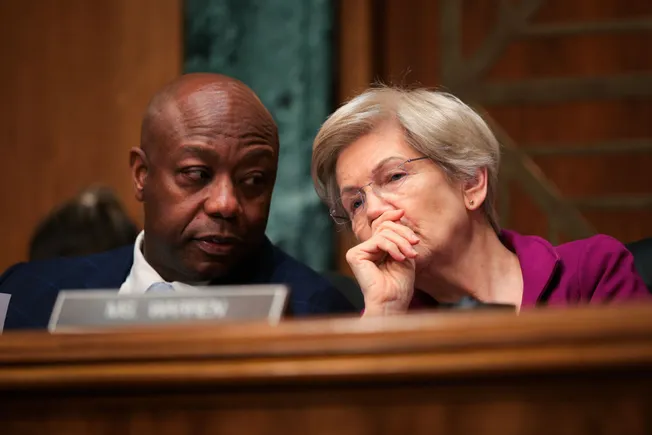
    Sen. Elizabeth Warren and senate Minority Leader Chuck Schumer were among those requesting an evaluation of whether the administration is undermining the Education Department’s ability to provide students with equal access to education and to help state and local governments’ education systems

    “Decimating the Department of Education’s abilities to administer financial aid, investigate civil rights violations, conduct research on educational outcomes, and oversee the use of federal education grants threatens to have disastrous consequences for American students, teachers and families,” they wrote in a March 27 letter to Rocque. 

    “The Trump Administration’s further attempts to close the Department entirely and transfer its responsibilities over to other agencies will likely interrupt and degrade education programs and services, causing additional pain for the 62 million students across the country that the Department serves.” 

    The administration’s gutting of the Education Department not only impacted nearly half of the department’s workforce, but also left civil rights investigation and enforcement offices at half their previous capacity, cut the Federal Student Aid office by over 450 employees, and slashed 90% of the Institute of Education Sciences staff. 

    These decisions would likely impede key functions of the department, including ensuring all students’ civil rights are protected, administering federal loans and overseeing lenders and FAFSA, and tracking students’ educational outcomes and the condition of education in the nation, the Democratic senators told Rocque.

    Rocque, who joined the Education Department’s Office of Inspector General as deputy inspector general in December 2023, became acting director in January.

    As with many other issues dividing lawmakers today, Democrats and Republicans have been starkly divided over the Trump administration’s efforts to eliminate the department altogether. This makes attaining a Senate supermajority of 60 votes — which is required to officially shut the department — unlikely. 

    House Democrats introduced a resolution on March 21 calling for transparency and information from the administration, including unredacted copies of all federal documents referring to the department’s closure and information on workforce reduction decisions.

    About a week after the massive reduction in force on March 11, Democrat lawmakers from both the House and Senate wrote the department demanding information on the layoffs, saying that halving its workforce could impact the agency’s ability to perform vital functions required by law.

    Meanwhile, Republicans in some states have taken the opportunity to ask the administration for more leeway in their education spending. 

    On March 25, for example, Oklahoma State Superintendent Ryan Walters sent a letter to the Education Department requesting a waiver to receive a block grant for all funds allocated to his state under the Every Student Succeeds Act. Such a consolidated block grant would “significantly enhance local flexibility” so “schools will be able to address their unique needs and priorities,” Walters wrote.

    The block grant would be used to “expand educational choices,” including attendance at private schools, and would loosen federal oversight of education spending requirements.

    Source link

  • What’s in a name? That which we call a university…

    What’s in a name? That which we call a university…

    by Rob Cuthbert

    In England the use of the title ‘university’ is regulated by law, a duty which now lies with the regulator, the Office for Students (OfS). When a new institution is created, or when an existing institution wishes to change its name, the OfS must consult on the proposed new name and may or may not approve it after consideration of responses to the consultation. The responsible agency for naming was once simply the Privy Council, a responsibility transferred to the OfS with the Higher Education and Research Act 2017. For existing older universities where legislative change is needed, the Privy Council must also still approve, but will only do so with a letter of support from the OfS. The arrangements were helpfully summarised in a blog by David Kernohan and Michael Salmon of Wonkhe on 8 April 2024, before most of the recent changes had been decided.

    That which we call a university would probably not smell quite as sweet if it could not use the university title, and with its new power the OfS has made a series of decisions which risk putting it in bad odour. In July 2024 it allowed AECC University College to call itself the Health Sciences University. Although AECC University College was a perfectly respectable provider of health-related courses, this name change surely flew in the face of the many larger and prestigious universities which had an apparently greater claim to expertise in both teaching and research in health sciences. The criteria for name changes are set out by the OfS: “The OfS will assess whether the provider meets the criteria for university college or university title and will, in particular: …  Determine whether the provider’s chosen title may be, or may have the potential to be, confusing.” It is hard to see how that criterion was satisfied in the case of the Health Sciences University.

    Even worse was to come. In 2024 Bolton University applied to use the title University of Greater Manchester, despite the large and looming presence of both Manchester University and Manchester Metropolitan University. And the OfS said yes. If you google the names Bolton or Greater Manchester University you may even find the University of Bolton Manchester, which is neither the University of Bolton nor the University of Manchester, but is “Partnered with the University of Bolton and situated within the centre of Manchester” – indeed, very near the Oxford Road heartland location of Manchester and Manchester Metropolitan universities.

    This is rather more confusing and misleading than University Academy 92, founded by a group of famous football team-mates at Manchester United, formed in August 2017 and based near Old Trafford. Wikipedia says that “the approval by the Department of Education (DoE) to allow UA92 the use of ‘University Academy 92’ was questioned with critics claiming the decision to approve the use of the name makes it ‘too easy’ for new providers to use ‘university’ in a new institution’s name”. This criticism continues to have some merit, but a high-profile football-related initiative, now broadened, is perhaps less likely to cause any confusion in the minds of its potential students. It may be significant that it was created at the same time as the HERA legislation was enacted, with government perhaps relaxing its grip in the last exercise of university title approval powers before the Privy Council handed over to the OfS. UA92 was and continues to be a deliverer of degrees validated by Lancaster University. In 2024 the OfS the University of Central Lancashire applied to be renamed the University of Lancashire, despite the obvious potential confusion with Lancaster University. And the OfS said yes.

    It was not ever thus. The Privy Council would consult and take serious account of responses to consultation, especially from existing universities, as it did after the Further and Higher Education 1992 when 30 or so polytechnics were granted university title. A massive renaming exercise was carefully managed under the Privy Council’s watchful eye. As someone centrally involved in one such exercise, at Bristol Polytechnic, I know that the Privy Council would not allow liberties to be taken. The renaming exercise naturally stretched over many months; the Polytechnic conducted its own consultations both among its staff and students, but also much more widely in schools and other agencies across the South West region. Throughout that period, in a longstanding joke, the Polytechnic Director playfully mocked the Vice-Chancellor of Bristol University by suggesting that the polytechnic might seek to become the ‘Greater Bristol University’. It was a joke because all parties knew that the Privy Council, quite properly, would never countenance such a confusing and misleading proposal.

    How would that name change play out now? In the words (almost) of Cole Porter: “In olden days a glimpse of mocking was looked on as something shocking, now heaven knows, anything goes.”

    Rob Cuthbert is the editor of SRHE News and Blog, and a partner in the Practical Academics consultancy. He was previously Deputy Vice-Chancellor and professor of higher education management at the University of the West of England.

    Author: SRHE News Blog

    An international learned society, concerned with supporting research and researchers into Higher Education

    Source link

  • Curtain call on traditional time-intensive drama training

    Curtain call on traditional time-intensive drama training

    Recent closures of renowned actor training courses, including the Bristol Old Vic Theatre School’s undergraduate provision and the abrupt collapse of the Academy of Live and Recorded Arts, have laid bare a crisis in drama training. This isn’t only about funding shortfalls; it’s about the very structures and traditions of training, which risk shutting out those able to succeed.

    The financial strain on institutions is undeniable. The historical freeze in undergraduate tuition fees and the high-intensity delivery required in drama and other forms of intensive arts training like dance and music education have made traditional models almost unsustainable. Specialist institutions, unable to cross-subsidise, have stretched themselves to the limit – expanding course offerings, increasing intakes, internationalisation and growing postgraduate provision, where costs can be better covered. Meanwhile, government support through welcome specialist funding streams such as Institution Specific Funding have proven insufficient to address the root challenges.

    These efforts, while necessary, have unintended consequences. Over-speedy expansion creates great challenges for the quality of the learning experience, while institutional survival strategies rarely address the deeper, systemic issues at play. The question is not just how to survive in this increasingly precarious environment, but how to rethink the system entirely.

    The hidden barrier of time poverty

    The financial barriers to entering drama training are well-documented, but there is a more insidious form of exclusion that demands urgent attention: time-poverty.

    As highlighted in a recent Unipol and HEPI report, the average cost of student rent in London now exceeds the maximum maintenance loan, leaving students struggling to make ends meet. This financial reality forces many to take on part-time work, but the intensive nature of traditional actor training – 30-40 hours a week, often with irregular schedules – leaves little room for paid employment. The result? Only those who can afford not to work can afford to train.

    Traditional training models require high levels of physical presence and stamina. While these methods have been celebrated for their rigour, they exclude those with caring responsibilities, disabilities requiring time flexibility, or the need to support themselves financially. This isn’t just a financial issue – it’s a fundamental inequity in how time is valued in training.

    Addressing time-poverty isn’t about making marginal adjustments; it requires a paradigm shift. Drama schools must reimagine training models to prioritise accessibility and sustainability without compromising quality. Flexible delivery methods, guaranteed non-contact periods for work or rest, and rethinking the necessity of long, traditional schedules are all potential starting points. If we are to be equitable in the way almost all drama schools claim as a value, we must redesign what “intensity” in training means for excellent students who do not arrive with the economic means required. The current system is exclusionary.

    Some institutions are already leading the way. Identity School and Access All Areas have successfully adapted their training processes to accommodate a broader range of students. The Collective Acting Studio excels at balancing time pressures with rigorous training, redefining how intensity can be delivered. These organisations boast impressive alumni who are actively working successfully in the industry. Notably, Sally Ann Gritton, Principal of Mountview, emphasises in her book, The Independent Actor, that long, gruelling days are neither effective nor beneficial for students. These examples prove that change isn’t just possible – it’s essential if we want the arts to become more inclusive.

    Why it matters

    The stakes couldn’t be higher. The creative industries contribute over £100 billion to the UK economy annually, with drama training forming the backbone of the talent pipeline. Rose Bruford College alumna like Jessica Gunning, who recently won Emmy and Golden Globe awards, or Sara Huxley, whose work on Mr. Bates vs. the Post Office catalysed governmental action, exemplify the global impact of British arts education.

    However, the arts are more than an economic driver – they shape how we see ourselves, societal narratives, build empathy, and are key in defining our cultural identity. If access to training is restricted to the privileged, the stories we tell become narrower and less representative. Equity in the arts is not just an educational issue; it is a societal imperative.

    Nearly a decade ago, calls for greater class diversity in the arts sparked important conversations. In 2016, a report from the London School of Economics revealed that only 27 per cent of actors came from working-class backgrounds. While this discussion was absorbed into the broader issue of societal inequality, solutions remained vague and largely limited to the idea of increased funding. Today, with budgets tighter than ever, this approach feels increasingly out of reach.

    In recent years, established actors, including household names like Julie Walters and Christopher Eccleston have voiced concerns that they would no longer be able to afford the cost of training. Their warnings highlight a system where financial barriers stifle talent, despite the well-meaning calls for bursaries and other competitive financial support. The result? A cycle where potential is lost, and the arts grow less accessible.

    We need bold leadership across the sector. Institutions must collaborate to share best practice, experiment with alternative training models, and advocate for systemic support. There are innovative models, and we must deal with the friction preventing them from spreading. Policymakers and trainers must recognise that funding is only one part of the equation; addressing time-poverty is critical to ensuring a truly inclusive arts education.

    The arts are at their best when they reflect the richness of society. It’s time to move beyond tradition and reimagine drama training for a new generation—one where potential, not privilege, determines success.

    Anyone interested in being part of this conversation is welcome to contact the authors directly.

    Source link

  • A call for more transparent college pricing (opinion)

    A call for more transparent college pricing (opinion)

    Despite frequent media reports about the high cost of college, many students pay much less than the eye-catching sticker price. Students enrolled at four-year institutions living away from their parents face the highest sticker prices. But only around a quarter or fewer of those enrolled at public institutions (for state residents) or private nonprofit four-year institutions pay that sticker price. The remainder receive financial aid. Even most high-income students receive merit-based aid. How are they supposed to know how much they will have to pay?

    Here is how colleges and universities could help. They can provide students with tools that lead them through a financial aid “information funnel.” Provide limited financial details (just family income?) and get an instant ballpark estimate at the top of the funnel. Provide a few more details, get a better, but still ballpark estimate. Keep going until you get an actual price. Extreme simplicity at the beginning of the process facilitates entry; the funnel should have a wide mouth. If the result is below sticker price, it can promote further investigation. Along the way, positive reinforcement through favorable results (if they occur) supports students continuing through the funnel.

    Courtesy of Phillip Levine

    This approach represents a significant advance over past practices, as I detail in a report newly released by the Aspen Economic Strategy Group (AESG). Historically, colleges provided no preliminary estimates. Students filed their financial aid forms (FAFSA and perhaps CSS Profile), applied to a college, and received their admissions decision and financial aid offer (if admitted) at the same time. Who knows how many students didn’t bother to apply because they believed they couldn’t afford it?

    This began to change in 2008. The Higher Education Act was amended at that time to require institutions to provide “net price calculators” by 2011 that were intended to provide early cost estimates. Unfortunately, the well-intended policy hasn’t been very effective because these tools often are not user-friendly. They may represent a useful step higher up the funnel relative to the ultimate financial aid offer, but they remain toward its bottom.

    Other steps have been taken along the way attempting to provide greater pricing information to prospective students. The government launched new webpages (the College Navigator and the College Scorecard), which provide college-specific details regarding the average “net price” (the amount students pay after factoring in financial aid). But the average net price mainly helps students with average finances determine their net price. Besides, using the median rather than the average would lessen the impact of outliers. It’s a much better statistic to capture the amount a typical student would pay in this context. Additional data on net prices within certain income bands are also available, but they still suffer from the biases introduced by using the average net price as well. What students really want and need is an accurate estimate of what college will cost them.

    The most recent advance in college price transparency is the creation of the College Cost Transparency Initiative. This effort represents the response of hundreds of participating institutions to a Government Accountability Office report detailing the inconsistency and lack of clarity in financial aid offer letters. To participate, institutions agreed to certain principles and standards in the offer letters they transmit. It is an improvement relative to past practice, but it also is a bottom-of-the-funnel improvement. It does not provide greater price transparency to prospective students prior to submitting an application.

    Institutions have also engaged in other marketing activities designed to facilitate communication of affordability messaging. Some institutions have begun to provide offers of free tuition to students with incomes below some threshold. The success of the Hail Scholarship (now repackaged as the Go Blue Guarantee) at the University of Michigan supports such an approach. Many of these offers, though, do not cover living expenses, which is a particular problem for students living away from their parents. In those instances, such offers may be more misleading than illuminating.

    In 2017, I founded MyinTuition Corp. as a nonprofit entity designed to provide pricing information higher up in the financial aid information funnel. Its original tool, now used by dozens of mainly highly endowed private institutions, requires users to provide basic financial inputs and receive a ballpark price estimate. More recently, MyinTuition introduced an instant net price estimator, which is currently operational at Washington University in St. Louis, based solely on family income. Given the limited financial details provided, those estimates include some imprecision; the tool also provides a range of estimates within which the actual price is likely to fall. These tools are an easy entry point into the process, which is what the top of the funnel is designed to accomplish. More such efforts are necessary.

    If we could do a better job communicating the availability of financial aid, it would also contribute to better-informed public discussions about college pricing and access. One recent survey found that only 19 percent of adults correctly recognized that lower-income students pay less to attend college than higher-income students. It is a legitimate question to ask whether the price those students pay is low enough. But we cannot even start the discussion with such limited public understanding of how much students across the income distribution pay now. Any step that colleges and universities can take to facilitate that understanding would be helpful. Improving the transparency in their own pricing certainly would be an important step they can take.

    Phillip Levine is the Katharine Coman and A. Barton Hepburn Professor of Economics at Wellesley College and the founder and CEO of MyinTuition Corp.

    Source link

  • Call for Submissions for Special Edition – “Trends in the Use of Generative Artificial Intelligence for Digital Learning.” (Anthony Picciano)

    Call for Submissions for Special Edition – “Trends in the Use of Generative Artificial Intelligence for Digital Learning.” (Anthony Picciano)


    Dear Commons Community,

    Patsy Moskal and I have decided to be guest editors for Education Sciences for a special edition entitled,

    “Trends in the Use of Generative Artificial Intelligence for Digital Learning.” (See below for a longer description.)

    It is a most timely topic of deep interest to many in the academy. We would love to have you contribute an article for it. Your submission can be research, practitioner, or thought-based. It also does not have to be a long article (4,000-word minimum). Final articles will be due no later than July 1, 2025.

    You can find more details at: https://www.mdpi.com/journal/education/special_issues/6UHTBIOT14#info

    Thank you for your consideration!

    Tony


    Source link