Tag: calling

  • FIRE statement on Pentagon investigation of video calling on troops to refuse illegal orders

    FIRE statement on Pentagon investigation of video calling on troops to refuse illegal orders

    On Nov. 24, the Pentagon announced it would initiate a review of Sen. Mark Kelly, a retired Navy captain. The announcement comes six days after Kelly and other elected officials released a video calling on U.S. troops to refuse illegal orders. The group did not identify any specific illegal orders. Notably, service members already take an oath to uphold the Constitution.

    The Pentagon’s decision follows a Truth Social post from President Trump, saying that the video was “SEDITIOUS BEHAVIOR, punishable by DEATH.” He later walked back the post, saying, “I would say they’re in serious trouble. I’m not threatening death, but I think they’re in serious trouble. In the old days, it was death. That was seditious behavior.”

    The following statement can be attributed to Greg Lukianoff, president and CEO of the Foundation for Individual Rights and Expression:

    The Pentagon’s actions are clear retaliation for something Sen. Kelly is entirely within his rights to say. America’s servicemembers already take an oath to uphold the Constitution, which includes not following illegal orders. The argument that the video’s message is sedition, or otherwise unprotected by the First Amendment, is flatly wrong.

    Source link

  • Ky. Prof. Calling for War Against Israel Pulled From Teaching

    Ky. Prof. Calling for War Against Israel Pulled From Teaching

    Since Oct. 7, 2023, scholars and members of the broader public have debated whether Israel’s war against Hamas in Gaza actually constitutes a genocide of Palestinians. Fights have erupted over scholarly association resolutions, course descriptions and assignments calling it such.

    Ramsi Woodcock, a University of Kentucky law professor, says it’s a genocide. On his website, antizionist.net, he says that the ongoing genocide—combined with his expectation that Israel would violate any future ceasefire and continue killing—creates a “moral duty” for the world’s nations.

    That duty, he writes in the “Petition for Military Action Against Israel,” is to wage war on Israel until it “has submitted permanently and unconditionally to the government of Palestine everywhere from the Jordan River to the Mediterranean Sea.” He asks fellow law scholars to sign the petition, adding that Israel is a colony and war is needed to decolonize.

    This month—just after Woodcock says he was promoted to full professor—the university removed him from teaching. In a July 18 message to campus that doesn’t specifically name Woodcock, UK president Eli Capilouto wrote that legal counsel was investigating whether an employee’s “conduct may violate federal and state guidance as well as university policies.”

    “We have been made aware of allegations of disturbing conduct, including an online petition calling for the destruction of a people based on national origin,” Capilouto wrote. Woodcock told Inside Higher Ed that characterization of his petition is “obviously defamatory, creates a hostile environment for me and makes me potentially physically unsafe.” He said he’s considering suing Capilouto and the university for defamation.

    Capilouto further wrote that the petition, which the unnamed university employee seemed to be “broadly” circulating online, “can be interpreted as antisemitic in accordance with state and federal guidance.” Woodcock responded that “what Palestinians resist, and what those who advocate for them resist, is colonization, apartheid and a currently unfolding genocide—they are not opposed to any particular religion or any particular people.”

    But Shlomo Litvin, chairman of the Kentucky Jewish Council and rabbi for the Chabad at UK Jewish Student Center, told Inside Higher Ed that “calling for the establishment of a state that is free of Jews in a land that currently has seven million Jews is calling for the death of seven million Jews,” including “families and relatives of [Woodcock’s] students.”

    “What he’s calling for is a second Holocaust,” Litvin said, adding that “this idea that there is a possibility of the Jews coming to some imaginary country and being safe there is a fantasy that not even he believes.”

    Woodcock countered, “Rabbi Litvin is trying to distract us from an actual second Holocaust that Israel is committing right now in Gaza and which only immediate military intervention will stop.”

    Woodcock has become another example of pro-Palestine faculty across the country being investigated for their writing or speech about the conflict while they aren’t teaching. During the Biden era, investigations at other universities led to discipline and terminations. The current Trump administration has stripped universities of federal funding and punished them in other ways for allegedly failing to address campus antisemitism. And Woodcock’s case continues the debate about when denunciations of Israel or Zionism are or aren’t antisemitic.

    But why UK began investigating Woodcock now remains unclear.

    ‘Not Academic Discourse’

    In a July 18 email obtained by Inside Higher Ed, UK’s general counsel, William E. Thro, wrote to Woodcock that “recently, the university became aware of your writings on certain websites, your conduct at academic conferences, and your postings on American Association of Law Schools [sic] list serves [sic], and other actions.”

    “These activities may create a hostile environment for Jewish members of the university community or otherwise constitute harassment as defined by the Supreme Court,” Thro wrote. “The university has concerns that your actions may violate Title VI of the Civil Rights Act of 1964, the equivalent state laws, and various university policies.”

    Title VI prohibits discrimination based on shared ancestry, including antisemitism.

    But the letter didn’t provide further details, such as what conference conduct or writings the university was concerned about, or how university officials became aware of this expression. A UK spokesperson said, “At this time, we are not going to comment beyond [Capilouto’s] statement, as there is an active investigation.”

    Woodcock said he made a statement about “Israel’s genocide of Palestinians” at a conference over a year ago. He later shared a link to his antizionist.net site on Association of American Law Schools online discussion forums, triggering “really lively debate about whether Israel has a right to exist.”

    “Nobody wants to talk about that question, and as soon as you bring it up, you see how hungry people are to debate it,” Woodcock said.

    He says he created the antizionist.net website late last year but didn’t share it broadly until the start of this month. It’s a site for what he dubs the Antizionist legal studies movement.

    “Israel is committing genocide against Palestinians in Gaza,” Woodcock wrote on the site in December. “No genocide in the 20th century ended without armed intervention. For more than a year now, the international community has been in denial about the implication of these two facts.”

    He listed various failed international efforts to stop the genocide, ending with “Even the most outspoken international lawyers dare not speak the name of the only thing that history suggests might actually stop Israel. That is, of course, war—by the international community against Israel.”

    Woodcock says he wants Israel defeated and replaced with a Palestinian state, and he doesn’t insist the vast majority of Jews be automatically allowed to remain. He says Palestinians should get to decide. His definition of “antizionist legal scholars” includes that they oppose “any right of self-determination for Jewish people as such in Palestine.” He does say that “the tiny minority of Jewish people whose ancestors lived in Palestine immediately prior to the arrival of the first Zionist colonizers in Palestine in 1882 … share in the right of Palestinians to self determination.”

    “Palestinian people alone should decide how Palestine should be governed after independence, including the legal status of the colonizer population,” he says.

    The Kentucky Jewish Council and State Sen. Lindsey Tichenor, a co-chair of the state General Assembly’s Kentucky-Israel Caucus, praised the decision to remove Woodcock from the classroom. In a statement, Tichenor wrote that the “reports coming out of our taxpayer-funded flagship university are incredibly disturbing. A law professor calling for the destruction of Israel and against the right for the Jewish people to have self-determination is not a policy disagreement, but a call to violence.”

    “That is not academic discourse. It’s antisemitism and racism and abuse of his power, plain and simple,” Tichenor wrote. She thanked Capilouto “for his strong and unequivocal condemnation of this hateful message” and for reinforcing “the importance of moral clarity and swift institutional accountability.”

    But Capilouto’s message also hinted at the academic freedom concerns at play. He wrote that the situation “compels us to address questions other campuses are grappling with as well—chiefly, where and when does conduct and the freedom to express views in a community compromise the safety and well-being of people in that community?”

    In a statement to Inside Higher Ed, Connor Murnane, the Foundation for Individual Rights and Expression’s campus advocacy chief of staff, said, “FIRE is actively investigating this case, and we’re concerned that Professor Woodcock may have been punished for protected activities.”

    Jennifer Cramer, president of UK’s American Association of University Professors chapter, said that “assuming he did not pose a threat in any meaningful way to our campus, I think that the treatment of this case seems outside of the bounds of the norm.” She said that “whether we agree with what he says or not shouldn’t matter, because that’s the point of academic freedom.”

    Woodcock hasn’t stopped calling for war on Israel, posting on X, “Zionists are frustrated that their intimidation campaign hasn’t shut me up.”

    Source link

  • Journalism is a calling. Is a story calling you?

    Journalism is a calling. Is a story calling you?

    Marcy Burstiner is the educational news director for News Decoder. She is a graduate of the Columbia Journalism School and professor emeritus of journalism and mass communication at the California Polytechnic University, Humboldt in California. She is the author of the book Investigative Reporting: From premise to publication.

    💡 More Tips Like This

    This story is part of News Decoder’s open access learning resources.

    Whether you’re a secondary student, studying at university or simply interested in learning new things, we can help you build your journalism skills and better understand big global issues.

    If you are a student or a member of a News Decoder Club, check out our other learning resources.

    If you are a teacher, check out our other classroom resources:

    And ask us about joining the News Decoder Club program.


    Source link

  • Prof. says he was fired for email calling U.S. racist, fascist

    Prof. says he was fired for email calling U.S. racist, fascist

    After Donald Trump was elected president in 2016, some faculty canceled classes to allow themselves and students time to process a result that shocked the media and academe.

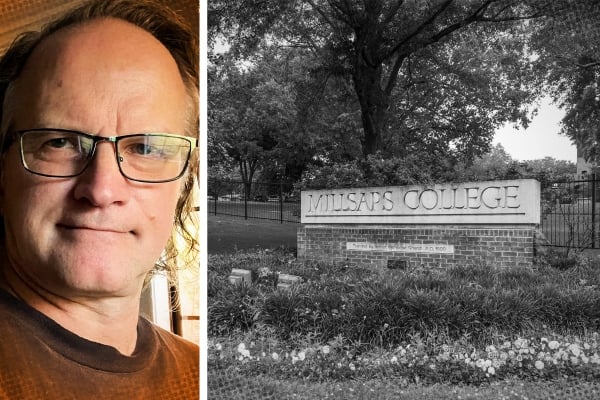
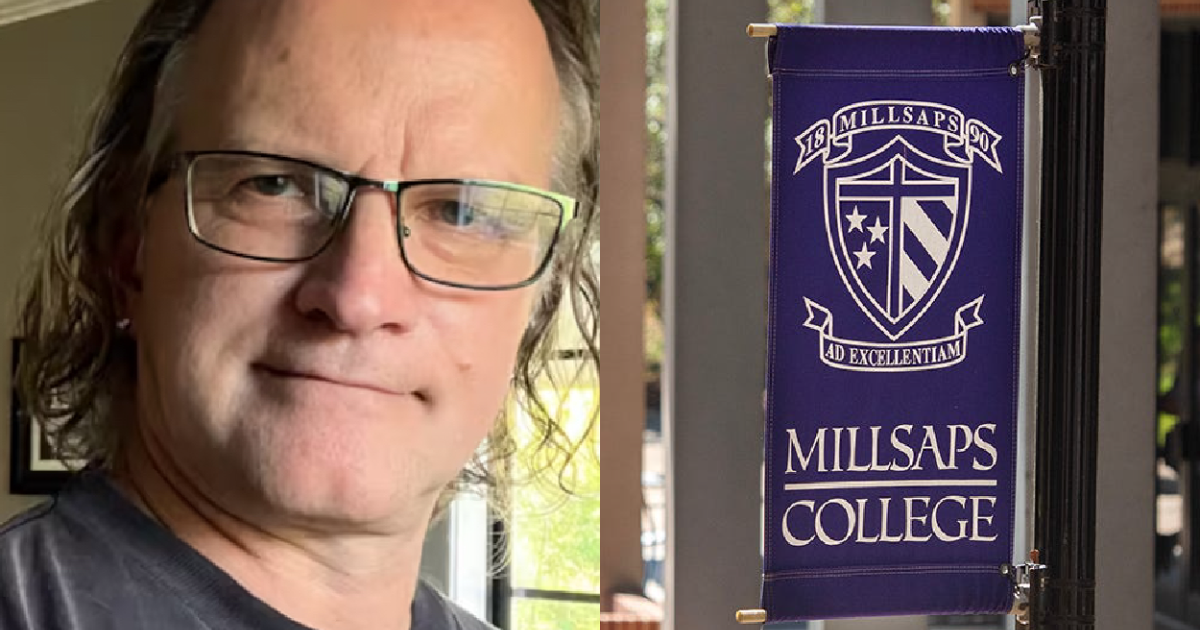
    Campus responses to Trump’s re-election in November seemed more muted. But at Millsaps College, a private Mississippi institution of roughly 600 students, James Bowley said he canceled his Abortion and Religions class meeting the day after the election.

    Bowley, a tenured religious studies professor, told Inside Higher Ed the class had only three students, and he knew they were upset about Trump’s re-election. He said he sent them an email with the subject line “no class today” and one line of text: “need time to mourn and process this racist fascist country.”

    For what he wrote in that email, Bowley said, the college swiftly barred him from campus and, on Tuesday, fired him—ending his more than 22 years of employment. He’s now fighting to get his job back and said he remains on the payroll while he appeals to the institution’s Board of Trustees.

    “This seems to me like the very definition of censorship, and of course it will make every single faculty member fearful of the administration, fearful of sharing their own opinions,” Bowley said. “There are hundreds of historians who would say that the election was a victory for fascism and racism,” he added.

    The college didn’t provide interviews Thursday and didn’t answer written questions. The situation appears to be another example of faculty members being punished for commenting on current events—but this time involving communication to a small group of students, according to Bowley. The Foundation for Individual Rights and Expression, a free speech and academic freedom advocacy group, is pushing for Bowley’s reinstatement.

    “This is absolutely absurd,” said Haley Gluhanich, a senior program officer in FIRE’s campus rights department. She said that when Bowley was initially suspended, “he was charged with an offense that does not exist in any of the handbooks, so they completely just made up a violation of policy.”

    The Email Gets Out

    Bowley said one of the students who received the email shared it on Instagram, approvingly, but another student whom he doesn’t know reported it to administrators. Bowley said he got a call from interim provost Stephanie Rolph on Nov. 7, the day after he sent the email, saying he was being placed on leave for it and banned from campus.

    “I was shocked, I was dumbfounded, I just could not believe it,” Bowley said.

    A copy of a letter from Rolph to Bowley, obtained by Inside Higher Ed, says this leave was “pending a review of the use of your Millsaps email account to share personal opinions with your students.” In the letter, Rolph told Bowley his email account access was cut off and further told him not to “engage with students.”

    The suspension dragged on, Bowley said, and three weeks in he filed a grievance against Rolph—which led to a hearing. Then, on Dec. 27, a grievance panel composed of three faculty members ruled that Bowley should be reinstated, according to a copy of the ruling that FIRE provided.

    “We recognize that Dr. Bowley has, on multiple occasions, shown poor judgment in his use of campus email,” the committee wrote. But during the hearing, Rolph couldn’t “identify a specific policy that Dr. Bowley violated,” they said. “No policy prohibiting the use of campus email to share personal opinions with students exists in either the Faculty Handbook or the Staff Handbook.”

    The panel further recommended that “Rolph issue a formal apology to Dr. Bowley” and that Bowley “be compensated for the loss of income resulting from his removal from the winter study abroad course he had been scheduled to teach.” Bowley told Inside Higher Ed that was a course in Mexico for which he would’ve been paid more than $6,000 and would have had his travel expenses covered. 

    The panel also concluded that Bowley wasn’t “afforded due process.” It said Rolph had argued that the both the staff handbook and the faculty handbook applied to faculty. It also mentioned unresolved tension between the interim provost’s confidentiality claims and Bowley’s right to the hearing, saying the “interim provost can refuse to answer substantive questions pertaining to the grievance.” (Michael Pickard, chair of the grievance panel and vice president of the college’s Faculty Council, said he couldn’t comment Thursday. Rolph didn’t respond to requests for comment.)

    Millsaps president Frank Neville rejected the grievance panel’s report and then fired Bowley on Tuesday, according to Bowley.

    Bowley and FIRE said there was an extra twist at the end: FIRE wrote on its website that Bowley was told in a meeting Tuesday that he was also fired for “not clarifying that his views were not that of the college’s. To be clear: The college fired Bowley for an offense … of which he wasn’t accused.”

    “The FIRE article is riddled with inaccuracies,” wrote college spokesperson Joey Lee in an email to Inside Higher Ed. He did not specify what those inaccuracies were.

    “Because Millsaps does not disclose information about individual employment matters for privacy and confidentiality reasons, the article is based on incomplete information,” he wrote.

    ‘A Bit Reckless’

    Was Bowley fired for more than the email? The college won’t specify, and Bowley didn’t provide a copy of his termination letter.

    David Wood, the Faculty Council president, told Inside Higher Ed he doesn’t exactly know why Bowley was fired, but he doesn’t think he should have been. Wood said he’s disappointed in the college administration and “the extreme nature of the punishment.” But he also said he’s disappointed in Bowley.

    “This is partly on him as well,” Wood said.

    Wood doesn’t believe academic freedom is under threat at Millsaps and thinks “everything was done legally and by our own rules at the college,” he said.

    (After this article was initially published Friday, Wood added in an email that he believes the “initial suspension was unfair and unsubstantiated” and that Rolph “exercised very poor judgment in banning James without a hearing.” Wood wrote that he believes “the review continued and shifted because” Rolph “realized she was wrong and had to go fishing for other reasons to fire James. The rest of her investigation I believe was done according to the rules of the Faculty Handbook.”)

    Asked whether college leaders were upset with Bowley for previous alleged transgressions, Wood said, “There’s a history there, I’ll just put it that way.”

    “James has been a bit reckless in the past, but I do not believe that being terminated was the appropriate punishment,” Wood said. “James likes to push the envelope, let me just put it that way … he’s not going to steer away from controversial issues.”

    Bowley, for his part, said that Rolph had verbally reprimanded him before for sharing with students and employees—through email—a brochure for a prayer vigil for Palestinians killed in Gaza that used the term “genocide.”

    But Bowley said the postelection email was the primary reason for his firing. Regarding any other accusations, he said, “The administration spent two months trying to find other things, and they allege that there were problems in my other class.”

    One accusation leveled at him was “lack of awareness of the status of assignments and grades for a course,” he said. But he wasn’t allowed to appear before a committee to answer such charges, he said, or access his emails and other documents to defend himself.

    He also said he’s protested the death penalty and celebrated the legalization of gay marriage and has ended up on the news for such demonstrations.

    “The idea of me pushing the envelope is me being an activist,” Bowley said. “I am an activist and people know that.”

    Source link

  • No speech for you: College fires professor for calling America ‘racist fascist country’ in email to students

    No speech for you: College fires professor for calling America ‘racist fascist country’ in email to students

    When tenured Millsaps College professor James Bowley sent an email sharing his opinion on the outcome of the 2024 presidential election, he didn’t anticipate it would result in his termination. But in a perfect storm of overreach and red tape, that’s exactly what happened. 

    On Nov. 6, 2024 — the day after the election — Bowley emailed the students in his “Abortion and Religions” class, canceling that day’s session to “mourn and process this racist fascist country.” With only three students in the class, Bowley got to know them quite well, including their political feelings, and knew canceling class would be best for those students. As Bowley told FIRE, “I just want to be caring and kind to my students, whom I knew would be troubled by the election.” Bowley wasn’t just trying to get out of work; he did not cancel the much larger first-year writing class session he taught that same day because he had no reason to know how those students felt about the election. 

    Two days later, Millsaps Provost Stephanie Rolph informed Bowley that he had been placed on temporary administrative leave pending review, for the bizarre offense of using his “Millsaps email account to share personal opinions with [his] students.” 

    That’s right: Millsaps didn’t take issue with Bowley canceling class (likely because they’d have to punish lots of people; professors cancel class for all sorts of reasons). The only cited reason was the use of his email to share personal opinions with students, which unsurprisingly is not an actual policy violation. That’s right: The college simply fabricated a policy violation so it could punish a professor for his speech. Frank Neville, president of the private college, has ignored hundreds of calls to reinstate Bowley, who was unable to do his job for over three months until yesterday, when he was eventually fired.

    Welcome to Millsaps, a labyrinth of academic bureaucracy where personal opinions may not be shared.

    Millsaps College president Frank Neville denied a committee recommendation and doubled down on Bowley’s leave being both justified and necessary, without explanation. (Barbara Gauntt / Clarion Ledger / USA TODAY NETWORK)

    Professor punished without due process

    Everything about Bowley’s treatment goes directly against Millsaps’ own fundamental principles of “freedom of speech and expression.” While Millsaps is a private institution not bound by the First Amendment, its commitment to free speech leads any reasonable student or faculty member to believe they are being promised expressive rights that align with the First Amendment. 

    Courts have recognized protection for a great deal of faculty speech on matters of public concern (say, a presidential election) because higher education depends on the wide exposure to robust exchanges of thoughts and ideas. But Millsaps’ actions here signal that it doesn’t take its own principles seriously and is making up its own standards for free speech and expression. That’s not okay with us — and it’s unfair to the students and faculty of Millsaps.

    Not only did FIRE request that Millsaps drop the investigation and reinstate Bowley, but so did more than 100 students, reportedly, (pretty impressive for a college of only about 600) and over 500 alumni. And when Bowley contested the provost’s decision to place him on leave, a grievance committee made up of faculty members determined that Millsaps couldn’t identify a single policy that Bowley had violated. The committee recommended that Bowley be reinstated immediately.

    FIRE remains by Bowley’s side, fighting for his return to teaching — and his right to share his opinions with students.

    The grievance committee, like FIRE, also found that Bowley was not afforded proper due process. Bowley was placed on leave before receiving a hearing and final determination. By doing so, the provost created an intermediary step in the process of dismissing a professor that exists nowhere in the handbooks — all without Bowley having any prior violations or disciplinary actions taken against him.

    But Neville seemed unfazed by the calls from the Millsaps community and unconvinced by the facts presented to him. On Jan. 10, Neville denied the grievance committee’s recommendation and doubled down on Bowley’s leave being both justified and necessary, without explanation.

    Calls to reinstate Bowley continued, this time reaching tens of thousands of people. But that still wasn’t enough. On Jan. 14, Bowley was told in a meeting that he was fired for not exercising restraint and not clarifying that his views were not that of the college’s. To be clear: The college fired Bowley for an offense – not clarifying that his views were not that of the college’s – of which he wasn’t accused. It’s no surprise that Bowley could not extricate himself from what Millsaps made into an impossible situation. 

    Ferris State cannot punish professor for comedic — and now viral — video jokingly referring to students as ‘cocksuckers’ and ‘vectors of disease’

    News

    It’s a joke, people. But violating faculty rights is not.


    Read More

    Even if the college had originally charged Bowley with not clarifying that his views were not that of the college’s, his email to his class still wouldn’t qualify. Whatever interest Millsaps may have in preventing faculty from purporting to speak on its behalf does not justify automatic punishment for simply not asserting that one isn’t speaking for the college. In fact, the Supreme Court has held that a teacher could not be punished for a letter to the editor he wrote in which he identified himself as a teacher at a certain school. Just because Bowley is identified as working at Millsaps (via his faculty email), doesn’t mean his speech is transformed into speech on behalf of the college. 

    Millsaps cannot overcome this principle just because it wants faculty to indicate whether views expressed “are individual or those of the institution.” Nothing in Bowley’s email can reasonably be interpreted as speaking on behalf of Millsaps, as it is commonly understood that when using their college email, faculty members are speaking for themselves rather than conveying that they speak for their employer. And here, Bowley was very clearly sharing an opinion – a criticism of an election outcome – that any reasonable person would understand as being his own opinion. 

    Bowley told FIRE yesterday: “I love Millsaps College and even more I love my students, but censorship by an administration by definition means that it is not education anymore; it is not a legitimate college.”

    FIRE remains by Bowley’s side, fighting for his return to teaching — and his right to share his opinions with students.

    Source link

  • Living Our Values: Courage, Care and Calling at CUPA-HR’s Spring Conference – CUPA-HR

    Living Our Values: Courage, Care and Calling at CUPA-HR’s Spring Conference – CUPA-HR

    by Julie Burrell | May 2, 2024

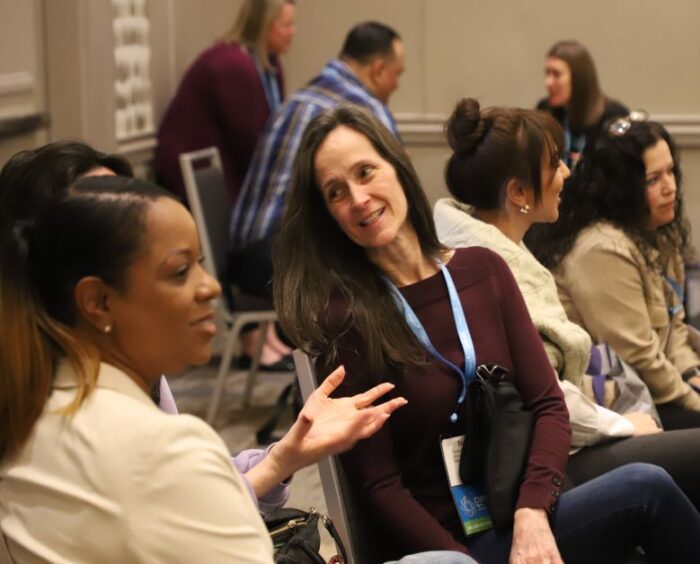
    “Wherever we go, we are CUPA-HR.” That’s what CUPA-HR President Andy Brantley reminded members at the recent Spring Conference in Minneapolis. Though institutions differ in mission and scope and despite daily crises that threaten to divert attention from long-term goals, CUPA-HR members live their values every day.

    The keynote speakers struck a similar theme, encouraging attendees to align their internal values with work, tapping into courage, care and a sense of calling.

    The Courage to Embrace Failure

    In her opening keynote, Kris McGuigan, an author, executive coach and corporate trainer, emphasized the power of authenticity in helping to overcome fear. At some point in our lives, we have all allowed our fears — including of failure, inadequacy and uncertainty — to dictate our future. “How often do we identify that a path is not serving us, but we stay the course, we cling to the status quo?” But clinging to the status quo out of fear can lead to apathy and disengagement. This lack of motivation and confidence can be tied to the engagement crisis at work.

    Facing Down Fear of Failure

    McGuigan believes courageously embracing failure can help move employees past apathy and disengagement. One way to start embracing failure is by taking a cue from tech. In their relentless testing and pushing out new releases, tech adopts a model of “perpetual beta.” This allows for constant innovation, with failure built into the model. If something doesn’t work, it’s scrapped and fixed — think of your smart phone’s frequent software updates. McGuigan asked, how can higher ed leaders bring this model of embracing failure to their teams?

    Takeaway: Having the courage to embrace failure can increase engagement and satisfaction and decrease apathy and disengagement.

    Creating a Caring Campus

    In his keynote, Dr. Kevin R. McClure, Murphy distinguished scholar of education and associate professor of higher education at the University of North Carolina Wilmington, drew from his forthcoming book, The Caring University, for which he interviewed staff, faculty and administrators. What he found will likely sound familiar. Higher ed employees were working tirelessly and generously, and frequently sacrificed their physical and mental health for their jobs. Consistent with CUPA-HR’s findings, McClure cited higher ed employees’ primary concerns as overwork, inadequate compensation, lack of recognition for their contributions, and lack of career pathways, among others.

    The Work “Just Kept Coming”

    McClure interviewed one higher ed staff member who said the work “just kept coming.” Her campus leaders talked about care, but there was no structural change to her workload, so she started looking for a new job. Many of his interviewees felt they were required to be superhuman — a worker without a body or personal life — who “exists only for the job.”

    Structural changes are needed in policies and procedures, he emphasized. What happens when practices like service awards and merit pay reward only ideal workers and not real people, or when leave policies don’t account for people’s caregiving or health needs? Employees will disengage and look for jobs elsewhere. HR has a crucial role to play in transforming the workforce, he says, and institutions need to empower HR as experts.

    Takeaway: Structural change is urgently needed to transform higher education into a workplace that values the well-being of its employees.

    Living your Calling Through Job Crafting

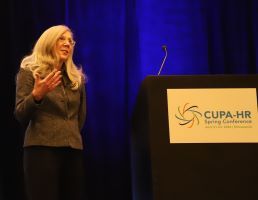
    In the closing keynote, Dr. Amy Wrzesniewski shared insights into what makes work meaningful for the individual. In her research, Wrzesniewski, who is William and Jacalyn Egan professor at the Wharton School of the University of Pennsylvania, identifies three main ways people understand their work: as a job, career or calling.

    Out of these, it is people who see their work as a calling who are more satisfied with the work and with their lives, tending to be absent less and engaged more. So how do people come to treat their work as a calling? That’s where “job crafting” comes in.

    Finding Purpose in Work

    Wrzesniewski interviewed members of a cleaning crew in a university hospital. This work is often stigmatized as non-meaningful, but employees who found a calling in the work were engaged in job crafting, often doing a different job than their job description, while still completing their required duties. For example, one cleaning crew member said that she tailored the cleaning schedule around patients who might be sensitive to the smell of cleaning chemicals. She made a tangible difference in the lives of others, even though she risked getting written up for doing so.

    Wrzesniewski argues job crafting has several benefits. It can increase satisfaction and commitment to the job, intensify happiness at work, boost job mobility, and even maintain or increase performance.

    Takeaway: Job crafting — the practice of living out your values by making work your own — can help make a work a calling, not just a job.


    Source link