Bishop State Community College in Mobile, Ala., evacuated its campus and moved classes online Thursday morning due to a threatening email.
At least four campuses on Thursday received swatting calls—false reports of active or impending threats intended to disrupt operations and whip up a significant police response.
Early Thursday morning, officials at Villanova University outside Philadelphia received a “threat of violence targeted at an academic building” and quickly closed their campus and canceled all activities. University officials issued an all clear at 1:36 p.m. on Thursday and noted that the FBI and local law enforcement were continuing their investigation.
Alcorn State University in Mississippi initiated a campus lockdown Thursday morning due to a “safety threat,” which officials cleared several hours later. Wiley University in Texas also locked down its campus due to a “threat via email” and lifted the lockdown at noon Thursday.
Bishop State Community College in Mobile, Ala., evacuated its campus and moved classes online Thursday morning due to a “threatening” email, college officials said. A nearby elementary school also entered lockdown due to the same threat, AL.com reported.
In recent days, senior United Kingdom government officials and members of the European Parliament havethreatened to ban the social media platform X in response to a proliferation of sexualized images on the platform, including images of minors, created by user prompts supplied to Grok, X’s artificial intelligence application.
The following statement can be attributed to Ari Cohn, FIRE’s lead counsel for tech policy:
Banning a platform used by tens of millions of EU and UK residents to participate in global conversations would be a grave mistake.
X and Grok are tools for communication, much like printing presses and cell phones are tools for communication. If those tools are used to create and share unlawful content, the answer must be to prosecute those individuals responsible, not to shut down a vital communicative hub in its entirety. Free nations that claim to honor the expressive rights of their citizens must recognize that mass censorship is never an acceptable approach to objectionable content or illegal conduct. Just as the United States’ attempt to ban TikTok violated core First Amendment principles, so too would an international ban of a social media platform violate basic tenets of freedom of expression.
As we navigate the challenges of technological advances like artificial intelligence, we must reject censorship and top-down governmental control. In our interconnected world, censorship abroad affects all of us, wherever we call home.
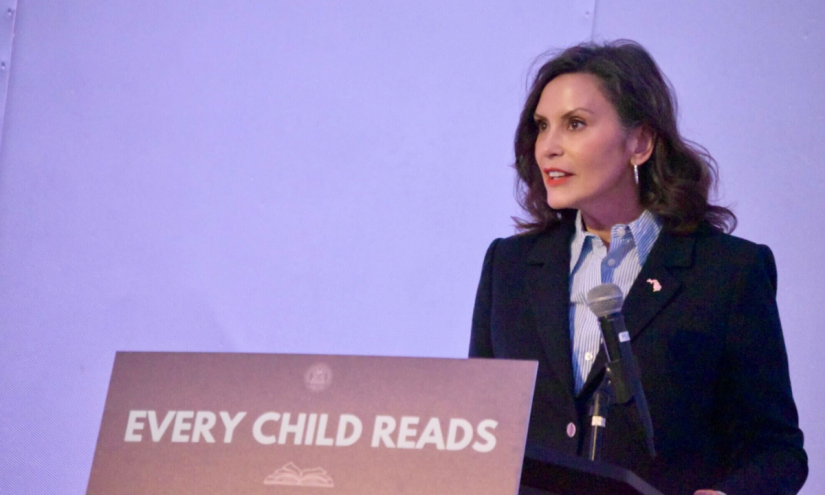
In a keynote speech at the Michigan Literacy Summit, held Tuesday at the Michigan Science Center, Gov. Gretchen Whitmer said that improving literacy rates would remain her top priority in her final year as governor.
“Helping every child read is tough. It’s a worthwhile goal,” she said. “It’s a long term project that will pay off in decades, not days. It’s a team effort that requires buy-in from students, parents, teachers and policy makers.”
She referenced the increased implementation of the “science of reading” law, which she signed in October 2024, as part of this priority. That law standardized literacy teaching methods across the state and implemented regular dyslexia testing for students up to third grade. She also touted the free school breakfast and lunch program, a key piece of the state’s education budget, and funding to reduce class sizes.
Michigan currently ranks 44th in the nation for 4th grade reading skills, Whitmer said, calling it a “crisis.”
“The vast majority of people in our state agree this isn’t the fault of any one person or any one policy or any one political party,” she continued. “I know how hard every one of our educators works every day, but we’re all feeling the impact of our literacy crisis.”
Gov. Gretchen Whitmer and State Superintendent Glenn Maleyko pose for a photograph before her speech at the Michigan Literacy Summit. Dec. 16, 2025. | Photo by Katherine Dailey/Michigan Advance.
State Superintendent Dr. Glenn Maleyko, who officially took over the role leading the state’s department of education on Dec. 8, introduced Whitmer to a crowd of educators and advocates, who had gathered in Detroit for the day-long event that included panels with teachers and school leadership.
“What stood out to me the most was the governor’s genuine commitment to partnership,” Maleyko said. “She understands that improving outcomes for students is not about politics, it’s about listening, working together and staying focused on what matters most.”
This was Whitmer’s first public appearance since Michigan House Republicans canceled nearly $650 million in spending for departmental projects, a move heavily criticized by Democrats as “untransparent” and “cruel”. While Whitmer’s press secretary shared similar criticism from the governor’s office, Whitmer herself has yet to make a statement on the cuts, and left the summit before speaking to the press.
Michigan Advance is part of States Newsroom, a nonprofit news network supported by grants and a coalition of donors as a 501c(3) public charity. Michigan Advance maintains editorial independence. Contact Editor Jon King for questions: [email protected].
Did you use this article in your work?
We’d love to hear how The 74’s reporting is helping educators, researchers, and policymakers. Tell us how
The City Club of Cleveland’s creed, written in 1912, begins, “I hail and harbor and hear persons of every belief and party; for within my portals prejudice grows less and bias dwindles.”
Over the years, figures as varied as Clarence Darrow, Babe Ruth, George Wallace, Rosa Parks, and every sitting U.S. president from Ronald Reagan to Barack Obama have appeared on the City Club’s stage. The day after Martin Luther King Jr. was assassinated, Sen. Robert F. Kennedy set aside his prepared remarks there and delivered his now-famous speech condemning “the mindless menace of violence.”
This century-long tradition of hosting “conversations of consequence that help democracy thrive” has cemented the City Club’s reputation as a “citadel of free speech.” The institution is now upholding that tradition by refusing calls to disinvite a controversial speaker.
Speaker invitation sparks backlash
In November, the City Club announced it will host a conversation with Aaron Baer, president of the Center for Christian Virtue. City Club CEO Dan Moulthrop is set to moderate the event, which includes an unscreened audience question-and-answer period.
The announcement triggered immediate calls to cancel the event from critics of CCV’s views and advocacy on LGBT issues. The City Club’s Facebook page was flooded with complaints. “We don’t support those who give hate groups platforms,” read one. “Promoting hate speech should never be the goal. Do better,” read another.
Central to the backlash is the Southern Poverty Law Center’s designation of CCV as an “anti-LGBTQ+ hate group.” The label appears to stem in part from the organization’s role in advancing an Ohio law banning medical treatments intended to assist minors with gender transition and excluding transgender girls and women from women’s K-12 and college sports.
“We’re not canceling, and we have never had any intention of canceling this.”
The controversy escalated last week when a coalition of organizations and individuals penned an open letter urging the City Club to “cancel or modify this forum in a way that does not platform” an SPLC-designated hate group. Failing outright cancellation, the letter called for an external moderator “trained in navigating civil rights or constitutional issues” and “capable of challenging extremist claims.”
The City Club stays true to its mission
Moulthrop’s response to the pushback was unequivocal:
We’re not canceling, and we have never had any intention of canceling this. We’re gonna continue to do what we always do, and have done for 113 years, which is convene conversations of consequence that help democracy thrive and do that with the leadership of relevant organizations who are shaping our communities.
That’s exactly the right response from an institution dedicated to free speech and civic dialogue.
Moulthrop told me the City Club’s mission “necessarily means making the platform available to diverse points of view and people with political influence — people who, if they’re not shaping policy, they have the ear of people who are.” So it made sense to book Baer for the Friday Forum, a “luncheon program devoted to significant national and regional concerns.” The event description notes that under Baer’s leadership, CCV “has emerged as one of the most influential nonprofit advocacy organizations in the state of Ohio, notching legislative victories on school choice and building coalitions with state government leaders.”
The City Club is not endorsing Baer’s views any more than it has endorsed the views of other speakers it has hosted. It is allowing attendees to engage with ideas that, for better or worse, have gained purchase in society. Notably, the executive director of the LGBT Community Center of Greater Cleveland, who criticized the event by arguing that free speech “should never be used to legitimize rhetoric that undermines the safety, dignity, and well-being” of LGBT people, was herself a City Club speaker just two months ago.
This is hardly the first time the City Club has weathered such controversy. In 1923, after socialist presidential candidate Eugene Debs was invited to speak, prominent business leaders resigned their memberships in protest. More recently, the announcement of a forum featuring President Donald Trump’s former campaign manager Corey Lewandowski provoked outrage.
In an era when cancellation demands are widespread and too often successful, the City Club’s refusal to yield is a welcome affirmation of the values of free speech and open discourse. FIRE’s Campus Deplatforming Database has recorded 1,824 attempts to disinvite speakers or cancel controversial performances, screenings, or exhibits on campus since 1998. Nearly half (847) succeeded. And the pace has accelerated sharply in recent years. This year alone has seen 151 attempts, about two-thirds (98) of which were successful.
Deplatforming is unwise
This trend comes at a cost. As FIRE President Greg Lukianoff often argues, we are not better off knowing lessabout what people think or why they think it. That point has even more force when it comes to someone like Baer, who wields significant influence over policies affecting a state’s 11.9 million residents.
“Whether you agree or disagree with these individuals, a chance to hear directly from them, rather than just about them in the media or from a researcher, is the kind of thing that makes democracy work better,” Moulthrop toldThe Buckeye Flame last month. In a fuller response he later shared with me, he added, “It’s a chance for speakers to understand how their ideas are heard and felt and it’s a chance for audiences to understand where different political philosophies and beliefs are born.”
Deplatforming attempts often rest on the flawed assumption that giving someone a platform inevitably makes their ideas more popular. But if the ideas are truly indefensible, exposing them to scrutiny may have the opposite effect. To that end, Baer will face questions from Moulthrop and from audience members who are unlikely to be uniformly supportive. The alternative is for him to speak only in ideologically friendly spaces where his views go unchallenged and perhaps harden further.
Baer’s critics should also consider that attempts to silence speakers often backfire by bringing them more attention. Before this controversy, I had no idea who Baer was. Media coverage of the dispute will only increase public curiosity about him and CCV. The Streisand effect strikes again.
Meanwhile, the targeted speaker obtains a rhetorical advantage. He can cast himself as a victim of suppression at the hands of intolerant critics who can’t refute his ideas on the merits.
Free speech is more than the First Amendment
When private institutions resist deplatforming demands in the name of free speech, critics often retort that it’s not a free speech issue because the First Amendment restrains only government action. That response misunderstands what sustains free speech in practice. Constitutional protection is indispensable. But culture matters too.
If silencing and punishment, rather than persuasion and criticism, gain wide acceptance as righteous responses to objectionable speech — the logic that justifies those practices may soon be turned against legal protections for free speech as well.
True, the First Amendment does not require private forums to facilitate the free exchange of ideas. It also doesn’t compel private universities to uphold free speech and academic freedom in the pursuit of knowledge, publishers to offer readers a wide range of perspectives and information, or private businesses to exercise restraint when faced with calls to fire an employee whose political opinion offended an online mob. But these norms and institutions sustain a healthy culture of free expression. They create conditions in which free speech can flourish and reinforce related values like curiosity, intellectual humility, and engagement with different points of view.
And if we abandon these norms — if silencing and punishment, rather than persuasion and criticism, gain wide acceptance as righteous responses to objectionable speech — the logic that justifies those practices may soon be turned against legal protections for free speech as well.
In standing its ground, the City Club of Cleveland has done more than defend a single event. It has defended the broader cultural foundations on which free speech depends.
This audio is auto-generated. Please let us know if you have feedback.
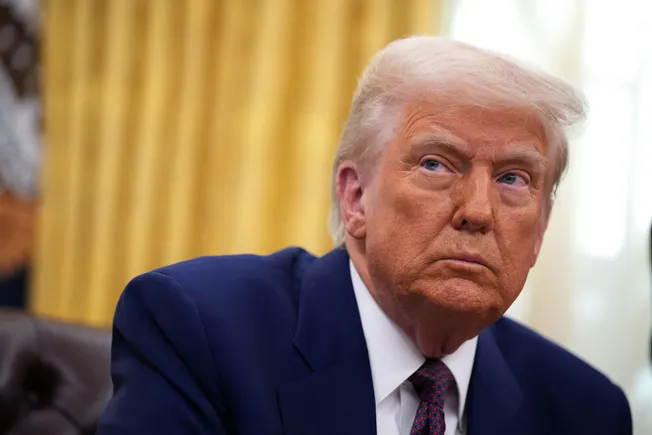
President Donald Trump signed an executive order Thursday challenging the growing ecosystem of state AI laws and setting the stage for a federal policy to oversee the technology, citing concerns over compliance challenges for businesses and stymying innovation.
The executive order tasks U.S. Attorney General Pam Bondi with creating an AI Litigation Task Force in the next 30 days to challenge state AI laws that “unconstitutionally regulate interstate commerce” or clash with existing federal laws. Trump also called for a national policy framework for AI that would preempt state AI laws, add child safety protections, ensure copyright safeguards and hinder censorship.
“My administration must act with the Congress to ensure that there is a minimally burdensome national standard – not 50 discordant State ones,” the order said. “The resulting framework must forbid State laws that conflict with the policy set forth in this order.”
States will face evaluation of their AI laws under the executive order, as well as potential restrictions on funding if their laws are found to be burdensome, according to the document.
The proposal was met with sharp criticism from some advocates and lawmakers including Sen. Amy Klobuchar (D-Minn.), who described the executive order as “dangerous, and most likely illegal,” in a post on social media platform X.
“Trump’s new executive order tries to eliminate state AI laws – in both red and blue states – that are protecting Americans from harmful deepfakes, scams, and online exploitation,” Klobuchar said on X. “We shouldn’t remove the few protections Americans have as Congress fails to act.”
Trump’s move to create roadblocks for state AI law implementation aligns with the interests of tech companies, which have worked against state regulations in 2025 as new models, agentic tools and applications spread among enterprises.
Despite its attempt to slow state efforts regulating AI, the executive order isn’t likely to shift enterprise compliance or AI governance strategies as a result, said Forrester Principal Analyst Alla Valente.
“They can’t pull back on what they’re doing when it comes to AI standards, assessments, controls and governance,” Valente said. “They’re going to have to stay the course on it.”
Companies building AI products, particularly in highly regulated fields such as healthcare, are aware they can’t adopt a technology without managing risk, said Alaap Shah, an AI, privacy, cybersecurity and health IT attorney at Epstein Becker Green. Many companies that have already adopted compliance frameworks based on consensus-based standards will likely continue to implement them, he added.
Still, businesses will continue to advance AI development and deployment regardless of the state of the regulatory landscape, Shah said.
“It’s sort of like a build now, fail fast, mentality and investors are continuing to invest,” Shah said.
The pushback against state AI regulation comes at a time when tech companies like Google, OpenAI, AWS, Microsoft, Meta and more are investing billions in building out infrastructure in the U.S. and globally. Gartner estimated that global AI spending will reach $1.5 trillion in 2025.
Google and OpenAI earlier this year advocated for a federal policy preempting state AI laws. Meta also launched a lobbying effort to support political candidates who aligned with the company’s views on AI oversight, marking another step by Big Tech against state AI regulation after a proposed 10-year moratorium on state AI laws failed to pass in Trump’s One Big Beautiful Bill Act.
What CIOs can expect from U.S. states
As the AI market rapidly expands, U.S. states including California, Colorado, Connecticut and Texas have passed AI legislation in an attempt to regulate AI model developers and deployers. California’s AI law requirements stand to have a particular effect on CIOs and businesses because the law imposes direct obligations on companies that run data centers or are building their own AI models.
Navigating the landscape of state AI laws can be challenging for businesses because it requires them to comply with differing standards, which makes compliance tricky, Shah said. Even as enterprises create AI guidelines and policies, more than two-thirds of C-suite executivesadmitted to using unapproved AI tools, according to research commissioned by software company Nitro.
Many states are trying to solve similar issues with respect to AI, such as transparency, bias and discrimination risk, Shah said. That means states aren’t necessarily legislating in different directions but it can take time for businesses to understand the laws’ nuances.
“Clients who are developing AI or adopting AI certainly are attuned to the fact that there’s a litany of different kinds of AI laws out there and they’re variable across the states, many of which are nascent or maybe not even on the books yet,” Shah said. “There’s a great deal of ‘what do we need to focus on?’”
Businesses can struggle to keep track of what’s happening at the state level and understanding how it applies to their uses of AI, as well as developing AI-related compliance programs, said Katy Milner, a partner at law firm Hogan Lovells.
There are various roles within the AI value chain, from AI developers to deployers. While some legal frameworks apply exclusively to developers, others – like California’s AI law – can apply to both, Milner said.
“There are questions of when would a deployer be considered a developer because of the way they’re adapting it,” Milner said. “Developing compliance strategies amid this very active legislative backdrop has been challenging.”
Part of Trump’s policy push will be to target certain AI laws and make an example of ones the administration deems most burdensome, like Colorado’s, Shah said. Trump named the Colorado AI Act specifically in his executive order, which likely makes it first on the list to face the AI Litigation Task Force, he added.
New York and New Jersey state attorneys general have already indicated they plan to stand against the president’s order threatening U.S. states’ ability to regulate AI.
“We embrace technological innovation,” New Jersey State Attorney General Matthew Platkin said during a Thursday press briefing by The Leadership Conference on Civil and Human Rights. “But no industry in the history of our country has received the types of protections that these AI oligarchs are seeking and that apparently President Trump is willing to succumb to.”
Florida Governor Ron DeSantis also pushed back on executive authority to preempt state AI laws. He said Congress, after it didn’t vote to pass the 10-year state AI law moratorium, might not even want to pursue legislation preempting state AI laws. An attempt to include a state AI law preemption in the National Defense Authorization Act this year also failed.
“I doubt Congress has the votes to pass this because it is so unpopular with the public,” DeSantis said in a post on social media platform X.
Trump likely recognizes that passing a federal AI policy framework through Congress won’t happen anytime soon, Valente said. The order said the administration will be working on a “legislative recommendation” for Congress to establish a federal policy preempting state AI laws, but with no set deadline.
“This executive order is putting states on notice, hoping that it slows down some states from creating AI laws,” Valente said.
The OCR employees were fired in March as part of a broader reduction in force at the Education Department.
Saul Loeb/AFP via Getty Images
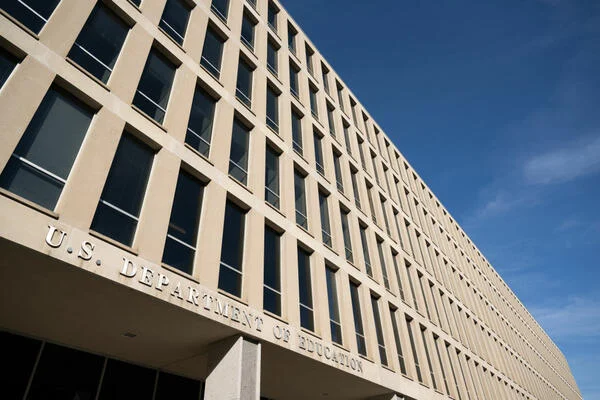
The Education Department is calling Office for Civil Rights employees who were fired earlier this year back to work.
The Trump administration tried to ax half of the Education Department’s OCR staff in March, but it has been paying them not to work since then while it continues to fight litigation contesting its plan. The department says it hasn’t given up on defending that move, but now says it’s “important to refocus OCR’s work and utilize all OCR staff to prioritize OCR’s existing complaint caseload.”
“In order for OCR to pursue its mission with all available resources, all those individuals currently being compensated by the Department need to meet their employee performance expectations and contribute to the enforcement of existing civil rights complaints,” the department said in Friday emails obtained by Inside Higher Ed. “Utilizing all OCR employees, including those currently on administrative leave, will bolster and refocus efforts on enforcement activities in a way that serves and benefits parents, students, and families.”
One email gave an employee a Dec. 15 return date, while another said Dec. 29. It’s unclear how many workers will return. Bloomberg reported that the order went out to “more than 260,” while USA Today cited the department as saying “roughly 250,” but the Associated Press said “dozens.” Inside Higher Ed is awaiting clarification from the department.
Rachel Gittleman, president of American Federation of Government Employees Local 252, which represents department employees, said her union hasn’t been told how many workers in its bargaining unit received the email. She said in a statement Monday that “while we are relieved these public servants are finally being allowed to return to work, Education Secretary Linda McMahon has made clear that she would rather play politics than uphold her responsibility to protect students’ rights.”
“For more than nine months, hundreds of employees at the Office for Civil Rights (OCR) have been sidelined from the critical work of protecting our nation’s most vulnerable students and families,” Gittleman said. She said the administration’s actions keeping these employees out of work and on leave “wasted more than $40 million in taxpayer funds.”
“By blocking OCR staff from doing their jobs, Department leadership allowed a massive backlog of civil rights complaints to grow, and now expects these same employees to clean up a crisis entirely of the Department’s own making,” she added.
DHS said ICE arrested Sumith Gunasekera on Nov. 12.
Lawrey/iStock/Getty Images Plus
Immigration and Customs Enforcement has detained a Ferris State University professor, according to a Department of Homeland Security news release that calls him “a criminal illegal alien sex offender from Sri Lanka.”
ICE arrested Sumith Gunasekera in Detroit on Nov. 12, DHS announced in its Nov. 25 release. That’s the date Ferris State “became aware of accusations regarding” Gunasekera, university spokesperson David Murray said in an emailed statement. Murray didn’t answer further questions from Inside Higher Ed Monday, including whether the university performed a background check on Gunasekera before hiring him.
“He has been placed on administrative leave while the university gathers more information,” Murray wrote. “This is a personnel issue and it would be inappropriate for the university to further discuss the matter.”
The university’s website lists Gunasekera as director of its Data Analytics Consulting and Research Center. A Sumi Gunasekera is also listed as an assistant professor of marketing.
As of last week’s news release, DHS said Gunasekera “remains in ICE custody pending further immigration proceedings.” DHS spokespeople didn’t respond to Inside Higher Ed’s questions Monday about whether he’s still being held and where.
The DHS release says that, in 1998, “a criminal court in Brampton, Ontario convicted Gunasekera for utter threat to cause death or bodily harm and sexual interference and sentenced him to 1 month of incarceration and 1 year of probation.” Anita Sharma, group leader at the Ontario Court of Justice in Brampton, told Inside Higher Ed the case has been archived, so she couldn’t provide further details Monday.
DHS’s release says “the convictions in Canada” rendered Gunasekera “ineligible for legal status in the United States.” Tricia McLaughlin, a DHS spokesperson, said in the release that “it’s sickening that a sex offender was working as a professor on an American college campus and was given access to vulnerable students to potentially victimize them. Thanks to the brave ICE law enforcement officers, this sicko is behind bars and no longer able to prey on Americans.”
Inside Higher Ed was unable to reach Gunasekera for comment.
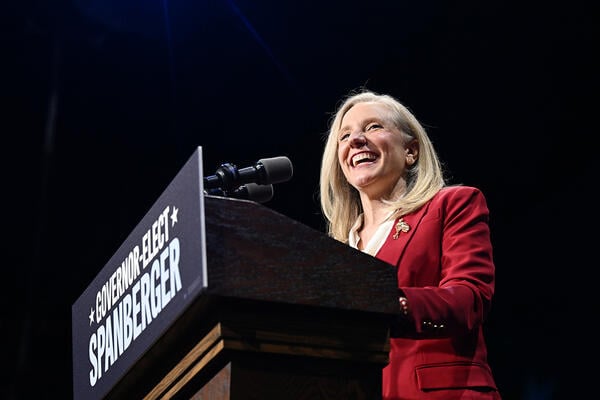
Virginia governor-elect Abigail Spanberger has called on the University of Virginia to pause its presidential search until she takes office in January and appoints new members to the Board of Visitors.
In a Wednesday letter to board leaders, Spanberger wrote that she was “deeply concerned” about recent developments at the state flagship, citing “the departure of President Jim Ryan as a result of federal overreach.” Ryan stepped down amid federal investigations into diversity, equity and inclusion practices at UVA. The board later reached an agreement with the U.S. Department of Justice to pause those investigations.
Spanberger argued that the government’s interference “went unchallenged by the Board” and has “severely undermined” public confidence in its ability to “govern productively, transparently, and in the best interests of the University.”
Spanberger also pointed to recent votes of no confidence in the board by both the UVA Faculty Senate and the Student Council. Given those concerns and the hobbled state of the board, which is missing multiple members after state Democrats blocked Republican governor Glenn Youngkin’s appointments, Spanberger called for a pause until her own picks are confirmed by the General Assembly.
“The benefits of selecting a new president with a full, duly-constituted Board are clear,” the governor-elect wrote in her letter to board leaders. They include making the search process and decision credible and “removing any concern that the Board’s actions are illegitimate due to a lack of authority,” she wrote.
So far, UVA has been noncommittal in its public response.
“University leaders and the Board of Visitors are reviewing the letter and are ready to engage with the Governor-elect and to work alongside her and her team to advance the best interests of UVA and the Commonwealth,” spokesperson Brian Coy wrote to Inside Higher Ed by email.
Spanberger is the latest state Democrat to clash with the UVA Board of Visitors, which is stocked with GOP donors and political figures. While politics have long been at play on Virginia’s boards, Youngkin’s appointments have represented a dramatic rightward shift, prompting pushback as Democrats have blocked recent nominations.
(A legal battle over the state of those appointments is currently playing out; the Virginia Supreme Court heard oral arguments in the case last month but has yet to issue a decision.)
Democrats have turned up the temperature on UVA in recent months, demanding answers about the agreement with DOJ and Ryan’s resignation and accused the board of giving in to “extortionate tactics.” Now, following an election that saw Democrats take the governor’s office and broaden their majority in the General Assembly, Spanberger will likely have political capital to reshape higher education at the state level as she sees fit—barring intervention from the federal government.
Spanberger, the first woman elected governor of Virginia, is a UVA alumna.
The governor-elect’s call to pause UVA’s presidential search prompted immediate pushback from the Jefferson Council, a conservative alumni group that has won influence with Youngkin, who appointed the group’s co-founder Bert Ellis to the board before removing him for his combative behavior.
The organization argued in a statement that in 2022 a Democratic-appointed board “quietly extended” Ryan’s contract through 2028—even though it did not expire until 2025—without “Governor Youngkin having an opportunity to appoint one Board member.” They wrote that “the Board’s action was clearly intended to ensure Ryan’s tenure” beyond Youngkin’s term. (Governors in Virginia may not serve consecutive terms.)
The group also defended the search committee and process.
“In contrast, the current UVA presidential search committee, the most extensive and diverse in University history, was lawfully formed by the Board and has been operating since July 2025, working diligently through meetings and interviews. To suddenly ask the BOV to wait to choose a president is a bold act of political legerdemain representing a total historical double-standard,” the Jefferson Council wrote.
However, faculty members have a different view of the search committee.
In an Aug. 10 letter, the UVA chapter of the American Association of University Professors accused the board of shortchanging faculty by limiting their seats on the presidential search committee. The group wrote that the committee “is dominated by current and former members of the [Board of Visitors] and administrators,” with faculty members composing less than a quarter of the committee. Additionally, they noted that none of those members “were selected by the faculty.”
Spanberger’s insistence that UVA pause its presidential search bears similarities to ways other governors have sought to influence leadership decisions before they took office, such as Jeff Landry in Louisiana. Shortly after his election in late 2023, the Republican governor called on the University of Louisiana system to hold off on hiring Rick Gallot, a former Democratic state lawmaker, as its next president.
Landry said he wanted to make sure their visions for the system aligned. Ultimately, despite the pause, Gallot was hired as system president after meeting with Landry before he took office.
According to reports, a brief note issued by the Department of Home Affairs through the Provider Registration and International Student Management System (PRISMS), which oversees international student data, confirms that evidence levels have been updated.
“The September 2025 evidence level update for countries and education providers (based on student visa outcome data from 1 July 2024 to 30 June 2025) has taken place, effective for applications lodged on or after 30 September 2025,” read a statement by the DHA on the PRISMS website.
Consultants and universities in Australia are able to work out these levels through the government’s document checklist tool, which reveals a provider’s risk standing based on the requirements triggered when paired with a student’s country of origin.
Reports suggest that level 1 (lowest risk) includes Bangladesh and Sri Lanka; level 2 (moderate risk) includes India, Bhutan, Vietnam, China, and Nepal; and level 3 (highest risk) includes Fiji, the Philippines, Pakistan, and Colombia.
Although India and Vietnam, both prominent source markets for Australia, improved from level 3 to level 2 on the back of stronger grant rates, China slipped from level 1 to level 2, possibly due to a surge in asylum applications from Chinese nationals, particularly students, as some reports suggest.
While education providers in Australia registered under CRICOS (Commonwealth Register of Institutions and Courses for Overseas Students) are assigned an evidence level, each country is also given one based on its past performance with student visas, particularly visa refusals, asylum applications, and breaches of conditions.
Are there not more Indians applying for protection visas? Hasn’t Nepal followed Sri Lanka and Bangladesh in political turmoil, where the economy has suffered? This has raised concerns around students meeting GS requirements Ravi Lochan Singh, Global Reach
The combination of provider and country levels determines the documents required for an international student’s visa application.
Stakeholders have highlighted the lack of transparency in assessing country risk levels, particularly as students from countries with reduced risk ratings may still arrive in Australia under precarious conditions.
“Are there not more Indians applying for protection visas? Hasn’t Nepal followed Sri Lanka and Bangladesh in political turmoil, where the economy has suffered? This has raised concerns around students meeting GS requirements. There are also whispers that certain operators may encourage students to apply for protection visas,” stated Ravi Lochan Singh, managing director, Global Reach.
Visa prioritisation is already tied to intended caps, with applications processed on a first-in, first-out basis until a provider reaches 80% of its allocation, explained Singh.
With almost all universities now streamlined for visas and the majority promoted from level 2 to level 1, lowest risk, and almost none remaining in level 3, the evidence-level system appears unnecessary to some.
“The concept of ‘streamlining’ (and then the development later of the SSVF) took place at a time where there was a whole-of-government focus on growing international student numbers and increasing the value, while maintaining integrity, of the highly important international education sector,” shared Mike Ferguson, pro vice-chancellor of Charles Sturt University.
According to Ferguson, a former DHA official, “English and financial requirements were streamlined as part of the visa process, based on a risk assessment, given the other safeguards in place – obligations enforced by TEQSA and ASQA in terms of providers ensuring students have sufficient English proficiency and the use of the GTE requirement to consider a student’s holistic economic circumstances.”
However, with international student numbers rising since the early 2010s, “times have changed” and the focus has shifted to managing enrolments and ensuring sustainable growth, explained Ferguson.
“My view is that all students should provide evidence of funds and English with the visa process. That would align with community expectations, support enhanced integrity and potentially help to some degree with some of the course hopping behaviour we are seeing (though the latter requires a range of measures),” he contineud.
“DHA could still determine the degree to which they scrutinise the funds submitted but that would be based on a more holistic and granular risk assessment – not just based on country and provider.”
Evidence levels of select Australian institutions, showing whether they have remained steady, been upgraded, or downgraded, as shared by Ravi Lochan Singh. Correction: Deakin University was previously categorized under risk level 2 (not 1) and has since been upgraded to 1.
Singh further stated that concerns around visa hopping and attrition could be exacerbated, as international students may now enter Australia through universities and then transition to higher-risk, non-university sectors without needing new visa applications, especially since Australia has yet to mandate linking study visas to the institution of initial enrolment, unlike neighbouring New Zealand.
Moreover, Singh pointed out that when students arrive without adequate financial backing, it can increase visa misuse, which may lead authorities to tighten risk classifications again.
“The document checklist tool provides a clear framework for assessing the risk level of a university. However, it raises concerns about the recent trend of promoting the application of visas without financial funds, as suggested by the document checklist tools. While these visas may be approved, this approach could potentially lead to the return of the country to risk level 3 in the future,” stated Singh.
“For instance, if a country’s risk level is 3 (such as Pakistan), and Home Affairs requires financial and English requirements to be attached to the visa application, the university’s risk level is inferred to be 2. If the Home Affairs tool waives this requirement, the risk level is reduced to 1.”
The PIE has requested comment from the DHA and is awaiting a response.
Australia’s reported changes to country evidence levels come just a month after the government announced an additional 25,000 international student places for next year, raising the cap to 295,000.
A senate inquiry has recommended Australian universities cap remuneration for vice-chancellors and senior executives, finding they are rewarded too generously compared to other staff and international peers.
Please login below to view content or subscribe now.