The National Higher Education Code to Prevent and Respond to Gender-based Violence passed through Parliament on Monday.
Please login below to view content or subscribe now.
Membership Login

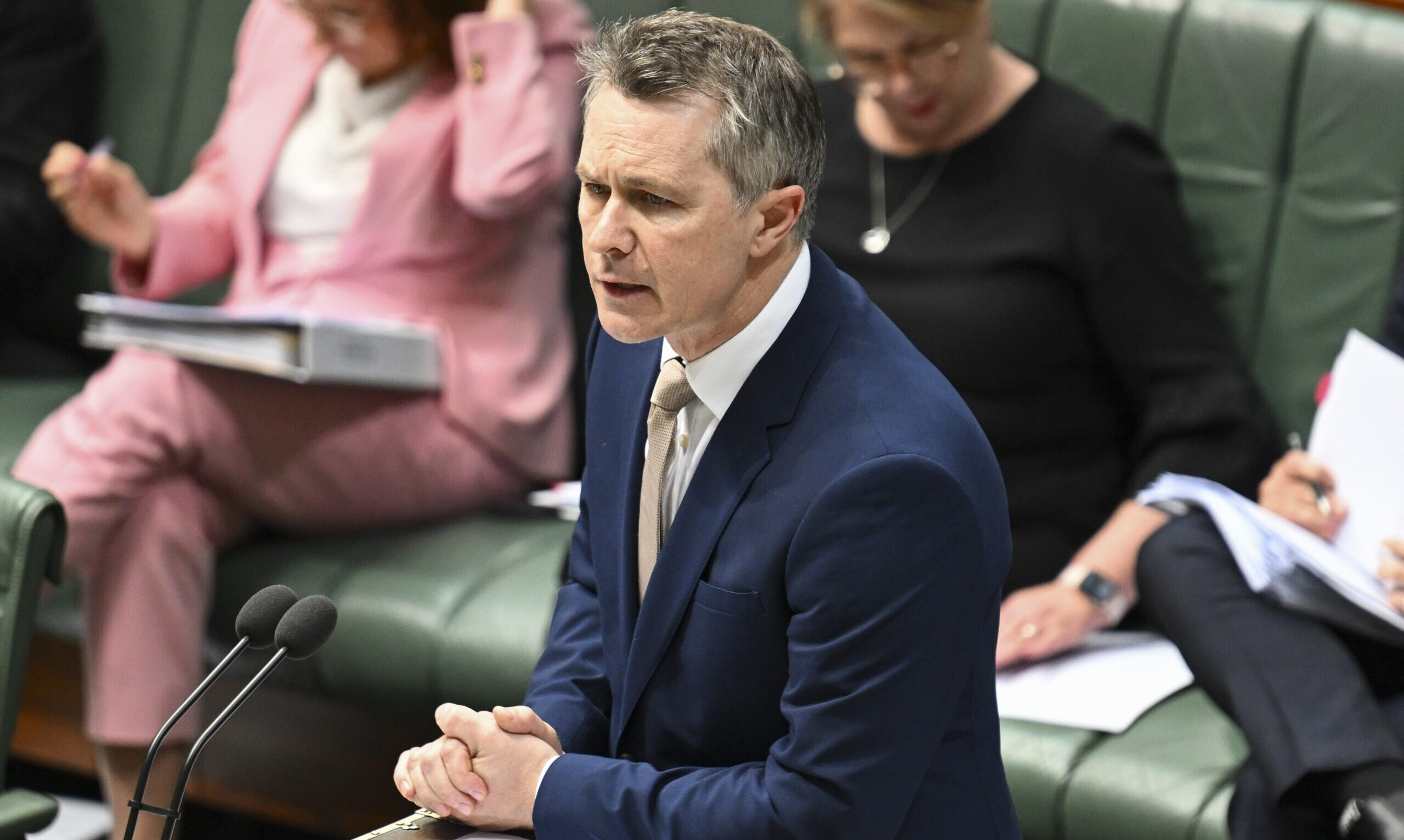
The National Higher Education Code to Prevent and Respond to Gender-based Violence passed through Parliament on Monday.
Please login below to view content or subscribe now.
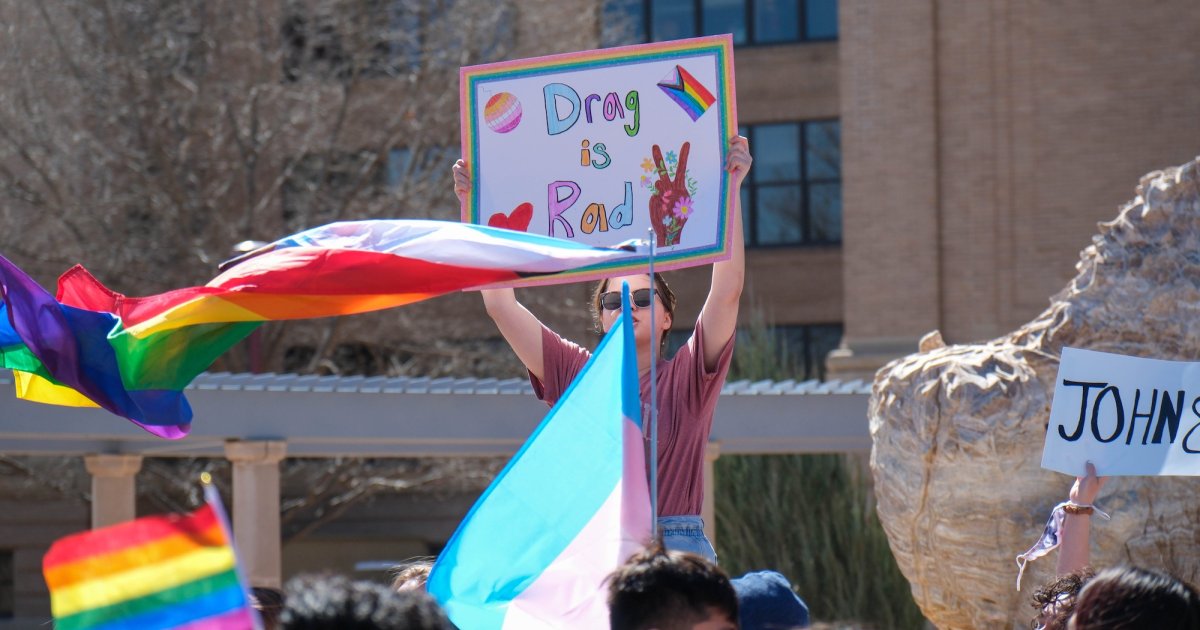
On March 20, 2023, the students of Spectrum WT — an LGBTQ+ organization at West Texas A&M University — were in the final stages of preparing a charity drag show when University President Walter Wendler sent a community-wide email unilaterally banning all drag shows from campus. In his email, Wendler derided drag shows as “misogynistic,” and enacted the ban despite acknowledging that “the law of the land appears to require” him to allow the show to go on.
On Aug. 18, 2025, the U.S. Court of Appeals for the Fifth Circuit confirmed that, indeed, it does. The 2-1 panel opinion overturned the trial court’s denial of Spectrum WT’s motion for a preliminary injunction and ordered the lower court to block Wendler from enforcing the drag ban while the case proceeds. The court held the students are substantially likely to prevail on the merits of their claims that singling out drag performances to ban them from a campus theater, otherwise open to students and the public alike, violates the right to free speech.
To start, the court affirmed that the First Amendment protects drag performance — just as it protects other theatrical performance — rejecting the trial court’s holding that drag shows constitute nonexpressive conduct outside the First Amendment’s protection. The appeals court explained that like the “unquestionably shielded painting of Jackson Pollock, music of Arnold Schöenberg, or Jabberwocky verse of Lewis Carroll,” art, whether painted, sung, or performed on stage, is expressive as so long as it is “evident that conveying some message, even if nearly opaque or perhaps smeared, was intended.”
Spectrum WT’s drag show passes that test, the court explained, because “the message sent by parading on a theater stage in the attire of the opposite sex,” in support for the LGBTQ+ community, “would have been unmistakable” to its ticketed audience.
The second question the court considered was whether the university could lawfully keep Spectrum WT’s drag show out of Legacy Hall, a performance venue the college allows both students and outside groups to rent for expressive events like magic shows, beauty pageants, and even a past drag show. Here, again, the court sided with Spectrum WT. The court conducted a public forum analysis, which examines the underlying purposes and practices of government property to determine what restrictions officials can place on protected expression in the property.
The court noted that the university had let pretty much anyone beside the plaintiffs use Legacy Hall for expressive events, including, “a local church group’s ‘Community Night of Worship and Prayer,’ a congressional candidate forum, a local high school’s ‘Casino Night’ dance, a local nonprofit’s benefit gala, Randall County’s livestock show, and a religious retreat center’s event dinner.”
Because President Wendler singled out a particular type of expression to exclude from a space WTAMU generally opens to third parties for expressive use, his drag ban must survive strict scrutiny, the toughest level of judicial review. And because Wendler made no attempt to overcome strict scrutiny, the court held “the plaintiffs are entitled to an injunction protecting their rights, and the district court erred in concluding otherwise.”
Spectrum WT’s legal battle may not be completely over, as the case waits to return to the trial court, but this opinion represents a real victory for all students at West Texas A&M, reaffirming the First Amendment principles that protect their free speech rights on campus. It’s also another victory for students across Texas — where drag performance bans have become all too common — whose abilities to express themselves shouldn’t be subject to the whims of censorial college administrators.

Administrators at the University of Missouri told a student organization that it could not proceed with a “Black 2 Class Block Party” because the event qualified as “unlawful discrimination.” Is it possible that students who are not Black complained of being denied access to the annual event in prior years? Probably not. This cancellation is one of numerous examples of how institutions are attempting to comply with the Trump administration’s anti-DEI agenda, as Inside Higher Ed reporter Jessica Blake noted in an article last Friday.
U.S. Department of Education data shows that during the 2023–24 school year, 79 percent of undergraduates on the University of Missouri’s flagship campus were white. Black students were just 5 percent of the undergraduate student body. Put differently, nearly 19,000 students were white and fewer than 1,200 were Black. Numerically, there are not and have never been enough Black students there to create a climate of exclusion for their white counterparts. The same is true among professors—last school year, only 33 of 1,027 tenure-track faculty members at Mizzou were Black, according to statistics published online by the university’s Office of Institutional Research.
Given these demographics, it seems implausible that collegians in the minority have enough power to routinely and unlawfully discriminate against their peers who comprise the majority. This could be confirmed via systematic analyses of discrimination complaints submitted to the university in recent years. When disaggregated by race, the data is unlikely to show that it is overwhelmingly white students who most often experience racism. Surely few, if any, complaints are about encounters with discrimination at Black student organization events.
Activities like Mizzou’s annual welcome-week block party are important for Black students, as most will be expected to successfully navigate spaces where they are the only or one of just a few persons from their racial group in every course they take, sometimes in their entire academic majors. Some will be the lone Black students who live on their residence hall floors. In these and other spaces, too many will be met with racial stereotypes, microaggressions and, at times, explicit racial violence. Black student organization events afford them opportunities to meet others who can affirm their sense of belonging at the institution. They may also meet other Black students who can teach them how to navigate campus environments that are anti-Black and otherwise racist.
The inclusion of “Black” in its title is what made this year’s block party suddenly and presumably discriminatory. Like historically Black colleges and universities, Black culture centers, and African American studies courses, Black student organization events have neither historically nor contemporarily been proven to be spaces that exclude people from other races. Mizzou and universities like it are considerably more likely to find evidence of racial discrimination in predominantly white sorority and fraternity recruitment and member-selection activities, as well as at parties on frat row, than at a student organization event that amplifies black culture.
As previously noted, 5 percent of Mizzou undergraduates are Black. Noteworthy is that Black men are 2 percent of the student body, yet NCAA data shows that they comprised 62 percent of the football team and 56 percent of the men’s basketball team there last academic school year. Despite generating millions of dollars in revenue for the university, these student athletes and their same-race peers are not allowed to have events that have “Black” in the title.
“Black college football and basketball players are the most powerful people of color on campus,” I wrote in a Washington Post article 10 years ago. At that time, Black student athletes at Mizzou threatened to skip a football game that would have resulted in a loss of more than $1 million in revenue. This threat was in response to institutional inaction on racism that Black collegians had long experienced there. Within days, the system president and the chancellor of the Columbia campus both resigned.
Football and basketball players are as powerful there today as they were a decade ago. They can indeed resist anti-DEI efforts that disadvantage them and other students of color. But should they do so in response to a canceled welcome-week block party? Yes, because that one seemingly insignificant event is emblematic of a more expansive demonstration of anti-Blackness on their and other campuses at this time.
The elimination of culturally resonant programs, centers and institutes, and offices denies Black students access to valuable relationships and resources that bolster their first-year transition experiences, sense of belonging, classroom and out-of-class engagement, academic performance, and retention. Some of the most enduring and transformative advancements for Black collegians in U.S. higher education emerged from student activism. Student athletes, student organization leaders and everyday students who are Black, along with allies and supporters from other racial groups, ought to refuse to allow anyone to mischaracterize activities and spaces as discriminatory just because “Black” is in the title.

Universities should offer shorter, cheaper and more accessible courses that recognise prior learning to help boost Australia’s productivity, Canberra’s economic roundtable has agreed.
Please login below to view content or subscribe now.

A new report has found that clerical and administrative workers, telemarketers, salespeople, receptionists and programmers are the most likely to face work changes caused by generative artificial intelligence (gen AI).
Please login below to view content or subscribe now.

Deputy vice-chancellor of cooperation and innovation at Sweden’s Halmstad University Kristian Widen explained how market forces like IKEA changed the country’s higher education system.
Please login below to view content or subscribe now.

As budget cuts continue to ripple across the education sector, many institutions are being forced to reassess how they manage their workforce. From widespread restructures to heavier workloads, staff are feeling the strain.
Some academics are now working the equivalent of nine-hour days, 365 days a year. At the same time, some institutions are making difficult staffing decisions in response to multi-million dollar funding gaps.
These pressures are compounding existing workforce challenges. Human resource (HR) and payroll teams are navigating complex employment arrangements, evolving compliance requirements, and increasing scrutiny around underpayment.
Without the right systems in place, even minor errors can have significant consequences.
For many universities and TAFEs, HR and payroll systems haven’t kept pace with the realities of modern education. What may have once worked for a more stable, less fragmented workforce is now creating unnecessary complexity.
When systems aren’t integrated, data is difficult to reconcile and even harder to act on. Payroll teams are left cross-checking spreadsheets, while HR teams struggle to track performance, training, and entitlements across multiple roles and contracts.
Manual processes create more room for error, and a lack of visibility makes it harder to ensure compliance. According to McKinsey, automating finance processes can free up 30 to 40 per cent of a team’s capacity.
Disparate platforms also limit the experience for staff. Employees struggle to access their information, update details, or understand how their workload impacts their pay and entitlements. In a climate where staff are already stretched, that lack of clarity can further impact morale and retention.
Education providers are turning to integrated enterprise resource planning (ERP) software to automate tasks like timesheet management, onboarding, and performance tracking, thereby freeing up teams to focus on more strategic work.
We have identified eight benefits of an integrated HR and payroll solution. Payroll becomes more accurate, compliance becomes easier to manage, and leaders gain clearer insights into workforce trends.
While workforce challenges persist across the sector, some institutions are proving that the right technology can deliver meaningful change.
Instead of relying on fragmented systems, organisations like GOTAFE and Victoria University have shown how ERP software, like TechnologyOne’s, can play a critical role in improving payroll accuracy, streamlining HR tasks, and boosting overall efficiency and decision-making.
These are just two recent TechnologyOne success stories among many, but their experiences reflect a broader shift happening across the sector. More institutions are recognising the value of embracing ERP software that can grow with them.
We recently saw this shift in action at GOTAFE, which replaced its ageing payroll system with TechnologyOne’s modern enterprise software.
By moving to our Human Resources & Payroll product, GOTAFE was able to unify its systems and reduce its reliance on manual processes. Staff could manage leave and payslips through self-service tools, while HR teams gained real-time insights into workforce activity and performance.
The improvements were significant. Contract generation dropped from four days to five minutes. Workforce reports that once took weeks could now be produced in two days. These changes helped the organisation make faster, more informed decisions and improve the employee experience.
Importantly, the shift was also cultural. GOTAFE moved away from customising the platform to match legacy processes, instead adopting standard functionality to unlock ongoing improvements.
The result is a more agile, data-driven workforce environment that supports both staff needs and strategic planning.
Read more about the GOTAFE story here.
Victoria University recently completed a major digital transformation, replacing legacy platforms with a single enterprise solution with TechnologyOne’s OneEducation. While the project was initially focused on improving the student experience, the impact on staff productivity, reporting, and decision-making has been just as significant.
Before the shift, the university was operating across a patchwork of disconnected systems. Frequent outages and manual workarounds meant that staff were spending more time managing technology than using it effectively. Reporting was cumbersome, making it difficult to generate insights or respond to changes with confidence.
By unifying core systems across student management, finance, and scheduling, Victoria University has created a more connected environment for both staff and students. Manual tasks have been replaced with automated workflows. Reporting is no longer a reactive process but an embedded part of everyday decision-making.
Overall, the university fixed nearly 180 pain points. The result is a more agile workforce environment where time is spent on higher-value work and institutional knowledge is easier to share and act on.
You can find out more about Victoria University’s transformation here.
From shifting compliance requirements to the increasing complexity of workforce management, legacy systems are no longer equipped to support long-term success.
Modern enterprise platforms are changing that. In an environment where every hour counts, the ability to streamline tasks and remove administrative roadblocks makes a real difference.
The next generation of education software is already here. Institutions that embrace it will be better positioned to support their people, respond to challenges, and plan with confidence.
TechnologyOne Human Resources & Payroll (HRP), part of our OneEducation solution, provides universities with real-time workforce insights, automated payroll processing, and self-service HR tools.
Designed for the unique needs of higher education, it streamlines recruitment, onboarding, and workforce planning, helping institutions manage staff efficiently while ensuring compliance.
Adapt, evolve, and stay ahead with a solution built for the future of education.
Do you have an idea for a story?
Email [email protected]
Last month, the Department of Health and Human Services accused Harvard of violating Title VI, which bans discrimination based on race or nationality at any school that takes federal funding. Last week, it was reported that Harvard is nearing a $500 million settlement with the administration to end legal battles.
In the past two years alone, HHS noted, Harvard has accepted nearly $800 million from the government. But the threat to Harvard’s funding is just the headline. The sweeping theory of “harassment” HHS used to justify its claim has the potential to cause huge damage, not just at Harvard but across the nation, by collapsing protected speech and misconduct into a single charge that could turn campus protest into a civil rights violation.
There’s nothing new about the idea that we need to ban the expression of certain opinions in order to fight discrimination — that’s the reasoning behind a vast number of speech codes that FIRE has fought since 1999. The new, destructive twist on this is what we at FIRE call the cumulative theory of harassment. That’s the notion that while myriad individual instances of expression by unrelated individuals may be fully protected under the First Amendment, they can together create a cumulative harm, even to those not present and not targeted by the speech, that justifies overriding the Constitution.
By using the cumulative theory of harassment, the government can smear those following the law with the actions of those breaking it.
In Harvard’s case, HHS has determined that since the October 7, 2023, Hamas attack on Israel, the accumulation of antisemitic and anti-Israel rhetoric constitutes a “hostile environment on its campus for Jewish students.” HHS claims Harvard failed to “take appropriate corrective action” to end this hostile environment, thus violating Title VI.
At first glance, this finding may seem justified, or at least not worth worrying about. After all, most Americans are not exactly enthusiastic about their tax dollars going to fund campuses that are hostile environments for Jewish or Israeli students, or anyone else, simply because of their race, color, or national origin. Still, there are several major problems with interpreting the law in the way HHS does here.
First and foremost, the government has deemed that a hostile environment exists at Harvard by conflating constitutionally protected expression — including core political speech, which gets the highest level of protection — with unprotected conduct such as vandalism, blocking entrances and exists, even acts of physical violence.
A single paragraph provided an illuminating look at how HHS blurs the line between protected speech and unprotected conduct in order to accuse Harvard of violating federal law:
Harvard student groups and faculty groups posted to Instagram an antisemitic cartoon that included the Star of David, dollar signs, and nooses. The image depicted “a white hand, marked with a dollar sign inside a Star of David, tightening nooses around the necks of a Black man [Muhammad Ali] and an Arab man [Gamal Abdel Nasser].” This incendiary image was subsequently reposted on Instagram by Harvard Faculty and Staff for Justice in Palestine.
It’s not hard to see why Jewish and Israeli students (and many others) would find this cartoon offensive. But it is undoubtedly political speech, which lies at the very core of what the First Amendment protects. In fact, the cartoon in question was originally published in 1967 by the Student Nonviolent Coordinating Committee, one of the best-known organizations of the civil rights movement of the 1960s. As the Los Angeles Times pointed out, it was controversial then as well, but this history only serves to clarify that it is indeed political speech. The Harvard groups’ use of the cartoon to make points about “apartheid and occupation” only reinforces the fact that it is political in nature.
Furthermore, there’s no question that, in a country where the First Amendment continues to protect even the likes of the Westboro Baptist Church holding signs saying “God Hates Fags” and “Thank God for Dead Soldiers” outside military funerals, the government simply cannot take action against others for merely for posting a political cartoon on social media.[1]
The next sentence in HHS’ paragraph reveals that some or all of these groups (the letter does not specify) apologized for posting the cartoon, but suggests the apology was insincere:
The apology for these postings came with a photo of a figure known for saying, “The only good Zionist is a dead Zionist.”
Indeed, the Harvard groups eventually replaced the cartoon in the infographic with a picture of civil rights activist Kwame Ture (Stokely Carmichael), who was known for his anti-Zionist views and who famously echoed the “dead Zionist” remark during a 1990 speech at the University of Maryland. But the revised post from the Harvard groups did not quote his remark directly, despite HHS implying that the Harvard groups were trying to associate themselves with Ture’s remark from 35 years ago. Besides, even if they had, it would still be protected speech both under the First Amendment and Harvard policies.
Then comes the paragraph’s conclusion, where HHS mixes all of that protected speech just discussed with unprotected acts:
A “series of anonymous acts” occurred on campus, including posters of Israeli citizens taken hostage by Hamas being vandalized with messages such as “Israel did 9/11.” There were also “instances of vandalism on campus and the posting of swastika stickers near Harvard Hillel’s Rosovsky Hall.”
Unlike the expression in the rest of the paragraph, vandalism, even when expressive, is not protected by the First Amendment. Defacing posters or putting stickers on them, especially if their removal damages the underlying surface, can be and often is prohibited both by law and by university rules. But that’s because it damages or destroys the vandalized item, not because of the content of the speech. Defacing hateful signs with stickers saying “I love everyone!” is still vandalism, and prohibited. Posting political cartoons on Instagram is speech, and is protected. But by using the cumulative theory of harassment, the government can smear those following the law with the actions of those breaking it.
Another problem with the cumulative theory of harassment is that it holds current speakers responsible for creating a “hostile environment” based on the previous statements and activities of people to whom they may be entirely unrelated. This means anyone can find themselves in the position of perpetrator of hostile environment harassment without himself or herself actually engaging in harassing behavior.
Consider, for example, the following account said to “highlight the hostile environment created for Jewish and Israeli students at Harvard,” according to HHS:
On May 12, 2024, a crudely drawn image of Interim President Garber was also displayed [during an encampment protest] depicting him as a devil with horns and a tail, recalling “medieval antisemitic tropes of Jews as Satan’s minions.”
Like posting a political cartoon to Instagram, simply displaying such a picture simply cannot be deemed harassment by any rational measure, let alone be taken as serious enough to deny the person seeing it “equal access to an educational program or activity.” The Supreme Court’s decision in Davis v. Monroe County Board of Education established the standard for peer harassment under Title IX, holding schools liable only when they are deliberately indifferent to harassment that is severe, pervasive, and objectively offensive, and even warns of “the amount of litigation that would be invited by entertaining claims of official indifference to a single instance of one-on-one peer harassment.”
Under the cumulative theory of harassment, that’s out the window. A school like Harvard must consider each individual student’s choice to display this picture as part of a pattern of behavior that consists of everything everyone else is doing on campus during some undefined period of time, whether or not the student knew anything about it.
HHS doesn’t tell us who displayed the picture, how long it was displayed, whether others at the protest somehow signed off on it or objected to it, how many people saw it, whether it was intended to be antisemitic, or whether HHS or Harvard knows the answers to any of these questions. It requires no coordination or organization. It doesn’t even matter whether the person who displayed the picture is hostile towards Jewish or Israeli students — maybe the artist just hates President Garber!
But using the cumulative theory of harassment, even the message the speaker intended to communicate doesn’t matter. The speaker becomes a harasser who the school has a duty to stop, solely because of what other people, who need not even be present, might have thought about the expression that took place before the current speaker arrived. There’s only one sure way to prevent such “offenses”: you must prevent people from expressing certain opinions when and where those opinions might offend members of a protected class.
While HHS’s OCR was able to draw the conclusion that the words and actions of a number of unrelated perpetrators somehow added up to a hostile environment on a given college campus, it has proved far less successful when analyzed by courts.
Just last month, a federal court dismissed a hostile-environment claim by a coalition of plaintiffs at Haverford College, which sued the institution using the cumulative theory of harassment. As Judge McHugh of the Eastern District of Pennsylvania wrote, the plaintiffs sought to establish their hostile environment claim “by citing some 25-plus incidents purportedly impacting the collective consciousness of 50-plus mostly unnamed individuals comprising Jews at Haverford. But such gestalt pleading cannot be employed as a strategy to avoid scrutiny by the Court.”
McHugh noted, “several of Plaintiffs’ allegations involve protected political expression, and cannot be regulated under the guise of nondiscrimination,” later adding that “[m]any of Plaintiffs’ allegations fall into the category of pure, protected speech. Although Plaintiffs may have found much of this speech reprehensible, there is no legal cause of action for upset feelings.”
Among the examples of speech the plaintiffs cited as harassing, but which the court found to be protected, were a lecture on the “weaponization of Covid,” a student handing out Palestinian flags, a campus organization changing its name to “Bi-Co Students for the Liberation of Palestine,” and a number of posts disparaging Israel made by Haverford students and faculty members on their private social media accounts.
The court recognized each of these as instances of political expression protected by the First Amendment. In particular, the court said, “Plaintiffs do not attempt to explain how Haverford could regulate students’ and faculty’s private social media content, offering no basis on which it could assert such invasive authority,” calling into question how HHS could require Harvard to do exactly the same thing.
The Haverford students also complained that Haverford had not done enough to communicate its disapproval of the Hamas attack or antisemitism on campus and (with what appears to be good reason) that it had not followed all its own rules in dealing with protests. But the court did not find this to be a violation of Title VI either, noting that “government coercion of speech to adhere to a particular message tampers with First Amendment protections” and that courts “may not compel administrators to make any specific statement on any particular topic,” citing the 1943 landmark Supreme Court decision in West Virginia State Board of Education v. Barnette. (In that case, the Supreme Court found that the government could not force students to say the Pledge of Allegiance, even against the unprecedented backdrop of World War II.)
Judge McHugh was careful throughout the brief not to discount the discomfort Jewish students at Haverford might have felt during the past year’s pro-Palestinian protests, saying they might have a legal claim that the school didn’t follow its own policies, so that part of their case can move forward. The question, he noted, was not “whether Haverford could have handled each situation better.” Rather,
Under Title VI, the question is whether Haverford was so indifferent to known acts of harassment that it caused students to undergo harassment or made them more vulnerable to it, and thereby undermined the students’ education. Davis, 526 U.S. at 644-45. And even taking all these allegations as a whole, Plaintiffs’ pleading does not plausibly support a finding of deliberate indifference, especially where countervailing First Amendment concerns are considered in evaluating the often-fragile balance college administrators must strike.
In another recent case, Gartenberg v. Cooper Union for the Advancement of Science and Art, Judge John Cronan of the Southern District of New York similarly found that much of the expression the plaintiff cited was “pure speech on matters of public concern,” and while some of that speech could be considered to determine intent, “it cannot itself support a claim for an objectively hostile educational environment under this Court’s interpretation of the statute.” On the other hand, the incident that headlined Gartenberg’s complaint was considered to have sufficiently alleged a violation of Title VI to allow the case to proceed to discovery. As Judge Cronan summarized the complaint:
After first attempting to locate Cooper Union’s president, the mob descended on the building’s library, where a group of students wearing recognizably Jewish attire were sheltering behind locked doors. The demonstrators surrounded the library and proceeded to bang loudly on the library’s doors and on its floor-to-ceiling glass windows, shouting demands to be let in and continuing to direct anti-Israel slogans and wave a Palestinian flag at the Jewish students inside the library. During the roughly twenty-minute ordeal, Cooper Union’s administrators did nothing to disperse the protestors and instead directed law enforcement to stand down, even as the college’s president had just escaped the building through a back exit. None of the protestors subsequently faced any discipline.
There is a stark difference between that sequence of events and the kinds of expression that courts have consistently protected under the First Amendment.
Real discrimination deserves a real response. True threats, vandalism, and violence are not protected speech and schools should act when they occur. But they must do so with the precision the Constitution requires.
HHS claims Harvard may have been deliberately indifferent to patterns of harassment that violated Title VI. And it does identify potentially troubling incidents, as did Harvard’s own task force studying the issue of campus antisemitism. But because it has mixed and conflated incidents of protected expression with unprotected discriminatory acts, the federal government has made it impossible to separate any objective case that Harvard has violated Title VI as written and intended from an exercise in political speech-policing.
Given the level of partisan acrimony in American politics, and the Trump administration’s aggressiveness towards Harvard in particular, one might think that this is a right-wing or Republican problem. Unfortunately, though, this is one of the rare issues in which the Biden and Trump administrations are in substantial agreement.
In the middle of 2024, the Department of Education under President Biden began to issue findings in a number of Title VI complaints filed in the wake of campus activity after the October 7 Hamas-led attack on Israel. As should surprise no one, the letters did highlight some pretty concerning problems at schools like the University of Michigan and (especially) CUNY’s Brooklyn College. But it made these diagnoses using the same cumulative theory of harassment that the Trump HHS is now applying to Harvard.
The findings it announced with regard to a third college, Lafayette College, illustrates just how absurd this approach can become. Despite Lafayette’s (apparently) responding to every complaint of antisemitism, including those that were vague or purely based on expression, the Department of Education still found it in violation of Title VI. Why? Because it failed to assess whether “social media and off-campus conduct individually or collectively created or contributed to a hostile environment.” Translation: Lafayette didn’t treat constitutionally protected speech as evidence of actionable harassment.
As I remarked at the time,
If anything, Lafayette was a bit heavy-handed: Most students would think twice about posting on Instagram after being called on the carpet by the college chaplain to “discuss” their political opinions… It’s hard to see what else Lafayette could have done to try to address the allegedly hostile environment on its campus without actually descending into censorship.
FIRE has long explained that the U.S. has no legal category called “hate speech.” That’s still true. But the cumulative theory of harassment is starting to look a lot like an attempt to revive the old concept of group libel, a legal relic rightly abandoned decades ago.
Group libel laws once aimed to ban statements that defamed not individuals, but entire groups. The idea: if you can’t spread lies about a person, why should you be allowed to malign a racial or ethnic group? As University at Buffalo law professor Samantha Barbas details, the press, civil liberties advocates, and even the NAACP frequently warned against these laws as Trojan horses for censorship. In 1935, when New Jersey passed an “anti-Nazi” group libel law, newspapers worried it could be used to ban criticism of Nazis. The ACLU rightly called it a sweeping threat to free speech, and described the law as “more sweeping in its threat to free speech than any measure ever passed in any state,” and in a pamphlet claimed that the law could even be used against Jews for criticizing Nazis.
The evil of Nazi Germany soon provided the best imaginable example for group libel law advocates, and during World War II, Congress proposed a bill that would have banned sending material through the mail that exposed people to “hatred, contempt, ridicule, or obloquy” based on race or religion. While a number of labor unions supported the bill, the NAACP testified against it, concerned that it would impair constitutional rights and “lead to an aggravation of race and religious tensions.” Thankfully, the bill never got a floor vote, though some states maintained laws regulating group libel.
While prosecutions appear to have been few and far between, in the 1952 case Beauharnais v. Illinois, the Supreme Court narrowly affirmed the constitutionality of a group libel statute, upholding a 1917 Illinois statute that outlawed making public any material that “portrays depravity, criminality, unchastity, or lack of virtue of a class of citizens, of any race, color, creed or religion [and] exposes the citizens of any race, color, creed or religion to contempt, derision, or obloquy or which is productive of breach of the peace or riots.”
As is often the case, bad facts made for bad law. Joseph Beauharnais, president of the “White Circle League of America,” had distributed a pamphlet demanding the Chicago government “halt the further encroachment, harassment and invasion of white people, their property, neighborhoods and persons, by the Negro,” asserting that “If persuasion and the need to prevent the white race from becoming mongrelized by the negro will not unite us, then the aggressions . . . rapes, robberies, knives, guns and marijuana of the negro, surely will.” He was convicted and fined $200.
But if the Supreme Court’s upholding the Illinois law was group libel’s biggest moment in the sun, it was also its last. Justice Frankfurter couched his majority opinion with caveats, proving that even then, the Court seemed uncomfortable. And they had reason to be. Beauharnais didn’t age well. Legal scholars blasted it. Thurgood Marshall and the ACLU tried to get it overturned. The Supreme Court never cited it again. Even Illinois repealed the law nine years later. By 1969, Brandenburg v. Ohio effectively buried Beauharnais, by making clear that even advocating flatly illegal conduct is protected unless it incites imminent lawless action.
Real discrimination deserves a real response. True threats, vandalism, and violence are not protected speech and schools should act when they occur. But they must do so with the precision the Constitution requires — punishing conduct, not ideas, and respecting the robust political debate that higher education exists to nurture.
Harvard’s case should be a warning. Unless we properly respect the line between speech and misconduct, Title VI risks becoming not a shield against injustice, but a sword for enforcing the orthodoxy favored by whatever political forces wield it, now or in the future.
[1] And while, as a private university, Harvard could legally limit freedom of speech in ways the government may not, the government also may not launder demands for censorship through a private organization, campus or not. Furthermore, just like the vast majority of private universities, Harvard promises to provide a great deal of free political expression. While such promises are frequently ignored by those universities, they are nonetheless both legally and morally binding.

Education Minister Jason Clare granted the university regulator’s wish for more power over universities at the Australian Financial Review Higher Education Summit on Tuesday.
Please login below to view content or subscribe now.
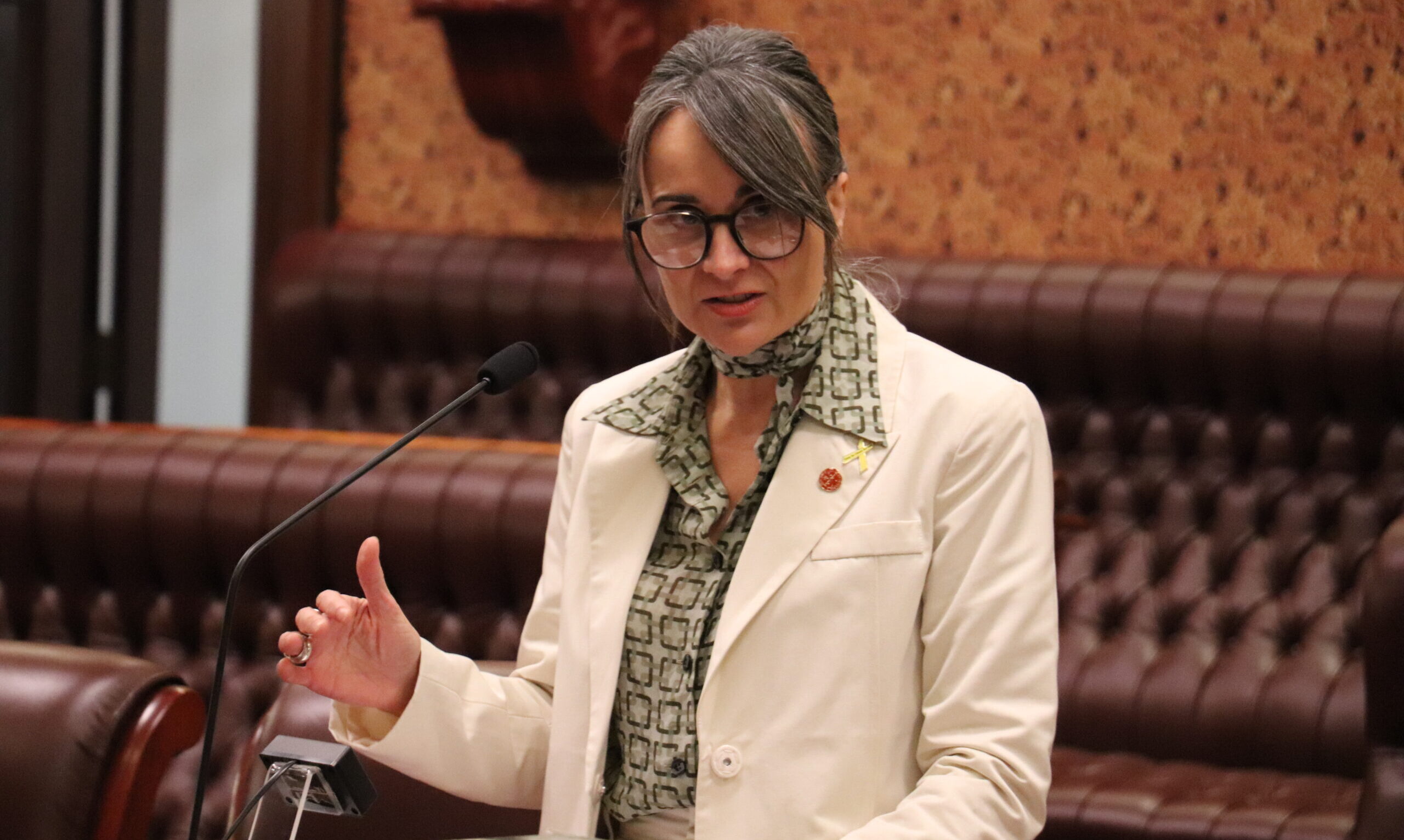
The NSW Upper House on Monday referred a Parliamentary inquiry into its universities to investigate and report on the “crisis” in the sector.
Please login below to view content or subscribe now.