The University of Wollongong (UOW) on Monday announced it now only needs to cut between 85 and 118 full-time positions instead of the originally proposed 155 to 185 jobs.
Please login below to view content or subscribe now.
Membership Login


The University of Wollongong (UOW) on Monday announced it now only needs to cut between 85 and 118 full-time positions instead of the originally proposed 155 to 185 jobs.
Please login below to view content or subscribe now.
The Australian Human Rights Commission’s landmark Racism@Uni survey will appear in student and staff inboxes from August 11.
Please login below to view content or subscribe now.

Speak to young university students today and a picture emerges of deep concern for justice, hunger for real-world connection, and an urgent desire to belong to something bigger than themselves.
Please login below to view content or subscribe now.

The University of New South Wales has come under fire for offering a new subject that asks students to explore how to use generative AI to create art.
Please login below to view content or subscribe now.

Eveline McPhee, a 39-year-old mother of two, has been a dental assistant in northern Massachusetts for nearly 15 years. And while she’s long aspired to upgrade that title to dental hygienist, for most of her career that goal seemed unattainable.
With a full-time job, managing classes seemed arduous, and without a job she and her husband wouldn’t be able to afford day care and after-school programs.
But that all changed last year when an admissions officer at Mount Wachusett Community College told McPhee about Child Care Access Means Parents in School, or CCAMPIS—a $75 million federal grant program designed to help low-income parents in college pay for childcare both on and off campus. McPhee enrolled last fall and is on track to graduate in 2026.
“I have a 9-year-old son, and they paid for him to go to camp this summer so that I can take an intensive course in the dental hygiene program,” McPhee said. “I definitely would not have been able to go back to school without CCAMPIS.”
Now the future of the program is cloudy.
Applications for this year’s CCAMPIS grants—which typically open in May and close by the end of July—have yet to be announced, leaving thousands of student parents in limbo.
Multiple think tank fellows and student advocacy representatives said they’ve been reaching out to the Trump Department of Education for more information since the spring, but the response is always “We’ll open it soon.” Similar circumstances have been reported for other basic needs programs included under FIPSE, the Fund for the Improvement of Postsecondary Education.
Neither the Department of Education nor Republican committee chairs in the House and the Senate responded to Inside Higher Ed’s request for comment.
With the new academic year quickly approaching, the lack of funds leaves many colleges and universities with major budget gaps.
Until last month, Mount Wachusett’s childcare finances looked grim; CCAMPIS funding was set to run out on Sept. 30. But Ann Reynolds, the student support adviser who runs the program, had seen all the headlines about the Trump administration’s funding freezes and anticipated the delay. (Last year, the Biden administration chose not to open the grant to new applicants, but it sent out a clear notice in advance and allowed existing awardees to reapply.) She reached out to a local philanthropy and secured $94,000 to carry McPhee and about a dozen other student parents through graduation.
“We could see the writing on the wall, so to speak,” Reynolds said. “And it’s lifted a great weight from my student parents’ shoulders.”
Not all colleges were so forward-thinking. Many students, including future enrollees at Mount Wachusett, will have to take out additional loans—or drop out and try to repay the loans they already have without a college degree.
“We’re seeing a lot of students raising children coming to school now, so our need is greater,” Reynolds said. “But we can’t take in new students.”
Without the grants, which have had bipartisan support in Congress for years, historically underfunded institutions, including community colleges and minority-serving institutions, will be cash-strapped. Some may be forced to cut staffing or eliminate services entirely.
“Given all the other funds from the U.S. Department of Education that have been frozen or subject to political games in the last few months, the community is right to worry,” said Bryce McKibben, senior director of policy and advocacy at Temple University’s Hope Center for Student Basic Needs. “This doesn’t serve anyone—certainly not taxpayers. The administration should announce a competition or award continuation grants immediately.”
Most experts speculate the delay is occurring for one of two reasons: Either the department lacks the capacity to meet this statutory requirement since it laid off half its staff in March, or it is intentionally withholding the dollars as part of a broader effort to claw back education funding through a process known as rescission.
The latter option would require congressional approval. But the president already won enough votes to pass one rescission package earlier this month, and policy analysts say it’s likely he’ll try to do it again. (Trump’s proposed budget for fiscal year 2026 axes CCAMPIS and FIPSE completely.)
Either way, Theresa Anderson, a senior education and labor fellow at the Urban Institute, a nonpartisan think tank, said the delay symbolizes a larger restriction on college access.
This is a “well-documented agenda pattern and strategy” of the Trump administration, she explained. “It represents further disinvestment and disinterest in helping people access the necessary training, education and credentialing programs that states recognize are necessary to development of the workforce.”
Tanya Ang, executive director of the Today’s Student Coalition, an adult learner advocacy group, described the situation as putting the leaders of critical student support services “up against a brick wall.”
“If students are going to school, we want them to finish, because that’s going to ensure they can get a job and start a long-term career that will provide a strong return on investment,” Ang explained. Cutting off access to childcare “creates a vicious cycle that will hurt not just them and their children as individuals but, honestly, our economy.”
Critics have long argued that CCAMPIS is a duplicate program, suggesting that the Child Care and Development Block Grant, which is run by the Department of Health and Human Services, fulfills a similar purpose. But higher education experts say that’s simply not the case.
CCDBG, they say, supports broad, state-level childcare subsidies, predominantly allocated to parents who work full-time. CCAMPIS, on the other hand, is more targeted and serves student parents, many of whom can’t meet the work requirements attached to the block grant.
“CCAMPIS was really important to not only be able to fill childcare needs in a way that was very flexible for colleges, but also to allow for additional wraparound supports that are incredibly important to support persistence,” Anderson said. It helps student parents “build meaningful community connections, not only with staff of the college, but also with each other.”
At Mount Wachusett, Reynolds said student parents who participate in the CCAMPIS program have one of the highest completion rates among any demographic, at 73 percent. So she hopes that even a sliver of the current operation will survive past its current end date in 2027.
When asked what she would tell the Trump administration if she had the chance, McPhee said she was worried people were losing the opportunity to get ahead.
“I wanted to do better for my family, and this allowed me to do that,” she said. “To not be able to provide that for people moving forward, it’s just not what this country is about. It’s wrong, and I don’t really understand why they would do it.”
A tax write-off for small businesses that hire PhD graduates, lower course fees and higher PhD stipends are some of the ideas higher education’s peak body has put to the federal government ahead of its economic roundtable on productivity.
Please login below to view content or subscribe now.

A Reserve Bank of Australia (RBA) analysis has found the post-pandemic international student boom only marginally drove up the price of rent and inflation.
Please login below to view content or subscribe now.
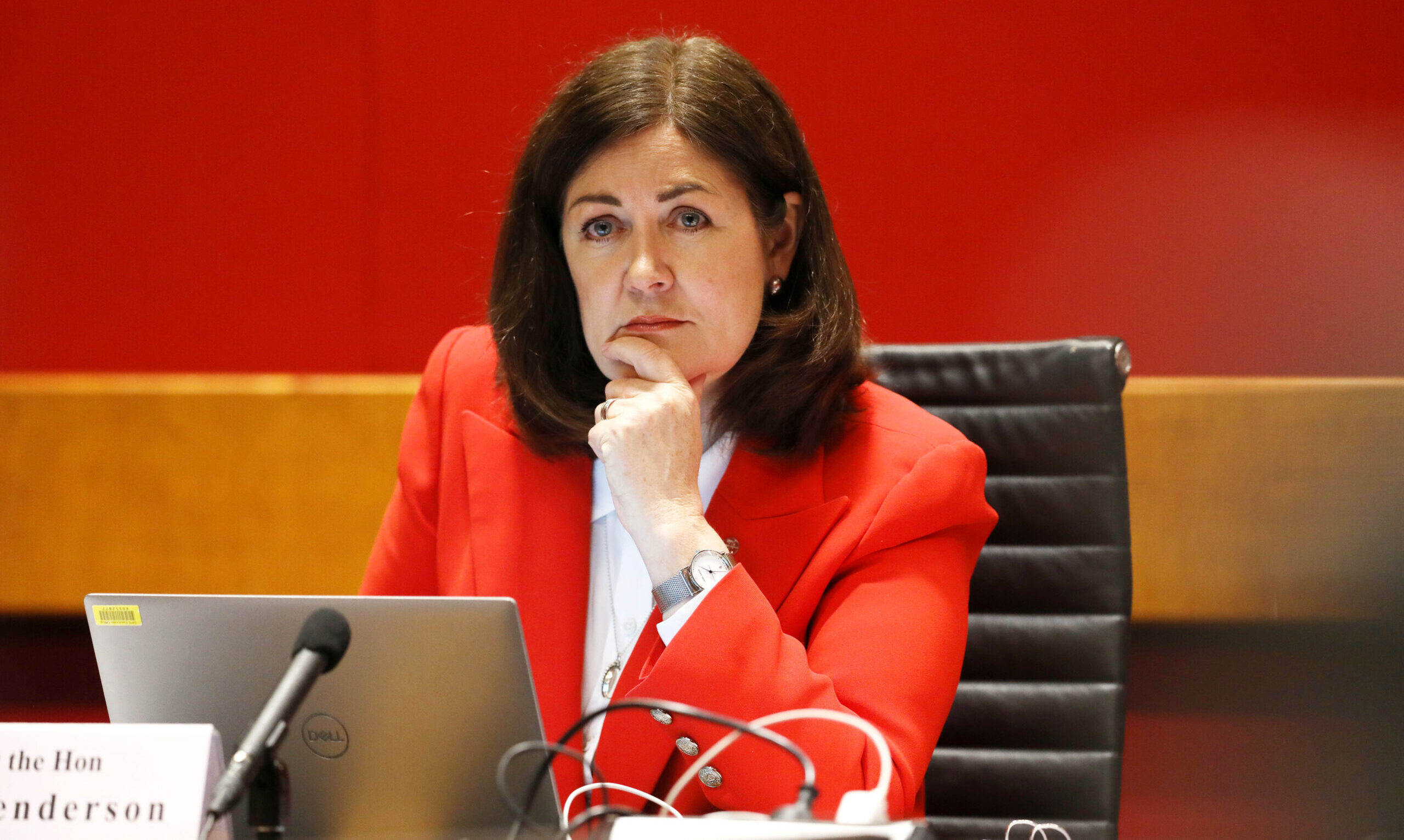
Former education opposition spokeswoman Sarah Henderson has broken rank with her party after she pushed for a flat indexation cap on Labor’s student debt-slashing Bill.
Please login below to view content or subscribe now.
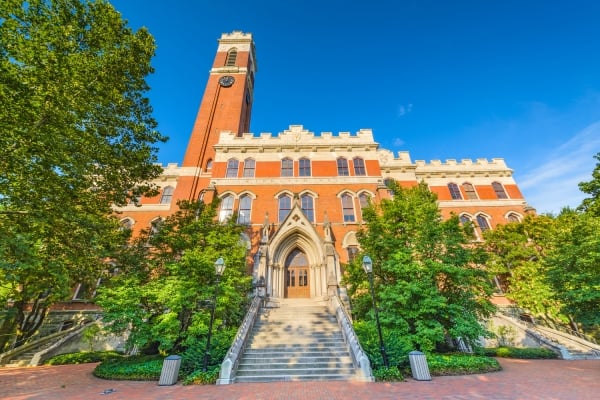
Vanderbilt University is in talks with the city of San Francisco to establish a campus there, the San Francisco Chronicle reported.
A Vanderbilt spokesperson confirmed to the Chronicle that the university—which is based in Nashville, Tenn., but also has satellite campuses in New York City and West Palm Beach, Fla.—has been working with the San Francisco mayor’s office on a plan to gain a foothold in the Bay Area.
“Vanderbilt is always exploring new opportunities to expand our impact and further our mission,” the spokesperson told the newspaper. “We recognize the long-term global leadership of San Francisco and its ever-growing potential, defined by a vibrant culture, dynamic innovation ecosystem and the talent drawn to its leading technology companies and top-caliber arts and cultural institutions.”
The spokesperson added that the institution’s aim is “to create unique student experiences, fuel pathbreaking research and foster close connections to the ideas and companies that will lead the next generation of the nation’s economy.”
San Francisco mayor Daniel Lurie has expressed interest in partnering with a university to revitalize the city.
“Our administration is working every day to create a clean, safe and thriving downtown—one that draws people, businesses and investments back to our city,” Lurie told the Chronicle. “As I said during my campaign, welcoming a world-class university like Vanderbilt to our city would bring new energy and foot traffic downtown, and we will continue working to make that happen.”
A source told the Chronicle that the mayor has approached a handful of other universities, but the arrangement with Vanderbilt appears to be the “most promising”; city officials have met with university leaders multiple times.