Last week the Australian Government’s special antisemitism envoy Jillian Segal delivered her report to Prime Minister Anthony Albanese.
Please login below to view content or subscribe now.
Membership Login


Last week the Australian Government’s special antisemitism envoy Jillian Segal delivered her report to Prime Minister Anthony Albanese.
Please login below to view content or subscribe now.

In an era where technology constantly reshapes the classroom, keeping pace with the latest innovations isn’t just an advantage – it’s a necessity
From vice-chancellors to technical support staff, leaders across higher education are grappling with the challenge of creating dynamic, intuitive and effective learning environments that truly empower students and educators.
The rapid evolution of AV technology is at the heart of this transformation. Interactive displays, immersive virtual reality labs, sophisticated lecture capture systems, and intelligent campus-wide AV networks are no longer futuristic concepts; they are the bedrock of modern education.
Yet, staying informed about these advancements, understanding their practical applications, and integrating them seamlessly into existing infrastructure can feel like a monumental task.
How can your institution harness these tools to foster collaboration, enhance engagement, and prepare students for a technologically driven future?
This is precisely why this year’s Integrate, Australia’s leading audiovisual and integration tradeshow, is once again set to be an indispensable event for anyone involved in higher education.
More than just an exhibition, Integrate is a curated experience designed to demystify complex AV solutions and demonstrate their tangible impact across various sectors, with a significant focus on education.
Australia’s premier annual AV and integration trade show, Integrate serves as the central hub for local and global brands to showcase their latest solutions and products. This year it runs from August 27-29 at the ICC Sydney, and exhibition registration is free.
Walking the Integrate exhibition floor is like stepping into the future of technology. You’ll encounter hundreds of leading companies – from established giants like Crestron and HP Poly to emerging innovators – all demonstrating cutting-edge advancements that will transform your learning environment.
Collaboration technology
Discover unified communication platforms, advanced video conferencing tools, and interactive displays that foster seamless communication and teamwork, whether in a hybrid classroom or across a global research network.
Audio technology and equipment
Explore the latest in sound reinforcement, acoustic design, and intelligent audio systems that ensure every lecture, presentation, or performance is heard with crystal clarity.
Digital signage
See how dynamic digital displays are transforming campus communication, wayfinding, and interactive learning experiences.
Networks and AV-over-IP
Understand the foundational shift towards AV over IP and how robust high-speed networks are enabling flexible and scalable AV solutions across your entire campus.
Smart buildings
Learn about the integration of AV into smart building automation, creating intuitive and energy-efficient spaces that respond to user needs.
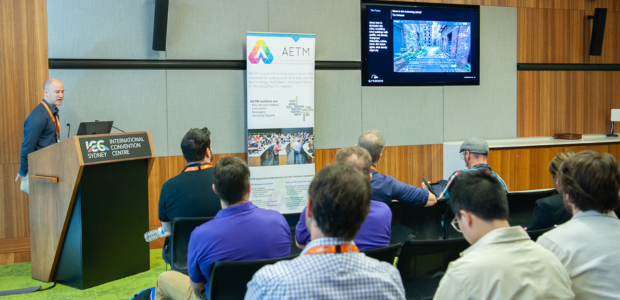
Beyond the vast exhibition, Integrate and the Audiovisual and Educational Technology Management (AETM) Association proudly presents the AETM K-12 Conference on the first day of Integrate.
This dedicated stream is specifically tailored for the education sector. While its title specifies K-12, the insights, case studies, and technological showcases are profoundly relevant and applicable across all levels of education, including the nuanced demands of universities and higher learning institutions.
It’s an opportunity to delve into specific challenges and solutions pertinent to creating agile, future-proof learning environments.
Imagine a space where you can:
View the agenda and purchase tickets for the AETM K-12 Conference here.
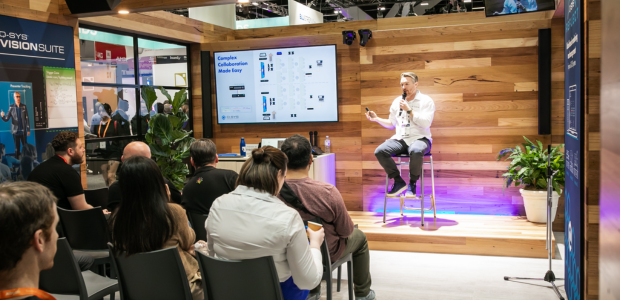
This year Integrate is co-located with the Security Exhibition & Conference, further enhancing its value by showcasing the convergence of AV and security technologies – a crucial aspect of integrated campus solutions.
This strategic partnership offers a holistic view of how intelligent AV systems work hand-in-hand with AI-powered security solutions to create truly integrated, safe, and efficient environments.
Don’t let your institution fall behind in the race for educational excellence. Equip yourself with the knowledge and tools to create truly seamless learning environments that foster innovation and prepare the next generation.
Visit the official Integrate website here to explore the full program, purchase education tickets, view the list of hundreds of exhibitors, and secure your registration for this essential event. Don’t miss your opportunity to connect with the forefront of educational AV technology and unlock limitless potential for your institution.
Integrate runs from August 27-29, 2025, at the ICC Sydney. Exhibition registration is free.
Do you have an idea for a story?
Email [email protected]
TFTDL podcast – David Winstanley (Who’s The Man?)
Listen to David Winstanley, the man with the weight of expectation on his shoulders as all eyes are on the University of Southampton as they prepare to open their Indian campus in August 2025. The TFTDL crew return to the airwaves on the day of the Air India crash, in a rare, new episode.
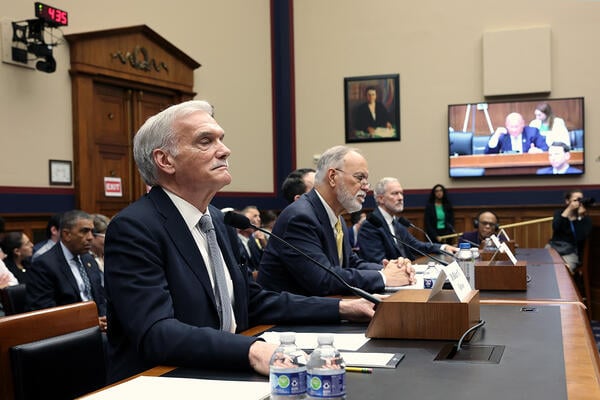
For the fifth time since late 2023, congressional Republicans on Tuesday interrogated a group of university leaders about campus antisemitism. But unlike previous hearings, this one was short on fireworks and viral moments, even as the three leaders—Georgetown University interim president Robert Groves; University of California, Berkeley, chancellor Rich Lyons; and City University of New York chancellor Félix V. Matos Rodríguez—faced a grilling over faculty remarks, foreign funding and alleged failures to protect Jewish students from discrimination and harassment.
While the first hearing, in December 2023, contributed to the ouster of the presidents of Harvard University and the University of Pennsylvania, who equivocated on a hypothetical question about calls for the genocide of Jewish students, subsequent sessions have not had the same impact.
Conducted by the Republican-led Committee on Education and the Workforce, Tuesday’s hearing—titled “Antisemitism in Higher Education: Examining the Role of Faculty, Funding and Ideology”—spanned more than three hours and was interrupted several times by pro-Palestinian protesters, who were quickly removed. In sometimes-heated questioning, lawmakers focused on controversial social media posts by college employees and hypothetical situations, such as whether a faculty union might demand a boycott of Israel in collective bargaining agreements.
But the campus leaders largely avoided gaffes and appeared to emerge mostly unscathed.
Here are highlights from Tuesday’s hearing.
While past hearings often centered on what happened on campus—particularly at institutions that had pro-Palestinian encampments—at Tuesday’s hearing lawmakers focused more on social media, questioning and condemning posts by professors that were critical of Israel. Some posts also seemed to show support for Hamas’s terrorist attack on Israel on Oct. 7, 2023.
Rep. Glenn Thompson, a Pennsylvania Republican, specifically highlighted a social media post from Georgetown employee Mobashra Tazamal, associate director of a multiyear research project on Islamophobia who allegedly reposted a statement that said, “Israel has been recreating Auschwitz in Gaza for two years.” Thompson asked interim president Robert Groves if he thought it was “appropriate for a Georgetown-affiliated scholar to publicly endorse a statement comparing Israel actions in Gaza to the evil of Auschwitz.”
Groves made it clear that he rejected the statement and apologized to anyone harmed by it. But he also defended Georgetown officials for not disciplining Tazamal for the post.
“That’s behavior covered under the First Amendment on social media that we don’t intervene on,” Groves told Thompson in response. “What we do intervene on quickly is behavior that affects our students in the classroom and research-related activities that involve students.”
Republican lawmakers also asked about posts by Ussama Makdisi at UC Berkeley, zeroing in on one that read, “I could have been one of those who broke through the siege on October 7,” the title of an article sympathetic to the Palestinian plight that praised the “determination and courage” of the attackers.
Several Republicans pressed Berkeley chancellor Rich Lyons on how he perceived that post and why Makdisi, a Palestinian American scholar who teaches history, was hired in the first place. Lyons, who became chancellor last July, acknowledged his concerns about the post.
“I believe it was a celebration of the terrorist attack on Oct. 7,” he told lawmakers.
Despite that acknowledgement, Lyons twice defended Makdisi as “a fine scholar” and said he was hired as the inaugural chair of a new Palestinian and Arab Studies program based on his qualifications. His defense prompted a sharp rebuke from Lisa McClain, a Michigan Republican.
“I’m sure there’s a lot of murderers in prison that are fine people, too, fine scholars, but they do some pretty nefarious and heinous acts,” McClain responded to Lyons.
Pro-Palestinian protesters interrupted Tuesday’s proceedings at least four times. Authorities quickly shut down and removed protesters, who were not visible and only faintly audible via live stream.
The protesters seemed to be targeting City University of New York chancellor Félix V. Matos Rodríguez, given that the interruptions occurred when he was speaking or being questioned by Congress. Partial phrases audible over the live stream included “blood on your hands” and “genocidal warmonger.”
Florida Republican Randy Fine fired back after one such interruption.
“Shut up and get out of here,” he bellowed at a protester, calling them a “loser” before blaming campus leaders for the disruption. “I hold you all responsible for this. It is the attitude that you have allowed on your college campuses that make people think that this is OK.”
New York Republican Elise Stefanik made headlines in prior hearings when she asked the hypothetical genocide question that tripped up the presidents of Harvard, Penn and the Massachusetts Institute of Technology. But for the first time in five antisemitism hearings, she did not ask that question. Instead she focused on a legal clinic at the CUNY School of Law
She expressed concern that the legal clinic, CUNY CLEAR, is representing Mahmoud Khalil, the Columbia University graduate who was arrested without charge and incarcerated for three months for his role in organizing pro-Palestinian campus protests.
Khalil, who was freed last month, has not been accused of a crime and has subsequently sued the Trump administration, alleging he was falsely imprisoned and smeared by the federal government for First Amendment–protected activism.
“Does it concern you that New York taxpayers are paying the salary for the legal defense fund of Mahmoud Khalil?” Stefanik asked Rodriguez. ”And I’ll remind you who Mahmoud Khalil is: This is the chief pro-Hamas agitator that led to the antisemitic encampments at Columbia, the rioting and violent takeover of Hamilton Hall, the harassment and physical assault of Jewish students.”
The CUNY chancellor told Stefanik he was not aware CUNY CLEAR was representing Khalil, but that such decisions are “made in the clinics” and at the individual campus level.
Democratic lawmakers focused less on the presidents on the stand than on the hearing itself. Several cast antisemitism concerns as pretext for the Trump administration’s crackdown on higher education. They also criticized the administration for slashing staff at the Office for Civil Rights, the enforcement arm of the Department of Education tasked with investigating antisemitism and other complaints.
Suzanne Bonamici, an Oregon Democrat, argued that Republicans are “weaponizing the real problems of the Jewish community” to attack higher education. She also noted that Republicans have been largely silent about President Donald Trump’s own antisemitic remarks recently.
Bobby Scott, a Virginia Democrat and ranking member of the Education and Workforce Committee, argued that the Trump administration is not approaching concerns about antisemitism in good faith but rather as a way to exert control.
“The Trump administration is destabilizing higher education itself, eroding trust, silencing dissent and undermining universities’ ability to promote diversity and critical inquiry, while at the same time sabotaging the Office [for] Civil Rights,” he said in closing remarks. “Who suffers most from this strategy? It’s the students, Jewish and non-Jewish, marginalized and unrepresented. They’re the ones who will be left vulnerable and voiceless. This should not be a partisan debate. It should be about ensuring that our schools are safe, inclusive and intellectually vibrant.”
However, House Education and Workforce chairman Tim Walberg, a Michigan Republican, made it clear that despite criticism from Democrats, such hearings will continue to be held.
“We need to continue to highlight bad actors in our higher education institutions,” Walberg said.
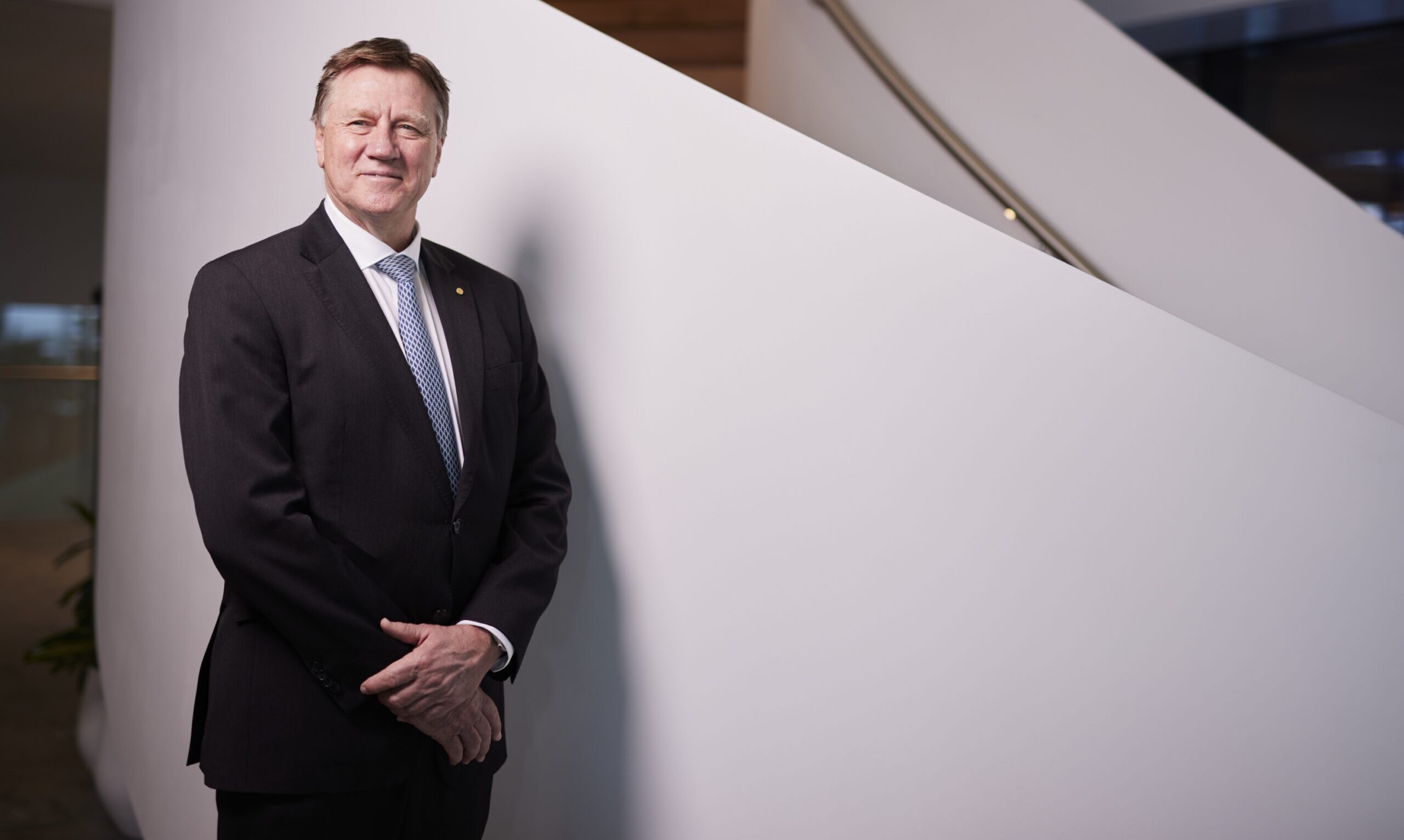
The University Chancellors Council (UCC) on Tuesday said the Commonwealth Remuneration Tribunal should advise on vice-chancellor pay packages, some of which are exceeding $1 million per year.
Please login below to view content or subscribe now.

The sector union has once again called for transparency in university governing bodies after staff reported a culture of secrecy, bullying and intimidation in university councils and senates.
Please login below to view content or subscribe now.

Virtual reality (VR) isn’t a silver bullet replacement for lectures or labs, but it is the most practical method to support higher education to deliver immersive learning more effectively at-scale.
Please login below to view content or subscribe now.

Restrooms don’t have to be showpieces — but they also shouldn’t be an afterthought.
Across campuses, every space tells a story. The student center. The admissions office. The lecture hall. Each one reflects the institution’s priorities, personality and pride. But too often, the restroom is left out of that story — treated as a utility rather than a touchpoint.
That’s starting to change.
Forward-thinking colleges and universities are reimagining what restrooms can contribute to the campus experience. Whether they blend quietly into the background or become a branded statement — they’re being designed with intention.
To reinforce school spirit. To align with campus standards. To simplify operations across varied facilities. And most of all, to support a seamless experience for students, staff and guests.
Because the restroom may not be the centerpiece of campus life — but it still reflects the care behind it.
Restrooms are among the most frequently visited and most visibly judged spaces on campus by prospective students, visiting families, faculty, alumni, donors and staff. Their condition, look and functionality can either reinforce the university’s values…or quietly undermine them.
In fact, nearly 60% of people say a poorly maintained restroom negatively affects their perception of an organization.¹ And while universities don’t compete on toilet paper, they do compete on experience, reputation and pride.
That makes restrooms more than a maintenance checklist — they’re part of the brand.
From dorms to arenas to academic halls, no two campus buildings are exactly alike. But consistency still matters for both the brand and the teams behind it.
A welcome center might feature subtle brand cues or custom faceplates. A student union might highlight school spirit or student accomplishments. An admin wing may favor quieter design that blends in. The point isn’t sameness; it’s cohesion.
So how do universities achieve that without adding complexity?
They’re working from a flexible foundation — systems that adapt to each building’s needs while maintaining a cohesive experience across campus.
That might mean:
By choosing tools that support both visual customization and operational ease, campuses are creating restrooms that feel thoughtful, consistent and easy to maintain — no matter the setting.
It’s not one-size-fits-all. It’s one strategy applied intentionally.
Restrooms can look great — but if they’re hard to service, the system breaks down fast. On a busy campus with lean facility teams, every efficiency matters.
Elevated doesn’t mean complex. In fact, the best elevated solutions simplify operations with:
The result: less downtime, fewer complaints, smoother campus operations. And all of it happening behind the scenes — just as it should.
Whether you’re reimagining a flagship student space or refreshing legacy buildings, intentional restroom design can help bring your brand and your operations into better alignment — and create a more consistent experience, one space at a time.
Because small details send big signals — to students, staff and everyone who walks your halls.
Explore what elevated could look like for your campus.
Sources:
1Bradley Corporation. (2023, February 28). Bradley survey illustrates why clean restrooms are good for business. https://www.bradleycorp.com/news/bradley-survey-illustrates-why-clean-restrooms-are-good-for-business
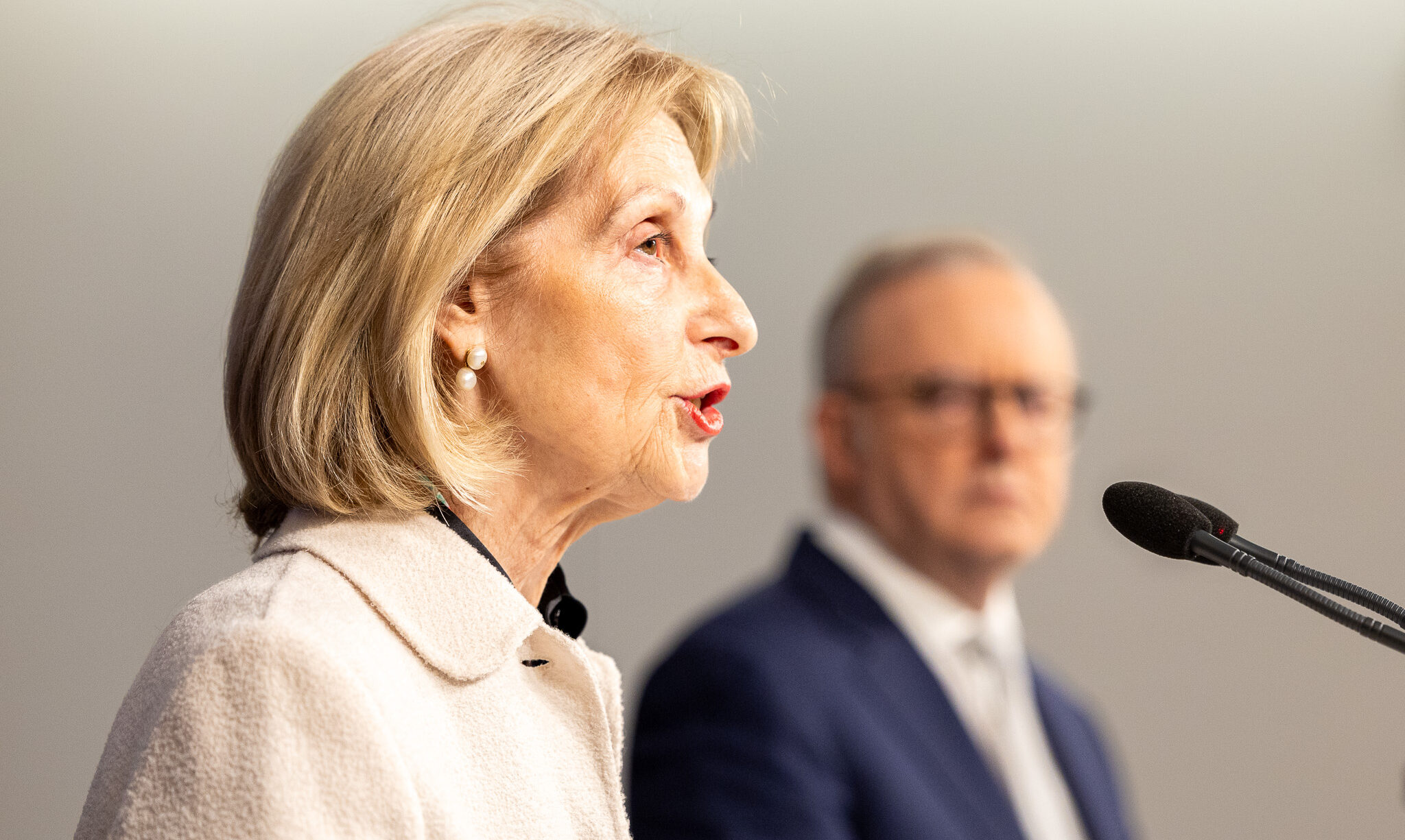
Universities could be subject to a ’report card’ that assesses their responses to antisemitism, which could result in cut funding, according to Australia’s antisemitism envoy’s report released on Thursday.
Please login below to view content or subscribe now.

The Australian university sector has come under considerable pressure in recent years. It is currently in a parlous state.
Please login below to view content or subscribe now.