Tag: Campus

  • KEDGE to launch associated campus in India

    KEDGE to launch associated campus in India

    The new associated campus, which is being launched in collaboration with Vijaybhoomi University in Karjat, a town near Mumbai, and its business education arm, the Jagdish Sheth School of Management, will initially offer a bachelor in business administration program starting September 2025.

    The collaboration with Vijaybhoomi aligns perfectly with our vision to nurture global leaders with a strong foundation in innovation and ethics
    Alexandre de Navailles, KEDGE

    To be eligible for the undergraduate program, students must have completed or be currently enrolled in grade 12, India’s equivalent of the final year of high school, and either have a minimum SAT score of 1300 or pass KEDGE’s internal entrance exam.

    “In line with its mission to educate future leaders in their local contexts, KEDGE already operates associated campuses in Abidjan and Dakar (Africa), as well as in Shanghai and Suzhou (China),” read a statement by the grande école. 

    “This new strategic partnership in South Asia, established with Vijaybhoomi University and its JAGSoM Business School, will enable the joint development of innovative programmes. These will combine KEDGE’s academic expertise with the evolving needs of the Indian market in areas such as sustainable management, the creative industries, sport, entrepreneurship and innovation.” 

    As its associated campus prepares to introduce a BBA program within the next two months, KEDGE’s collaboration with Vijaybhoomi University will also lead to the launch of several master of science programs in areas such as sports management, arts and creative industries, sustainable transformation, luxury management, entrepreneurship and innovation, and design.

    These programs are expected to launch in September 2026 and will be delivered at the Vijaybhoomi University campus, with select modules featuring remote lectures from KEDGE faculty based in France.

    According to a report by Careers360, an executive MBA and a PhD program tailored for working professionals are also expected to be introduced in the coming years.

    Moreover, a dedicated India operations team appointed by KEDGE will oversee all academic affairs related to the associated campus.

    “This partnership is a testament to KEDGE’s mission to extend its global footprint and bring top-tier education closer to students worldwide. The collaboration with Vijaybhoomi aligns perfectly with our vision to nurture global leaders with a strong foundation in innovation and ethics,” stated Alexandre de Navailles, general manager, KEDGE. 

    KEDGE’s India plans build on the success of its ventures in other parts of Asia and Africa.

     In China, the school has established two Franco-Chinese institutes – both recognised by the Chinese Ministry of Education – focused on art, design management, humanities, and social sciences, together welcoming over 300 high-potential Chinese students each year.

    Meanwhile in Africa, its Dakar campus in Senegal, operational since 2008, offers bachelor’s and master’s programs in management along with executive education. The Abidjan campus in Côte d’Ivoire, launched in 2020, reflects the school’s ambition to grow its footprint across the continent.

    Though French institutions have previously been encouraged to establish fully fledged campuses in India, Campus France has been actively exploring joint campus opportunities, a focus highlighted during The PIE Live India 2025.

    Moreover, it’s not just KEDGE, ranked among the top 10 business schools in France, that is expanding its presence. 

    ESCP, another leading French business school, has partnered with IIT Bombay and IIT Madras to facilitate student and faculty exchanges, joint research, and the integration of emerging technologies in sustainability, entrepreneurship, and AI.

    Source link

  • This college campus may be literally underwater sooner than you think

    This college campus may be literally underwater sooner than you think

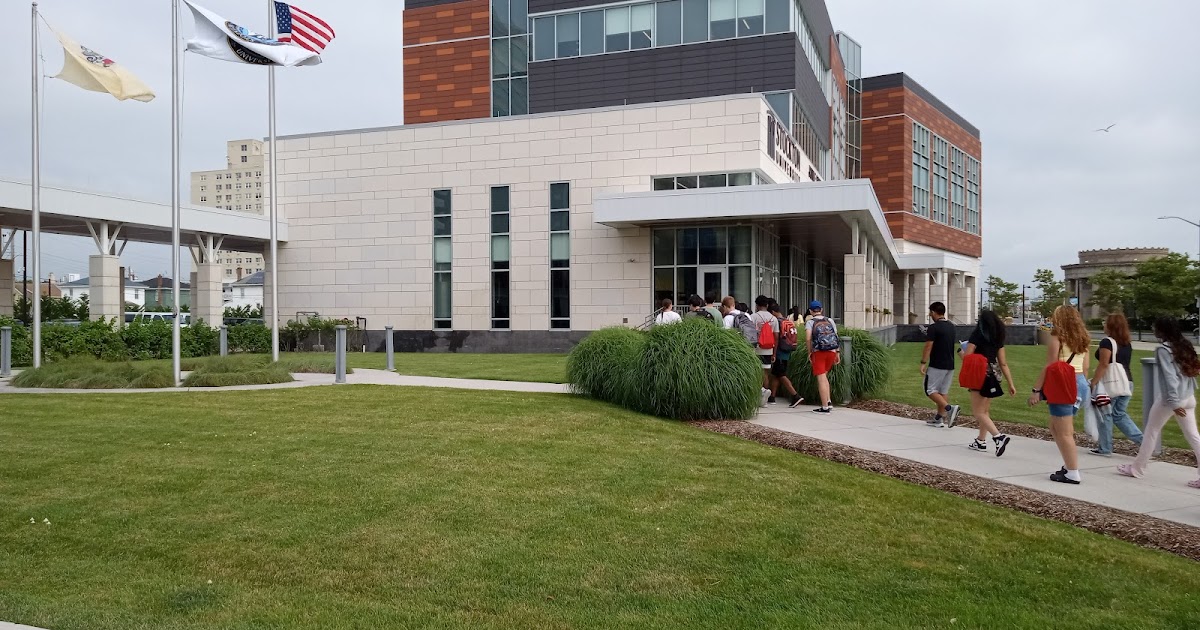
    Stockton University’s Atlantic City campus may be treading water—literally and figuratively. Built in 2018 on a stretch of reclaimed land in the South Inlet neighborhood, the coastal satellite of Stockton University sits just a few hundred feet from the Atlantic Ocean. With scenic views and beachfront access, it was marketed as a fresh vision for higher education: experiential learning by the sea.

    But according to Rutgers University’s Climate Impact Lab and corroborated by NOAA sea level rise projections, that vision may be short-lived. In less than 50 years, large portions of the campus could be underwater—possibly permanently. In fact, with high tide flooding already happening more frequently in Atlantic City and sea levels expected to rise 2 to 5 feet by 2100 depending on emissions, climate change poses an existential threat not just to Stockton’s Atlantic City facilities, but to the broader idea of oceanfront higher education.

    The Science: Rutgers’ Stark Warning

    Rutgers’ 2021 “New Jersey Science and Technical Advisory Panel Report” projected sea level rise in the state could exceed 2.1 feet by 2050 and 5.1 feet by 2100 under high emissions scenarios. Even under moderate mitigation efforts, the sea is projected to rise 1.4 to 3.1 feet by 2070, placing critical infrastructure—including roads, utility networks, and public buildings—at risk. Stockton’s coastal campus is among them.

    A Teachable Crisis

    For students and faculty in environmental science, public policy, and urban planning, Stockton’s Atlantic City campus is both classroom and case study. Professors can point to flooding events just blocks away as real-time lessons in sea level rise, coastal erosion, and infrastructure vulnerability. Students witness firsthand the tension between development and environmental limits.

    Yet these lived experiences also raise ethical questions. Is the university preparing students for the reality of climate displacement—or is it merely weathering the storm until the next round of state funding? Are public institutions being honest about the long-term risks students will face, not just as residents but as debt-burdened alumni?

    In many ways, Stockton’s presence in Atlantic City epitomizes the “climate denial by development” that characterizes so much U.S. urban planning: Build now, mitigate later, and leave tomorrow’s collapse for someone else to manage.

    No Easy Retreat

    Climate adaptation strategies in Atlantic City have been slow-moving, expensive, and often controversial. Proposed solutions—such as sea walls, elevating roads, and managed retreat—require enormous financial and political capital. There’s also no consensus on how to preserve equity in a shrinking, sinking city.

    For Stockton University, retreating from the Atlantic City campus would be politically and financially damaging. The expansion was celebrated with ribbon-cuttings and bipartisan support. Pulling back now would mean acknowledging a costly miscalculation. Yet failing to plan for relocation or phased withdrawal could leave students and taxpayers on the hook for an underwater investment.

    According to the New Jersey Coastal Resilience Plan, Atlantic County—home to Stockton’s main and satellite campuses—is one of the most climate-exposed counties in the state. And Stockton isn’t just sitting in the floodplain; it’s training the very people who will be tasked with managing these emergencies. It has both a responsibility and an opportunity to lead, not just in mitigation but in public reckoning.

    Lessons for Higher Ed

    Stockton is hardly the only university caught between mission and market. Across the U.S., colleges and universities are pouring resources into branding campaigns and capital projects that ignore—or actively obscure—the long-term environmental risks. Climate change is often treated as a course offering, not an existential threat.

    In Universities on Fire, Bryan Alexander outlines how climate change will fundamentally reshape the higher education landscape—from facilities planning to enrollment, from energy consumption to curriculum design. He warns that campuses, particularly those located near coasts or in extreme heat zones, face not just infrastructural threats but institutional crises. Rising waters, wildfires, hurricanes, and population shifts will force universities to rethink their physical footprints, economic models, and public obligations.

    Yet few accreditors or bond-rating agencies have accounted for climate risk in their evaluations. Endowments continue to fund construction in flood-prone areas. Boards of trustees prioritize expansion over retreat. And students, many of whom are first-generation or low-income, are seldom told what climate vulnerability could mean for the real value of their degrees—or the safety of their dormitories.

    As sea levels rise and climate models grow more precise, Stockton’s Atlantic City campus may become a symbol—not just of poor urban planning, but of an education system unprepared for the world it claims to be shaping.

    What Comes Next?

    For now, Stockton continues to expand its Atlantic City footprint, even as new reports suggest that this part of the Jersey Shore may be uninhabitable or cost-prohibitive to protect in a few decades. The university has proposed additional student housing and even a new coastal research center. But each new building reinforces the same flawed logic: that short-term gains outweigh long-term collapse.

    At some point, Stockton University—and many other coastal institutions—will have to decide whether to keep investing in property that’s literally slipping into the sea, or to model the kind of resilience and foresight they claim to teach.

    Because this is not just a sustainability issue. It’s a justice issue. It’s a debt issue. It’s a survival issue.

    And it’s happening now.

    Sources

    Bryan Alexander. Universities on Fire: Higher Education in the Climate Crisis. Johns Hopkins University Press, 2023.

    NJ Department of Environmental Protection. Resilient NJ: Statewide Coastal Resilience Plan. 2020.

    Rutgers University. New Jersey Climate Change Resource Center.

    U.S. Army Corps of Engineers. Back Bay Study – New Jersey.

    New Jersey Future. “Climate Risks and Infrastructure in Atlantic County.”

    Stockton University. Strategic Plan 2025: Choosing Our Path.

    NOAA. State of High Tide Flooding and Sea Level Rise 2023 Technical Report.

    Source link

  • Antisemitism action waiting on more info – Campus Review

    Antisemitism action waiting on more info – Campus Review

    Education Minister Jason Clare said the government will deliver its plan to tackle antisemitism after considering input from the Islamophobia envoy, Race Discrimination Commissioner and Expert Council on University Governance.

    Please login below to view content or subscribe now.

    Membership Login

    Source link

  • Western Sydney uni launches 5-year plan – Campus Review

    Western Sydney uni launches 5-year plan – Campus Review

    Western Sydney University (WSU) has doubled down on its commitment to make every year the ‘year of the student’ in its new 2030 strategic plan.

    Please login below to view content or subscribe now.

    Membership Login

    Source link

  • How skills drive productivity – Campus Review

    How skills drive productivity – Campus Review

    Sector voices discussed how skills could drive productivity at the Applied Learning Conference at the Singapore Institute of Technology.

    Please login below to view content or subscribe now.

    Membership Login

    Source link

  • Canberra staff “in the dark” after council review – Campus Review

    Canberra staff “in the dark” after council review – Campus Review

    A review of the University of Canberra’s (UC) management said governing body members should be held more accountable after staff felt ‘shut down‘ and shunned from decision making.

    Please login below to view content or subscribe now.

    Membership Login

    Source link

  • New UOW leadership reduces job cuts – Campus Review

    New UOW leadership reduces job cuts – Campus Review

    The new University of Wollongong (UOW) leader will cut senior staff and reduce non-salary spending to save some non-academic positions in the university’s restructure.

    Please login below to view content or subscribe now.

    Membership Login

    Source link

  • Antisemitism scorecard will harm unis: Opinion – Campus Review

    Antisemitism scorecard will harm unis: Opinion – Campus Review

    Last week the Australian Government’s special antisemitism envoy Jillian Segal delivered her report to Prime Minister Anthony Albanese.

    Please login below to view content or subscribe now.

    Membership Login

    Source link

  • Why education leaders are converging at Integrate 2025 – Campus Review

    Why education leaders are converging at Integrate 2025 – Campus Review

    Are you ready to transform your institution’s learning landscape?

    In an era where technology constantly reshapes the classroom, keeping pace with the latest innovations isnt just an advantage – it’s a necessity

    From vice-chancellors to technical support staff, leaders across higher education are grappling with the challenge of creating dynamic, intuitive and effective learning environments that truly empower students and educators.

    The rapid evolution of AV technology is at the heart of this transformation. Interactive displays, immersive virtual reality labs, sophisticated lecture capture systems, and intelligent campus-wide AV networks are no longer futuristic concepts; they are the bedrock of modern education.

    Yet, staying informed about these advancements, understanding their practical applications, and integrating them seamlessly into existing infrastructure can feel like a monumental task.

    How can your institution harness these tools to foster collaboration, enhance engagement, and prepare students for a technologically driven future?

    This is precisely why this years Integrate, Australia’s leading audiovisual and integration tradeshow, is once again set to be an indispensable event for anyone involved in higher education.

    More than just an exhibition, Integrate is a curated experience designed to demystify complex AV solutions and demonstrate their tangible impact across various sectors, with a significant focus on education.

    Integrate is where innovation comes to life

    Australias premier annual AV and integration trade show, Integrate serves as the central hub for local and global brands to showcase their latest solutions and products. This year it runs from August 27-29 at the ICC Sydney, and exhibition registration is free.

    Walking the Integrate exhibition floor is like stepping into the future of technology. Youll encounter hundreds of leading companies – from established giants like Crestron and HP Poly to emerging innovators – all demonstrating cutting-edge advancements that will transform your learning environment.

    Collaboration technology
    Discover unified communication platforms, advanced video conferencing tools, and interactive displays that foster seamless communication and teamwork, whether in a hybrid classroom or across a global research network.

    Audio technology and equipment
    Explore the latest in sound reinforcement, acoustic design, and intelligent audio systems that ensure every lecture, presentation, or performance is heard with crystal clarity.

    Digital signage
    See how dynamic digital displays are transforming campus communication, wayfinding, and interactive learning experiences.

    Networks and AV-over-IP
    Understand the foundational shift towards AV over IP and how robust high-speed networks are enabling flexible and scalable AV solutions across your entire campus.

    Smart buildings
    Learn about the integration of AV into smart building automation, creating intuitive and energy-efficient spaces that respond to user needs.

    Technology built for education

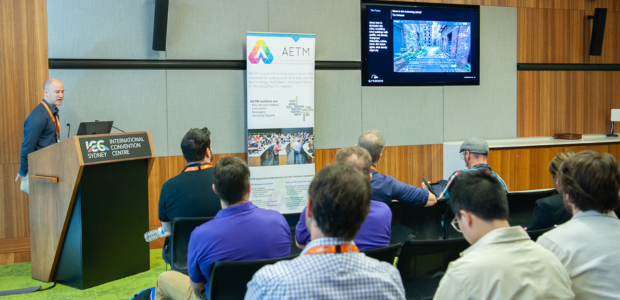
    Beyond the vast exhibition, Integrate and the Audiovisual and Educational Technology Management (AETM) Association proudly presents the AETM K-12 Conference on the first day of Integrate.

    This dedicated stream is specifically tailored for the education sector. While its title specifies K-12, the insights, case studies, and technological showcases are profoundly relevant and applicable across all levels of education, including the nuanced demands of universities and higher learning institutions.

    It’s an opportunity to delve into specific challenges and solutions pertinent to creating agile, future-proof learning environments.

    Imagine a space where you can:

    • Discover groundbreaking AV technologies: See firsthand the latest interactive whiteboards, advanced projection systems, robust campus AV management platforms, and collaborative tools that are redefining learning spaces.
    • Gain actionable insights: Hear directly from industry experts, leading educators, and technical specialists who have successfully implemented cutting-edge AV solutions in real-world educational settings. Learn from their successes and challenges.
    • Network with peers: Connect with hundreds of like-minded professionals – all focused on enhancing educational delivery through technology. Share experiences, discuss challenges, and forge valuable partnerships.
    • Experience practical demonstrations: Move beyond brochures and see how these technologies operate in live environments, understanding their potential applications within your own institution’s lecture halls, labs, and collaborative spaces.

    View the agenda and purchase tickets for the AETM K-12 Conference here.

    Security and safety

    This year Integrate is co-located with the Security Exhibition & Conference, further enhancing its value by showcasing the convergence of AV and security technologies – a crucial aspect of integrated campus solutions.

    This strategic partnership offers a holistic view of how intelligent AV systems work hand-in-hand with AI-powered security solutions to create truly integrated, safe, and efficient environments.

    Dont let your institution fall behind in the race for educational excellence. Equip yourself with the knowledge and tools to create truly seamless learning environments that foster innovation and prepare the next generation.

    Ready to shape the future of learning?

    Visit the official Integrate website here to explore the full program, purchase education tickets, view the list of hundreds of exhibitors, and secure your registration for this essential event. Dont miss your opportunity to connect with the forefront of educational AV technology and unlock limitless potential for your institution.

    Integrate runs from August 27-29, 2025, at the ICC Sydney. Exhibition registration is free.

    Do you have an idea for a story?
    Email [email protected]

    Source link

  • First look at the University of Southampton’s Delhi campus

    First look at the University of Southampton’s Delhi campus

    TFTDL podcast – David Winstanley (Who’s The Man?)

    Listen to David Winstanley, the man with the weight of expectation on his shoulders as all eyes are on the University of Southampton as they prepare to open their Indian campus in August 2025. The TFTDL crew return to the airwaves on the day of the Air India crash, in a rare, new episode.

    Source link