Tag: Campus

  • Trump Signs Executive Order on Combating Antisemitism on Campus

    Trump Signs Executive Order on Combating Antisemitism on Campus

    by CUPA-HR | February 5, 2025

    On January 29, President Trump signed an executive order titled “Additional Measures to Combat Anti-Semitism.” The order directs certain federal agencies to use appropriate legal tools to “prosecute, remove, or otherwise hold to account the perpetrators of unlawful anti-Semitic harassment and violence.”

    Background

    The new EO directly connects to and expands upon Trump’s EO 13899, “Combating Anti-Semitism,” that was signed in December 2019. The 2019 EO tasks federal departments and agencies charged with enforcing Title VI of the Civil Rights Act to use the law to investigate potential cases of discrimination against Jewish individuals where such action does not run contrary to rights protected under other federal laws.

    The Biden administration did not rescind EO 13899, and they pursued regulations at the Department of Education to amend Title VI for cases involving discrimination based on shared ancestry or ethnic characteristics. The proposed rule, which was not published during the Biden administration but was most recently included in the Fall 2024 Regulatory Agenda, indicated that the regulations were in part in response to EO 13899.

    2025 Executive Order

    The new EO states that it reaffirms EO 13899 and “directs additional measures to advance the policy thereof in the wake of the Hamas terrorist attacks of October 7, 2023.” It takes direct aim at institutions of higher education, stating that the attacks resulted in “an unprecedented wave of vile anti-Semitic discrimination, vandalism, and violence … especially in our schools and on our campuses.”

    In response to these claims, the EO directs all federal agencies to submit a report within 60 days of the order that identifies “all civil and criminal authorities or actions within the jurisdiction of that agency, beyond those already implemented under Executive Order 13899, that might be used to curb or combat anti-Semitism.” Notably, the order directs these agency reports to include “an inventory and analysis of all pending administrative complaints … against or involving institutions of higher education alleging civil rights violations related to or arising from post-October 7, 2023, campus anti-Semitism.”

    The EO provides additional requirements for the reports submitted by the U.S. attorney general and the secretary of education. Specifically, the order directs the attorney general’s report to include “an inventory and analysis of all court cases against or involving institutions of higher education alleging civil rights violations related to or arising from” antisemitism that potentially occurred after the October 2023 attacks. The attorney general is also required to indicate whether they intend to or have taken any action with respect to the cases at institutions of higher education. Moreover, the secretary of education is tasked with submitting additional inventory and analysis of Title VI complaints related to antisemitism that were filed to the Office for Civil Rights after the October 7 attacks.

    Finally, the EO directs the secretaries of state, education and homeland security to report recommendations to familiarize “institutions of higher education with the grounds for inadmissibility under 8 U.S.C. 1182(a)(3) so that such institutions may monitor for and report activities by alien students and staff relevant to those grounds” and to ensure “that such reports about aliens lead, as appropriate and consistent with applicable law, to investigations and, if warranted, actions to remove such aliens.”

    Next Steps

    As explained above, the EO directs agencies to promulgate reports for the president within the next 60 days. Additional information and guidance are needed from relevant agencies to determine next steps for institutions of higher education. CUPA-HR will keep members apprised of additional updates related to Title VI enforcement and public policy related to antisemitism on campus.


    Source link

  • Analysis: Harvard’s settlement adopting IHRA anti-Semitism definition a prescription to chill campus speech

    Analysis: Harvard’s settlement adopting IHRA anti-Semitism definition a prescription to chill campus speech

    Just one day after President Trump took office, Harvard agreed to settle two lawsuits brought against it by Jewish students that alleged the university ignored “severe and pervasive anti-Semitism on campus” and created “an unbearable educational environment” in the wake of the October 7, 2023, Hamas attack on Israel and the ongoing war in Gaza. 

    While the settlement language itself does not appear to be public, a press release filed on the official docket of The Louis D. Brandeis Center for Human Rights Under Law v. President and Fellows of Harvard College included some details. Most notably, Harvard agreed to adopt the International Holocaust Remembrance Alliance’s (IHRA’s) definition of anti-Semitism. FIRE’s worry, shared by many others — including the definition’s primary author — is that, when added to policies used to punish discriminatory harassment on American campuses, the definition is too likely to be used to punish speech that is critical of Israel or its government but that is not motivated in animus against Jews or Israelis. 

    FIRE has repeatedly proposed steps to address anti-Semitic discrimination on campus that would safeguard students from harassment while protecting freedom of speech, most recently in our inauguration-day letter to President Trump. Getting this right is important; any proposal that chills or censors protected speech on campus won’t pass constitutional muster at public universities, won’t square with free speech promises at private universities (like Harvard), and won’t effectively address anti-Semitism.

    Nevertheless, attempts to codify the IHRA definition of anti-Semitism into laws or regulations are nothing new. FIRE posted a roundup of the widespread civil libertarian opposition to its codification last year, when Congress considered adopting it as federal law. Among those opponents is the definition’s primary author, Kenneth Stern, who spoke at length with FIRE’s Nico Perrino on our So to Speak podcast about why it’s not the right tool for the job of regulating speech. As Stern wrote back in 2016 for The New York Times: “The definition was intended for data collectors writing reports about anti-Semitism in Europe. It was never supposed to curtail speech on campus … And Jewish students are protected under the law as it now stands.” (Perhaps “as it is now written” would have been more precise; whether colleges follow the law is a different issue.) As Stern predicted in that piece:

    If this bill becomes law it is easy to imagine calls for university administrators to stop pro-Palestinian speech. Even if lawsuits alleging Title VI violations fail, students and faculty members will be scared into silence, and administrators will err on the side of suppressing or censuring speech.

    Stern’s prediction is about to receive ground testing at Harvard, and likely at other universities that may follow its lead.

    Anti-Semitism Awareness Act continues to threaten free speech on campus

    News

    However well-intentioned the Anti-Semitism Awareness Act may be, it remains deeply flawed and a threat to the First Amendment.


    Read More

    At public universities, which are bound by the First Amendment, it’s possible that the test will not last that long. In a case over the definition’s adoption by Texas public institutions by gubernatorial executive order, a federal judge ruled last October that Students for Justice in Palestine was likely to succeed in its claim that policies using the IHRA definition “impose impermissible viewpoint discrimination that chills speech in violation of the First Amendment.” The policies are still in place until the trial, which is scheduled for January of 2026.

    But even if use of the IHRA definition is struck down at public universities, that would not prevent its use at Harvard or hundreds of other private institutions. FIRE’s opposition to the use of the IHRA definition for the purpose of regulating speech is not because we do not believe anti-Semitic harassment is not happening. Obviously, it is. Nor is it because we believe anti-Semitic harassment is not worth attention or not prohibited by civil rights law. Again, it is. Our concern is with the IHRA definition itself and the way campuses across the country are likely to misapply it to further chill speech — and use it as an entering wedge to do the same with speech on every other topic under the sun. If the underlying issue were bigotry against any other group, our concerns would be the same. (And if you are aware of such efforts, please bring them to our attention.)

    The IHRA definition and anti-discrimination law

    At the outset, the adoption of the IHRA definition to define anti-Semitism is itself novel in that laws and rules in the United States generally do not define what acts specifically are racist, sexist, religiously bigoted, or anti-Semitic. They are written from the perspective of prohibiting discrimination against a class of people protected by that law. In the case of Title VI of the Civil Rights Act of 1964, for example, that includes race, color, and national origin. But the law does not go on to say “and here is what is racist” followed by a list of examples or a definition. That is left to judges and fact-finders to determine, taking into account the facts and context of a given case.

    Detailed definitions and examples are much less novel on college campuses, though they have long been problematic. Back in 2007, FIRE took issue with the University of Delaware for a mandatory freshman orientation that (among a massive number of its problems) defined “a racist” as “all white people (i.e., people of European descent) living in the United States, regardless of class, gender, religion, culture, or sexuality.” Sexual harassment is often (too broadly) defined simply as “unwelcome conduct of a sexual nature,” which is unhelpful and overbroad, and then further runs aground on examples like Cal State-Channel Islands’ (our July 2019 Speech Code of the Month) “derogatory posters, cartoons, drawings, symbols, or gestures.” 

    The IHRA definition combines a couple of these problems. Its website explains

    On 26 May 2016, the Plenary in Bucharest decided to:

    Adopt the following non-legally binding working definition of antisemitism:

    “Antisemitism is a certain perception of Jews, which may be expressed as hatred toward Jews. Rhetorical and physical manifestations of antisemitism are directed toward Jewish or non-Jewish individuals and/or their property, toward Jewish community institutions and religious facilities.”

    Let’s look at this with an eye towards enforcement. Did a person accused of discriminatory harassment do so based on having “a certain perception of Jews?” What perception is that? Hatred? Not exactly, as it “may be expressed as hatred towards Jews.” But if it “may be expressed as hatred towards Jews,” it may also not be expressed as hatred towards Jews. That leaves open the possibility that anti-Semitism can be expressed by anything. The definition then moves on to say that it can be directed toward “Jewish or non-Jewish individuals and/or their property.” The group of “Jewish and non-Jewish individuals” includes literally everyone. It is more specific about community institutions and religious facilities, excluding those that are not Jewish.

    The IHRA definition’s flexibility and reach introduce serious problems when the definition is being used as a speech code that can result in the discipline of individuals or the silencing of their speech. 

    Most of the definitional work, then, is left to be done by analogy to the examples, which IHRA makes clear, saying, “To guide IHRA in its work, the following examples may serve as illustrations.” Some of those examples include hard-to-argue-with propositions like “Calling for, aiding, or justifying the killing or harming of Jews in the name of a radical ideology or an extremist view of religion,” or “Accusing Jews as a people of being responsible for real or imagined wrongdoing committed by a single Jewish person or group, or even for acts committed by non-Jews.” But other examples have a much greater potential overlap with political critiques, such as “Drawing comparisons of contemporary Israeli policy to that of the Nazis,” and “Denying the Jewish people their right to self-determination, e.g., by claiming that the existence of a State of Israel is a racist endeavor,” both of which were cited by the judge in the Texas lawsuit mentioned above. Still others are somewhere in between, like “Applying double standards by requiring of it a behavior not expected or demanded of any other democratic nation.”

    To combat anti-Semitism, House bill chips away at free speech

    News

    An amendment before the U.S. House impermissibly threatens the expressive rights of students and faculty across the country.


    Read More

    For the IHRA definition’s intended purpose — to identify anti-Semitism in Europe so that the IHRA may catalog and identify it — the breadth of the examples isn’t too much of a problem. It is common, at FIRE and everywhere else, to ask someone to look for examples of a certain kind of incident by telling them “look for things that look like this.” The sweep of the examples is likely helpful for the IHRA’s intended aim, in that they may capture “edge cases” that don’t strictly fall into the definition but nevertheless seem like part of what it was intended to cover.

    Yet the IHRA definition’s flexibility and reach introduce serious problems when the definition is being used as a speech code that can result in the discipline of individuals or the silencing of their speech. The definition is simply not constructed in a manner that makes for fair and predictable application by different individuals, even if all of those individuals are trying their level best. That’s likely why the IHRA went out of its way to label it both a “non-legally binding” and “working” definition, building into the definition’s very text the recognition that it was neither intended to be used as a regulation nor the final word.

    Having said that, IHRA goes on to couch things even further. Preceding the examples, it writes:

    Manifestations might include the targeting of the state of Israel, conceived as a Jewish collectivity. However, criticism of Israel similar to that leveled against any other country cannot be regarded as antisemitic. Antisemitism frequently charges Jews with conspiring to harm humanity, and it is often used to blame Jews for “why things go wrong.” It is expressed in speech, writing, visual forms and action, and employs sinister stereotypes and negative character traits.

    Contemporary examples of antisemitism in public life, the media, schools, the workplace, and in the religious sphere could, taking into account the overall context, include, but are not limited to: […]

    The bolded phrases are all qualifiers that leave more openings for interpretation — a situation that courts recognize as a problem in the area of free speech because it makes the rule too vague to follow or fairly administer. In Grayned v. City of Rockford, a landmark 1972 case, the Supreme Court explained that a law (or regulation) is unconstitutionally vague when it does not “give a person of ordinary intelligence a reasonable opportunity to know what is prohibited, so that he may act accordingly.” And vagueness is a particular problem when the rule concerns free speech: “[W]here a vague statute abut[s] upon sensitive areas of basic First Amendment freedoms, it operates to inhibit the exercise of [those] freedoms. Uncertain meanings inevitably lead citizens to steer far wider of the unlawful zone … than if the boundaries of the forbidden areas were clearly marked.”

    Harvard is private, so the First Amendment doesn’t directly apply on its campus, but the underlying problem for any institution that claims to be committed to free speech is the same.

    Applying the IHRA definition in practice

    Let’s walk through one example to see how this can play out.

    Accusations that Israel is an “apartheid state” are common on campuses (including at Harvard). Are they anti-Semitic? Many would say yes; the ADL calls labeling Israel as an apartheid state “inaccurate [and] offensive,” and notes it is “often used to delegitimize and denigrate Israel as a whole.” A large majority of Americans may find it unconvincing — only 13% in this April 2023 poll agreed that Israel was “a state with segregation similar to apartheid.” Yet saying that Israel’s Jews are oppressing Palestinians by running an apartheid regime is most certainly criticism “similar to that leveled against” countries like the United StatesIndiaMalaysia, and course the former regime of South Africa (the country from which the term originates), along with many others, past and present. If applying the actual words of the IHRA definition, then, this seems to mean that accusations of Israeli apartheid “cannot be regarded as antisemitic.”

    On the other hand, Israeli apartheid accusations do sound similar to several of the IHRA examples. Is the apartheid accusation “[d]enying the Jewish people their right to self-determination, e.g., by claiming that the existence of a State of Israel is a racist endeavor?” That’s close, but not exactly right; you may think that Israel should exist, but with different policies. Is it “[a]pplying double standards by requiring of it a behavior not expected or demanded of any other democratic nation?” This depends on whose expectations or demands are being considered. And is making the claim while mostly around American Jews rather than Israeli Jews a form of “[h]olding Jews collectively responsible for actions of the state of Israel,” since most of your Jewish listeners are likely to be American, with little influence on what Israel does?

    None of these are easy questions. Regardless of your personal view, you will find reasonable people who disagree on the answers. And that’s exactly why the IHRA’s examples, when used as part of a speech regulation, threaten protected speech.

    Nobody asked the IHRA to come up with a law or rule to define anti-Semitism for purposes of determining what might be discriminatory harassment on American campuses. It’s not the IHRA’s fault that the definition is not right for that purpose.

    Ask yourself: What would you do if put in the position of the fact-finder tasked with using the IHRA definition to determine whether a person had engaged in prohibited discriminatory harassment by constantly banging the drum about “Israeli apartheid?” First, you would look to see if the accused said or did something else that would make the prohibited discriminatory intent — that the real reason for their activity was prejudice, not political disagreement — more obvious. If so, problem solved: you can either ignore the apartheid accusation or feel fairly safe assuming that this particular person did mean it to be anti-Semitic.

    But if there’s no other helpful evidence, you have to make a decision: Do I believe the IHRA definition actually means what it says about how “criticism of Israel similar to that leveled against any other country cannot be regarded as antisemitic?” The rules of grammar and logic dictate one answer. But, you think, “that can’t actually be what the rule means, can it?” You look at the examples and can’t figure it out, so you just pick one meaning and go with it. This isn’t an application of the rule based on the facts before you. It’s essentially a coin-flip, and replacing it with an actual coin-flip would produce an equally accurate outcome.

    More likely, though, you’re on the disciplinary panel because you care about the college community and are determined to try to do what’s best for it. You ask yourself: “Is anyone really that angry about political discrimination in a far-off land, or is it really hostility towards Jews? Might they escalate to physical violence if I let them ‘get away’ with it? Maybe it’s better safe than sorry; after all, this person sounds unpleasant to be around.”

    Either way, you don’t have the information you need to know whether the person is guilty or innocent, because you don’t know what the rule actually forbids. You can speculate about what it means, and you have incentives to find a certain way. But the main thing you have to fall back on is the one thing for which you don’t need any process or information at all: prejudice. Imagine the most likely result with a white student named Stacy. Then a Latino student named Reuben. Then a black student named Denise. Then an Arab student named Mohammed. Are all these cases equally likely to come out the same way? The obvious answer is no.

    That’s the cost of punishing people for breaking rules that are too vague to understand, or too confusing to follow, or that reasonable people can read entirely differently from one another. 

    This is bad practice with any rule, but it’s particularly bad with rules that can affect expression. Vague and incomprehensible rules about income taxes are certainly bad, but people are still likely to work and pay (most of) their taxes. Vague rules about speech means people silence themselves, at least in public, which only encourages resentment and radicalization. 

    Nobody asked the IHRA to come up with a law or rule to define anti-Semitism for purposes of determining what might be discriminatory harassment on American campuses. It’s not the IHRA’s fault that the definition is not right for that purpose. It will be the fault of a school who adopts it when the inevitable injustice results, and quite possibly turns a persuadable political opponent into someone with a racial or religious ax to grind.

    Harvard compounds the problem through hypocrisy

    Harvard’s FAQ attempting to explain how this applies only makes the situation worse.

    A few days after announcing the settlement, Harvard also released a Frequently Asked Questions document about its updated policy. It’s more than 3,500 words long, and refers students to the IHRA definition as well as Harvard’s own (also long) Non-Discrimination and Anti-Bullying Policy. It states that “[d]iscrimination on the basis of the following protected categories, or any other legally protected basis, is unlawful and is prohibited,” with those categories being 

    According to the press release, Harvard agreed to include discrimination against Zionists as a form of punishable discriminatory harassment, apparently independent of whether those Zionists are or are perceived to also be Jewish. The FAQ confirms this, but with a twist — it covers anti-Zionists, too:

    Does conduct that would violate the Non-Discrimination Policy if targeted at Jewish or Israeli individuals also violate the policy if targeted at Zionists?

    Yes, provided that the conduct meets the requirements for discriminatory disparate treatment or discriminatory harassment. The Non-Discrimination Policy includes among its protected categories religion, national origin, shared ancestry or ethnic characteristics, and political beliefs. For many Jewish people, Zionism is a part of their Jewish identity. Conduct that would violate the Non-Discrimination Policy if targeting Jewish or Israeli people can also violate the policy if directed toward Zionists. Examples of such conduct include excluding Zionists from an open event, calling for the death of Zionists, applying a “no Zionist” litmus test for participation in any Harvard activity, using or disseminating tropes, stereotypes, and conspiracies about Zionists (e.g., “Zionists control the media”), or demanding a person who is or is perceived to be Jewish or Israeli to state a position on Israel or Zionism to harass or discriminate.

    Such conduct would need to meet the standards expressed in the Non-Discrimination Policy for discriminatory disparate treatment or discriminatory harassment, as described above.

    Zionists, anti-Zionists, and non-Zionists are all protected against discriminatory disparate treatment and harassment under the policy.

    Does conduct that would violate the Non-Discrimination Policy if targeted at Muslim, Arab, Palestinian individuals also violate the policy if targeted at individuals who support Palestinian rights?

    Yes, parallel to the question and answer above, provided that the conduct meets the requirements for discriminatory disparate treatment or discriminatory harassment. The Non-Discrimination Policy includes among its protected categories religion, national origin, shared ancestry or ethnic characteristics, and political beliefs such as support of Palestinian rights.

    On one hand, this can be seen as solving the problem of appearing to carve out special protections for those with a particular religious or political belief (Zionism is at least one of those and sometimes both) by according the same level of protection to those with the opposing belief. Perhaps this will end up being a net benefit for Jewish or Zionist students who are discriminatorily harassed — if one assumes that Harvard administrators did not already know that Zionism was, if not a religious belief, certainly a political belief. (That seems hard to swallow, but it’s possible.) What Harvard appears to do with this FAQ is simply subsume the settlement into its pre-existing protections against discrimination against people based on their political beliefs.

    And that’s where this all breaks down, because it’s quite possible that there is not a single person on this planet who sincerely believes that Harvard does not engage in disparate treatment of people based on their political beliefs. (Start here and keep on scrolling.)

    It is no exaggeration to say that FIRE would not exist if Harvard didn’t play favorites with regard to politics. Its decades of doing so were a major factor in leading FIRE co-founder Harvey Silverglate (a graduate of Harvard Law who to this day resides in Cambridge, and who often represented Harvard students at its disciplinary hearings) to realize that something had gone terribly wrong on our nation’s college campuses. He would eventually join FIRE’s other co-founder, Alan Charles Kors, to publish The Shadow University back in 1998, and to found what began as the Foundation for Individual Rights in Education the following year. Harvard’s written prohibition against political discrimination was already in place when then-president Claudine Gay stepped on a metaphorical rake regarding anti-Semitism in front of Congress in 2023, starting a chain of events that led to her resignation.

    Simply put, if Harvard was serious about preventing discrimination against Jewish or Zionist students, it already had the ability to do so. Whether based on status or belief, they were certainly protected under Harvard’s existing policies. Harvard just didn’t feel like enforcing those rules for the benefit of those students.

    Nor did Harvard feel like using the correct standard for discriminatory harassment in the educational context — the Davis standard that behavior must be “severe, pervasive, and objectively offensive” (as well as fulfill several other factors) to be punishable discriminatory harassment. FIRE has written exhaustively about the importance of the Davis standard (here’s a primer in two parts on it), and why the constant attempts of schools to water it down by pretending “and” is the same as “or” are dangerous for free expression.

    Groups across ideological spectrum unite in opposing Antisemitism Awareness Act

    News

    The bill, which seeks to codify the IHRA definition of anti-Semitism into law, faces widespread criticism.


    Read More

    Harvard has done exactly that, watering down the Davis standard to require only that to be punishable, offensive behavior merely be severe or pervasive, not both. Here’s the thing: a great deal of activism is meant to be pervasive. Ongoing protests, social media campaigns, distribution of literature, the display of flags and signs, and many other forms of expression can all go on for days, weeks, or months. The messages may well be offensive, even objectively offensive. Requiring that the communication of these messages also reach the level of severity is a fundamental guardrail preventing the use of discriminatory harassment policies to silence protected speech — and Harvard has gone ahead and pulled that guardrail right out.

    Presumably, the plaintiffs are hoping that this settlement will at least focus Harvard’s attention on discrimination against Jewish and Zionist students. This is likely to be true, at least until the heat is off. Given the past couple of years, it’s hard to blame anyone involved in the Israeli-Palestinian controversy for being upset about how campuses have treated them. But the permanent effect of broadening the reach of discriminatory harassment policies so that virtually every cultural, political, or religious disagreement becomes a potential matter for investigation will inevitably be to chill speech on any topic that might be controversial.

    Harvard is likely just fine with that chilling effect, and even more content to know that the more overbroad, vague, and complicated it can make its harassment policies, the more discretion its administrators have to simply do whatever they want. Not only does the vagueness guarantee this outcome, but the FAQ contains plenty of “savings clause” language that gives Harvard the ability to apply the policy arbitrarily. How about this gem:

    Ordinarily, it will not violate the NDAB Policies for members of the Harvard community to make controversial statements in the course of academic work or in scholarship; express disagreement with another person’s political views; or criticize a government’s policy or the political leaders of a country.

    “Ordinarily” it won’t — which means sometimes it will. Can you determine when that might be by reading the policies? No. The answer, then, is “when we say it will.”

    This is not a win for free speech or for anti-discrimination. This is a license for Harvard to go right on doing whatever it wants.

    The double standards are the real problem

    The words “Equal Justice Under Law” are carved on the front of the Supreme Court for a reason. 

    There is little that is more corrosive to a society or community than rules that allow the authorities to treat offenses differently depending on who the alleged victims or offenders might be. This is a common thread in many FIRE cases, but it’s impossible not to notice how clearly it takes front and center in complaints by Jewish or pro-Israel students that they are subjected to treatment that no campus would accept were it aimed at other minority groups.

    The complaint in the Brandeis Center v. Harvard case at issue is just one among many examples. It’s literally the first thing they bring up in the complaint. While Harvard promises to prohibit “[b]ullying, hostile and abusive behavior,” the plaintiffs write:

    [A]s to Harvard’s Jewish and Israeli students, these promises are empty. In recent years, and especially in the last few months, Jewish and Israeli students have been subjected to cruel antisemitic bullying, harassment, and discrimination. And when Harvard is presented with incontrovertible evidence of antisemitic conduct, it ignores and tolerates it. Harvard’s permissive posture towards antisemitism is the opposite of its aggressive enforcement of the same anti-bullying and anti-discrimination policies to protect other minorities.

    FIRE has spoken to enough students at Harvard and other institutions to give us no reason to doubt this is true. While a perennial problem with regard to many issues, the transparent application of double standards has been particularly central to the complaints of Jewish and pro-Israeli students.

    The extent to which this is acutely felt by Jewish and pro-Israeli students is further compounded by the fact that the application of double standards to Jews and/or Israel is widely considered to be a central characteristic of specifically anti-Semitic bigotry. After all, the words “double standards” literally appear in one of the IHRA examples of potential anti-Semitism: “Applying double standards by requiring of [Israel] a behavior not expected or demanded of any other democratic nation.”

    Consider this allegation, taken from the Brandeis Center’s complaint:

    On October 18, 2023, another member of JAFE and the Brandeis Center, Member #4, an Israeli Jew and a student at the Harvard Business School (“HBS”), was walking through campus when he encountered an outdoor anti-Israel protest and decided to video the event, as others were doing. When protestors saw him and identified him as Jewish and/or Israeli, they accosted him. A mob surrounded him, engulfed him with keffiyehs, and chanted “Shame! Shame! Shame!” in his face. The assailants grabbed him, and one hit him in the neck with his forearm, before forcing Member #4 out of Harvard’s quad…. The video of the assault is shocking. But more remarkable perhaps is that Harvard has not taken any action to date to redress both the physical assault and the clear violations of its Anti-Bullying and Anti-Discrimination Policies.

    Assuming this account is anywhere near the truth, it is impossible to imagine this being Harvard’s reaction to, say, a group of white students doing this to an African-American student. Nor is any change to policy required to handle this situation. You don’t even need a discrimination policy to prevent people from shoving others around. If Harvard truly sat on its hands here, that’s because it wanted to.

    The solution to this problem will not come from making people at Harvard more aware of what represents anti-Semitic discrimination, expanding the number of protected classes, or broadening their interpretation in a way that cannot help but scare people away from speaking. It can only be solved when the people in charge are either no longer willing or no longer able to apply noxious double standards in order to advance their own political, religious, or cultural agendas.

    Adopting the IHRA definition of anti-Semitism will chill campus speech. We can hope that it will also help at least a few Harvard students whose episodes of discriminatory harassment might otherwise be ignored, assuming the Harvard administration feels the need to make a show of things. It won’t address the root problem. But it will set Harvard up for plenty of new ones.

    Source link

  • Unifying supports for first-generation students on campus

    Unifying supports for first-generation students on campus

    University of South Carolina

    While first-generation students are a growing population in higher education, they remain less likely to retain or complete a credential, compared to their continuing-generation peers.

    A new initiative at the University of South Carolina unifies assistance for students who are the first in their families to attend college to guide them through the university and provide a sense of belonging. The First-Generation Student Center is connected to a first-generation living-learning community and offers embedded academic and socioemotional support, which reduces the need for students to seek support independently.

    What’s the need: USC serves a large number of first-generation learners—one in five undergraduate students or around 6,000 individuals.

    “We know from our campus data on students in our long-standing TRIO program that they do not have the gaps in retention and graduation that our other first-generation students have,” says Shelley Dempsey, assistant provost for graduation and retention. “However, the program is at max capacity.  It was time for our university to provide additional options to serve students in a similar demographic who are not able to be a part of the TRIO program.”

    The center was designed to provide increased and more specialized services for learners in a physical space that promotes students’ feelings of belonging.

    Dempsey sees particular benefits with first-generation student support, including social capital growth and impacting future generations of their families. But Dempsey also notes improving processes and the student experience for first-generation degree attainment is a benefit for the institution as a whole.

    How it works: The First-Generation Center (FGC), which opened in fall 2024 within Maxcy College residence hall on campus, includes a variety of support services and resources.

    A dedicated director and assistant director support the center, as does a faculty director, who oversees the living and learning community for 151 first-generation students.

    Within the center, students can engage with an embedded mental health counselor for one-on-one in-person or virtual sessions, as well as group sessions on common themes like homesickness and exam anxiety. The Student Success Center has embedded staff presence for drop-in hours, and the FGC hosts other partners across campus, including financial aid, the career center and the meal card office, to provide insights into navigating higher ed.

    “The idea is that if we can have all of these offices have a presence in the FGC as a safe space, then we build comfort and confidence with the first-generation students to utilize them in their locations outside the FGC as well,” Dempsey says.

    This fall, the center hosted a series called First-Gen Connections that provided relevant information related to campus experiences and deadlines. Athletics staff led a discussion on how students can earn ticket priority for sporting events and offered students a behind-the-scenes tour of the football stadium, for example.

    How it’s going: Since launching the center, USC leaders have seen an increase in first-generation student involvement. The center was advertised through meetings, events and campus media including newsletters, but word of mouth has been the most effective marketing campaign.

    Several sections of University 101, USC’s first-year seminar program, also meet in the center, which helps raise awareness of the support offerings.

    This fall, efforts to include first-generation students were noticeable in mini-grant applications for research and creative projects alongside a mentor, with 55 percent of applicants being first-gen learners.

    “We want our first-generation students to know that they are just as capable, and sometimes that takes bringing the info to them in a designated space so that they don’t have to navigate the large university and unfamiliar lingo or jargon for themselves,” Dempsey says.

    What’s next: The current target is incoming and first-year students, with the hopes of continuing to involve them as they progress through the institution, but administrators hope to reach graduate students, as well.

    “We are in the process of conducting a needs assessment to know how to increase our supports going forward,” Dempsey says.

    The university will also track other student metrics including involvement in high-impact practices, GPA, DFW rates, campus involvement and leadership opportunities. Additionally, leaders will compare utilization of support services among first-gen students who engage with the center compared to their peers who are also first-gen but not associated with the center.

    If your student success program has a unique feature or twist, we’d like to know about it. Click here to submit.

    Source link

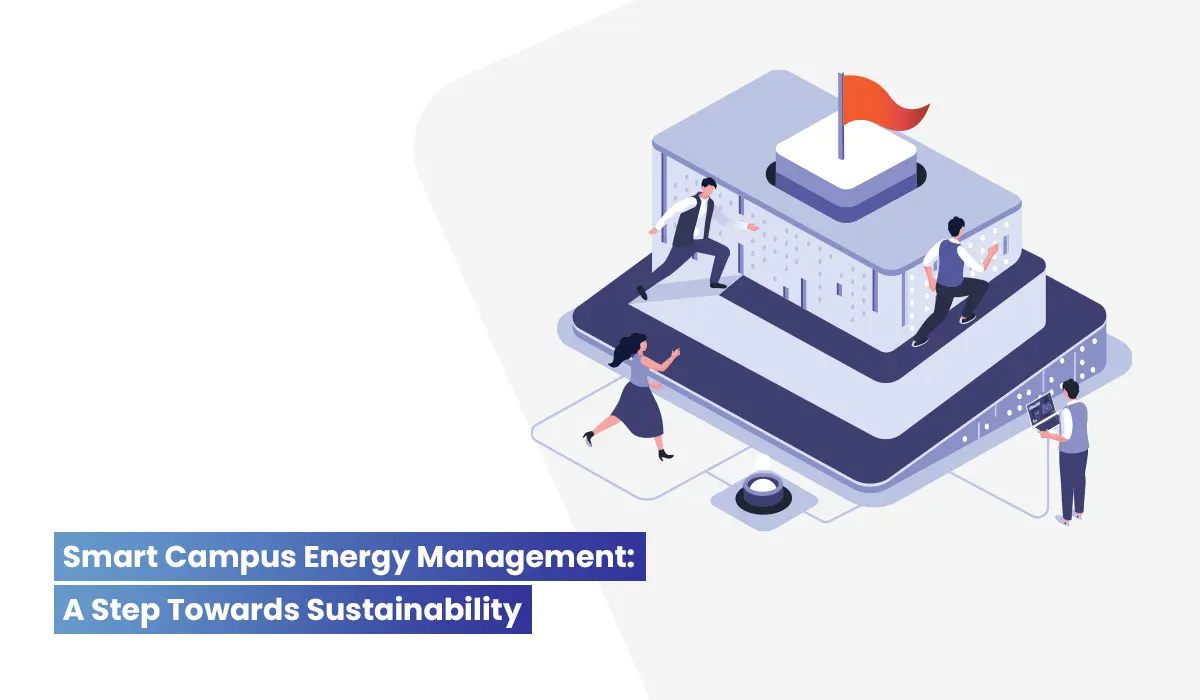
  • Smart Campus Energy Management and Green Campuses

    Smart Campus Energy Management and Green Campuses

    Introduction: How Educational Technology Promotes Green Campuses

    Sustainability is now a requirement, not a slogan, especially concerning educational institutions given the tremendous environmental impact of paper-based systems! Textbooks and administrative paperwork from colleges and institutions contribute to worldwide paper consumption. Panic not, the good news is that technology and smart campus energy management is making a difference.

    Universities may encourage sustainability by using innovation that eliminates waste, conserves energy, and optimizes resources. With the correct tools, becoming green may become the norm. Creatrix Campus’s educational innovations in the form of smart campus energy management are turning campuses into eco-friendly centers while improving efficiency.


    Benefits of Educational Technologies for Eco-friendly Campus Management


    Paperless Classrooms and Administration

    Reducing paper waste is a simple but effective way for institutions to become green. Paperwork is massive in conventional classrooms and administrative systems due to the proliferation of various forms of paper-based documentation. However, campuses may reduce paper use, simplify operations, and save time by moving digital!

    Paperwork is a thing of the past with cloud-based tools for resource optimization that manage student work, grades, and attendance. With a few clicks, students may turn in their work online, instructors can digitally grade and comment, and attendance can be kept tabs. In addition to enhancing efficiency, all of this helps save environment. On top of that, everything is well-organized and simple to find, which simplifies administrative duties.


    Controlling Energy Consumption Using Intelligent Devices

    Energy regulation is crucial to a sustainable campus. Smart campus energy management have increased university energy efficiency. Smart meters, IoT devices, and cloud-based energy management software can analyze energy usage, identify inefficiencies, and reduce carbon footprint on campuses.

    According to a new study out of the National Renewable Energy Laboratory, campuses can save 30% on their energy bills by implementing smart campus energy management solutions. Colleges can significantly reduce their energy use by installing smart lighting, HVAC systems, and energy-efficient equipment.

    Additionally, facilities staff may reduce waste and promote eco-friendly practices across the board by making smarter decisions on energy usage based on data-driven insights. It’s about more than just cutting costs; it’s about making a better, more sustainable future for generations to come.


    Learn to Reduce Carbon Footprint Online

    More than just a convenient way to attend classes, online learning changes the atmosphere. Universities may substantially reduce travel by going digital, reducing traffic, carbon emissions, and cars on the road. Online education reduces carbon footprints by up to 90% compared to on-campus instruction, according to The Global e-Sustainability Initiative.

    But it’s not just about travel cuts!  Online learning minimizes the need for environmentally harmful paper books, handouts, and other materials! Students get to access course materials instantaneously from anywhere, saving resources and giving the planet a respite.

    Students can get degrees from home while protecting the environment—a win-win!


    Sustainable Resource Management

    Building a green campus requires efficient resource management. AI and IoT-powered smart campus energy management systems are changing how universities measure and optimize resource use. Educational institutions may now make smarter judgments about water, electricity, paper, and plastic to reduce waste and save money.

    Real-time data and predictive analytics helped institutions employing smart campus energy management systems cut energy use by 15% reports The International Energy Agency. It’s not just about turning off lights in empty classrooms—it’s about using energy-hungry equipment sparingly and conserving water in dorms and cafeterias.

    Cloud-based technologies and AI-powered analytics help colleges improve their sustainability initiatives and achieve lasting impact! Understanding how and when resources are used helps institutions reduce waste, save money, and promote sustainability.


    Environment Awareness

    Environmental knowledge is crucial to creating tomorrow’s leaders on campuses. Sustainability in the curriculum and green campus projects can teach students to be eco-friendly. This approach may even help students become environmental activists.

    According to a National Environmental Education Foundation research, 79% of students think their institutions should address sustainability, and 67% prefer to work for green companies. University environmental awareness programs teach lifelong habits and educate students to take responsibility for their ecological footprint.


    Remote Collaboration Encouragement

    Carbon footprint reduction doesn’t require face-to-face interaction. Virtual classrooms and cloud-based technology let students and teachers communicate anytime, anywhere, minimizing travel and meetings. Trust us, remote collaboration for group tasks or faculty discussions saves time, cuts travel emissions, and makes their workspace more flexible and sustainable.

    Remote work and collaboration tools reduce travel and their organization’s environmental effect, according to 60% of McKinsey respondents.  


    Data-driven Sustainability Planning

    Sustainability requires educated decisions, not just good intentions. Data helps higher eds design better, more customised sustainability plans. Leveraging AI and IoT for green campus operations aids to analyze real-time energy, waste, and resource allocation data to improve.

    According to a Gartner report, 70% of organizations utilizing data analytics have improved their sustainability initiatives, from waste reduction to energy optimization. Same with universities. Educational technologies let institutions track success, identify areas for development, and make long-term environmental decisions. Data-driven sustainability is a game-changer, not a buzzword.


    Conclusion

    University greening can jump forward with technology. Sustainable, eco-friendly education is possible through paperless classrooms in universities, smart campus energy management, and online learning. By using cloud-based tools for resource optimization, institutions lower their environmental footprint and inspire future leaders.

    Is your organization ready to impact? Greening your campus is easy with Creatrix Campus and its creative solutions. Connect with us.

    Source link

  • Podcast: Cuts, applications, campus climate

    Podcast: Cuts, applications, campus climate

    This week on the podcast as news of further redundancies sweeps the sector, we ask how bad things can get before the government will act or the public notice.

    Plus UCAS end of cycle applications data has arrived, there’s a new report on the campus encampments, and there’s data futures news to get across.

    With Alex Stanley, Vice President for Higher Education at the National Union of Students, Eve Alcock, Director of Public Affairs at the Quality Assurance Agency, James Coe, Associate Editor at Wonkhe, David Kernohan, Deputy Editor at Wonkhe and presented by Mark Leach, Editor-in-Chief at Wonkhe.

    Read more

    An early look at 2023–24 financial returns shows providers working hard to balance the books.

    Lessons for leaders from the campus encampments.

    UCAS End of Cycle provider data, 2024.

    Data futures, reviewed.

    Source link

  • Recent Executive Orders and Higher Ed HR’s Role in Creating and Sustaining an Inclusive Campus Community

    Recent Executive Orders and Higher Ed HR’s Role in Creating and Sustaining an Inclusive Campus Community

    by Andy Brantley | January 30, 2025

    In the wake of the recent Executive Orders on DEI, gender identity and immigration, higher ed institutions, like so many other organizations, are assessing the impacts and formulating next steps.

    Amid the inevitable changes that lie ahead, it’s important to remember that the role of HR in creating and sustaining a higher ed workplace that provides access and opportunity for all employees hasn’t changed. The programs, policies, processes and language we use to support this work may need to evolve, but the work and the institutional values it supports remain the same.

    We can still:

    • Promote equitable work and career pathing opportunities and pay for all employees.
    • Cultivate inclusive learning and working communities.
    • Create a workplace culture that embraces respect and civil discourse.
    • Level the playing field for everyone by working to remove bias, reviewing outdated policies, and creating transparency.
    • Reinforce institutional values by ensuring that all employees feel connected and supported.

    However, as we review and evaluate the work we’re doing, we have the opportunity to do so with fresh eyes, reframing it in ways that are both purpose-driven and inclusive. For example:

    • Communities of people with diverse backgrounds and life experiences create opportunities for community members to grow, both personally and professionally. To support a diverse workforce, institutions must explore ways to generate a more diverse applicant pool.
    • Access, opportunity and equitable pay for all employees promote job satisfaction, recruitment and retention. To support access and opportunity, institutions must identify and remove roadblocks to opportunity. To support equity in pay, institutions must ensure their compensation structures support these efforts.
    • A safe and welcoming work environment fosters community and collaboration. To create a work environment that’s welcoming and psychologically safe, institutions must ensure that systems, policies and processes are free from discriminatory practices.

    If you have resources or ideas to share with other CUPA-HR members regarding ways that you and your HR colleagues are refining your approach to creating and sustaining an inclusive campus community, please email them to [email protected]. Your submission will be treated as confidential and, if shared, will be described in terms that will not identify your institution.

    You’re Not Alone

    We know that HR leaders are often caught in the middle as different groups of employees and administrators express strong opinions and feelings regarding changes we must implement. In the coming weeks, CUPA-HR will share guidance and support to help you make changes to programs, policies and procedures and communicate these changes to the campus community.

    We are also hosting webinars focused on the recent Executive Orders, as well as the rollback of the Title IX regulations. And we’ll continue to keep you informed about future Executive Orders and legislation, as well as potential actions we should take as higher education HR leaders.

    The higher ed HR community has proved time and again how strong and resilient it is. Thanks for all the ways you lead and support your organizations, your employees and your CUPA-HR community.


    Source link

  • Lessons for leaders from the campus encampments

    Lessons for leaders from the campus encampments

    It’s neither a personal nor an especially novel observation to suggest that both in the UK and across North America and Western Europe, debates about campus climate, culture and freedom of speech were upended on 7 October 2023.

    It’s not the purpose of the report, but you can really feel some of the contradictions coming to a head in Josh Freeman’s terrific new HEPI report on the Encampments protesting for Palestine and the response to them, tentatively timed to offer early reflections now that a ceasefire has been secured.

    What until October 7 had been a rhetorically wide framing of freedom of speech and a pretty narrow one over protection from harm and harassment was always going to be challenged when speech took the form of pro-Palestine placards rather than the punch and judy of rarified Russell Group debating societies.

    And while plenty of people still pretend that there are no “fine lines” and contradictions between, say, expressions of pro-Palestinian solidarity and antisemitism, Freeman’s report lays out the realities and complexities of universities, their students’ unions and students themselves being expected to tread and police those lines.

    I was struck, reading the report, by the contradictions between the way in which student “debaters” (the subject of a previous report from Freeman) and student activists of the sort in the encampments are often framed in terms of what they represent – the former is often assumed to be a near-universal experience or at least an ideal, while the latter are painted as an angry mob that often aren’t even students anyway.

    Both, in truth, are pretty unrepresentative of the contemporary higher education experience, both can seem like indulgences that many students are unable to afford, but both do have an influence on students’ understanding of the world. The fact that both appear to be largely confined to the Russell Group could easily be a source of shame rather than relief.

    Motivations and disruptions

    There’s a good methodology to the report that some tend to turn their nose up at when used on other issues – it’s basically a qualitative, case study-based approach, drawing on lived experiences through semi-structured interviews with key players – student protestors, university staff, students’ union officers, and Jewish students – while triangulating these insights with documentary analysis of public statements and social media discourse.

    As a result, there are some fascinating insights from Freeman. Fairly early on, he notes that in the student interviews, many were motivated by factors which, at least at face value, went far beyond the situation in Gaza – referring to other factors like islamophobia, tuition fees, staff pay and pensions, mental health or even the freedom to protest:

    These issues were rarely mentioned in encampments’ official demands but they appear to have been significant motivators to join the protests.

    There’s also a clutch of material on the way in which the encampments themselves operated – laying bare both aspects and incidents of obvious antisemitism, but also anguish about the right (and for some, perceived duty) to object to and highlight the actions of Israel throughout the war, and the way in which those protestors knew that that might be misinterpreted.

    Material on “disruption” is interesting too. Freeman identifies both an oft-denied truism – that this kind of “speech” is designed to be disruptive – and a less-understood concern of some protestors that keeping students on side by not excessively disrupting their education was important.

    The section on the “institutional response” is particularly helpful, mainly because it draws comparisons in the approach on engagement. The running theme is that where – either by chance or by design – institutional managers and student protesters were caused to meet and discuss as people, some inching away from simplistic demonisation was possible and helpful. By contrast, it looks like a lack of engagement allowed a simplistic framing – of protester as terrorist, and university manager as oppressor – to unhelpfully persist.

    Freeman also reflects on the learning made possible by those encounters:

    The ultimate goals of discussions should be learning, on the one hand – these examples suggest institutions still have much to learn from their students – and explaining, on the other, why some demands are not feasible.

    Another aspect of the diversity in approaches relates to “demands”. The old “give them an inch and they’ll take a mile” approach to students can be seen in this quote:

    It would create two categories of students … it would give them a carte blanche for any kind of behaviour.

    …while others were perceptive enough to recognise that hard and fast rules can look quite silly quite quickly when it’s often context that counts:

    It’s a special situation, an emotional issue. It’s okay to call this a one-off. Though some have said we are setting a bad precedent by allowing this behaviour.

    That’s true too over a running theme in the narrative amongst protesters – that taking an early and unequivocal stance on Ukraine in the way that most of the sector did was, for them, incompatible with a sudden concern for neutrality over Israel/Palestine.

    Frustratingly, Freeman even reports that after accusations of being “hypocrites”, “several” senior staff said that, on reflection, their institutions would avoid political statements entirely in the future – as if carefully crafted regulations will always trump context. They won’t.

    I’d also tentatively add that while it was undoubtedly true that:

    …In comparison with the Marking and Assessment Boycott, there is tiny traffic from students. To the bulk of our students, it [the conflict] is not on their radar. We have had a few hundred emails on divestment, but they are the same people writing over and over, with the same template.

    …one might argue that a huge international conflict, with significant global implications, might cause one to wonder why more students weren’t engaged, particularly in universities where “activism” is more a rarity than a rhythm.

    Threats, reputation and officialdom

    There are, inevitably, some pointed observations both about government and the Office for Students – which to this day has said almost nothing about so many of the edge cases of freedom v harm involved in Israel/Palestine, despite being in the process of launching two new “sandbags on the see saw” in the form of free speech duties and anti-harassment duties.

    Universities – perhaps it was always thus – were neither to be trusted nor offered much in the way of help when being left to resolve the tensions themselves:

    They’ve left us to it. That may have been the best thing.

    In a week when student activists appear to have brought down a populist Prime Minister in Serbia, I was also especially interested in Freeman’s observations about the relationship between what we might call the “official” voice of students – students’ unions – and the activists in the encampments.

    Before I even got to page 35, for example, I knew that words to this effect would appear somewhere:

    We engage with the Students’ Union as they are the democratically elected representatives, not with some small group of people, most of whom have nothing to do with the University or its community.

    I would note in eyebrow-raising passing that I’ve often come across that view from those who tend, in other contexts, to challenge the representativeness of their students’ union when advancing recommendations or opinions.

    But more broadly, I tend to adopt a straightforward principle when an organised group of students decides that the “official” channel of communication isn’t cutting the mustard – they often have a point. That’s partly because, back on that “hard and fast rule” thing, some SUs (and their universities) can take their apoliticism and desire to be seen to be supporting all students too far – overcooking reputational or charity law fears, and undercooking their role as clearing houses for often opposed student opinion.

    When Freeman recommends that:

    Distinguishing between the collective position of the students’ union on the one hand and the stances of individual elected officers on the other, so elected officers can remain true to their own views and the mandate they were elected on, while allowing the students’ union to remain apolitical, follow charity law and be representative of the wider student body.

    …it also seems fairly clear that the “own views” aspect of that doesn’t mean silence in the way that has been imposed for many an SU officer with strong views on the issues.

    Mediation and advocacy

    What’s helpful in the report is the description of the positive role that many SU officers and staff played in the process as mediators (supporting both encampments and institutions to reach a resolution), as intermediaries (passing “intelligence” between encampments and institutions), and as advocates to make sure the voices of all students are heard roles that many of their staff (outside a handful) are neither routinely funded for nor recognised.

    And as Freeman puts it when discussing allegations of illegitimacy:

    But rather than undermining the positions of elected officers, it might be more productive to work with the SU to create an effective process for dialogue with all groups of students. When the main mechanism for students to contribute to institutional policy does not function properly, it may explain why many students choose to bypass their unions and channel their frustrations through protest.

    I discussed some of the differences between what we might call the “official” student movement and the activists leading the blockades in Serbia in my write up on that issue elsewhere on the site – and I’m struck by the character of the past 18 months’ pro-Palestinian activism when compared to previous intensifications of the Middle East conflict.

    For many years, the “voice” of such activism tended to be the Federation of Islamic Student Societies (FOSIS), often setting up an arguably unhelpful and simplistic link between Jewish students, the Union of Jewish Students and a “pro Israel” position on the one hand, and Muslim students, FOSIS and a “pro Palestinian” position on the other.

    For all sorts of obvious reasons, the simplicity of those links and resultant “sides” was always problematic – it has never been just Muslim students and Jewish students caught up in debates over the conflict, and there have always been significant differences of opinion on the conflict within those “sides”.

    But it’s also true to say that both UJS and FOSIS were able to act in an “official” student representative role in a similar way to that that Freeman frames students’ unions as inhabiting – able to speak to power, their own members, and through NUS, each other. In recent years, FOSIS has fallen away in prominence – the channel for much of the anger and activism now represented by the Palestinian Solidarity Campaign and related offshoots – while UJS has tended to focus its efforts on persuading power to exert authority over antisemitism.

    That is not to suggest that either is wrong, or illegitimate, or especially problematic – but it has meant that in this phase of the Middle East crisis, one “side” has looked very official, while the “other” has looked like the opposite. In a climate where words like “oppressor” get attached to one side and “terrorist” to the other, those types of perhaps accidental perceptions are likely to have clouded wider students’ engagement in and understanding of what has been happening.

    Partnership and power

    Bringing both Serbia and the HEPI paper together, in quieter moments this week I’ve been caused to re-read this terrific paper from Simon Varwell on citizen participation in an era of emergency decision-making.

    Varwell is a former staffer from Sparqs – the little known (outside of Scotland) student participation “agency” originally set up to give a boost to class rep training north of the border. It rarely gets the credit it deserves from Scottish ministers or Principals, but it’s much more than its roots as a train the trainer scheme for reps these days – producing acres of intelligent and helpful material that has helped to engender partnership between students and universities in Scotland more generally.

    His paper – written in the teeth of the Covid crisis – makes a compelling argument that what Sherry Arnstein described in the late 60s as a “ladder” of participation pretty much turned into a circle during the pandemic – where the very highest and lowest levels of student engagement overlapped in a zone of anger and conflict.

    I think that argument matters – not especially from a tactical point of view, but because it’s clear that in some universities, notions of “partnership” melt away quickly when something more “serious” or “risky” is on the table – whether that’s making cuts to provision, handling Covid, or dealing with ministerial and press interest in a protest or “woke” initiative on campus.

    Partnership can mean all sorts of things to all sorts of people. But fundamentally it’s about sharing power, both between groups of students and between students and their university.

    Few would argue that partnerships of the latter should be “equal”. But when what is sold as a safe environment doesn’t feel like it, and when what is promoted as way of having your voice heard or your interests met feels like being ignored or marginalised, “senior” partners should always be mindful that universities aren’t schools, authority tends to depend on consent, and whatever the weight of expectation on the “grown ups” to crack down and control, conflict almost always requires both mediation and mutual respect.

    Source link

  • FIRE statement on reports of forthcoming executive order on student visas and campus protests

    FIRE statement on reports of forthcoming executive order on student visas and campus protests

    President Donald Trump is expected to sign an executive order today threatening action against international students in the United States for their involvement in campus protests related to Israel and Hamas. 

    Per reports, President Trump promises to “quickly cancel the student visas of all Hamas sympathizers on college campuses, which have been infested with radicalism like never before,” and to deport students who joined “pro-jihadist protests.” 

    The revocation of student visas should not be used to punish and filter out ideas disfavored by the federal government. The strength of our nation’s system of higher education derives from the exchange of the widest range of views, even unpopular or dissenting ones.

    Students who commit crimes — including vandalism, threats, or violence — must face consequences, and those consequences may include the loss of a visa. But if today’s executive order reaches beyond illegal activity to instead punish students for protest or expression otherwise protected by the First Amendment, it must be withdrawn.

    Source link

  • Law professor challenges university after campus ‘shooting’ hypothetical changed in lesson plan

    Law professor challenges university after campus ‘shooting’ hypothetical changed in lesson plan

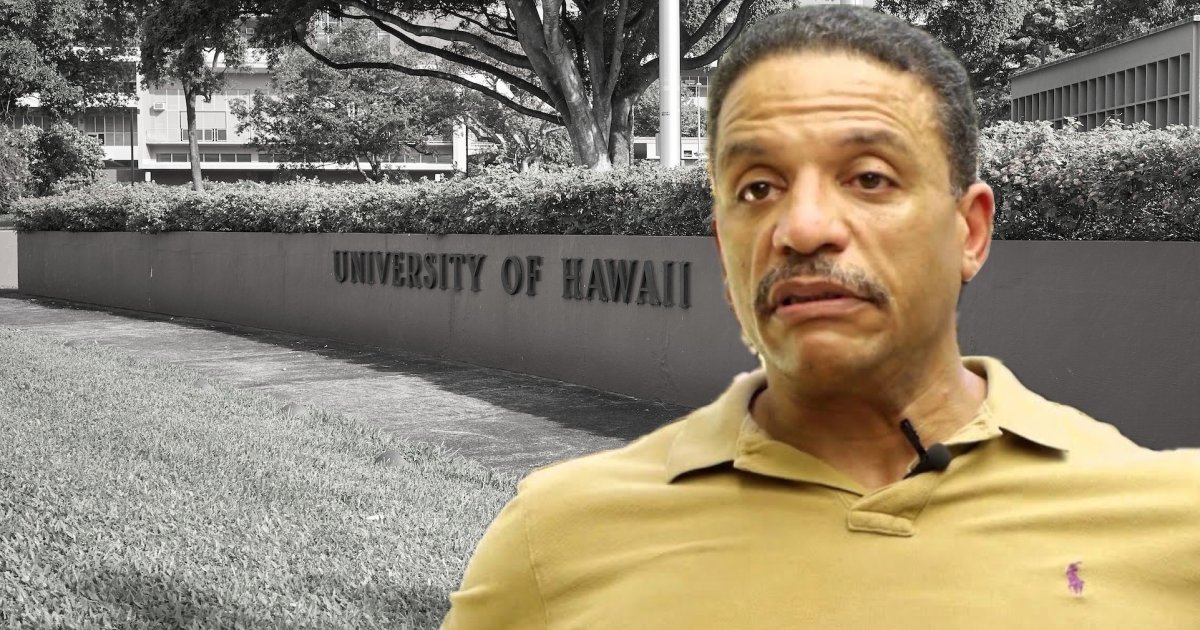
    Those concerned that law schools are shying away from teaching some areas of law to avoid controversy just got more reasons to worry, this time courtesy of the University of Hawai’i at Manoa and its absurd treatment of law professor Kenneth Lawson.

    Lawson, an accomplished faculty member at UH, used a simple hypothetical to teach the idea of “transferred intent,” a legal concept invoked when a defendant intends to harm one person, but ends up harming a second person instead. As is common in law school, Lawson offered a hypothetical to convey this idea: Imagine if a dean at his institution tried to shoot another dean, missed, and hit Lawson instead.

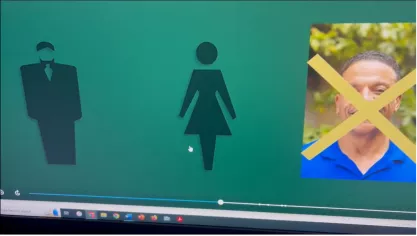
    Here’s a screenshot from part of his lesson:

    Those who have been to law school will understand that using campus figures to illustrate hypotheticals is not at all unusual, and is intended to add a bit of levity and grounding to what can be pretty esoteric topics.

    But when an anonymous student filed a complaint, calling the hypothetical “extremely disturbing” and citing the context of some shootings near the university’s campus, administrators summoned Lawson to a meeting near the end of last semester. Though they acknowledged he had not violated any university policy, they nevertheless mandated that he remove the thought experiment from a posted video of the class — or they would change it for him

    The ability of administrators to forcibly alter course materials is positively ripe for abuse.

    Lawson hadn’t thought twice about including the example, and had been using the example for years, not simply because it wasn’t unusual but because the protections of academic freedom give faculty wide latitude in determining how to approach controversial or potentially difficult material. When Lawson refused to alter the video of his presentation, given that he had not violated any policy, and using the hypothetical was well within his academic freedom rights, administrators just went on the school’s online curriculum system, where faculty submit presentations, to make the changes themselves.

    Remember: these changes were being made because, supposedly, some found a hypothetical of campus figures being shot to be disturbing. So this is what the administration came up with.

    Slide with an image of law professor Ken Lawson alongside generic man/woman icons

    You will note that there is still a campus figure on that slide, and it’s the person who was (hypothetically) shot: Professor Lawson. Only the deans have been removed. It seems that at UH, some hypothetical victims are more equal than others.

    There’s no denying that this is silly, and many will be tempted to chalk it up as just more campus craziness. But there’s a disturbing wrinkle here, which is that the ability of administrators to forcibly alter course materials is positively ripe for abuse. The university’s administrators have granted themselves unilateral authority to interfere with faculty teaching decisions, despite the fact that UH is a public institution bound by the First Amendment, which views academic freedom, which protects that right, as a “special concern.” If administrators can “memory hole” bits and pieces of curricula they don’t like, even when it violates no rule, where does it stop?

    UH still has an opportunity to do the right thing. It’s easy, too — all it has to do is step back and let faculty teach, and save the video editing for film class.

    FIRE wrote the university on Dec. 13, urging it to reverse course and restore Lawson’s original hypothetical. The university responded in early January, declining to substantively engage with our concerns or detail specific issues with our argument. Lawson, and all UH students, deserve better. As our second letter states: 

    FIRE’s concerns are only amplified by the fact that this alleged capitulation to sensitivity is occurring in a law school. To receive a proper education in the law, students will inevitably encounter difficult topics like sexual assault, homicide, physical assault, domestic violence, and may be faced in school and in their careers with descriptions of personal injuries far more graphic than those in Lawson’s hypothetical. Where do UH administrators draw the line regarding their interference in faculty instruction if they feel free to operate under a nebulous standard of protecting students from “disturbing and harmful” material? 

    Lawson has submitted a grievance about the situation, so UH still has an opportunity to do the right thing. It’s easy, too — all it has to do is step back and let faculty teach, and save the video editing for film class.

    Source link

  • Snitch hotlines for ‘offensive’ speech were a nightmare on campus — and now they’re coming to a neighborhood near you

    Snitch hotlines for ‘offensive’ speech were a nightmare on campus — and now they’re coming to a neighborhood near you

    We know the term “Orwellian” gets thrown around a lot these days. But if a government entity dedicated to investigating and even reeducating Americans for protected speech doesn’t deserve the label, nothing does.

    This step towards the Stasi isn’t hypothetical, either. It’s real. The governing bodies in question are called bias reporting systems, and the odds are they’re already chilling free expression on a campus near you. What’s worse, they aren’t staying there — now municipalities and states are using them, too.

    In this explainer, we’ll break down what bias reporting systems are, how they’ve spread beyond campus, and why they’re a threat to free speech.

    What are bias reporting systems?

    If you’ve been on campus in the last decade, you’ve likely heard of bias reporting systems — or, as they’re sometimes called, bias response teams. Their structure and terminology vary, but FIRE defines a campus bias reporting system as any system that provides:

    1. a formal or explicit process for or solicitation of
    2. reports from students, faculty, staff, or the community
    3. concerning offensive conduct or speech that is protected by the First Amendment or principles of expressive or academic freedom.

    Bias reporting systems generally solicit reports of bias against identity characteristics widely found in anti-discrimination laws. Western Washington University, for example, defines a “bias incident” as “language or an action that demonstrates bias against an individual or group of people based on actual or perceived race, color, creed, religion, national origin, sex, gender identity or expression, disability, sexual orientation, age, or veteran status.” Some systems also invite reports of bias against traits like “intellectual perspective,” “political expression,” and “political belief,” or have a catch-all provision for any other allegedly biased speech.

    Many colleges have bias response teams that consist not only of administrators but law enforcement. They often investigate complaints and summon accused students and faculty to meetings.

    The ability to speak freely is core to our democracy. Any system or protocol that stifles or inhibits free expression is antithetical to the principles and ideals of our institutions of higher education and our republic. 

    You might be wondering, “Don’t civil rights laws already cover this sort of thing?” Well, not quite. Bias reporting systems cover way more expressive ground than civil rights laws do, which puts these systems at odds with First Amendment protections. They generally define “bias” in such broad or vague terms that it could be applied to basically anything the complainant doesn’t like, including protected speech. This is doubly so when a school includes that vague and subjective word “hate” as another form of language or behavior worth reporting.

    That’s a problem at public colleges, which are bound by the First Amendment, and also at private colleges that voluntarily adopt First Amendment-like standards. Bias reporting systems completely ignore the fact that “hate speech” has no legal definition, and that unless a given expression clearly falls into one of the clearly-defined categories of unprotected speech, like true threats or incitement to immediate violence, it is almost certainly protected by the First Amendment. This remains so regardless of how anyone might feel about the speech itself.

    Bias Response Team Report 2017

    Reports

    The posture taken by many Bias Response Teams is likely to create profound risks to freedom of expression and academic freedom on campus.


    Read More

    These initiatives incentivize and in many cases encourage people to report each other for disfavored expression. As you can imagine, these systems often lead to unconstitutional infringements on protected student and faculty speech and chill expression on campus.

    For example, after the University of California, San Diego received bias incident reports about a student humor publication that satirized “safe spaces,” administrators asked the university’s lawyer to “think creatively” about how to address the newspaper, which they felt “crosse[d] the ‘free speech’ line.” And at Connecticut College, pro-Palestinian students were reported for flyers mimicking Israeli eviction notices to Palestinians, prompting an investigation by a dean.

    These are just a couple of instances where bias reporting systems have crossed the line. Sadly, there are plenty more, spanning FIRE’s research and commentary going back as far as 2016 — and none of them are good news.

    Sound Orwellian enough for you yet? Wait until you hear how bias reporting systems work off campus.

    Bias reporting systems have graduated from campus into everyday life

    Exporting campus bias reporting systems to wider society is a disastrous idea. No state should be employing de facto speech police. But of course, that hasn’t stopped state and city governments from trying.

    Bias reporting systems have been popping up in one form or another across more than a dozen state and city municipalities in the last four years, usually consisting of an online portal or telephone number where citizens are encouraged to submit reports.

    If you’re thinking this is just like the hate crime hotlines that many states have had for years, there is one important difference: namely, the word “crime.” While the new bias reporting systems will similarly accept reports of criminal acts, they also actively solicit reports of speech and behavior that are not only not crimes, but also First Amendment-protected expression.

    They know this, too.

    Vermont state police protocol, for instance, describes the information it compiles as being on “biased but protected speech.” This raises the obvious question of why the police are concerning themselves with Americans lawfully exercising their fundamental rights, and opens the door to police responses that violate those rights.

    Wherever they’ve popped up, these bias reporting systems have been bad news. Washington Free Beacon journalist Aaron Sibarium’s research has turned up a number of alarming examples. In Oregon, citizens can report “offensive ‘jokes’” and “imitating someone’s cultural norm or practice.”

    Meanwhile, in Maryland, the attorney general’s office states on its website that “people who engage in bias incidents may eventually escalate into criminal behavior,” which is why “Maryland law enforcement agencies are required by law to record and report data on both hate crimes and bias incidents.” But these speculative concerns do not justify the chilling effect bias reporting systems create. Not only do these systems solicit complaints about protected speech, they also cast an alarmingly wide net. It’s hard to believe, for instance, that many “offensive jokes” are reliable signs of future criminal activity.

    At this point you’d be forgiven for thinking that “Orwellian” is an understatement.

    But that’s not the worst of it. In Philadelphia — home of FIRE, the Liberty Bell, and the Constitution — authorities fielding “hate incidents” can now ask for exact addresses and various identifying details about the alleged offending party, including their names. According to Sibarium, city officials will in some cases “contact those accused of bias and request that they attend sensitivity training.”

    You heard that right. If you’re reported for a “non-criminal bias incident” in the city of Philadelphia, the city may request that you take a course meant to teach you the error of your ways. “If it is not a crime, we sometimes contact the offending party and try to do training so that it doesn’t happen again,” Saterria Kersey, a spokeswoman for the Philadelphia Commission on Human Relations, told Sibarium.

    The training is voluntary, but it reflects an unsettling level of government interference in the thoughts and opinions of the public.

    At this point you’d be forgiven for thinking that “Orwellian” is an understatement.

    Bias reporting systems are a threat to free speech on and off campus

    Thankfully, there has been some considerable pushback on bias reporting systems — though not entirely successful. Washington, for example, introduced a bill to create a statewide bias reporting system, but it failed to advance out of the Senate Ways and Means committee. However, a new version of the bill passed in March of 2024, and Washington is now set to establish a bias reporting system this year.

    The threat remains real, and the consequences of these speech-chilling initiatives are further-reaching than it might seem at first glance.

    On campus, the mere existence of bias reporting systems threatens one of the purposes of higher education, if not the purpose: the free exchange of ideas. Some courts have recognized that bias reporting systems may chill protected speech to such a degree that they violate the First Amendment.

    Bias reporting systems fundamentally undermine the First Amendment rights of not just students and faculty, but also ordinary citizens.

    The state-level reporting systems raise similar First Amendment issues — especially when law enforcement is involved. Like their campus counterparts, the state systems use expansive definitions of “bias” and “hate” that could encompass a vast range of protected expression, including speech on social or political issues.

    However, unconstitutionality isn’t the only concern. Even a bias reporting system that stays within constitutional bounds can deter people from freely expressing their thoughts and opinions. If they are afraid that the state will investigate them or place them in a government database just for saying something that offended another person, people will understandably hold their tongues and suppress their own voices. Moreover, the lack of clarity around what some states actually do with the reports they collect is itself chilling.

    The ability to speak freely is core to our democracy. Any system or protocol that stifles or inhibits free expression is antithetical to the principles and ideals of our institutions of higher education and our republic. In both word and deed, bias reporting systems fundamentally undermine these principles — and now seriously threaten the First Amendment rights of not just students and faculty, but also ordinary citizens.

    Source link