Submissions to the NSW government’s inquiry into university governance have flagged issues with a lack of transparency throughout restructures at the state’s institutions.
Please login below to view content or subscribe now.
Membership Login

Submissions to the NSW government’s inquiry into university governance have flagged issues with a lack of transparency throughout restructures at the state’s institutions.
Please login below to view content or subscribe now.

Universities need workers with comprehensive analytical and strategic skills, but funding cuts and progression barriers have caused retention issues, leading to early-career researchers leaving universities in droves.
Please login below to view content or subscribe now.
Monash University’s new dean of law has announced senior law students will stop tutorials and suggested students should do no more than ten hours of paid work a week alongside their studies.
Please login below to view content or subscribe now.


This blog was kindly authored by Dr Gisela Tomé Lourido (@gisetomelourido.bsky.social), Associate Professor in Sociophonetics at the University of Leeds and Niamh Mullen, Associate Professor in English for Academic Purposes at the University of Leeds.
Everyone has an accent – a way of speaking that reflects different aspects of our identities
Accent variation is a natural feature of spoken language, shaped by our social, geographical, and cultural backgrounds. This diversity enriches our academic and professional environments by bringing a wider range of perspectives and ways of thinking.
Despite this, the linguistic diversity of staff and students is typically overlooked in higher education strategies, discourse and practices. Additionally, accent bias – the automatic associations we make based on how someone speaks – is rarely discussed in academic settings.
Yet, in the UK, 30% of university students report having their accent mocked or criticised in academic contexts. Similarly, 25% of professionals report experiencing accent-related bias in workplace settings. Recent research conducted by the first author and Professor Julia Snell, and reported in an earlier HEPI blog, has shown that these forms of microaggressions can damage university students’ confidence, reduce participation, and affect their sense of belonging and wellbeing.
At the University of Leeds, we have launched the “All Accents Welcome” campaign: an initiative designed to raise awareness of the importance of accents to individuals’ identities. It highlights how accent bias can affect students’ and colleagues’ experiences and opportunities at university, while promoting the value of the diverse voices that strengthen our community, from all corners of the UK and the world.
As one contributor to the campaign put it:
My accent is an integral part of who I am. It’s like my cultural identity, my roots.
At the heart of the campaign is a video featuring staff and students sharing what their accents mean to them, and reflecting on the biases they have encountered.
Through the campaign, we present the University’s new Accent Equality Statement, a policy commitment to welcoming and respecting all accents, the statement aligns with broader institutional efforts to address class, race, gender, and other forms of inequality.
In the UK, self-consciousness and anxiety about accent bias are highest during university, more than at any other life stage. Judgements about accents are rarely about how someone speaks; they’re about who is speaking. Accent bias is deeply entangled with perceptions of class, race, nationality, gender, sexuality, and disability. It disproportionately affects students who are already navigating structural barriers, particularly those from working-class, racially minoritised, or multilingual backgrounds.
Another contributor to the “All Accents Welcome” campaign said: “I thought twice before speaking in class because I thought I would be mocked at just because the way I spoke.”
For many students, accent bias adds another layer of complexity to their university experience. It influences how they are heard, how they participate, and how they succeed, not just at university, but in their future careers. While this is fundamentally an equity issue, it also affects key institutional metrics, including student satisfaction, outcomes, continuation, and employability. Yet, it remains under-recognised in most institutional equity and inclusion strategies.
We believe that tackling accent bias must become a sector-wide priority. That means taking a collaborative, interdisciplinary, and holistic approach to create a cultural change where linguistic diversity is recognised as an asset and mocking, and questioning someone’s accent is de-normalised. In our earlier HEPI blog, we outlined four actionable recommendations for higher education institutions:
At the University of Leeds there is a growing community of staff and students committed to addressing accent bias and embedding this work into institutional practice. The campaign was co-designed with students, academic and professional services staff, and representatives from Leeds University Union, ensuring it reflects a wide range of lived experiences. It forms part of the work of the University’s institutional working group “Tackling Accent Bias”, which is focused on translating the statement into policy and practice, guided by the recommendations outlined above.
We invite colleagues across the sector to watch our “All Accents Welcome” video and join us in reflecting on how accent bias may be operating in their own institutions. What assumptions do we make based on how someone speaks? How do those assumptions shape our interactions, decisions, and environments?
The University of Canberra will offer shorter courses to students who have completed a TAFE course in a bid to fast track tertiary harmonisation at the institution.
Please login below to view content or subscribe now.
Universities will face even more scrutiny in the coming months after a third government announced it will probe the governance and management of public higher education institutions.
Please login below to view content or subscribe now.

We asked 34 students from eight universities what they thought of higher education and what they would change. Their answers might surprise you.
Please login below to view content or subscribe now.

International students see American life portrayed in movies and on TikTok; U.S. universities have built global brands, helped along by Hollywood and merchandising. When it comes time to apply, international students can readily imagine a U.S. college experience, starting with seeing themselves in a crimson sweatshirt studying on a grassy quad flanked by ivy-covered buildings.
And as the U.S.’s hold on cutting-edge science and innovation slips away to China, and other destinations with more welcoming visa policies offer lower-cost degrees and jobs, soft power might be the only edge American universities have left.
The desire is about more than bricks and mortarboards. Students from other countries have long sought out American values of academic freedom and open discourse. They are excited by ideas and experiences that are as emblematic of the American way of life as tailgating on game day: criticizing the government, discussing LGBTQ+ rights or learning about the Tiananmen Square massacre in China, the Armenian genocide in Turkey or the comfort women victimized by the Imperial Japanese Army.
But in 2025, those freedoms are at risk of becoming strictly theoretical. Anti-DEI laws in Utah led to Weber State University asking researchers to remove the words “diversity,” “equity” and “inclusion” from their slides before presenting at a—wait for it—conference on navigating the complexities of censorship. Conference organizers canceled the event after other presenters pulled out in protest.
University leaders in Texas and Florida are refusing to put in writing policies that prohibit faculty from talking about transgender identity or diversity, equity and inclusion in classrooms, sowing fear and confusion across their campuses. A secret recording of a Texas A&M professor talking about gender in her class led to a successful campaign by a state representative to get her fired and forced a former four-star general to resign as university president.
This weekend, students at Towson University moved their No Kings rally off campus after school officials told them their speakers’ names would be run through a federal government database. They changed locations out of fear the speakers would be targeted by the Trump administration.
Meanwhile, dozens of faculty are still out of jobs after being fired for posting comments online about the murder of Charlie Kirk. Repressing free speech on social media is also what the Chinese government does to political dissenters.
It’s true that colleges are exercising American values by following laws passed by democratically elected legislators. And presidents say they will follow the rule of law without compromising their missions, but overcompliance with vague legislation and policies is incompatible with this aim.
International students who care about more than a name brand may find the erosion of the country’s global reputation as a democratic stronghold a reason to look elsewhere. That means billions of dollars are also at stake if international students no longer trust in America’s values and choose to stay away. Modeling from NAFSA: Association of International Educators projected a 30 to 40 percent drop in international students this fall that would result in $7 billion in lost revenue and more than 60,000 fewer jobs across the country. Records from August suggest a similar outlook: 19 percent fewer students arrived in the U.S. compared to August 2024.
International students bring more than just valuable tuition dollars to American campuses. They contribute global perspectives to their less traveled American peers and build relationships that could turn into partnerships when they go home and become entrepreneurs or political leaders.
Higher ed can track the number of international student visas issued, students who enroll and the economic contributions of these students, but they can’t quantify what it means when a student in Shanghai stops imagining America as a place where all ideas can be expressed and explored. It’s taken decades for this country to build power based on free expression and open discourse, but by the time the loss of students starts to register in economic data and visa applications, the decline may be too late to reverse.
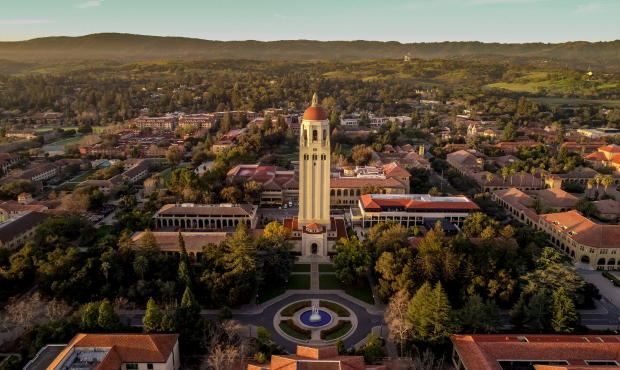
A controversial conference at a prestigious American university where AI will author and review academic research papers has faced worldwide backlash as Australian academics join the debate about the event.
Please login below to view content or subscribe now.