Tag: Cancel

  • Canadian sector hits back over plan to cancel study permits in crises

    Canadian sector hits back over plan to cancel study permits in crises

    Immigration Minister Lena Diab told a House of Commons committee last week that the Strengthening Canada’s Immigration System and Borders Act (Bill C-12) would target “people who are going to be committing large-scale fraud”.

    However, an opposition member, Conservative MP Michelle Rempel Garner, rejected the idea that the Liberal government needs sweeping powers to keep the immigration system functioning.

    “That sounds like an authoritarian dictatorship to me,” Rempel Garner said.

    Languages Canada Executive Director Gonzalo Peralta told The PIE News there was a need to define under what conditions Immigration Refugees and Citizenship Canada (IRCC) could cancel student visas.

    “The term ‘public interest’ as grounds for cancelling visas or applications is vague and does not provide the assurances needed to ensure that legitimate students are not inadvertently impacted by the legislation,” Peralta said.

    At the committee meeting, Rempel Garner argued: “It seems like you’re trying to give yourself and your department more powers to correct mistakes in the system that they could have made in screening out potential fraud to begin with.” 

    The term ‘public interest’ as grounds for cancelling visas or applications is vague and does not provide the assurances needed

    In the wake of a large number of fraudulent study permit applications made by unscrupulous education agents, in 2023 the department implemented a system requiring applicants to present a verified letter of acceptance from a designated learning institution in order to obtain a study permit.

    In many cases, the students said they were not aware that their agent was submitting fraudulent documents on their behalf.

    MP Rempel Garner called out the minister for blaming students and other newcomers to Canada. “Why don’t you make the system work instead of punishing the victims of human trafficking,” she demanded at the meeting.

    Larissa Bezo, president of the Canadian Bureau for International Education (CBIE), told The PIE her group supports measures to uphold the integrity of the International Student Program. “However, we do not want to see international students who have been the victims of fraud unfairly punished,” Bezo said.

    Peralta of Languages Canada condemned the Liberal government for failing to consult with the sector about this legislation and other policy changes.

    “In the case of the proposed Bill C-12, a more comprehensive definition is needed of the specific conditions under which IRCC could cancel visas,” Peralta said.

    Canadian immigration policy has hit the headlines over the past week after Prime Minister Mark Carney’s government set out its intention to cut new international study permits by more than 50% in 2026-2028 – going further with enrolment caps that are already causing significant problems for the international education sector.

    Source link

  • How ‘anti-woke’ laws and cancel culture combine to chill classroom speech

    How ‘anti-woke’ laws and cancel culture combine to chill classroom speech

    Over the past several years, some politicians have tried to ban or limit discussion of controversial ideas in higher education, particularly those related to critical race theory, gender identity, and diversity, equity, and inclusion. 

    FIRE has been on the front lines of this fight, opposing bills that target classroom speech and challenging those that become law. We’ve warned legislators that attempts to ban ideas from the college classroom are unconstitutional. As the Supreme Court explained, the First Amendment “does not tolerate laws that cast a pall of orthodoxy over the classroom.”

    Many legislatures now write their bills to avoid crossing this constitutional line. When they do not, courts often step in. Florida’s “Stop WOKE Act,” for example — part of which FIRE has challenged in court — currently faces a preliminary injunction blocking the enforcement of its classroom provisions.

    LAWSUIT: FIRE challenges Stop WOKE Act’s limits on how Florida professors can teach about race, sex

    First Amendment doesn’t allow Florida law to declare which concepts are too challenging for students and faculty to discuss in a college classroom.


    Read More

    Perhaps in part because of this roadblock, some actors have taken a more indirect approach to removing disfavored ideas from the classroom: a mix of “anti-woke” laws and cancel culture designed to intimidate schools into doing what the state cannot do directly.

    This process involves some or all of the following steps: a politician passes an “anti-woke” law, someone misinterprets the law and claims a professor violated it, outrage erupts and people demand the school take action, school administrators cave to the pressure and punish the teacher, the school announces reviews of curricula, and then other schools follow suit.

    Here’s how that cycle works in detail — and why it’s chilling classroom speech.

    Step 1: “Anti-woke” laws set the stage

    Texas A&M senior lecturer Melissa McCoul began the summer semester teaching ENGL 360: Literature for Children, a course she had taught 12 times that focused on “representative writers, genres, texts and movements.” During the third week of class, they were reading Jude Saves the World, a novel about a 12-year-old who identifies as nonbinary. As part of their discussion, McCoul displayed an image of the “gender unicorn,” a graphic device used to educate children about gender identity, expression, and sexuality. 

    Whatever one’s personal views, it should not be a surprise that a children’s literature course would focus on how contemporary children’s authors approach the major social issues of the day, such as gender ideology. Faculty at public colleges also have a First Amendment right to share their views, and to invite students who disagree to challenge them. In fact, McCoul acknowledged in the course syllabus that some of the class materials would spark “differing opinions” and that students were “not required to agree.”

    This was a chance for open dialogue, until it wasn’t.

    A student in McCoul’s class raised her hand and asserted that President Trump’s executive order on gender identity somehow made the discussion illegal. The student subsequently reached out to school President Mark Welsh, who defended the inclusion of LGBT content in professional-track courses. He explained to her that students “want to understand the issues” that affect the people they will work with.

    Nevertheless, the school canceled the class for the summer, citing “the emotions” generated by this controversy. That’s no reason to cancel a class, but the school did not punish McCoul or cancel her class for the fall semester. Instead, they agreed that her course would be taken out of the core curriculum and more clearly marked as a special topics class.

    But then, on Sept. 8, Texas State Representative Brian Harrison posted video of the student’s exchange with McCoul on X and wrote a letter to the Trump administration calling for an “investigation into discriminatory DEI practices.” The assistant attorney general for the Justice Department’s Civil Rights Division, Harmeet K. Dhillon, called the incident “deeply concerning” and said her division would “look into this.” Gov. Greg Abbott said McCoul acted “contrary to Texas law” without actually citing any specific laws (though Abbott directed state agencies earlier this year to align their practices and policies to recognize only two sexes).

    Crucially, neither Abbott’s directive nor Trump’s order bans discussion of gender identity in college classrooms. Doing so, after all, would be unconstitutional. Instead, they largely instruct Texas and federal agencies to recognize only two sexes in official government work, not to police classroom speech.

    Step 2: An outrage campaign demands punishment

    Harrison’s Sept. 8 post kicked off a cascade of calls to discipline McCoul. It was also only the first in a long thread of posts that set off a social media firestorm. Before long, other high profile government figures like Abbott and Dhillon were chiming in. Others with large social media followings picked up the story. A routine classroom discussion had been reframed to the public as a legal violation requiring immediate sanction.

    Step 3: The school caves to pressure

    Soon after, Texas A&M fired McCoul. The school also demoted College of Arts and Sciences’ Dean Mark Zoran and the English Department head Emily Johansen. 

    President Welsh justified these moves by alleging McCoul taught “content that was inconsistent with the published course description.” The apparent basis for this assertion was that McCoul’s course was renumbered as ENGL 394, rather than a 400-level number that would supposedly mark it as a special-topics class. But McCoul and Johansen dispute this, noting that 394 places the course outside the core curriculum and qualifies it as a special-topic class. Other faculty agreed that there is little difference between these designations. 

    Whatever the case, the public pressure only continued to build. Harrison demanded that Texas A&M terminate Welsh. Texas’s lieutenant governor, Dan Patrick, echoed the call, saying that Welsh’s “ambivalence on the issue and his dismissal of the student’s concerns by immediately taking the side of the professor is unacceptable.” Barely a week later, Welsh announced his resignation, following McCoul out the door.

    Step 4: Administrators announce curricular reviews

    If this story ended only with a professor being fired for her protected speech, that would be bad enough. And driving out a university president is even more alarming, because it shows how these campaigns scare people into silence or submission. But Texas A&M System Chancellor Glenn Hegar then announced that he and the board of regents would audit all courses across all 12 schools in the A&M System. 

    Neither Hegar nor the board explained how it would carry out the course review, leaving faculty members guessing as to what materials would be under their microscope. But in a campaign like this one, a chilling vagueness is part of the point. In the aftermath of seeing a fellow professor fired for her classroom speech, one has to imagine that many will choose to avoid addressing sensitive topics in the future. And this will only serve to rob Texas A&M students of the opportunity to engage with challenging and topical issues.

    Step 5: Other schools get the message

    Although this controversy started with one class taught by one professor at one Texas A&M campus, the ripple effects rapidly reached campuses across the state. According to reporting at the time, multiple school systems launched reviews:

    • Texas Tech told faculty that teaching must comply with “current state and federal law recogniz[ing] only two human sexes.”
    • The University of North Texas system ordered an expedited review of courses and programs, including syllabi, for compliance with “all current applicable state and federal laws, executive orders, and court orders.”
    • A University of Texas system spokesperson said they were reviewing “gender identity” courses for legal compliance.
    • The Texas State University System told each campus to review academic programming “in light of recent inquiries.”
    • Texas Woman’s University System said it was reviewing academic courses and programs for compliance.

    And that, in a nutshell, is how vague laws and online outrage came together in a toxic cocktail that resulted in a fired professor, a removed dean and department head, and a university president’s resignation, not to mention several systemwide university audits of entire course catalogues — all starting with a single student’s complaint that discussing a children’s book was “illegal.”

    A growing problem

    This practice of overreading laws and executive orders in order to target protected speech is, unfortunately, not just limited to Texas. In July, at the University of North Carolina at Chapel Hill, the Oversight Project reportedly filed a records request for syllabi and materials from roughly 70 courses containing terms such as: “Diversity, Equity, Inclusion, and Belonging,” “gender identity,” “intersectionality,” “white privilege,” “cultural humility,” “racial equity,” “implicit bias,” “microaggressions,” “queer,” and “sexuality.” 

    The stated purpose of this request is to evaluate and publicize “compliance with current Executive Orders issued by the President of the United States.” But again, Trump’s executive orders have no bearing on whether these words can be used in class materials. Suggesting otherwise and going on a fishing expedition for controversial class materials only further chills protected speech.

    Sometimes the pressure is quieter, but no less chilling. At the University of Alabama, Dana Patton, director of the Witt Fellows Program, says she was told by university officials that a “very powerful person” in the state capital believed her program violated state law. This person reportedly asserted, among other things, that “divisive concepts (were) embedded” in the program. Patton responded by removing course content, including three documentaries, from one of her classes because they can prompt a “visceral reaction” and “feelings of guilt and anger” in students. This is self-censorship driven by fear of political blowback, not educational judgment.

    How not to reform higher ed

    As government officials increasingly look for ways to reform higher education, they must remember that efforts to ban controversial ideas from academia are not merely unconstitutional, they’re harmful regardless of their legal legitimacy. Such efforts frustrate an essential purpose of university life: young Americans should be able to explore and grapple with a wide variety of ideas, even those that many find offensive.

    Amy Wax is academic freedom’s canary in the coal mine

    Penn’s chilling decision to punish the controversial professor calls tenure protections at private universities into question


    Read More

    The debates in this country around gender and sexuality will not subside because of censorship in Texas. Indeed, classroom debates on this topic have the potential to leave both conservative and liberal students with a richer understanding of the issue. But some young Texans will now be robbed of this opportunity. Many others will be left with impoverished versions of those conversations, stripped of anything controversial that would draw the ire of government officials.

    We should expect college students to be fearless when faced with ideas they dislike, regardless of the partisan valence of those ideas. As FIRE said when critics on the left came after conservative University of Pennsylvania professor Amy Wax, “Any university that would attempt to shield its community from offense would soon see the death of intellectual vitality, and the waning of its influence in society.”

    If lawmakers want to reform higher education or bolster viewpoint diversity, they should do so by passing laws that protect the speech rights of all students and faculty — like FIRE’s model legislation — and they should focus on bringing more ideas onto public campuses, not removing those they dislike through vague assertions of illegality and targeted pressure campaigns.

    Source link

  • It’s Censorship, Not Cancel Culture

    It’s Censorship, Not Cancel Culture

    “We are in the cancel culture part of the tragedy cycle.”

    This is the declaration of Adam Goldstein, vice president of strategic initiatives for the Foundation for Individual Rights and Expression, writing at the organization’s website.

    In the piece, dated Sept. 12, he chronicles almost three dozen incidents of individuals being sanctioned, suspended or terminated for public remarks following the tragic killing of Charlie Kirk.

    The vast majority of these incidents concern schools, colleges and universities. The examples exhibit a pattern of public outrage, which gets the attention of a public official, who then calls for sanction, followed by the sanction being administered by another public entity.

    As a typical example, Tennessee senator Marsha Blackburn called for the firing of a Cumberland University professor on Sept. 11, the day after Kirk’s death. On Sept. 12, the professor was dismissed, along with a member of the university staff.

    Goldstein says that this is a cycle of “the cancel culture machine. It goes like this: A tragedy happens. Someone reacts by celebrating that tragedy for whatever reason. Then the social media mob comes to demand this person be fired, expelled, or otherwise punished for their views.”

    I’m appreciative of Goldstein’s work to compile, publicize and criticize these actions, but I have an important point of disagreement. Most of these are not incidents of cancel culture.

    It’s censorship.

    The problem is not about “social media mobs” making demands, but on the public officials in power following through and punishing those views.

    Whatever anyone thinks about people saying things on social media, all of it (providing it doesn’t run afoul of the law) is a form of protected speech. Some may decry the effect of that speech, but this doesn’t make it not speech. Charlie Kirk’s Professor Watchlist was a documented vector of threats and harassment directed toward college faculty, but the website itself is too is an example of speech, even when the website called for professors to be fired.

    The public discussion about these issues has been unfortunately muddled for years, including by FIRE president Greg Lukianoff, who, along with his Coddling the American Mind co-author Jonathan Haidt, invented a psychological pathology they called “safetyism” in order to delegitimize student speech they believed to be “illiberal.”

    The “cancel culture” narrative had much the same effect, by categorizing contentious speech where people were advocating for particular outcomes—without having the power to directly enact those outcomes—as something akin to censorship. Whatever one thinks of the phenomenon as a whole or individual examples of it, it was never censorship.

    United States senators calling for firings and then college presidents complying is straight-up censorship.

    These distinctions very much matter in this moment, because it is clear that numerous government officials are interested in using the response to Kirk’s death as a pretext to crack down on speech they don’t approve of. The United States State Department is “warning” immigrants not to “mock” Kirk’s death.

    Legal remedies to illegal firings are also no longer guaranteed in a system where politicians are willing to use the weight of their office to crush dissent. At Clemson, one employee was fired and two faculty members were removed from teaching duties after complaints originating with the Clemson College Republicans surfaced. The South Carolina attorney general, Republican Alan Wilson, issued an opinion holding Clemson harmless if it fired the employees claiming, without evidence, the speech was tantamount to threats.

    Other state legislators overtly threatened the school’s state funding should officials fail to act.

    Coercion, intimidation.

    Representative Clay Higgins declared that he is “going to use Congressional authority and every influence with big tech platforms to mandate immediate ban for life of every post or commenter that belittled the assassination of Charlie Kirk.”

    The same Clay Higgins sponsored the Protecting Speech from Government Interference Act in 2023, in which he said, “The American people have the right to speak their truths, and federal bureaucrats should not be dictating what is or isn’t true. We must continue to uphold the First Amendment as our founding fathers intended.”

    In 2021, Blackburn, who called for the firing the Cumberland University professor, introduced an anti–cancel culture resolution, declaring, “Cancel culture is a barrier to a free marketplace of ideas and remains antithetical to the preservation and perpetuation of global democracy.”

    It is tempting to nail Blackburn and Higgins as hypocrites, but again, this mistakes the underlying aim of the larger political project for surface-level features. Blackburn and Higgins were against “cancel culture” because they did not approve of the potential consequences for speech with which they agreed. They are now calling for sanctions against speech and speakers with which they disagree. In both cases, they are using their power to promote speech of which they approve and discount that of which they don’t approve.

    The major difference is that instruments of the state are acting on these calls to sanction, suspend and fire people.

    Like I said, censorship.

    The only thing that’s changed is the locus of power and a presidential administration that is more than willing to use the instruments of the state to intimidate and silence the opposition.

    This isn’t cancel culture; it’s authoritarianism.

    As I say, I’m appreciative of FIRE’s attention to these incidents, but the facts of what’s going on show the limits of trying to adjudicate freedoms—including academic freedom—entirely through the lens of free speech. If we’re going to preserve our freedoms, I think it’s important that, at the very least, we use the most accurate descriptive language we can.

    FIRE’s Goldstein is wrong. We aren’t in the “cancel culture” part of the cycle.

    We’re in the retaliation, censorship, coercion, authoritarianism part of the cycle, and the wheels are turning ever faster.

    Source link

  • We are in the cancel culture part of the tragedy cycle

    We are in the cancel culture part of the tragedy cycle

    First, two children lost their father and a wife her husband. Then people lost their humanity. And now, a nation loses another piece of its soul. This part of the cycle is its own special kind of awful: the cancel culture machine.

    It goes like this: A tragedy happens. Someone reacts by celebrating that tragedy for whatever reason. Then the social media mob comes to demand this person be fired, expelled, or otherwise punished for their views.

    Time and time again, we resort to this mob mentality when tragedy strikes. When Barbara Bush died. When the Queen diedRush LimbaughOtto WarmbierGeorge Floyd. After 9/11. After October 7. The attempted assassination of Donald Trump.

    As free speech advocates, it places us in a painful position. Charlie Kirk’s assassination was an attack on free speech and open discourse. In a free society, we must not be afraid to express our views, no matter how strongly some might oppose them. That’s the point of free speech. But it is precisely for that reason why we must not respond to mockery of Kirk’s assassination by canceling everyone who offends us: because that too creates a society where people are afraid to express themselves.

    Cancel culture ends when we decide that people can be horrifically wrong and still entitled to the grace that enables us all to grow from our worst moments. 

    Among the people targeted in the aftermath of Kirk’s heinous murder include:

    Businesses

    • The Carolina Panthers have fired a PR staffer for social media posts.
    • A DC comic book writer has had her series cancelled for her social media posts.
    • PHNX Sports has fired a staff writer for his posts.
    • The general manager of a burger restaurant in Quincy, Illinois, was fired for a post.
    • A restaurant in Wayzata, Minnesota, said it would review security camera footage and fire any employee seen to have celebrated.
    • Wausau River District has fired their executive director over her social media post.
    • A political contributor to MSNBC was fired over his on-air comments; Cumberland University in Lebanon, Tennessee, subsequently cancelled a scheduled speech.

    Schools and universities

    • The Florida Department of Education has said it would investigate every teacher who makes “disgusting comments” about the tragedy.
    • An assistant dean of Middle Tennessee State University has been fired for a social media post.
    • Naples (NY) Central School District has started a formal investigation of one staff member’s posts.
    • A cheerleading coach from Meridian (ID) High School was fired over a video.
    • A teacher at Ridgeview Elementary School in Lakeside, Florida, has been suspended for her posts.
    • A teacher at Greenville (SC) County Schools was suspended and then terminated for his post after a member of congress called for his firing.
    • A teacher at Lake Norman Charter School in Huntsville, North Carolina, has been placed on leave pending an investigation of his post.
    • A teacher at Gaston County (NC) Schools is under investigation for their post.
    • A teacher at the School District of Lancaster (PA) is facing some action, described as a “personnel matter,” for their posts.
    • A teacher at Lee County (FL) School District is being investigated for their post.
    • The University of Mississippi fired an executive assistant over her post, after a member of the state house said he would vote against continued university funding until her firing.
    • Linden (NJ) Public Schools had to shelter in place after the school received threats because a post was erroneously claimed to have been written by an employee. In reality, the author never worked there.
    • A teacher at Wachusett (MA) Regional School District has been suspended for her social media posts.
    • A teacher at Framingham (MA) Public School District has been suspended for her social media video.
    • A teacher at Vassar (MI) Public Schools has been suspended for her social media posts.
    • A teacher at Oksaloosa (IA) High School has been suspended for his social media post after U.S. Rep. Marionette Miller-Meeks promised to contact the school.
    • A teacher at the Cleveland Heights-University Heights (OH) School District has been suspended for alleged social media posts.
    • A professor at East Tennessee State University has reportedly been suspended after state lawmakers complained about his posts.

    Legislators and government officials

    • The U.S. State Department has warned that it will review the legal status of immigrants who mock the tragedy.
    • U.S. Sen. Marsha Blackburn and U.S. Rep. Andy Ogles have called for the firing of a Cumberland University professor over his post.
    • U.S. Rep. Lauren Boebert has called for the firing of a Colorado Department of Health staffer for a social media post.
    • U.S. Rep. Riley Moore has called on West Virginia University to remove a state lawmaker from a gender equity council based on her posts.
    • A Michigan state senator has demanded a University of Michigan professor be fired for his post.
    • A Virginia state senator has demanded a dean at the Chesterfield School Board be fired for her posts.
    • A Texas state senator has demanded a teacher be fired for liking someone else’s post.
    • A city councilman in Jacksonville, Florida, called for the removal of a city appointee over a now-deleted post.
    • A South Carolina state lawmaker called for the firing of a Clemson University professor over his posts.
    • The Louisiana attorney general is calling for the firing of a New Orleans firefighter for a now-deleted post.
    • The Toledo Fire Department is investigating one firefighter’s post. 

    Have no doubt: There will be more. 

    A website is actively soliciting reports of posts “celebrating Charlie’s death” to preserve them for, presumably, posterity. (Take my word for it or don’t. Linking the website would tend to undermine the larger goal here.)  And in a counter-cancellation remarkable for its willingness to victim-blame, a Tennessee lawmaker has called for all events by Kirk’s organization, Turning Point USA, to be cancelled “out of fear of violence and threat to public safety.” 

    When state lawmakers and officials make demands to employers to fire people for their speech, those demands can violate the First Amendment. When private people and businesses do the same, it undermines the culture of free expression we all want to cultivate. To be clear, a business owner can fire employees for any lawful reason. At times, a misalignment of values or a need to retain customers will be those perfectly legitimate reasons. But performative firings are participation in a cancel culture that undermines American values.

    Violence must never be a response to speech

    America must be an open society where we feel safe to share our ideas in the public square, not just from behind bulletproof glass and bulletproof vests.


    Read More

    None of us are immune to these instincts. Kirk’s organization, Turning Point USA, maintains a Professor Watchlist. As we noted back when it was launched in 2016, the watchlist is protected speech. But as we also noted and predicted, the watchlist has been used to call for sanctions on professors for their protected academic expression, contributing to the scourge of cancel culture. We have opposed those calls, too.

    Governments and lawmakers must do better. The rest of us should do better, too. 

    When someone indulges their worst impulses after a tragedy, we should use our own voices to challenge them. Or if we’re really courageous, we can be like Daryl Davis, a black musician and activist who through love, compassion, and constructive dialogue has convinced dozens of people to leave and denounce the Ku Klux Klan. We should remember we don’t win an argument by ruining someone’s life. We just ruin someone’s life. 

    We are not so fortunate, in this imperfect world, that Charlie Kirk’s murder is the last tragedy we experience. Nor is it the last time that some of us take a moment that calls for compassion and fill it with vitriol. If we (as a society) were to wait for either of those things to stop being true before ending cancel culture, that’s the same as ceding freedom of speech to the assassins and the mobs. 

    Cancel culture ends when we decide that people can be horrifically wrong and still entitled to the grace that enables us all to grow from our worst moments. 


    Source link

  • Is cancel culture dead? | The Foundation for Individual Rights and Expression

    Is cancel culture dead? | The Foundation for Individual Rights and Expression

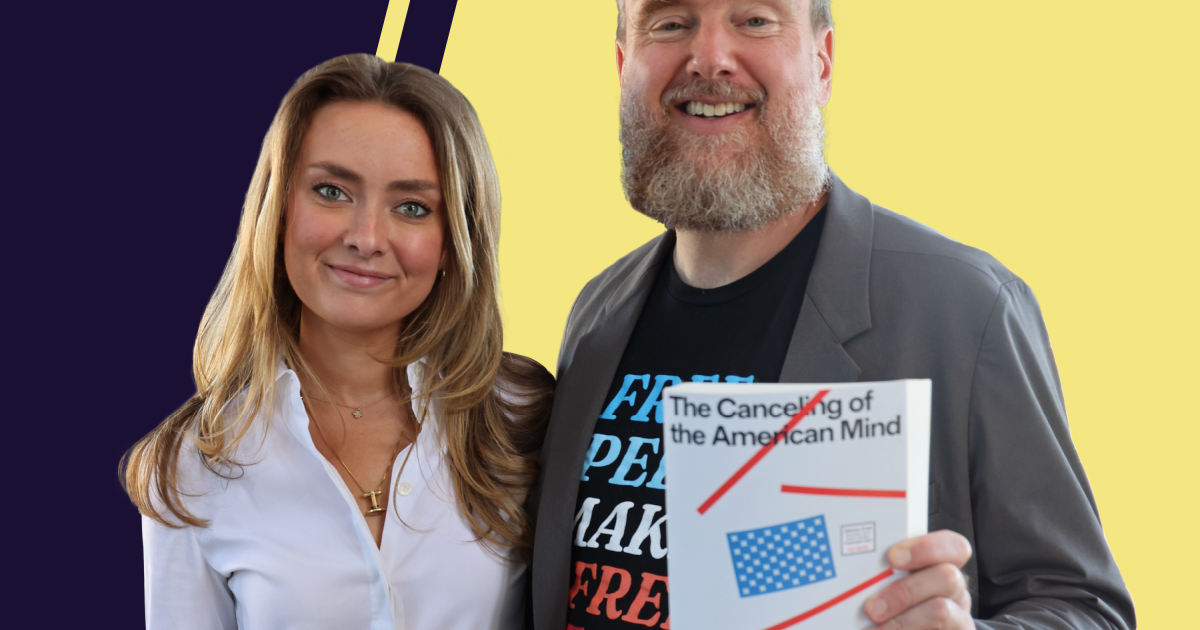
    The co-authors of “The Canceling of the American Mind”
    discuss its new paperback release and where cancel culture stands a
    year and a half after the book’s original publication.


    Greg Lukianoff

    Rikki Schlott

    Timestamps:

    00:00 Intro

    04:35 Origin of book

    07:56 Definition of cancel culture

    17:55 Mike Adams, canceled professor

    23:51 Alexi McCammond, former Teen Vogue
    editor-in-chief

    31:57 Echo chambers on social media

    35:09 Trump administration ‘canceling’ law firms and
    higher ed institutions

    44:02 Rikki’s libertarian political identity

    51:02 Is cancel culture dead?

    54:26 Outro


    Read the transcript.

    Enjoy listening to the podcast? Donate to FIRE today and
    get exclusive content like member webinars, special episodes, and
    more. If you became a FIRE Member
    through a donation to FIRE at thefire.org and would like access to
    Substack’s paid subscriber podcast feed, please email [email protected].

    Show notes:

    Source link

  • Cancel culture, legal education, and the Supreme Court with Ilya Shapiro

    Cancel culture, legal education, and the Supreme Court with Ilya Shapiro

    Over the years, elite institutions shifted from
    fostering open debate to enforcing ideological conformity. But as
    guest Ilya Shapiro puts it, “the pendulum is swinging back.” He
    shares his firsthand experience with cancel culture and how the
    American Bar Association’s policies influence legal education.
    Shapiro also opines on major free speech cases before the Supreme
    Court, including the TikTok ownership battle and Texas’ age
    verification law for adult content.

    Shapiro is a senior fellow and director of
    constitutional studies at the Manhattan Institute. He previously
    (and briefly) served as executive director and senior lecturer at
    the Georgetown Center for the Constitution and as a vice president
    at the Cato Institute. His latest book, “Lawless:
    The Miseducation of America’s Elites
    ,” is out now.

    Enjoy listening to our podcast? Donate to FIRE today and
    get exclusive content like member webinars, special episodes, and
    more. If you became a FIRE Member
    through a donation to FIRE at thefire.org and would like access to
    Substack’s paid subscriber podcast feed, please email
    [email protected].


    Read the transcript.

    Timestamps:

    00:00 Intro

    02:58 Shapiro’s Georgetown controversy

    15:07 Free speech on campus

    26:51 Law schools’ decline

    40:47 Legal profession challenges

    42:33 The “vibe shift” away from cancel culture

    56:02 TikTok and age verification at the Supreme
    Court

    01:03:37 Anti-Semitism on campus

    01:09:36 Outro

    Show notes:

    – “The
    illiberal takeover of law schools
    ” City Journal (2022)

    – “Poll
    finds sharp partisan divisions on the impact of a Black woman
    justice.
    ” ABC News (2022)

    – “Why
    I quit Georgetown.
    ” Ilya Shapiro, The Wall Street Journal
    (2022)

    – “Georgetown’s
    investigation of a single tweet taking longer than 12 round-trips
    to the moon.
    ” FIRE (2022)


    Students for Fair Admissions v. Harvard
    (2023)


    Lamont v. Postmaster General
    (1965)

    TikTok Inc
    v. Garland
    (2025)


    Free Speech Coalition v. Paxton
    (2024)

    Ginsberg
    v. New York
    (1968)


    International Holocaust Remembrance Alliance (IHRA) working
    definition of antisemitism
    (last updated 2025)

    Source link